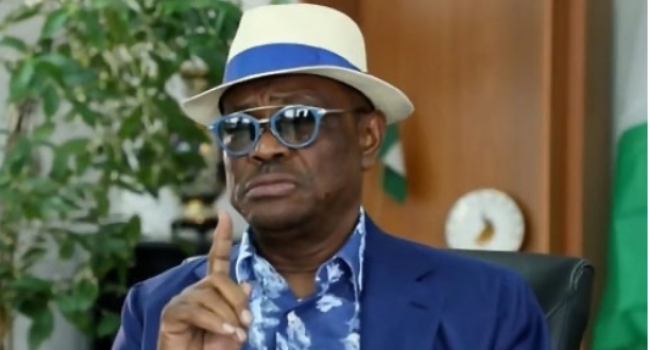
The Minister of the FCT, Nyesom Wike, has defended the imposition of a curfew in the build-up to the council polls in the nation’s capital.
Speaking at a media chat on Monday in his office, the minister said he has the rights as the ‘governor of the FCT’ to declare curfew.
He told journalists that contrary to claims, the action was approved by President Bola Tinubu.
The former Rivers State governor stated that his movements during the February 21 area council elections did not influence the outcome of the polls.
“I have the rights, I am the governor of 3,000 polling units. For security, I have to find out what is going on. I don’t have to be told, I am not a candidate for the election,” the minister stated.
“Somebody has said I move about. How many polling units in FCT? FCT has not less than 3,000 polling units. Assuming I went to 10 polling units to check what was going on, how will it affect 3,000 polling units?
“As a candidate, I cannot move around. I must have my agents. As the Chief Security Officer. I have a right to have a view of what is going on and how does it affect, influence the election?”
He also blamed the opposition party of not preparing well for the exercise, saying the success recorded by the All Progressives Congress (APC) showed the performance of President Tinubu-led Federal Government.
Wike had come under attack by Nigerians and opposition for restricting of human and vehicular movement in the FCT from 8pm on Friday to 6pm on Saturday.
Among them is senator representing the Federal Capital Territory (FCT), Ireti Kingibe, who accused the minister of being autocratic.
Kingibe said Wike’s decision to impose a curfew across the FCT without broad consultation with critical stakeholders is “a direct affront to democratic governance and the constitutional rights of residents”.
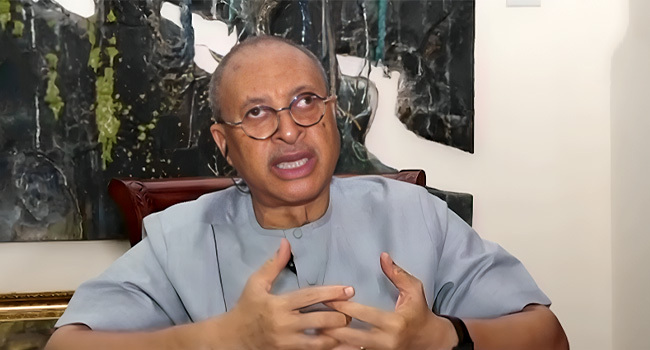
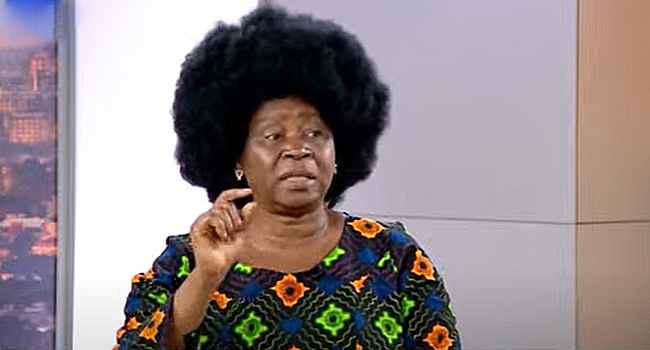
Political economist and member of the African Democratic Congress (ADC), Prof. Pat Utomi, has criticised members of the National Assembly over their role in the amendment of the Electoral Act.
Last month, the National Assembly passed the Electoral Bill after an extended period of deliberations. President Bola Tinubu subsequently signed the bill into law. However, opposition parties have rejected the new legislation and are calling for an immediate review by the lawmakers.
Speaking on The Morning Brief on Channels Television on Monday, Utomi accused federal lawmakers of pursuing self-interest politics aimed at retaining power.
He warned that such actions could erode the legitimacy of the legislature and plunge the country into anarchy.
“What we have has become a sham National Assembly. Because they are playing more to their interest of staying in power, they forget that they can lose legitimacy — the whole system can lose legitimacy — and that what they are doing is inviting anarchy.
“They had better save themselves and the system now. If it’s just for themselves, we can all sit back and say, ‘Okay, they will see the consequences.’ We have seen the history; we know what the consequences are — they will pay dearly for it.
“But their paying dearly could mean all of us ultimately pay dearly, because we could lose our democracy; we could lose our capacity for law, order, good governance, and progress in the country,” Utomi said.
The political economist also expressed concern over what he described as political games between the presidency and the Senate, warning that such actions could steer Nigeria in the wrong direction. He called for the return of the law to the National Assembly for reconsideration.
“I don’t think people who are playing these games between the Senate and the presidency quite understand where they are going and where this could lead Nigeria.
“This is why it is imperative, for progress in Nigeria, that they return that so-called law to the National Assembly and make a law that reflects what the people want.
The Chairman of the Independent National Electoral Commission (INEC), Prof. Joash Amupitan, has assured Nigerians that the commission possesses the capacity to electronically transmit election results in 2027, though he cautioned that a “100 per cent perfect election” cannot be guaranteed.
Amupitan gave the assurance on Sunday during the Citizens’ Town Hall programme aired live on Channels Television and themed, ‘Electoral Act 2026: What it means for your votes and the 2027 elections.’
He urged Nigerians to temper expectations, stressing that while INEC would strive to deliver its best performance, perfection remains unrealistic.
“Let me just appeal to Nigerians, because I have noticed now that what Nigerians desire is a perfect election. And INEC will strive as much as possible to give this country the best election.
“However, we may not be able to achieve a 100 per cent perfect election for now. But as far as electronic transmission of results is concerned, I said it before the FCT Area Council that we have the capacity to transmit the results, and that we’re going to transmit the results. The only concern was real-time,” he said.
Let me just appeal to Nigerians because I have noticed now that what Nigerians desire is a perfect election, and INEC will strive as much as possible to give this country the best election; however, we may not be able to achieve a 100% perfect election for now.
-INEC Chairman,… pic.twitter.com/fQjYvy7bmv
Describing elections as the foundation of democratic governance, the INEC chairman underscored the importance of voter education and transparency.
READ ALSO: [2027] INEC To Conduct Mock Presidential Poll
“Election, for that matter, is the lifeblood of democracy. According to Abraham Lincoln, the ballot is more powerful than the bullets. Also, the ignorance of a voter is very inimical to the security of a nation.
“So, that is why we cannot underscore the role of INEC, as well as the civil society, in guaranteeing a transparent and credible election,” he stated.
Amupitan disclosed that INEC played an active role in shaping the Electoral Act 2026, explaining that the review process began about three years ago through a joint committee made up of the National Assembly, civil society organisations and the commission.
“As of the time I was taking over, the work was almost concluded. But nonetheless, we still made some important provisions and recommendations in the new acts,” he said.
Addressing the long-running debate over electronic transmission of results, which gained prominence after the 2023 general elections, Amupitan revealed that INEC advocated for mandatory transmission during legislative discussions.
“Now, even talking about the transmission of the results, you will notice that the original provision that came out of the retreat from the National Assembly was not exactly what you have today.
“But when INEC came in, we talked of transmission being mandatory. But let us be sincere and honest. The only problem that we had was how to define what we call real time,” he explained.
He cited the recent Federal Capital Territory Area Council elections to illustrate challenges surrounding real-time transmission, particularly in remote areas.
“Let’s look at the FCT area council election that just took place. Now, there are six area councils in the FCT. The results came out on time in five area councils. But in the Kuje area council, we have 10 wards. And the results in one ward, Kabi, did not come until the following day, Sunday.
“Now, on Saturday, when we mobilised and sent people to that ward from Kuje town, Kabi ward is about three-and-a-half hours’ drive. And the terrain is very bad. So I was worried.
“When we sent our polling officials and security agencies to that ward, the moment they entered that place, we could not reach them. They were not accessible by phone. And nobody could speak to them until we had to send somebody on Saturday morning, just to be sure that they were safe, before we now got the results.
“They brought the results to Kuje town. And then it was collated along with the remaining nine wards before the result could be declared,” he recounted.
Despite the delay, Amupitan maintained that transmission itself was not the principal challenge, pointing instead to network adequacy and logistics.
A cross-section of panels at Citizens’ Townhall. Photo: Taiwo Adesina/Channels TV
“I don’t see the issue of transmission as really a problem. I don’t see it as an issue because, from my little experience, over four months now in INEC, the problem is not even the network.
“The problem I have seen is the adequacy of the network we have. For instance, you expect that in a place like FCT, you should be able to transmit your results without any encumbrance. But we had a situation where it was impossible for us to have a real-time transmission of results, especially from the Kabi ward, until the following day. And in some of the wards, some results were transmitted,” he said.
He emphasised that logistics remain critical to election credibility, warning that operational shortcomings can erode public trust.
“So, talking about logistics, I’ve said it often that your election can be as good as your logistics. So, where there is logistics failure, you know that you are beginning to fail.”
While acknowledging that the FCT poll encountered “some logistic issues,” including human errors, he said corrective measures were already underway.
“As a regulatory body, we’re determined to achieve all this. But nonetheless, we have to admit that there were some logistical issues. Some were purely human, which we are trying to address,” he added.
Looking ahead, Amupitan expressed optimism that the 2027 general elections would represent a marked improvement, citing increased voter awareness and stronger public demand for accountability.
“But I want to assure you that the election of 2027 will be the best election that Nigerians will have because Nigerians of 2023 are different from what you have in 2027. People are much more aware. And you know the correlation between elections and development.
“Nobody is happy about the classification of Nigeria as an underdeveloped country. So we want a situation where our process will be able to guarantee the confidence and the transparency that people want to see in their system.
Civil society leaders, electoral experts, and INEC’s top brass gathered on Sunday evening for the Citizens’ Townhall on the freshly signed Electoral Act 2026.
Organised by the Civil Society Network on Electoral Integrity (including YIAGA Africa and TAF Africa), the event dissected the law’s reforms, mandatory electronic result transmission via IReV/BVAS, hybrid manual backups, revised party primaries, and earlier funding release, and their real impact on voters ahead of the 2027 general elections.
The evening poster captures the urgency: “Electoral Act 2026: What it means for your vote and the 2027 Elections.”
INEC Chairman Prof. Joash Amupitan delivered the headline assurance, vowing that 2027 will be Nigeria’s “best election yet” thanks to reforms, heightened voter awareness since 2023, and planned mock presidential exercises to iron out any transmission glitches.
He stressed simpler laws for transparency and pledged no repeat of past “technical failures.”
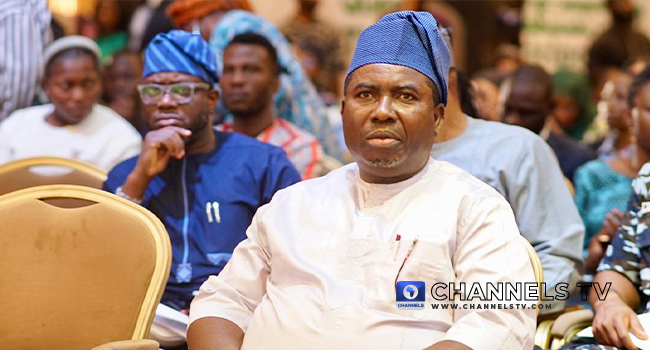
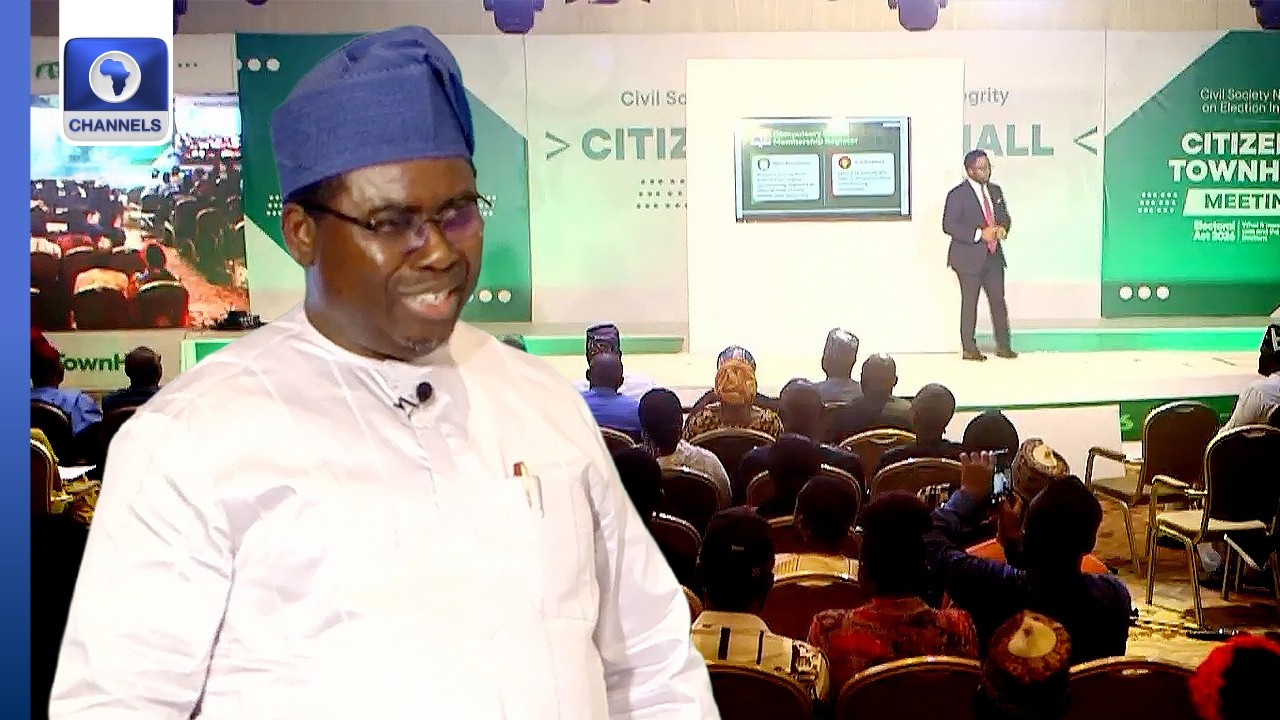
Samson Itodo, Executive Director of YIAGA Africa, took a critical stance, labelling the manual transmission fallback proviso a dangerous loophole that could erode trust.
Samson Itodo speaking at the Citizens’ Townhall over the 2026 Electoral Act held in Abuja on Sunday, March 1, 2026. Photo: Taiwo Adesina/Channels TV
He urged the National Assembly to swiftly amend the Act again to prioritise full electronic transmission, warning that citizens risk losing faith without it.
Citizens’ Townhall over the 2026 Electoral Act held in Abuja on Sunday, March 1, 2026. Photo: Taiwo Adesina/Channels TVCitizens’ Townhall over the 2026 Electoral Act held in Abuja on Sunday, March 1, 2026. Photo: Taiwo Adesina/Channels TV
Other voices included former INEC officials optimistic about BVAS recognition and electronic mandates, political party reps (APC, Labour Party, ADC) debating party perspectives, and activists like Oby Ezekwesili pushing for citizen empowerment.
Panellists highlighted remaining gaps but celebrated progress in funding and timelines.
Citizens’ Townhall over the 2026 Electoral Act held in Abuja on Sunday, March 1, 2026. Photo: Taiwo Adesina/Channels TVCitizens’ Townhall over the 2026 Electoral Act held in Abuja on Sunday, March 1, 2026. Photo: Taiwo Adesina/Channels TVCitizens’ Townhall over the 2026 Electoral Act held in Abuja on Sunday, March 1, 2026. Photo: Taiwo Adesina/Channels TVCitizens’ Townhall over the 2026 Electoral Act held in Abuja on Sunday, March 1, 2026. Photo: Taiwo Adesina/Channels TVCitizens’ Townhall over the 2026 Electoral Act held in Abuja on Sunday, March 1, 2026. Photo: Taiwo Adesina/Channels TVCitizens’ Townhall over the 2026 Electoral Act held in Abuja on Sunday, March 1, 2026. Photo: Taiwo Adesina/Channels TVCitizens’ Townhall over the 2026 Electoral Act held in Abuja on Sunday, March 1, 2026. Photo: Taiwo Adesina/Channels TVCitizens’ Townhall over the 2026 Electoral Act held in Abuja on Sunday, March 1, 2026. Photo: Taiwo Adesina/Channels TVCitizens’ Townhall over the 2026 Electoral Act held in Abuja on Sunday, March 1, 2026. Photo: Taiwo Adesina/Channels TVCitizens’ Townhall over the 2026 Electoral Act held in Abuja on Sunday, March 1, 2026. Photo: Taiwo Adesina/Channels TVCitizens’ Townhall over the 2026 Electoral Act held in Abuja on Sunday, March 1, 2026. Photo: Taiwo Adesina/Channels TVCitizens’ Townhall over the 2026 Electoral Act held in Abuja on Sunday, March 1, 2026. Photo: Taiwo Adesina/Channels TVCitizens’ Townhall over the 2026 Electoral Act held in Abuja on Sunday, March 1, 2026. Photo: Taiwo Adesina/Channels TVAPC National Chairman Nentawe Yilwatda at the Citizens’ Townhall over the 2026 Electoral Act held in Abuja on Sunday, March 1, 2026. Photo: Taiwo Adesina/Channels TVCitizens’ Townhall over the 2026 Electoral Act held in Abuja on Sunday, March 1, 2026. Photo: Taiwo Adesina/Channels TVCitizens’ Townhall over the 2026 Electoral Act held in Abuja on Sunday, March 1, 2026. Photo: Taiwo Adesina/Channels TVA cross-section of panels at Citizens’ Townhall. Photo: Taiwo Adesina/Channels TVProfessor Okechukwu Ibeanu at Citizens’ Townhall in Abuja. Photo: Taiwo Adesina/ChannelsTV
The national debate over the Electoral Act 2026, recently signed into law, continued on Sunday, with Nigerians expressing divergent views over the new legislation that will serve as a legal guide for the conduct of the 2027 general elections.
The issues identified in the new law took centre stage during a Citizens’ Townhall, an event broadcast live on Channels Television.
READ ALSO: If Tinubu Could Revert National Anthem In 24 Hours, Electoral Act 2026 Can Be Amended – Sam Amadi
The programme, themed “Electoral Act 2026: What it means for your vote and the 2027 elections?”, provided a platform for Nigerians to ask critical questions about the thorny issues in the new Act, including the contentious debate over electronic result transmission.
The Chairman of the Independent National Electoral Commission (INEC), Joash Amupitan, used the forum to address the technical concerns facing the Commission.
Identifying network inadequacy as a primary challenge, he emphasised that the quality of an election is inherently linked to logistical capacity.
“I don’t see the issue of transmission as a problem; the problem is not the network but the adequacy of the networks we have,” he said.
While acknowledging that Nigeria might not achieve “100 per cent perfect elections for now,” Amupitan assured the public that the Commission is striving to deliver the best possible outcome.
He further declared that technical glitches would not derail the 2027 polls.
“The glitch is eliminated; by God’s grace, it will not surface in Nigeria,” he added.
To bolster this confidence, he disclosed that INEC would conduct a mock presidential election to stress-test the transmission architecture.
“One of the things we are trying to do before the election is to have a mock presidential election so that we are sure that this transmission across the states must not fail,” Amupitan added.
Yiage Faults NASS
However, the Executive Director of Yiaga Africa, Samson Itodo, remained critical of the National Assembly’s decision to make manual transmission an option.
He argued that electronic transmission must be the sole, real-time method for results to ensure credibility.
Samson Itodo
Itodo further warned that the recently announced compressed election timetable places immense pressure on the Commission.
“And as we approach 2027, the credibility of that election will not just be determined on election day. It will be determined by a few things: the quality of preparations, the transparency of resource management, the professionalism of election officials, how political actors restrain themselves, but more importantly, the independence and the integrity of our security agencies and the judiciary.
“And lastly, the vigilance of citizens is what will determine the credibility of the next elections, because democracy is not self-executing. It requires guardians, and the citizens of this great country are the guardians that we need.”
‘Gaps, Loopholes’
Former INEC National Commissioner, Okechukwu Ibeanu, reinforced the need for systemic commitment over legislative tinkering.
“I think there are still gaps and loopholes in the law, and it’s unfortunate that it took us debating about a proviso for the country to come to a consensus that electronic transmission was actually in the 2022 act.
“But what we have done is actually to take us far back to 2018… We consistently tinker with the electoral legal framework as if that holds all the answers to our electoral problems,” Ibeanu cautioned.
Citizens’ Townhall over the 2026 Electoral Act held in Abuja on Sunday, March 1, 2026. Photo: Taiwo Adesina/Channels TV
He urged citizens to remain the ultimate watchdogs.
“Citizens, this is about you. It is not about politicians; it is not about INEC. Except citizens are in a position to protect their votes and control those who ostensibly represent them, our dream of a truly democratic country will remain an illusion,” he added.
Chidi Nwafor, who is a former director of information and communication technology at INEC, said security agencies and the judiciary play a crucial role in maintaining the sanctity of elections in Nigeria.
He also urged INEC to assess sections 50 and 70 of the Electoral Act.
Lawmakers Disagree
The chairman of the bipartisan conference committee on the Electoral Act (Amendment) Bill to harmonise differences between versions passed by both chambers of the National Assembly, Adebayo Balogun, stated that Form EC8A remains the primary source of collation of results.
But the member representing Anambra Central at the National Assembly, Senator Victor Umeh, described the INEC Result Viewing portal, IREV, as the game-changer.
He noted that the inclusion of a proviso that allows the presiding officer to use the Form EC8A remains a challenge, adding that the electronic transmission of the Form EC8A to the IREV was to forestall manipulation.
Citizens’ Townhall over the 2026 Electoral Act held in Abuja on Sunday, March 1, 2026. Photo: Taiwo Adesina/Channels TV
Similarly, a former Director of Voter Education at INEC, Oluwole Osaze-Uzzi, said the Electoral Act has taken Nigeria back with the proviso on manual collation when the network fails.
“Who is the judge when there is a network failure? Is it the electoral officer?” he queried.
For the Head of ICT at the Nigerian Society of Engineers, Oluwadara Oluwalana, Nigeria has the capacity to try out technology in the 2027 polls, with the collaboration of operators.
“Yes, I believe telecom operators can come together and make it work. I think we have the capacity now,” he submitted during the panel discussion.
‘Defections To APC Fair’
Meanwhile, the National Chairman of the All Progressives Congress (APC), Nentawe Yilwatda, said the Electoral Act did not confer any advantage to the ruling party.
Citizens’ Townhall over the 2026 Electoral Act held in Abuja on Sunday, March 1, 2026. Photo: Taiwo Adesina/Channels TV
Asked whether it was fair that the APC allowed politicians who won elections on the platform of opposition parties to defect to the ruling party, Yilwatda said, “Very fair, very fair because you will discover that many of those political parties are already dying.
“They saw a reason to join us because of how we operate as a party—from party management to organization and mobilization,” Yilwatda said at the event.
“APC seems to be the best party in terms of mobilization, organization, and governance. That provides a leeway for competition. When I go to the market, I have a choice to make: a choice between good governance, good party management, and a transparent system,” he added.
However, a chieftain of the African Democratic Party, Sam Amadi, said the submission of the INEC chairman it the commission’s preparedness for the general elections does not inspire confidence.
Among those who attended the event are serving and former members of the National Assembly, representatives of security agencies, civil society organisations, and other stakeholders in the electoral process.
A former Country Director of ActionAid, Ene Obi, faulted the campaign spending guideline set out in the Act, expressing worry over how this can prevent Nigerians with less financial capacity to vie for public offices.
“Another thing to look out for is the source of whatever money they are talking about,” she added.
New Law
Nigeria recently updated its electoral system after President Bola Tinubu signed the Electoral Act 2026 into law on February 18, 2026, after weeks of heated debate, replacing the 2022 legislation ahead of the 2027 general elections.
Key provisions of the new law include the mandatory electronic transmission of results to the INEC Result Viewing (IReV) portal, recognition of the Bimodal Voter Accreditation System (BVAS), new timelines for election notices and candidate nominations, revised methods for party primaries, and earlier release of funding for the electoral commission.
While Tinubu explained that the amendment aims to strengthen transparency, opposition parties and civil society organisations slammed aspects of the law, arguing that certain discretionary powers granted to electoral officials during technical failures could affect the credibility of the election.
The Commission had earlier fixed Saturday, February 20, 2027, for the presidential and National Assembly elections and Saturday, March 6, 2027, for the governorship and state Houses of Assembly elections.
A former Country Director of ActionAid Nigeria, Ene Obi, has raised concerns over the increase in campaign spending limits introduced in Nigeria’s newly amended electoral law, questioning both the practicality of the figures and the sources of campaign financing.
Obi spoke on Sunday at the Citizens’ Townhall on the Electoral Act 2026 held in Abuja, where she examined key provisions of the new legislation and their implications for Nigeria’s electoral process.
Reacting to the revised spending thresholds, Obi noted that while the limits were adjusted from those contained in the 2022 law, the new figures raise critical questions about equity and transparency in political participation.
“For the campaign limits now, the presidential campaigns used to be five billion in 2022, and now it has been taken to ten billion, and the governorship, from one billion has been taken to three billion.
“Many people look at who wants to go in for elections, where are they going to get one billion? Another thing we need to look at is the source of whatever money they are talking about,” she said.
READ ALSO: Amended Electoral Act Has Given Us Hope — Ex-INEC ICT Director
She warned that without stronger oversight of funding sources, the higher ceilings could deepen concerns about undue influence in the political process.
Nigeria’s electoral framework was revised after President Bola Tinubu signed the Electoral Act 2026 into law on February 18, following its passage by the National Assembly.
The new law significantly increases campaign spending limits, raising the presidential cap from ₦5 billion to ₦10 billion and the governorship limit from ₦1 billion to ₦3 billion.
Senate candidates can now spend up to ₦500 million, House of Representatives candidates ₦250 million, and State Assembly candidates ₦100 million, while the donation limit jumps from ₦50 million to ₦500 million.
The Act also mandates electronic transmission of results, formally recognises BVAS, imposes stricter penalties for electoral offences, and shortens timelines for resolving election disputes.
‘Timely Electoral Preparations’
Obi also highlighted the importance of the amendment in addressing logistical delays that affected previous elections, particularly in relation to procurement and planning timelines for the electoral body.
“For the 2022 Electoral Act, the issue was that it was getting too late so that INEC could roll out their work, and now you are saying six months before, with procurement and all the bottlenecks, that is why a new amendment is important.”
She added that financial independence and early planning remain crucial to improving election administration.
Weighing in on electronic transmission of results, Obi emphasised that the 2022 law had already recognised technology such as the Bimodal Voter Accreditation System (BVAS) and permitted transmission, but implementation challenges stemmed largely from human factors rather than legal gaps.
“When you are looking at the Electoral Act of 2022, it acknowledges the BVAS and also allows transmission. The issues of transmission, we are talking about it as if it never happened, or it wasn’t there; it was there. The human element brought in the issue of glitches because they had the capacity.”
She explained that the focus should be on whether results are transmitted at the point of accreditation, rather than on connectivity delays.
“What we are saying is that you can transmit, whether you are talking about real-time or not, where you are accredited, the machine is able to do transmission at that time. Whether it connects at that time is secondary; did you transmit at that very moment? That is what we are talking about,” she said.