The Board of Directors of the United Bank for Africa Plc, Africa’s Global Bank, today announced the appointment of Mrs. Abiola Bawuah, as Chief Executive Officer (CEO) of UBA Africa. Bawuah will also join the Group Board as an Executive Director, overseeing the Group’s operations across the African continent, outside Nigeria. UBA operates in 19 African countries beyond Nigeria, in addition to global operations in New York, London, Paris and the UAE.
Government officials, private sector leaders and Royal Fathers and Chiefs are some dignitaries expected to attend the final passage ceremony and 41-day prayer of the late Olofin Adimula Oodua of Ado-Odo, His Royal Majesty, Oba Abdul Lateef Adeniran Akanni on Saturday, February 19, 2022.
The event, which will have the Governor of Ogun State, Prince Dapo Abiodun, MFR and his Deputy in attendance will hold at Alamuwa Grammar School, Ado Odo, Ogun State.
Africa’s global bank, United Bank for Africa, through its UBA Foundation, has been spreading joy across Africa for many years as they continue to give back to the underprivileged in the communities in which they operate.
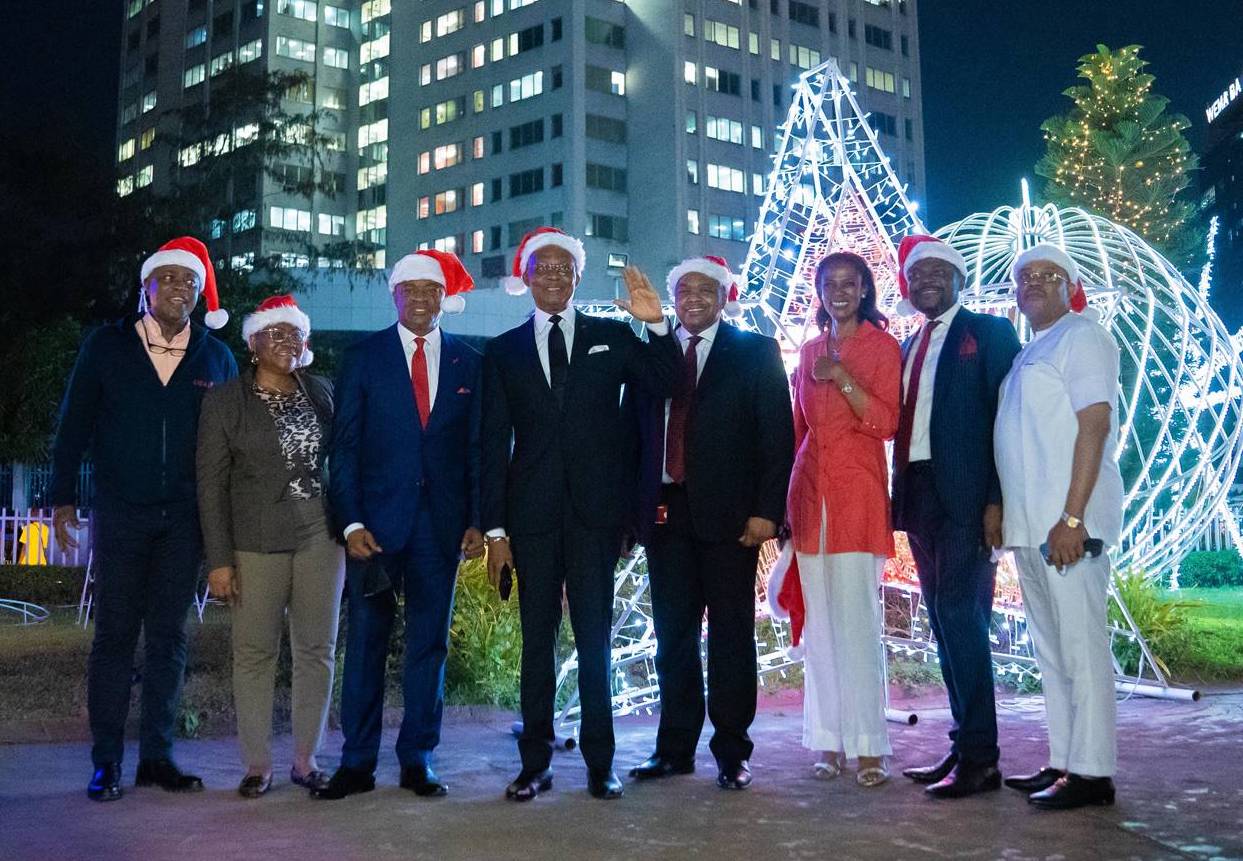
At the UBA Foundation gardens in Lagos, where the bank is headquartered, a lights up ceremony was held to mark the start of the festive season. The garden lights were activated by UBA’s Group Managing Director/Chief Executive Officer, Mr Kennedy Uzoka, joined by other key management staff and some bank customers.
Uzoka, who is also the chairman of the UBA Foundation, emphasised that giving back was the main tenet of the UBA Foundation. He said, ‘We have over the years, engaged in various activities aimed at appreciating our host communities all around Africa and especially in countries where we operate and so for us, these lights symbolise hope for the future and all the goodness it will bring into people’s lives.
‘it is hard to believe that we have been in this pandemic for almost two years. People have lost friends and family members, and businesses decimated by the effects of the pandemic. There has been a general feeling of hopelessness, but we desire to fill people’s lives with hope once again.’ Continued Uzoka.
The UBA Foundation has been very active in combatting the spread of Covid -19 across Africa as the bank did not waste any time at the start of the pandemic, donating over $14m to its communities across Africa to support the fight against the Covid-19 pandemic.
This year, the Foundation will be feeding tens of thousands of people across Africa through its annual Foodbank initiative. Food, hygiene products and other gifts items are handed over to those who have less, especially during the festive season.
The CEO, UBA Foundation, Mrs Bola Atta, said that the light-up ceremony was important for the Foundation, adding: “This goes beyond lighting up the Marina and adorning the streets with beautiful colours. It reminds us as an institution of our promise to continue to touch lives and treat our communities with kindness. We are living in challenging times and a little gesture to put a smile on even one face goes a very long way. We should all endeavour to do whatever we can, within our power, to uplift others.”
Group Managing Director/CEO, UBA Plc, Mr Kennedy Uzoka; flanked by Executive Director, Chukwuma Nweke; Head of Operations, Alex Alozie; MD/CEO, UBA Foundation, Bola Atta, and other staff members at the 2021 Christmas and New Year Light-Up Ceremony of UBA Foundation Garden, at Marina, Lagos
The Lighting Ceremony, which observed all necessary Covid-19 protocols, was witnessed by members of staff and customers and featured Christmas carols by UBA’s CFC choir and a guided tour around the beautiful UBA Foundation Garden at the Lagos Marina.
UBA Foundation, the CSR arm of the UBA Group, is committed to the socio-economic betterment of the communities in which the bank operates, focusing on development in the areas of Education, the Environment, Economic Empowerment and other Special Projects.
The Tony Elumelu Foundation (TEF), Africa’s leading philanthropy empowering young African entrepreneurs from all 54 African countries, has partnered with DEG, the German development financial institution supporting the private sector in emerging-market countries, to empower an additional 200 entrepreneurs across Africa.
The initiative will fund 200 additional young African entrepreneurs complementing the US$100m Tony Elumelu Foundation Entrepreneurship Programme that has identified, trained, mentored and funded over 9,000 entrepreneurs from all 54 African countries since 2015. The partnership will also help to scale TEFConnect, the Foundation’s proprietary digital platform supporting African entrepreneurs and provide platform access to an additional 500,000 SMEs. The initiative is co-financed by DEG with 1.5 million Euro from the develoPPP Program funded by the German Federal Ministry for Economic Cooperation and Development (BMZ).
As we move towards who becomes our next governor come next year, Ekiti Youths should think twice! Is it true that the man Kayode Adaramodu (KA) was one of the key supporters of Chief Segun Oni (CSO) to become governor in 2007?
Is it true that CSO offered him appointments on three different occasions, including the submission of his name with that of Olubolade for Ministerial appointment? Is it true the man accepted to assist CSO as a Technical Adviser on Policy and Strategy in honorary capacity?
Then CSO should be encouraged to take his place as a party leader and push this younger man forward. Just as CSO himself has acknowledged, everyone who know KA attest to his technical skills and excellent leadership credentials. What else do we want?
Ekiti Youths, let’s stop being short-sighted. This generation needs one of its own who understands the requirements of the rapidly changing world we are in.
That Kayode Adaramodu comes from Ekiti South senatorial district is even an added advantage as his nomination will settle the agitation of the zone to produce the governor of the State for the first time since 1999.
To our delegates in the PDP, let us choose a competent and focused young man with practical experience to lead Ekiti State forward positively from next year. His antecedents and contributions to youth development in Ekiti, in his private capacity, compare with none!
The Tony Elumelu Foundation (TEF), Africa’s leading philanthropy dedicated to empowering African entrepreneurs, will close applications for the Tony Elumelu Entrepreneurship Programme on its TEFConnect digital platform (www.tefconnect.com) on March 31. This year’s intervention prioritises the economic recovery of small and medium scale enterprises (SMEs) and young African entrepreneurs, following the Covid-19 disruption to economic activities.
To address the unique challenges arising from the pandemic, lift millions out of poverty and create sustainable employment across the continent, the Foundation’s Entrepreneurship Programme will empower over 3,500 young African entrepreneurs in collaboration with global partners.