EFCC Arrests 20 For Alleged Electoral Offences In FCT Council Polls

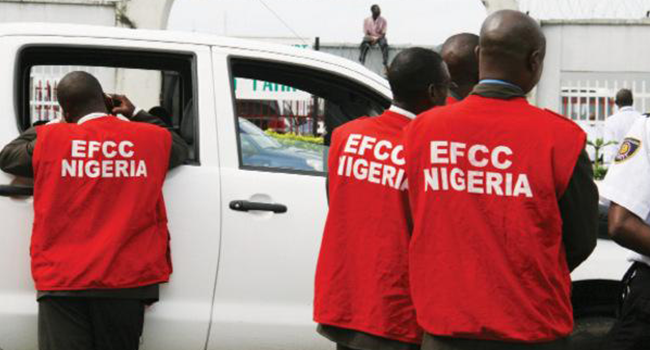
The Economic and Financial Crimes Commission (EFCC) said it has arrested 20 suspects for different electoral offences during the February 21, 2026, Federal Capital Territory area council elections.

READ ALSO: APC Dominates Rivers By-Elections, FCT Polls, PDP Wins Gwagwalada

It disclosed that the suspects were arrested across the FCT, for offences ranging from vote buying, vote selling, to obstruction of officers, to the tune of ₦17,218,700.

“One of the suspects was arrested with a sum of ₦13,500,000 in a car parked beside a polling booth in the Kwali local government area.

“Two of the suspects were arrested in Abaji; nine in Gwagwalada; four in Kuje, and the remaining four in Kwali,” The EFCC said in a statement signed by its Head of Media and Publicity, Dele Oyewale.

It said the suspects would be charged in court upon the conclusion of investigations.

The Independent National Electoral Commission (INEC) conducted elections in the six area councils of the FCT for chairmanship and councillorship positions.

By-elections were conducted in the Ahoada East II and Khana II state constituencies of Rivers State.

Troops Kill 25 ISWAP Fighters, Recover 13 AK-47s

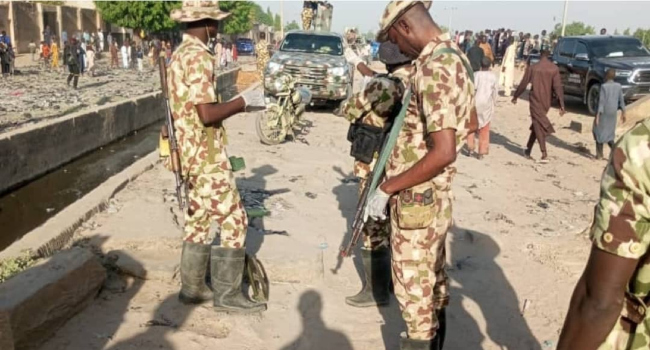
Troops of the Joint Task Force (North East) Operation HADIN KAI (OPHK) have repelled coordinated terrorist attacks in Limankara and Kukawa, Borno State.

READ ALSO: Troops Arrest Suspected Boko Haram Collaborators, Seize Drones In North-East

This was contained in a statement on Sunday by the Media Information Officer of the Theatre Command, Lt. Col. Sani Uba.

“Troops of Sector 2 under Operation DESERT SANITY V, acting on weeks of intelligence backed by satellite imagery and ISR air platforms, conducted a precision operation in the early hours of 22 February 2026 around Lamusheri Village in Gujba LGA, identified as a key terrorist attack launch pad and logistics hub.

“During the ensuing firefight and exploitation, 15 terrorists were neutralised while scores fled with gunshot wounds,” Uba said.

According to him, extensive defensive and life-support structures were destroyed.

He said that five terrorist tricycles and two vehicles used for attacks and logistics were set ablaze with their contents, and a cache of arms, ammunition, bandoliers, and camel pouches was recovered.

Uba said the terrorists, in unconfirmed numbers, also attempted to infiltrate the Forward Operating Base (FOB) Limankara, while the alert troops immediately engaged the attackers in a fierce firefight, bringing disciplined firepower and tactical coordination to bear.

He said rapid reinforcement at the contact point with support from the Air Component Command overwhelmed the assailants, compelling them to flee in disarray through the burial ground axis.

“In a related incident at about 2320 hours, terrorists mounted on gun trucks and motorcycles, with additional fighters on foot, launched a coordinated multi-pronged attack on troops in Kukawa from the Alagarno and Jemmu axes.

“The troops engaged the attackers in an intense firefight that extended into the early hours of 21 February 2026. Overpowered by superior fire and coordinated resistance from the ground troops and air support from the Nigerian Air Force, the terrorists withdrew, dragging away casualties,” he said.

Uba noted that the air platforms further conducted a series of precision strikes, with one terrorist gun truck destroyed, “pulverising four fighters in the gun truck”.

“Persistent aerial surveillance subsequently tracked fleeing terrorists on five motorcycles to a convergence point, where another precision strike destroyed the five motorcycles and neutralised an additional 10 fighters.

“Following the strikes, troops conducted an operation and recovered thirteen(13) AK-47 rifles, sixteen (16) AK-47 loaded magazines, three(3) handheld radios which the insurgents used for communication, terrorists’ stretchers used to convey their casualties, as well as shallow graves and blood trails left by the terrorists,” he added.

He announced that “regrettably, one gallant soldier paid the supreme price, and some combat enablers were destroyed by rocket fire during the engagements.

Police Rescue Five Missing Children In Ebonyi

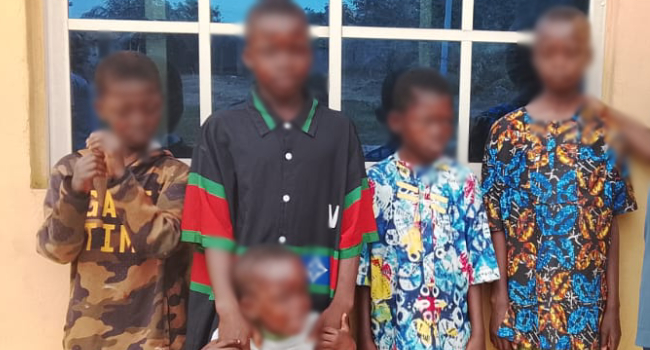
The Ebonyi State Government, working with the Nigerian Police Force, has confirmed the rescue of five male children at various locations across the state.

READ ALSO: Ebonyi Killings: Gov Nwifuru Relaxes Curfew In Amasiri, Orders Prosecution Of Suspects

The police spokesperson, SP Joshua Ukandu, on Sunday confirmed to Channels Television that the operatives of the command played a vital role in getting the boys off the street.

He noted that the children were handed over to the Ministry of Women Affairs and Social Development for further investigations and possible reunion with their parents.

“Operatives of the command rescued the five male children at various locations across the state. They have been handed over to the Ebonyi State Ministry of Women Affairs and Social Development for further investigations and to reunite them with their families,” Ukandu said.

At the premises of Ebonyi State Juvenile Remand Home, Ugwuachara Abakaliki, the Commissioner for Women’s Affairs and Social Development, Mrs. Felicia Nwankpuma, disclosed that the children were seen wandering until the police intervened.

“These vulnerable children were found missing by men of the Nigeria Police Force, Ebonyi State Command, on different dates at different parts of the state and handed over to the Ministry of Women Affairs to enable us to trace their families and reunite them,” she stated.

Nwamkpuma, who was represented by the Head of Child Development Department of the ministry, Emmanuel Nkwuda, said that children are precious gifts from God and should be protected.

“I advise parents to give birth to only a number of children they can adequately cater for, considering their economic strength and schedules, and be security conscious,” he added.

The government called on people looking for their missing children to visit the ministry as soon as possible for an interview, identification, and reunion.

The commissioner threatened that if the parents of the lost but found children are not seen within a reasonable period of time, the ministry will be compelled to place the children for adoption or fostering so as not to deprive them of adequate parental care and love, dignity, education, and name.

She explained that the ministry does not operate a school or skill acquisition centre within the facility, stressing that prolonged stay without meaningful engagement could negatively affect the children’s development.

“Some of them have stayed here up to four years, some two years, some a year, and the youngest among them have stayed with us for just two months. We resolved that it’s important to let the public know that children of these ages are in our children’s centre.”

“Parents whose children are missing should come with evidence for the interview, identification, and possible reunion,” the commissioner said.

She also cautioned against allowing strangers to interact freely with children, recalling a recent incident in the Nkwagu axis of the state where some women were allegedly deceived and three children taken away.

The ministry urged members of the public with relevant information to come forward to help reunite with their families.

[VIDEO] Channels TV Correspondent Recounts Ordeal After Assault By Benue Speaker Over APC Congress Coverage

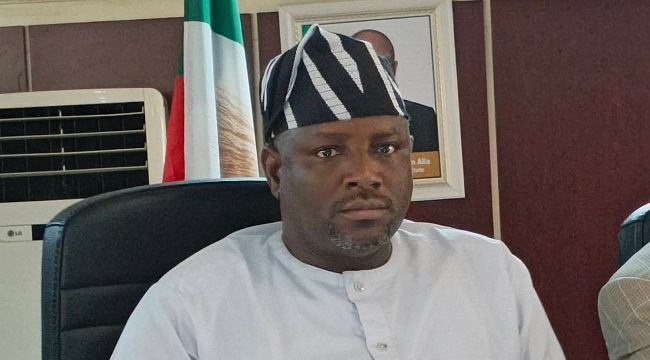
A Channels Television correspondent in Benue State, Pius Angbo, has recounted his experience after he was assaulted by the Speaker of the House of Assembly, Alfred Berger, following tensions that arose during coverage of the All Progressives Congress (APC) local government congress in Makurdi, the state capital.


Angbo explained that on February 21, 2026, he, alongside colleagues from AIT and Arise Television, covered an affirmation congress held in the Madikpo area of Wadata, Makurdi.

The event was organised by a faction of the APC reportedly aligned with the Secretary to the Government of the Federation, George Akume.

The coverage followed earlier reporting on February 20 at the APC state secretariat, where the caretaker committee chairman, Benjamin Omale, oversaw the distribution of congress materials to the 23 local government areas.

Omale had stated that the ward, local government, and state congresses were elective and that no formal complaints had been received regarding the process.

However, differences emerged over the interpretation of the party’s National Executive Committee guidelines.

The publicity secretary of the APC state executive, who is aligned with the SGF, Dan Ihomun, invited media organisations to cover what he described as a non-elective affirmation congress in Madikpo.

At the event, returning officer Hilthler Akya affirmed the existing local government executive through a voice vote. Party stakeholder Audu Akange maintained that the process complied with NEC guidelines.

According to Angbo, shortly after the coverage, he received a phone call from the Speaker of the Benue State House of Assembly, who expressed dissatisfaction with the report and questioned his presence at what was described as a parallel congress.

He said that Berger warned him against filing the report and indicated he would report the matter to Governor Hyacinth Alia.

“Pius, why did you go to cover the meeting with few people organised by Audu Akange? If you file that report, I will report you to the governor. I will deal with you,” the Speaker said.

The correspondent explained that moments later, the Chief Press Secretary to the Governor, Tersoo Kula, contacted the journalist to inquire about the coverage, stating that the governor had raised concerns about reports of a parallel congress.

The Chairman of the Nigerian Union of Journalists (NUJ), Benue State Council, Bemdoo Ugber, subsequently reached out to Angbo to seek clarification about the venue of the event.

After he explained that the congress took place in Madikpo, Wadata — and not at a private residence — the NUJ chairman conveyed an invitation from Terhemen Tarzoo to discuss the matter.

Angbo said that upon his arrival at StelaRose Hotel in the New GRA area of Makurdi, accompanied by the NUJ chairman, the Speaker confronted him and issued further threats, saying, “This is Makurdi, my turf, I will deal with you. Beat him up. Beat him up. Nonsense!”

The correspondent stated his explanation that his presence at the event was in line with his professional responsibility to report on matters of public interest was rebuffed by Berger and his associates, who physically assaulted him and used derogatory words against him.

He stated that the situation was eventually calmed following the intervention of Terhemen Tarzoo.

As of the time of this report, there had been no official public response from the Speaker regarding the allegations.

APC Dominates Rivers By-Elections, FCT Polls, PDP Wins Gwagwalada

The Independent National Electoral Commission (INEC) has declared winners in Saturday’s area council elections in the Federal Capital Territory (FCT) and by-elections in Rivers State, with the All Progressives Congress (APC) securing major victories.

READ ALSO: [UPDATED] FCT: APC Wins Kuje Area Council Chairmanship Election

In Kuje Area Council, APC candidate Danjuma Shekwolo won the chairmanship election with 17,269 votes.

The Returning Officer, Nkiruka Odoh of the University of Abuja, declared Shekwolo duly elected, having scored the highest votes and satisfied the requirements of the law.

The candidate of the Peoples Democratic Party (PDP), Zakwoyi Danlami, polled 15,824 votes, while Abdullahi Galadima of the All Progressives Grand Alliance (APGA) scored 4,305 votes.


In Abuja Municipal Area Council (AMAC), APC’s Christopher Maikalangu was returned elected after polling 40,295 votes out of 62,861 valid votes cast.

The African Democratic Congress (ADC) scored 12,109 votes, while the PDP polled 3,398 votes.

In the Kwali Area Council, APC’s Daniel Nuhu secured 17,032 votes to defeat PDP’s Haruna Pai, who polled 8,575 votes.

Meanwhile, in Gwagwalada Area Council, PDP candidate Mohammed Kasim won the chairmanship seat with 22,165 votes, defeating the APC’s Yahaya Shehu, who scored 17,788 votes.

INEC described the Gwagwalada poll as peaceful and smoothly conducted.

APC Dominates In Rivers

In Rivers State, APC candidate Henrietta Loolo won the Khana Constituency II by-election into the Rivers State House of Assembly, polling 7,647 votes to defeat candidates of other political parties.


The by-election was conducted to fill the vacancy created by the death of former lawmaker Dinebari Loolo. Khana Constituency II comprises 155 polling units across eight wards.

Also in Rivers, INEC declared APC’s Napoleon Ukalikpe winner of the Ahoada East II Constituency by-election with 3,980 votes.

The seat became vacant following the resignation of Edison Ehie, who took up an appointment as Chief of Staff to the state governor.

The by-elections filled two vacant seats in the Rivers State 10th Assembly.

Kano By-Elections

In Kano State, the APC emerged victorious in the Ungogo and Kano Municipal State Assembly by-elections, clinching both seats amid low voter turnout.


In Kano Municipal Constituency, the APC candidate, Aliyu Daneji, secured 7,484 votes to win the seat and represent the constituency in the Kano State House of Assembly.

Announcing the result, the Returning Officer, Ibrahim Siraj, declared that Daneji satisfied the requirements of the law and scored the highest number of valid votes cast.

Similarly, in Ungogo Constituency, the APC candidate, Aminu Sa’ad, polled 8,975 votes to clinch the seat.

The Returning Officer for the constituency, Ali Abdullahi, declared the result.

Major opposition parties, including the New Nigeria Peoples Party (NNPP), the Peoples Democratic Party (PDP), and the African Democratic Congress (ADC), were not on the ballot and did not participate in the elections.

INEC conducted elections in the six area councils of the FCT for chairmanship and councillorship positions.

By-elections were also held in Ahoada East II and Khana II constituencies of Rivers State, while legislative elections took place in Kano Municipal and Ungogo constituencies in Kano State.

There had been concern ahead of the exercise in the FCT following a disagreement between FCT Minister Nyesom Wike and FCT Senator Ireti Kingibe over movement restrictions.


Kingibe criticised the 22-hour restriction on human and vehicular movement as excessive and undemocratic.

Wike insisted the directive was not imposed unilaterally and had the approval of President Bola Tinubu.

Meanwhile, President Tinubu congratulated the winners of the elections in the FCT, Rivers, and Kano states, urging them to serve with humility, patriotism, and dedication.
National Assembly Highlights Key Reforms In Electoral Act 2026

The National Assembly has outlined major reforms introduced in the Electoral Act 2026, including mandatory electronic transmission of results, compulsory use of the Bimodal Voter Accreditation System (BVAS), the creation of a dedicated fund for the Independent National Electoral Commission (INEC), and stricter regulations for political parties.

Leader of the Senate, Opeyemi Bamidele, in a statement released by the Directorate of Media and Public Affairs in his office, said the new electoral framework was the product of two years of consultations involving INEC, the Office of the Attorney-General of the Federation (OAGF), civil society organisations (CSOs), and development partners.

According to him, the National Assembly harmonised versions of the Electoral Bill 2026 passed by both chambers, particularly Clause 60(3), before transmitting it to President Bola Tinubu for assent in order to avert a constitutional crisis ahead of preparations for the 2027 general elections.

READ ALSO: Tinubu Signs Electoral Act 2026 Into Law, Says ‘We Need To Avoid Glitches, Unnecessary Hacking’

The President signed the bill into law within 24 hours, completing what lawmakers described as a two-year reform process.

Financial Autonomy for INEC

Bamidele explained that Section 3 of the Act establishes a dedicated fund for INEC to guarantee its financial autonomy, operational stability and administrative continuity. The law also mandates the release of election funds at least six months before a general election and expands INEC’s authority to review result declarations made under duress or procedural violations.

Technology-Driven Electoral Process

Under Section 47, the Act makes it mandatory for presiding officers to use BVAS or any other technological device prescribed by INEC for voter accreditation.

Section 60(3) provides for the compulsory electronic transmission of results to the INEC Result Viewing Portal (IReV), while Section 60(6) prescribes a six-month jail term or a fine of ₦500,000 — or both — for any presiding officer who wilfully frustrates the electronic transmission of results.

The Senate Leader clarified that while IReV enhances transparency, it is not a collation platform. He added that the law permits the use of Form EC8A where electronic transmission fails due to communication challenges.

Sanctions and Administrative Provisions

Section 74(1) mandates Resident Electoral Commissioners (RECs) to release certified true copies of documents within 24 hours of payment, with failure attracting a minimum two-year imprisonment without the option of fine.

Section 72(2) provides that a certified true copy of a court order is sufficient for swearing in a candidate declared winner by a court if INEC fails to issue a certificate of return.

Under Section 125(1-2), the Act prescribes a two-year jail term or fines ranging between ₦500,000 and ₦2 million — or both — for offences such as vote buying, impersonation and result manipulation.

Reforms to Party Primaries

The Act eliminates indirect primaries and retains only direct and consensus primaries under Section 84 (1-2).

Section 77 (1-7) requires political parties to maintain a digital register of members, issue membership cards, and submit the register to INEC at least 21 days before conducting primaries, congresses or conventions. Parties that fail to comply will be barred from fielding candidates in the affected election.

Revised Campaign Spending Limits

Section 92(1-8) raises campaign spending limits as follows:

Presidential: ₦10 billion (from ₦5 billion)

Governorship: ₦3 billion (from ₦1 billion)

Senate: ₦500 million

House of Representatives: ₦250 million

House of Assembly: ₦100 million

Area Council: ₦60 million

Councillorship: ₦10 million

The Act also imposes a ₦10 million fine on any political party that fails to submit accurate audited returns within the stipulated period.

Inclusion Measures

The legislation introduces additional safeguards, including provisions under Section 49 for gender-separated queues in areas where cultural practices require it, and Section 54, which establishes support mechanisms for persons with visual impairment.