Channels TV Cameraman Kani Ben Laid To Rest In Adamawa

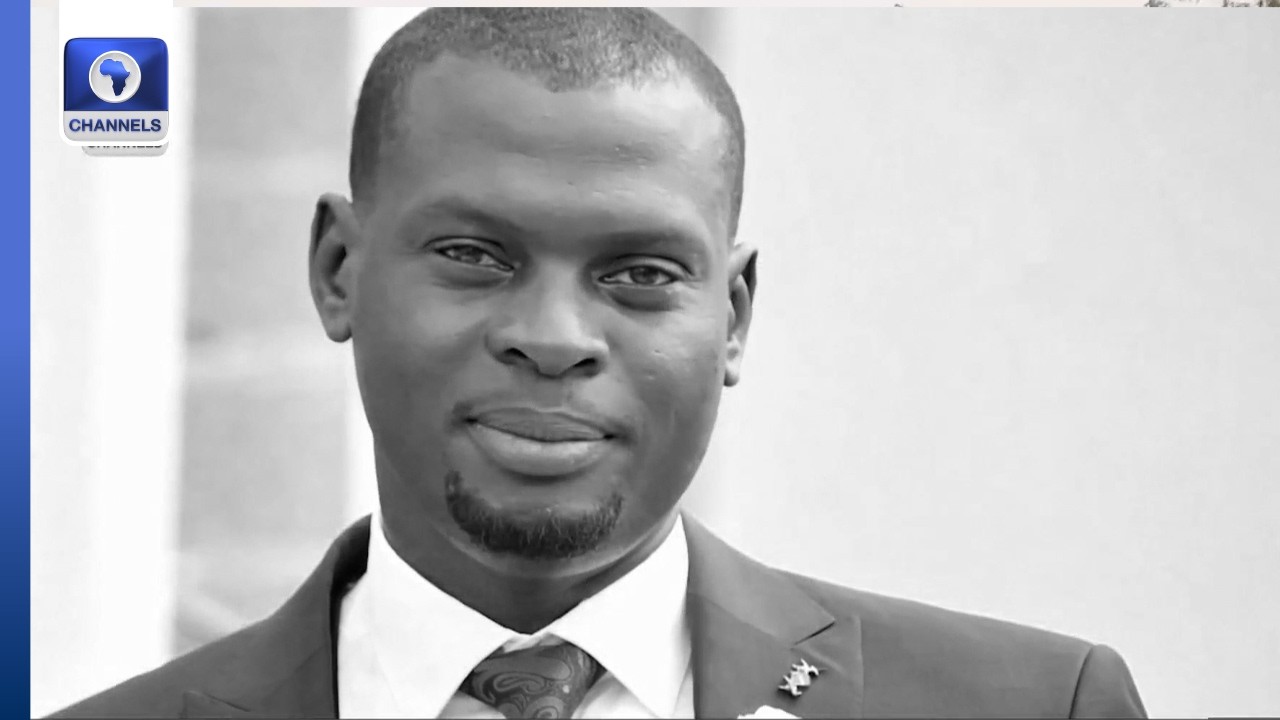
Channels Television’s Bauchi bureau cameraman, Kani Ben, has been laid to rest in his hometown of Kangali, Girei Local Government Area of Adamawa State, following a solemn series of funeral rites attended by family, colleagues and dignitaries.

The 44-year-old died on February 15, 2026, at the Abubakar Tafawa Balewa University Teaching Hospital after sustaining injuries in a road accident while on official duty.

A wake service held on Sunday at the Lutheran Church of Christ in Nigeria in Yola drew hundreds of worshippers, members of the Channels Television team, and sympathisers who gathered to honour the fallen journalist.

The General Manager, Special Duties, Kingsley Uranta, led the delegation from Channels Television.

The following day, a brief departure ceremony took place at a specialist hospital in Yola before the body was conveyed to Kangali, where grieving relatives and community members paid their final respects.

At the funeral service, church leaders described Ben as a devoted Christian and consummate professional. The Bishop of the Abuja Diocese of the Lutheran Church testified to his active involvement in church life and exemplary character.

He said, “For us to have this calibre of people from North East Development Commission, from Government of Bauchi state, from Channels, from National Union of Journalists, and all his colleagues, it means that Kani Ben lived a good life.”

READ ALSO: Channels TV Mourns Bauchi Bureau Cameraman, Kani Ben

Tributes 

Colleagues remembered him as courageous and committed to his craft.

Speaking on behalf of the organisation, Uranta said, “Our love, thoughts and prayers are with his family, his entire family, as you continue to celebrate the life of your dearly departed.”


The Bauchi State Commissioner for Information, Usman Shehu-Usman, who attended alongside representatives of the North East Development Commission, commended the late cameraman’s diligence and work ethic.

He said, “Channels Television had this active cameraman, we call him an active reporter, because actually he died less than a week ago, when Channels Television asked him to come from Bauchi to cover an event here in Adamawa. That is to tell you how trustworthy he is, how active he is.”

Also paying tribute, Director of Information at the NEDC, Naomi Abwaku, noted, “Mr. Kani Ben has been with the NEDC since inception. Right from the very day the NEDC stormed into Bauchi, Kani Ben was there.”

After prayers for strength and comfort for the bereaved, Kani Ben was committed to Mother Earth in a final, solemn farewell.

Kani Ben

Kani Ben was born in 1982. He was covering the commissioning of projects by the North East Development Commission, a reflection of a career spent documenting the nation’s stories.

At 44, he had dedicated nine years to Channels Television, earning widespread respect for his professionalism and courage.

Tributes poured in from the Nigeria Union of Journalists and the Bauchi State Government, where he was based.

Bauchi State Governor Bala Mohammed described his passing as painful and heartbreaking, noting that he died in active service while keeping Nigerians informed.
10 Killed In Fresh Attacks On Two Plateau Communities

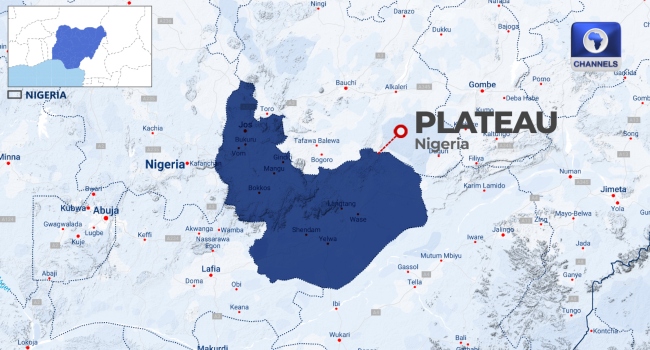
Fresh violence rocked Riyom Local Government Area of Plateau State on Sunday night as armed bandits launched coordinated attacks on Jol community and Dorowa Babuje (Rob District), killing at least 10 persons between 8:00pm and 9:00pm, local leaders have confirmed.

The National President of the Berom Youth Moulders Association (BYMA), Barrister Solomon Dalyop, disclosed this in a phone interview with a Channels Television correspondent in Jos. He said nine people were killed in Dorowa Babuje, while one person lost his life in Jol during the separate but near-simultaneous attacks.

According to Dalyop, the assailants who attacked Jol arrived on motorcycles from the Manga axis, despite early warnings issued to security agencies about possible movement in the area.

READ ALSO: Troops Kill Five Suspected Kidnappers, Rescue Abducted Woman In Plateau

He explained that personnel of Operation Rainbow, Plateau State’s security outfit, were already on the ground and succeeded in repelling the attackers, thereby limiting casualties.

In Dorowa Babuje, Dalyop said the attackers emerged from the Jong-Wereh area, where they were believed to have been camping for some time. He noted that the military was promptly informed and responded swiftly, a move he said prevented the death toll from rising further.

“If not for the quick intervention of the military in Dorowa, the casualty figure would have been much higher. We must commend them for their swift response,” Dalyop stated.

Efforts to obtain an official reaction from the police proved unsuccessful, as the Plateau State Police Public Relations Officer, Alfred Alabo, did not respond to phone calls as of press time. The Nigerian Police is yet to issue an official statement on the attacks.

The latest killings add to a disturbing pattern of repeated attacks in Riyom, one of Plateau State’s most volatile flashpoints, where farming communities have endured cycles of night raids, ambushes and displacement in recent months.

Residents of Jol and Dorowa Babuje are gripped by fear as families mourn their dead and call for sustained security presence to prevent further bloodshed.

Violence Erupts Across Mexico As Army Kills Drug Lord ‘El Mencho’

The Mexican army announced Sunday that it had killed powerful drug lord Nemesio “El Mencho” Oseguera in an operation that sparked a wave of violence in various parts of the country.

Oseguera, the 59-year-old leader of the Jalisco New Generation Cartel, was wounded in a clash with soldiers in the town of Tapalpa, in Jalisco state, and died while being flown to Mexico City, the army said in a statement. He had a $15 million US bounty on his head.

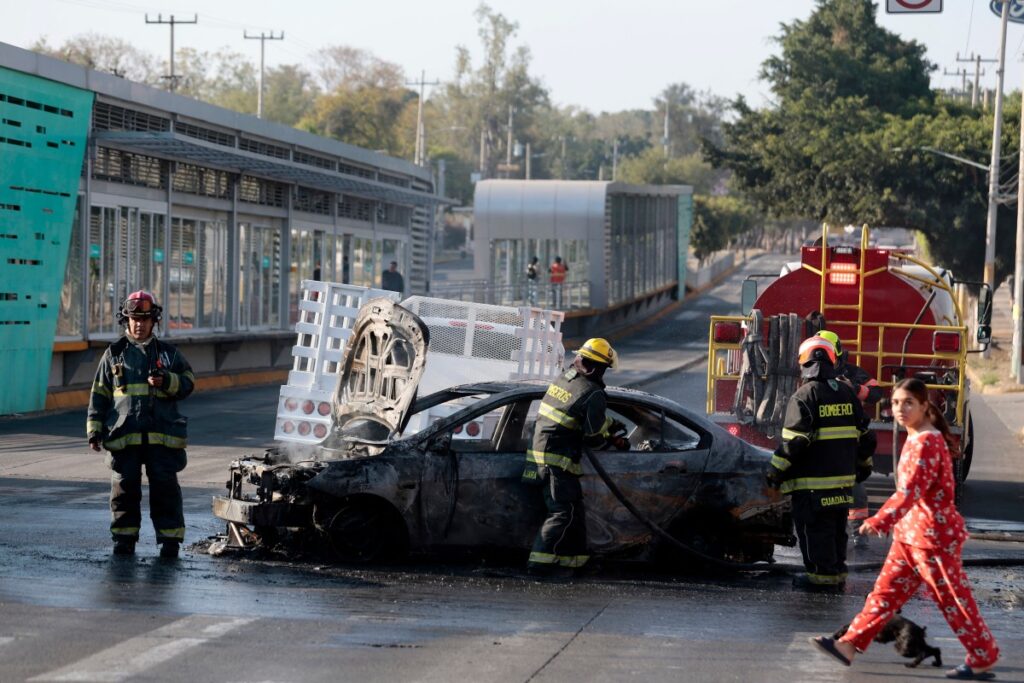
Gunmen retaliating for the raid blocked more than 20 roads in western Jalisco state, burning cars and trucks. As violence spread across the country, at least eight states suspended in-person classes and the judiciary authorized judges to close courts where necessary.

Mexican President Claudia Sheinbaum urged citizens to remain calm.

Oseguera, whose nickname was “El Mencho,” is one of the biggest Mexican drug lords to be taken down since the capture of the founders of the Sinaloa cartel, Joaquin “El Chapo” Guzman and Ismael Zambada. Both are now serving time in the United States.

READ ALSO: Ukraine’s Peace ‘Cannot Be Postponed,’ Says Pope

Sunday’s statement said that in addition to Mexico’s own military intelligence, the raid was carried out with “complementary information” from US authorities.

A view of a burning truck, allegedly set on fire by organised crime groups in response to an operation to arrest a high-priority security target, on a highway near Acatlan de Juarez, Jalisco state, Mexico on February 22, 2026. (Photo by Ulises Ruiz / AFP)

White House Press Secretary Karoline Leavitt said Washington “provided intelligence support.”

Six suspected cartel gunmen besides Oseguera were killed and three soldiers were wounded, the Mexican army said.

Two cartel suspects were arrested and a variety of weapons were seized, including rocket launchers capable of taking down airplanes and destroying armored vehicles, the statement said.

As gunmen blocked roads with retaliatory violence, Jalisco state, which is scheduled to host four World Cup games this summer, cancelled all events involving large crowds.

This aerial view shows a car passing by a burned bus and car, allegedly set on fire by organised crime groups in response to an operation to arrest a high-priority security target, on a highway near Acatlan de Juarez, Jalisco state, Mexico on February 22, 2026.  (Photo by Ulises RUIZ / AFP)

 ‘Great development for Mexico’

The streets of the state capital Guadalajara were almost empty as stores, pharmacies and gas stations shut down.

Maria Medina, who works in a gas station that was set on fire, said men with guns showed up and told everyone to get out.

“I thought they were going to kidnap us. I ran to a taco stand to take cover with the people there,” Medina told AFP.

The violence spread to the neighboring state of Michoacan, where Oseguera’s cartel also has a presence, and to the resort city of Puerto Vallarta.

His cartel was formed in 2009 and became one of Mexico’s most violent drug trafficking organizations, according to the US Justice Department.

Amid the violence, Guatemala said it was reinforcing “strategic” sections of its frontier with Mexico, which has seen cross-border incursions by criminal groups linked to cartels in recent months.

Mexican National Guard special forces patrol around the Specialized Prosecutor’s Office for Organized Crime (FEMDO) headquarters in Mexico City on February 22, 2026. (Photo by Alfredo ESTRELLA / AFP)

The United States has classified the Jalisco cartel as a terrorist organization and accuses it of sending cocaine, heroin, methamphetamine and fentanyl into the United States.

US Deputy Secretary of State Christopher Landau welcomed the operation and called Oseguera “one of the bloodiest and most ruthless drug kingpins.”

“This is a great development for Mexico, the US, Latin America, and the world,” he added.

The raid came amid pressure from US President Donald Trump for Mexico to stem the flow of drugs, particularly fentanyl, into the United States.

Trump has threatened repeatedly to slap tariffs on Mexican exports, arguing that Sheinbaum has not done enough to combat the drug trade.

In a statement on social media released after Sunday’s violence broke out, the US State Department urged US citizens in large parts of Mexico to “shelter in place until further notice.”

Canada also issued a travel warning for some areas, citing “shootouts with security forces and explosions” in Jalisco, Guerrero and Michoacan states.

US and Canadian airlines cancelled dozens of flights to Mexico over the violence, with Air Canada saying cancellations to Puerto Vallarta would stretch into at least Monday.

INEC Denies Migrating FCT Voters, Explains Split Polling Units

The Independent National Electoral Commission (INEC) has denied claims that voters were migrated to new polling units during Saturday’s Area Council elections in the Federal Capital Territory (FCT).

In a statement signed by its Acting Director of Voter Education and Publicity, Wilfred Ifogah, the Commission stated categorically that no voter was moved from their original polling unit.

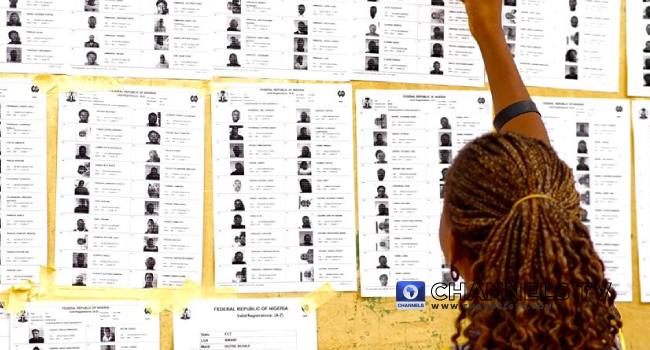
INEC explained that what it implemented ahead of Saturday’s election was the creation of split polling units in locations with more than 1,250 registered voters in order to reduce congestion on election day.

According to the Commission, the split units were situated only a few meters away from the original polling units within the same premises.

READ ALSO: [FCT Polls] PDP Celebrates Gains, Signals Court Action Over Alleged Manipulation

The Commission recalled that it displayed the Register of Voters at designated centres and split polling units four days before the election to enable voters confirm their details and polling unit locations. It also disclosed that text messages and emails were sent to affected voters between February 18 and February 21 as reminders indicating the locations of their split polling units.

INEC acknowledged that some voters experienced challenges locating their designated polling units on election day. According to its Election Operations Dashboard, 45 per cent of polling units had opened as of 8:30am, while all units were confirmed open by 10:00am.

While expressing concern over voter apathy, the Commission noted an improvement in turnout compared to the 2022 Area Council elections. It said over 239,210 voters participated in the 2026 poll, representing about 15 per cent of the 1,680,315 registered voters in the FCT, compared to 148,685 voters or 9.4 per cent recorded in 2022.

The Commission further explained that the delay in announcing results for Kuje Area Council, which were declared at 3:30pm on Sunday, was due to the difficult terrain of Kabi ward that slowed final collation.

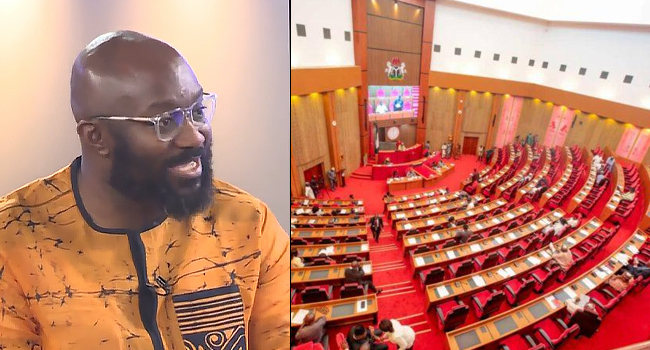
Electoral Act: NASS Enacted Provisions At Variance With Desires Of Nigerians — Itodo

The Executive Director of Yiaga Africa, Samson Itodo, has faulted the assent to the amended electoral bill, saying that it contains provisions that are at variance with the aspirations of Nigerians.

READ ALSO: [UPDATED] Ex-Reps Member Bugaje Accuses Tinubu Of Subverting Popular Will With Speedy Assent To Electoral Bill

“I think that Nigerians need to know that, yes, whilst there might be progressive provisions in the 2026 Act, the cardinal issues that are central to the integrity of elections are those contentious provisions that the Senate or the National Assembly decided to enact provisions that are in variance with the desires of Nigerians.

“And so when you look at some of those provisions, let’s take Section 63, which is one of the most contentious. On the one hand, the Act says that there shall be an electronic transmission of results,” Itodo said on Channels Television’s Sunday Politics.


He explained that the inclusion of the former EC8A in the amended law — now the Electoral Act 2026 — had legitimise its use in general elections, a decision he said the electorate had kicked due to its use as a tool for results manipulation

“So there is mandatory electronic transmission of results based on this particular drafting, but it’s that proviso that it introduces, and you know what they have now said that in all cases, it is the form EC8A that shall be the primary source of collating results as well as declaring results.

“What they have done to a large extent is just legitimising the current practise, which is that any result on the IREV has no legal effect; it’s only for verification because there’s a superior legal recognition that has been given to the form EC8A,” Itodo said.

“And what Nigerians are saying is the primary instrument of election rigging, the primary instrument of election manipulation is the form EC8A. So if you place primacy on the form EC8A, and that form EC8A becomes falsified, it then renders the electronically transmitted results a nullity, of no effect, and that’s what Nigerians are saying that, ‘No, you cannot place primacy on EC8As because we know that EC8As are often used and historically they are used as tools for results manipulation’.

“And they decided on their own accord, at variance with what Nigerians said, and I think the point needs to be made that the way the National Assembly voted on that particular provision is against the will of the people, and no one should attempt to deceive Nigerians that this was in line with what Nigerians wanted,” he added.

Heated Conversations

The Electoral Act, 2022 (Repeal and Re-Enactment) Bill 2026 was made law by President Bola Tinubu after it was passed by the National Assembly.

The bill has generated heated debates in the last one week, with lawmakers and prominent Nigerians disagreeing over the method for the transmission of results, ahead of the 2027 general elections.

The Senate had on Tuesday passed the Electoral Act, 2022 (Repeal and Re-Enactment) Bill 2026, but not without a rowdy session as the upper chamber resumed proceedings.

The situation was not different at the House of Representatives as lawmakers disagreed over a motion seeking to rescind the passage of the amendment bill, which contained real-time electronic transmission of results.

The Chairman of the House of Representatives Committee on Rules and Business, Francis Waive, had moved a motion for the House to rescind its decision on the bill, which was passed on December 23, in line with the Senate’s position on real-time electronic transmission of election results.

When the Speaker of the House, Tajudeen Abbas, put the motion to a voice vote, the “nays” were louder than the “ayes,” but he ruled that the ayes had it.

[UPDATED] Ex-Reps Member Bugaje Accuses Tinubu Of Subverting Popular Will With Speedy Assent To Electoral Bill

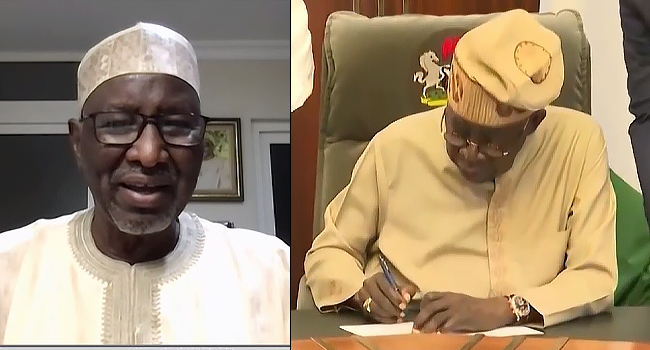
A former member of the House of Representatives, Usman Bugaje, has accused the All Progressives Congress government led by President Bola Tinubu of subverting the popular will of voters with the speedy assent to the amended electoral bill.

READ ALSO: National Assembly Highlights Key Reforms In Electoral Act 2026

He, however, said that there would be repercussions.

“The executive arm, including the President himself, from the speed with which he signed that law, they are all an accomplice in subverting the electoral process of this country. They are all an accomplice in designing an electoral law that will facilitate rigging,” Bugaje said on Channels Television’s Sunday Politics.

“They are all an accomplice in subverting the popular will of the people, and this thing that they have done is well noted, and there will be repercussions. I don’t know where it’s going come, but everywhere in the world where such things have happened, there have been very serious consequences, repercussions.

The former lawmaker, who is also the chairman of the Movement for Credible Elections, accused those against the will of voters of being “so obsessed with power” for the control of state treasury.

“These people cannot see the repercussions. They are so obsessed with power. They are so obsessed with the control that they now have for the state treasury and the way they dispense money the way they want.

“Nigerians are aware of who you are. This electoral law has shown who you are, and Nigerians are not going to take it lightly, and they are going to react,” he added.

Electoral Reforms

Bugaje said that members of the National Assembly insulted the intelligence of Nigerians by passing the amended electoral bill without including real-time electronic transmission of election results.

He advised them not to attempt to deceive Nigerians with “cosmetic” electoral reforms.

On the just-concluded elections in the Federal Capital Territory, the former NASS member said Nigerians had lost confidence in the Independent National Electoral Commission (INEC), as nothing in the conduct of the exercise showed that things would get better.

‘We Need To Avoid Interference’

Tinubu signed the Electoral Act, 2022 (Repeal and Re-Enactment) Bill 2026 into law last Wednesday, following the passage of the bill by the National Assembly the previous day, after months of deliberations.

[embedded content]

Tinubu signed the bill at the State House on Wednesday in the presence of top government officials, including the Senate President, Godswill Akpabio; the Speaker of the House of Representatives, Tajudeen Abbas; and the Chief of Staff to the President, Femi Gbajabiamila.

He said the essence of democracy is to have very solid discussions committed to national development and nation-building, essential for the stability of the nation.

“It’s not as important as the history aspects of this. What is crucial is the fact that you manage the process to the extent there will be no confusion, no disenfranchisement of Nigerians, and that we are all going to see democracy flourish.

“No matter how good the system is, it’s managed by the people, promoted by the people, and the result is finalised by the people,” The President said.