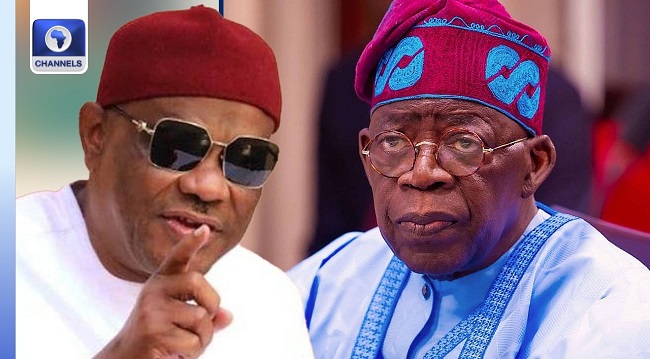
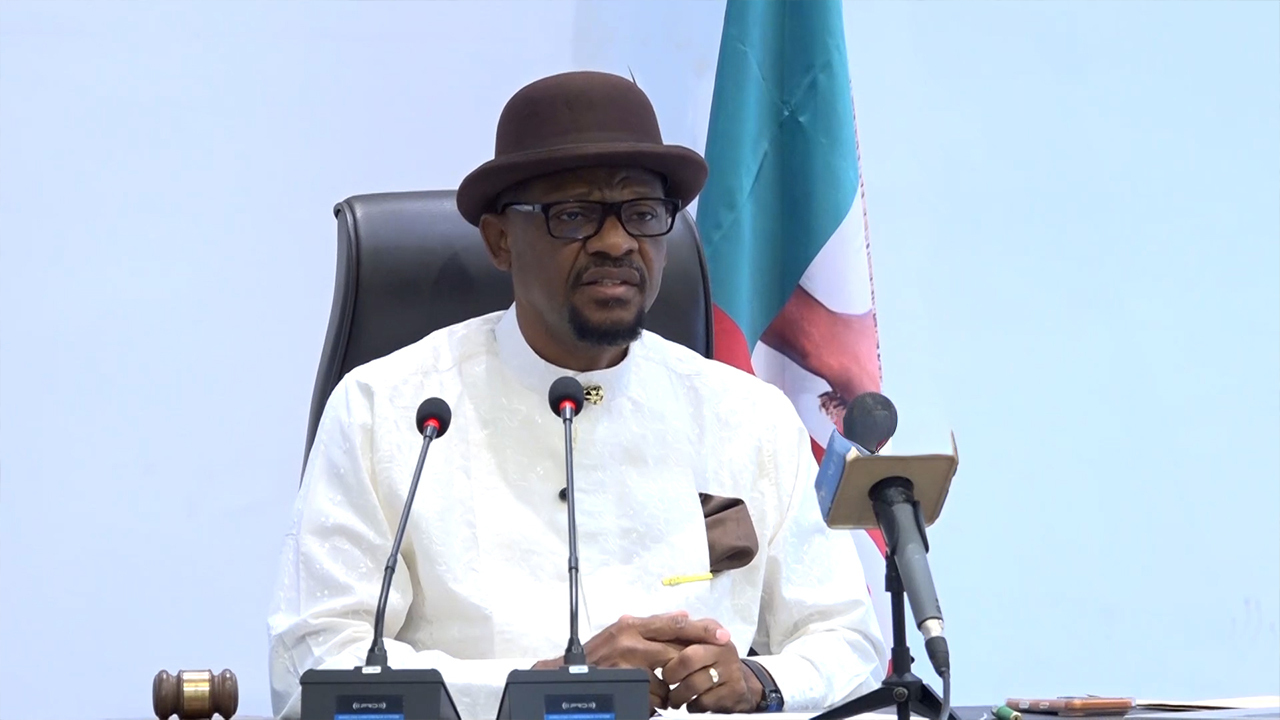
The Minister of the Federal Capital Territory (FCT), Nyesom Wike, has hailed President Bola Tinubu for promptly signing the Electoral Act Amendment Bill 2026 into law.
Wike in a statement on Wednesdat by his spokesman, Lere Olayinka, described the President’s action as another demonstration of his commitment to deepening the democratic process by making elections more credible.
He said the passage of the amended Electoral bill by the National Assembly, and the President giving assent to the bill immediately, has ended the unnecessary protest by those who were only preparing an excuse for their impending electoral loss.
“Democracy has always been a work-in-progress, as it has continuously evolved, adding that by always looking into the Electoral Act with a view to strengthening our democratic process, it is sure that we will keep getting better,” the statement read.
“I therefore congratulate Mr. President and the National Assembly members for playing their roles in this dispensation to make democracy stronger.
“Particularly, I commend the President for not keeping Nigerians waiting for more than 24 hours before signing the Electoral Act Amendment Bill 2026 into law.”
READ ALSO: Tinubu Signs Electoral Act 2026 Into Law, Says ‘We Need To Avoid Glitches, Unnecessary Hacking’
Earlier on Wednesday, President Bola Tinubu has signed the Electoral Act, 2022 (Repeal and Re-Enactment) Bill 2026 into law, following the passage of the bill by the National Assembly on Tuesday after months of deliberations.
Tinubu signed the bill at the State House in the presence of top government officials, including the Senate President, Godswill Akpabio; the Speaker of the House of Representatives, Tajudeen Abbas; and the Chief of Staff to the President, Femi Gbajabiamila.
He said the essence of democracy is to have very solid discussions committed to national development and nation-building, essential for the stability of the nation.
According to him, it is high time Nigerians had confidence in their system.
“It’s not as important as the history aspects of this. What is crucial is the fact that you manage the process to the extent there will be no confusion, no disenfranchisement of Nigerians, and that we are all going to see democracy flourish.
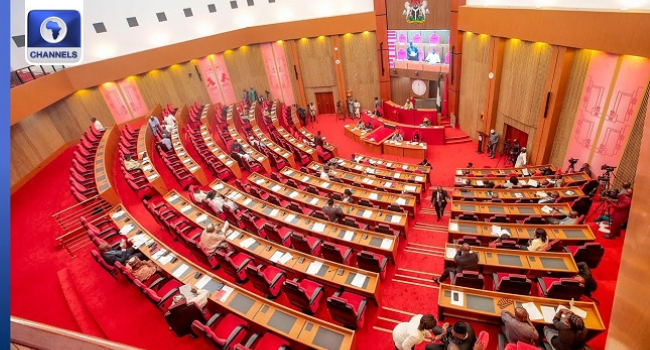
The Senate on Tuesday confronted the President’s economic team over the poor implementation of the 2025 budget and what it described as unrealistic assumptions underpinning the proposed ₦58.7 trillion 2026 budget, raising the possibility of reducing the proposal.
During a tense budget defence session before the Senate Committee on Appropriations, several lawmakers expressed concern over widespread complaints of non-funding of the 2025 budget by Ministries, Departments and Agencies (MDAs).
Some senators described the exercise as one of the worst budget defence sessions in recent times, citing unpaid contractors, a controversial centralised payment system, inadequate capital releases, and a rising debt profile as major areas of concern.
READ ALSO: [Killings] Senate Directs Strengthening Of Joint Security Operation In Niger, Kwara
Dissatisfied with the explanations provided by the Minister of Finance and Coordinating Minister of the Economy, Wale Edun, the committee turned to the Chairman of the National Revenue Service, Zacch Adedeji, for further clarification.
He stated that previous budgets were often built on faulty assumptions, noting that unrealistic projections had consistently created implementation challenges.
“When assumptions are not real, there will be a problem. That is what we intend to correct this year. It must be based on realistic budgeting. Efficiency lies in what you can actually execute,” he said, urging lawmakers to adopt a new approach anchored on credible revenue projections.
However, the Chairman of the Committee, Senator Adeola Olamilekan, questioned the economic team’s confidence in delivering the proposed budget.
“The indication is that you do not have full confidence in the ₦58.7 trillion budget. Do we reduce this budget or leave it as it is? If it is faulty and we are not reducing it, then you are saying you will meet it?” he asked.
Responding to further inquiries on the performance of the 2025 budget, the Minister of State for Finance disclosed that the Federal Government was prepared to begin settling outstanding payments.
She revealed that MDAs had been directed, effective immediately, to upload their cash plans for all pending obligations, assuring the committee that payments for 2025 would commence immediately or, at the latest, by Monday.
Dozens are feared dead after suspected Lakurawa terrorists carried out attacks on several rural communities in the Arewa Local Government Area on Wednesday.
According to local and security sources, the gunmen stormed villages in the remote border district, opening fire on residents in what survivors described as highly organised and indiscriminate assaults.
Breakdowns from security sources indicate that 16 people were killed in Mamunu, five in Awashaka, three in Masama, while two people each lost their lives in five other affected villages.
READ ALSO: Two Killed, Three Injured During Ondo APC Ward Congress — Police
The attacks triggered panic, forcing many residents to flee their homes as the assailants stormed homes and shot at civilians.
Security operatives have since been deployed to the area to secure the communities, assist survivors, and block possible escape routes for the attackers. Tracking operations are also ongoing.
The senator representing Anambra Central, Victor Umeh, has described President Bola Tinubu’s decision to sign the Electoral Act (Amendment) Bill 2026 into law as expected, saying the legislative process clearly pointed to that outcome.
Umeh, who spoke on Channels Television’s Sunrise Daily programme on Thursday, said the political and legislative dynamics surrounding the bill made the President’s assent inevitable.
“There is no surprise that it will be so. Anybody who was expecting the president not to assent to the bill is perhaps not honest to himself or herself. The whole process was predicted to end this way, and that’s what we have seen.
“Seeing what played out in both chambers of the National Assembly, one will be expecting that at the end, the president will veto the National Assembly or say that he doesn’t want to assent to the bill…because everything was tailored to meet a certain end,” he said.
Umeh traced the controversy to the debate over electronic transmission of election results, particularly the provision now captured in Section 63 of the amended law.
READ ALSO: Tinubu Signs Electoral Act 2026 Into Law, Says ‘We Need To Avoid Glitches, Unnecessary Hacking’
He explained that the repealed Electoral Act 2022, then Section 65, only provided for the transfer of results in a manner prescribed by the electoral commission, without expressly mandating electronic transmission.
According to him, the commission’s guidelines for the 2023 general election required electronic transmission, but the law itself did not explicitly state it.
He said disputes arising from the 2023 process, especially claims of glitches affecting the presidential poll, triggered litigation that eventually reached the Supreme Court of Nigeria.
Umeh noted that the court held that electronic transmission “was not expressly recognised by the Act,” even though the Independent National Electoral Commission had the power to prescribe the mode of result transfer.
He said the amendment was therefore aimed at giving clear statutory backing to electronic transmission to avoid similar disputes.
Inside NASS Deliberations
Reflecting on the legislative process within the National Assembly of Nigeria, Umeh said the Senate initially passed a version similar to the 2022 provision, while the House of Representatives adopted mandatory electronic transmission based on recommendations from joint committees.
He disclosed that disagreements emerged within the Senate when the mandatory transmission clause was removed and replaced with a broader “transfer of results” wording, prompting protests from some lawmakers.
“When that mandatory transmission was expunged and returned to ‘transfer’ as contained in Section 65 of the Act, we made noise. We went public. We said that wasn’t what we agreed to in the Senate executive session,” he said.
READ ALSO: Electoral Act: We’ve Met Aspiration Of Nigerians, Not Few People Who Make Noise — Akpabio
Senator Godswill Akpabio.
Following public backlash, he said the Senate revisited the clause and reinstated electronic transmission but inserted a proviso allowing exceptions in cases of communication failure, a move that triggered fresh controversy.
Umeh argued the proviso could weaken the intent of the reform.
“If you make a law and say, ‘provided that there will be no communication failure,’ you’re already proposing that there will be a communication failure.
“Once you say if this happens, you can jettison electronic transmission, you have opened the door back to anybody who will claim that there was no internet or communication availability,” he said.
Passage, Presidential Assent
Tinubu (centre) urged Nigerians have confidence in their system.
The Electoral Act generated public debate. Key proposals in the amendment included electronic transmission of results, digital voter identification using QR codes, compulsory National Identification Number linkage for voter registration, and voting rights for inmates.
Civil society groups under the “Occupy NASS” campaign demanded real-time transmission to curb manipulation, while opposition figures such as Peter Obi and Rotimi Amaechi pushed for the same cause.
Lawmakers were divided over whether electronic transmission should be compulsory or conditional, with some arguing that Nigeria’s infrastructure gaps necessitated retaining manual collation as a backup.
The bill was passed on Tuesday, February 17, after a tense session marked by disagreements across party lines, with the Senate adopting a conditional approach that allows manual collation where technological failures occur.
President Tinubu signed the legislation into law on Wednesday, February 18, citing concerns about broadband limitations, potential technical glitches and cybersecurity risks.
He maintained that election outcomes are ultimately determined by human officials, not technology alone.
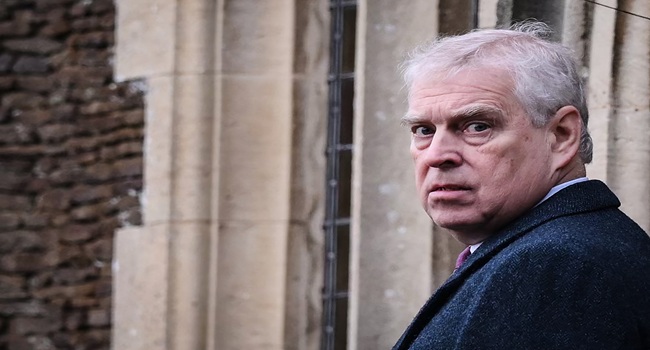
Britain’s former prince Andrew was Thursday arrested on suspicion of misconduct during his time as a trade envoy, as UK police investigations into allegations emerging from the Jeffrey Epstein files gathered pace.
Unprecedented in Britain’s modern era, the arrest was a new blow for the ousted royal, who was marking his 66th birthday on Thursday.
Andrew was stripped of all his titles last year, having been forced out of his former home by his brother King Charles III.
READ ALSO: Democratic Lawmakers Accuse US Attorney General Of Epstein File ‘Cover-Up’
As part of the investigation into Andrew, “we have today (19/2) arrested a man in his sixties from Norfolk on suspicion of misconduct in public office,” Thames Valley police said in a statement, without naming the suspect, as is common practice in the UK.
Several UK media reported a fleet of unmarked cars, believed to be police vehicles, were seen arriving early Thursday at the Sandringham estate in eastern England where Andrew now resides.
New revelations last week appeared to show Andrew sent convicted US sex offender Epstein potentially confidential documents during his time as a UK trade envoy.
In a November 2010 email seen by AFP, Andrew appeared to share with Epstein reports on Vietnam, Hong Kong, Shenzhen and Singapore following an official visit to Asia.
The ex-royal, now known as Andrew Mountbatten-Windsor, also reportedly sent the American financier details of the trip — on which he was accompanied by Epstein’s business associates — along with investment opportunities months later.
Britain’s Prince Andrew, Duke of York attends a Requiem Mass, a Catholic funeral service, for the late Katharine, Duchess of Kent, at Westminster Cathedral in London on September 16, 2025. Photo by AARON CHOWN / POOL / AFP
The former prince was eventually stripped of his titles after one of Epstein’s victims alleged she had been trafficked to have sex with him.
He has previously denied any wrongdoing in his associations with Epstein.
Charles has voiced “concern” over his brother’s actions and last week issued an unprecedented statement noting Buckingham Palace was “ready to support” the police in their inquiries.
Official guidance stipulates trade envoys have a duty of confidentiality over sensitive, commercial or political information related to their official visits, the BBC has said.
Andrew, whose ties to Epstein have caused a spectacular years-long fall from grace, served as a British trade envoy for a decade from 2001.
‘Aware’
Wealthy US financier Jeffrey Epstein and photo illustration taken in Washington, DC, on December 19, 2025 shows photographs, including of former US president Bill Clinton, Rolling Stones singer Mick Jagger, Virgin Group chairman Richard Branson and Ghislaine Maxwell, after the US Justice Department began releasing the long-awaited records from the investigation into the politically explosive case of convicted sex offender Jeffrey Epstein. (Photo by Mandel NGAN / AFP)
At least nine separate UK police forces have confirmed they are assessing reports which appear to link the former prince to Epstein.
Police in Surrey, southeastern England, said Wednesday they had become “aware” of a redacted report alleging “human trafficking and sexual assaults on a minor” between 1994 and 1996 in the village of Virginia Water.
The report emerged in the latest tranche of millions of files released by the US justice department from the investigation into Epstein, who died in prison in 2019.
“After reviewing our systems using the limited information available to us, we found no evidence of these allegations being reported to Surrey Police,” its statement read.
“We therefore encourage anyone with information in relation to these allegations to report this to us.”
A person takes a photo as a message calling on President Donald Trump to release all files related to Jeffrey Epstein is projected onto the US Chamber of Commerce building across from the White House in Washington, DC, on July 18, 2025. (Photo by Alex WROBLEWSKI / AFP)
The statement did not name any individuals involved.
But it comes as high-profile figures, including former UK prime minister Gordon Brown, have urged police to probe dozens of flights dating back decades arriving at UK airports and tied to Epstein.
Writing in the New Statesman magazine last week, Brown said he had been “told privately that the investigations related to the former Prince Andrew did not properly check vital evidence of flights”.
“I have asked the police to look at this as part of the new inquiry,” he stated, adding it appeared “the authorities never knew what was happening”.
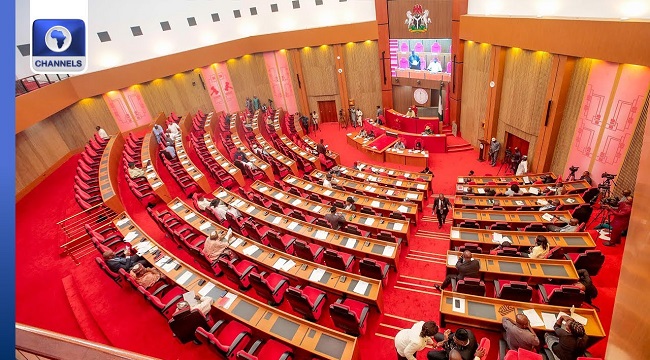
The Rivers State House of Assembly has halted impeachment proceedings against Governor Siminalayi Fubara and his deputy, Ngozi Odu.
The decision was made during Thursday’s sitting, shortly after the House concluded a Committee of the Whole.
The impeachment process had been delayed due to legal and political challenges, and further action was put on hold pending the outcome of ongoing court cases and consultations.
Speaker of the Assembly, Martin Amaewhule, told lawmakers at the plenary that the decision followed a high-level meeting at the Presidential Villa.
The meeting involved him, Governor Fubara, the Minister of the Federal Capital Territory, Nyesom Wike, and President Bola Tinubu.
“In furtherance of the outcome of the meeting we held with Mr President and other parties. That the governor and the deputy governor have gone ahead to withdraw the case they filed at the Rivers State High Court,” the speaker said.
READ ALSO: Rivers Assembly Begins Impeachment Proceedings Against Fubara
According to the Speaker, part of the resolution reached at the meeting was that the governor would withdraw all court cases filed against the Assembly, while the lawmakers, in turn, would halt the impeachment process as a mark of respect for the President’s intervention.
He further disclosed that all lawsuits involving the governor, his deputy, and the Assembly had now been withdrawn.
“In response to their actions, yesterday we instructed our lawyers to also withdraw the matter we filed at the Court of Appeal, setting the way for the state to move forward. Having reported all of these, members agreed to halt the impeachment process against the governor and deputy governor,” Amaewhule said.
During plenary, the Deputy Speaker, Dumle Maol, urged members to honour the President’s efforts by formally rescinding both the impeachment notice and pending legal actions.
“It is my position that we should respect the office of the President and halt the impeachment proceedings against the governor and deputy governor,” the deputy speaker said.
The Speaker subsequently put the matter to a vote, and the House unanimously resolved to withdraw the impeachment proceedings.
Lawmakers expressed the expectation that the governor and his deputy would henceforth conduct their affairs strictly in line with constitutional provisions and avoid actions that could trigger further political conflict.
This marks the third time the Rivers Assembly has stepped back from impeachment proceedings against Governor Fubara, raising fresh hopes that the latest development could signal a lasting political truce between the executive and legislative arms of government in the state.
Impeachment Proceedings
The state assembly members, in January, initiated impeachment proceedings against the governor and his deputy over allegations of gross misconduct.
During the plenary presided over by Speaker Martins Amaewhule, Majority Leader Major Jack presented a notice citing seven allegations against Fubara under Section 188 of the Nigerian Constitution.The accusations included demolishing the Assembly complex, engaging in extra-budgetary spending, withholding funds meant for the Assembly Service Commission and disobeying a Supreme Court ruling on the legislature’s financial autonomy.
Twenty-six lawmakers signed the notice, which was to be forwarded to the governor. Deputy Leader Linda Stewart also submitted allegations against Odu, accusing her of unconstitutional expenditure, obstructing the Assembly’s work, approving budgets through unauthorised channels and withholding salaries and allowances.
The impeachment push, which began in early January 2026, soon encountered judicial obstacles.
Rivers State Chief Judge, Simeon Chibuzor-Amadi, declined the Assembly’s request to constitute the constitutionally required seven-member investigative panel, citing a subsisting interim injunction issued by the Rivers State High Court.
Rivers State Chief Judge, Simeon Amadi.
The restraining order, granted on January 16, 2026, by Justice Florence A. Fiberesima, barred the Chief Judge, the Speaker and the Clerk from taking further steps on the impeachment, following suits filed by the governor and his deputy challenging the legality of the process.
Meanwhile, Rivers State chapter of the All Progressives Congress (APC) also rejected the impeachment process, describing the move as “destabilising and unnecessary.” The move also drew reactions from several political quarters and Nigerians.
Brokered Peace
L-R: Combo photo of FCT Minister Nyesom Wike, President Bola Tinubu, and Gov Siminalayi Fubara
Last week, the President was reported to have engaged in a closed-door meeting at the Presidential Villa with Fubara and FCT Minister Nyesom Wike, the governor’s political godfather. Fubara was said to have also accompanied Wike to his residence in Guzape, Abuja.
Wike later confirmed the meeting with Fubara and disclosed that it was initiated by the President in a renewed effort to resolve the political crisis in Rivers State.
According to him, the meeting was held on February 9. Wike said the President stepped in to broker peace between the governor and the state lawmakers.
Expressing appreciation for Tinubu’s intervention, Wike voiced optimism that the move would bring lasting peace. He noted that it was the second time the President had intervened in the dispute and expressed “hope it would be the last.”
The talks came shortly after a third impeachment notice was issued against Fubara by lawmakers believed to be loyal to Wike.
Precedence
Politically, the crisis revived long-standing tensions in the state.
This marks the second impeachment attempt against Fubara and Odu, after a similar move in March 2025 triggered by the rift between the governor and his predecessor, Wike.
That earlier standoff escalated into a major political crisis that prompted President Tinubu to declare a state of emergency, suspend the governor, deputy governor and lawmakers for six months, and appoint Ibokette Ibas as sole administrator.
File photo: President Bola Tinubu, Siminalayi Fubara, Nyesom Wike, and some members of the Rivers Assembly.
Fubara eventually returned to office after a political reconciliation involving him, Wike and legislators.