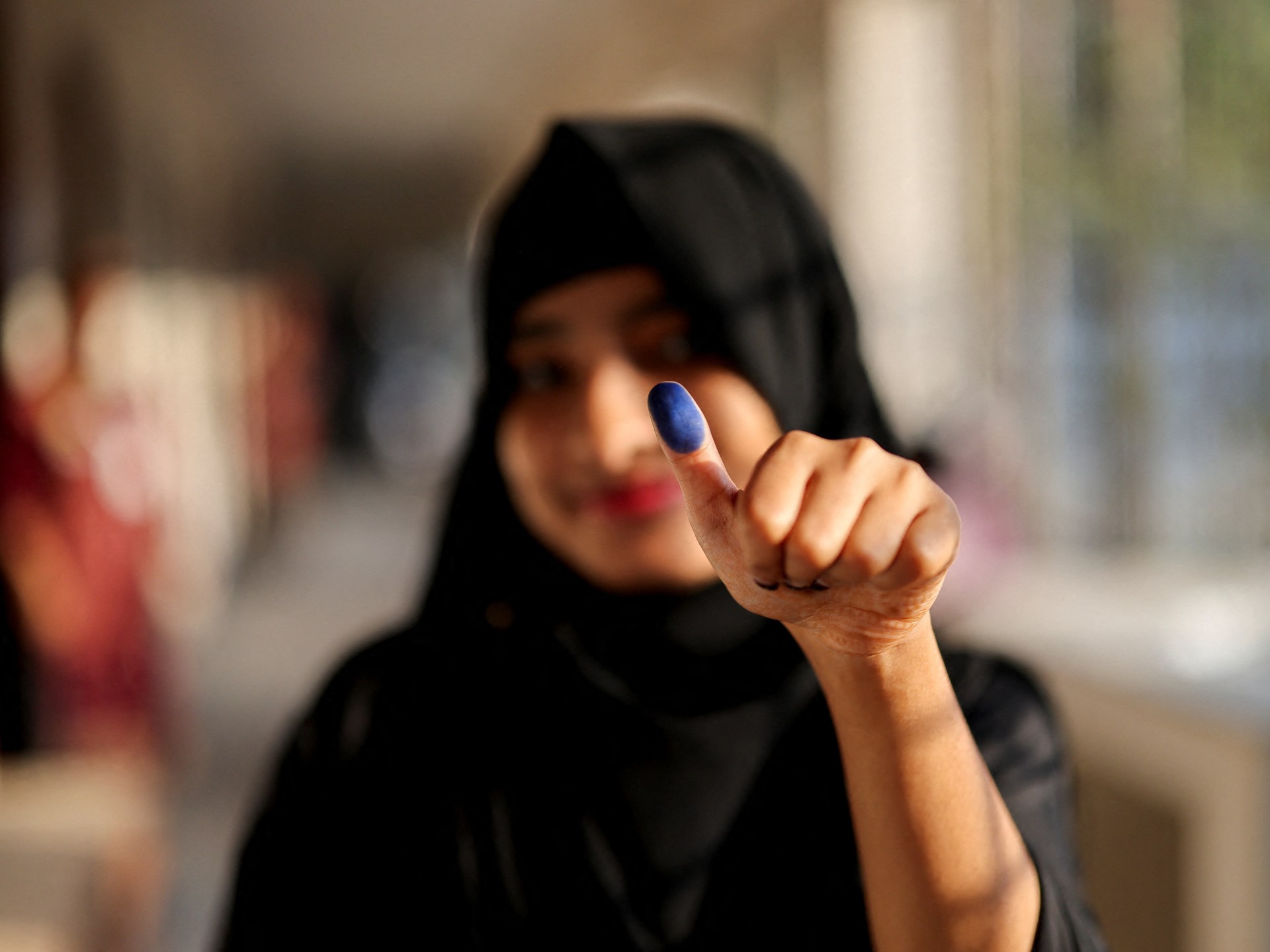
Bangladesh is voting in an election seen as pivotal for the nation’s future as it seeks to chart a democratic course in the wake of the 2024 ouster of longtime leader Sheikh Hasina in a student-led uprising that killed hundreds.
Voters headed to the polls on Thursday to cast their votes in a contest pitting the Bangladesh Nationalist Party (BNP) and a Jamaat-e-Islami-led coalition that includes the National Citizens Party, formed by youth activists instrumental in ousting Hasina. There are nearly 127 million registered voters in the South Asian country.
Recommended Stories
list of 3 itemsend of list
The two leading prime ministerial candidates are the BNP’s Tarique Rahman, a political scion who has edged ahead in polls with his anticorruption campaign, and Jamaat chief Shafiqur Rahman, who is aiming to present his long-excluded Islamist party as a credible and modern force for change.
Polls opened amid tight security, with hundreds of thousands of security personnel deployed on the streets, but voters cast their ballots in a mood of optimism in what is seen as the first free and fair election since 2008, when Hasina embarked on an oppressive 15-year stretch in power.
Jainab Lutfun Naher, a voter from the Gulshan area of Dhaka, told Al Jazeera that the experience was emotional and empowering. “I want this country to prosper,” she said. “I want it to be democratic, where everyone has rights and freedom.”
AMM Nasir Uddin, the chief election commissioner, said the poll would mark a break from the “arranged elections” of recent history. “We must forget the history of centre-grabbing and ballot box capture,” he said.
Uddin noted that voter turnout had been strong, saying Bangladesh had “boarded the train of democracy” and would soon “reach its destination”.
In parallel to the election, the country is also holding a referendum on constitutional reforms that the country’s caretaker government, led by Nobel laureate Muhammad Yunus, had put together after the student-led protests.
Reporting from Dhaka, Al Jazeera’s Jonah Hull said they included “institutional reforms, electoral, policing and constitutional reforms designed to ensure this country doesn’t again slide into autocracy”.
“I think this is really important as a sort of subtext to this election,” he said, predicting a “landslide ‘Yes’ vote”. “It is, perhaps, the truest legacy of that revolution 18 months ago, in which hundreds of students gave their lives.”
But the “bigger question”, he noted, is whether the election victor actually puts the reforms into practice.
‘Deep challenges’
Elections were held during Hasina’s tenure, but they were marred by opposition boycotts and intimidation, critics have said.
The 78-year-old former leader was sentenced to death in absentia for crimes against humanity for the bloody crackdown on protesters during her final months in power, and remains in hiding in India. Her Awami League party has been barred from the election.
Following the 2024 uprising, Yunus stepped in as interim leader with a mandate to restore a credible electoral process and build consensus around reforms, acting as democratic safeguards that would balance power among different state institutions.
“This election is not just another routine vote,” Yunus said this week. “It will determine the future direction of the country, the character of its democracy, its durability, and the fate of the next generation”.
Farhana Sultana, a professor of geography at Syracuse University, told Al Jazeera that if the election succeeded in restoring public trust, it would create a foundation for the country to tackle its “deep challenges”.
“Economic pressure, including youth unemployment and stagnating growth, is fuelling frustration among a new generation that demands real opportunity rather than symbolic change,” she said.
Climate, too, is an “ongoing existential issue for Bangladesh”, she said, adding that the new government would need to “integrate climate adaptation and water security into governance, economic planning and international cooperation”.

Leave a Reply