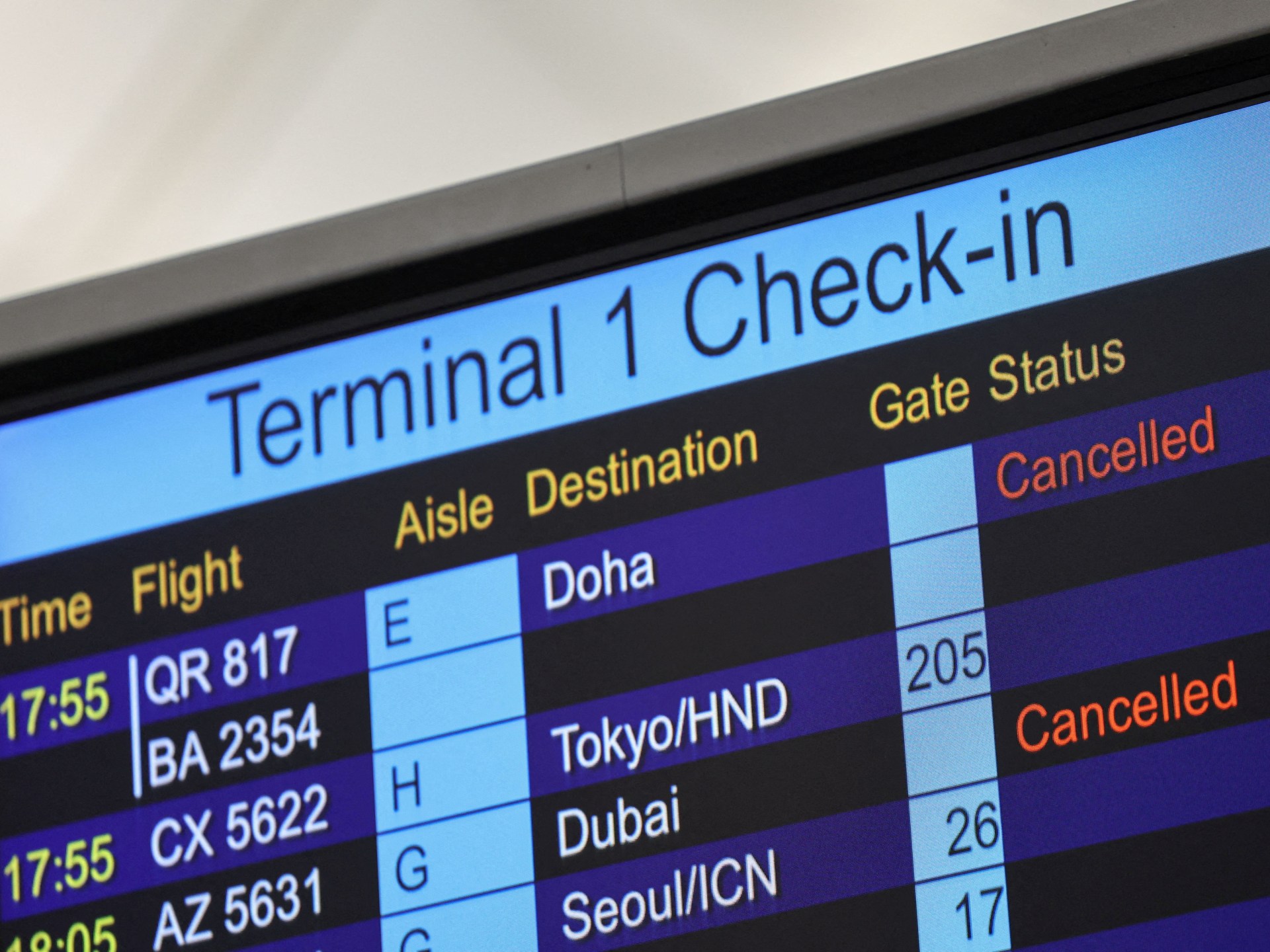
Travellers stranded, airlines under pressure as Iran war escalates

The airline and tourism industries are scrambling to deal with the fallout from the escalating US and Israeli air war against Iran, while governments have rushed to bring stranded travellers home from the Middle East following the cancellation of more than 20,000 flights over a handful of days.

Major Gulf hubs, including Dubai, the world’s busiest international airport, remained closed or severely restricted for a fourth day on Tuesday, leaving tens of thousands of passengers stranded. According to Flightradar24, some 21,300 flights have been cancelled at seven major airports, including Dubai, Doha and Abu Dhabi, since the strikes started.

Recommended Stories

list of 3 itemsend of list

The attacks have upended travel across a growing region that hosts several thriving business hubs and is trying to diversify away from oil-dominated economies. The turmoil also narrows an already slim flight corridor for long-haul flights between Europe and Asia, complicating operations for global air carriers.

Gulf airlines Emirates, flydubai and Etihad have been operating a limited number of flights since Monday, mostly to repatriate stranded passengers, who have rushed to secure seats.

“It’s pretty well the biggest shutdown we’ve seen certainly since the COVID pandemic,” said Paul Charles, CEO of luxury travel consultancy PC Agency, adding that beyond passenger disruption, the cargo impact would run to “billions of dollars”.

‘Depart now’

The United Arab Emirates said 60 flights had taken off, operating in dedicated emergency air corridors. The next phase will be operating more than 80 flights.

The US Department of State, meanwhile, has urged all Americans to leave more than a dozen countries in the region, while other nations have scrambled to arrange repatriation flights for their citizens even as explosions tore through Tehran and Beirut.

But with airspaces closed or restricted across the Gulf, many were not sure what to do.

“They say, ‘Get out’, but how do you expect us to get out when airspaces are closed?” said Odies Turner, a 32-year-old chef from Dallas stuck in Doha, Qatar. “They just have been cancelling every flight. I want to go home.”

US Assistant Secretary of State for Consular Affairs Mora Namdar posted on X on Monday that Americans in Iran and Israel – as well as Qatar, Bahrain, Egypt, Iraq, Jordan, Kuwait, Lebanon, Oman, the Palestinian territory, Saudi Arabia, Syria, the United Arab Emirates and Yemen – should “DEPART NOW”, using any available commercial transportation.

The US is securing military and charter flights to evacuate Americans from the Middle East, a State Department official said on X on Tuesday, adding that it was in contact with nearly 3,000 US citizens. The department was under fire from US lawmakers who said the Trump administration should have advised people to leave before the attacks started.

Demand for alternatives to Gulf airlines has surged, with bookings and ticket prices jumping on routes like Hong Kong-London, Reuters checks showed on Tuesday. Should the conflict linger, it could cost the Middle East billions in tourism dollars, analysts estimate.

“We can’t get home, we can’t go back to work, we can’t get the kids back to school,” said Tatiana Leclerc, a French tourist stuck in Thailand, whose flight had been set to go via the Middle East hubs that are a key link between Asia and Europe.

Anita Mendiratta, an international aviation and tourism consultant stuck in Bangkok, said the location of the war would inevitably upend travel and trade.

“Effectively, within the Middle East, an eight-hour flying distance covers two-thirds of the world population,” she said. “When that corridor is blocked, it forces aviation to either move far north, which is going into potentially other conflict airspace, such as Russia, such as Pakistan, or fly south. That puts huge pressure on the airlines.”

In an early sign of thaw, Virgin Atlantic said on Tuesday that it would resume services as scheduled between London’s Heathrow airport and Dubai or Riyadh.

Airline finances under pressure

Shares of air carriers worldwide fell on Tuesday, though US shares pared losses in afternoon trading. The operational and financial effect varies significantly among airlines, said Karen Li, JP Morgan’s head of Asia infrastructure, industrials and transport research.

“There are important differences across carriers, in terms of hedging strategy, air cargo exposure, and network rerouting capabilities, that will shape the actual impact from the Middle East situation,” Li said.

Oil prices have surged amid the widening conflict. Benchmark crude is up roughly 30 percent so far this year, threatening to lift jet fuel costs and squeeze airline profits, as most airlines long ago gave up on hedging their fuel purchase, their second‑largest operating cost behind labour.
‘Justice Must Not Be Selective,’ ADC Faults Handling Of Malami, El-Rufai Cases

The African Democratic Congress (ADC) has criticised what it described as selective enforcement of the law in the handling of legal cases involving two of its prominent members, insisting that justice must be applied evenly and without political bias.

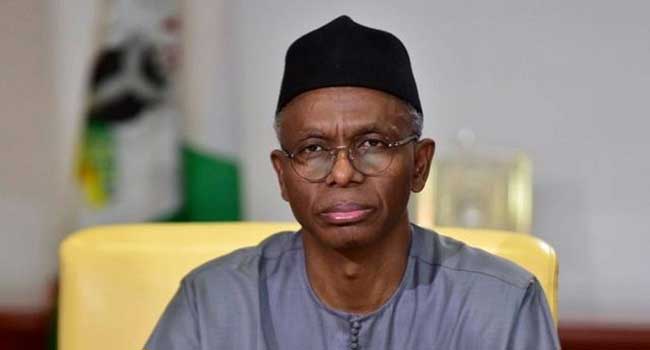
In a statement posted on X on Tuesday, the party’s National Publicity Secretary, Bolaji Abdullahi, said the ADC had been monitoring the ongoing cases involving former Attorney-General of the Federation, Abubakar Malami, and former Kaduna State Governor, Nasir El-Rufai.

“The African Democratic Congress, ADC, has been monitoring the ongoing legal cases involving two of our leaders, Mr Abubakar Malami… and Mallam Nasir El-Rufai,” the statement read.

The party stressed that no citizen is above the law but raised concerns about what it termed inconsistencies in the manner and speed of enforcement actions.

“As a law-abiding party, it is important to state for the record that the ADC believes no citizen, regardless of stature or past office, is above the law,” Abdullahi said.

“However, in a constitutional democracy where the law is seen to operate selectively, it becomes imperative to insist… that justice must be applied evenly, transparently, and without political calculation,” he added.

READ ALSO: [Alleged Phone-Tapping] El-Rufai’s Family Accuses ICPC Of Smear, Challenges Search Warrant

The ADC referenced what it described as a recent high-profile case involving allegations of passport forgery, international conspiracy and impersonation, noting that the accused persons in that matter were granted bail and are standing trial.

According to the party, it contrasted this with what it called “prolonged custodial movements, inter-agency transfers, and processes that appear to precede, rather than follow, fully crystallised prosecution” in the cases of Malami and El-Rufai.

The party added, “Abubakar Malami and Nasir El-Rufai are first citizens of Nigeria before they are opposition leaders… They are therefore presumed innocent under the Constitution until proven otherwise in a fair and competent court of law.”

“We will continue to stand by our members as they assert their legal rights. We will ensure that they are not isolated, intimidated, or denied the protections that every Nigerian citizen is entitled to under the law. We will never abandon our people in moments of trial.”

Malami (second from left) at the Federal High Court in Abuja on January 2, 2026.

Malami is currently in custody over allegations of money laundering and financial impropriety during his tenure.

On February 27, 2026, Justice Joyce Abdulmalik of the Federal High Court ordered that he and his son, Abdulaziz, be remanded in Kuje Correctional Centre, while his wife, Asabe, was remanded in Suleja Correctional Centre.

They pleaded not guilty to charges including the alleged improper use of approximately ₦800 billion in recovered funds.


The matter has been adjourned to March 6, 2026 for the hearing of their bail applications.

El-Rufai, on his part, is under investigation by the Economic and Financial Crimes Commission, the Independent Corrupt Practices and Other Related Offences Commission, and the Department of State Services.

A combo photo of the ICPC HQ and ex-Kaduna State governor, Nasir El-Rufai

His legal troubles escalated following a February interview in which he admitted to phone-tapping National Security Adviser Nuhu Ribadu.

The ICPC is also probing alleged financial improprieties during his time in office between 2015 and 2023.

The former governor has filed a ₦1 billion fundamental rights enforcement suit against the ICPC, challenging what he described as an unlawful invasion of his Abuja residence on February 19.

Khamenei To Be Buried In Holy City Of Mashhad − Iran Media

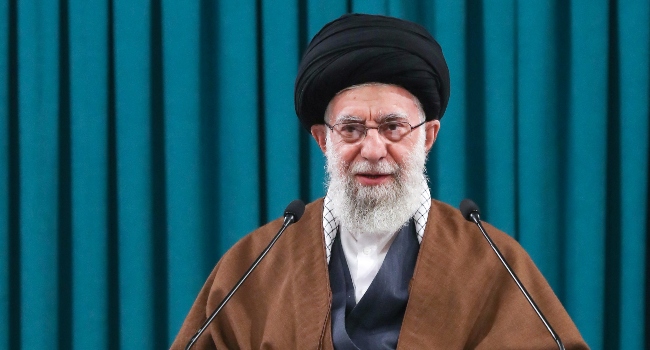
Iran’s slain supreme leader Ayatollah Ali Khamenei will be buried in the holy city of Mashhad, the Fars news agency said Tuesday.

Khamenei, who led the country for 36 years, was killed at 86 during a wave of US-Israeli attacks on Saturday.

He was originally from Mashhad, Iran’s second-largest city, where his father is buried at the Imam Reza shrine.

Before the burial, a “large farewell ceremony” will be held in Tehran, the Revolutionary Guards said on their Telegram account.

No date for the burial was disclosed.

READ ALSO: Iran Strikes Israel, US Bases After Khamenei’s Death

After Khamenei’s death, power was entrusted to a three-man interim council until the Assembly of Experts elects his successor.

It includes the president, the head of the judiciary and a jurist from the Guardian Council, the body that oversees legislation and vets electoral candidates.

Fars, citing an official familiar with the process, reported that “for security reasons”, the assembly’s final meeting could be postponed until after Khamenei’s burial.

Iranian media said the building housing the 88-member body in the holy city of Qom, south of Tehran, was hit Tuesday by US-Israeli strikes.

Its main headquarters in the Iranian capital was also struck the day before.

Hearing Of El-Rufai Rights Suit Against ICPC, Others Stalled

The hearing of a fundamental rights enforcement suit filed by Nasir El-Rufai against the Independent Corrupt Practices and Other Related Offences Commission (ICPC) and four other respondents was stalled on Tuesday due to the inability of the claimant’s counsel to serve the respondents with court processes.

El-Rufai is seeking ₦1 billion in damages from ICPC and the other defendants.

The additional respondents include the Magistrate’s Court of the Federal Capital Territory, the Nigeria Police Force, and the Federal Ministry of Justice (Attorney-General of the Federation), listed as the second to fourth respondents.

READ ALSO: El-Rufai Sues ICPC For ₦1bn Over Alleged Abuja Home Invasion

When the matter came up before Justice Joyce Abdulmalik of the Federal High Court of Nigeria, proceedings could not commence because none of the respondents were represented in court.

Counsel to the former governor, Ubong Akpan, informed the court that although the case was listed for mention, service of the court processes on the respondents had not been completed. He requested an adjournment to enable proper service.

Justice Abdulmalik granted the request and fixed March 11, 2026, for further mention.

Rubio says Iran was ‘playing’ US in negotiations

NewsFeed

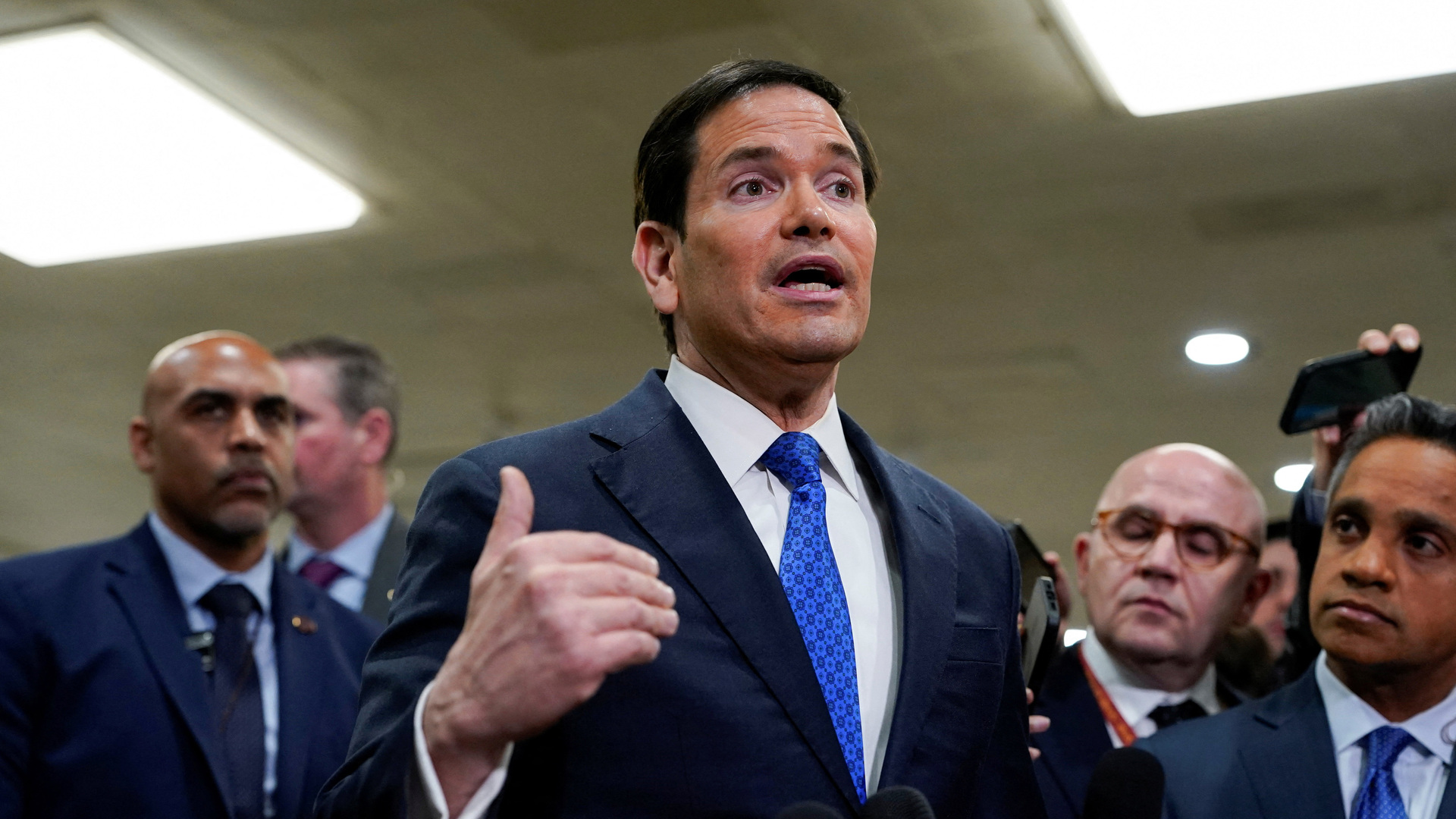
US Secretary of State Marco Rubio defended joint US-Israeli strikes on Iran, saying “the world will be safer” if Tehran doesn’t have access to nuclear weapons. He says President Trump made the decision to strike because Iran was ‘playing’ the US in negotiations.

Oman renews push for diplomacy, says ‘off-ramps available’ in Iran war

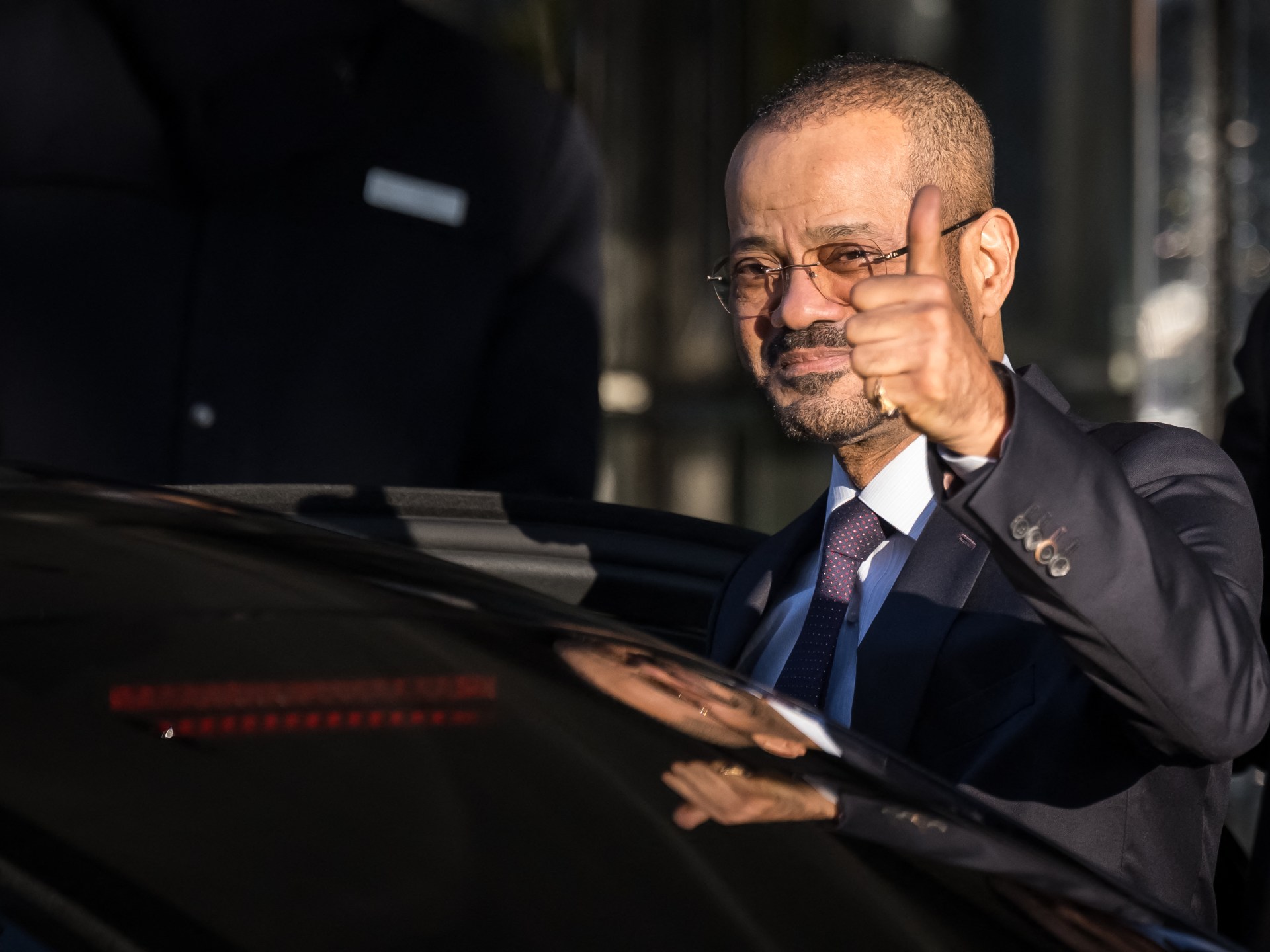
Omani Minister of Foreign Affairs Badr al-Busaidi, who mediated the US-Iran talks before the war, has said that diplomatic options are still “available” to de-escalate the situation in the Middle East.

“Oman reaffirms its call for an immediate ceasefire and a return to responsible regional diplomacy. There are off ramps available. Let’s use them,” he said on X on Tuesday.

Recommended Stories

list of 3 itemsend of list

Al-Busaidi did not provide details on what the options to end the ongoing conflict between Iran and joint Israeli and US forces could be.

Oman had been mediating talks between Iran and the US and said that peace was “within reach” hours before the US-Israeli air strikes began on Saturday, plunging the region into a crisis.

On Tuesday, US President Donald Trump told journalists in Washington, DC, that the US had attacked Iran because “he had a feeling” that Iran would strike first, as negotiations over its nuclear programme stalled.

However, US Secretary of State Marco Rubio had said on Monday that the US attacked Iran because it knew Israel was about to bomb the country, and because the Trump administration believed that Tehran would then strike US facilities in the region.

But Oman’s foreign minister pushed back on the Trump administration’s characterisation that Iran was an “imminent threat” to the US. He maintained that “significant progress” had been made in the nuclear talks before the US and Israel launched attacks on Iran.

In its retaliatory strikes, Iran has attacked Israel and US forces across the Gulf region. While Oman does not host any US forces, it has also been struck and dragged into the conflict.

The Oman News Agency reported on Sunday that the Duqm commercial port, located in Al Wusta Governorate in central Oman, was struck by two drones. It said that an expatriate worker was injured in the attack.

A fuel tank at Duqm Port was also hit in a drone attack on Tuesday, but there were no casualties.

Majed al-Ansari, a spokesperson for Qatar’s Ministry of Foreign Affairs, said the strike on Oman was “an attack on the very principle of mediation”.