Who are the council members temporarily in charge of Iran?

Iranian authorities have announced a three-member interim leadership council to run the government after the killing of Supreme Leader Ali Khamenei in Israeli-United States strikes.

Iran’s government pledged to avenge the killing on Saturday of Khamenei, who had been in power for nearly four decades. Tehran has since targeted Israeli and US assets located across Gulf countries in retaliatory strikes.

Recommended Stories

list of 4 itemsend of list

While US President Donald Trump has said he wants a change in Iran’s government, the religious leaders of Iran moved on Sunday to start the process of choosing Khamenei’s successor.

Iran
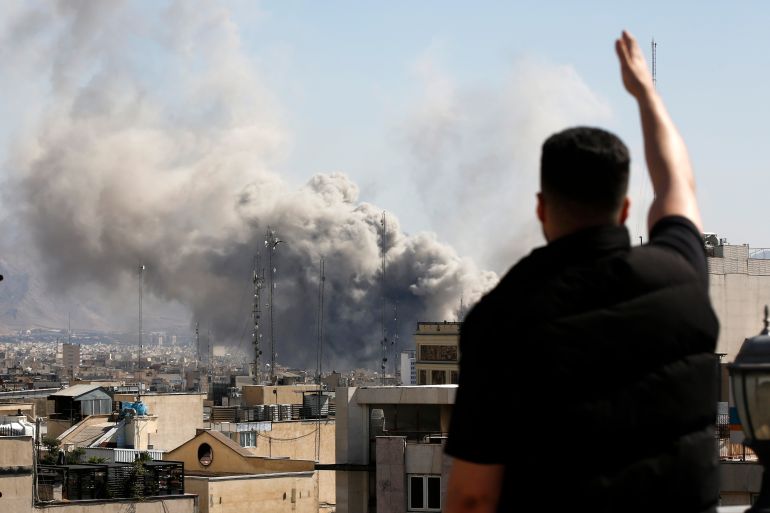
Plumes of smoke rise over residential areas of Tehran from US-Israeli air strikes on March 1, 2026 [Fatemeh Bahrami/Anadolu]

What is the interim leadership council?

Article 111 of Iran’s Constitution authorises a temporary leadership council to assume the supreme leader’s duties until a successor is elected.

That council will consist of President Masoud Pezeshkian; the chief justice of the Supreme Court, Gholam-Hossein Mohseni-Ejei; and a member of the Guardian Council, Ayatollah Alireza Arafi.

So who are these three figures who will temporarily run Iran as it reels from war?

arafi
Pope Francis greets Ayatollah Alireza Arafi, president of the Islamic Seminaries of Iran, during a private audience at the Vatican on May 30, 2022 [Handout/Vatican Media via Reuters]

Ayatollah Alireza Arafi

Arafi has been a member of the Guardian Council since 2019. Its members are appointed by the supreme leader. It is an Islamic legal authority that vets Iran’s laws and policies to make sure they conform to Islamic principles. It approves election candidates, has veto power over legislation passed by parliament and supervises elections.

Arafi also serves as the deputy chairman of the Assembly of Experts, the body responsible for overseeing the selection of the supreme leader. He leads Friday prayers in Qom, Iran’s most important religious centre, and heads the seminary system, overseeing education for religious leaders nationwide.

FILE - Masoud Pezeshkian, the President of Iran, attends the United Nations General Assembly at United Nations headquarters, on Sept. 25, 2025. (AP Photo/Angelina Katsanis, File)
Masoud Pezeshkian, the president of Iran, attends the United Nations General Assembly in New York [File:Angelina Katsanis/AP]

Masoud Pezeshkian

Pezeshkian, 71, is a reformist politician and heart surgeon who served in the army during the Iran-Iraq War. He was elected president in the 2024 elections.

He previously served as health minister under President Mohammad Khatami and, after 2005, as a member of parliament representing the northwestern city of Tabriz.

Pezeshkian ran unsuccessfully for president earlier but in 2024 won on a reform-oriented platform and has since navigated economic pressures and regional tensions.

He earlier campaigned on economic stabilisation, easing social restrictions and pursuing constructive engagement abroad while affirming loyalty to the Islamic Republic’s constitutional framework.

Reacting to Khamenei’s assassination, Pezeshkian said in a statement that Iran now considers “it its legitimate duty and right to avenge the perpetrators and masterminds of this historic crime”.

Gholamhossein Mohseni Ejei was put on US and EU sanctions blacklists 10 years ago for his role in a crackdown on a popular uprising [File: AFP]
Gholam-Hossein Mohseni-Ejei [File: AFP]

Gholam-Hossein Mohseni-Ejei

Mohseni-Ejei is a senior religious leader and has headed the judiciary since Khamenei appointed him to the post in July 2021.

He previously served as intelligence minister from 2005 to 2009 and later as prosecutor-general and first deputy chief justice. He is regarded as a hardline figure aligned with the conservative wing of the government.

In January, when the collapsing rial triggered protests across Iran, Mohseni-Ejei promised “no leniency” towards what he called “rioters”.

Mohseni-Ejei said the US and Israel “openly and explicitly supported the unrest” in the country after Trump called on Iranians to take to the streets.
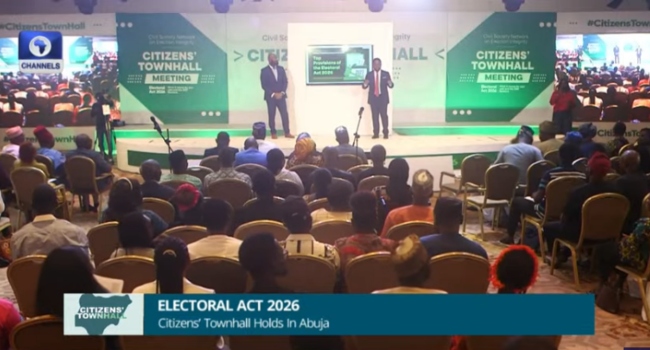
LIVE: Citizens’ Townhall On Electoral Act 2026

The Electoral Act 2026 has been signed by President Bola Tinubu just about one year ahead of the 2027 general elections. 

But what are the implications for voters and next year’s election? The Citizens’ Townhall on the Electoral Act will explore these and many other burning issues concerning the law.

Politicians, civil society organisations, and several others are live on the show to deal with these questions.

Guests at the event include INEC Chairman Joash Amputan; Oby Ezekwesili; Sen. Ireti Kingibe; APC chairman, Nentawe Yilwatda; Nenadi Usman of the LP, among others.

Watch the event live: 

At least three US service members killed during Iran operation: CENTCOM

The United States military has announced that at least three service members have been killed in its operation against Iran.

US Central Command (CENTCOM) said in a statement that five others have been “seriously wounded” in the operation.

“Several others sustained minor shrapnel injuries and concussions — and are in the process of being returned to duty. Major combat operations continue and our response effort is ongoing,” it added.

“The situation is fluid, so out of respect for the families, we will withhold additional information, including the identities of our fallen warriors, until 24 hours after next of kin have been notified,” it added.

CENTCOM also announced that US forces had struck an Iranian warship in the Gulf of Oman.

The Jamaran-class corvette “is currently sinking to the bottom of the Gulf of Oman at a Chah Bahar pier,” CENTCOM said, referring to a location in southern Iran.

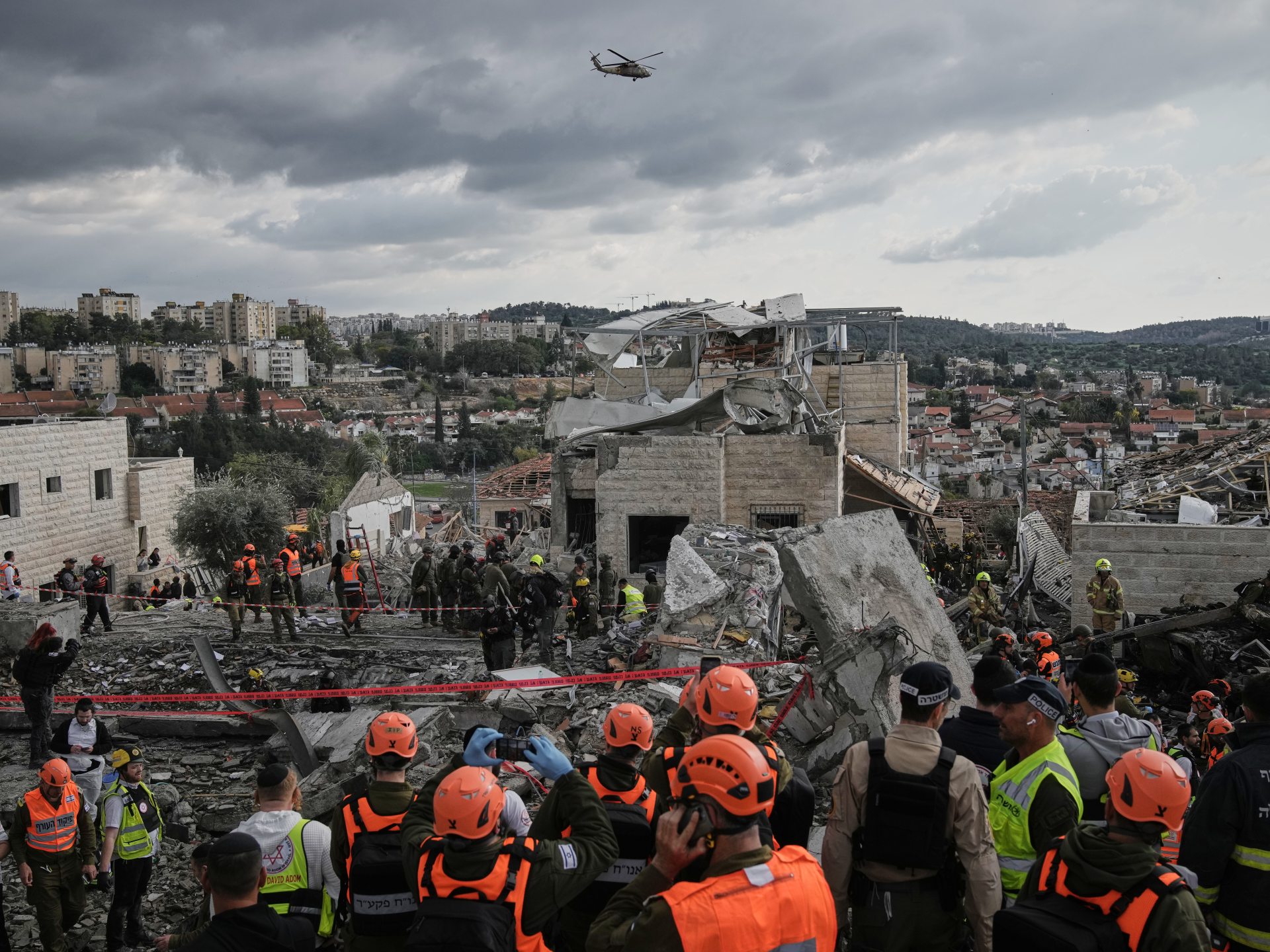
Iranian missile strike on Israel’s Beit Shemesh kills nine people

At least nine people have died in Iran’s missile strike on the Israeli town of Beit Shemesh, as Iran continued retaliatory attacks against Israel and United States military assets across several Middle Eastern countries after Supreme Leader Ayatollah Ali Khamenei was killed in an Israel-US strike.

Residents of Tel Aviv reported hearing loud explosions, which were either from missile strikes or defence system interceptions. Israeli rescue services confirmed nine fatalities and 28 injuries in Beit Shemesh, raising Israel’s total casualty count to 10 since the conflict erupted.

“You have crossed our red line and must pay the price,” said Iran’s parliamentary speaker, Mohammad Bagher Ghalibaf, in a televised address on Sunday.

The US military reported no US casualties and minimal infrastructure damage, despite what it described as “hundreds of Iranian missile and drone attacks”.

Who are Iran’s senior figures killed in US-Israeli attacks?

Ayatollah Ali Khamenei, Iran’s supreme leader, has been killed along with senior figures in the country’s leadership in strikes on Saturday carried out by the US and Israel.

Early on Sunday, the Iranian state-run news agency IRNA confirmed 86-year-old Khamenei’s death. The supreme leader’s daughter, son-in-law, and grandson were also killed in the US and Israel’s coordinated attack on Iran.

Recommended Stories

list of 3 itemsend of list

Iran’s President Masoud Pezeshkian said Khamenei’s killing is an “open declaration of war against Muslims”, particularly Shia practitioners.

“This tragic event is the greatest trial facing the Islamic world today,” Pezeshkian said in a written message offering condolences over the killing of the supreme leader, who has ruled Iran for over three decades.

The Islamic Republic News Agency (IRNA) also confirmed the killing of several other senior figures.

Here are some of them:

Ali Shamkhani

Shamkhani was the secretary of Iran’s Defence Council and a close adviser to Supreme Leader Khamenei.

The 70-year-old also oversaw the negotiations between the United States and Iran over the Iranian nuclear programme, the latest round of which concluded on Friday.

“If the main issue of the negotiations is not making nuclear weapons by Iran, this is in compliance with a religious decree issued by Iran’s leader and the country’s defence doctrine, and an immediate agreement is within reach,” Shamkhani had said on Thursday.

Shamkhani had also been targeted in an Israeli strike in June 2025, during the 12-day war between Iran and Israel. There were reports that he had been killed in the attack, but he was later confirmed to have survived. He was pulled from the rubble of his home, and had sustained severe injuries back then.

He had recently been appointed the secretary of Iran’s Defence Council, which was created after the war and coordinated Iran’s defence and national security policies, while mobilising resources to address threats.

He had also led Iran’s Supreme National Security Council (SNSC) for a decade until 2023, making him the second-longest-serving security chief since 1979 after former President Hassan Rouhani, who was SNSC secretary for nearly 16 years.

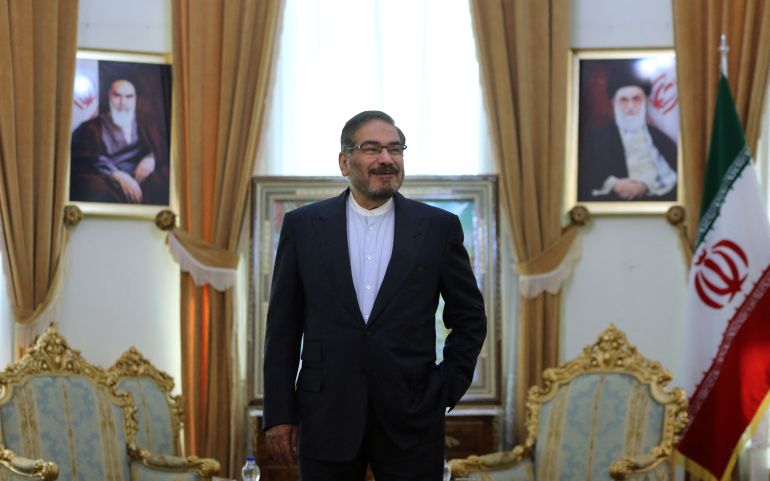
Ali Shamkhani,
Ali Shamkhani, the former secretary of the Supreme National Security Council of Iran, attends a meeting in Tehran [File: Atta Kenare/AFP]

Abdolrahim Mousavi

Mousavi served as the chief of staff of Iran’s armed forces. He had been appointed to this post by Khamenei just days after Israel’s strikes on Iran in June last year.

He previously served as the commander-in-chief of the Iranian army from 2017 to 2025.

Mousavi is believed to have been a prominent figure working to develop Iran’s ballistic missiles, drone systems and Western-criticised space launches.

In March 2023, the US, together with the European Union, United Kingdom, and Australia, sanctioned Mousavi for committing serious human rights abuses in Iran.

“Iranian army personnel under Mousavi’s command reportedly fired machine guns at protesters in November 2019,” a report by the US Department of State said. In November 2019, protests had erupted across Iran after an abrupt decision by authorities to hike petrol prices as part of efforts to blunt the effects of crippling US sanctions on the country’s economy.

TEHRAN, IRAN - ARCHIVE: A file photo dated November 11, 2019 shows Iran’s Armed Forces Chief of Staff Major General Abdolrahim Mousavi addressing the crowd during a protest against United States, Israel, and Saudi Arabia in Tehran, Iran. ( Fatemeh Bahrami - Anadolu Agency )
Major General Abdolrahim Mousavi addresses a crowd during a protest against the United States, Israel, and Saudi Arabia in Tehran, Iran [File: Fatemeh Bahrami/Anadolu Agency]

Aziz Nasirzadeh

Nasirzadeh served as Iran’s minister of defence in Pezeshkian’s government, which came to power after the 2024 elections.

He was previously the deputy chief of staff of the Iranian armed forces and also served as the commander in the Iranian air force from 2018 to 2021.

Amid US and Israeli strikes, Nasirzadeh played a key role in ensuring Iranian military and nuclear infrastructure was safeguarded.

In June 2025, when the US and Israel had threatened to strike Iran, Nasirzadeh warned that Iran would target US military bases in the region if the US attacked it first.

“If a conflict is imposed on us … all US bases are within our reach, and we will boldly target them in host countries,” Nasirzadeh had told reporters at the time.

After the June 2025 attacks, there were also reports that he had been killed, but local journalists later confirmed that he was alive and in good health.

Nasirzadeh was also critical of Israel’s actions in Gaza and the occupied West Bank. According to Iranian media, in October 2024, during Israel’s genocidal war on Gaza and attacks across Southern Lebanon, he warned: “Resistance will defeat Israel as it did in 2006.” He was referring to Israel’s 34-day armed conflict with Lebanon’s Hezbollah in 2006, when Israel could not completely dismantle Hezbollah’s influence in the region.

Iran's Defence Minister Aziz Nasirzadeh during a meeting
Iran’s Defence Minister, Brigadier General Aziz Nasirzadeh, looks on during a meeting with Venezuelan President Nicolas Maduro at the Miraflores Palace in Caracas, Venezuela [File: Marcelo Garcia/Venezuelan Presidency/Handout via AFP]

Mohammad Pakpour

Pakpour served as the commander-in-chief of Iran’s Islamic Revolutionary Guard Corps (IRGC) from June 2025 until his death.

Khamenei appointed Pakpour, a veteran commander who started and made his career within the elite force, to the post last year. He had previously led the IRGC’s armoured units and then a combat division during the war with Iraq in the 1980s.

Pakpour led the IRGC ground forces for 16 years before he was appointed commander-in-chief. He was also a deputy for operations at the IRGC and used to lead two major headquarters of the force.

(FILES) Commander of the ground forces of Iran's Islamic Revolutionary Guard Corps, Brigadier General Mohammad Pakpour, attends a military parade in Tehran, on April 17, 2024.
Brigadier General Mohammad Pakpour attends a military parade in Tehran [File: AFP]

Who will replace these Iranian officials?

A three-person council – consisting of Iran’s President Pezeshkian, Supreme Court Chief Justice Gholam-Hossein Mohseni-Ejei and one of the jurists of the Guardian Council – will temporarily assume all leadership duties in the country, Iran’s state TV reported.

⁠Alireza ⁠Arafi, a religious leader on the Guardian Council, has been appointed to ⁠Iran’s leadership council, the body tasked with fulfilling the ‌supreme leader’s role until the Assembly of Experts elects a new leader.

Reporting from Tehran, Al Jazeera’s Maziar Motamedi said the IRGC and security chief Ali Larijani are also expected to play pivotal roles.

OPEC+ Hikes Oil Production Amid US-Isreal Strikes On Iran

Key members of the OPEC+ oil cartel announced a greater-than-expected increase to production quotas on Sunday following US and Israeli strikes on Iran that triggered retaliation by Tehran across the Middle East.

READ ALSO: [UPDATED] Trump, Netanyahu Claim Iran’s Supreme Leader Khamenei Killed After Israel-US Attack In Tehran

The eight-strong V8 (Voluntary Eight) group in the alliance, which includes top oil producers Saudi Arabia and Russia — as well as several Gulf states bearing the brunt of Tehran’s missile strikes — said they had agreed a “production adjustment” of 206,000 barrels per day (bpd).

“This adjustment will be implemented in April,” they said in a statement.

The text did not mention the outbreak of the Iran conflict, instead citing “a steady global economic outlook and current healthy market fundamentals” as their reasons for the increase.

Before the weekend’s meeting, experts had forecast a more modest increase of 137,000 bpd.

However, Jorge Leon, an analyst at Rystad Energy, warned that the agreed-upon increase might not be large enough to prevent the Iran conflict from causing a spike in oil prices when trading opens on Monday.

Leon pointed to the possibility that Iran could target the Strait of Hormuz, a key waterway for nearly a quarter of the world’s seaborne oil supplies, in retaliation.

Iran’s Revolutionary Guards have contacted ships to announce that the Strait was closed.

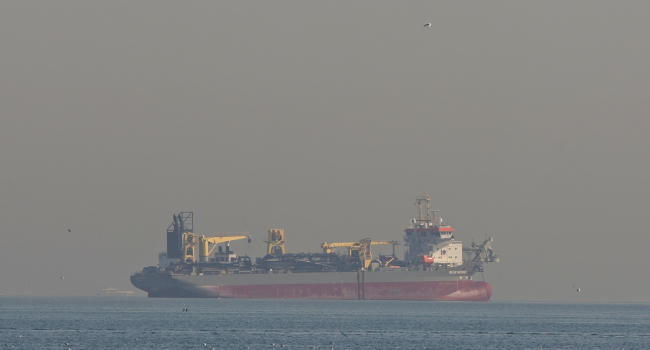
On Sunday, Iranian state TV said an oil tanker in the strait was struck while attempting to “illegally” pass through and was sinking, showing footage of a burning tanker at sea.

“If oil cannot move through Hormuz, an extra 206,000 barrels per day does very little to ease the market,” Leon said, arguing that “logistics and transit risk matter more than production targets right now”.

The OPEC+ move “is unlikely to calm markets”, he said.

“Prices will respond to developments in the Gulf and the status of shipping flows, not to a relatively small increase in output,” Leon added.

‘Nightmare Scenario’

Besides Russia and Saudi Arabia, the V8 group within OPEC+ includes Kuwait, Oman, Iraq, and the United Arab Emirates, all of which were targeted by Iranian attacks for a second day on Sunday.

Algeria and Kazakhstan are also part of the group.

Another analyst, Stephen Innes, managing partner at SPI Asset Management, said that, with the fear of incoming missiles in the Strait of Hormuz, insurers cancelling contracts for vessels wanting to go through there, and jammed electronic signalling in the Gulf region, commercial shippers were scared.

They are “starting to act as if the route is compromised,” he said.

“A full closure for more than a few days is the nightmare scenario,” he said.

A blockage of the strait could mean oil prices leaping from around $72 before the war to $120 to $150 a barrel when trading starts on Monday, he said, based on industry estimates.

He and other analysts pointed to land pipelines Saudi Arabia and the UAE could use to get around shipping through the strait, but noted that would still leave a shortfall of some eight million to 10 million bpd on the market.

“Those are meaningful pressure valves, but they are not a replacement for the full seaborne flow,” Innes said.

While higher prices might seem a boon for OPEC+ countries, it in fact carries the risk of increasing competition from producers outside the cartel, such as the United States, Canada, and Brazil.

Kpler analyst Homayoun Falakshahi told AFP that the cartel might “prefer prices of $80 to 90, but around $70 per barrel is the ideal price level” to cut the incentive for more investment by those rival producers.

He added that Russian production has been on a downward trend since November, leaving analysts to think that it was at its maximum output.

Leon, of Rystad Energy, said the only OPEC+ members “who can really boost their production are Saudi Arabia, the United Arab Emirates, and, to a lesser degree, Kuwait and Iraq”.