Who was Iran’s supreme leader, Ayatollah Ali Khamenei?

NewsFeed

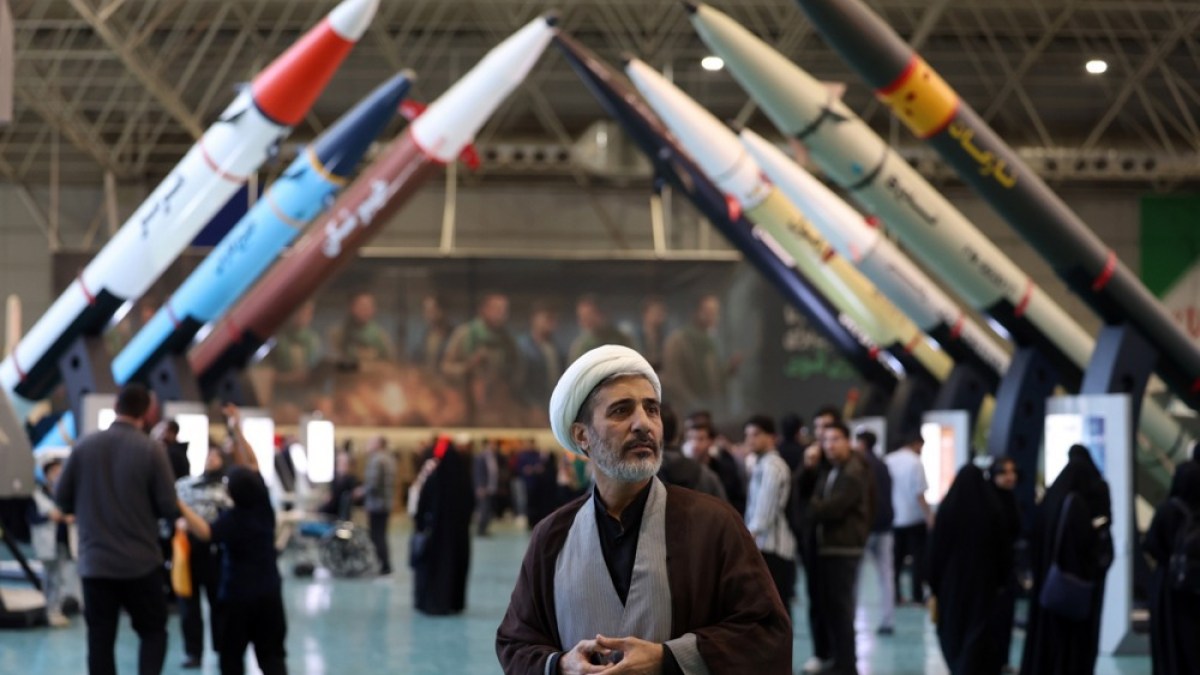
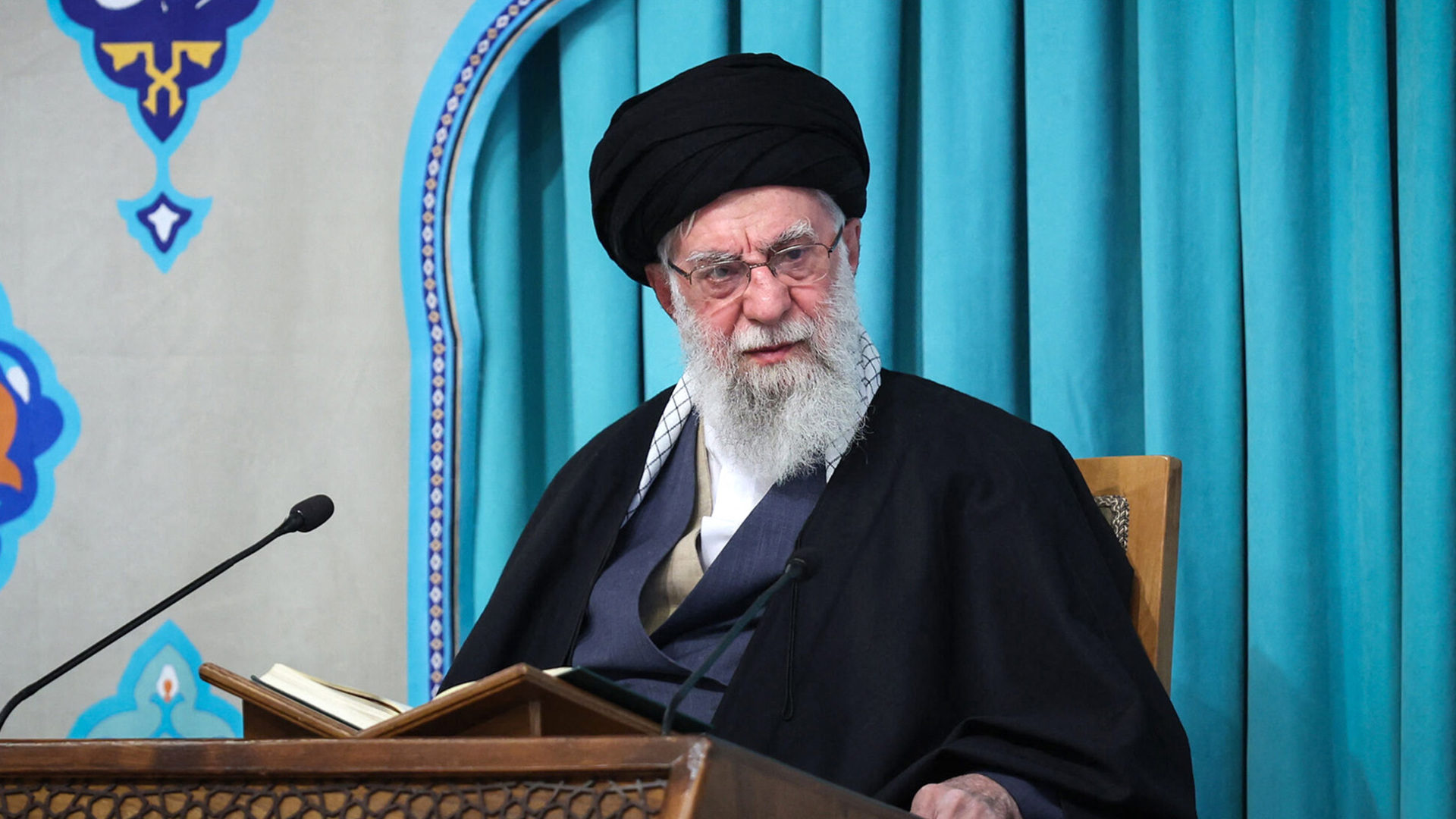
Iranian state media confirmed that Ayatollah Ali Khamenei, Iran’s supreme leader since 1989, was killed in a joint US-Israeli air strike. Here’s what we know about him and the key moments that defined his rule.

At least nine killed after Iranian strike on Israel’s Beit Shemesh

BREAKING,

At least nine people have been killed after an Iranian missile strike on the central Israeli city of Beit Shemesh, as Tehran continued to launch retaliatory attacks a day after Supreme Leader Ayatollah Ali Khamenei was killed in US-Israeli strikes.

The Magen David Adom (MDA) emergency service said on Sunday that nine people were killed and 20 other people were injured by the impact, including two in serious condition.

The Israeli military said in a statement that search and rescue teams, and a helicopter to evacuate those injured are currently operating in Beit Shemesh, with the army’s spokesperson adding that the circumstances of the impact from the Iranian ballistic missile are under review.

Has Trump misunderstood Iran’s IRGC and the Basij forces?

On Saturday, as the United States and Israel attacked Iran, US President Donald Trump sent a message to the Islamic Revolutionary Guard Corps (IRGC) conscripts, demanding they surrender or die.

“To the members of the Islamic Revolutionary Guard, the armed forces and all of the police, I say tonight that you must lay down your weapons and have complete immunity,” Trump said. “Or in the alternative, face certain death. So, lay down your arms. You will be treated fairly with total immunity, or you will face certain death.”

Instead, they retaliated with drone and missile attacks on Israel and multiple Arab states that host US assets in the region. Early on Sunday morning, Iranian state television announced that one of the strikes on Tehran killed its longtime supreme leader, Ayatollah Ali Khamenei.

If Trump’s appeal to the IRGC was aimed at inspiring defections or abdications, it does not seem to have had the intended effect. So why did Trump’s call for the IRGC to lay down their arms fall on deaf ears?

Here’s everything you need to know:

What is the IRGC

It is an elite armed force and a constitutionally recognised component of the Iranian military, established in 1979 after the Islamic revolution. It operates alongside the country’s regular army but answers directly to the supreme leader.

In fact, its doctrine is built on velayat-e faqih, or guardianship of the Islamic jurist, essentially the protection of the Islamic revolution and its fealty to the supreme religious leader, initially Ayatollah Ruhollah Khomeini, who died in 1989 and was succeeded by Khamenei.

It is composed of ground, naval and air forces troops and includes an internal security paramilitary militia known as Basij. It also has an external operations force called the Quds Force, which is focused on special operations outside Iranian territory.

What does the IRGC do?

It plays a key role in Iran’s defence, foreign operations and regional influence with its 190,000 or so active personnel and a total of 600,000 if reserves are included. The IRGC manages Iran’s ballistic missile programme, is responsible for security for the country’s nuclear programme and coordinates with its regional allies in what is described as the “axis of resistance”.

The IRGC has been heavily sanctioned by various states. The US designated it an FTO (foreign terrorist organisation) in 2019. The European Union did the same in February 2026, prompting Tehran to respond by naming all EU member states, naval and air forces, as terrorist organisations the same month.

The IRGC, however, is also deeply entrenched in Iran’s political and economic structures. Its economic role expanded during the 1980-88 Iran-Iraq war, as it handled engineering and logistics to sustain Iran’s war effort. Firms affiliated with the IRGC reportedly have contracts in key sectors such as Iran’s natural resources, transport, infrastructure, telecommunications, and mining. Iranian officials call this the “resistance economy” and say this is part of how the country has circumvented sanctions.

What is the Basij?

Also founded by Khomeini in 1979, the Basij is a volunteer paramilitary force that falls under the IRGC and enlists civilians motivated by their devotion to the country, though some analysts say young men also sign up for privileges and economic betterment.

The group is considered to be deeply ideological, often made up of young, working-class men. There are an estimated 450,000 personnel in the group, according to the Institute for the Study of War, though that also includes members who manage the group’s communications and sociocultural programmes.

Basij personnel are often deployed on the front lines of protests and have played a large role in countering uprisings against the government in recent years, including the 2009 Green Revolution and the 2022-23 Woman, Life, Freedom protests.

During the Iran-Iraq war, Basij members volunteered and were deployed to the front lines. They were encouraged to undertake “martyrdom missions”, wherein they would clear minefields in “human waves” to clear the battlefield for more experienced soldiers to advance.

Will they listen to Trump?

In short, it seems the answer is no.

Michael Mulroy, former deputy assistant secretary of defence (DASD) for the Middle East, told Al Jazeera: “In Iran, you have the supreme leader, of course, but there are multiple different power centres in the clerical, in the military, in the IRGC, in the intelligence service. They are unlikely to comply with what President Trump has done, and Israel.”

“Everything that they are saying right now, including recent statements from [Ali] Larijani, is that they intend to escalate this and essentially turn the region into an all-out war, causing as much pain not only to the United States but also against the Gulf countries in the region,” Mulroy said, referring to the secretary of the Supreme National Security Council of Iran.

Ideology and loyalty to the Islamic revolution and the supreme leader are key ideological tenets of the IRGC. But even beyond that, the economic and social power that many members receive makes it unlikely that a mass abdication will occur.

In fact, some analysts believe the latest attacks on Iran and the assassination of Khamenei might even expand the IRGC’s control over the Iranian state.

Director of the Atlantic Council’s Scowcroft Middle East Security Initiative, Jonathan Panikoff, said an end of the current regime in Iran is less likely to lead to a democracy than a “military-controlled state that might offer a new supreme leader as a symbolic token to millions of conservative Iranians, but with power firmly vested in the hands” of the IRGC.

Will Trump’s promise have any impact after Khamenei’s death?

That seems unlikely.

The IRGC is still very likely in control, despite a turbulent year for Iran.

After Israel’s war on Iran in 2025, the government grappled with relaxing social freedoms and appointing advisers to reach the country’s youth in an effort to improve national morale and ease public discontent.

Still, in January, Iran erupted in antigovernment protests, with analysts saying economic hardships from years of sanctions and government mismanagement were a key cause.

T20 World Cup: South Africa beat Zimbabwe, set up New Zealand semifinal

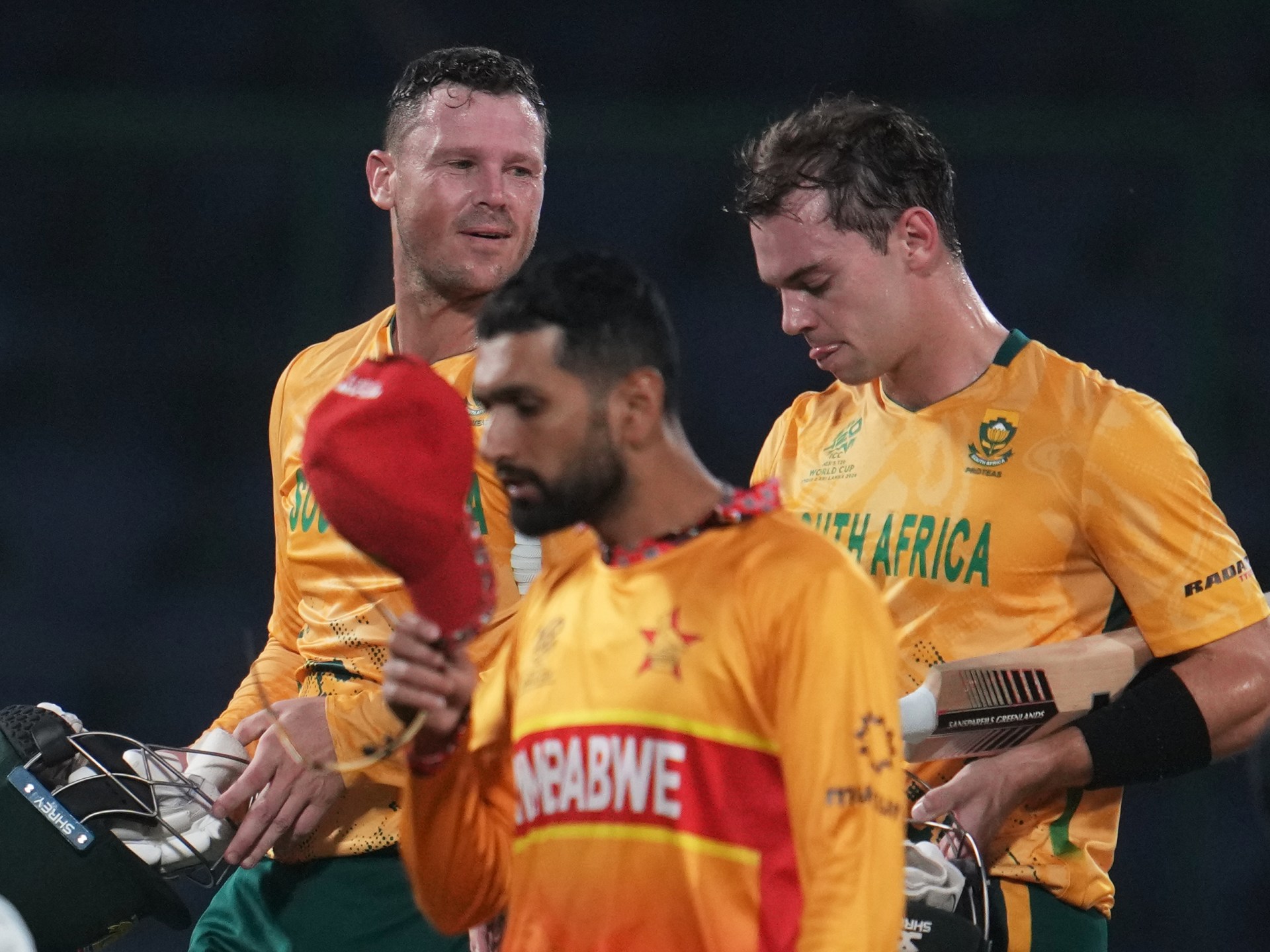
South Africa survived a brilliant all-round show by Zimbabwe captain Sikandar Raza to record a five-wicket win over their neighbours and set up a T20 World Cup semifinal against New Zealand.

South Africa survived an early wobble to overcome the spirited Zimbabwe, who scored 153-7, in their last Super Eight match in New Delhi, India on Sunday.

Recommended Stories

list of 3 itemsend of list

Dewald Brevis hit 42 off 18 balls as the 2024 runners-up reached 154-5 in 17.5 overs to remain the only unbeaten side in the cricket tournament.

Raza earlier hit 73 and then took 3-29 with his off-spin for Zimbabwe, who had stunned Australia and co-hosts Sri Lanka in the group stage to reach the Super Eight.

Raza struck on the third ball of the South African chase to send back Quinton de Kock caught behind for a duck and then bowled skipper Aiden Markram for four in the next over.

Ryan Rickelton was hit on the helmet by a bouncer from Brad Evans and took five minutes to recover. He then lifted Evans for two straight sixes in the next over before the bowler had him caught for 31.

Brevis and David Miller, who hit 22, put on 50 before two more quick strikes from Zimbabwe.

Blessing Muzarabani dismissed Miller, and Raza removed Brevis.

Tristan Stubbs (21) and George Linde (30) then put on an unbeaten 53 to steer their side to the target.

After choosing to bat, Zimbabwe lost the in-form opener Brian Bennett, who hit an unbeaten 97 in the defeat by India, for 15.

Raza reached his fifty off 29 balls before falling to left-armer Kwena Maphaka, caught by Miller off a leading edge. Clive Madande boosted the total with 26 not out off 20 balls at the end.

Maphaka took 2-21 from his four overs, and Corbin Bosch, 2-40.

Kerr scores first international goal in 28 months in Australia win

Paul Battison

BBC Sport Journalist

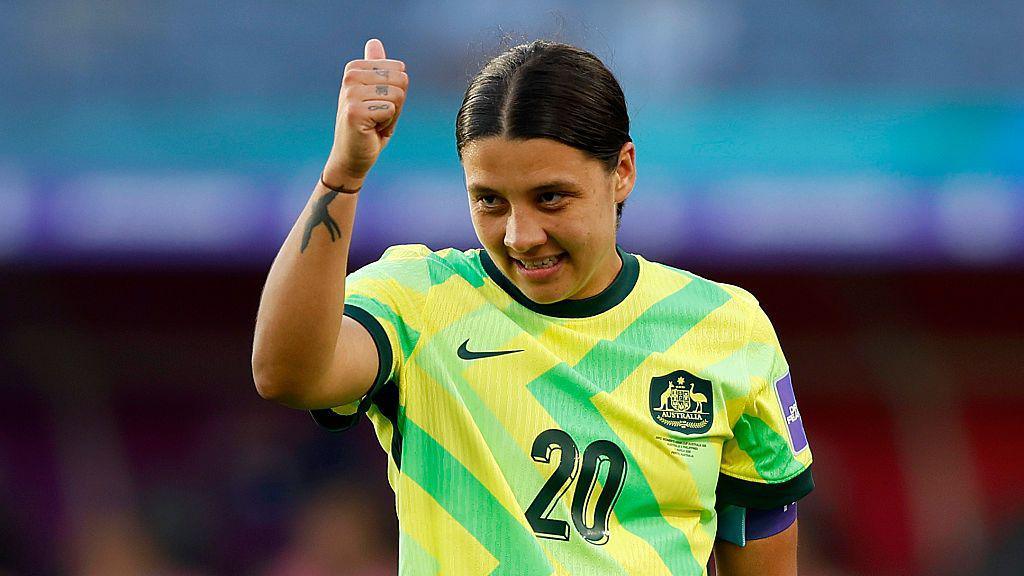
Sam Kerr scored her first international goal in 28 months as Australia opened their Asian Cup campaign with a 1-0 win over the Philippines in Perth.

The Chelsea striker, who returned to action in September after nearly two years on the sidelines following an anterior cruciate ligament injury, scored the winner in the 14th minute as she nodded in from close range.

Kerr’s goal – her 70th for her country – proved to be the sole highlight of the match at the Perth Stadium, with Australia wasting a number of chances.

“I think I’m just finding my confidence again,” said 32-year-old Kerr.

“I feel like I’m still my normal self, I’ve just got to get more touches in and around the box.

“Today was a good start and there’s a lot of belief in the team but as you see today, there’s a lot of quality teams in the Asian Cup so you have to take it one day at a time.”

Australia’s next game is against Iran at the Gold Coast Stadium on Thursday, with Iran opening their campaign against South Korea on Monday.

The games are set to go ahead, although the Asian Football Confederation has postponed a number of domestic matches on the continent following the conflict in the Middle East.

On Saturday, the United States and Israel launched attacks on Iran, which has responded with retaliatory strikes across the Middle East.

“In light of the developing situation in the Middle East, matches in the West Region, originally scheduled for 2-3 March 2026, will now be rescheduled,” the AFC said in a statement.

“The AFC will continue to closely monitor this rapidly evolving situation and remains resolute in ensuring the safety and security of all players, teams, officials, and fans.

Ellen White, Jen Beattie and Ben Haines

Related topics

  • Football
  • Women’s Football

More on this story

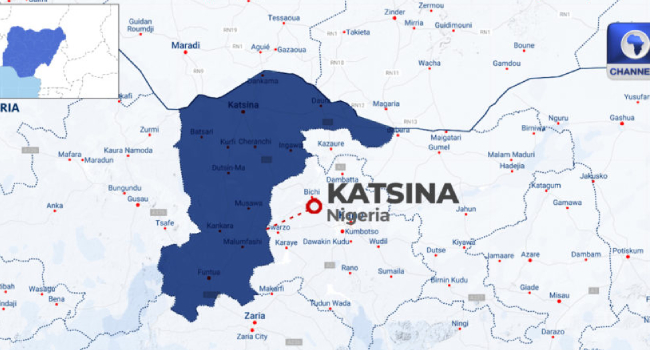
Four Dead, Several Injured In Katsina

At least four persons reportedly died, and several others were injured during the distribution of annual Ramadan Alms, otherwise called (Zakkat), at a residence in Katsina metropolis.

The Katsina State Police Command confirmed this to Channels Television in a statement on Sunday.

According to the Command’s spokesman, Abubakar Sadiq, the incident happened on Thursday.

During the incident, several people sustained varying degrees of injuries and were rushed to the General Hospital, Katsina, for treatment.

The deceased persons have been identified as Bilkisu Mamman, 40, of Kerau Quarters; Ihsan Musbahu, 40, of Abattoir Quarters; Aisha Sani, 16, of Kofar Sauri Quarters; and Salamatu Kabir, 45, of Sabuwar Unguwa Quarters.

READ ALSO: Four Suspects Arrested As NSCDC Busts Illegal Arms Fabricating Factory In Katsina

Another victim, 15-year-old Hafsat Zubairu of Masanawa Quarters, was, however, referred to the Federal Teaching Hospital, Katsina, for advanced medical attention.

The Command’s spokesman said a distress call was received at the Central Police Station in Katsina on the 26th February, 2026, at about 9:00 pm, about a large crowd gathered at the residence of one Alhaji Dahiru Usman Sarki, a philanthropist, situated at Kofar Guga Quarters, Katsina, resulting in a stampede incident.

“Upon receipt of the report, promptly, a team of policemen responded to the scene. The rescuers rushed the victims to the nearest hospital for medical attention. Unfortunately, 4 of the injured later succumbed to their injuries”, he said.

On his part, the State Commissioner of Police, Bello Shehu, commiserated with the families of the dead victims.

He also wished a speedy recovery to the injured victims, directing further investigation and necessary measures to prevent future occurrences.

The Command called on individuals who wish to distribute alms to members of the public to notify the command for adequate security coverage so as to ensure the safety of lives and property and orderliness during such events to prevent similar incidents in the future.

“Further development will be communicated in due course as the investigation proceeds”, the statement noted.

Eyewitness had earlier said the crowd stormed the residence of one Alhaji Dahiru Usman Sarki, located at the Kofar Guga Quarters, to receive Ramadan alms.