Who could succeed Ayatollah Ali Khamenei to lead Iran?

The killing of Ayatollah Ali Khamenei in US-Israeli air attacks has thrust Tehran to a pivotal crossroads as the ruling establishment looks to pick the late supreme leader’s successor.

Several senior leaders close to Khamenei were also killed in the attack, including his top security adviser Ali Shamkhani and Islamic Revolutionary Guard Corps (IRGC) commander-in-chief Mohammad Pakpour.

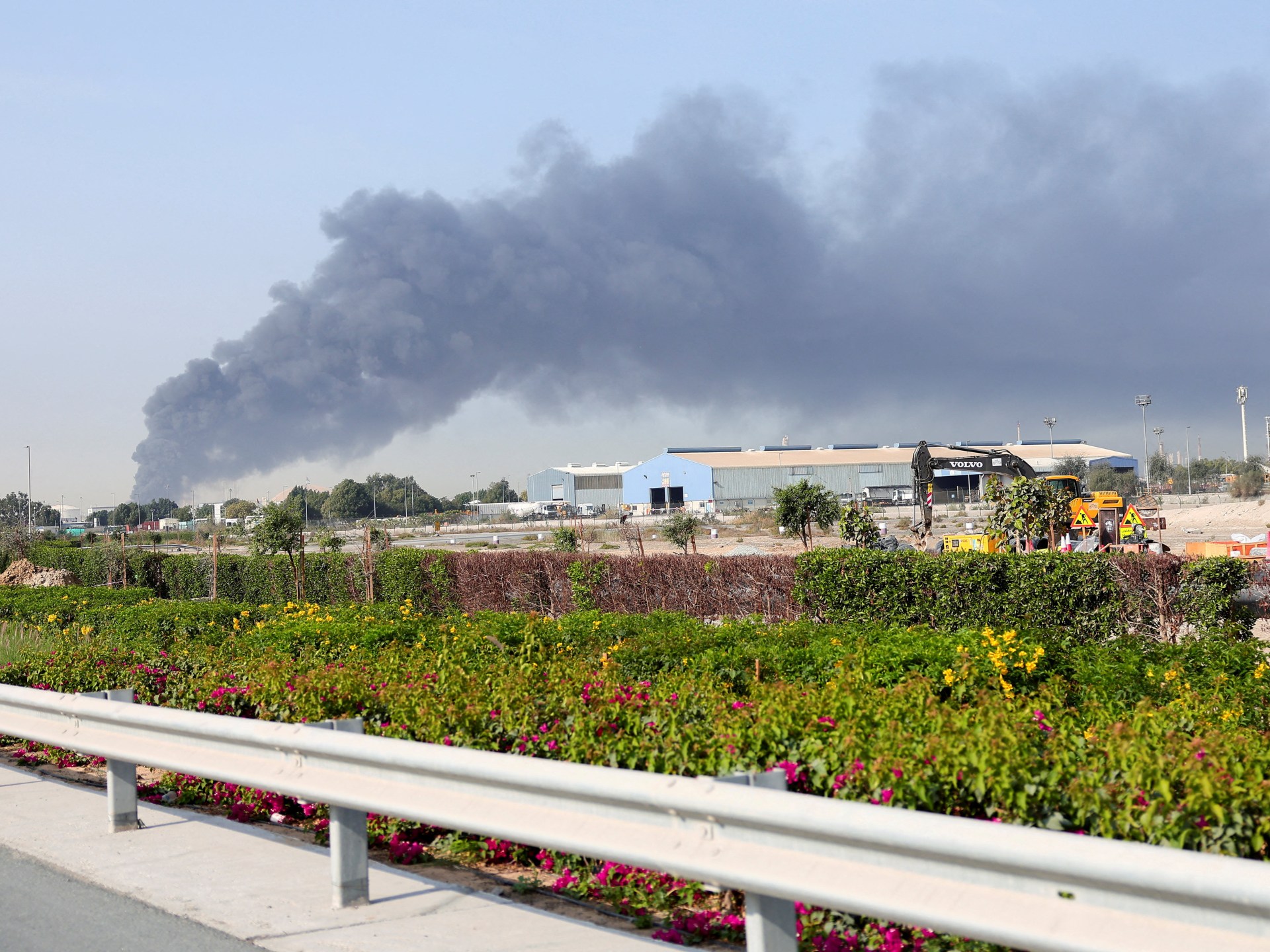
Tehran on Sunday targeted more sites in Gulf countries in retaliation as it vowed to avenge the killing of Khamenei. Meanwhile, United States President Donald Trump has warned against the retaliatory attacks and suggested that the strikes on Iran would continue.

The US-Israeli attacks were launched on Saturday despite several rounds of diplomatic engagement with Tehran that raised hopes of a deal on its nuclear programme.

The assassination of Khamenei, who took power in 1989, has left Iran’s top leadership to prepare for the transfer of power at a time when the US, the world’s strongest military power, has pledged to dismantle the ruling structure established following Iran’s 1979 revolution.

So, who will be the next supreme leader of Iran? And how will he be chosen?

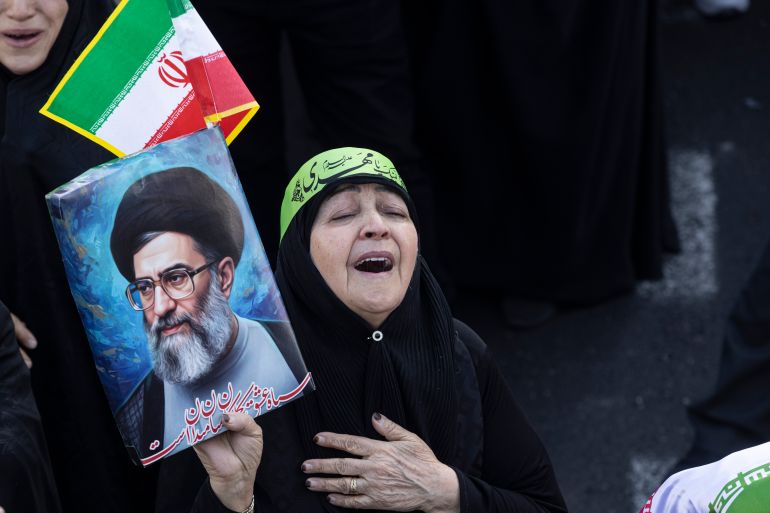
TEHRAN, IRAN - MARCH 1: A woman wails and holds a poster as thousands of people gather in Enghelab Square for a pro-government demonstration after Iranian state media confirmed the death of Ayatollah Ali Khamenei on March 1, 2026 in Tehran, Iran. Iran's Supreme Leader, Ayatollah Ali Khamenei, was confirmed killed after the United States and Israel launched a joint attack on Iran on February 28. Iran retaliated by firing waves of missiles and drones at Israel, and targeting U.S. allies in the region. (Photo by Majid Saeedi/Getty Images)
A woman wails and holds a poster as thousands of people gather in Enghelab Square for a pro-government demonstration after Iranian state media confirmed the death of Ayatollah Ali Khamenei on March 1, 2026 in Tehran, Iran [Majid Saeedi/Getty Images]

How is the supreme leader selected?

Iran’s supreme leader is selected by the Assembly of Experts, an 88-member clerical body elected by the public every eight years.

Candidates who run for the Assembly must first be vetted and approved by the Guardian Council, a powerful oversight body whose members are partly appointed by the supreme leader himself.

When the position becomes vacant, due to death or resignation, the Assembly of Experts convenes to choose a successor. A simple majority is sufficient to appoint the new supreme leader.

As per Iran’s constitution, the candidate must be a senior jurist with deep knowledge of jurisprudence in Shia Islam, as well as qualities such as political judgement, courage, and administrative capability.

Earlier, there had been only one other transfer of power in the office of the supreme leader of Iran, when Grand Ayatollah Ruhollah Khomeini, the leader of the Islamic Revolution, died at age 86 in 1989.

Iran
Emergency personnel stand at the site of an Iranian missile strike on a residential building, after Iran launched missile barrages following attacks by the United States and Israel on Saturday, in Tel Aviv, Israel, March 1, 2026 [Ronen Zvulun/Reuters]

What happens in Iran during a leadership vacuum?

Article 111 of Iran’s constitution mandates that a temporary council handle duties until a new supreme leader is elected.

That council will include President Masoud Pezeshkian, Supreme Court Chief Justice Gholam-Hossein Mohseni-Ejei, and a cleric from the Guardian Council, according to Iranian media. Ayatollah Alireza Arafi from the Guardian Council, 67, was on Sunday appointed to the three-member temporary council.

They will lead the country until the assembly formally picks the new supreme leader.

Iran’s security chief and a close confidante of the late Khamenei, Ali Larijani, said on Sunday that the transition process is under way.

Luciano Zaccara, a research associate professor in Gulf politics at Qatar University, told Al Jazeera that Iran’s political system has been prepared for the current situation, knowing that Khamenei’s assassination was a real possibility.

“Trump wants to get the best deal possible, but the method he’s using to get that deal is to annihilate or destroy as much as he can,” Zaccara said. “This is the way to impose conditions, not to negotiate anything. Trump wants a surrender of the regime, not a change.”

To avoid a vacuum of power, the late Khamenei kept replacements for all the officials eliminated in the last few months ready, and made sure to put in a structure, Zaccara told Al Jazeera.

“The structures remain, the line of power [and] the line of command remain in place,” he said.

INTERACTIVE-Iran’s government structure-jan 12, 2026 2-EDIT-1768237547
(Al Jazeera)

Who is the supreme leader of Iran?

The supreme leader is the top position in the Islamic Republic’s political and religious hierarchy under the velayat-e faqih system – the principle of the guardianship of the Islamic jurist.

He is essentially the commander-in-chief of the armed forces and the final word in the country – and appoints key judicial, military, and media officials. He also leads the mighty IRGC.

Here are the contenders for the top job in Tehran

iran
Mojtaba Khamenei (left), the second son of Iran’s Supreme Leader Ayatollah Ali Khamenei, visits Hezbollah’s office in Tehran, Iran, October 1, 2024 [Handout/Office of the Iranian Supreme Leader/West Asia News Agency via Reuters]

Mojtaba Khamenei

Khamenei’s second son, Mojtaba Khamenei, is among the top contenders to succeed his father as the next supreme leader.

He is known to wield significant influence among the administrators and the IRGC, the most powerful military body.

However, Khamenei’s lineage is also among the biggest barriers he faces. He was reportedly opposed to the father-to-son succession. It is frowned upon in Iran, particularly after the US-backed monarchy of Shah Mohammad Reza Pahlavi was toppled in 1979.

Iran
Pope Francis is shown a gift as he receives Ayatollah Alireza Arafi (centre), president of the Islamic Seminaries of Iran, and his entourage in a private audience at the Vatican, May 30, 2022 [Handout/Vatican Media via Reuters]

Alireza Arafi

Arafi, a 67-year-old cleric, is an influential figure in the Islamic Republic’s religious establishment, but not a widely accepted political actor.

He serves as the deputy chairman of the Assembly of Experts, the body responsible for overseeing the selection of the supreme leader, and has been a member of the Guardian Council, which vets election candidates and laws passed by parliament.

Arafi was appointed as ⁠the jurist member of ⁠Iran’s Leadership Council, the body tasked with fulfilling the ‌supreme leader’s role until the Assembly of Experts elects a new leader, Iran’s state media reported on Sunday.

He is also the Friday prayer leader of Qom – Iran’s most important religious centre – and heads the country’s seminary system, overseeing clerical education nationwide.

Mohammad Mehdi Mirbagheri

Mirbagheri is an ultra-hardline clerical voice in the establishment and a member of the Assembly of Experts.

He is widely known for his world view critical of the West – and currently heads the Islamic Sciences Academy in the northern city of Qom.

Gholam-Hossein Mohseni-Ejei

Mohseni-Ejei is a senior Iranian cleric and currently heads the judiciary of the Islamic Republic, appointed to the role in July 2021 by the late Khamenei.

He previously served as minister of intelligence from 2005 to 2009 and later as prosecutor-general and first deputy chief justice. He is regarded as a hardline figure aligned with the conservative wing of the regime.

Iran
Ayatollah Ruhollah Khomeini’s grandson, Hassan Khomeini (right), stands next to Iran’s Supreme Leader Ayatollah Ali Khamenei during the 36th anniversary of the death of the leader of Iran’s 1979 Islamic Revolution, Ayatollah Ruhollah Khomeini, at Khomeini’s shrine in southern Tehran, Iran, June 4, 2025 [Handout/Office of the Iranian Supreme Leader/WANA via Reuters]

Hassan Khomeini

Khomeini, 54, is among the most discussed names in succession talks for the next supreme leader.

He is the grandson of Ayatollah Ruhollah Khomeini, the founder of the Islamic Republic, and also the custodian of his grandfather’s mausoleum in Tehran.
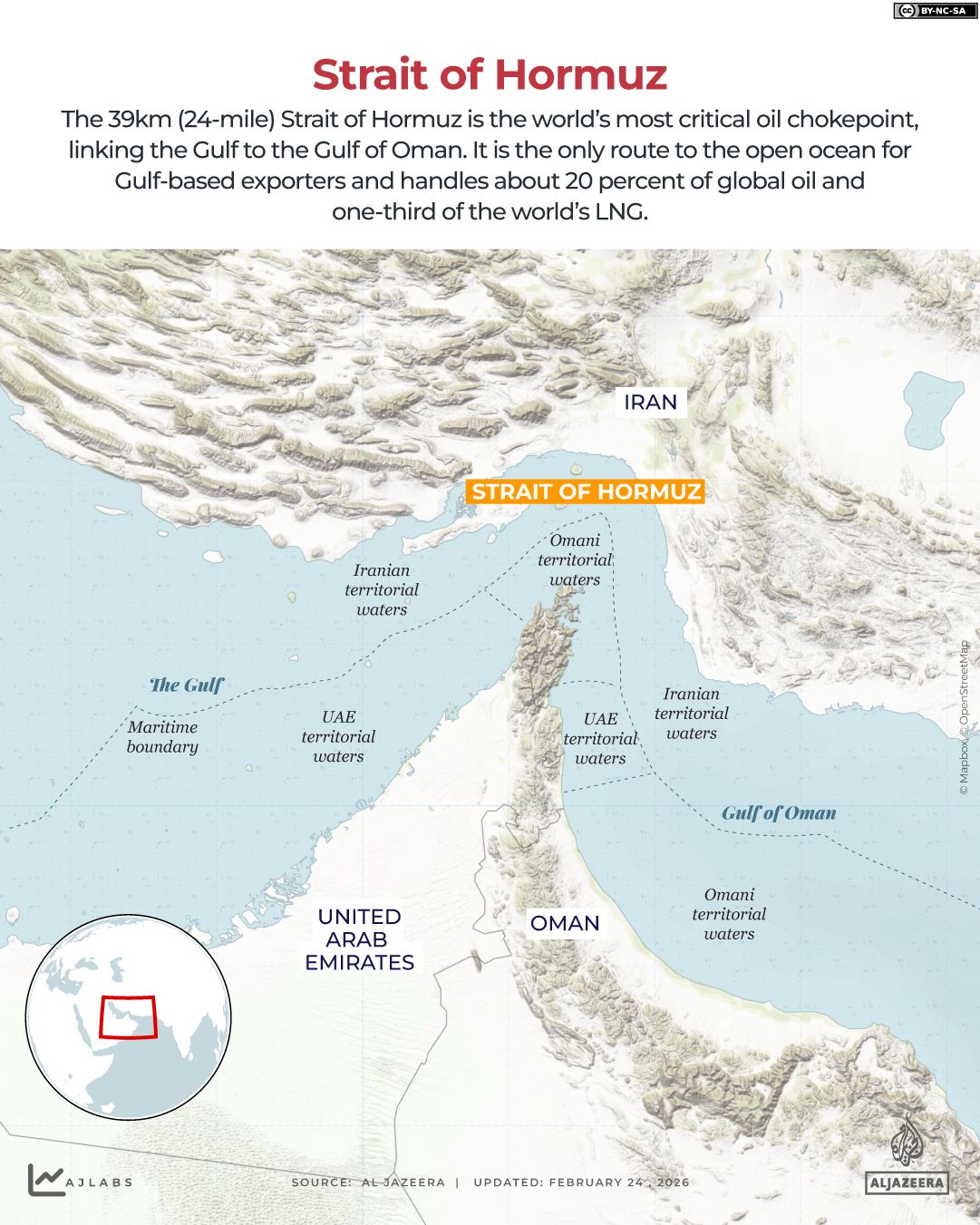
How US-Israel attacks on Iran threaten the Strait of Hormuz, oil markets

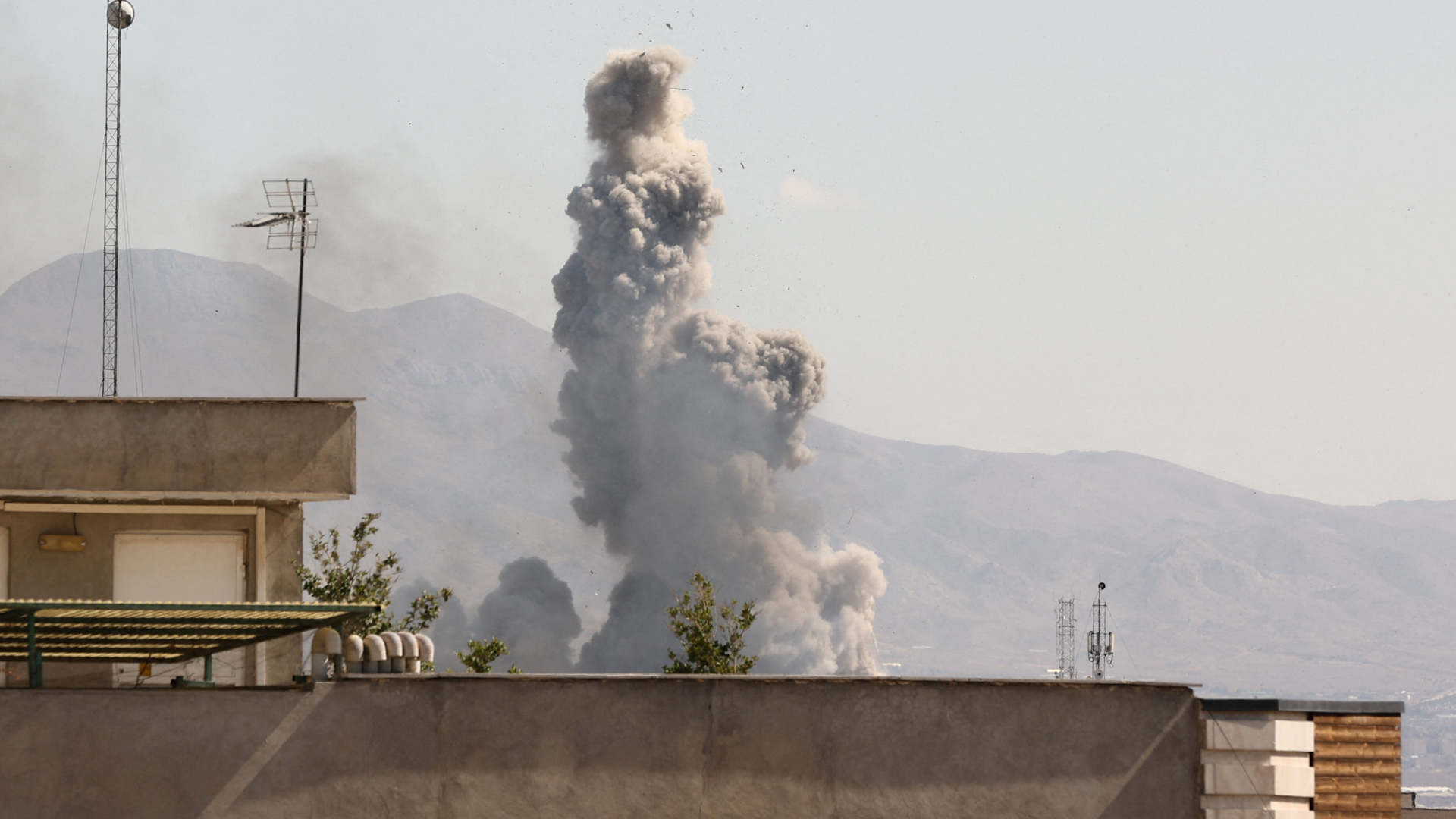
The US-Israeli attacks on Iran have triggered swift retaliatory attacks from Tehran, targeting their assets in multiple Middle East countries, including Israel, Qatar, the United Arab Emirates, Kuwait, Bahrain, Jordan, Saudi Arabia, Iraq and Oman.

Analysts are warning of a spike in global oil prices after Iranian officials hinted at shutting down the Strait of Hormuz, one of the most important maritime routes in the world.

Recommended Stories

list of 3 itemsend of list

On Saturday, an official from the European Union told the Reuters news agency that vessels crossing the strait have been receiving very high frequency (VHF) transmissions from Iran’s elite Islamic Revolutionary Guard Corps (IRGC), saying “no ship is allowed to pass the Strait of Hormuz”.

However, the EU official added, Iran has not officially closed the strait. Instead, several tanker owners have suspended oil and gas shipments through the strait amid the ongoing conflict in the region.

“Our ships will stay put for several days,” a top executive at a major trading desk told Reuters on condition of anonymity. Countries like Greece have also advised their vessels to avoid transiting through the waterway.

Any instability in this important maritime route could rattle economic stability worldwide.

So what is the Strait of Hormuz, and how will its closure impact oil prices?

Where is the Strait of Hormuz?

The Strait of Hormuz is located between Oman and the UAE on one side and Iran on the other. It links the Arabian/Persian Gulf, or just the Gulf, with the Gulf of Oman and the Arabian Sea beyond.

It is 33km (21 miles) wide at its narrowest point, with the shipping lane just 3km (2 miles) wide in either direction, making it vulnerable to attack.

Despite its narrow width, the channel accommodates the world’s largest crude carriers. Major oil and gas exporters in the Middle East rely on it to move supplies to international markets, while importing nations depend on its uninterrupted operation.

How much oil and gas pass through the strait?

According to the US Energy Information Administration (EIA), about 20 million barrels of oil, worth about $500bn in annual global energy trade, transited through the Strait of Hormuz each day in 2024.

The crude oil passing through the strait originates from Iran, Iraq, Kuwait, Qatar, Saudi Arabia and the UAE.

The strait also plays a critical role in the liquefied natural gas (LNG) trade. According to the EIA, in 2024, roughly a fifth of global LNG shipments moved through the corridor, with Qatar accounting for the vast majority of those volumes.

Where does it all go?

The strait handles both oil and gas exports and imports.

Kuwait and the UAE import supplies sourced outside the Gulf, including shipments from the United States and West Africa.

The EIA estimated that in 2024, 84 percent of crude oil and condensate shipments transiting the strait headed to Asian markets. A similar pattern appears in the gas trade, with 83 percent of LNG volumes moving through the Strait of Hormuz destined for Asian destinations.

China, India, Japan and South Korea accounted for a combined 69 percent intake of all crude oil and condensate flows through the strait last year. Their factories, transport networks and power grids depend on uninterrupted Gulf energy.

A spike in oil prices will impact countries such as China, India and several Southeast Asian nations.

How would the Strait’s closure impact oil prices?

According to Iranian state media, the country’s Supreme National Security Council must make the final decision to close the strait, and it has to be ratified by the government.

But energy traders have been on high alert in recent weeks amid escalating tensions in the region – home to one of the largest reserves of oil and gas in the world. Muyu Xu, senior crude oil analyst at Kpler, told Al Jazeera that since the war began on Saturday, there has been a sharp drop in vessel traffic through the strait.

“At the same time, the number of vessels idling on either side – in the Gulf of Oman and the Gulf – has surged, as shipowners grow increasingly concerned about maritime security risks following Tehran’s warning of a potential navigation closure,” he said.

“The Strait of Hormuz is critical to the global energy market, as roughly 30 percent of the world’s seaborne crude oil transits the waterway. In addition, nearly 20 percent of global jet fuel and about 16 percent of gasoline and naphtha flows also pass through the Strait,” Muyu said.

“On Sunday, an oil tanker was struck off the coast of Oman just hours ago, signalling a clear escalation of the conflict and a shift in targets from purely military facilities to energy assets.”

Shipping data showed that at least 150 tankers, including crude oil and liquefied natural gas vessels, have dropped anchor in open Gulf waters beyond the Strait of Hormuz.

The tankers were clustered in open waters off the coasts of major Gulf oil producers, including Iraq and Saudi Arabia, as well as LNG giant Qatar, according to the Reuters news agency estimates based on ship-tracking data from the MarineTraffic platform.

Moreover, on Sunday, the United Kingdom Maritime Trade Operations (UKMTO) said it is aware of “significant military activity” in the Strait and said it has ⁠received a report of an ⁠incident two nautical miles north of Oman’s Kumzar, located in the ‌Strait of Hormuz.

Muyu from Kpler said a broad range of energy infrastructure is now under threat. “This is expected to sharply intensify the oil price rally and could keep prices elevated for a sustained period, potentially longer than during last June’s conflict.”

Ali Vaez, director of the Iran project at the International Crisis Group, told Al Jazeera, “Closure of the Strait of Hormuz would disrupt roughly a fifth of globally traded oil overnight – and prices wouldn’t just spike, they would gap violently upward on fear alone.”

“The shock would reverberate far beyond energy markets, tightening financial conditions, fuelling inflation, and pushing fragile economies closer to recession in a matter of weeks,” he added.

When the US and Israel bombed Iran last June, there was no direct disruption to maritime activity in the region.

What does it mean for the global economy?

Any disruption to energy flows through Hormuz will also impact the global economy, driving up fuel and factory costs.

Hamad Hussain, a climate and commodities economist at the United Kingdom-based firm Capital Economics, said that for the global economy, a sustained rise in oil prices would add upward pressure to inflation.

“If crude oil prices were to rise to $100 per barrel and remain at those levels for a while, that could add 0.6-0.7 percent to global inflation,” he said, noting that this would also lead to an increase in natural gas prices.

Green wins LPGA title with husband as caddie

Paul Battison

BBC Sport Journalist

HSBC Women’s World Championship – final round leaderboard

-14 H Green (Aus); -13 A Kim (US); -11 P Bouchard (Fra), A Yin (US), M Lee (Aus); -10 H Ryu (Kor); -8 L Duncan (US); -7 A Iwai (Jpn), R Takeda (Jpn)

Selected others: -6 L Woad (Eng), C Hull (Eng), M Rhodes (Eng)

Australia’s Hannah Green won the LPGA’s Women’s World Championship in Singapore after her husband stepped in as her caddie.

With Green’s usual caddie unable to leave the USA while he applies for a green card, her husband Jarryd Felton – who is a professional golfer – filled the role for the second time this year.

Green, 29, carded a three-under-par 69 on Sunday to finish one shot clear of American Auston Kim and win this title for a second time.

She married Felton in 2024 and has also caddied for her husband in the past.

“It was absolutely a team effort over the last two weeks, and it’s very special to share my seventh win, which is also my favourite number, with him,” said Green.

“My usual caddie is applying for a green card and couldn’t leave the US, so it wasn’t part of the plan for the season. Luckily, my husband was able to pick up the bag for me.”

Green started the day tied for the lead with three-time major champion Minjee Lee, but took control with an early birdie followed by an eagle on the eighth hole.

Green sank three more birdies on the final nine, and – despite a nervous finish after bogeying her final two holes – ended on 14 under overall to win this tournament for the second time in three years, having triumphed in 2024.

“I was feeling nervous and told Jarryd a couple of times that I wasn’t comfortable. He reminded me to take a deep breath, have a snack or even sip some water,” she said.

“I haven’t played with this kind of adrenaline in a long time, and we handled it really well.”

Related topics

  • Golf

The US-Israeli war on Iran could rewrite Gulf security calculations

The United States-Israeli war on Iran is just one day old, and it is already clear it will have a profound impact on the Middle East and the Gulf in particular. The US-Israeli bombardment of Iran has killed a number of high-ranking officials as well as Supreme Leader Ali Khamenei. Tehran has responded by attacking not just Israel but also various countries in the region.

Saudi Arabia, Qatar, the United Arab Emirates, Bahrain, Kuwait and Oman were all struck by Iranian missiles or drones, even though none of these countries had launched attacks on Iran from their territory. Various sites across these states were targeted, including US military bases, airports, ports and even commercial areas.

If the conflict drags on, it could become a real turning point for the Gulf – one that reshapes how states think about security, alliances and even their long-term economic futures.

For years, Gulf stability has leaned on a familiar set of assumptions: The United States remained the dominant security guarantor; rivalry with Iran was managed, contained and kept below the threshold of full confrontation; and the Gulf Cooperation Council (GCC) – despite its disagreements – provided enough coordination to prevent regional politics from unravelling entirely. A sustained conflict involving the US, Israel and Iran would strain all of that at once. It would push Gulf capitals to revisit not only their defence planning but also the deeper logic of their regional strategy.

In recent years, Gulf diplomacy had already been shifting – carefully, quietly and with a strong preference for hedging rather than choosing sides. The Saudi-Iran thaw brokered by China in 2023, the UAE’s pragmatic channels with Tehran and Oman’s steady mediation role all point to the same idea: Stability requires dialogue, even when mistrust runs deep. Qatar has also kept doors open, betting on diplomacy and de-escalation as a way to reduce risk.

But a prolonged war would make that balancing act much harder to sustain. Pressure would rise from Washington to show clearer alignment. Domestic opinion would demand firmer answers about where national interests truly stand. Regional polarisation would intensify. In that kind of environment, strategic ambiguity stops looking like smart flexibility and starts looking like vulnerability because everyone wants you to pick a side.

The economic shockwaves could be just as significant. Any extended conflict tied to Iran immediately puts maritime chokepoints back at the centre of global attention, especially the Strait of Hormuz, one of the most sensitive arteries in the world economy. Even limited disruptions could trigger sharp energy price increases, higher insurance and shipping costs, and renewed investor anxiety.

Yes, higher oil prices could boost revenues in the short term, but sustained volatility carries a different cost. It could scare away long-term capital, complicate megaproject financing and raise borrowing costs at exactly the moment many Gulf states are trying to accelerate diversification.

There is also a longer-term strategic risk. Major consumers, especially in Asia, may decide that repeated instability is reason enough to speed up diversification away from Gulf energy resources. Over time, that would quietly reduce the region’s leverage, even if it remains a major energy supplier.

Inside the GCC, the war could either push states closer together or expose the cracks. The bloc has always moved between unity and rivalry, and a crisis doesn’t automatically produce cohesion. Different members have different threat perceptions and different comfort levels with risk. Oman and Qatar have typically valued mediation and communication channels with Tehran. Saudi Arabia and the UAE have leaned more heavily towards deterrence, even if both have recently invested in de-escalation. Kuwait tends to balance carefully and avoid hard positioning.

If the conflict escalates unpredictably, those differences could resurface and strain coordination. But the opposite outcome is also possible. The crisis could drive deeper cooperation on missile defence, intelligence sharing and maritime security. Which direction the GCC takes will depend less on outside pressure and more on whether member states see this as a moment to compete or a moment to close ranks.

Zooming out, a prolonged war would also accelerate larger geopolitical realignments. China and Russia would not remain passive. Beijing, deeply invested in Gulf energy flows and regional connectivity, may expand its diplomatic footprint and present itself as a stabilising intermediary. Moscow could exploit the turmoil to increase arms sales and leverage regional divisions.

Meanwhile, if US military engagement deepens but Washington’s political bandwidth narrows, Gulf states may find themselves in a complicated position – more dependent on American security support yet more cautious about relying on a single patron. That dynamic could produce a new pattern, something like conditional alignment, where Gulf capitals cooperate militarily with the US but widen their economic and diplomatic options to avoid overdependence.

The deepest change, though, may not be military or economic. It may be cultural, in strategic terms. The Gulf states have spent decades prioritising stability, modernisation and careful geopolitical manoeuvring. A sustained regional war could disrupt that model. It could force painful trade-offs between security imperatives and development ambitions, between diplomatic flexibility and alliance discipline, between the desire to avoid escalation and the reality of living next door to it.

That is why the Gulf now feels like it is standing at a crossroads. It could become the front line of a prolonged, great power-inflected confrontation – or it could leverage the diplomatic capital it has built to push for de-escalation while strengthening its defensive resilience. Either way, the outcome won’t just shape Gulf security thinking. It could influence the region’s entire political architecture for years – possibly decades – to come.

Under the shadow of the Iran war, Israel finds another way to punish Gaza

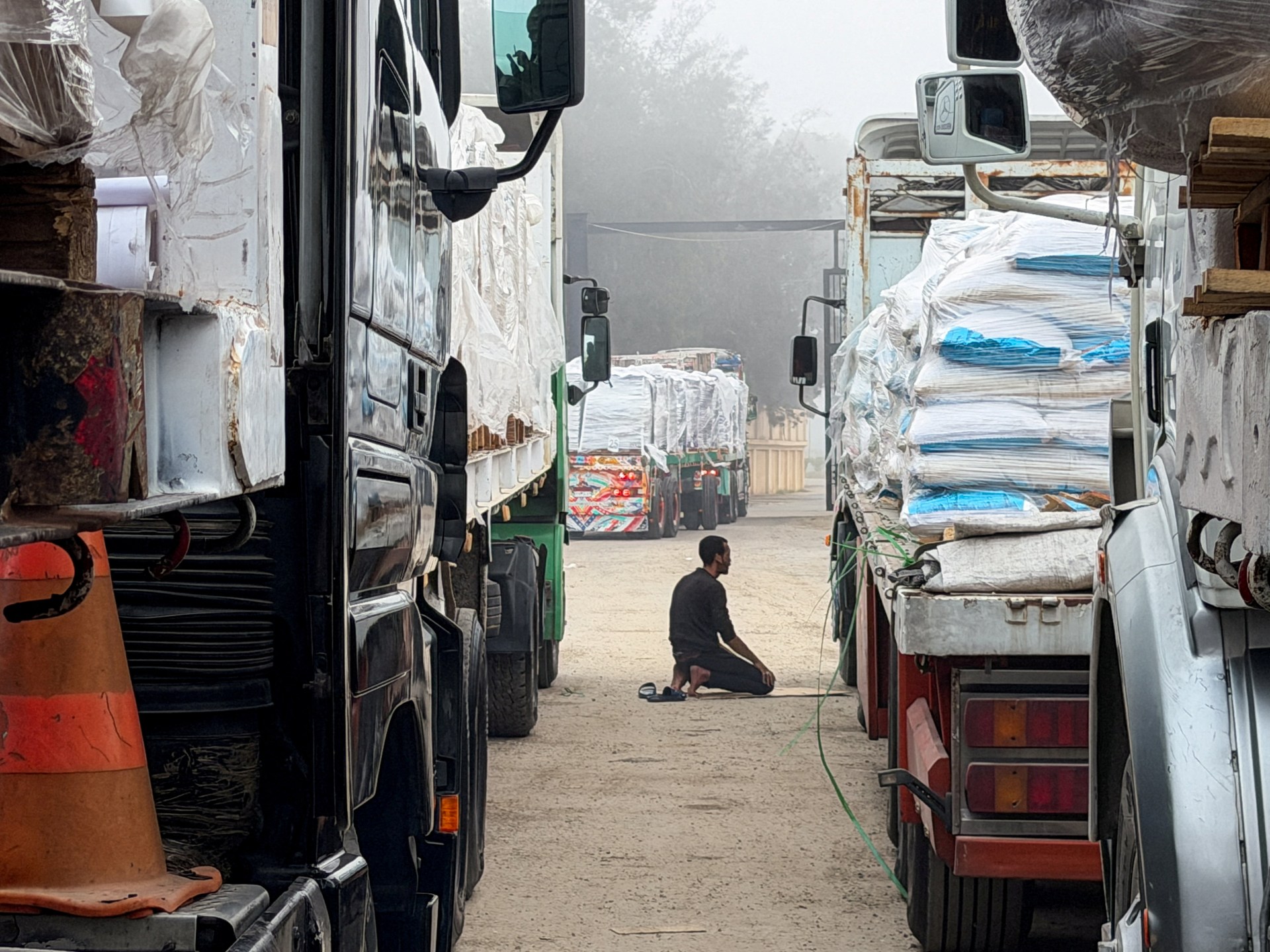
As Israel and the United States attacked Iran, Palestinians in the Gaza Strip began to panic. They remembered how crossings were closed in the past, causing famine, and rushed to markets to buy whatever they could. As a result, prices of food and basic necessities skyrocketed. Soon enough, the news came that the border crossings had been closed.

All of this happened just as the grace period set by Israel for 37 NGOs to withdraw from Gaza for not fulfilling registration requirements expired. Organisations like Doctors Without Borders (also known by its French acronym MSF), Medical Aid for Palestinians UK, Handicap International: Humanity & Inclusion, ActionAid, CARE, etc were supposed to stop operating in Gaza.

At the last moment, a ruling by the Israeli Supreme Court allowed them to continue working while it considers their appeal against the ban. But even with this court decision, these organisations cannot continue to function fully. That is because the Israeli occupation continues to prevent their supplies and foreign staff from entering Gaza.

According to these NGOs, together they are responsible for half of the food handouts in the Strip and 60 percent of services provided in field hospitals.

For many families in Gaza, this means hunger – because food parcels will not be distributed and livelihoods will be lost.

We know this is not about NGOs failing to meet new registration rules, just like the closure of the border crossings is not a matter of security. They are about exacting yet another form of collective punishment on the Palestinians.

Even if the Supreme Court miraculously rules against the NGO ban, the Israeli occupation would still find another way to push these foreign organisations out of Gaza. This was made clear this month when it was revealed that World Central Kitchen, which has been running dozens of soup kitchens across the Strip and which is not on the ban list, may be suspending its activities.

According to Gaza’s Government Media Office, this was because Israel blocked most of the organisation’s supply trucks from coming in. As a result, there are not enough supplies to continue cooking. World Central Kitchen previously said it serves 1 million meals daily.

So now, amid the war with Iran, which may last weeks or months, hundreds of thousands of families will not have adequate food once again.

All of this comes on top of Israel’s continuing war on UNRWA. Since its creation in late 1949, the United Nations agency has been the backbone of international support for Palestinian refugees. It has the largest capacity for emergency response and the widest spectrum of services on offer. And yet, Israel has banned its operations and has blocked its supplies from entering the Strip.

Through relentless lobbying, Israel has managed to achieve substantial cuts to UNRWA’s budget. As a result, last month 600 employees were fired. The salaries of the rest were reduced by 20 percent.

The NGO ban will likely result in thousands of people losing their jobs as well. And this is at a time when unemployment in Gaza has gone beyond 80 percent.

My family will also suffer. In the past, we have benefitted from food and basic supplies handouts from NGOs, and my brother has been able to find temporary work as a driver for one of them.

The possible closure of international organisations is a direct threat to the lives of hundreds of thousands of civilians who depend on their services and employment. The closure of the border crossings could mean another hunger crisis.

These are a form of collective punishment that yet again will not make the news. Israel is constantly thinking of new ways to make our lives that much more unbearable, that much more impossible in our devastated homeland.

Two and half years of the Israeli genocide has destroyed hospitals, schools, universities, roads, sewage and potable water systems, water treatment plants, the electricity grid, and countless generators and solar panels.

The vast majority of the population lives primitive lives in tents or makeshift shelters that cannot protect people from extreme heat or cold.

Water is contaminated, food is insufficient, land has been destroyed and poisoned.

Now we will be deprived of the little international support we have been receiving.

And what is the goal of all this? To push us ever closer to despair and the ultimate surrender, to make us desire to leave our homeland on our own. Ethnic cleansing by mutual agreement.

All of the organisations that Israel is seeking to ban are foreign. Most of them are based in Western countries. Yet there has been little to no condemnation from Western governments of Israel’s actions against their own organisations. There has been no outrage that the occupation is trying to destroy international humanitarian provision so it can fully control aid distribution.

Collective punishment is a violation of international law. States are obliged to go beyond verbal condemnations and take action by imposing sanctions. Until that happens, we in Gaza will continue to be subjected to ever more brutal acts of collective punishment by our occupiers.