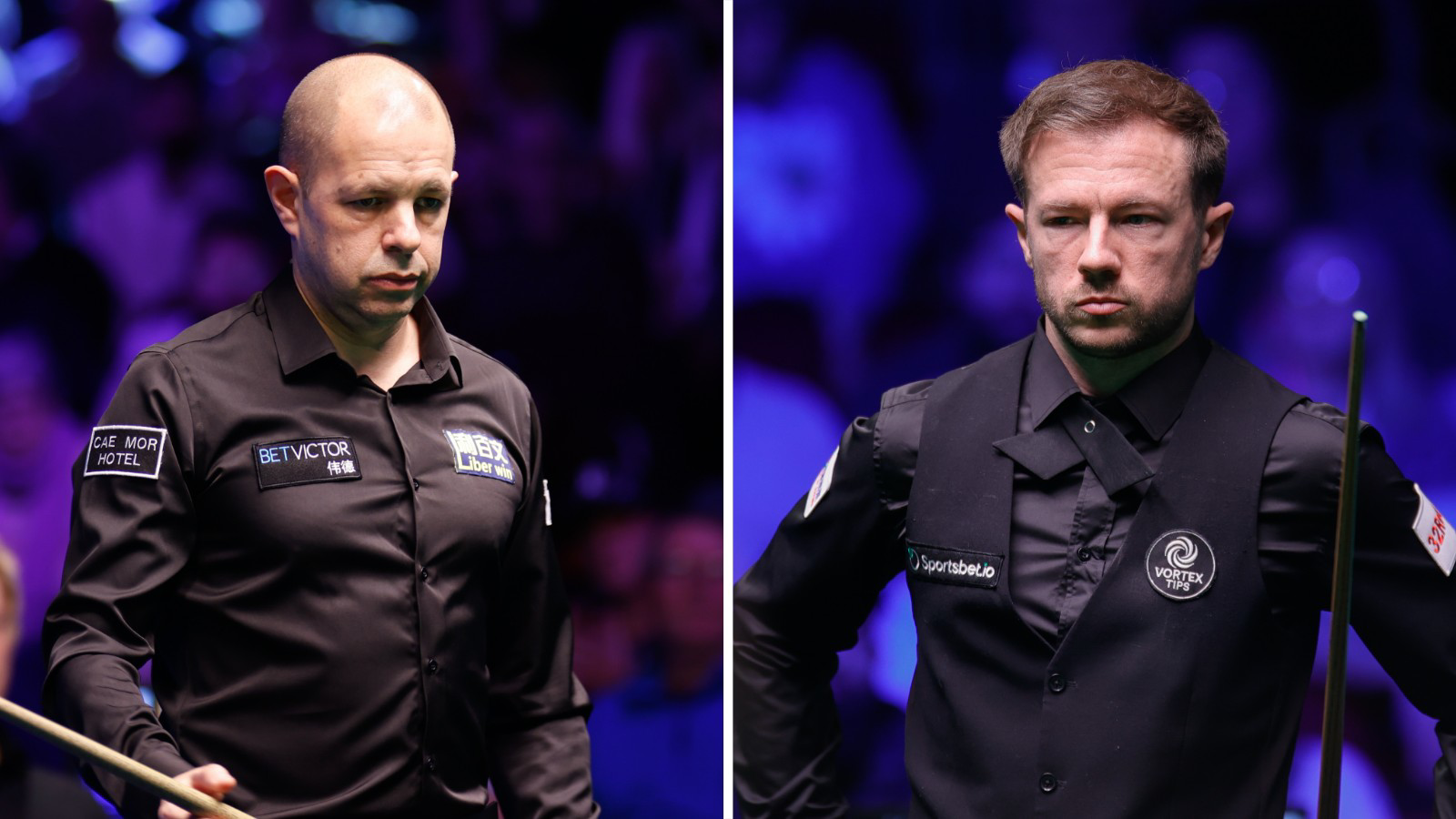
Jack Lisowski pulled off a stunning comeback to beat five-time champion John Higgins and reach the Welsh Open final for the first time.
The 34-year-old Lisowski came from 3-1 behind to beat the Scot 6-5 in Llandudno to set up a meeting with fellow English left-hander Barry Hawkins in Sunday’s final (13:00 GMT).
He made breaks of 95, 79, 138, 58 and a closing 78 to deny 50-year-old Higgins a shot at the Ray Reardon Trophy.
“I knew I was playing well. I turned the game around after the interval and I was just thinking ‘keep it going’,” Lisowski told BBC Sport.
“Sometimes when the pressure’s like that, it gets a little bit easier because you go into auto-pilot.
“The crowd was amazing. I felt at 4-3 up, ‘I’m playing really good’, but you’re playing John Higgins. It’s like you’re playing a god.
Four-time world champion Higgins started the semi-final encounter strongly and led at the interval, helped by a 73 break in frame three.
But Lisowski was rampant immediately after the interval and won three successive frames – with Higgins failing to score a single point – to take a 4-3 lead.
The first of those saw Lisowksi miss the black for a century, but the crowd on the north Wales coast were soon treated to a sublime ton from the man who beat Judd Trump in the Northern Ireland Open final in October for his first ranking title.
Higgins responded with an 82 break to halt Lisowski’s surge and level the contest, but the match got away from the ‘Wizard of Wishaw’.
1 hour ago
2 days ago
Hawkins overcomes Wu
Earlier, Hawkins resisted a fightback as he clinched a 6-4 victory over Wu Yize to reach the Welsh Open final for the second time in his career.
‘The Hawk’ started strongly, winning four of the first five frames, with 72 and 66 breaks among his highlights.
But China’s Wu, 22, responded in stunning fashion to level the match at 4-4 by reeling off three consecutive frames thanks to a pair of half-centuries and a 122 break.
“I’m over the moon, I’m pleased with that. He threw everything at me at the end there,” Hawkins told BBC Sport.
“4-1 up, I miscued a red with the rest and then I didn’t see a ball. He just went into one.
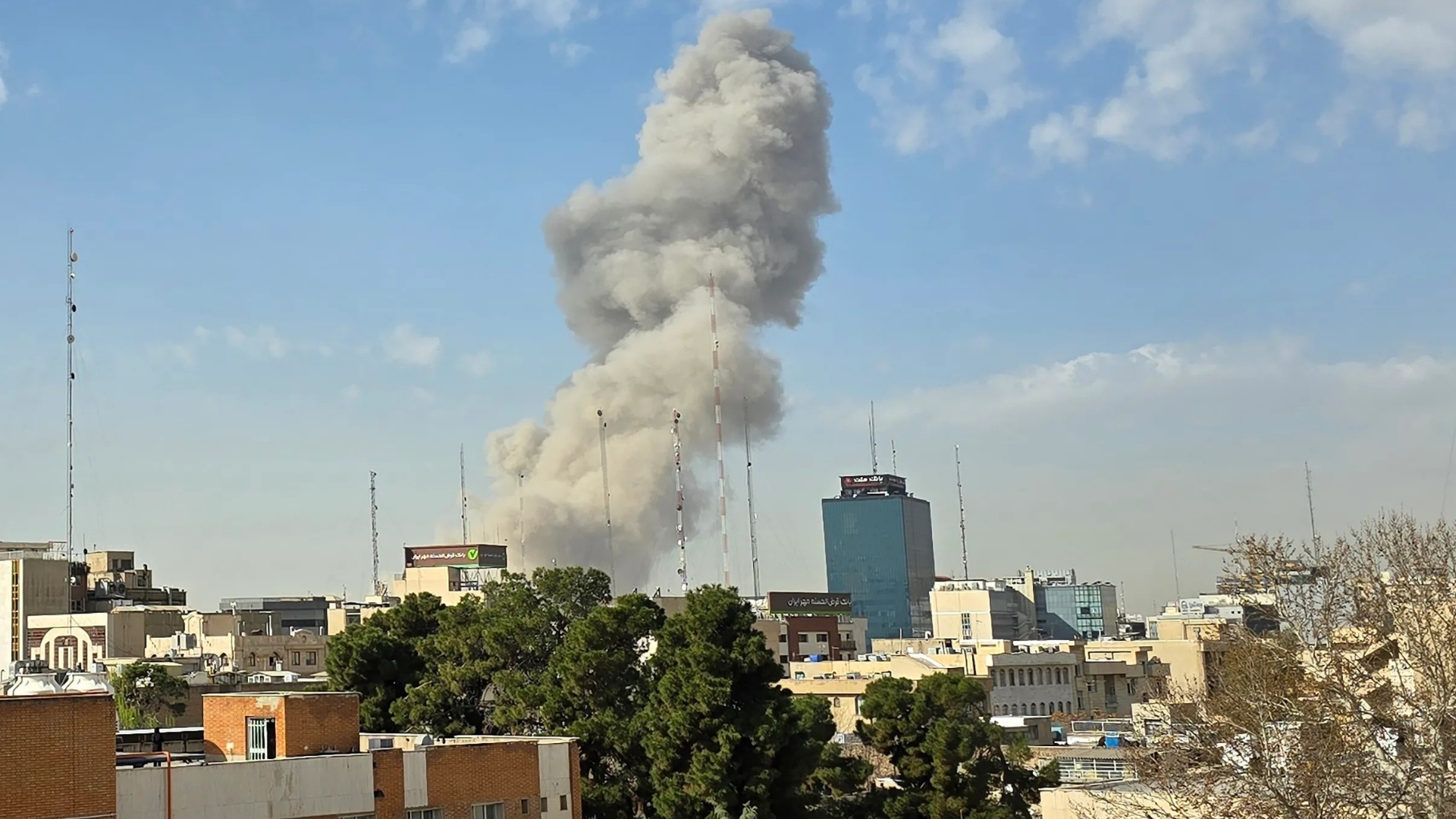
Iran has retaliated, firing at Israel, as well as US military assets, in the Middle East.
The United States and Israel have attacked Iran, and Tehran has retaliated, firing missiles at Israeli targets and US assets in the region.
The attacks come after weeks of Washington’s massive build-up of military assets in the Middle East, as well as indirect talks between the US and Iran over its nuclear programme.
So, how dangerous is the situation?
Presenter: James Bays
Guests:
Daniel Levy – president of the US/Middle East Project and a former Israeli negotiator
Mehran Kamrava – professor of government at Georgetown University in Qatar
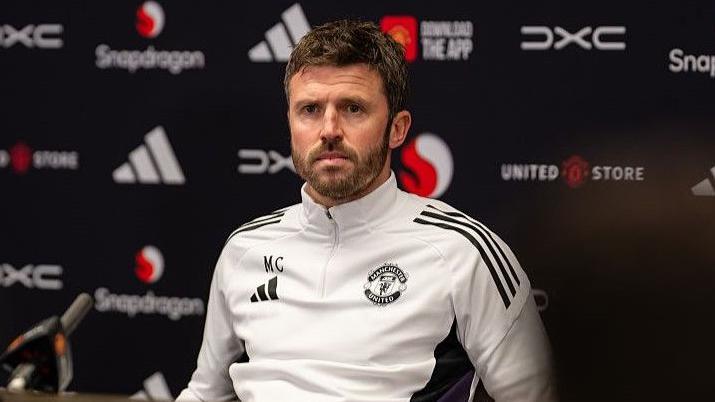
Michael Carrick says the chance to inflict damage on one of the men thought to be a contender to be Manchester United‘s next head coach will not be a motivating factor in Sunday’s game against Crystal Palace.
Palace manager Oliver Glasner is second favourite for the permanent role with most bookmakers, despite a troubled campaign in which he has openly criticised his club’s board, lost in the FA Cup to Macclesfield and fallen out with supporters amid a struggling Premier League campaign.
Interim Manchester United boss Carrick is now the favourite, thanks to five wins and a draw from his six games in charge.
It is a record which, after Aston Villa’s shock defeat at Wolves on Friday, means United will go third in the table for the first time since the end of the 2022-23 campaign if they beat Palace at Old Trafford.
That is enough of a motivation for Carrick, who says there is no personal element to his preparations at all.
“It is not something that would cross my mind until you mentioned it,” he said.
“It doesn’t make any difference whatsoever.
“I have total respect for Crystal Palace and Oliver, in terms of the team that they are and the role they are doing. But it’s the next game for us.”
Palace were ahead of United in the table when the two sides met on 30 November.
One influential figure in United’s 2-1 success that day, Matthijs de Ligt, has not played since because of a back injury. Fellow centre-half Lisandro Martinez missed Monday’s win at Everton with a calf problem which Carrick regards as “a small issue” that will not keep the Argentine out “for very long”.
With fifth-placed Chelsea due to play Arsenal and Aston Villa in their next two games, this is looking like a chance for United to cement their position in the Champions League places.
It is an aim few thought likely when Ruben Amorim was sacked in January.
“We are in a decent spot,” Carrick said. “We feel like we are moving forwards, but it’s just about what’s in front of us, and trying to get to where we want to be, which is a little bit higher in the league.
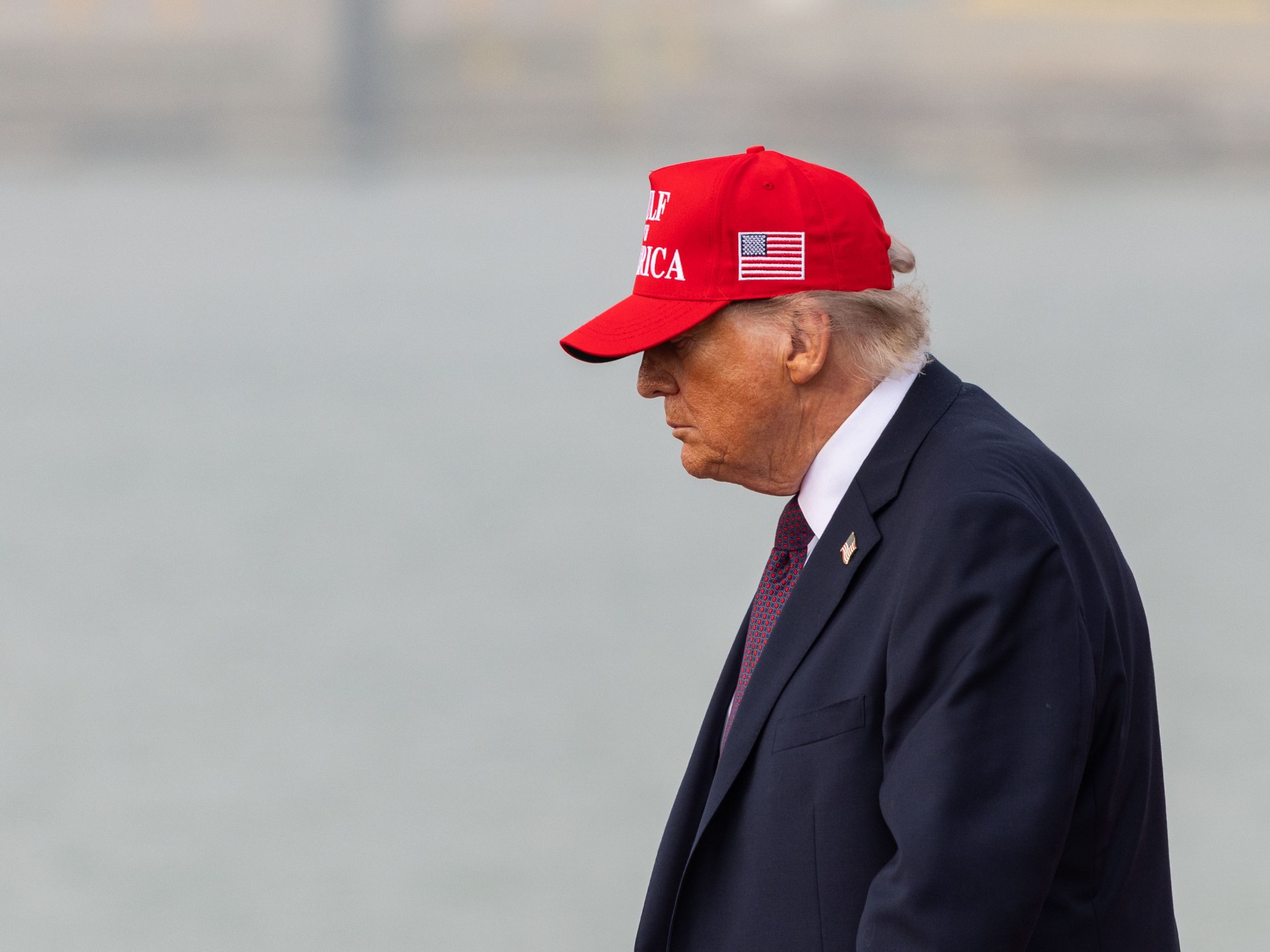
Despite a second-term pledge to end US involvement in costly and destructive foreign wars, President Donald Trump has initiated a full-scale offensive to topple the Iranian government just more than a year after returning to office.
The attacks on Iran, considered a violation of international law, mark the most aggressive escalation yet of Trump’s embrace of military power to pummel foreign governments and extract concessions demanded by his administration.
Recommended Stories
list of 3 itemsend of list
Despite widespread scepticism among the US public about Trump’s military campaigns abroad, his administration has carried out brash attacks on the governments of Iran and Venezuela, while also stepping up US strikes in the name of counterterrorism in Africa and the Middle East.
Here’s a quick look at Trump’s military actions abroad since returning to office in January 2025.
Iran
The joint US-Israeli attacks on Iran that began on Saturday morning Tehran time have so far killed at least 201 people, according to the Iranian Red Crescent, and fuelled fears about a widening war that could bring chaos and destruction to countries across the region.
The US strikes, which Trump said were “major combat operations” aimed at regime change in Tehran, appear far more extensive than a previous US attack on Iran in June 2025.
Those strikes, which, like the current attacks, took place as Iran was engaged in diplomatic talks with the US, targeted Iranian nuclear facilities at Fordow, Natanz, and Isfahan.
Trump said that the attacks, which took place during a 12-day war launched by Israel against Iran that killed more than 600 Iranians, had “obliterated” the country’s nuclear capabilities.
Both US attacks on Iran are considered illegal under international law.
Venezuela
The Trump administration carried out an attack on Venezuela in January 2026, bombing the capital, Caracas, and abducting President Nicolas Maduro, a longtime figure of US ire.
The Venezuelan minister of defence said that 83 people were killed in the attack, including members of the Venezuelan and Cuban security services, as well as Venezuelan civilians.
Boat strikes in Latin America
Since September, the US has carried out at least 45 strikes on alleged drug trafficking vessels in Latin America and the Caribbean, killing at least 151 people, according to a tally from the watchdog group Airwars.
Trump and his allies have framed the strikes as an effort to combat regional narcotics trafficking and have declared several criminal groups as foreign terrorist organisations, stating that drug trafficking is the equivalent of an armed attack on the US.
UN officials and international law experts have roundly rejected those arguments, stating that the strikes are a campaign of illegal extrajudicial killings that erase the distinction between criminal activity and armed conflict.
Nigeria
The Trump administration has also stepped up military operations in Africa, expanding collaboration with local governments and carrying out air strikes under the guise of counterterrorism.
In Nigeria, Trump has carried out a series of attacks and deployed 100 US military personnel to train Nigerian forces, threatening US strikes if the government does not do more to address what Trump says is a “genocide” of Christians in Nigeria by Muslim groups.
Nigerian officials say that the largely debunked claim miscasts widespread and violent civil conflict that has racked the country for years as a case of anti-Christian persecution.
Trump announced that the US had carried out “powerful and deadly” attacks targeting what he said were members of ISIL (ISIS) affiliates in northwestern Nigeria in December 2025, with the government’s cooperation.
Questions have emerged about whether the targets struck were in fact associated with ISIL, which is not known to operate in the region targeted in the strikes.
Somalia
The Trump administration has expanded US military engagement in Somalia, where it has long worked with the government to counter armed groups such as al-Shabab and a regional offshoot of ISIL.
The US has massively stepped up air strikes in Somalia during Trump’s second term, with the New America Foundation finding that the US carried out at least 111 attacks in 2025. Monitors say the figure surpasses the total of attacks under the George W Bush, Barack Obama and Joe Biden administrations combined.
Yemen
The US launched dozens of naval and air strikes targeting Yemen’s Houthi rebel group between March and May of 2025, destroying infrastructure and killing dozens of civilians.
The Houthis had carried out attacks on ships passing through the Red Sea as a form of pressure on Israel to end its genocidal war on Gaza.
Human Rights Watch said in June that a US strike on the country’s Ras Isa port in Hodeidah in April 2025 killed more than 80 civilians and should be investigated as a war crime.
A ceasefire brokered by Oman was announced in May.
Syria
The US conducted strikes on ISIL targets in Syria in December 2025, following an attack that killed two US soldiers and a translator in the city of Palymra.
Trump said the US was “inflicting very serious retaliation” on those responsible for the attack, which the Syrian government said was carried out by an employee of the state security services who was set to be expelled due to his hardline views.
Iraq
The US killed a high-profile ISIL commander in a strike in the al-Anbar province of Iraq in March 2025.
The group’s second-in-command, Abdallah “Abu Khadijah” Malli Muslih al-Rifai, and another unnamed operative were reported to have been killed in the strikes.
To play this video you need to enable JavaScript in your browser.
Shamoon Hafez
Manchester City reporter at Elland Road
202 Comments
Manchester City have often been accused of being too reliant on Erling Haaland this season. There are signs that could be changing.
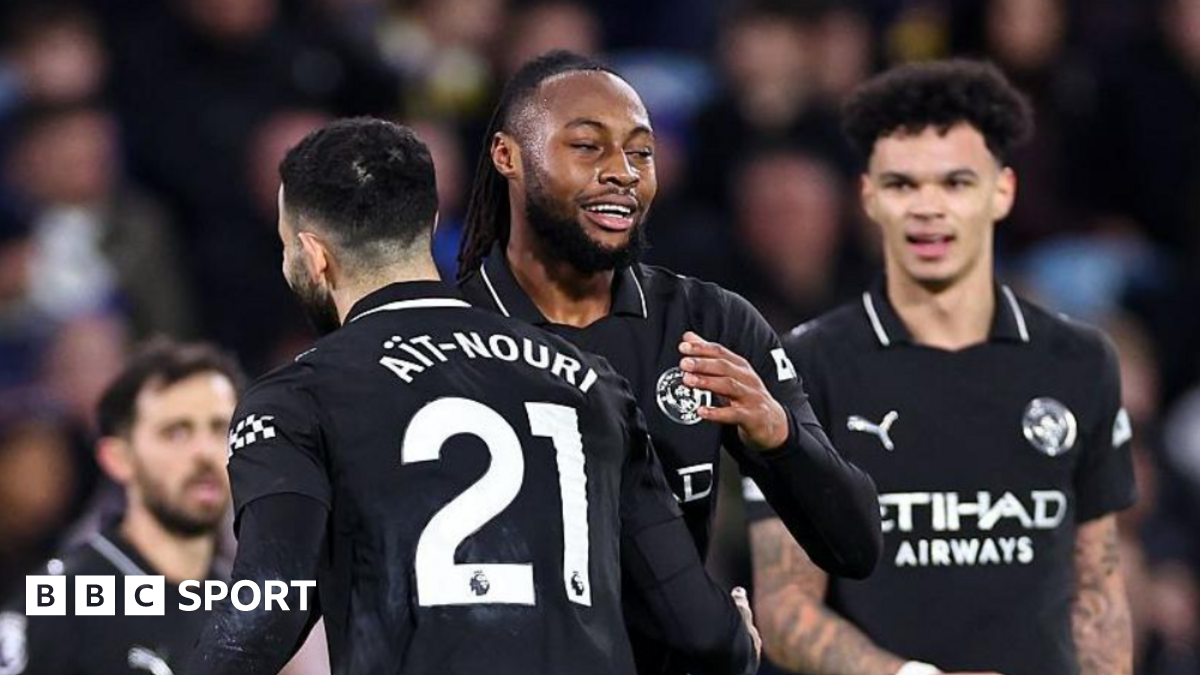
January signing Antoine Semenyo scored the only goal in a tense 1-0 win against Leeds United at Elland Road on Saturday as City, without the injured Haaland, moved to within two points of Premier League leaders Arsenal.
Since signing from Bournemouth for £62.5m, Semenyo has scored six goals in 11 appearances, making him the club’s top scorer this year and easing the goalscoring burden on Haaland.
Semenyo’s arrival has coincided with an impressive run of form for Pep Guardiola’s side as four league wins in a row – and one loss in seven games – have helped them pile the pressure on long-time leaders Arsenal.
The Gunners host Chelsea on Sunday but, with Arsenal and City due to meet in April, they will feel their presence close behind.
“It means everything,” said 26-year-old Semenyo. “We just want to win with our games on our side and, whatever Arsenal do, we just have to wait and see.
“We just need to control what we can control, win our games, and we will see what happens.”
Guardiola strode on to the pitch after the match and blew kisses in the direction of his family in the stands.
‘We are building these players’
Semenyo’s winner silenced a raucous and rowdy crowd with a real poacher’s finish, reacting quickest to latch on to Rayan Ait-Nouri’s cross and converting with aplomb.
“We made a lot of passes that we needed to do to survive without much intention to attack,” said Guardiola.
“The reaction was amazing – unbelievable with the goal we scored. A complete game in a tough, tough place, and 10 games left in the Premier League. Time to be decisive.
“Now we are building these players and they have a long, long time here. It is important for the future for the club.”
Semenyo is taking the goalscoring burden off Haaland’s shoulders – only his team-mate with 29 and Brentford’s Igor Thiago (19) have been involved in more Premier League goals than Semenyo’s 18.
Since signing for City, Semenyo has scored four league goals and provided one assist, a goal contributions record which is bettered only by Chelsea pair Cole Palmer and Joao Pedro, who have six apiece.
In late November Haaland had scored 58% of City’s goals, taken 30% of their shots and had 57% of their expected goals (xG).
He had scored 19 goals in all competitions. Burnley’s Maxime Esteve was City’s second highest scorer in the league thanks to his two own goals in the game at Etihad Stadium.
To play this video you need to enable JavaScript in your browser.
‘It’s not a big issue’
Guardiola did not reveal the extent of Haaland’s injury and could not say if he will be fit for the game against Nottingham Forest at Etihad Stadium on Wednesday.
His omission came as a surprise as there was no hint beforehand of Haaland missing out on the trip to Leeds.
“We don’t have spies in the training centre to deliver the info to our media,” said Guardiola. “I think it is not a big issue. We will see.”
It was the first Premier League match Haaland has not been involved in this season.
A surprising statistic, though, shows that since the start of the 2022-23 season City have won 14 of their 18 league games without Haaland, averaging 2.4 points per game in his absence compared to 2.1 when he features.
Victory over Leeds means City have lost only one of their past 15 games when playing a day before Arsenal.
US president Donald Trump has announced the killing of Iran’s supreme leader Ali Khamenei after joint US-Israeli air strikes hit his compound on Saturday.
Trump said Khamenei and other Iranian officials ”couldn’t escape US intelligence and the advanced tracking systems.”
Recommended Stories
list of 3 itemsend of list
Khamenei took the helm of the Islamic republic in 1989 following the death of Ayatollah Ruhollah Khomeini, the charismatic leader who had spearheaded the Islamic revolution a decade earlier.
While Khomeini was the ideological force behind the revolution that ended the rule of the Pahlavi monarchy, it was Khamenei who shaped the military and paramilitary apparatus that form both Iran’s defence against its enemies, and provide it with influence well beyond its borders.
Before becoming supreme leader, he had led Iran as president through a bloody war with Iraq in the 1980s. The grinding conflict, coupled with a sense of isolation among many Iranians as Western countries backed Iraqi leader Saddam Hussein, deepened Khamenei’s distrust of the West generally and the United States, in particular, analysts say.
That sentiment would underpin his decades-long rule and cement the idea that Iran must remain in a constant state of defence against external and internal threats.
“People think [of Iran] as a theocracy, because he [Khamenei] wears the turban and the language of the state is the language of religion, but in reality, he was a wartime president that came out of war with the assumption that Iran is vulnerable and in need of security,” said Vali Nasr, Iranian affairs expert and author of Iran’s Grand Strategy: A Political History. “That the US is hostile to Iran; and that the revolution, the Islamic republic and nationalism, are not separated” and that so, they need to be protected.
Under this vision, the Islamic Revolutionary Guard Corps (IRGC) evolved from a paramilitary force into a powerful security, political and economic institution that became central to broader Iran’s influence across the region. Khamenei also promoted a “resistance economy” to foster self-reliance in the face of punishing Western sanctions, maintained a strong scepticism of engagement with the West, and responded forcefully to critics who argued his focus on defence was blocking much-needed reforms.
But his rule was seriously tested over the years, including in 2009, when protesters who took to the streets over what they claimed was a rigged presidential election were met with a brutal crackdown, and in 2022 over women’s rights.
Possibly the biggest challenge to his rule came in January when protests triggered by economic hardship morphed into nationwide upheaval, with many protesters directly calling for the overthrow of the Islamic republic. The authorities’ response led to one of the most violent confrontations since the country’s 1979 revolution.
Critics saw him as being too out-of-touch with a young population seeking reforms and economic improvement over isolationism and forever shadow wars with the US and Israel.
“Iranians paid too high a cost for this degree of insistence on national independence – in the process, he lost the Iranian population because they no longer believed in the wisdom of this independence,” Nasr said.
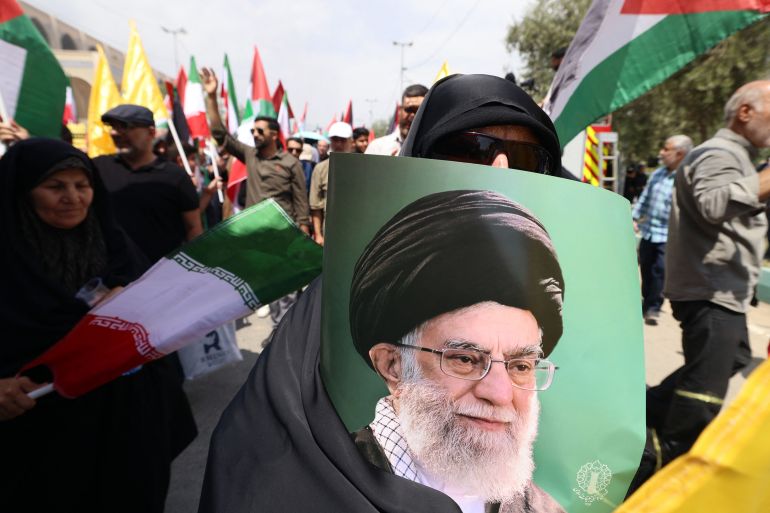
A demonstrator carries a portrait of Iran’s Supreme Leader Ayatollah Ali Khamenei during a rally in solidarity with Palestinians and in condemnation of Israel and the United States, after Friday prayers in Tehran [File: AFP]
Education
Born in 1939 in the holy Shia city of Mashhad in northeast Iran, Khamenei was the son of a renowned Muslim leader and ethnic Azerbaijani from neighbouring Iraq. The family first settled in Tabriz in northwestern Iran before moving to Mashhad, a place favoured by religious pilgrims, where Khamenei’s father led an Azerbaijani mosque.
Khamenei has described his mother, Khadijeh Mirdamadi, as an avid Quran and book reader who instilled in her son a love of literature and poetry, and later supported her son as he joined the movement against the Pahlavi dynasty’s rule.
Khamenei started his studies at age four, learning the Quran, and completed his primary education at the first Islamic school in Mashhad. He did not finish high school, instead attending theology schools and learning from renowned Islamic scholars of the time, like his father, and Sheikh Hashem Ghazvini. In the following years, he continued his studies at more prestigious Shia centres for higher education in Najaf and Qom.
In Qom, he learned from and became close to a number of other famous Muslim scholars, including Ayatollah Khomeini, who was popular among young seminarians for his defiance of the shah.
Khamenei taught jurisprudence courses and public theology interpretation classes, which also allowed him to gain access to a growing audience, especially young students who were beginning to become disillusioned with the monarchy.
The monarchy at the time had been reinstated to absolute power following an MI6 and CIA-orchestrated coup in 1953, which ousted democratically elected Prime Minister Mohammad Mosaddegh after he attempted to nationalise the Iranian oil industry.
As a political activist, Khamenei was repeatedly arrested by the shah’s secret police (SAVAK) and sentenced to exile in the remote city of Iranshahr in southeastern Iran, but returned to take part in the 1978 protests that led to the end of the Pahlavi rule.
Iran’s Supreme Leader Ali Khamenei (3rd from right) attends a memorial service for the late Ayatollah Ruhollah Khomeini alongside senior officials on June 7, 1989 [Fatih Saribas/Reuters]
The supreme leader
Once the monarchy had been deposed, Khamenei became a key figure in establishing the new Iran. He served briefly as minister of defence in 1980 and later as the supervisor of the Islamic Revolutionary Guard Corps (IRGC) after the outbreak of the Iran-Iraq war. A fiery orator, he also secured the influential post of Tehran’s Friday prayer leader.
1981 proved a momentous year for Khamenei. He lost the use of his right arm after narrowly escaping an assassination attempt by the Mojahedin-e Khalq (MEK), an opposition group that had started an armed uprising against the newly established Iranian theocracy after falling out with Khomeini. In the same year, Khamenei won the presidency, becoming Iran’s first clerical president.
In 1989, the death of Khomeini was a turning point for the Islamic republic. Before his death, Khomeini had sidelined his long-time designated heir, Ayatollah Hossein Ali Montazeri, due to the latter’s criticism of the mass execution of prisoners in 1988.
A council that had been set up to revise the constitution appointed Khamenei instead. To make that happen, the council had to loosen the qualifications required to hold the country’s top job. Khamenei did not have the title of the hojatoleslam – a high-ranking Shia clerical title.
“I believe I do not deserve this position; perhaps you and I know this. This would be symbolic leadership, not real leadership,” Khamenei said at the time.
But his leadership has been anything but symbolic.
Khamenei’s early tenure as ayatollah was defined by efforts to rebuild a country shattered by eight years of war with Iraq. More than a million people were killed in the conflict, and the economy was left in ruins. The conflict had also fostered resentment towards the international community over its perceived inaction following Iraq’s use of chemical weapons against Iranian forces and civilians. While still president, Khamenei would frequently visit the front lines, earning the loyalty of the IRGC and gaining a firsthand understanding of the realities of war.
“He is the leader whose formation was in the war with Iraq – that framed his outlook on domestic and foreign politics. Once he became the supreme leader, he focused on building the military and paramilitary apparatus for a siege, for constant resistance,” said Narges Bajoghli, an associate professor of anthropology and Middle East studies at John Hopkins University.
But the mood began to change in the 1990s. The country was in desperate need of investment, while the revolutionary fervour had begun to cool somewhat. Some, exhausted by the war, were eager to see Iran return to the international fold.
That sentiment translated into a landslide election victory for reformist Mohammad Khatami in 1997, an advocate for rapprochement with the West and promoter of a “dialogue among civilisations”.
Supporters of Iran’s presidential election candidate Mir Hossein Mousavi carry posters with images of Mousavi, left, and former Iranian President Mohammad Khatami during a campaign rally in Tehran, on June 9, 2009 [File: Ahmed Jadallah/Reuters]
Still, Khamenei’s own scepticism and mistrust towards the West remained steadfast. He saw the vote for reform, including from within the ranks of the military and paramilitary apparatus, as a threat to the status quo. So he set off to create a stable voting bloc of loyal supporters against reformers, according to Bajoghli.
“Khamanei never had a natural base for himself compared to Khomeini,” said Bajoghli, also the author of Iran Framed. “So he put a lot of funding in redoing the education and training for the young generations [within the paramilitary system] that would then find their way up.”
That meant giving the IRGC a free hand to build a network of businesses that would allow them to dominate Iran’s economy while also intensifying training programmes, especially for younger members of its paramilitary volunteer force, the Basij. While it was a limited section of society, it was one that would grow in line with Khamenei’s posture of perpetual resistance against the West and one that was given great resources. More importantly, Bajoghli said, they were willing to fight and die.
These new ranks within the paramilitary force were the ones called upon to suppress the nationwide protests that erupted after the disputed presidential election victory of Mahmoud Ahmadinejad, a staunch opponent of the West, in 2009. By then, a new generation of Iranians – born after 1979 – were less attuned to the anti-imperialist, anti-colonial narrative that had inspired their parents’ revolution.
In what was then considered the strongest challenge to Khamenei’s leadership, hundreds of thousands of protesters took to the streets under what the media dubbed the Green Movement to contest the election results and express support for the defeated reformist candidate, Mir Hossein Mousavi. While protesters said the elections were rigged for Ahmadinejad to win, Khamenei endorsed the results. Thousands were arrested and dozens were killed, according to Amnesty International.
The Iranian leadership accused Western countries of stoking the unrest to topple the religious establishment. “You [the West] should be held accountable for your actions,” Ahmadinejad said.
“The Iranian nation would … slap those with ill intentions so hard that they would lose their way home.”
An Iranian with his glasses decorated with photos of President Mohammad Khatami carries the national flag during a celebration in central Tehran, on June 9, 2001, a day after the country’s presidential elections [File: Damir Sagolj/Reuters]
‘Neither peace nor war’
Khamenei was also a pragmatist. And he believed the battle against the West had to be fought with different strategies: resisting but also negotiating, if that was necessary, observers said.
In 2015, the country was struggling under crippling international sanctions due to its nuclear programme. To maintain domestic stability and boost legitimacy, Khamenei recognised the need to ease economic pressure.
So he greenlit then-President Hassan Rouhani’s negotiations with the West that led to the 2015 Joint Comprehensive Plan of Action (JCPOA). The landmark deal, signed by Iran and world powers, was designed to curb Tehran’s nuclear programme in exchange for sanctions relief.
“It was a moment of pragmatism – sometimes protecting the state requires compromises,” Nasr said. “Khamenei favoured a policy of neither peace nor war with the US. He believed that Iran needed to pursue its independence against the US, which he believed is inherently against Iran.” Within this perspective, “the nuclear deal was not normalisation [with the US] but a narrow arms control deal like the one the US did with the Soviets,” Nasr said.
But three years after that accord was signed, President Donald Trump pulled the US out of the agreement, bringing the rapprochement to an end. As Washington imposed a new set of sanctions on Iran, Khamenei returned to a more aggressive posture, ruling out negotiations with the US and backing a gradual breach of the deal. Over the following years, Iran resumed the enrichment of uranium to 60 percent, the level at which it becomes quicker to convert to 90 percent weapons-grade uranium. Iran has insisted — and continues to insist — that its nuclear programme is purely civilian in nature. In 2003, Khamenei issued a fatwa prohibiting the manufacture, use and storage of nuclear weapons.
With Western sanctions biting and inflation rising, protests erupted across Iran in 2019 following the government’s decision to hike petrol prices. Security forces were accused of violently cracking down on demonstrations where, according to Amnesty International, more than 100 people were killed. Khamenei dismissed the protesters as “thugs” and accused counterrevolutionaries and foreign enemies of fuelling the unrest.
Amid internal turmoil and growing isolation, the presidential elections saw the victory of Ebrahim Raisi – a senior prosecutor who had drawn criticism for his links with the mass executions of the late 80s – and the lowest turnout in the Islamic republic’s history.
With a close ally such as Raisi at the presidency, Khamenei promoted the so-called “resistance economy” relying on Iran’s internal capabilities while also pivoting its business towards the East – an approach that failed to yield tangible results.
The 2022 nationwide protests over Mahsa Amini’s death in police custody for allegedly violating the mandatory hijab law marked another major challenge for Khamenei. The ayatollah drew criticism as the person responsible for social restrictions imposed on the population and the security forces’ brutal crackdown on the ensuing demonstrations. More than 500 people were killed, according to Amnesty International.
Again, Khamenei saw the whole affair as a national security matter. He blamed Western and regional adversaries for fomenting the unrest, arguing that the protests were not about the death of Amini or the wearing of the hijab but rather the result of foreign intervention. “It is about Islamic Iran’s independence, resistance, strength and power,” he said. “That is what this is about.”
‘Axis of resistance’
Independence and power, in Khamenei’s view, were also required beyond the country’s borders to maintain a “forward defence” that would deter potential aggression or overreach by adversaries, including the US and Israel.
That translated into weaving a web of proxy relations and transfer of weapons knowledge and resources to a constellation of allies outside Iran – the so-called “axis of resistance”, Khamenei’s most impactful strategic project.
The master architect of this strategy was Qassem Soleimani, a staunch Khamenei supporter and commander of Iran’s Quds forces, the elite wing of the IRGC responsible primarily for its foreign operations. Soleimani was assassinated by the US in 2020.
The crown jewels of the alliance were Hezbollah in Lebanon, former President Bashar al-Assad in Syria, Hamas in Palestine, the Houthis in Yemen, and armed groups in Iraq.
But the axis began unravelling following Hamas’s assault in southern Israel on October 7, 2023. Israel then unleashed a genocidal war on Gaza, which has killed more than 70,000 people and turned most of the enclave into rubble. Many senior Hamas leaders have been killed in the war.
Israel also attacked Hezbollah in Lebanon, killing many figures in its senior leadership, including secretary-general Hassan Nasrallah. Then came the overthrow of Syria’s Bashar al-Assad regime in December 2024 by rebel forces. The corridor that Iran had been using to replenish Hezbollah — through Syria — ceased to be viable.
With Iran’s allies weakened, Israeli Prime Minister Benjamin Netanyahu, who had been pushing for a strike on Iran’s nuclear programme for decades, seized the moment.
On June 13, 2025, the Israeli army – with the knowledge of the US – attacked Iran, killing dozens of its senior commanders and top nuclear scientists, striking several nuclear sites and civilian and military infrastructure. Israel maintained its attack was to prevent Iran from producing a nuclear weapon, despite separate assessments by the US intelligence and the International Atomic Energy Agency that Tehran was not in the process of doing that. And that attack occurred just as Tehran was engaged in negotiations with Washington to reach an agreement about its nuclear programme.
Iran responded with a barrage of missiles striking Tel Aviv. A full-blown war ensued for nearly two weeks, culminating with the US dropping bunker busters on three key nuclear facilities.
Israeli soldiers work at an impact site following a missile attack from Iran on Tel Aviv, Israel, after Israel bombed several nuclear sites in Iran [File: Violeta Santos Moura/Reuters]
Netanyahu threatened to kill Khamenei, while Trump demanded his “unconditional surrender”.
That had little effect. “Intelligent people who know Iran and its history would never speak to this nation in threatening language because the Iranian nation will not surrender, and the Americans should know that any US military intervention will undoubtedly cause irreparable damage,” Khamenei snapped back.
To some, Khamenei’s steadfastness, which once attracted criticism for his state-of-siege mentality, took a different meaning following the 12-day war with Israel. Iranians defied calls by Israel to revolt against the Islamic republic.
But the rally around the flag effect did not last long.
Crippling sanctions weighed heavily on the country’s economy. In late December, protests over a currency collapse morphed into a nationwide upheaval calling for the end of Khamenei’s rule. That led to the most brutal crackdown in decades. Iranian authorities said more than 3,000 people were killed, but a US-based human rights group put that tally at more than 7,000. Al Jazeera is unable to independently verify those figures.
Following the upheaval, the country was at a crossroads. While during previous rounds of protests the state was able to either dispense some subsidies or loosen up social restrictions, this time it had few options for addressing the underlying economic grievances that sparked the demonstrations. Iran needed to make tough compromises to win sanctions relief and fix the economy – or face further upheaval, experts said.
That led to new rounds of negotiations between the US and Iran to limit Tehran’s nuclear activities in exchange for sanctions relief. Despite statements of “progress”, several rounds of talks in the United Arab Emirates and in Geneva failed to reach any breakthrough. The US said it wanted Iran to dismantle its nuclear infrastructure entirely, limit its arsenal of ballistic missiles and stop supporting regional allies. While Tehran has shown flexibility about discussing limitations on the enrichment of uranium for civilian use, it has so far treated missiles and proxies as non-negotiables.
Meanwhile, the US amassed its biggest military arsenal in the region since the 2003 invasion of Iraq.
On February 28, Trump announced that the US had begun a “major combat operation” in Iran. In his speech, the American president made it clear that the US was seeking regime change.
“The hour of your freedom is at hand,” Trump said, speaking to the Iranian people at the end of his Saturday morning address. “When we are finished, take over your government. It will be yours to take. This will probably be your only chance for generations.”
He said he was “willing to do” what no previous American president had done.