Vice President Kashim Shettima says the naira would have appreciated to ₦1,000 in “weeks” if the Central Bank of Nigeria (CBN) had not intervened in the foreign exchange (FX) market on Monday to ensure market stability.
Shettima said this on Tuesday at the Progressive Governors’ Forum (PGF), Renewed Hope Ambassadors Strategic Summit in Abuja.
“In fact, if not for the interventions by the Central Bank of Nigeria yesterday, the 1,000 Naira to a dollar we are going to attain in weeks, not in months. But for the purpose of market stability, the CBN generously intervened yesterday.
“So, for some of my friends, especially one of our party leaders who take delight in stockpiling dollars, it is a wake-up call,” the vice president said.
“Our economy is picking up. Of the seven major investment decisions made last year in Africa, five were done in Nigeria. That goes to show the strength, viability, and the promise of the Nigerian economy. And as we advance into 2026, our focus shifts from stabilization to acceleration.”
READ ALSO: Dangote Predicts Naira Will Hit ₦1,000 To $1 This Year, Backs FG’s Policies
Celtic say the use of video assistant referees in Scotland “needs urgently reviewed” after their unsuccessful appeal against the red card shown to Auston Trusty in their Scottish Premiership defeat by Hibernian.
Trusty, 27, was dismissed with the score 1-1 at Celtic Park following an incident with Hibs’ Jamie McGrath as the pair jostled at a corner. The defending champions lost 2-1.
Violent conduct carries an automatic two-match suspension but Trusty incurred an additional one-match ban, having previously been sent off in the competition this season.
However, Trusty will be available for the Scottish Cup quarter-final away to Rangers on 8 March.
Watch: Celtic v Hibernian – Sportscene highlights
Watch on iPlayer
“The match audio demonstrates that the referee saw the incident clearly. Immediately following the incident, the referee said: ‘It’s nothing I’m just going to speak to them’ in terms of no further action being required.
“In discussions with Celtic manager Martin O’Neill after the match this was something he also confirmed.
“However, VAR again decided to intervene to ‘re-referee’ an initial decision which had been made.
Watch: St Mirren v Motherwell – Sportscene highlights
Watch on iPlayer
St Mirren’s King gets reprieve
Meanwhile, St Mirren were successful in challenging Richard King’s sending off in Saturday’s loss to Motherwell and his ban was overturned.
St Mirren defender King, 24, was sent off in his side’s 5-0 defeat in Paisley on Saturday.
With his team trailing 3-0, the centre-back was involved in an incident with Callum Slattery and the Motherwell player fell to the ground.
Referee Calum Scott did not see the incident, issuing the red card on the advice of his assistant, and VAR did not intervene to ask him to review footage.
Celtic say the use of video assistant referees in Scotland “needs urgently reviewed” after their unsuccessful appeal against the red card shown to Auston Trusty in their Scottish Premiership defeat by Hibernian.
Trusty, 27, was dismissed with the score 1-1 at Celtic Park following an incident with Hibs’ Jamie McGrath as the pair jostled at a corner. The defending champions lost 2-1.
Violent conduct carries an automatic two-match suspension but Trusty incurred an additional one-match ban, having previously been sent off in the competition this season.
However, Trusty will be available for the Scottish Cup quarter-final away to Rangers on 8 March.
Watch: Celtic v Hibernian – Sportscene highlights
Watch on iPlayer
“The match audio demonstrates that the referee saw the incident clearly. Immediately following the incident, the referee said: ‘It’s nothing I’m just going to speak to them’ in terms of no further action being required.
“In discussions with Celtic manager Martin O’Neill after the match this was something he also confirmed.
“However, VAR again decided to intervene to ‘re-referee’ an initial decision which had been made.
Watch: St Mirren v Motherwell – Sportscene highlights
Watch on iPlayer
St Mirren’s King gets reprieve
Meanwhile, St Mirren were successful in challenging Richard King’s sending off in Saturday’s loss to Motherwell and his ban was overturned.
St Mirren defender King, 24, was sent off in his side’s 5-0 defeat in Paisley on Saturday.
With his team trailing 3-0, the centre-back was involved in an incident with Callum Slattery and the Motherwell player fell to the ground.
Referee Calum Scott did not see the incident, issuing the red card on the advice of his assistant, and VAR did not intervene to ask him to review footage.
Warner Bros Discovery (WBD) says it is reviewing a new takeover offer from Paramount Skydance, but it continues to recommend a competing proposal from Netflix to its shareholders in the meantime.
Warner disclosed on Tuesday that it had received a revised offer from Paramount after a seven-day window to renew talks with the Skydance-owned company elapsed on Monday. Paramount – which is run by David Ellison, son of United States President Donald Trump ally and Oracle cofounder Larry Ellison – confirmed it had submitted the proposal, but neither company provided details about it. The company was widely expected to have raised its offer.
Recommended Stories
list of 4 itemsend of list
A WBD buyout would reshape Hollywood and the wider media landscape, bringing HBO Max, cult-favourite titles like Harry Potter and, depending on who wins the Netflix vs Paramount tug-of-war, potentially even CNN under a new roof.
Paramount wants to acquire Warner Bros in its entirety, including networks like CNN and Discovery, and went straight to shareholders with an all-cash, $77.9bn hostile offer just days after the Netflix deal was announced in December. Accounting for debt, that bid offered Warner stakeholders $30 per share, amounting to an enterprise value of about $108bn.
Paramount maintained on Tuesday that its tender offer remains on the table while Warner evaluates its latest proposal.
Netflix wants to buy only Warner’s studio and streaming business for $72bn in cash, or about $83bn including debt. Warner’s board has repeatedly backed this deal and on Tuesday maintained that its agreement with Netflix still stands.
Warner shareholders are to vote on the Netflix proposal on March 20.
If Warner’s board changes course and considers Paramount’s latest offer superior, Netflix would have a chance to match or revise its proposal, potentially setting the stage for a new bidding war. It could also choose to walk away.
Further consolidation
Paramount, Warner and Netflix have spent the last couple of months in a heated back and forth over who has the stronger deal. But along the way, lawmakers and entertainment trade groups have sounded the alarm, warning that either buyout of all or parts of Warner’s business would only further consolidate power in an industry already run by just a few major players. Critics said that could result in job losses, less diversity in filmmaking and potentially more headaches for consumers who are facing rising costs of streaming subscriptions as is.
Combined, that raises tremendous antitrust concerns – and a Warner sale could come down to who gets the regulatory greenlight. The US Department of Justice has already initiated reviews, and other countries are expected to do so too.
Both Paramount and Netflix have argued that their proposals are good for consumers and the wider industry. And the companies have taken aim at each other publicly with regulatory arguments.
Paramount has pointed to Netflix’s much larger market value, and it has argued that if the streaming giant acquires Warner, it would only give it more dominance in the subscription video-on-demand space. But Netflix is trying to persuade regulators that it’s up against broader video libraries, particularly Google’s YouTube, America’s most-watched TV distributor.
Paramount’s bid will create a studio bigger than market leader Disney and fuse two major TV operators, which some Democratic senators said would control “almost everything Americans watch on TV”.
It will also hand control of CNN to the conservative-leaning Ellisons, soon after they acquired CBS News and installed as its editor-in-chief Bari Weiss, a right-leaning opinion editor who had no prior TV experience. The network settled for $16m a lawsuit that Trump had filed, accusing CBS’s 60 Minutes programme of editing an interview with Kamala Harris to his 2024 presidential election rival’s advantage. It also appointed Kenneth Weinstein, a former Trump administration official, as ombudsman to investigate allegations of bias.
In December, Ellison visited the White House, media reports said, and told Trump that Paramount would execute “sweeping changes” if it acquired CNN’s parent company.
More recently, Trump, in a Truth Social post on Saturday, demanded that Netflix fire former US National Security Adviser Susan Rice from its board. Rice, a Black woman, had served under former Presidents Barack Obama and Joe Biden, both Democrats.
“This is a business deal. It’s not a political deal,” Netflix CEO Ted Sarandos told BBC Radio 4’s flagship Today programme on Monday. “This deal is run by the Department of Justice in the US and regulators throughout Europe and around the world.”
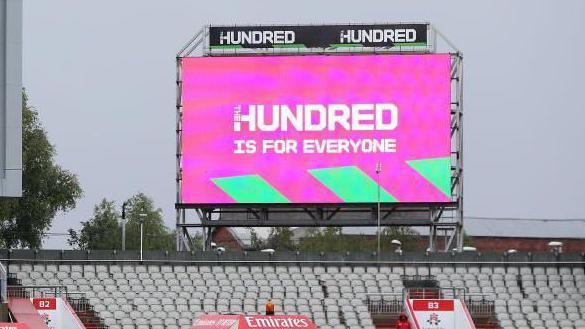
All teams in The Hundred are “committed to selection being based solely on performance”, said the competition’s eight franchises and the England and Wales Cricket Board (ECB).
It comes after sources told BBC Sport last week that Pakistan cricketers are not being considered for this summer’s tournament by Indian-owned sides at next month’s auction.
Players from Pakistan have not featured in the Indian Premier League (IPL) since 2009 because of diplomatic tensions between the two countries.
“All eight teams commit to selection being based solely on cricketing performance, availability, and the needs of each team,” read the statement.
“The ECB is committed to ensuring there is no place for discrimination, and has regulations in place to take robust action to tackle any such conduct.
“Players must not be excluded on the grounds of their nationality.”
In messages seen by the BBC, a senior ECB official indicated to an agent that interest in his Pakistan players would be limited to sides not linked to the IPL.
Four of The Hundred’s eight franchises – Manchester Super Giants, MI London, Southern Brave and Sunrisers Leeds – are now at least part-owned by companies that control IPL teams.
Another agent described the situation as “an unwritten rule” across T20 leagues with Indian investment.
The ECB and the franchise teams said they were committed “to ensuring The Hundred continues to be a competition that is inclusive, welcoming and open to all”.
1 day ago
3 days ago
The ECB has come under pressure to address the reports since England limited-overs captain Harry Brook said it would be “a shame” if Pakistan players were excluded from playing in The Hundred this year.
Sixty-seven players from the country are among those to have registered for next month’s auction, with the competition due to run from 21 July-16 August.
The UK government’s Department for Digital, Culture, Media and Sport (DCMS) have held discussions with the ECB over the issue.
A DCMS spokesperson told BBC Sport: “The Hundred plays a significant role in attracting new audiences and inspiring grassroots participation.
“It is important that the tournament remains free from discrimination and nationality should not be a deciding factor in the selection of players.
“The ECB has assured us that it has reminded teams of the same expectation.”
A spokesperson for the Mayor of London also told BBC Sport: “Cricket should be open to everyone, and excluding players for no other reason than their nationality would be unacceptable.
Aden, Yemen – Lying on the outskirts of Yemen’s interim capital, Aden, al-Basateen district starts where the paved roads end, stretching into narrow, sandy alleyways. It reveals a decades-old refugee story in which Arabic blends with Somali and the faces harbour memories of a different place, across the sea.
Residents know the area by several names, including “Yemen’s Mogadishu” and “the Somalis’ neighbourhood” – a reference to the demographic shift it has seen since the 1990s, when civil war in Somalia pushed thousands of families across the Gulf of Aden in search of safety.
Recommended Stories
list of 3 itemsend of list
Today, local sources estimate the district’s population at more than 40,000, with people of Somali origin making up the majority. They live in harsh conditions where economic vulnerability overlaps with an unresolved legal status.
Some arrived as children holding the hands of relatives, while others were born in Aden and have known no other home. But they all share one thing in common: the refugee label stamped on their official documents.
Harsh living conditions
As dawn breaks, dozens of men gather at the entrances of the area’s main streets, waiting to be picked up to do a day’s work in construction or manual labour. Many depend on this fragile pattern of employment to put food on the table.
Residents say the lack of regular work has become the defining feature of life in al-Basateen, as extreme poverty spreads and humanitarian aid declines.
Ashour Hassan, a resident in his mid-30s, waiting at a main road junction for someone to hire him to wash a car, told Al Jazeera that he earns between 3,000 and 4,000 Yemeni rials a day (less than $3). That amount is not enough to cover the needs of his family, which lives in a single room in a neighbourhood lacking basic services, surrounded by dirt roads and piles of rubbish.
In a voice mixed with fatigue and despair, Ashour summed up life in al-Basateen: “We live day to day. If we find work, we eat. If we don’t, we wait without food until tomorrow.”
Families in al-Basateen typically rely on both men and women to be breadwinners.
Some women work cleaning homes, while others run small businesses, such as selling bread and traditional foods that blend Yemeni and Somali flavours, and which become especially popular during the Muslim fasting month of Ramadan.
Many children also find themselves pushed into work despite their age. One of the main jobs for children involves sifting through waste for materials they can sell, such as plastic or scrap metal, to help support their families.
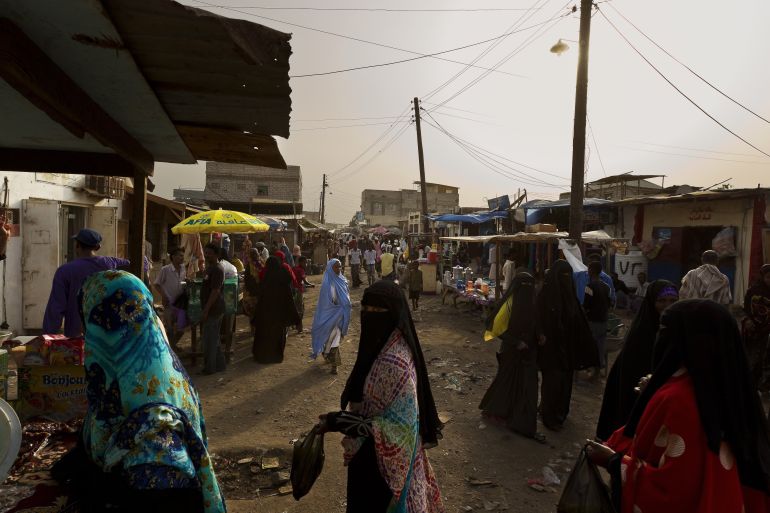
Roads in al-Basateen are typically unpaved, with residents often sheltering in haphazard structures [Brent Stirton/Getty Images]
Little sense of belonging
Poverty is clearly visible in al-Basateen’s architecture and appearance, with tightly packed homes, some made of metal sheets and consisting of only one or two rooms, separated by dirt roads covered in rubbish.
But that is not the only burden weighing on al-Basateen’s Somali residents. A deeper feeling of what many here call “suspended belonging” hangs over them, with the first generation of refugees still carrying memories of a distant homeland and speaking its language, while the second and third generations know only Aden and speak Arabic in the local dialect, with Somalia only known through family stories.
Fatima Jame embodies this paradox. A mother of four, she was born in Aden to Somali parents. She told Al Jazeera: “We know no country other than Yemen. We studied here and got married here, but we do not have Yemeni identity, and in front of the law, we are still refugees.”
Fatima lives with her family in a modest two-room home. Her husband works as a porter in one of the city’s markets, while she helps support the family by preparing and selling traditional foods. Even so, she says their combined income “barely covers rent and food” because of the high cost of living and few job opportunities.
A bleak reality
Conditions in Yemen were never the best for migrants and refugees, but they have significantly worsened since a civil war began in 2014 between the Iranian-backed Houthis and the central government in Sanaa, in Yemen’s north.
The violence from that war, along with declining aid and shrinking job opportunities have increased pressure on both host communities and refugees.
The United Nations Office for the Coordination of Humanitarian Affairs says that funding for support programmes in Yemen in 2025 met only 25 percent of the country’s actual needs, directly affecting the lives of thousands of families. Residents of al-Basateen say the aid they used to receive has sharply declined, and in many cases has stopped altogether.
Youssef Mohammed, 53, says he was one of the first Somali arrivals to the district in the 1990s, and now supports a family of seven.
“[We] have not received any support from organisations for years,” Youssef said, adding that some families “chose to return to Somalia rather than stay and die of hunger here”.
He believes the crisis affects everyone in Yemen, “but [that] the refugee remains the weakest link.”
Despite the bleak picture, a few have managed to improve their material conditions through education or by opening small businesses that have helped stimulate the local economy. But they remain an exception, and the flow of refugees continues.
Yemen is the poorest country in the Arabian Peninsula, but is also the region’s only signatory to the 1951 Refugee Convention, and therefore allows foreign arrivals to apply for asylum or refugee status. According to the United Nations refugee agency, Yemen hosted more than 61,000 asylum seekers and refugees as of July 2025, the vast majority from Somalia and Ethiopia.
Arrivals in recent years have typically travelled to Yemen via boats, with many planning to use Yemen as a transit point before moving on to richer countries like Saudi Arabia.
Hussein Adel is one of those recent arrivals. He is 30, but leans on a crutch on a street corner in al-Basateen.
Hussein arrived in Aden only a few months ago, having made the dangerous journey on a small boat carrying African migrants.
He told Al Jazeera that he fled death and hunger, only to find himself facing a harsher reality. Hussein shelters on the rooftop of a relative’s home and spends his days searching the city for occasional work. His leg injury, he said, was caused by Omani border guards who shot him while he was crossing into Yemen.
As evening falls, the noise in al-Basateen’s alleyways quiets down. Men lean against the walls of worn-out homes, and children chase a ball through narrow passages barely wide enough for their dreams.