Yemen’s ‘Mogadishu’: Somali refugees face poverty, instability in Aden

Aden, Yemen – Lying on the outskirts of Yemen’s interim capital, Aden, al-Basateen district starts where the paved roads end, stretching into narrow, sandy alleyways. It reveals a decades-old refugee story in which Arabic blends with Somali and the faces harbour memories of a different place, across the sea.

Residents know the area by several names, including “Yemen’s Mogadishu” and “the Somalis’ neighbourhood” – a reference to the demographic shift it has seen since the 1990s, when civil war in Somalia pushed thousands of families across the Gulf of Aden in search of safety.

Recommended Stories

list of 3 itemsend of list

Today, local sources estimate the district’s population at more than 40,000, with people of Somali origin making up the majority. They live in harsh conditions where economic vulnerability overlaps with an unresolved legal status.

Some arrived as children holding the hands of relatives, while others were born in Aden and have known no other home. But they all share one thing in common: the refugee label stamped on their official documents.

Harsh living conditions

As dawn breaks, dozens of men gather at the entrances of the area’s main streets, waiting to be picked up to do a day’s work in construction or manual labour. Many depend on this fragile pattern of employment to put food on the table.

Residents say the lack of regular work has become the defining feature of life in al-Basateen, as extreme poverty spreads and humanitarian aid declines.

Ashour Hassan, a resident in his mid-30s, waiting at a main road junction for someone to hire him to wash a car, told Al Jazeera that he earns between 3,000 and 4,000 Yemeni rials a day (less than $3). That amount is not enough to cover the needs of his family, which lives in a single room in a neighbourhood lacking basic services, surrounded by dirt roads and piles of rubbish.

In a voice mixed with fatigue and despair, Ashour summed up life in al-Basateen: “We live day to day. If we find work, we eat. If we don’t, we wait without food until tomorrow.”

Families in al-Basateen typically rely on both men and women to be breadwinners.

Some women work cleaning homes, while others run small businesses, such as selling bread and traditional foods that blend Yemeni and Somali flavours, and which become especially popular during the Muslim fasting month of Ramadan.

Many children also find themselves pushed into work despite their age. One of the main jobs for children involves sifting through waste for materials they can sell, such as plastic or scrap metal, to help support their families.

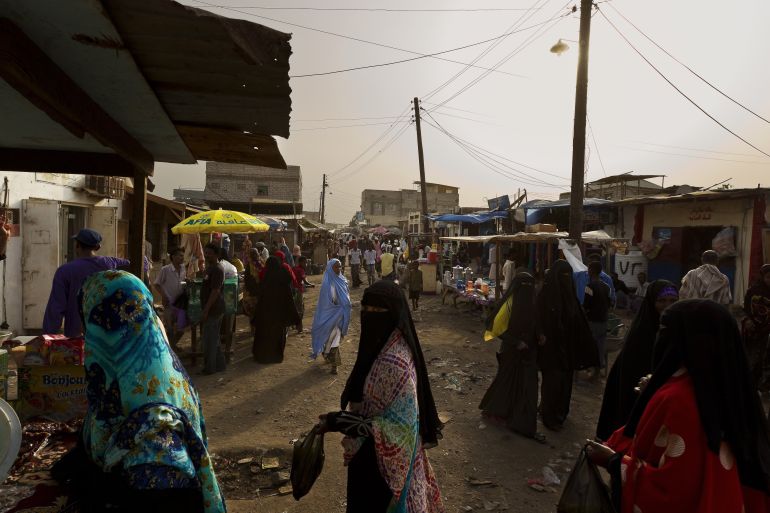
ADEN, YEMEN - AUGUST 2010: Busy market scenes in the Al-Basateen urban refugee area, Aden, Yemen, August 11, 2010. Many of these people are part of the 80 000 refugees who arrive in Yemen on an annual basis from the failed state of Somalia. The Al-Basateen urban refugee area houses more than 40 000 people, most of whom are refugees. (Photo by Brent Stirton/Reportage by Getty Images)
Roads in al-Basateen are typically unpaved, with residents often sheltering in haphazard structures [Brent Stirton/Getty Images]

Little sense of belonging

Poverty is clearly visible in al-Basateen’s architecture and appearance, with tightly packed homes, some made of metal sheets and consisting of only one or two rooms, separated by dirt roads covered in rubbish.

But that is not the only burden weighing on al-Basateen’s Somali residents. A deeper feeling of what many here call “suspended belonging” hangs over them, with the first generation of refugees still carrying memories of a distant homeland and speaking its language, while the second and third generations know only Aden and speak Arabic in the local dialect, with Somalia only known through family stories.

Fatima Jame embodies this paradox. A mother of four, she was born in Aden to Somali parents. She told Al Jazeera: “We know no country other than Yemen. We studied here and got married here, but we do not have Yemeni identity, and in front of the law, we are still refugees.”

Fatima lives with her family in a modest two-room home. Her husband works as a porter in one of the city’s markets, while she helps support the family by preparing and selling traditional foods. Even so, she says their combined income “barely covers rent and food” because of the high cost of living and few job opportunities.

A bleak reality

Conditions in Yemen were never the best for migrants and refugees, but they have significantly worsened since a civil war began in 2014 between the Iranian-backed Houthis and the central government in Sanaa, in Yemen’s north.

The violence from that war, along with declining aid and shrinking job opportunities have increased pressure on both host communities and refugees.

The United Nations Office for the Coordination of Humanitarian Affairs says that funding for support programmes in Yemen in 2025 met only 25 percent of the country’s actual needs, directly affecting the lives of thousands of families. Residents of al-Basateen say the aid they used to receive has sharply declined, and in many cases has stopped altogether.

Youssef Mohammed, 53, says he was one of the first Somali arrivals to the district in the 1990s, and now supports a family of seven.

“[We] have not received any support from organisations for years,” Youssef said, adding that some families “chose to return to Somalia rather than stay and die of hunger here”.

He believes the crisis affects everyone in Yemen, “but [that] the refugee remains the weakest link.”

Despite the bleak picture, a few have managed to improve their material conditions through education or by opening small businesses that have helped stimulate the local economy. But they remain an exception, and the flow of refugees continues.

Yemen is the poorest country in the Arabian Peninsula, but is also the region’s only signatory to the 1951 Refugee Convention, and therefore allows foreign arrivals to apply for asylum or refugee status. According to the United Nations refugee agency, Yemen hosted more than 61,000 asylum seekers and refugees as of July 2025, the vast majority from Somalia and Ethiopia.

Arrivals in recent years have typically travelled to Yemen via boats, with many planning to use Yemen as a transit point before moving on to richer countries like Saudi Arabia.

Hussein Adel is one of those recent arrivals. He is 30, but leans on a crutch on a street corner in al-Basateen.

Hussein arrived in Aden only a few months ago, having made the dangerous journey on a small boat carrying African migrants.

He told Al Jazeera that he fled death and hunger, only to find himself facing a harsher reality. Hussein shelters on the rooftop of a relative’s home and spends his days searching the city for occasional work. His leg injury, he said, was caused by Omani border guards who shot him while he was crossing into Yemen.

As evening falls, the noise in al-Basateen’s alleyways quiets down. Men lean against the walls of worn-out homes, and children chase a ball through narrow passages barely wide enough for their dreams.

VIDEO: Why Tinubu wouldn’t Have Made A Better Choice But Disu – Omole

A security consultant, Charles Omole, has explained why President Bola Tinubu, made the right decision by appointing Tunji Disu, an Assistant Inspector General of Police, as the new Inspector General of Police.

Speaking on Channels Television’s Politics Today, Omole described Disu as a thoroughbred officer who has the requisite skills and combat experience to tackle the nation’s myriad of security challenges.

He expressed optimism that Nigerians would witness a decline in insecurity once Disu assumes duty, lauding the outgoing IGP, Kayode Egbetokun, for his performance in office.


“Acting IG Disu is quite frankly the best choice if Egbetokun is to leave. If the President had asked my opinion which he didn’t, Disu would have been the person I would choose.

“He is an operation guy, one of guys who goes to the bush to deal with the bad guys. I remember when he was the Principal Staff Officer to Egbetokun, one of the discussions I had with Disu at that time was the struggle of doing office based work, rather than being on the street doing what he knows how to do best.

“He just reminded me of Tafa Balogun. He is coming in that mode of somebody who has been an operation guy. Given the security challenges in Nigeria at the moment, the President couldn’t have made a better choice than Disu.

“He knows all the tactical terrains and the strategies needed to move the police to the next level. I’m certain that within the next few months, people will know a new sheriff is in town,” he stated.

READ ALSO: Tinubu Appoints Tunji Disu As Acting Inspector-General Of Police

In a shakeup of the police hierarchy in Nigeria, President Bola Tinubu appointed Tunji Disu as the acting Inspector General of Police.

Disu was appointed after Kayode Egbetokun resigned as the Inspector-General of Police (IGP).

“In view of the current security challenges confronting the nation, and acting in accordance with extant laws and legal guidance, President Tinubu has approved the appointment of Assistant Inspector-General of Police Tunji Disu to serve as Acting Inspector-General of Police with immediate effect,” presidential spokesman, Bayo Onanuga, said in a statement on Tuesday evening.

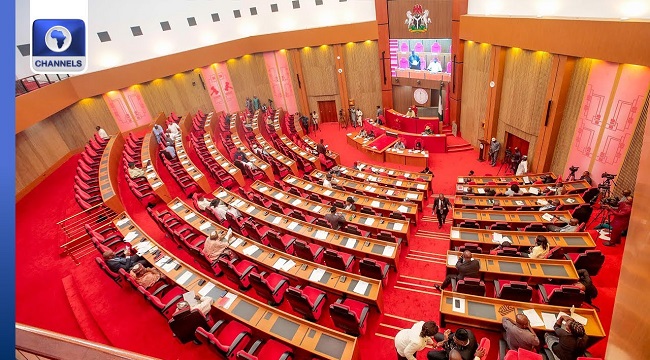
Senate Warns South-East Development Commission Against Misuse Of Funds

The Senate has cautioned the South-East Development Commission (SEDC) to focus on delivering meaningful development to the people and avoid turning the agency into an avenue for siphoning public funds.

The warning came during a budget defence session on Tuesday, where the commission’s management team appeared before the Senate Committee on South-East Development Commission to present its proposed ₦140 billion 2026 budget.

Chairman of the committee, Orji Kalu, charged the commission to remain committed to addressing the longstanding needs of communities across the region.

The former Abia State governor underscored that the agency must not repeat the mistakes that have plagued similar development bodies in the past.

According to him, the commission was created following the recognition of decades of neglect and hardship experienced in the South-East by President Bola Tinubu.

READ ALSO: Tinubu’s Assent To Electoral Act Not Surprising, Predictable — Senator Umeh

“It will be disappointing if this commission fails to execute its mandate and falls into the same controversies that have trailed similar agencies,” Kalu stated.

The Chairman said the committee would exercise strict oversight on the commission’s activities, particularly in the implementation of projects, to ensure tangible benefits for the people.

“Our oversight work shall never be taken for granted. You were appointed to make our region very proud. Our region has suffered so much, and Mr. President has done us the honor of giving us this commission,” the lawmaker said.

“I plead with you not to take this commission as a place for siphoning money. This commission is to work for our people, to rebuild our area. This committee will be very ruthless in its oversight.”

While reviewing the commission’s development roadmap, Kalu commended its economic blueprint, describing it as a critical opportunity for the largely business-oriented people of the South-East to transform the region.

Meanwhile, the Managing Director of the South East Development Commission (SEDC), Mark Okoye, has unveiled an ambitious plan to grow the South-East into a $200 billion economy within 10 years.

Police Arrest 10 Suspected Kidnappers In Ondo

Operatives of the Ondo State Police Command have arrested 10 suspects belonging to a kidnapping syndicate and recovered a ransom from them.

The arrest was carried out on Monday 23rd, February, 2026, by a combined operation between the Command’s Anti-Kidnapping Section and visiting PMF personnel approved and deployed to Ondo State as operational support.

The spokesperson of the Command, Abayomi Jimoh, confirmed the arrest in a statement made available to journalists in Akure on Tuesday.

He noted that the operatives swiftly mobilised to locations along the Ondo Road axis of Akure city, based on credible and actionable intelligence.

READ ALSO: Kayode Egbetokun Resigns As IGP — Presidency

“The intelligence-driven operation led to the arrest of ten suspects believed to be connected to the kidnapping syndicate. All the suspects apprehended are: Muritala Muhammed (aged;22), Mustapha Adamu (aged;20), Usman Ibrahim (aged;25), Amisu Aruna (aged;28), Asiru Abdulasis (aged;20), Abduliu Sanni (aged;22), Ibrahim Suraju (aged;20), Noah Isiaku (aged;20), Abdulahi Suraju (aged;20), and Arabi Hamet (aged;18),” the statement read.

According to Jimoh, a motorcycle, as well as some cash, suspected to be ransom money, were recovered from the Suspects.

“During the operation, their operational motorcycle and ransom money were recovered from the suspects. Notably, part of the recovered cash comprised burnt currency notes, which are currently being documented as exhibits in the ongoing investigation,” Jimoh said.

He noted that the suspects have made useful confessional statements of their involvement in the crime, while the exhibits recovered are currently being processed for comprehensive investigation and further necessary action.

The police spokesperson gave assurance that the command is working towards identifying and apprehending other accomplices who may still be at large.

Reacting to the development, the state Commissioner of Police, Adebowale Lawal, urged communities across the state to organise vigilante groups to complement the efforts of the police and other security agencies.