US re-asserts 2025 strikes ‘obliterated’ Iran’s nuclear programme

The White House has insisted that last year’s strikes against Iran destroyed the country’s nuclear programme despite a recent claim by a senior US official that Tehran is a week away from having bombmaking material.

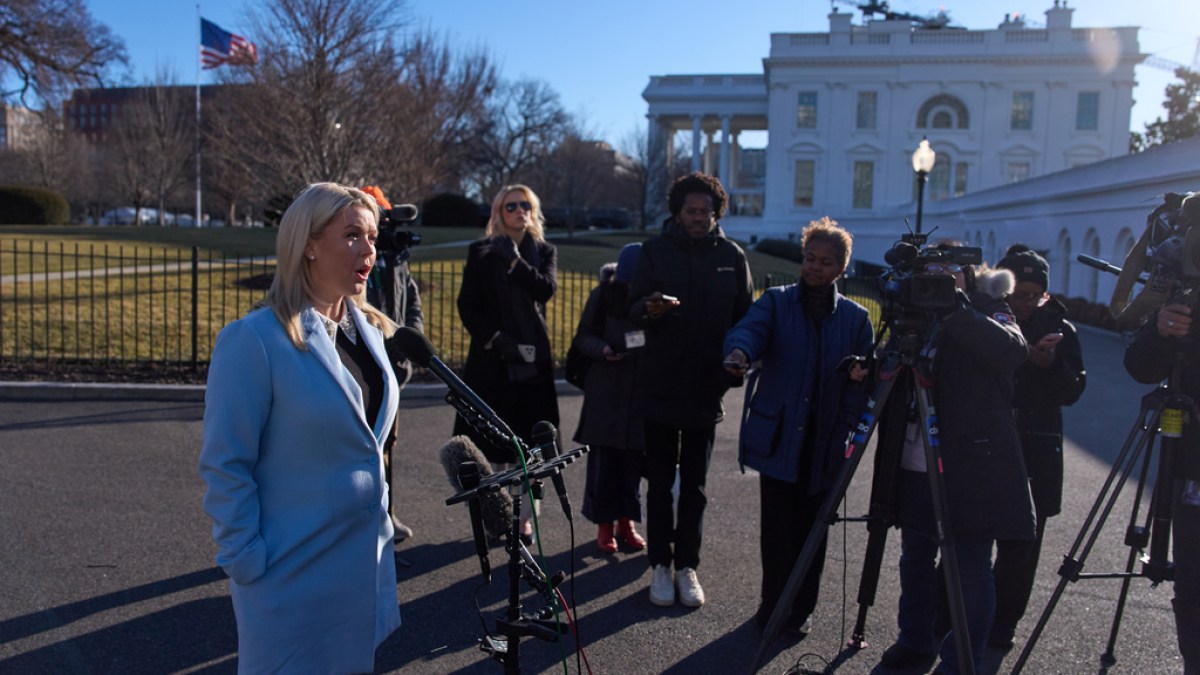
Karoline Leavitt, the White House spokesperson, told reporters on Tuesday that the June 2025 attack on Iran’s nuclear facilities, known as Operation Midnight Hammer, was an “overwhelmingly successful mission”.

Recommended Stories

list of 3 itemsend of list

The attack “did, in fact, obliterate Iran’s nuclear facilities“, Leavitt said.

But just this weekend, President Donald Trump’s envoy Steve Witkoff suggested that Iran is close to having enough material to build a nuclear weapon.

“They’re probably a week away from having industrial-grade bomb-making material,” Witkoff told Fox News on Saturday.

Since last June’s strikes, Trump has repeatedly hailed the attack, arguing that it eliminated Iran’s nuclear programme and led to “peace” in the Middle East. Operation Midnight Hammer came towards the end of a 12-day war Israel initiated with Iran that month.

But eight months later, US and Iranian officials are once again holding talks to reach a nuclear deal and avert another war.

On Tuesday, Leavitt said the destruction of Iran’s nuclear programme had been “verified” by Trump and the United Nations’ watchdog, the International Atomic Energy Agency (IAEA).

“That does not mean that Iran may never try again to establish a nuclear programme that could directly threaten the United States and our allies abroad, and that’s what the president wants to ensure can never happen again,” she added.

Last year, after the US attack, IAEA chief Rafael Grossi said Iran could resume uranium enrichment “in a matter of months”.

But the UN agency’s inspectors have not been able to assess Iran’s nuclear sites since the US strikes.

The Pentagon’s public assessment was that the Iranian nuclear programme was set back by one to two years.

There has been no official confirmation of the US claims that Iran has restarted nuclear enrichment after the attack.

After a visit by Israeli Prime Minister Benjamin Netanyahu to the US in December, Trump renewed his threats to attack Iran if it tries to rebuild its nuclear or missile programme.

Tensions have spiralled since then, with the US amassing military assets near Iran.

Still, Tehran and Washington are set to hold the third round of negotiations this year to push for a nuclear deal.

Iran, which denies seeking a nuclear weapon, has said it would agree to minimal uranium enrichment under strict IAEA supervision in exchange for lifting sanctions against its economy.

But Trump has repeatedly stressed that it is seeking zero enrichment.

Enrichment is the process of isolating and concentrating a rare variant, or isotope, of uranium that can produce nuclear fission.

At low levels, enriched uranium can power electric plants. If enriched to approximately 90 percent, it can be used for nuclear weapons.

Before the June 2025 war, Iran was enriching uranium at 60 percent purity.

Tehran had been escalating its nuclear programme since 2018, when Trump, during his first term, nixed a multilateral agreement that capped Iran’s enrichment at 3.67 percent. He instead started piling up sanctions on the Iranian economy, as part of a “maximum pressure” campaign.

The White House on Tuesday suggested the military option against Iran remains on the table.

‘It would be catastrophic’ – are Spurs too big to go down?

Steve Sutcliffe

BBC Sport journalist
  • 496 Comments

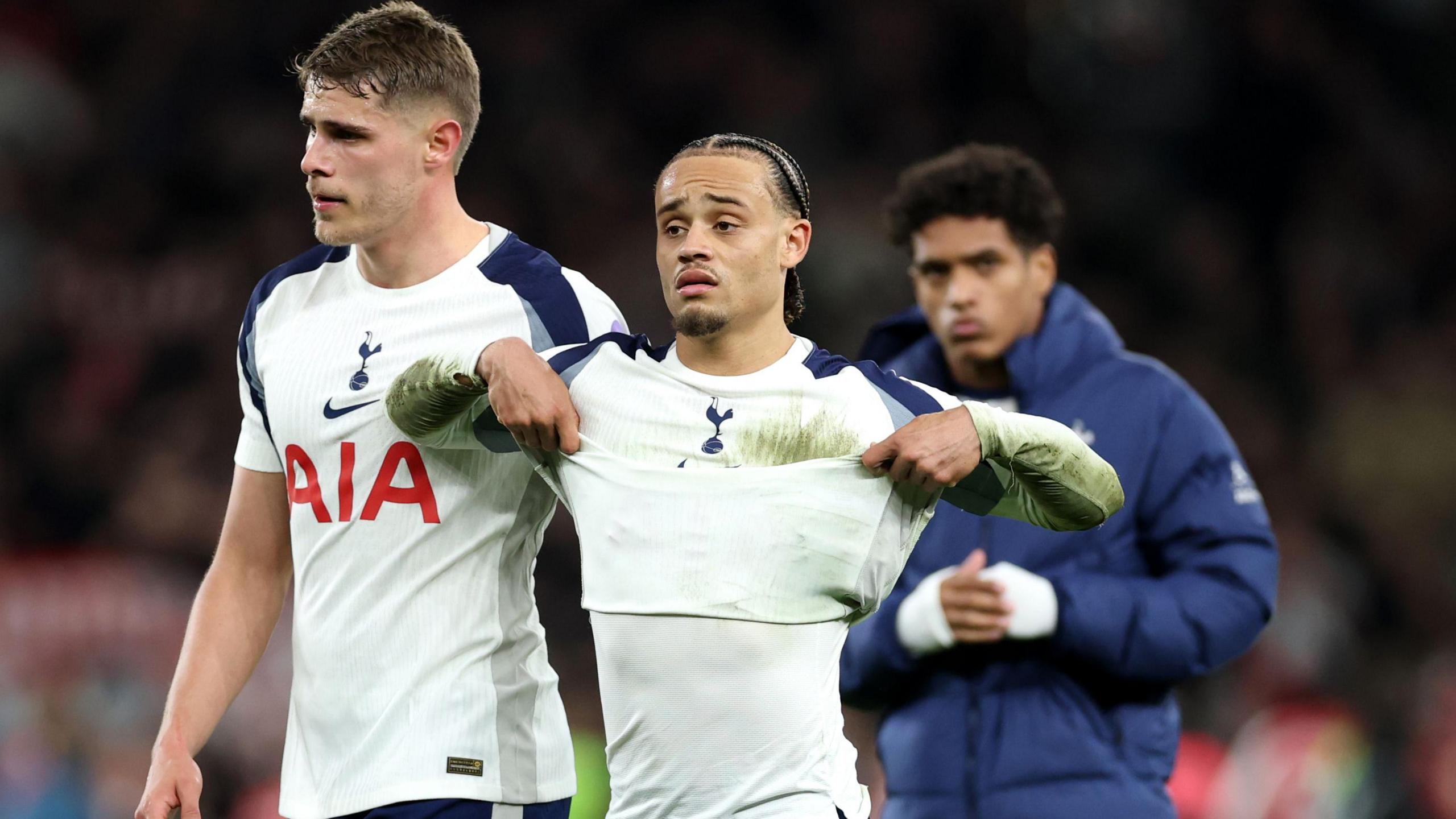
Tottenham‘s heavy north London derby defeat against Arsenal on Sunday just confirmed what everyone already knew.

Igor Tudor’s team are in serious trouble.

Perilously perched just four points above the Premier League relegation zone following the 4-1 home loss, Spurs have a multitude of issues to resolve.

They have not won a domestic league game in 2026 and only two since 26 October 2025, meaning that – aside from bottom club Wolves – 16th-placed Tottenham have the worst form in the division.

New interim head coach Tudor has a crippling injury list to contend with, plus a forthcoming Champions League last-16 tie to negotiate.

And all this is while he is attempting to implement new ideas and avoid the unthinkable scenario of dropping down into the Championship.

Since 1950, Spurs have only spent one season outside the top flight, which was back in 1977-78.

Will they have enough to survive?

In Tottenham’s remaining 11 Premier League games they will visit Wolves and have home fixtures against sides around them in the table – Crystal Palace, Brighton, Nottingham Forest and Leeds.

However, their record at Tottenham Hotspur Stadium this season is frankly abysmal, so can they expect to turn their form around against fellow strugglers?

With just two wins and only 10 points accrued from a possible 42, only Wolves have collected fewer points on home soil.

While sports analytics and data experts Opta place their chances of relegation at just 4.84%, worryingly for Spurs supporters their team have collected just 0.67 points per game since defeating Everton on 26 October.

And unless Tottenham can arrest their slump, that would equate to a further seven points, taking them to 36 on the final day of the season.

“I would be really surprised if they weren’t able to fight their way out of it,” former Spurs midfielder Danny Murphy, told BBC Sport.

“The games coming up are all huge. I think they will have just enough.

“The fact we are mentioning Spurs going down is unbelievable. It’s absolutely ridiculous really.

Injury-hit side need improved ‘mentality’

Dejan Kulusevski and James MaddisonGetty Images

Tottenham finished 17th last term, but were never really in danger of relegation as then-boss Ange Postecoglou juggled an injury-hit squad with a focus on Europe.

While their league form suffered they still scored 64 times and the silver lining was a Europa League triumph over Manchester United last May, which also secured a coveted place in the Champions League.

However, their attacking output this season has been underwhelming and they would need to average 2.45 goals per game in their forthcoming fixtures to match the same tally as the previous campaign.

Former full-back Stephen Kelly believes the “only reason” Tottenham may stay up is that other teams are even worse.

“You look at the fixtures coming and you feel like they are ones they could absolutely lose,” he said.

“They need a mentality to be able to perform at home. If you can get back to winning some games that can make a huge difference, but it just doesn’t feel like that is going to change between now and the end of the season.

“I don’t really want to admit it, and still feel there are teams that are really poor and won’t get themselves out of it [relegation], but the only reason Spurs will be OK is that other teams will do worse.

Relegation now more than ‘short-term’ shock

There has been a number of media reports outlining the calamitous cost that relegation would bring to Spurs.

And the club would undoubtedly face a significant financial hit if it was to start 2026-27 in the second tier.

Broadcast, matchday and commercial incomes would all be squeezed, while the most recent wage bill sat at around £254m as opposed to the Championship average of £38m.

There would also be a knock-on effect on transfers, not only in the quality of players the club could attract but also in paying off £337m in outstanding instalments for current players.

BBC Sport’s own analysis points to an estimated fall in annual revenue of around £261m as football finance expert Kieran Maguire said: “In 2023-24, the most Spurs generated an average of £84 per supporter per match, the highest figure in the Premier League.

“That figure would face significant downward pressure, not from the size of the crowd, but from what clubs can realistically charge.

“Corporate clients who pay a premium for a home fixture against Liverpool or Arsenal are unlikely to pay the same for a visit from Swansea.

“There is also great financial vulnerability around sponsorship. The front-of-shirt deal with AIA, worth around £40m a year almost certainly contains relegation clauses that could halve its value.

“The kit deal with Nike, estimated at £30m annually, is likely to take a smaller hit.

“Spurs supporters will still buy replica shirts regardless of division, but a reduction is likely. Broader sponsorship and partner agreements across the club would face similar issues.”

Clough’s Forest, Newcastle and Leeds fail to avoid the drop

Brian Clough on the Nottingham Forest benchGetty Images

The phrase ‘too good to go down’ was widely banded around about the Forest side that won the first ever televised live Premier League game against Liverpool in August 1992.

Except they weren’t.

The sales of England pair Des Walker and Teddy Sheringham had significantly weakened a group more accustomed to challenging at the top end of the table and in domestic cup finals.

And the two-time former European champions, with a squad containing Stuart Pearce, Roy Keane, Steve Stone and Nigel Clough went down in legendary boss Brian Clough’s final season in charge.

Newcastle players look dejected during the 2008-09 seasonGetty Images

Fabricio Coloccini, Obafemi Martins, Michael Owen, Damien Duff and Nicky Butt were part of the Newcastle squad relegated in 2008-09.

On paper the Magpies also looked relatively strong in the 2015-16 campaign, with Aleksandar Mitrovic, Georginio Wijnaldum and Andros Townsend in their ranks.

Again, that wasn’t enough and they joined another former European Cup-winning club, Aston Villa in going down that year.

The basic premise appears to be that the scrap for survival takes no account of big names – once you’re down there anything can transpire.

“If you keep losing games and confidence drops, it doesn’t matter how many good players you have, it gets hard,” added Murphy.

Sheffield Wednesday have never returned since losing their top-flight spot in 2000, with their sorry plight well documented.

Related topics

  • Premier League
  • Tottenham Hotspur
  • Football

More on this story

  • Tottenham Hotspur stadium
  • Ask Me Anything  logo

Fifa ‘closely monitoring’ Mexico cartel violence before World Cup

Daniel Austin

BBC Sport senior journalist

Fifa says it is “closely monitoring” the eruption in cartel violence occurring in Mexico, which is set to co-host this summer’s World Cup.

The Jalisco New Generation (CJNG) drug cartel – one of the country’s most powerful and feared criminal organisations – has engaged in gun shootouts with the Mexican military, blocked roads and burned vehicles in response to the killing of its leader Nemesio Oseguera Cervantes, better known as ‘El Mencho’, in an army operation.

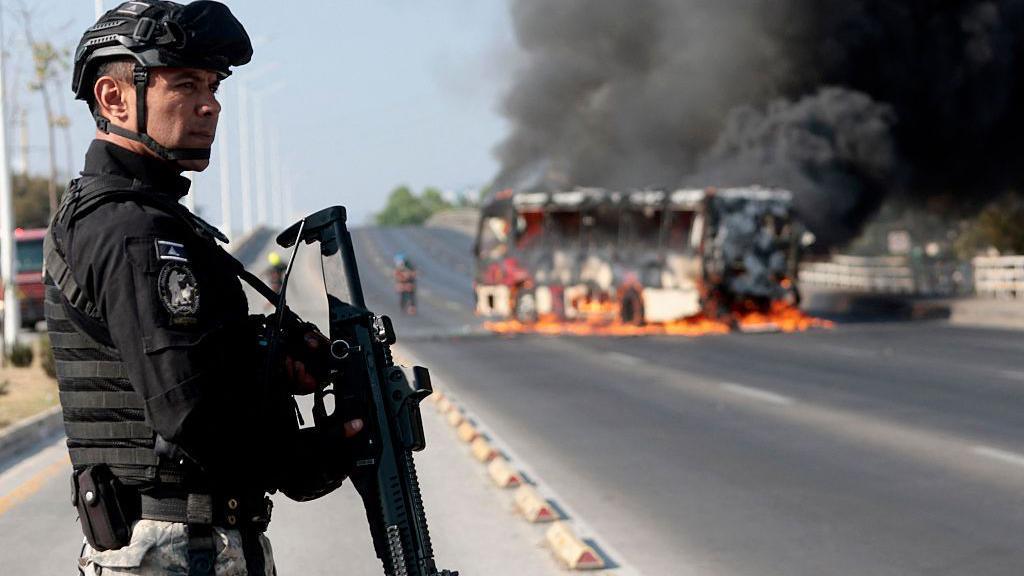
Violence began in the central-western Jalisco state – where a code red security situation has been declared – and has now spread to at least a dozen more regions, with videos posted online showing gunmen patrolling streets and smoke billowing over cities.

At least 25 National Guard officers were killed in the first 24 hours after El Mencho’s killing.

Guadalajara, capital city of Jalisco and home to more than a million people, is scheduled to host four matches at this summer’s tournament. Another five are scheduled in Mexico City, and four in Monterrey.

A Fifa spokesperson said the governing body “remain in constant communication with the authorities”.

To play this video you need to enable JavaScript in your browser.

‘Difficult to manage spiralling situation’

Security at this summer’s tournament could be compromised if the violence becomes a protracted cartel conflict, experts have told BBC Sport.

“When you push down on the cartels you do get pushback – the danger is that it can be very difficult to manage a security situation that spirals out of control,” says Javier Eskauriatza, assistant professor of criminal law at the University of Nottingham.

The power vacuum created by El Mencho’s killing could lead to a period of instability and further conflict as contenders vie to replace him.

“In general the cartels have an economic interest in making sure the World Cup is peaceful,” Dr Eskauriatza adds.

“Yes they pay off politicians and local police forces, but they also buy restaurants and own hotels. They are part of the economic system.

To play this video you need to enable JavaScript in your browser.

‘Moderate risk for tourists this summer’

The CJNG is estimated to be worth more than £10bn and has tens of thousands of members. It has been responsible for a series of killings of politicians, massacres and kidnappings since its formation in 2009.

But some cartel figures retain a level of popularity within local communities in Mexico, as they provide financing for local infrastructure and facilities.

“The response by the CJNG is, in a way, required by the rules of the game – if you have your leader nabbed, you have to respond, otherwise you look weak,” says Dr Eskauriatza.

“They are not idiots – they know that social media will film and amplify these videos for them and and they have made sure the response looks national.”

The US government has advised Americans in Jalisco to shelter indoors until further notice, while fellow World Cup co-host nation Canada has cancelled flights to the Puerto Vallarta airport, and flight tracking apps showed many aeroplanes returning to their departure destinations around the world.

“In terms of tourists, I would say there will be a moderate risk for them,” says Karina Garcia-Reyes, senior lecturer in criminology at UWE Bristol.

A fireman blasts water against a burning bus in Mexico set alight during a spate of cartel violenceGetty Images

‘Risk of new period of instability’

Security planning for the World Cup has already been under scrutiny over the deployment of Immigration and Customs Enforcement (ICE) officers to major US cities by President Donald Trump, leading to the killings of two US citizens by federal agents so far this year, and a series of mass protests.

Last month, Football Supporters Europe said it was “extremely concerned by the ongoing militarisation of police forces in the US”.

Now eyes are on Mexico and whether it can guarantee the safety of travelling fans.

Four football matches – two in the top flight and two in the second division – were postponed on Sunday because of the violence.

“People in Mexico are hoping that this is a one-off retaliation and that as the cartel reorganises itself, things will settle down,” says Monica Serrano Carreto, professor of international relations at El Colegio de Mexico.

“But there is also a risk that this leads to a new period of instability, unpredictability and the violence continues.

“The type of weapons that the cartel has access to means that a military-style confrontation in the aftermath is inevitable – the government would have known that. We have seen in the past they [the cartel] even have weapons capable of shooting down helicopters.

A young male protester holds up a sign reading 'Narcoestado' during an anti-cartel protest in Mexico City, MexicoGetty Images

Mexico has been under increased political pressure to take action against cartels in the past year.

“This response is not unique but is very serious and very high scale,” says Jon Benjamin, UK ambassador to Mexico between 2021 and 2024.

Related topics

  • Football
  • FIFA World Cup

How Epstein tried to buy a Moroccan palace months before his death

Behind high walls outside Marrakesh, Bin Ennakhil unfolds like a private kingdom. The estate spans 4.6 hectares (11.4 acres) and has 60 marble fountains that spill into mosaic-tiled courtyards. Gold-draped salons open onto gardens threaded with olive trees and more than 2,000 palms. A hammam steam spa sits beneath carved ceilings while an outdoor pool glints in the Moroccan sun.

It is the kind of property that keeps its owner beyond the view of the outside world.

Recommended Stories

list of 4 itemsend of list

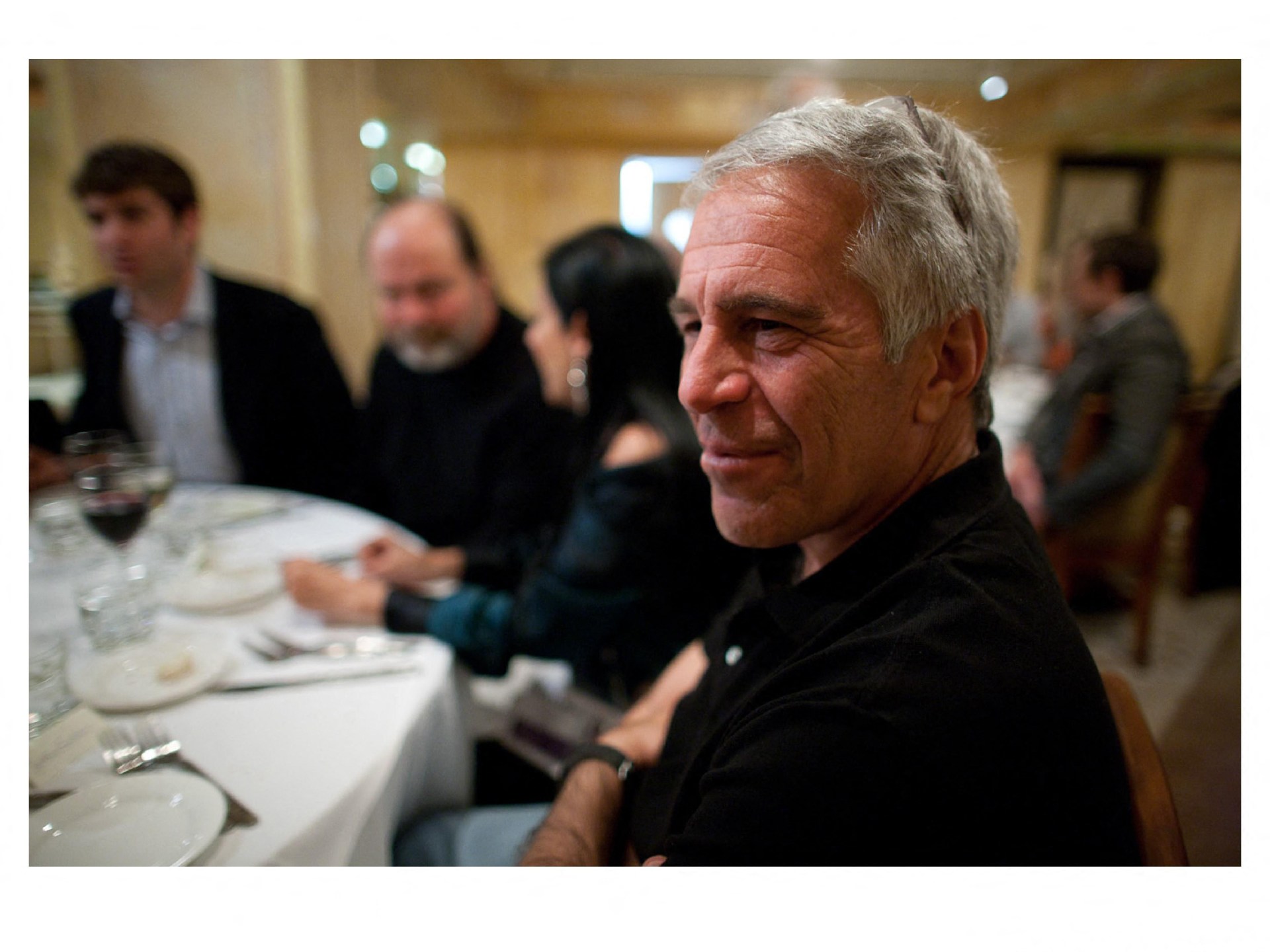
In the summer of 2019, a wire transfer request bearing convicted sex offender Jeffrey Epstein’s signature and dated July 4 was submitted to buy the Moroccan palace – in a country that has no extradition treaty with the United States. Two days later, Epstein was arrested at Teterboro Airport in New Jersey on federal sex trafficking and conspiracy charges.

Newly released US Department of Justice documents reviewed by Al Jazeera show that in the months before that arrest, Epstein had been negotiating to acquire the Moroccan estate through a layered offshore structure spanning the British Virgin Islands and Liechtenstein.

But as scrutiny intensified and details of Epstein’s life and crimes became public, the financial institutions that had long handled his money began to tighten their grip. The documents show banks rejecting wire transfers tied to his accounts and compliance teams escalating internal reviews. Tens of millions of dollars were sent abroad and then pulled back.

The records suggest that a man long adept at navigating complex financial systems was beginning to find those routes closing. A month after his arrest, he was discovered dead in US federal custody.

Epstein and Morocco

Bin Ennakhil palace was not the first time Morocco had appeared in Epstein’s orbit.

Emails examined by French broadcaster France Televisions showed that as early as July 2002, a Swedish national of Algerian origin, Daniel Siad, described by witnesses as a recruiter working for Epstein, sent him a photograph of a young woman in Marrakesh. “Cute French girl in Marrakech,” one message read.

A woman later questioned by French police said Siad “wanted me to meet girls for Epstein, to give him massages, prostitution”. She told investigators Siad showed her photographs of Moroccan girls and asked whether they would appeal to Epstein. “I told him no, that he wouldn’t be interested,” she said, adding that she did not want “another girl to suffer”.

The exchange suggests Morocco was part of Epstein’s international network long before the palace negotiations of 2019.

In 2008, Epstein pleaded guilty in Florida to soliciting a minor for prostitution and served 13 months in jail under a much criticised plea agreement that shielded him from federal prosecution. For years afterwards, he resumed a life of wealth and influence, moving between homes in Manhattan, Palm Beach, the US Virgin Islands and Paris and maintaining connections in finance, academia and politics.

He largely eluded scrutiny until late 2018 when the Miami Herald newspaper published a series of investigations revisiting the 2008 plea deal and giving voice to dozens of his accusers. The reporting triggered a renewed federal investigation. By early 2019, prosecutors in New York were quietly building a new case.

A palace and an offshore financial structure

Documents reviewed by Al Jazeera show that in February 2019, five months before his arrest, negotiations were under way for the purchase of Bin Ennakhil.

The transaction was not structured as a straightforward real estate purchase. Instead, emails show the deal involved acquiring shares in a Liechtenstein company connected to the property through a British Virgin Islands trust.

In the correspondence, the broker noted the arrangement would “save 7% in government taxes”. The proposed buyer was identified as “The Haze Trust”, and the price under discussion was about 25 million euros ($29.5m).

The emails were handled by Karyna Shuliak, who was described in media reports at the time as Epstein’s girlfriend and who also worked for his companies. She advanced negotiations on his behalf.

Rejected wires and new accounts

However, internal banking records reviewed by Al Jazeera show that a month later on March 13, 2019, a wire transfer tied to “Epstein, Jeffrey E.” was marked “Rejected” by Deutsche Bank

The documents do not specify why the transaction failed. According to the Reuters news agency, Deutsche Bank was in the process of winding down accounts held by Epstein in 2019.

About this time, Epstein appeared to turn to a new financial institution: Charles Schwab. It opened three accounts for Epstein-linked companies in April 2019, including one for Southern Trust, an Epstein-owned entity trying to buy the Moroccan palace.

On June 26, 2019, Southern Trust instructed Schwab to wire roughly 11.15 million euros (then worth about $12.7m), to an account in Switzerland held by Marc Leon, the Marrakesh-based realtor handling the sale, according to a suspicious activity report described by Reuters.

The next day, Schwab received a call asking to reverse the transfer. The funds were due to be returned on July 10.

Two days before his arrest, on July 4, 2019, a second wire request was submitted by Southern Trust, this time for $14.95m. It was signed by Epstein.

According to the suspicious activity report cited by Reuters, the Southern Trust account did not contain sufficient funds at that moment because the earlier $12.7m had not yet been credited back to it.

The second transfer was cancelled on July 9, 2019.

The death of Epstein

Additional documents reviewed by Al Jazeera show that by late July 2019, federal investigators were discussing a Charles Schwab account and Switzerland. One internal email noted that Epstein had “tried to send money … to Switzerland”.

Schwab told Reuters it had concerns about attempted wires “for the purpose of real estate, in light of negative media surrounding Jeffrey Epstein” and worries about him being a possible flight risk before a bail hearing.

By early July, the financial systems that had long sustained Epstein’s opulent life were beginning to close around him as transfers were flagged and the flow of funds reversed. Epstein’s financial manoeuvring had collided with a legal reckoning

On July 6, 2019, Epstein was arrested at Teterboro Airport in New Jersey by a Crimes Against Children Task Force on charges of sex trafficking minors from 2002 to 2005.

Investigators seized electronic devices from his homes in New York, Florida and the US Virgin Islands. According to court filings, the search of his Manhattan townhouse yielded evidence of sex trafficking and hundreds, possibly thousands, of sexually suggestive photographs of girls.

Epstein sought release on a proposed $100m bond and offered to submit to house arrest at his Manhattan mansion. US District Judge Richard M Berman denied the request, ruling that he posed both a danger to the community and a serious flight risk.

The palace near Marrakesh with its fountains and marble courtyards was never owned by Epstein. Instead, he was held at the Metropolitan Correctional Centre in Manhattan, a federal jail where detainees are confined to small cells behind steel doors.
Iran’s government stresses ‘red lines’ as students protest in universities

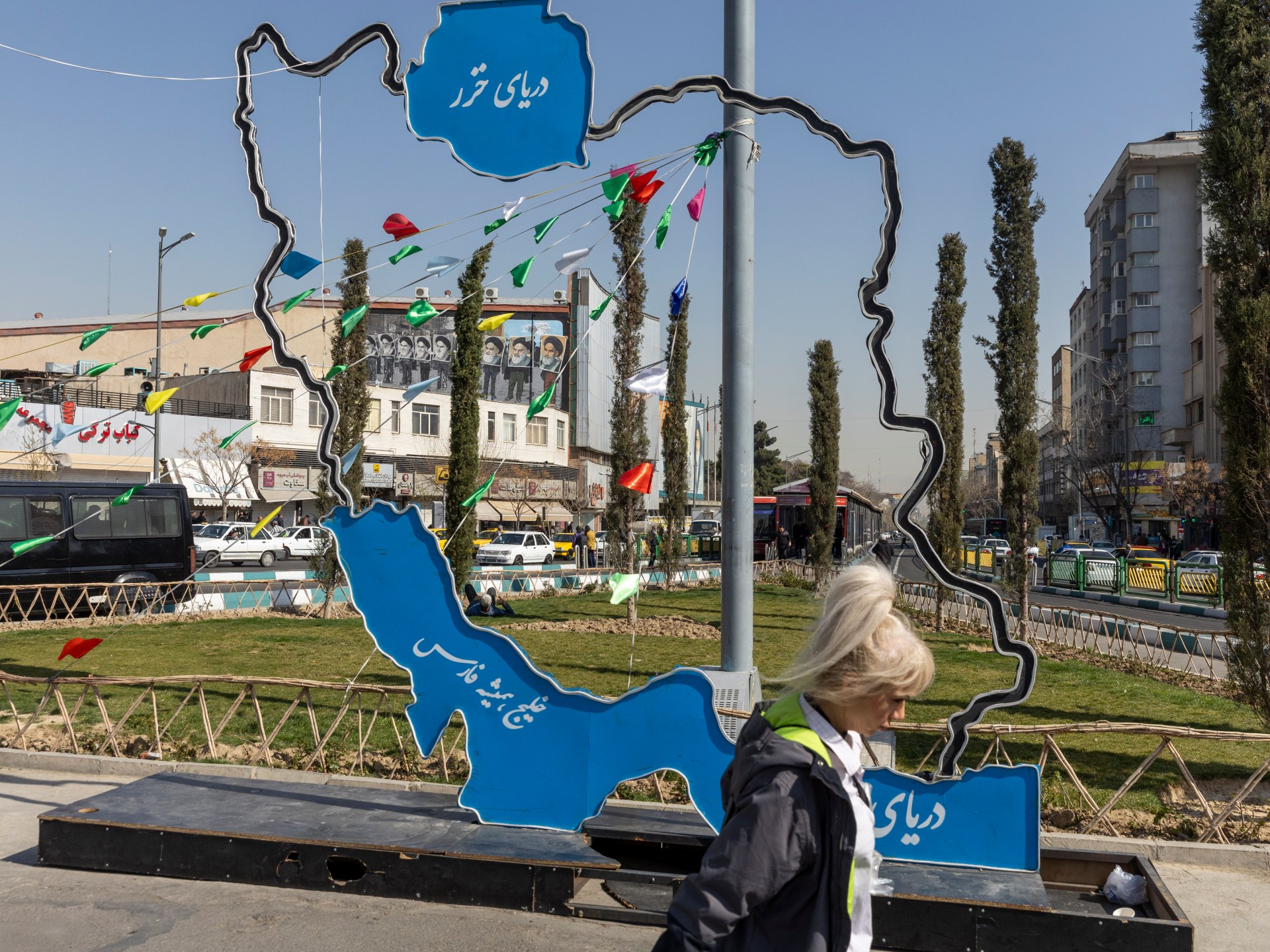
Tehran, Iran – The Iranian government has emphasised that protesting students must adhere to the theocratic establishment’s “red lines” as violent clashes took place inside universities for a fourth day.

Iranian students “have wounds in their hearts” and are angry, government spokesperson Fatemeh Mohajerani acknowledged to reporters during a news conference in Tehran on Tuesday, in an apparent reference to thousands killed during nationwide protests in January.

Recommended Stories

list of 3 itemsend of list

But she added that “sacred things and the flag are two of the red lines that we must protect”, a day after footage circulating online appeared to show some students tearing up and burning the country’s current flag, and hoisting Iran’s lion and sun flag, which was used before the 1979 Islamic revolution.

Mohajerani said the government believes the students must be heard, but confirmed that many universities remain closed more than a month after the protest killings, which mostly took place on the nights of January 8 and 9. Some universities have already moved classes online for the remainder of the Iranian calendar year, which ends on March 20.

But videos released on Tuesday by students and local media from inside tense university campuses that are still open showed pro-state groups affiliated with the paramilitary Basij force of the Islamic Revolutionary Guard Corps (IRGC) violently clashing with anti-establishment students.

Major demonstrations also took place across multiple top universities in Tehran, as well as in Shiraz to the northeast and Isfahan in central Iran, all major hotspots during the nationwide protests last month.

Protesting students chanted “Death to the dictator”, “Freedom” and “With each killed, a thousand stand behind them”.

Translation: Student clashes in gatherings at Tehran’s Khaje-Nassir-Toosi University of Technology.
Pro-government students were seen holding public prayers and reciting the Shia Islamic chant of “Haydar Haydar” as they marched in universities with the backing of university officials and security forces.

State media said no students were arrested inside universities this week, but confirmed that a number of students have had internal disciplinary cases opened against them, and some have already been suspended. Many students and schoolchidren remain imprisoned after being arrested during and in the aftermath of the nationwide protests.

“Due to reports of violations of student disciplinary guidelines, you will not be allowed to enter the university grounds. Refer to the university’s security department to offer explanations as soon as possible,” read a text message sent to a number of protesting students shared online.

Masoud Tajrishi, director of the Sharif University of Technology in Tehran, warned students on Monday that the prosecutor general’s office is now handling the issue of protesting students and that he would not help them if they are arrested.

“And if the number of those forbidden from entering the universities grows too much, we will hold all classes online,” he said, according to the university’s student publication.

The prestigious university’s website was hacked on Monday, with the hackers displaying its original name before the 1979 Islamic revolution – Aryamehr University. Officials had to take down the website for several hours to recover it.

Another cyberattack on the same day led to about 50,000 Iranians receiving a text message reading, “To the oppressed people of Iran: the US president is a man of action, you will soon see”. Iran’s cyberpolice said it was investigating on Tuesday.

The message was in reference to US President Donald Trump’s repeated threats to attack Iran if it does not agree to an agreement significantly curbing its nuclear and missile programmes, and end support for aligned armed groups in Lebanon, Iraq, Yemen, and Palestine.

As more mediated talks are expected between Iran and the US in the coming days in Geneva, Tehran has emphasised that it will only discuss its nuclear issues in exchange for lifting harsh sanctions that have helped push the country’s economy to the brink.

The IRGC on Tuesday held more military exercises along Iran’s southern shores. State television showed drones being launched and ground forces drilling to counter a potential US troop deployment on Iranian soil.

Clashes over human rights record

The Iranian government has also continued to push against the United Nations and international human rights organisations, as well as Western and other nations, who have condemned the Islamic Republic for the protest killings in January.

Human Rights Watch said in a report on Tuesday that Iran’s theocratic establishment committed “massacres” last month and has since launched a “tsunami of arbitrary arrests and enforced disappearances”.

Kazem Gharibabadi, deputy foreign minister for legal and international affairs, reiterated the state’s claim during a UN Human Rights Council in Geneva on Monday that “terrorists” trained, armed and funded by the US and Israel were behind the unrest. He said concerns raised over Tehran’s human rights conduct are “politicised”.

The Iranian government says that 3,117 people were killed during the protests, but US-based HRANA claims it has documented more than 7,000 deaths and is investigating nearly 12,000 more.

Fubara Congratulates APC Candidates On Rivers Bye-Election Victory 

Rivers Governor, Siminalayi Fubara, has congratulated the candidates of the All Progressives Congress (APC) on their victory in Saturday’s bye-elections held in two state constituencies.

The Independent National Electoral Commission (INEC) conducted the polls to fill vacant seats in the Rivers State House of Assembly.

Ukalikpe Napoleon emerged winner in Ahoada East State Constituency II, while Bulabari Henrietta Loolo secured victory in Khana State Constituency II, defeating candidates of other political parties.

Governor Fubara, in a statement by his Chief Press Secretary, Onwuka Nzeshi, described the victories as well-deserved, citing the candidates’ popularity in their respective constituencies.

He said the results reflected the beauty of democracy, noting that when people believe in a candidate’s capacity, they express it through their votes.

READ ALSO: APC, PDP Trade Words Over 2026 FCT LG Election Results

The governor expressed readiness to work with the newly elected lawmakers and their colleagues in the Assembly.

“It is the beauty of democracy. When the people believe in your capacity, they will give you their votes. I look forward to working with them and their colleagues in the State House of Assembly,” the governor said.

The governor also commended residents of the two constituencies for conducting themselves peacefully before, during, and after the elections.

Fubara Lists Achievements in healthcare

Meanwhile, Fubara has declared that his administration has made significant strides in the health sector in the past two and a half years.

He listed some of his achievements, including the employment of over 2,000 health workers, which was in order to boost the manpower and efficiency of the sector.

The statement disclosed that the administration has revived and expanded several abandoned health facilities, including the Zonal Hospitals in Bori, Omoku, Ahoada, and Degema.

“As an administration, we are very passionate about the health of every citizen and resident of Rivers State. When we realised that many people have been under stress as a result of economic hardship, we decided to introduce mental health services at the primary healthcare level,” Nzeshi said in another statement.