Team GB’s curlers discuss winning silver on BBC Breakfast

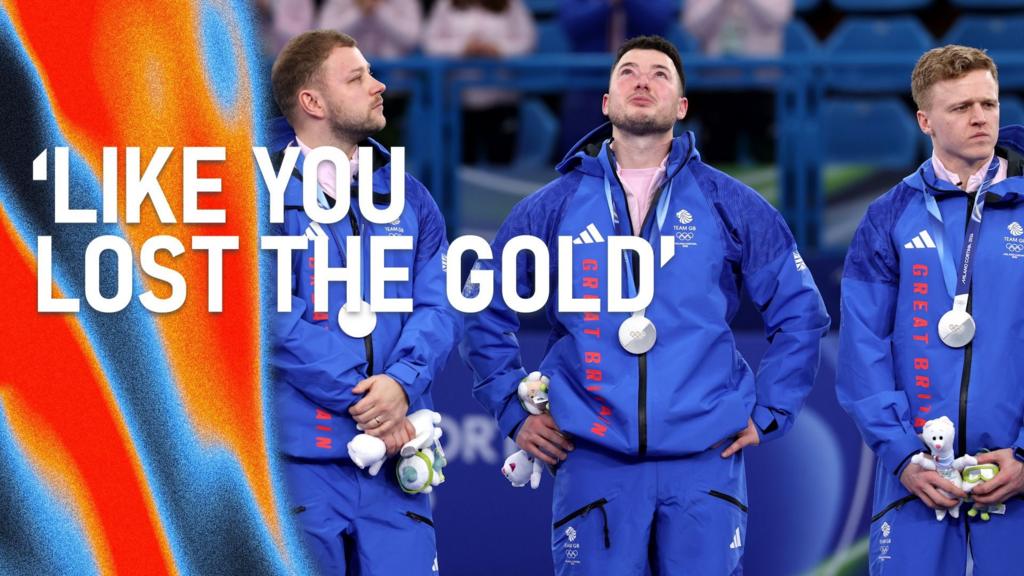
Team GB’s silver medal-winning curling team could go for gold at the 2030 Winter Olympics in France but will “sit down in the summer” before making a decision.

They spoke to BBC Breakfast about the disappointment of losing to Canada in Sunday’s final.

Three myths about the Russia economic war

Four years after Russia’s full-scale invasion of Ukraine, the devastation wrought by the Kremlin’s drones, infantry, missiles and armour continues to be matched by economic destruction. This is a cost borne mostly by Ukraine: The World Bank now estimates the cost of reconstruction, were the war to end today, is now $588bn, nearly three times the country’s GDP.

Simultaneous to the fighting in Ukraine itself, the economic war between Russia and the West rages on. But that battlefield has shifted far more sharply than the one in southern and eastern Ukraine has over the past year. With a war of attrition being waged on the ground, how the geo-economic battleground plays out from here may well prove more important in determining how the conflict is ultimately settled.

The nature of the changes in both sides’ economic fighting conditions, however, is obscured by a dense fog of war. This is compounded by the fact that most participants in this economic conflict are increasingly happy to obscure the state of the geo-economics at play, and to let narratives play out that are more rooted in propaganda and politics than fact. To understand where the war is headed, it could help to bust three myths about Russia’s current state of economic affairs and Western capabilities.

The first is that the economic cost Russia has borne is manageable. The Kremlin may appear willing to wage the war no matter the cost to its coffers and people, but that does not mean that doing so is not devastating its economy.

As a result of the 2022 invasion, the Kremlin has lost what was its largest gas export market: Europe. Before the war, Russia sold roughly 150 billion cubic metres (bcm) of gas to the EU annually; that number is down to 38 bcm. Based on the recent prices for European gas futures, every billion cubic metres is worth more than 300 million euros ($353m), meaning Russia is losing out on as much as 34 billion euros ($40bn) annually. That sum will increase next year when EU countries will phase out completely Russian gas imports.

Approximately $335bn in Russian sovereign assets remain frozen worldwide as well. Although the Kremlin has launched repeated legal challenges to the underpinning sanctions to scare off Ukraine’s backers from harnessing these in its defence, reading between the lines of recent Russian offers in negotiations indicates the Kremlin acknowledges a large portion thereof will never be recovered.

The Kremlin has also acknowledged that its remaining domestic piggy bank, the National Wealth Fund, is running dry, and with withdrawals at a record pace at the beginning of the year could even be spent by year’s end, barring a sustained uptick in oil prices.

The sole area of the economy that is performing well is that connected to the military and defence production, but sustained high borrowing costs and the decline in employable Russians due to war losses and recruitment mean that the Russian economy continues to bleed, too.

The second myth that must be dispelled is that the US has lost interest in fighting the economic war against Russia.

President Donald Trump may be making offers for Russian-American cooperation if a ceasefire and potential settlement to the conflict are reached, but it is still maintaining the sanctions.

In fact, his administration’s punitive economic measures are bringing real additional pain to the Kremlin in its sole remaining other major export market: oil.

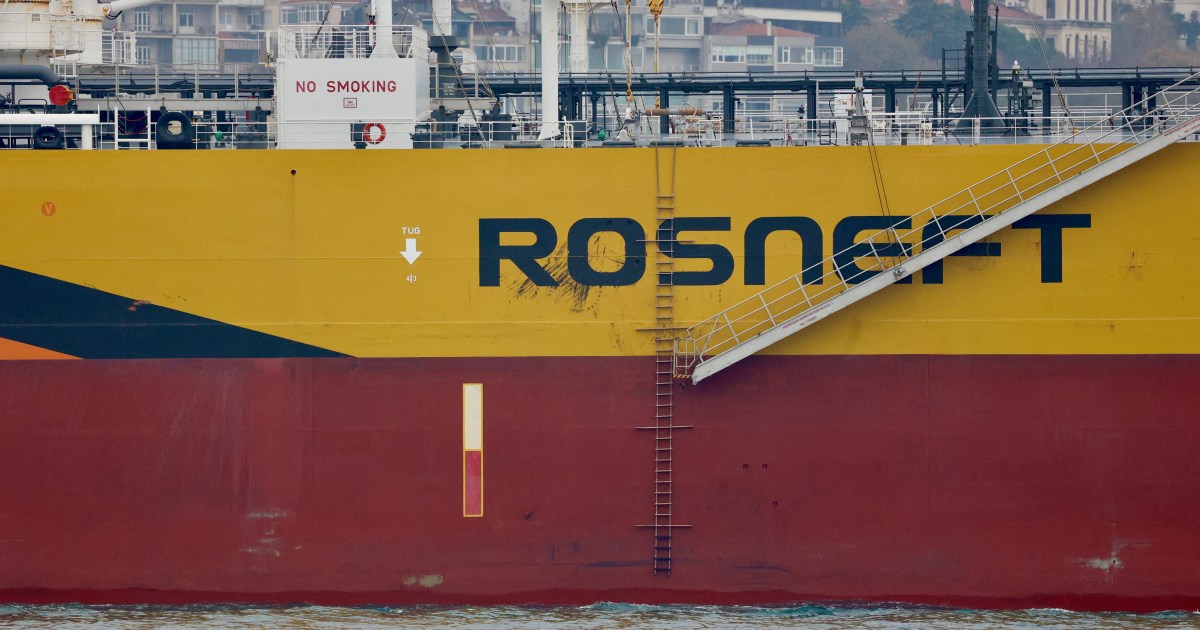
Since Washington imposed sweeping sanctions on Russia’s two largest oil companies, Rosneft and Lukoil, in October, early signs suggest the measures are beginning to disrupt the Kremlin’s ability to place barrels on global markets.

The restrictions blacklisted firms responsible for a large share of Russian crude exports and deterred banks, traders and refiners from participating in deals, particularly in Asia. The Trump administration may lag well behind Europe in imposing sanctions on Russia’s shadow fleet, but it has outpaced Europe in targeting Iran’s, meaning there are more “black” barrels in the market than before.

The result has been a growing pool of oil in search of buyers. Cargoes have accumulated, with tens of millions of barrels stranded in storage or on tankers without firm destinations as refiners hesitate to risk sanctions exposure. The emerging pattern suggests sanctions are not stopping exports outright, but forcing a slower and less certain trade in which Russian crude must hunt for buyers – and offer increasingly sharp discounts.

Therefore, even as the geopolitical risk premium driven by Trump’s threat to strike Iran has seen the benchmark Brent oil price reach more than $70 per barrel, Russia has had to offer discounts of as much as $30 per barrel to secure buyers.

This is not only a US story. Even in India, where Washington has openly negotiated on tariffs in exchange for decreasing Russian oil purchases, European sanctions have helped heap on the pressure. Brussels significantly sharpened its “anti-circumvention measures” over the past year, going as far as to target refineries in both China and India.

In the latter case, the country’s second-largest refinery, Vadinar, which is part-owned by Rosneft, has been blacklisted since the middle of last year.

Europe is currently preparing its 20th sanctions package and has proposed going further still, including with an outright ban on providing any support for the trading of Russian crude. That process, however, as well as the crucial 90-billion-euro ($106bn) loan that Brussels agreed to provide Kyiv in December, has been delayed by the latest round of intra-EU squabbling, after Hungary extended its veto on the eve of the invasion’s anniversary.

And therein lies the third myth due for dispelling in relation to the ongoing economic war: Europe must be prepared to pay for assistance to Kyiv from its own coffers. The EU does have a viable alternative: Russia’s frozen assets.

In fact, the 90-billion-euro loan plan was itself thrown together at the last minute in December, after the bloc failed to unite on a plan to harness these assets, the lion’s share of which is firmly under EU jurisdiction. Negotiations failed last year, but that does not mean they cannot be revisited.

With Russia-US-Ukraine diplomatic negotiations making no discernible progress, and both sides girding for fighting to continue unabated into a fifth year, the economic war is set to trundle on, as well.

To threaten a real collapse of the Russian economy and force Moscow to make concessions on ending the war, the West must take steps it has been unable to so far. The alternative is far worse: striking a deal on the Kremlin’s terms that may encourage future aggression.
The killing of Mexican drug lord El Mencho: How it unfolded

Mexican forces killed Nemesio Oseguera Cervantes, known as “El Mencho”, the leader of the Jalisco New Generation Cartel (JNGC), in a high-risk operation in the western state of Jalisco on Sunday.

Security forces tracked El Mencho, one of the United States’s most wanted fugitives, to a property in the mountain town of Tapalpa, central-western Mexico, after receiving intelligence linked to a close associate.

Recommended Stories

list of 3 itemsend of list

Troops launched a predawn raid on Sunday, triggering hours of gun battles and a wave of violence across several states.

The killing marks the most significant blow against organised crime since Mexican and US authorities recaptured Joaquin Guzman, known as “El Chapo”, nearly a decade ago.

Here is what we know about how the operation to capture El Mencho unfolded on Sunday.

Who was El Mencho?

El Mencho, 59, was believed to be a former police officer. He was from Michoacan, western Mexico, and built a vast criminal enterprise over more than 30 years.

US authorities convicted him of heroin trafficking in the mid-1990s, and he served a prison sentence in the US before returning to Mexico, where he rose rapidly within the drug underworld.

Around 2009, he founded the JNGC, which expanded rapidly to become one of Mexico’s most powerful and violent cartels.

The group trafficked cocaine, methamphetamine and fentanyl to the United States and smuggled migrants northwards.

It also earned notoriety for deploying military-style tactics, including armed drones and improvised explosive devices, and for launching direct assaults on security forces.

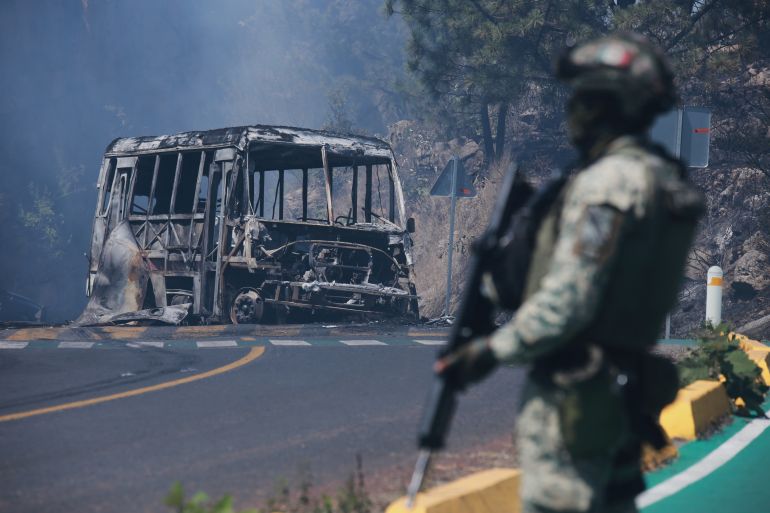
A soldier stands guard by a charred vehicle after it was set on fire, in Cointzio, Michoacán state, Mexico, Sunday, Feb. 22, 2026, following the death of the leader of the Jalisco New Generation Cartel, Nemesio Oseguera, known as "El Mencho." (AP Photo/Armando Solis)
A soldier stands guard by a charred vehicle after it was set on fire, in Cointzio, Michoacán state, Mexico, Sunday, February 22, 2026, following the death of the leader of Nemesio Oseguera, known as ‘El Mencho’ [AP Photo/Armando Solis]

How did the operation unfold?

On February 20, acting on new intelligence from an associate of one of El Mencho’s romantic partners, Mexican authorities began surrounding the site in Tapalpa where El Mencho was believed to be hiding.

Special forces, backed by the National Guard, military aircraft and helicopters, sealed off the area before dawn on February 22.

Cartel gunmen opened fire as soldiers advanced. Security forces returned fire, killing several suspected CJNG members. El Mencho and members of his inner circle fled to a nearby wooded cabin complex, where a second firefight erupted.

Soldiers eventually found a wounded El Mencho alongside two bodyguards. The authorities airlifted him to a medical facility, but he died during the flight.

A US defence official told Reuters that a US military-led intelligence task force focusing on drug cartels had supported the operation.

National Guard members patrol the area outside the General Prosecutor's headquarters in Mexico City
National Guards patrol the area outside of the General Prosecutor’s headquarters in Mexico City, Sunday, February 22, 2026 [Ginette Riquelme/AP]

What happened in the aftermath of the operation?

The raid set off an immediate response from cartel bosses. The defence ministry identified a senior JNGC figure known as “El Tuli”, El Mencho’s right-hand man and a top financial operator within the cartel, as the organiser of coordinated attacks in Jalisco.

Mexican authorities said he orchestrated roadblocks, arson attacks and assaults on government facilities, and offered a bounty of 20,000 pesos ($1,100) for the killing of each member of the military, following the February 22 operation.

Later the same day, security forces tracked him to El Grullo, a small town about 180km (112 miles) southwest of Guadalajara. He attempted to flee, firing on officers who killed him in the ensuing clash.

Violence spread across Mexico rapidly. Cartel members torched vehicles and blocked highways in several states.

Airlines cancelled flights to Puerto Vallarta, a Pacific resort city in the western state of Jalisco, as plumes of smoke rising over parts of southern Mexico grabbed international headlines.

Schools and universities suspended classes, and local authorities urged residents to remain indoors.

By Monday, authorities reported that at least 30 suspected gang members, 25 National Guard troops and one civilian had been killed in the unrest following the operation.

Security forces arrested more than 70 people across seven states and recorded at least 85 cartel-related roadblocks on Sunday alone.

The killing of El Mencho removes one of Mexico’s most feared crime bosses.

Abidjan Signals Readiness To Host 10th AFRIMA

Abidjan has declared its ambition to host a future edition of the All Africa Music Awards (AFRIMA), as Francophone stakeholders gathered for the Road to the 10th Edition Media and Stakeholders’ Parley on Tuesday.

The event, held in Côte d’Ivoire, marked the second stop in the global build-up to AFRIMA’s milestone 10th edition, following an earlier engagement in Dar es Salaam, Tanzania.

It brought together government officials, cultural industry leaders, artistes and media practitioners, underscoring the city’s growing profile as a creative hub in Francophone Africa.

Serge Akpatou, Deputy Director-General of the Ivorian Bureau of Copyright (BURIDA), said the awards platform continues to strengthen the continent’s creative ecosystem.

“AFRIMA adds real value to Africa’s creative ecosystem. It promotes our artistes, strengthens intellectual property awareness and connects us to the rest of the world. Abidjan has the capacity and the cultural depth to host a future edition, and we sincerely hope that opportunity will come,” Akpatou said.

READ ALSO: Rema, Burna Boy, Jux, Wendy Shay, Others Emerge Winners At AFRIMA Awards (FULL LIST)

Representing the Minister of Culture and Francophonie, Hein Sie described AFRIMA as a driver of cultural diplomacy and economic growth.

“Events like AFRIMA are important for our continental visibility. They celebrate African excellence, create opportunities for our creatives, and reinforce our identity.

“Côte d’Ivoire is proud of its artistes who have done us proud on a massive platform like AFRIMA, and we are ready to support initiatives that position our country as a creative force,” he said.

Members of AFRIMA’s International Executive Committee, including Associate Producer Victoria Nkong and International Jury member Messie Mboukou, led discussions on the awards process and collaboration with Francophone stakeholders.

Mboukou emphasised the importance of transparency and partnership as preparations intensify for the landmark edition.

“This gathering is not only about celebration. It is about dialogue, transparency and building stronger bridges between artistes, the media, cultural institutions, policy makers and AFRIMA.

“As we approach the 10th edition, continuous collaboration with Francophone Africa is vital for us not to be left out in the AFRIMA movement,” Mboukou said.

Addressing questions on adjudication, he added that the process is supervised by the African Union and independently audited to ensure credibility.

The parley featured several winners from the ninth edition, including Ivorian stars Didi B, Morijah and the group Team Paiya, alongside DJ Moh Green and Axel Merryl.

Receiving her trophy for Best Female Artiste in African Inspirational, Morijah said, “This award represents years of sacrifice and dedication. I am grateful to AFRIMA and Africa for recognising my work on such a respected global African platform.”

Didi B described the awards as a networking platform that expands opportunities for collaboration across borders, while other winners highlighted the exposure and confidence gained from the recognition.

10th Edition

Although the official dates are yet to be announced, the International Committee noted that preparations are underway for the 10th edition in partnership with the African Union Commission and host city Lagos.

Meanwhile, celebrations continue following the successful ninth edition held from January 7 to 11, 2026, at the Eko Convention Centre.

At that ceremony, top honours went to Rema, who emerged Artiste of the Year, while Burna Boy won Album of the Year. Other major winners included Shallipopi, Qing Madi, Juma Jux, Wendy Shay and Element Eléeeeh.

Qing Madi 9th AFRIMA Awards for Most Promising Artiste of the Year. Credit: afrimaofficial/X

The ceremony, hosted by Falz and French-Senegalese presenter Liliane Maroune, featured performances by Stonebwoy, Mr P, Seyi Vibez and Adewale Ayuba.

Founded in 2010 by the AFRIMA International Committee in partnership with the African Union, the awards remain Africa’s longest-running continental music platform, dedicated to celebrating and promoting African music globally.

‘It bothers me that Vinicius’ celebration is being used against him’

Bobbie Jackson

BBC Sport journalist

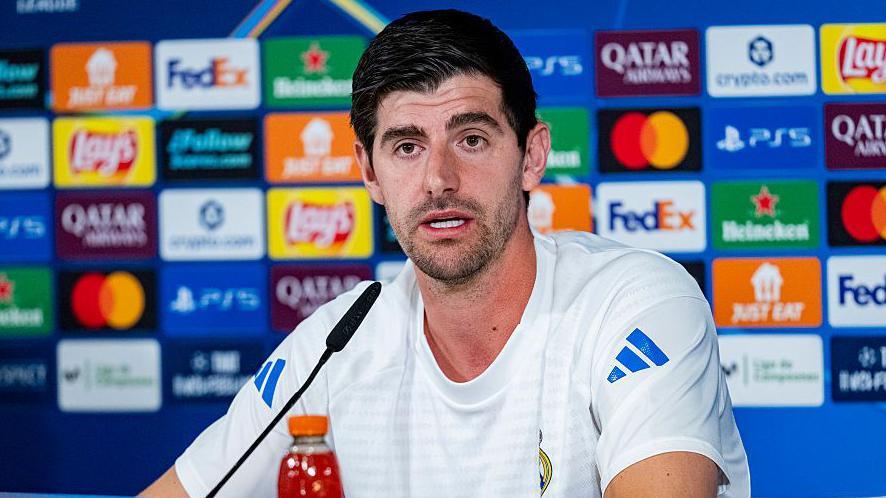
Real Madrid goalkeeper Thibaut Courtois says Vinicius Jr’s celebration against Benfica in last week’s Champions League tie in Portugal “does not justify a suspected act of racism”.

Vinicius alleged he was racially abused by Benfica’s Gianluca Prestianni shortly after scoring a stunning goal that earned the Spanish side a 1-0 win in the knockout round first-leg encounter.

Argentine winger Prestianni denied racially abusing Vinicius but has been handed a one-game provisional ban by Uefa and will miss Wednesday’s return in Madrid.

Vinicius was shown a yellow card for celebrating in front of the Benfica supporters after his strike.

Speaking after the game, Benfica boss Jose Mourinho said he believed the Brazilian forward had acted disrespectfully and incited the crowd.

“Unfortunately [he was] not just happy to score that astonishing goal. When you score a goal like that, you celebrate in a respectful way,” added Mourinho.

Asked about the comments from his former Chelsea manager, Courtois said: “Mourinho is Mourinho and, as a coach, you’ll always defend your club.

“But it bothers me that Vinicius’ celebration is being used against him.

“Vini didn’t do anything bad. He celebrated the same way many rivals have celebrated against us.

“It happened, and we can’t justify a suspected act of racism because of a celebration. I think we have to be less stupid as a society.”

    • 5 days ago
    • 5 days ago
    • 23 hours ago

Courtois refused to be drawn on comments from Benfica president Rui Costa, who said Prestianni “is not racist” and deserves the club’s trust after “being crucified”, but reiterated his support for his own team-mate.

“Vini has never said anything like that, so I’m 100% sure he heard it,” said the Belgian.

“I believe him completely. Since he’s keeping quiet, we’ll never know for sure, but there’s not much more we can do.”

The tie was halted for 10 minutes after Vinicius alerted referee Francois Letexier to the incident, before his team-mates temporarily left the pitch.

Courtois said Real were prepared to “stand their ground”, but agreed to complete the game after Vinicius said he wanted to continue.

There were also reports of racist gestures in the stands at Estadio da Luz.

“The other things that happened in the stands, in my opinion, warrant stopping the match and kicking those people out,” added Courtois.

“As footballers, we don’t see everything, but it happens when we’re focused on the game. There have to be people in charge who see that.

“There’s a Benfica security guard who’s two metres away and he has to act. We can keep improving in these areas… and stop being so foolish.”

Uefa has subsequently sanctioned Prestianni, 20, on a provisional basis, pending the result of a full investigation by an ethics and disciplinary inspector.

The European governing body said further punishment could be handed out once that investigation is completed.

Real manager Alvaro Arbeloa urged Uefa to use this incident as a chance to make a statement.

“We have a great opportunity to mark a turning point in the fight against racism,” he said.

Related topics

  • European Football
  • Real Madrid
  • UEFA Champions League
  • Football

More on this story