The Egyptian series ‘People of the Land’ has stirred backlash from Israeli media over its retelling of Israel’s crimes and genocidal war on Gaza.
Egyptian drama sparks outrage in Israel over Gaza war portrayal
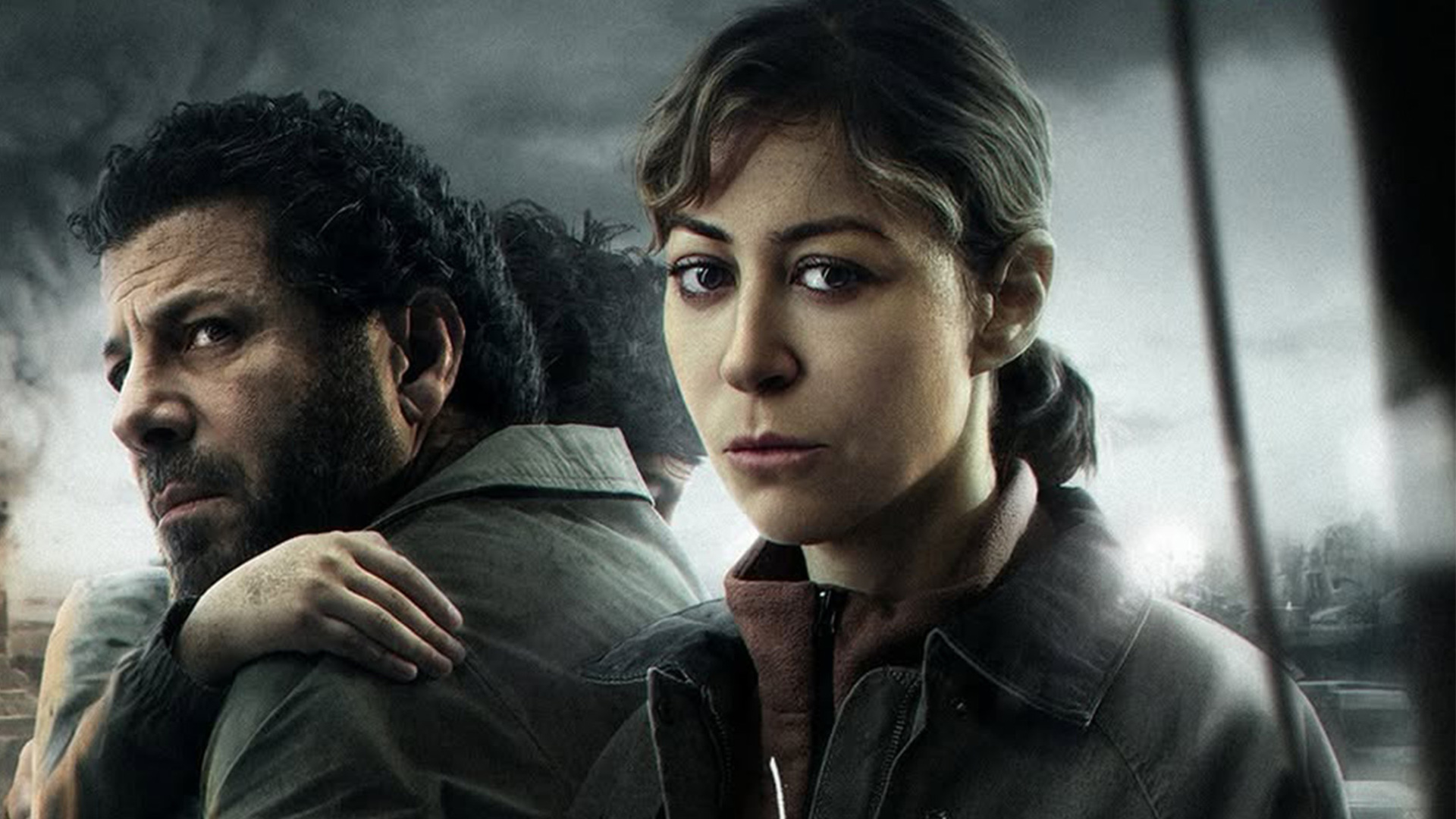
The Egyptian series ‘People of the Land’ has stirred backlash from Israeli media over its retelling of Israel’s crimes and genocidal war on Gaza.
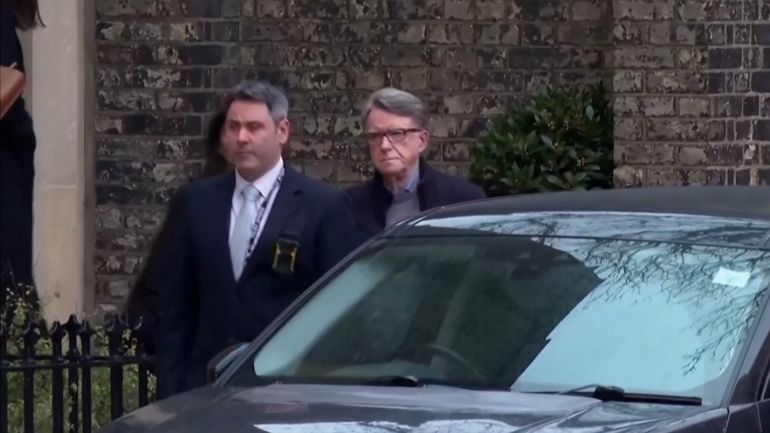
British politician Peter Mandelson has been released on bail after detectives questioned him for hours over the alleged leaking of sensitive government information to the late convicted paedophile, Jeffrey Epstein, while a government minister in the early 2000s.
The former United Kingdom ambassador to Washington was arrested on suspicion of misconduct in public office on Tuesday. His arrest followed the detention of Prince Andrew, now known as Andrew Mountbatten-Windsor, who was also questioned over similar misconduct linked to Epstein.
list of 3 itemsend of list
The Epstein revelations have triggered investigations and resignations in Europe, but the fallout has been muted in the United States.
The developments mark one of the sharpest reversals in recent British political life. Only months ago, Mandelson held one of the most senior (and coveted) diplomatic roles in the country.
He has since lost his post, faced a police raid at his home and now confronts the possibility of criminal charges. He has been forced to step down from the House of Lords, the unelected upper chamber of the UK parliament, and could be stripped of his title.
If convicted, he could face a maximum sentence of life imprisonment.
![Police lead Peter Mandelson to a waiting car upon his arrest on February 23, 2026. [Screenshot via Reuters]](https://i0.wp.com/www.aljazeera.com/wp-content/uploads/2026/02/peter_mandelson_arrest_screenshot-1771871477.jpg?w=696&ssl=1)
Prime Minister Keir Starmer’s decision to appoint Mandelson as British ambassador – a move made while his popularity has plunged – triggered the resignation of his chief of staff, Morgan McSweeney, and has raised questions about whether he can see out his term.
The scandal has also engulfed the royal family. After Andrew was arrested for leaking sensitive reports during his time as British trade envoy – the first arrest of a senior royal in centuries – King Charles III said “the law must take its course.”
British royal biographer Andrew Lownie, who interviewed the late Virginia Giuffre – who accused Epstein of forcing her to have sex with Prince Andrew three times when she was 17 – has warned that the fallout could also “bring down King Charles”, as scrutiny intensifies over what he knew about his brother’s conduct.
The cases form part of a broader European response to newly released troves of Epstein-related documents from the US.
Across the continent, authorities have opened investigations, and several public figures have stepped down or lost positions.

France has also moved. Former Culture Minister Jack Lang resigned from his role leading a Paris cultural institution after the Ministry for Europe and Foreign Affairs sought to question him over contacts with Epstein.
In Norway, former Prime Minister Thorbjorn Jagland has been charged with “gross corruption” following disclosures that he stayed at Epstein’s properties in New York and Florida and visited his private island, as well as having the late sex offender cover his expenses and those of his family. He faces up to a decade in prison if convicted.
Norway’s ambassador to Jordan, Mona Juul, also resigned after reports that Epstein left $10m to her children in his will.
Meanwhile, Crown Princess Mette-Marit of Norway apologised after documents showed she had holidayed at one of Epstein’s properties.
In Slovakia, national security adviser Miroslav Lajcak stepped down after disclosures about his association with Epstein surfaced. Prime Minister Robert Fico confirmed he accepted the resignation.
For many in Europe, simply appearing in the files has triggered public scrutiny, investigations or resignations.
Governments have treated the document releases as grounds for formal inquiry, even when criminal liability remains unclear.

In the US, public anger has simmered for years. Democratic Congressman Ro Khanna and Republican Thomas Massie have led a bipartisan effort to release the files, using the term “Epstein class” to describe a wealthy elite who believe themselves to be above the law.
Yet criminal accountability beyond Epstein and his longtime associate Ghislaine Maxwell has remained limited. Maxwell is serving a 20-year sentence for sex trafficking offences.
FBI documents identify eight alleged co-conspirators, including the former CEO of Victoria’s Secret, Lex Wexner, Epstein’s former secretary Lesley Groff and modelling agent Jean-Luc Brunel, who died in custody in France.
None, apart from Maxwell, has faced a US criminal conviction in connection with Epstein’s trafficking case.
The lack of accountability has spanned Democratic and Republican presidents.
Epstein first avoided federal prosecution in 2007-08 through a controversial non-prosecution agreement reached during the administration of George W Bush.
Subsequent administrations under Barack Obama, Donald Trump’s first terms and Joe Biden did not bring sweeping new prosecutions tied to the broader network named in the files.
There is no sign that any prosecutions are under way, despite Congress forcing Trump to release the files.
Several prominent Americans have stepped back from roles or faced reputational damage.
Former US Treasury Secretary Lawrence Summers took leave from academic duties at Harvard University after scrutiny over his ties to Epstein.
Lawyer Brad Karp resigned as chair of the law firm Paul Weiss. The National Football League said it would review correspondence between Epstein and New York Giants co-owner Steve Tisch.
Longevity specialist and high-profile physician Peter Attia issued an apology and resigned from his role as chief science officer at David Protein over emails exchanged with Epstein. He also stepped down as a CBS News contributor.
Others named in communications with Epstein have not faced formal charges.
Among them are former White House strategist Steve Bannon, Commerce Secretary Howard Lutnick and technology billionaire Elon Musk, who has said he never visited Epstein’s island despite discussing the possibility in emails.
Former President Bill Clinton has testified before Congress regarding his friendship with Epstein.
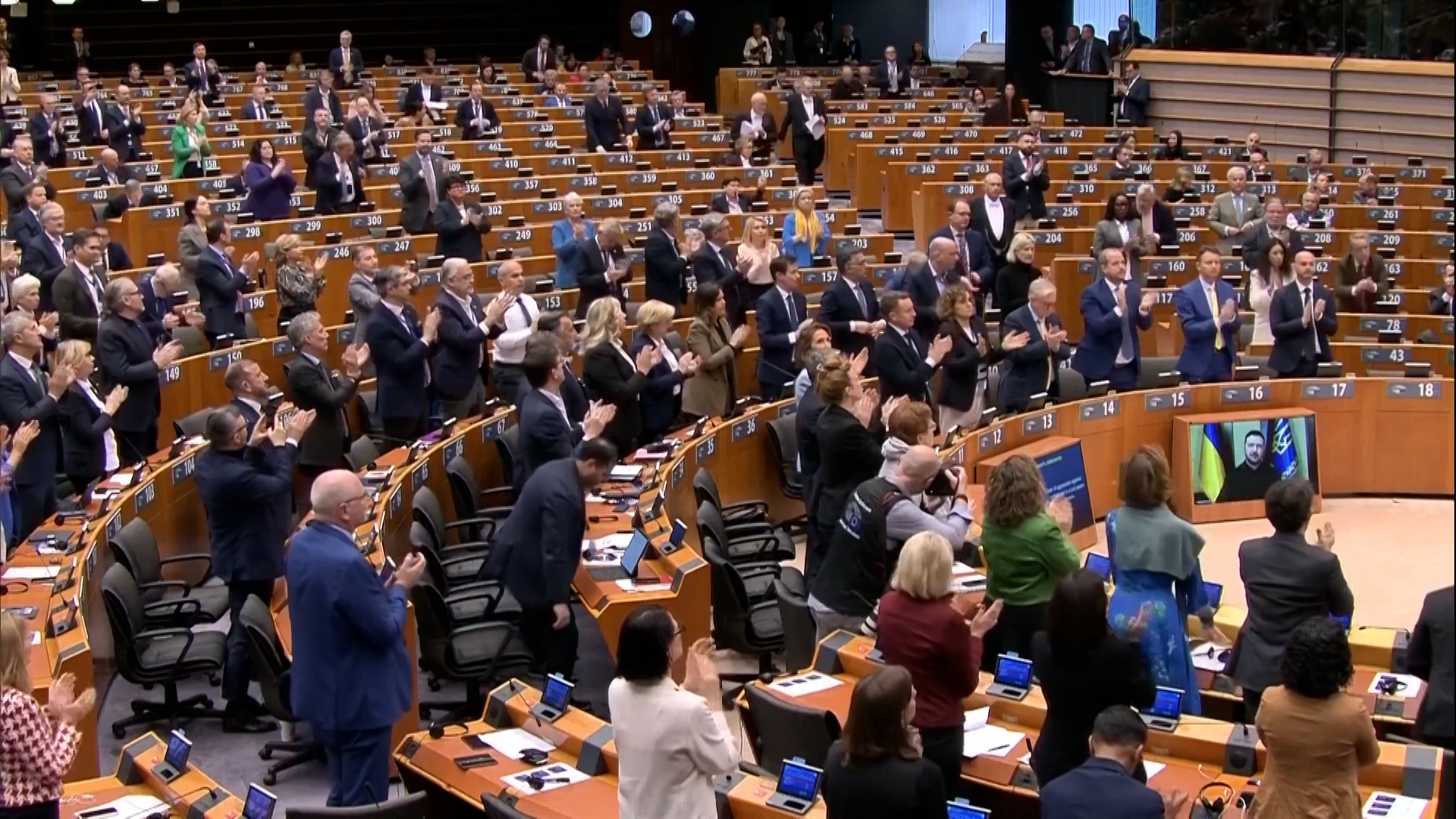
Politicians at the European Parliament gave Ukrainian president Volodymyr Zelenskyy a standing ovation after a speech marking the fourth anniversary of Russia’s full-scale invasion of Ukraine.
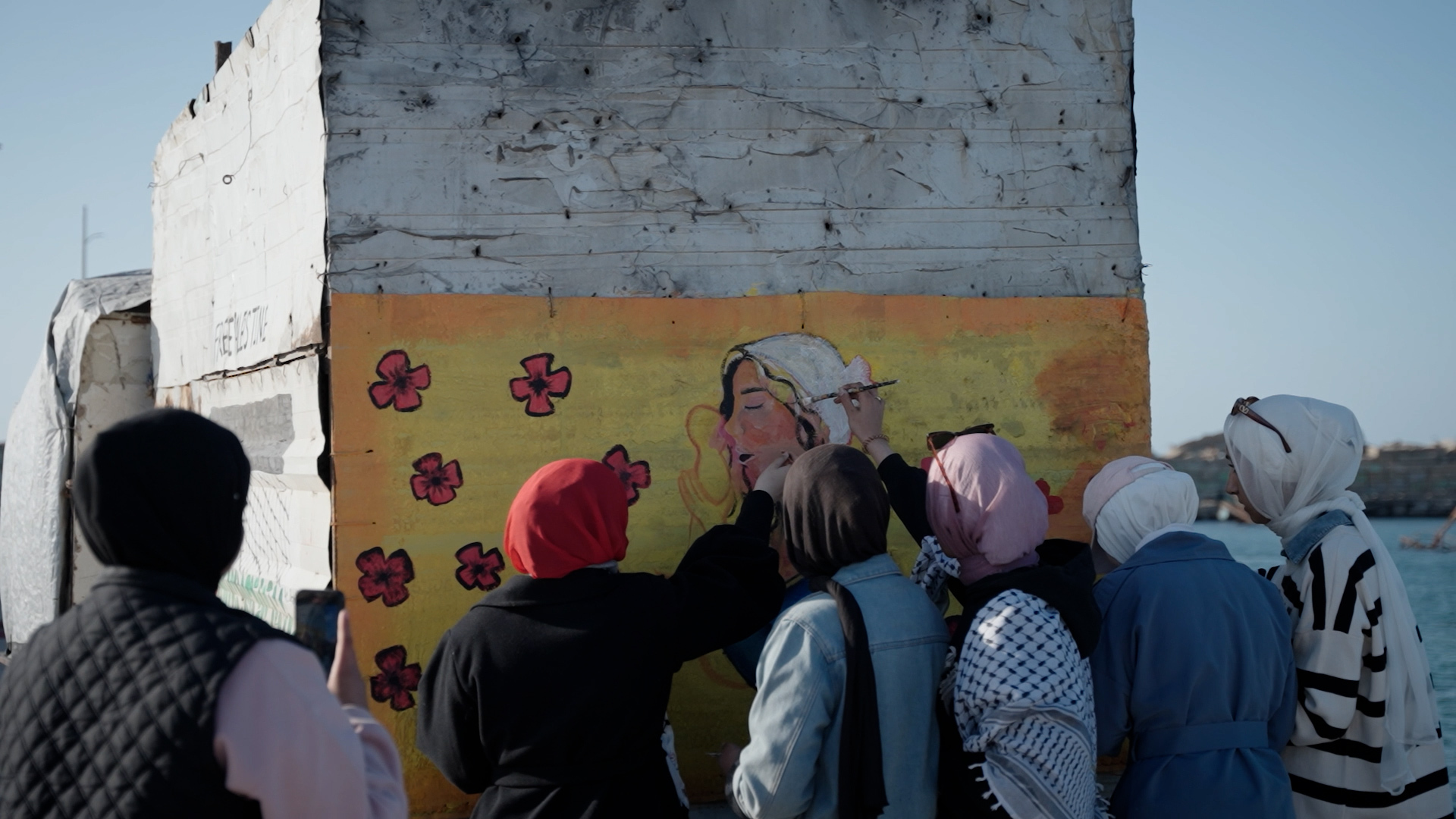
Young Palestinian artists in Gaza are turning the city’s ruins into a canvas through ‘Breathe and Paint’, an initiative founded by local artist and activist Farah Ajjour. They transform the trauma of war into art that speaks of survival, resistance, and hope.
Israeli soldiers fired more than 900 bullets at a convoy of clearly marked Palestinian emergency vehicles in Gaza before advancing to kill the surviving aid workers, some of whom were shot “execution-style” at close range, last March, a new joint investigation has revealed.
The report released on Monday by independent research agency Forensic Architecture and audio investigation group Earshot offers the most detailed reconstruction to date of the massacre in Tal as-Sultan, a neighbourhood west of Rafah in the southern Gaza Strip, on March 23, 2025.
list of 4 itemsend of list
Fifteen aid workers were killed in the attack, including paramedics from the Palestine Red Crescent Society (PRCS), firefighters from the Palestinian Civil Defence (PCD) and a staff member of the United Nations agency for Palestinian refugees (UNRWA). The slain aid workers were then buried along with their vehicles.
The Israeli military initially claimed the vehicles were “uncoordinated” and later admitted a “professional error”. But the forensic analysis paints a different picture: a coordinated ambush, an absence of return fire and a calculated move to eliminate survivors.
The investigation relies heavily on a “situated testimony” technique and advanced audio ballistics to analyse the sound of gunfire to determine the shooter’s distance, weapon type and direction.
Investigators analysed footage recovered from the phone of slain paramedic Rifaat Radwan, a PRCS paramedic who began recording at 5:09am, when the ambush began. In a video lasting five and a half minutes, at least 844 gunshots were recorded. Combined with other recordings, the total documented count reached at least 910 gunshots.
In the video, filmed from inside one of the last two ambulances, Radwan can be heard asking his mother for forgiveness and reciting the Islamic declaration of faith, the shahada, before he dies.
According to Earshot’s analysis, 93 percent of these shots featured a specific acoustic signature: a “supersonic shockwave”, followed by a muzzle blast. This combination confirms that the camera – and the aid workers huddled around it – were directly in the line of fire.
“The density of gunfire … frequently exceeds 900 rounds per minute,” the report states, noting that, at one point, five shots were fired in just 67 milliseconds. This rate of fire confirms that at least five shooters, likely many more, were firing simultaneously from an elevated sandbank approximately 40 metres away.
“Israeli soldiers ambushed and subjected Palestinian aid workers to continuous assault by gunfire for over two hours”, between 5:09am and 7:13am, the report says.
The report challenges the Israeli narrative of a chaotic “combat zone”. Instead, it describes a methodical massacre of Palestinian aid workers on their way to help people injured in Israeli strikes.
“There was no exchange of fire in the area, and no tangible threat to the safety of those soldiers. These attacks did not happen in ‘a hostile and dangerous combat zone’, as was claimed by Israeli spokespersons,” the report says.
By analysing the time delay between the sound of the gunshots and their echoes bouncing off a nearby concrete wall, investigators tracked the movement of the soldiers.
For the first four minutes, the soldiers held a fixed position on a sandbank. Then, the audio data shows the echo interval increasing, indicating the soldiers were moving down the hill, advancing roughly 50 metres towards the convoy while continuing to fire.
This corroborates the testimony of survivor Assaad al-Nassasra, a PRCS worker, who told investigators: “They were walking between [the aid workers] and shooting.”
The most chilling findings concern the final moments of the attack. Analysis of a subsequent phone call made by paramedic Ashraf Abu Libda to dispatchers captures the soldiers arriving at the vehicles.
The audio analysis identifies specific gunshots where the distinct “supersonic crack” of the bullet disappears, leaving only the muzzle blast. Ballistically, this indicates the shooter was within 1 to 4 metres (3 feet to 13 feet) of the victim.
These shots coincide with the final sounds of movement from Abu Libda, suggesting he was shot while lying on the ground. A doctor who later examined the bodies confirmed the wounds were consistent with “execution-style” killings.
Israeli forces have repeatedly been accused of crimes against humanity and war crimes during their genocidal war in Gaza that killed more than 72,000 Palestinians. A recent report by the medical journal The Lancet says the death toll in the first 16 months was much higher than the official figures. Despite a “ceasefire” in place since October, Israel has killed more than 600 Palestinians.
Rights groups and scholars have said the Israeli military offensive that turned Gaza into ruins is genocide. The International Court of Justice (ICJ) is hearing a case of genocide against Israel, while the International Criminal Court (ICC) has issued an arrest warrant for war crimes against Prime Minister Benjamin Netanyahu.
The brutal killing of the 15 aid workers in March 2025 caused outrage, but Israel faced no legal or political consequences as it continued to receive backing from its Western allies, including the United States.
The report details a systematic attempt by Israeli forces to conceal the massacre in the hours that followed.
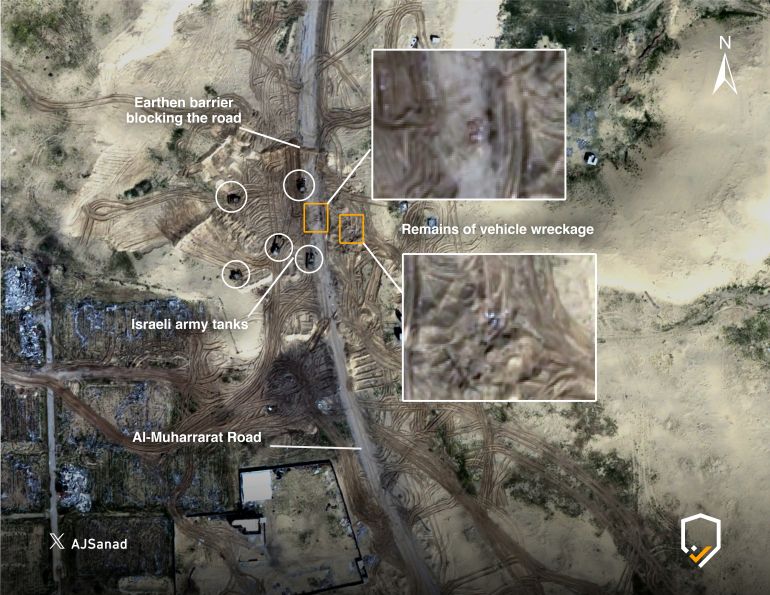
Satellite imagery from that morning revealed that bulldozers were deployed to the site. The emergency vehicles were crushed and buried, and earth berms were constructed over the scene to block visibility.
These forensic findings align with exclusive satellite imagery obtained by Al Jazeera’s Sanad fact-checking agency last year. In a report published on March 30, 2025, Sanad revealed imagery taken on March 25 showing that at least five rescue vehicles had been “completely destroyed” and buried in sand by Israeli forces on al-Muharrarat Street – the site of the massacre.
![Exclusive satellite imagery obtained by Al Jazeera’s Sanad agency reveals the destruction and burial of Palestinian Red Crescent and Civil Defence vehicles in Rafah. [Sanad/Al Jazeera]](https://i0.wp.com/www.aljazeera.com/wp-content/uploads/2026/02/1_25-03-2025-west-rafah-illustration-en-copy-1771927180.jpg?w=696&ssl=1)
At the time, the Palestinian Civil Defence condemned the act as a “crime of extermination”, stating that Israeli forces deliberately “altered the landmarks of the place” and used heavy machinery to hide the bodies of the victims.
“Israeli military personnel acted intentionally to conceal and disrupt evidence … by burying the bodies of the victims [and] burying the mobile phones,” the Forensic Architecture report says.
Survivor al-Nassasra was detained, taken to Israel’s notorious Sde Teiman detention camp, and tortured for 37 days. He testified that soldiers confiscated and buried his phone, likely to hide evidence.
One of the two PRCS survivors of the attack was later used as a “human tool” at an Israeli military checkpoint near the incident site, the report says.
In a rare instance of identification, the audio analysis was able to isolate and enhance the voices of the Israeli soldiers speaking Hebrew during the attack.
The investigation identifies three soldiers by name – Elias (referred to as Lalas), Yotam, and Amatzia – based on their conversations as they moved among the bodies.
In one recording, a soldier is heard asking, “Lalas, did you finish?” before receiving an order to “put the guns on them”.
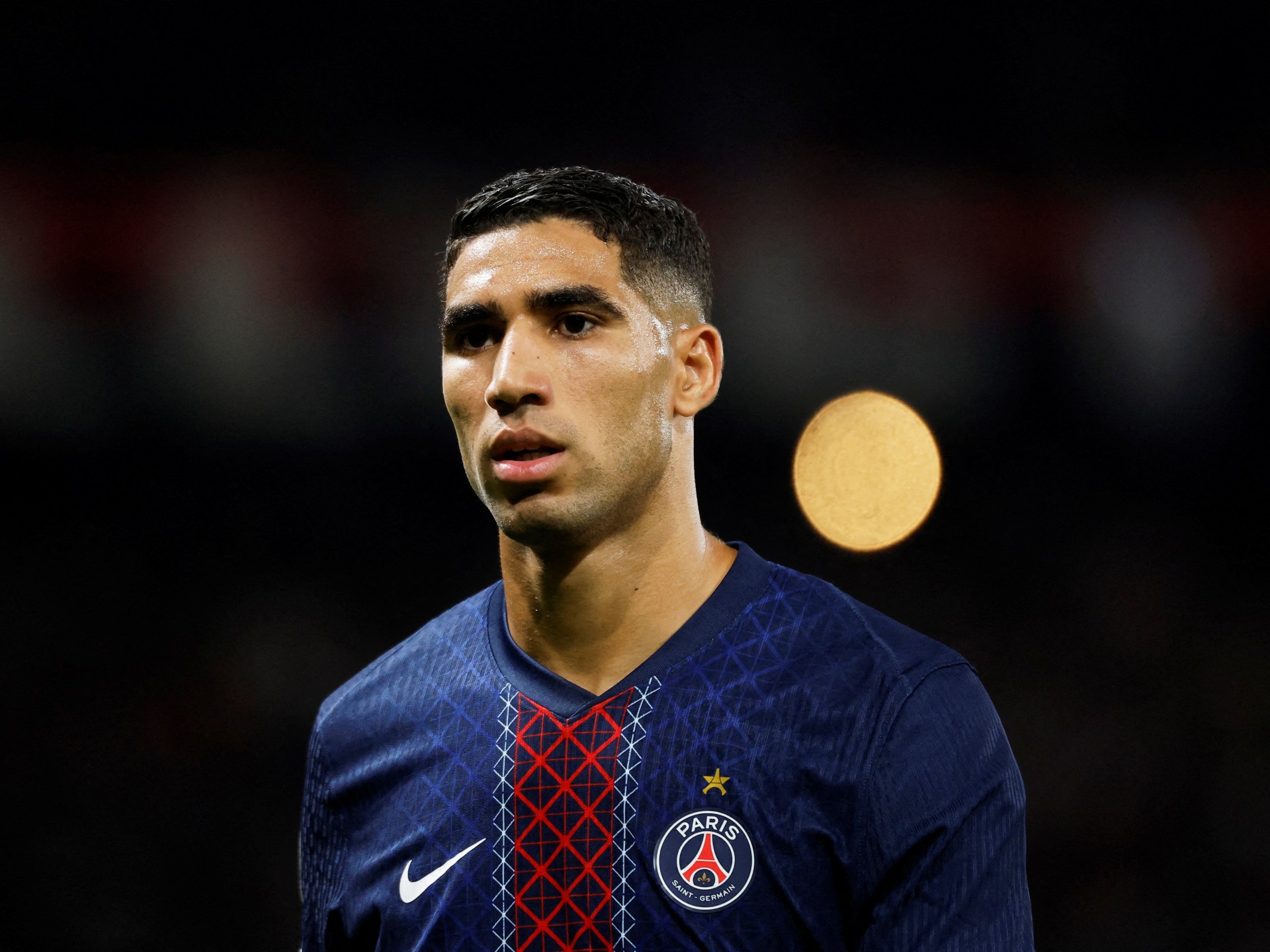
Paris Saint-Germain footballer Achraf Hakimi is to face a rape trial, a social media post from him has said.
In his post on X on Tuesday, however, the Morocco national team player denied the allegations.
list of 4 itemsend of list
“Today, a rape accusation is enough to justify a trial, even though I deny it and everything proves it’s false,” Hakimi said.
“This is as unjust to the innocent as it is to the genuine victims. I calmly await this trial, which will allow the truth to come out publicly.”
The Nanterre prosecutor’s office in the French capital of Paris had opened an investigation in 2023 after a woman accused him of rape.
The prosecutor confirmed on Tuesday that Hakimi’s case had been sent to trial.
Hakimi’s lawyer, Fanny Colin, also confirmed the trial order in a statement to the AFP news agency.
“A trial has been ordered on the basis of an accusation that rests solely on the word of a woman who obstructed all investigations, refused all medical examinations and DNA tests, refused to allow her mobile phone to be examined, and refused to give the name of a key witness,” Colin said.
The plaintiff’s lawyer, Rachel-Flore Pardo, said her client was relieved to hear the case was going to court.
She said the judiciary had been exemplary in handling the case.
But its treatment in general showed “there are still areas where the #MeToo movement has not yet breached the sound barrier, chiefly in men’s football”, AFP quoted Pardo as saying.
PSG will face Monaco in Wednesday’s return leg of their Champions League knockout round playoff tie.
Hakimi was in the initial squad list published last Tuesday.