DSS Captures Sixth Suspect In Owo Church Attack

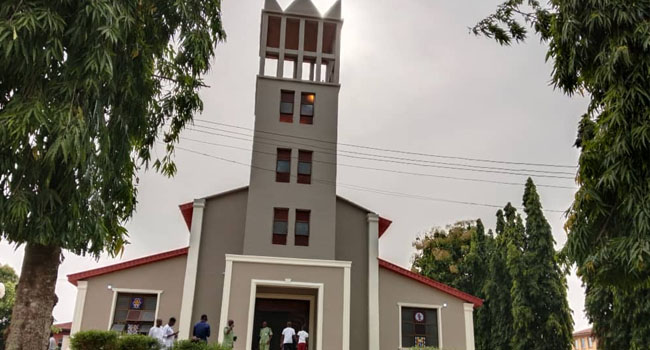
Operatives of the Department of State Services (DSS) have arrested the sixth person allegedly involved in the 2022 attack on St. Francis Catholic Church in Owo, Ondo State, in which over 40 worshippers lost their lives and scores were injured.

The DSS is currently prosecuting five persons — Idris Omeiza (25), Al Qasim Idris (20), Jamiu Abdulmalik (26), Abdulhaleem Idris (25), and Momoh Otuho Abubakar (47) — for allegedly carrying out acts of terrorism.

For nearly four years, the sixth suspect reportedly evaded arrest, making him one of the most wanted fugitives in the country.

READ ALSO: [Owo Church Attack] Court Admits Confessional Statements, Forensic Report As DSS Closes Case

A security source disclosed that DSS operatives, who had been on his trail for years, arrested the suspect, identified as Sani Yusuf, in the Iguosa community along Powerline in Ovia North-East Local Government Area of Edo State.

According to the source, Yusuf, described as a high-profile commander of the Islamic State West Africa Province (ISWAP), temporarily fled to Kano after the Owo church attack before relocating to the community in Edo State.

The source further disclosed that Yusuf has since confessed to his involvement in the planning and execution of the Owo church attack.

In addition, the source said he admitted involvement in other ISWAP operations, including the July 2022 attack on the Suleja military barracks and kidnappings in Kaduna State and its environs.

“He admitted his role in the Owo church attack, the Zuma Rock checkpoint assault, which claimed the lives of five soldiers, and several ISWAP kidnap operations,” the source said.

Another source added that Yusuf disclosed he served under other ISWAP commanders, including Abu Ikirimah, who was arrested by the DSS in 2024.

“This arrest marks a significant milestone in the pursuit of justice for the victims of the Owo church attack and the soldiers killed at the Zuma Rock checkpoint in Suleja.

Tinubu Appoints Tunji Disu As Acting Inspector-General Of Police

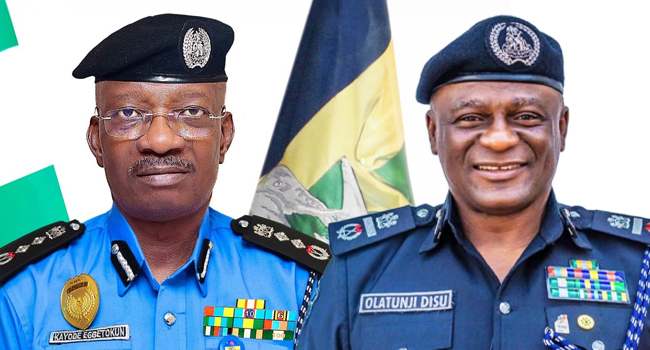
President Bola Tinubu has appointed Assistant Inspector-General of Police Tunji Disu as the acting Inspector-General of Police.

This followed the resignation of Kayode Egbetokun as the IGP.

“In view of the current security challenges confronting the nation, and acting in accordance with extant laws and legal guidance, President Tinubu has approved the appointment of Assistant Inspector-General of Police Tunji Disu to serve as Acting Inspector-General of Police with immediate effect,” presidential spokesman, Bayo Onanuga, said in a statement on Tuesday evening.

“In compliance with the provisions of the Police Act 2020, President Tinubu will convene a meeting of the Nigeria Police Council shortly to formally consider the appointment of AIG Disu as substantive Inspector-General of Police, after which his name will be transmitted to the Senate for confirmation,” he said.

Until his appointment, Disu served as Assistant Inspector-General in charge of the Force Criminal Investigation Department (FCID) Annex, Alagbon, Lagos. He was promoted to the rank of Assistant Inspector-General of Police last year.

Before then, he served as Commissioner of Police in Rivers State and was later deployed by Egbetokun to Abuja as Commissioner of Police of the Federal Capital Territory.

Disu is a member of the International Association of Chiefs of Police and a former head of the Intelligence Response Team of the Nigeria Police Force, a position previously held by Abba Kyari.

Tunji Disu was born on April 13, 1966, in Lagos Island and enlisted in the Nigeria Police Force on May 18, 1992. Over the course of his career, he has served as Divisional Police Officer (DPO) in several locations, including Ago Iwoye in Ogun State, Ikare and Owo in Ondo State, as well as Elimbu and Elelenwo in Rivers State.

He also served as Officer in Charge of the Special Anti-Robbery Squad and anti-kidnapping operations in Rivers State. He previously commanded SARS in Ondo State, Oyo State, and Rivers State, and later served as second in command (2IC) of the State Criminal Investigations Department (CID) in Rivers State.

In 2005, he led the first Nigerian Police contingent to the African Union Mission in Sudan as contingent commander on a peacekeeping assignment. While stationed in Darfur, he was appointed acting Chief of Staff before returning to Nigeria in 2006.

He served as commander of the Lagos State Rapid Response Squad from June 13, 2015, to August 2021. During his tenure, he branded his officers as “The Good Guys,” an initiative aimed at reforming policing practices by encouraging officers to enforce the law professionally while maintaining respectful engagement with citizens.

His appointment brings to an end Egbetokun’s tenure, which began in 2023.

READ ALSO: Letter Confirms IGP’s Four-Year Tenure, To Remain In Office Till 2027

President Tinubu appointed Egbetokun as the 22nd Inspector-General of Police on June 19, 2023, and the Nigeria Police Council confirmed his substantive appointment on October 31 of the same year.

The latter part of his tenure was marked by controversy, particularly over his extended stay in office, which drew public criticism.

Under Section 18(8) of the Police Act 2020, Egbetokun, who was born on September 4, 1964, was expected to retire in September 2024 upon attaining the age of 60.

But his tenure extended beyond the mandatory retirement limits of 60 years of age or 35 years of service, prompting sustained criticism from civil society groups, among others. Critics argued that the extension breached established police service regulations and weakened institutional discipline.

However, the police maintained at the time that the development did not amount to an extension but was a confirmation that he would complete the four-year tenure stated in his original letter of appointment.

In July 2024, the National Assembly passed the Police Act (Amendment) Bill to allow a person appointed as Inspector-General of Police to remain in office until the end of the term stipulated in the letter of appointment.

Trump says preference is to solve Iran tensions through diplomacy

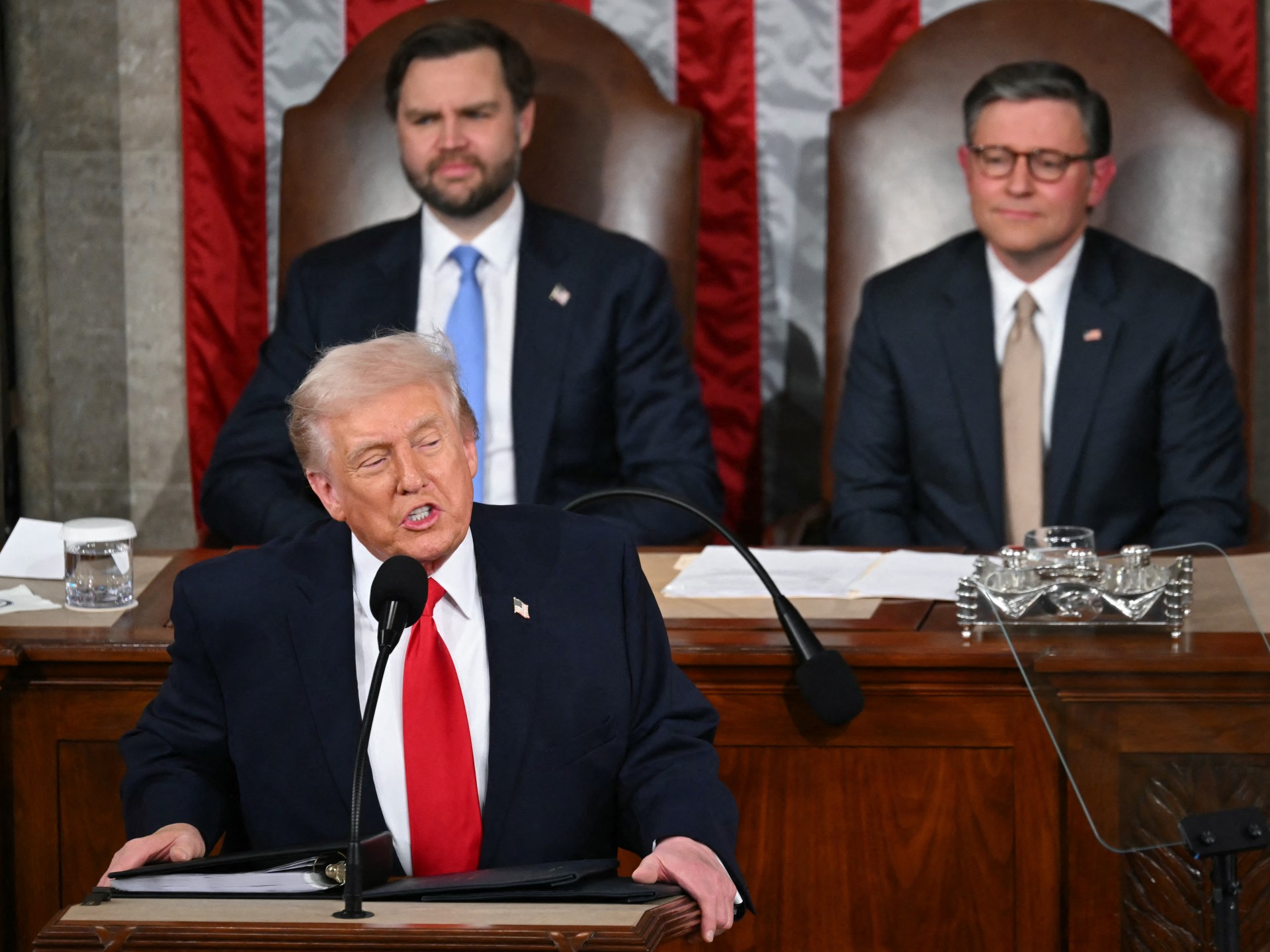
United States President Donald Trump has told Congress that he would prefer to resolve differences with Tehran through diplomacy, while laying out his case for potential attacks on Iran, which he claimed was seeking to develop missiles that could strike the US mainland.

In comments made during his annual State of the Union address to a joint session of the Senate and House of Representatives on Tuesday, Trump struck a belligerent tone against Iran, accusing it of working to rebuild its nuclear program that was hit by US strikes last year.

Trump has repeatedly said those sites were obliterated, a claim experts have disputed.

“We wiped it out and they want to start all over again. And they’re at this moment again pursuing their sinister ambitions,” Trump said, as he broached the subject of potential military action against Iran about 90 minutes into his record-length speech.

“We are in negotiations with them. They want to make a deal, but we haven’t heard those secret words: ‘We will never have a nuclear weapon.’”

Trump said his “preference” was “to solve this problem through diplomacy, but one thing is certain: I will never allow the world’s number one sponsor of terror, which they are by far, to have a nuclear weapon.

“Can’t let that happen,” he added.

Trump said that after the US attacks on Iran’s nuclear sites in June 2025, “they were warned to make no future attempts to rebuild their weapons programme, in particular, nuclear weapons – yet they continue.”

Iran has insisted for years that its nuclear programme is for civilian purposes only. Neither US intelligence nor the UN’s nuclear watchdog found any evidence last year that Iran was pursuing atomic weapons.

As well as accusing Iran of restarting its nuclear programme, Trump claimed Tehran was working to build missiles that “soon” would be capable of reaching the US, echoing claims in Iranian state media that Tehran is developing a missile capable of reaching North America.

He also claimed Iran was responsible for roadside bombings that have killed US service members and civilians. He criticised Tehran over the deaths of thousands of protesters killed during recent antigovernment demonstrations.

“The (Iranian) regime and its murderous proxies have spread nothing but terrorism and death and hate,” Trump said.

Araghchi: Deal ‘within reach’

Trump’s latest comments on the tensions come amid a significant US military buildup in the Middle East, and before a third round of indirect talks scheduled for Thursday.

The talks, to be held in Geneva and mediated by Oman, will be attended by Trump envoys Steve Witkoff and Jared Kushner, along with Iranian officials.

Earlier on Tuesday, Iranian Foreign Minister Abbas Araghchi said in a post on X that a deal with Washington to avert conflict was “within reach”, as Iran prepared to resume talks in Geneva “with a determination to achieve a fair and equitable deal – in the shortest possible time”.

“Our fundamental convictions are crystal clear,” he wrote. “Iran will under no circumstances ever develop a nuclear weapon; neither will we Iranians ever forgo our right to harness the dividends of peaceful nuclear technology for our people.”

The ‘rare combination’ behind Britain’s youngest F1 driver

To play this video you need to enable JavaScript in your browser.

Andrew Benson

F1 Correspondent
  • 376 Comments

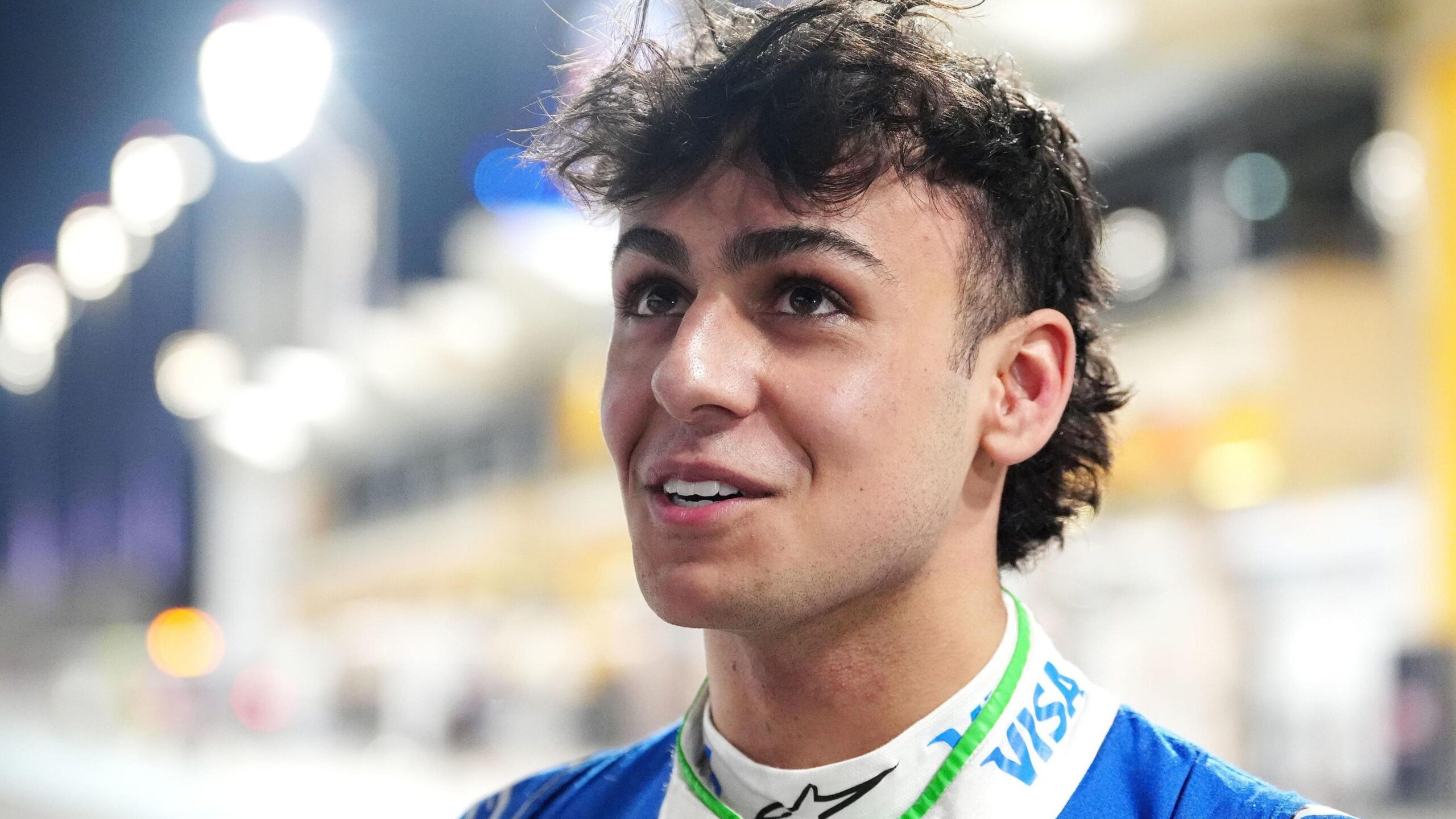
Arvid Lindblad’s eyes light up. The 18-year-old who is about to become Britain’s youngest ever Formula 1 driver is sitting on a beach in Bahrain, a Gulf mist obscuring the still-rising sun, and he’s pondering a question.

He’s been polite but wary so far. A five-minute drive from the circuit where he and his Racing Bulls team are completing their preparations for his grand prix debut in Australia at the beginning of March. On the cusp of achieving his lifetime’s dream, understandably he wants to make sure he does not say anything he might regret.

But when he’s asked what has been the best thing that’s happened to him since he became an F1 driver, the joy inside him bubbles to the surface, and he can’t resist a little smile.

“Since becoming a Formula 1 driver… the best thing was just becoming a Formula 1 driver,” he says.

He learned about Red Bull’s decision to promote him to their second team at last year’s Qatar Grand Prix, where he was competing in the penultimate round of the Formula 2 championship.

The news was broken by Red Bull’s former motorsport adviser Helmut Marko, the veteran former F1 driver who had taken Lindblad into the company’s driver programme at the age of 13 as a promising go-karter.

“This is something I’ve been doing with my dad,” Lindblad says. “I got the news in Qatar when I was with him, so obviously that was a very special moment to share together.”

Shaped by UK, Indian and Swedish heritage

Lindblad’s graduation to F1 this year is breaking new ground for the sport.

He is one of five British F1 drivers on the grid this year – six if you count Alex Albon, who was born and raised in the UK, but races under the Thai flag. He’s also the first Briton with Indian heritage to race at the highest level of the sport.

His father, Stefan, is Swedish. His mother, Anita, is of Indian descent. The partition of India in 1947 played a significant role in the family’s history.

“My Nani, my grandmother, is Sikh, grandfather’s Hindu,” Lindblad says. “And when they were five, they were involved in the partition.

“They were in the part of Punjab that is now Pakistan, and they had to leave. They came from quite well-off backgrounds, but then they lost everything. So then they had to work very hard their whole life to recreate a life for themselves. Then they moved to the UK in their late 20s, early 30s, as doctors.”

His family background is, he acknowledges, “quite a rare combination, but I’m very proud of my heritage. All three parts have really shaped me to who I am today”.

Language skills have not passed down the generations as effectively as culture, though.

“I’m not the best at languages, to be honest. I can speak a little bit of Swedish and a few words of Hindi, but it’s not great,” Lindblad says.

“I couldn’t do an interview in another language, so it’s something I’m still working towards. I think it is important and it’s also an element of respect, but I’ve got some work to do.”

The interest in motorsport came from his father’s side of the family.

“My grandfather is a massive motorsports fan,” Lindblad says. “He’ll watch anything with wheels and an engine. He did a little bit of motocross with my dad when he was younger. Unfortunately, they couldn’t do it for very long, but he passed that passion down to my dad, who passed it on to me.

“When I was three, my dad got me a motocross bike. To be honest, it didn’t last very long. It was a bit too much for my mum to sit a little three-year-old on a motocross bike. So that died out quite quickly.

“But then when I was five I went karting for the first time and loved it from the beginning.

“But I’d say a big turning point for me that I remember very well was when I was about four. My dad was sitting on the sofa and had the F1 on and I came and sat down next to him and was watching the race and asking him, ‘Is it possible to be there? Could I? How does it work?’

“That was really the moment when I saw the cars and wanted to be there one day and that fuelled the start of the journey.”

He says he has been fixated on this moment from a very early age.

Arvid Lindblad driving the Racing Bulls during testing in BahrainPA Media

Lindblad was born and grew up in well-to-do Virginia Water in Surrey, and is the first to acknowledge that he has been helped on his way by the relative comfort of his background.

“I’m very fortunate to be able to do racing, because as everyone knows it’s not the most accessible sport to everyone,” he says.

“I’ve already touched on a bit my mum’s side, that they were very hard-working and they had to really fight for what they had.

“My grandmother retired as a doctor at 82, and my mum is very similar. Well, she’s not 82, but she has that very similar work ethic. And my dad even more so.

“He came from a small village in Sweden, where sometimes my grandparents struggled to put three meals on the table.

“He had his first job from when he was 11, trying to just do anything he could to get any pocket money. He funded himself through university and he’s worked really hard his whole life, and it’s a big reason why I’m able to do this and be here today.

“So I’m extremely thankful and grateful for that. But even more so I think I’m very lucky to come from a family where hard work, humility and all of those values are very important. That’s really something I try to show and act of as well.”

Arvid Lindblad celebrates a Formula 3 sprint race victory in Bahrain in 2024Getty Images

We’re talking at the plush hotel Racing Bulls have picked as their base for the two pre-season tests in Bahrain, which followed a ‘shakedown’ in Spain. It’s not long past 8am, and his next appointment is an engineering meeting, before going out on track later in the day.

Asked if he feels ready for the big time in F1, he says: “Yeah, I think so. Obviously, it’s a big step from F2, especially this year. There’s regulation changes and everything is very different.

“But I’ve been working really hard with the team on the sim (simulator) at the factory, obviously also trying to utilise these three tests that we have.

“That’s a big benefit for me this year. Normally, there’s only one, whereas this year there’s three. So that really helps me to get up to speed. I’m really trying to utilise these tests, and I’m looking forward to getting on track in Melbourne.”

Racing Bulls team principal Alan Permane, who has worked with a multitude of top drivers, including Michael Schumacher and Fernando Alonso, has been full of praise so far.

“He’s done a fantastic job,” Permane says. “People often ask me, ‘What do you look for? What do you need in a young driver?’ And of course, the first thing you need is for them to be quick. We’re very comfortable with that, we know he’s got the speed.

“But also on top of that, he’s bringing lots of inquisitiveness, he’s asking many questions, his debriefs are great, he’s doing everything we ask of him at the moment.”

F1 is a brutal business, with little sentiment. Drivers either achieve or they’re out. And nowhere is more ruthless than Red Bull.

You might expect Lindblad to be feeling a little pressure mixed in with the obvious excitement. But he says not.

“I wouldn’t really say pressure,” he says. “If I’m being honest, this is what I’ve worked towards my whole life.

Related topics

  • Formula 1

More on this story

    • 1 day ago
    Fernando Alonso driving the 2026 Aston Martin during testing in Bahrain
    • 4 days ago
    George Russell and Fernando Alonso
    • 1 day ago
    F1 logo on the back of a mobile phone

‘I’m proud of my heritage’ – meet Britain’s youngest F1 driver

Andrew Benson

F1 Correspondent
  • 29 Comments

Arvid Lindblad’s eyes light up. The 18-year-old who is about to become Britain’s youngest ever Formula 1 driver is sitting on a beach in Bahrain, a Gulf mist obscuring the still-rising sun, and he’s pondering a question.

He’s been polite but wary so far. A five-minute drive from the circuit where he and his Racing Bulls team are completing their preparations for his grand prix debut in Australia at the beginning of March. On the cusp of achieving his lifetime’s dream, understandably he wants to make sure he does not say anything he might regret.

But when he’s asked what has been the best thing that’s happened to him since he became an F1 driver, the joy inside him bubbles to the surface, and he can’t resist a little smile.

“Since becoming a Formula 1 driver… the best thing was just becoming a Formula 1 driver,” he says.

He learned about Red Bull’s decision to promote him to their second team at last year’s Qatar Grand Prix, where he was competing in the penultimate round of the Formula 2 championship.

The news was broken by Red Bull’s former motorsport adviser Helmut Marko, the veteran former F1 driver who had taken Lindblad into the company’s driver programme at the age of 13 as a promising go-karter.

“This is something I’ve been doing with my dad,” Lindblad says. “I got the news in Qatar when I was with him, so obviously that was a very special moment to share together.”

To play this video you need to enable JavaScript in your browser.

Shaped by UK, Indian and Swedish heritage

Lindblad’s graduation to F1 this year is breaking new ground for the sport.

He is one of five British F1 drivers on the grid this year – six if you count Alex Albon, who was born and raised in the UK, but races under the Thai flag. He’s also the first Briton with Indian heritage to race at the highest level of the sport.

His father, Stefan, is Swedish. His mother, Anita, is of Indian descent. The partition of India in 1947 played a significant role in the family’s history.

“My Nani, my grandmother, is Sikh, grandfather’s Hindu,” Lindblad says. “And when they were five, they were involved in the partition.

“They were in the part of Punjab that is now Pakistan, and they had to leave. They came from quite well-off backgrounds, but then they lost everything. So then they had to work very hard their whole life to recreate a life for themselves. Then they moved to the UK in their late 20s, early 30s, as doctors.”

His family background is, he acknowledges, “quite a rare combination, but I’m very proud of my heritage. All three parts have really shaped me to who I am today”.

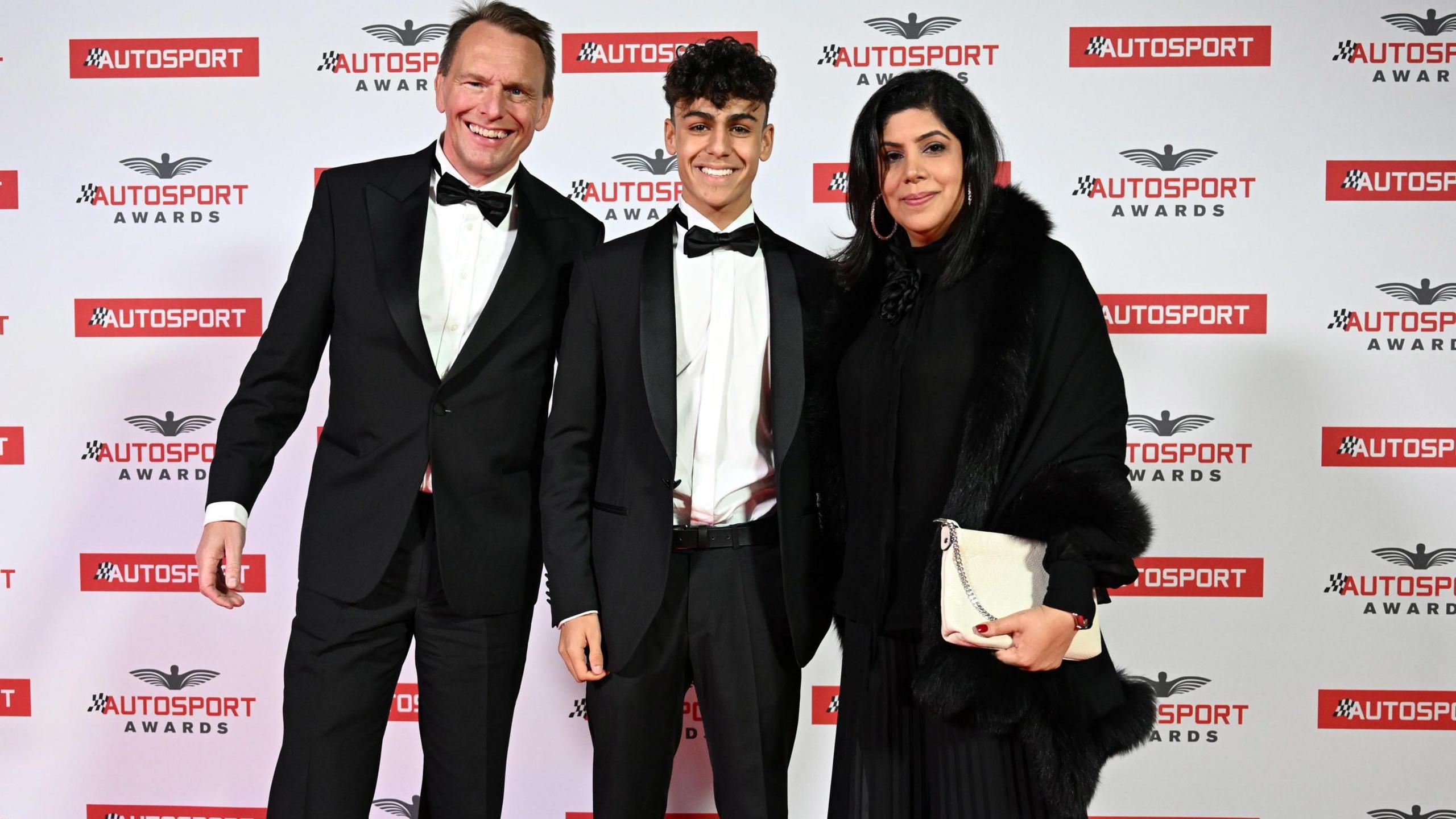
Arvid Lindblad pictured with his dad, Stefan, and his mum Anita, at the Autosport Awards in 2023Getty Images

Language skills have not passed down the generations as effectively as culture, though.

“I’m not the best at languages, to be honest. I can speak a little bit of Swedish and a few words of Hindi, but it’s not great,” Lindblad says.

“I couldn’t do an interview in another language, so it’s something I’m still working towards. I think it is important and it’s also an element of respect, but I’ve got some work to do.”

The interest in motorsport came from his father’s side of the family.

“My grandfather is a massive motorsports fan,” Lindblad says. “He’ll watch anything with wheels and an engine. He did a little bit of motocross with my dad when he was younger. Unfortunately, they couldn’t do it for very long, but he passed that passion down to my dad, who passed it on to me.

“When I was three, my dad got me a motocross bike. To be honest, it didn’t last very long. It was a bit too much for my mum to sit a little three-year-old on a motocross bike. So that died out quite quickly.

“But then when I was five I went karting for the first time and loved it from the beginning.

“But I’d say a big turning point for me that I remember very well was when I was about four. My dad was sitting on the sofa and had the F1 on and I came and sat down next to him and was watching the race and asking him, ‘Is it possible to be there? Could I? How does it work?’

“That was really the moment when I saw the cars and wanted to be there one day and that fuelled the start of the journey.”

He says he has been fixated on this moment from a very early age.

Arvid Lindblad driving the Racing Bulls during testing in BahrainPA Media

Lindblad was born and grew up in well-to-do Virginia Water in Surrey, and is the first to acknowledge that he has been helped on his way by the relative comfort of his background.

“I’m very fortunate to be able to do racing, because as everyone knows it’s not the most accessible sport to everyone,” he says.

“I’ve already touched on a bit my mum’s side, that they were very hard-working and they had to really fight for what they had.

“My grandmother retired as a doctor at 82, and my mum is very similar. Well, she’s not 82, but she has that very similar work ethic. And my dad even more so.

“He came from a small village in Sweden, where sometimes my grandparents struggled to put three meals on the table.

“He had his first job from when he was 11, trying to just do anything he could to get any pocket money. He funded himself through university and he’s worked really hard his whole life, and it’s a big reason why I’m able to do this and be here today.

“So I’m extremely thankful and grateful for that. But even more so I think I’m very lucky to come from a family where hard work, humility and all of those values are very important. That’s really something I try to show and act of as well.”

Arvid Lindblad celebrates a Formula 3 sprint race victory in Bahrain in 2024Getty Images

We’re talking at the plush hotel Racing Bulls have picked as their base for the two pre-season tests in Bahrain, which followed a ‘shakedown’ in Spain. It’s not long past 8am, and his next appointment is an engineering meeting, before going out on track later in the day.

Asked if he feels ready for the big time in F1, he says: “Yeah, I think so. Obviously, it’s a big step from F2, especially this year. There’s regulation changes and everything is very different.

“But I’ve been working really hard with the team on the sim (simulator) at the factory, obviously also trying to utilise these three tests that we have.

“That’s a big benefit for me this year. Normally, there’s only one, whereas this year there’s three. So that really helps me to get up to speed. I’m really trying to utilise these tests, and I’m looking forward to getting on track in Melbourne.”

Racing Bulls team principal Alan Permane, who has worked with a multitude of top drivers, including Michael Schumacher and Fernando Alonso, has been full of praise so far.

“He’s done a fantastic job,” Permane says. “People often ask me, ‘What do you look for? What do you need in a young driver?’ And of course, the first thing you need is for them to be quick. We’re very comfortable with that, we know he’s got the speed.

“But also on top of that, he’s bringing lots of inquisitiveness, he’s asking many questions, his debriefs are great, he’s doing everything we ask of him at the moment.”

F1 is a brutal business, with little sentiment. Drivers either achieve or they’re out. And nowhere is more ruthless than Red Bull.

You might expect Lindblad to be feeling a little pressure mixed in with the obvious excitement. But he says not.

“I wouldn’t really say pressure,” he says. “If I’m being honest, this is what I’ve worked towards my whole life.

Related topics

  • Formula 1

More on this story

    • 1 day ago
    Fernando Alonso driving the 2026 Aston Martin during testing in Bahrain
    • 4 days ago
    George Russell and Fernando Alonso
    • 1 day ago
    F1 logo on the back of a mobile phone

Key takeaways from Trump’s State of the Union speech

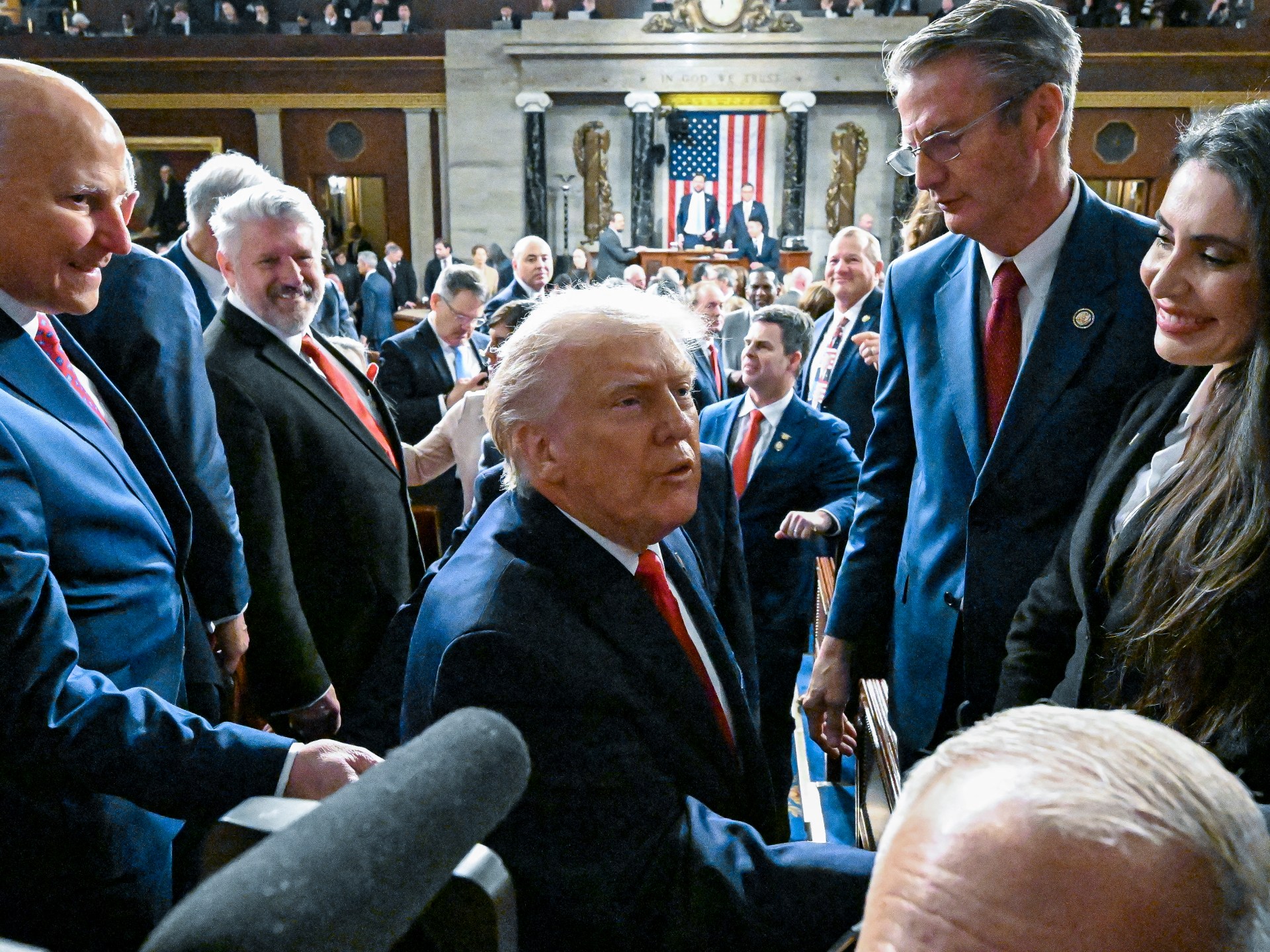
United States President Donald Trump delivered the longest State of the Union address in history on Tuesday night, covering an array of his policies on the US economy, crime, trade, immigration and foreign policy, all of which he said contributed to a “turnaround for the ages”.

The first such address of his second term lasted 1-hour, 48-minutes, which surpassed the record of 1 hour and 28 minutes set by former President Bill Clinton in 2000.

Recommended Stories

list of 3 itemsend of list

“Our nation is back: bigger, better, richer and stronger than ever before,” Trump said, at the start of his speech.

He ended the address with a similar sentiment: “Our future will be bigger, better, brighter, bolder and more glorious than ever before.”

It remains to be seen how the sentiment will resonate with voters, as the president has seen his approval rating slump in recent weeks to the lowest since his second term began.

It also remained unclear if Trump’s claims of success would give the Republican Party the bump it needs to hold on to control of the US House of Representatives and Senate in the midterm elections in November, which will greatly determine his ability to enact his agenda in the years ahead.

Here were some key moments from the speech:

Trump says the economy is ‘roaring’

One of the main goals of Trump’s speech was to sell his stewardship of the US economy, which has been a mixed bag over the last 13 months.

Trump pointed to Wall Street’s continued strength and strong job numbers, but glossed over the economy’s slower-than-expected growth in 2025.

While inflation has eased somewhat, it has not quite “plummeted” as Trump said. For example, January data from the Bureau of Labor Statistics showed food prices were still 2.9 percent higher than the same period last year.

The president then turned to the issue of “affordability”, which has proven a challenging subject for him. Polls have shown a decline in confidence in Trump’s leadership on the economy, with many US citizens still experiencing high living costs.

Trump largely blamed the affordability issues on Democrats, including former President Joe Biden, whose term ended over a year ago when Trump took office.

“Their policies created the high prices; our policies are rapidly ending them,” Trump said.

Trump also hailed his TrumpRx website, which offers people without insurance potentially cheaper medications online.

He said he had struck a deal with tech companies to keep utility bills low, despite the demands of AI data centres. He also pointed to an executive order limiting Wall Street investment firms from buying single-family homes in bulk.

President remains defiant after tariff ruling

Trump has remained defiant after the US Supreme Court ruled last week that large portions of the reciprocal tariffs he announced last year were illegal.

The ruling was the most substantial setback from the Supreme Court for any of Trump’s policies.

“Just four days ago, an unfortunate ruling from the United States Supreme Court, it just came down; very unfortunate ruling,” said Trump.

He greeted the four Supreme Court justices in attendance, including his appointees Neil Gorsuch and Amy Coney Barrett, as he entered the chamber.

On Tuesday, a new set of global tariffs of 10 percent went into effect under what Trump described as “fully approved and tested alternative legal statutes”. Trump has said he wants to increase these to 15 percent.

He added that “congressional action will not be necessary” to keep the tariffs in place.

Democrats protest Trump’s immigration policies

Trump focused heavily on his hardline immigration policies, particularly when it came to his closure of the US border.

He continually connected migration to higher crime rates, although studies have shown migrants commit crimes at a lower rate than US citizens.

Trump again alleged rampant fraud in the Somali-American community, referring to “the Somali pirates who ransacked Minnesota”.

Trump also asked those in attendance to stand if they agreed that “the first duty of the American government is to protect American citizens, not illegal aliens”.

That prompted heckles from Democrats Ilhan Omar, who is Somali American, and Rashida Tlaib, who is Palestinian American.

“You have killed Americans,” Omar, who represents a district in the state of Minnesota where two US citizens were killed in January by immigration agents, yelled.

Earlier in the night, Representative Al Green was escorted from the chamber after he held up a protest sign referring to a racist video posted on Trump’s Truth Social account depicting former President Barack Obama and his wife, Michelle, as apes.

Beyond the policy arguments on the economy and immigration, Trump leaned into a highly partisan appeal for Republican control of Congress.

He framed the upcoming midterms as a rescue mission; he labelled Democratic lawmakers “crazy” and accused them of “destroying this country,” claiming his administration had intervened “just in the nick of time”.

Throughout the address, he repeatedly cast his political opponents as anti-American actors working against the nation’s best interests.

Trump says Iran won’t commit to no nuclear weapons

The president addressed tensions with Iran amid the largest US military build-up in the Middle East since the 2003 invasion of Iraq.

He again claimed that US strikes last year had “obliterated Iran’s nuclear weapons programme”, just days after US envoy Steve Witkoff said Iran could be a “week away” from developing nuclear weapons.

Trump has upped threats against Iran amid the latest crackdown on protesters in the country, although he said he preferred to find a diplomatic solution.

“We haven’t heard those secret words: ‘We will never have a nuclear weapon,’’’ Trump said.

Iran’s top diplomat, Abbas Araghchi, in a post on X hours before Trump’s speech, said that “Iran will under no circumstances develop a nuclear weapon”. Iranian officials have repeatedly denied seeking nuclear weapons.

Trump also claimed that Iran was “working to build missiles that will soon reach the United States of America”.

Made-for-television moments

Trump built his career in reality television, and his eye for camera-ready moments was clear during the speech.

At one point, Trump referenced the US abduction of Venezuelan leader Nicolas Maduro, which he hailed as a “colossal victory for the security of the United States”. He added the US had “received from our new friend and partner, Venezuela, more than 80 million barrels of oil”.

The US president then introduced Venezuelan opposition lawmaker Enrique Marquez, who had been released from prison by the government of Delcy Rodriguez shortly after Maduro’s abduction.

“Alejandra,” Trump said to a woman he identified as Marquez’s niece, “I’m pleased to inform you that not only has your uncle been released, but he is here tonight. We brought him over to celebrate his freedom with you in person.”

Trump also awarded Chief Warrant Officer Eric Slover, who was wounded in the Maduro abduction raid, the Congressional Medal of Honor.

Earlier in the night, Trump awarded the goaltender of the US men’s hockey team, Connor Hellebuyck, with the country’s highest civilian honour, the Presidential Medal of Freedom.

Trump had invited the team, which won gold over Canada at the Olympics, to the speech as his guests.

Democrats’ response

Dozens of Democrats boycotted Trump’s speech and attended counterprogramming instead.

The party’s official rebuttal was delivered by Virginia Governor Abigail Spanberger.

Spanberger said US businesses suffer under Trump’s tariffs, communities live under his mass deportation drive and residents remain dogged by affordability issues.