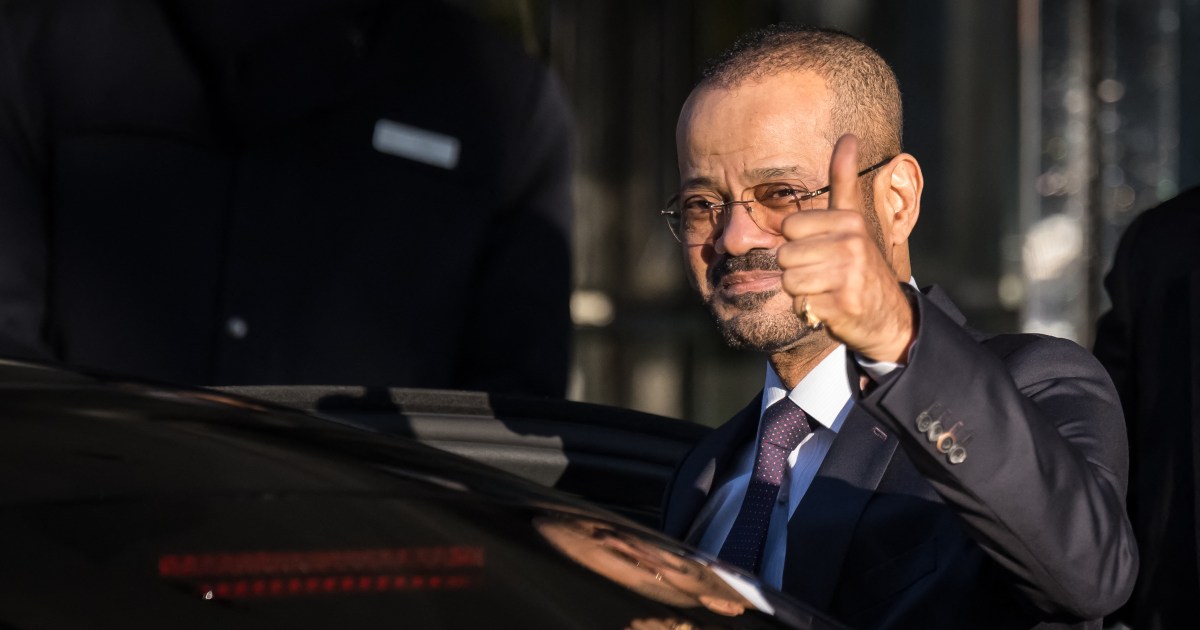
Peace ‘within reach’ as Iran agrees no nuclear material stockpile: Oman FM

Iran agreed during indirect talks with the United States never to stockpile enriched uranium, said Oman’s top diplomat, who described the development as a major breakthrough.

Oman’s Foreign Minister Badr bin Hamad Al Busaidi also said on Friday that he believed all issues in a deal between Iran and the US could be resolved “amicably and comprehensively” within a few months.

Recommended Stories

list of 4 itemsend of list

“A peace deal is within our reach … if we just allow diplomacy the space it needs to get there,” Al Busaidi said in an interview with CBS News in Washington, DC, after Oman brokered the third round of indirect talks between the US and Iran in Geneva on Thursday.

“If the ultimate objective is to ensure forever that Iran cannot have a nuclear bomb, I think we have cracked that problem through these negotiations by agreeing [on] a very important breakthrough that has never been achieved any time before,” Al Busaidi said.

“The single most important achievement, I believe, is the agreement that Iran will never ever have nuclear material that will create a bomb,” he said.

“Now we are talking about zero stockpiling, and that is very, very important because if you cannot stockpile material that is enriched, then there is no way that you can actually create a bomb,” he added.

There would also be “full and comprehensive verification by the IAEA [International Atomic Energy Agency]”, he said, referring to the UN’s nuclear watchdog.

Oman’s top diplomat also said Iran would degrade its current stockpiles of nuclear material to “the lowest level possible” so that it is “converted into fuel, and that fuel will be irreversible”.

“This is something completely new. It really makes the enrichment argument less relevant, because now we are talking about zero stockpiling,” Al Busaidi said.

Regarding recent US demands regarding Iran’s missile programme, Al Busaidi said: “I believe Iran is open to discuss everything”.

Asked if he thought enough ground was covered in the most recent talks in Geneva to hold off a US attack on Iran, the minister said, “I hope so.”

“We have really advanced substantially, and I think, obviously, there remains various details to be ironed out, and this is why we need a little bit more time to really try and accomplish the ultimate goal of having a comprehensive package of the deal,” he said.

“But the big picture is that a deal is in our hands,” he added.

The foreign minister’s comment followed after he met earlier on Friday with US Vice President JD Vance and as US President Donald Trump continued to sabre-rattle while at the same time declaring he favoured a diplomatic solution with Tehran.

Trump said on Friday that he was not happy with the recent talks that concluded in Geneva.

“We’re not exactly happy with the way they’re negotiating,” Trump told reporters in Washington, adding that Iran “should make a deal”.

“They’d be smart if they made a deal,” he said.

Trump later said that he would prefer it if the US did not have to use military force, “but sometimes you have to do it”.
Trump administration charges 30 more people for Minnesota church protest

The administration of United States President Donald Trump has broadened its prosecution of the protesters involved in a church demonstration to 39 people, up from nine.

The demonstration was part of a backlash to Trump’s deadly immigration surge in the Midwestern state of Minnesota, but officials have sought to frame the protest as an attack on religious freedom.

Recommended Stories

list of 3 itemsend of list

Attorney General Pam Bondi announced the expanded indictment on Friday in a message posted to social media.

“Today, [the Justice Department] unsealed an indictment charging 30 more people who took part in the attack on Cities Church in Minnesota,” Bondi wrote. “At my direction, federal agents have already arrested 25 of them, with more to come throughout the day.”

She added a warning to other protesters who might seek to disrupt a religious service.

“YOU CANNOT ATTACK A HOUSE OF WORSHIP,” Bondi said. “If you do so, you cannot hide from us — we will find you, arrest you, and prosecute you. This Department of Justice STANDS for Christians and all Americans of faith.”

Appealing to Christian voters

Since taking office for a second term, Trump has sought to appeal to Christian conservatives by launching initiatives, for example, to root out anti-Christian bias and prevent alleged acts of Christian persecution, both domestically and in countries like Nigeria.

But critics have accused his administration of attempting to stifle opposition through its prosecution of the Minnesota protest attendees.

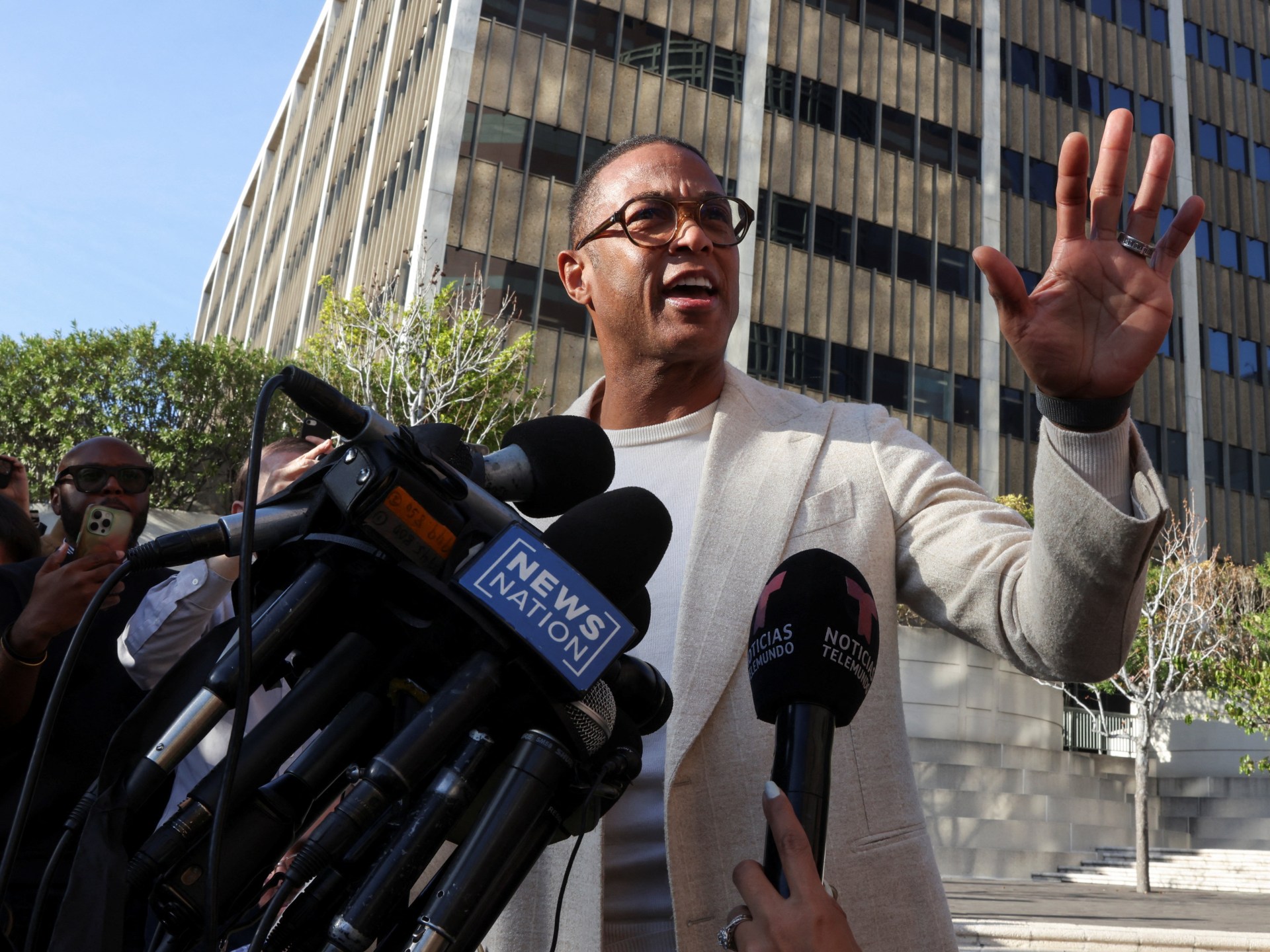
Some of those indicted deny even being a part of the January 18 protest. Defendants like former CNN anchor Don Lemon and reporter Georgia Fort say they attended in their capacity as journalists.

Both have pleaded not guilty to the charges and have publicly questioned whether their prosecution is an attempt to curtail freedom of the press.

The superseding indictment, filed on Thursday, levies two counts against the 39 defendants, accusing them of conspiracy against the right of religious freedom and efforts to injure, intimidate or interfere with the exercise of religious freedom.

“While inside the Church, defendants collectively oppressed, threatened and intimidated the Church’s congregants and pastors by physically occupying the main aisle and rows of chairs near the front of the church,” the indictment reads

It also describes the protesters as “engaging in menacing and threatening behavior” by “chanting and yelling loudly” and obstructing exits.

A magistrate judge on January 22 initially rejected the Justice Department’s attempt to charge nine attendees who were at the protest.

But the department sought a grand jury indictment instead, which was filed on January 29 and made public the next day.

A reaction to Trump’s immigration surge

The protest, dubbed “Operation Pullup”, was conceived as a response to the violent immigration crackdown that had unfolded in Minnesota.

Many of the enforcement efforts centred on the metropolitan area that includes the Twin Cities: St Paul and Minneapolis.

Trump had repeatedly blamed the area’s large Somali American population for a welfare fraud scandal involving government funds for programmes like Medicaid and school lunches.

In December, the Trump administration surged federal immigration agents to the region, nicknaming the effort Operation Metro Surge. At its height, as many as 3,000 agents were in the Minneapolis-St Paul area.

But the effort was plagued by reports of excessive violence towards detainees and protesters alike. Videos circulated of officers breaking the car windows of legal observers, pepper-spraying protesters and beating people.

Officers also engaged in the practice of entering homes forcibly without a judicial warrant, which advocates described as a violation of the Fourth Amendment of the Constitution. Cases of unlawful arrests were also reported.

But a turning point came on January 7, when an agent with Immigration and Customs Enforcement (ICE) was caught on camera shooting into the vehicle of 37-year-old mother Renee Good. She died, and her killing triggered nationwide protests.

Operation Pullup took place at Cities Church in St Paul less than two weeks later.

It was intended as a demonstration against the church’s pastor, David Easterwood, who serves as a local official for ICE.

Several protesters have indicated that they are prepared to fight the government’s charges over the incident, citing their First Amendment rights to free speech.

Some also said that they intended to remain vigilant towards government immigration operations, even after Trump administration officials announced Operation Metro Surge was winding down in mid-February.

Trump, Iran and geopolitical mind games

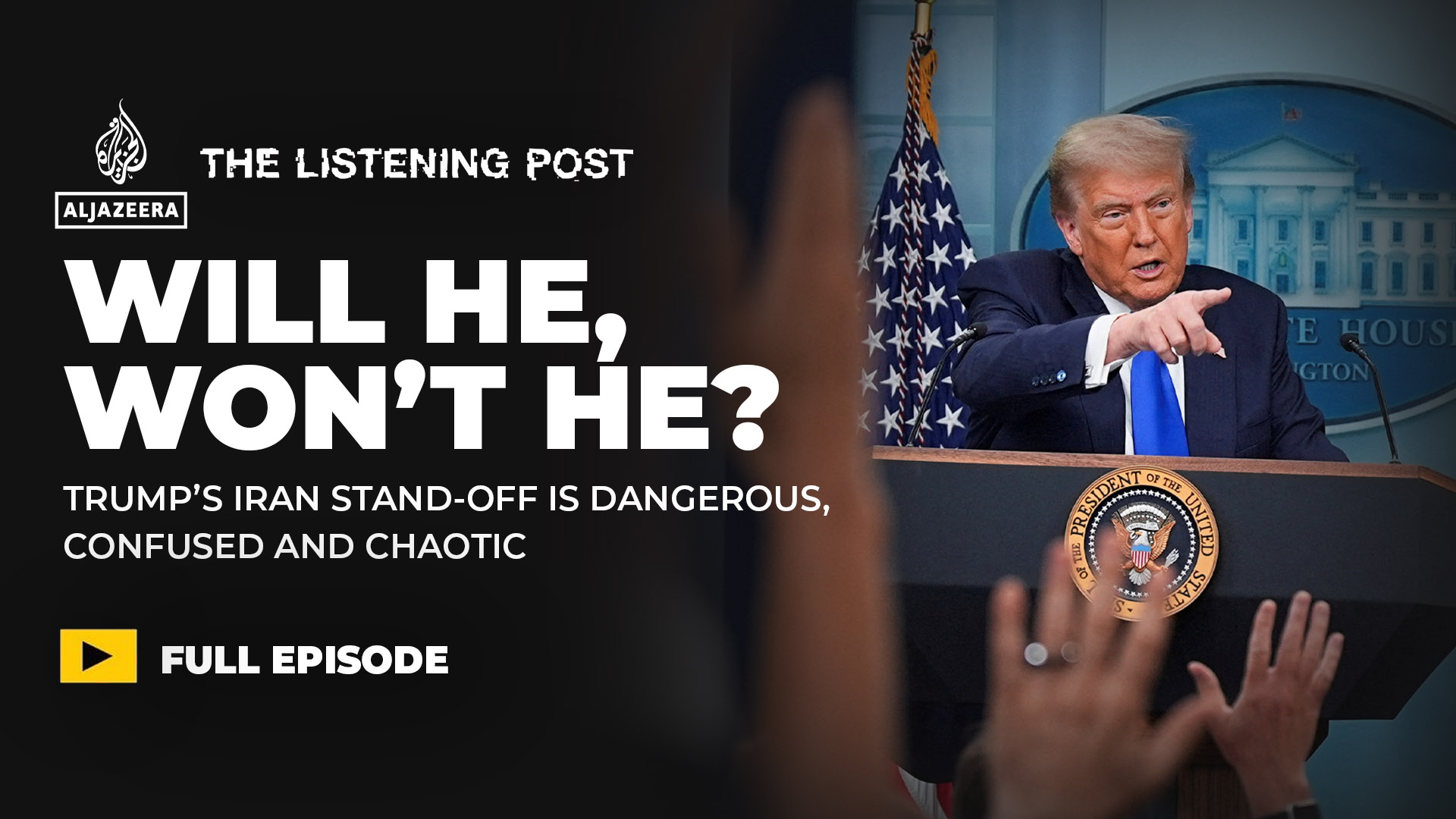
As Washington escalates threats of military action against Iran, negotiations over Tehran’s nuclear programme continue behind the scenes. But while the Trump administration insists that the standoff is about security, Iran’s state media are pushing a very different narrative: that the crisis is a deliberate distraction from the Epstein scandal that continues to implicate the US president.

Contributors:
Dina Esfandiary – Middle East Lead, Bloomberg Economics
Fereshteh Sadeghi – Iranian journalist
Jamal Abdi – President, National Iranian American Council
Sina Toossi – Senior Fellow, Centre for International Policy

On our radar:

Indian Prime Minister Narendra Modi travelled to Israel this past week in a carefully choreographed display of solidarity. While Modi’s trip was celebrated in the Israeli media, criticism by Indian journalists was blocked back home. Leaving the two leaders to sign arms deals that will boost an already significant military partnership.

The Rise of Digital Micro-Bolsonaros

Nearly two years after Jair Bolsonaro’s fall from power in Brazil, the movement he built is searching for a new figurehead. A rising generation of young, evangelical, and hyper-online politicians is stepping in.

They are leveraging a sophisticated, decades-old religious media machine that evolved from radio and television into a powerful force on social media. Brazil’s political right is being reshaped for the digital age.

Trump orders federal agencies to stop using Anthropic as dispute escalates

United States President Donald Trump said he is directing every federal agency to immediately cease work with artificial intelligence lab Anthropic, adding there would be a six-month phaseout for the Department of Defense and other agencies that use the company’s products.

“I am directing EVERY Federal Agency in the United States Government to IMMEDIATELY CEASE all use of Anthropic’s technology. We don’t need it, we don’t want it, and will not do business with them again!” Trump said in a post on Truth Social on Friday.

Recommended Stories

list of 3 itemsend of list

Trump’s directive came during a weeks-long feud between the Pentagon and the San Francisco-based startup over concerns about how the military could use AI at war.

Spokespeople for Anthropic, which has a $200m contract with the Pentagon, did not immediately respond to a request for comment.

Trump’s decision stopped short of threats issued by the Pentagon, including that it could invoke the Defense Production Act to require Anthropic’s compliance.

The Pentagon had also said it considered making Anthropic a supply-chain risk, a designation that previously targeted businesses tied to foreign adversaries.

Trump’s comments came just over an hour before the Pentagon’s deadline for Anthropic to allow unrestricted military use of its AI technology or face consequences – and nearly 24 hours after CEO Dario Amodei said his company “cannot in good conscience accede” to the Defense Department’s demands.

Calling the company “left-wing nut jobs”, the president said Anthropic made a mistake trying to strong-arm the Pentagon. Trump wrote on Truth Social that most agencies must immediately stop using Anthropic’s AI, but gave the Pentagon a six-month period to phase out the technology that is already embedded in military platforms.

“We don’t need it, we don’t want it, and will not do business with them again!” Trump wrote.

At issue in the defence contract was a clash over AI’s role in national security. Anthropic had said it sought narrow assurances from the Pentagon that Claude won’t be used for mass surveillance of Americans or in fully autonomous weapons. But after months of private talks exploded into public debate, it said in a Thursday statement that new contract language “framed as compromise was paired with legalese that would allow those safeguards to be disregarded at will”.

Trump threatened further action if Anthropic did not cooperate with the phaseout. Trump warned he would use “the Full Power of the Presidency to make them comply, with major civil and criminal consequences to follow” if Anthropic did not help in the phaseout period.

‘Threatening’ move

The setback comes as AI leader Anthropic raced to win a fierce competition selling novel technology to businesses and government, particularly for national security, ahead of its widely expected initial public offering. The company has said it has not finalised an IPO decision.

Anthropic was the first frontier AI lab to put its models on classified networks via cloud provider Amazon.com and the first to build customised models for national security customers, the startup has said.

Its product, Claude, is in use across the intelligence community and armed services.

US Senator Mark Warner, a Democrat and vice chairman of the Select Committee on Intelligence, criticised the action taken by Trump, a Republican.

“The president’s directive to halt the use of a leading American AI company across the federal government, combined with inflammatory rhetoric attacking that company, raises serious concerns about whether national security decisions are being driven by careful analysis or political considerations.”

The conflict is the latest eruption in a saga that dates back at least to 2018. That year, employees at Alphabet’s Google protested the Pentagon’s use of the company’s AI to analyse drone footage, straining relations between Silicon Valley and Washington. A rapprochement ensued, with companies including Amazon and Microsoft jostling for defence business, and still more CEOs pledging cooperation last year with the Trump administration.

The dispute stunned AI developers in Silicon Valley, where a growing number of workers from Anthropic’s top rivals, OpenAI and Google, voiced support for Amodei’s stand in open letters and other forums.

“The Pentagon is negotiating with Google and OpenAI to try to get them to agree to what Anthropic has refused,” says the open letter from some OpenAI and Google employees. “They’re trying to divide each company with fear that the other will give in.”

And in a surprise move from one of Amodei’s fiercest rivals, OpenAI CEO Sam Altman on Friday sided with Anthropic and, in a CNBC interview, questioned the Pentagon’s “threatening” move, suggesting that OpenAI and most of the AI field share the same red lines. Amodei once worked for OpenAI before he and other OpenAI leaders quit to form Anthropic in 2021.