[UPDATED] Nigeria Police Council Backs Disu’s Appointment, Tinubu To Swear In New IGP Wednesday

The Nigeria Police Council on Monday unanimously ratified the appointment of Olatunji Disu as the Inspector-General of Police.

According to a statement by the presidential spokesman, Bayo Onanuga, the endorsement has paved the way for his swearing-in by President Bola Tinubu on Wednesday.

READ ALSO: Tinubu Appoints Tunji Disu As Acting Inspector-General Of Police

The ceremony will take place during the Federal Executive Council meeting, scheduled for the same day.

The Council’s meeting, which took place at the State House, was presided over by President Bola Ahmed Tinubu and had in attendance Vice President Kashim Shettima, state governors, and the Chairman of the Police Service Commission, retired DIG Hashimu Argungu, in accordance with the Constitution.

Others in attendance were the Secretary to the Government of the Federation, Senator George Akume; the National Security Adviser, Nuhu Ribadu; the Chief of Staff, Femi Gbajabiamila; the Minister of Police Affairs, Senator Ibrahim Gaidam; the FCT Minister, Nyesom Wike; and the head of service, Mrs. Esther Didi Walson-Jack.


Governor of Nasarawa State, Abdullahi Sule, commended the President’s appointment of Disu, noting that it was based on his excellent career record.

Wike, who is a former governor of Rivers State, also lauded Disu for his efficiency as a crime fighter and for ensuring the command’s strategic impact in addressing security concerns within the territory.

Governor Peter Mbah of Enugu State seconded the motion endorsing the appointment.

President Bola Tinubu appointed Disu as the acting IGP on February 25, 2026, following the resignation of former IGP Kayode Egbetokun.

Tinubu, in a statement by the presidential spokesman, Bayo Onanuga, had said he would convene a meeting of the Nigeria Police Council to formally consider Disu’s appointment as substantive IGP, after which his name would be transmitted to the Senate for confirmation,” he said.

READ ALSO: Five Quick Facts About Acting IGP Tunji Disu

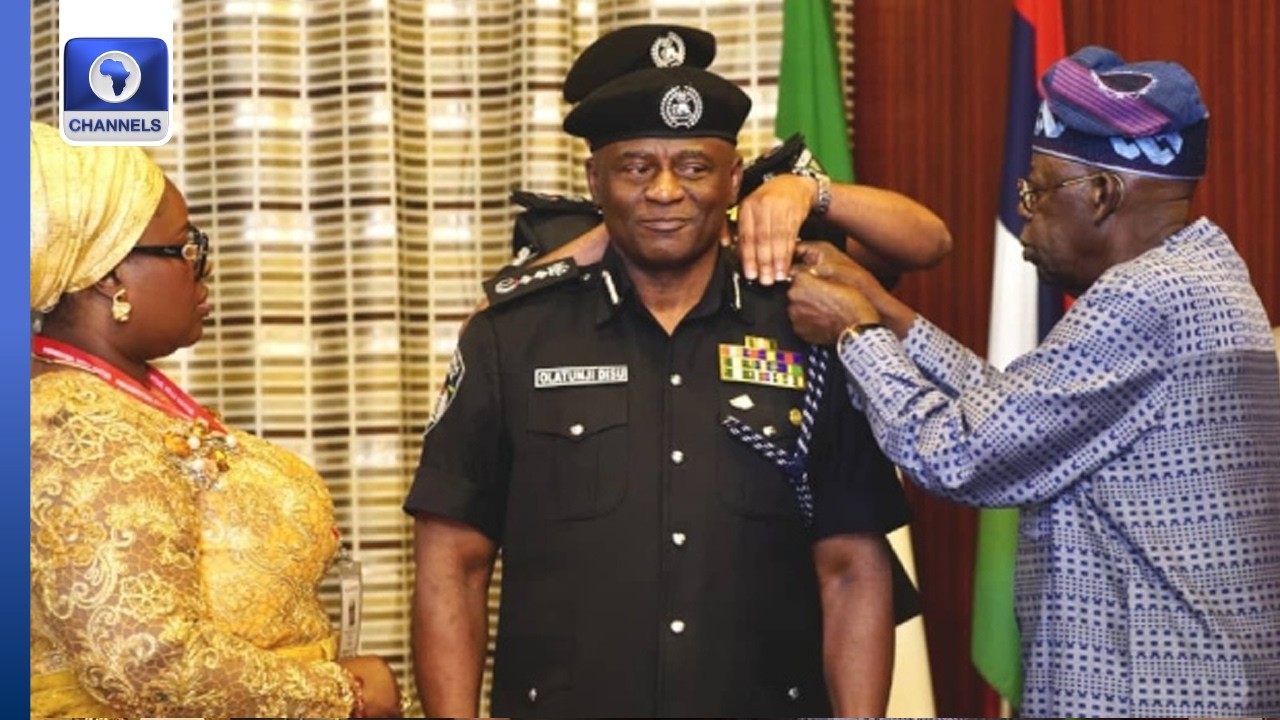
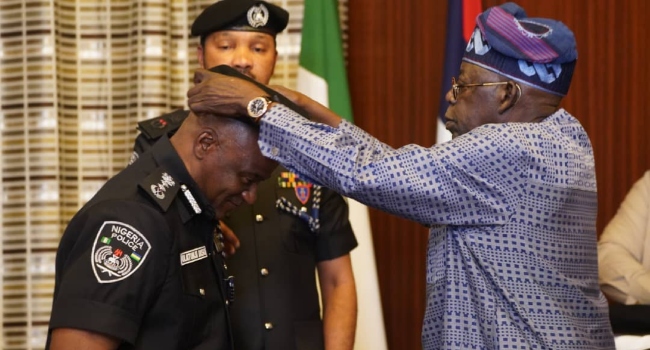
Disu, 59, took over the reins as Nigeria’s new police chief at a brief ceremony at the Louis Edet House in Abuja, shortly after President Bola Tinubu decorated him as the acting IGP.

Until his appointment, Disu served as Assistant Inspector-General in charge of the Force Criminal Investigation Department (FCID) Annex, Alagbon, Lagos.


Before then, he served as Commissioner of Police in Rivers State and was later deployed by Egbetokun to Abuja as Commissioner of Police of the Federal Capital Territory.

Disu is a member of the International Association of Chiefs of Police and a former head of the Intelligence Response Team of the Nigeria Police Force, a position previously held by Abba Kyari.

Born on April 13, 1966, in Lagos Island, he enlisted in the Nigeria Police Force on May 18, 1992.

Outgone Inspector General of Police, Kayode Egbetokun, hands over to the Acting IGP, Tunji Disu, at the Force Headquarters in Abuja on February 25, 2026. Credit: X/@PoliceNG

He also served as Officer in Charge of the Special Anti-Robbery Squad and anti-kidnapping operations in Rivers State.

Disu previously commanded SARS in Ondo State, Oyo State, and Rivers State, and later served as second in command (2IC) of the State Criminal Investigations Department (CID) in Rivers State.

Speaking at the handover, the former head of the Lagos Rapid Response Squad (RRS) promised to provide an accountable, modern, and professional policing.
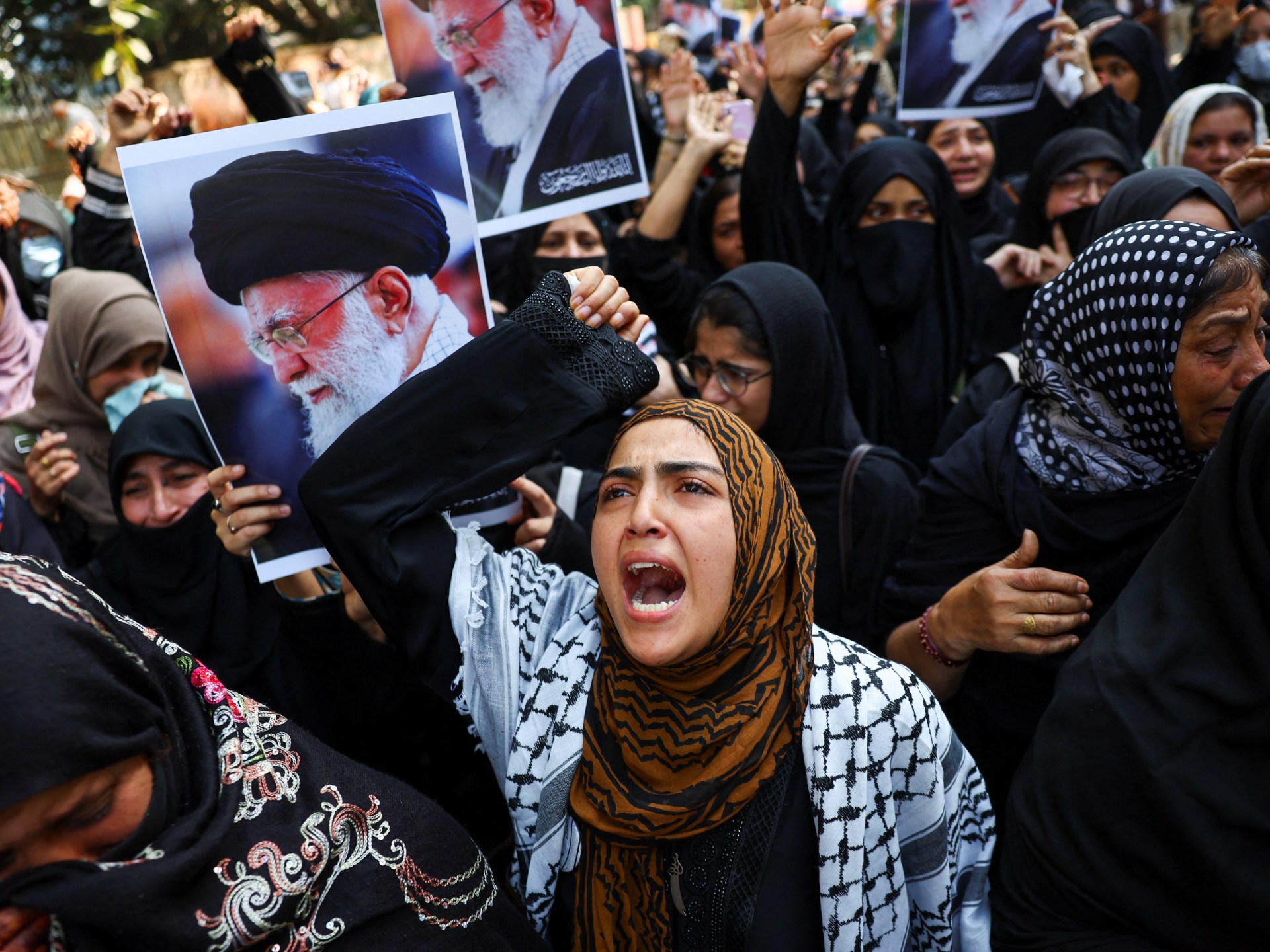
Protests across India against Khamenei’s killing

Protests have erupted in several parts of India following the killing of Iran’s Supreme Leader Ayatollah Ali Khamenei in a United States-Israeli air assault on Iran on Saturday.

Thousands of people took to the streets in cities across the country on Sunday, chanting anti-Israel and anti-US slogans in rallies that stretched into the evening.

Omar Abdullah, the chief minister of Jammu and Kashmir, said he was “deeply concerned” about the situation in Iran, urging demonstrators to remain calm and “avoid any actions that could lead to tension or unrest”.

Starmer lets US use bases for Iran clash: UK’s military, legal quagmire

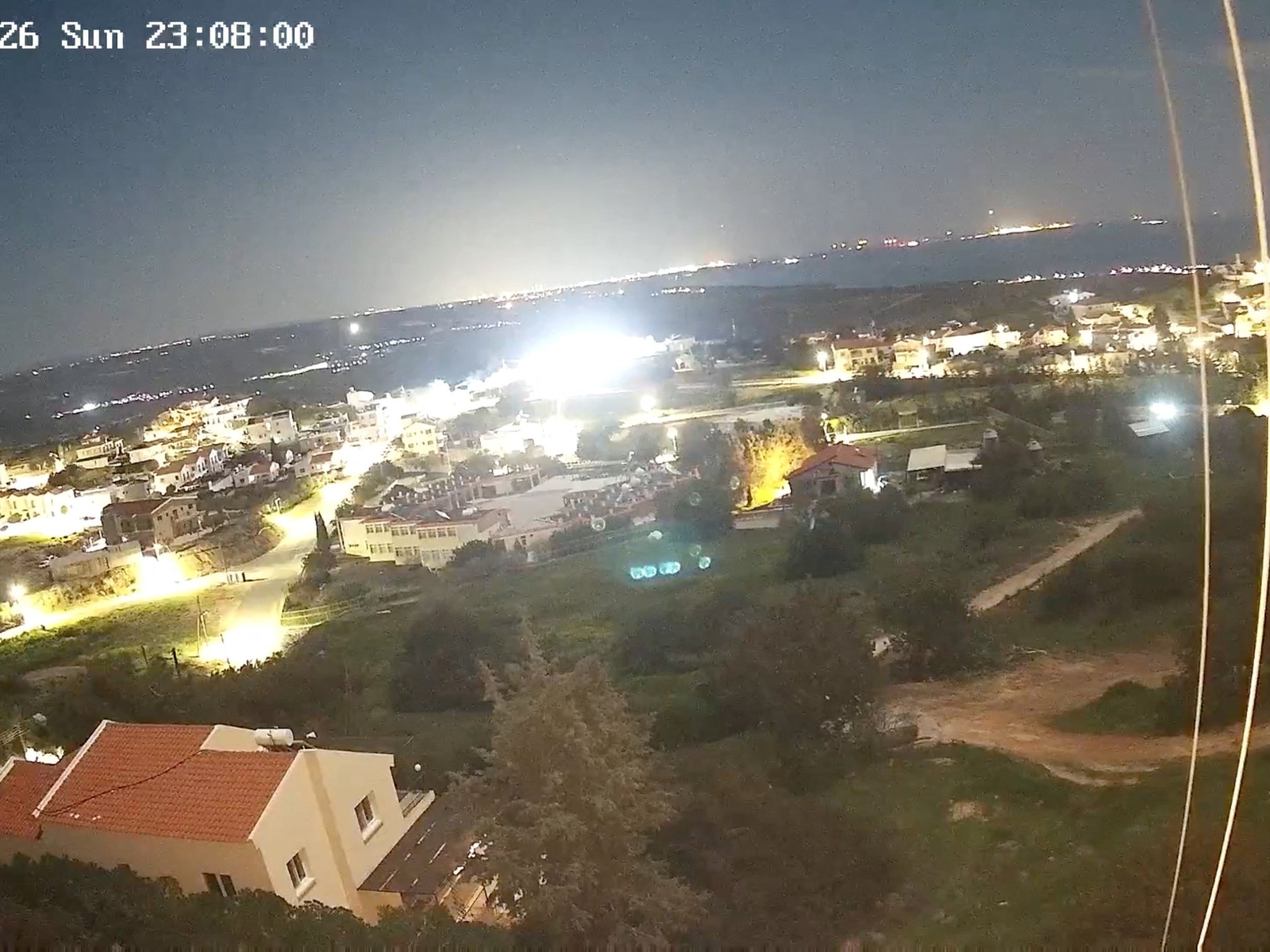
Early on Monday, a suspected Iranian drone crashed into the runway at the United Kingdom’s RAF Akrotiri base in southern Cyprus. British and Cypriot officials said the damage was limited. There were no casualties.

Hours later, two drones headed for the base were “dealt with in a timely manner”, according to the Cypriot government.

Recommended Stories

list of 4 itemsend of list

The incidents came as Prime Minister Keir Starmer signalled on Sunday that the UK was prepared to support the United States in its confrontation with Iran – raising the prospect that it could be drawn deeper into a war it did not choose by its closest ally.

In a joint statement with the leaders of France and Germany, Starmer said the European group was ready to take “proportionate defensive action” to destroy threats “at their source”.

Later, in a televised address, he confirmed that Westminster approved a US request to use British bases for the “defensive purpose” of destroying Iranian missiles “at source in their storage depots, or the launches which are used to fire the missiles”.

But his agreement did little to placate US President Donald Trump, who said the decision came too late.

UK-based military analyst Sean Bell cautioned against reading too much into the Akrotiri incident.

“I understand the projectile that hit Cyprus was not armed, it hit a hangar [with] no casualties, and appears to have been fired from Lebanon,” he said, citing sources.

Al Jazeera was not able to independently verify the claim.

The broader context, he argued, is more consequential.

The US has taken the action “and everybody else is having to deal with the fallout”, he said.

Iran’s military strength lies in its extensive ballistic missile programme, he said, adding that while some have the range to threaten the UK, they do not extend far enough to strike the US.

“I don’t think [US] President Trump has yet made the legal case for attacking Iran, and … international law makes no discrimination between a nation carrying out the act of war and a nation supporting that act of war, so you’re both equally complicit,” he said.

Bell said that Washington likely reframed the issue, communicating to London that, whatever triggered the escalation, US forces were now effectively defending British personnel in the region.

That shift, he suggested, provided a legal basis to “not to attack Iran, but to protect our people”, allowing the UK to approve US operations from its bases under a “very, very clear set of instructions” tied strictly to national interest and defence.

UK officials ‘tying themselves in knots’

However, concerns of complicity had reportedly shaped earlier decisions, according to Tim Ripley, editor of the Defence Eye news service, who said the British government initially concluded that US and Israeli strikes on Iran did not meet the legal definition of self-defence under the United Nations Charter.

When Washington requested the use of bases such as RAF Fairford in Gloucestershire, UK, and Diego Garcia in the Indian Ocean, Starmer is understood to have consulted government lawyers, who advised against participation.

Up until Starmer’s televised address, in which he approved the US request, the UK had not considered the campaign a war of self-defence, said Ripley. While Washington’s legal reasoning has not changed, the war’s trajectory has.

Iranian retaliatory strikes – which have seen drones and missiles targeting Gulf states – have placed British expatriates and treaty partners under direct threat.

“The basis of our decision is the collective self-defence of longstanding friends and allies, and protecting British lives. This is in line with international law,” Starmer said.

According to Ripley, several Gulf governments, which maintain defence relationships with the UK, sought protection, allowing London to focus on protecting British personnel and partners rather than endorsing a broader campaign. However, with memories of the Iraq War hanging over Westminster, British ministers have stopped short of explicitly backing the US bombing campaign.

British officials are “tying themselves in knots” trying to describe a position that is neither fully participatory nor detached, he said.

US-UK: A strained relationship

Starmer on Monday told Parliament that the UK does not believe in “regime change from the skies” but supports the idea of defensive action.

But Ripley warned that any arrangement allowing US warplanes to operate from British air bases carries significant risks.

Iran’s missile systems are mobile and launchers mounted on trucks, he said. From RAF Fairford or Diego Garcia, US aircraft face flight times of seven to nine hours to reach Iranian airspace, necessitating patrol-based missions.

Once airborne, pilots may have only minutes to act. The idea that a US crew would pause mid-mission to seek fresh British legal approval is unrealistic, he said.

London must rely on Washington’s assurance that only agreed categories of “defensive” targets will be struck. If an opportunity arose to eliminate a senior Iranian commander in the same operational zone, the temptation could be strong. Yet such a strike might fall outside Britain’s stated defensive mandate. The aircraft would have departed from British soil, and any escalation could implicate the UK, Ripley said.

Bell highlighted another weakness: Britain has no domestic ballistic missile defence system.

If a ballistic missile were fired at London, he said, “We would not be able to shoot it down.”

Intercepting such weapons after launch is notoriously difficult, reinforcing the argument that the only reliable defence is to strike before launch.

The UK, therefore, occupies a grey zone: legally cautious, operationally exposed and strategically dependent on US decisions, it does not fully control.

Beyond the legal and military dilemmas, Starmer must also contend with a sceptical public.

A YouGov poll conducted on February 20 found that 58 percent of Britons oppose allowing the US to launch air strikes on Iran from UK bases, including 38 percent who strongly oppose.

Lebanese civilians flee amid deadly Israeli strikes on Beirut suburbs

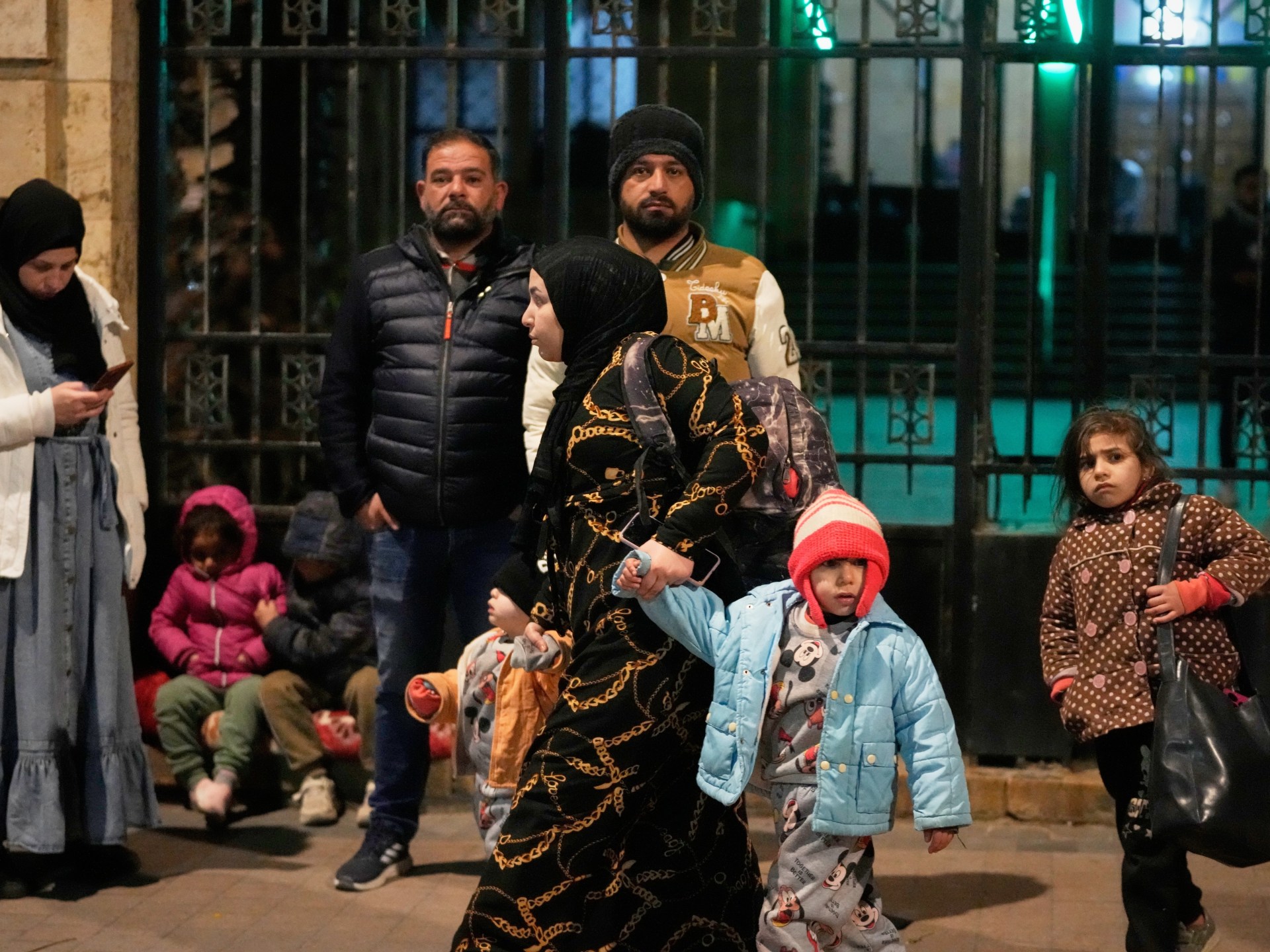
Lebanese civilians have fled southern Lebanon and Beirut’s southern suburbs as a deadly escalation erupts between Israel and Hezbollah. Many are seeking sanctuary in makeshift shelters across Lebanon’s capital.

At least 31 people were killed and 149 wounded in overnight Israeli strikes on Beirut’s suburbs and southern Lebanon, according to Lebanon’s Health Ministry.

Highways became gridlocked as people evacuated following Israel’s deadliest assault on Lebanon in over a year. The strikes came shortly after Hezbollah fired missiles into Israel for the first time in more than 12 months.

“I don’t know how long it will take us to reach Beirut,” said Ali Hamdan, who had been travelling for seven hours on what should have been a 30-minute journey from his village to Sidon. “I’m headed towards Beirut, but I don’t know where yet. We don’t have a place to stay.”

In Beirut, public schools transformed into emergency shelters. Families arrived with mattresses and belongings, while volunteers registered names as classrooms and courtyards filled with displaced people.

Hussein Abu Ali, who fled with his family from a southern Beirut suburb, recounted the strikes: “My son began shaking and crying. Where are you supposed to go? I stepped outside, then back in because I was afraid of shooting in the air. I gathered my children and went down to the street.”

Nadia al-Salman, displaced from Majdal Zoun in the south, declared: “They do not intimidate or frighten us, and they will not make us retreat even an inch from the path of resistance.”

During the 2024 Israel-Hezbollah war, over one million Lebanese were displaced. Many remain unable to return to their destroyed border villages.

Hezbollah stated Monday’s attacks were retaliation for the killing of Iran’s Supreme Leader Ali Khamenei and “repeated Israeli aggressions”, calling them “a legitimate defensive response”.

‘He Has His Work Cut Out For Him,” Govs’ Forum Reacts To Disu’s Appointment

The Nigeria Governors’ Forum has said that the substantive Inspector-General of Police, Olatunji Disu, has a difficult responsibility to perform as the new police chief, in view of the nation’s security challenges.

READ ALSO: [UPDATED] National Police Council Backs Disu’s Appointment As IGP


The Chairman of the NGF, AbdulRahman AbdulRazaq, stated this while speaking with journalists shortly after Disu’s appointment by the National Police Council.

“Well, at the deliberation, we went through his records, his performance in office, and the recommendation, and the Council was glad to approve the recommendation for him to be appointed as Inspector General of Police.

“He has his work cut out for him, especially in this age of talks about state police now,” he said.

‘He Can Perform’

AbdulRazaq, who is also the Governor of Kwara State, however, said that Disu’s track record is an indication that he has the capacity to do the job.

“The challenges are there. He’s been through it. He did a major assignment with the Rapid Response in Lagos State and the FCT, so he has a record to show that he can perform.

“There’s great expectation from the states, 36 states and the FCT, which he has to organise. We wish him all the best, and we look forward to working with him,” the governor added.

Disu was appointed as the acting IGP on February 25, 2026, by President Bola Tinubu,  following the resignation of former IGP Kayode Egbetokun.

The former AIG assumed office as the acting Inspector-General of Police (IGP) last Wednesday.

Disu, 59, took over the reins as Nigeria’s new police chief at a brief ceremony at the Louis Edet House in Abuja, shortly after President Bola Tinubu decorated him as the acting IGP.

Until his appointment, Disu served as Assistant Inspector-General in charge of the Force Criminal Investigation Department (FCID) Annex, Alagbon, Lagos.

He was promoted to the rank of Assistant Inspector-General of Police last year.