Can Chelsea kick-start faltering Palmer?

Nizaar Kinsella

Football reporter
  • 95 Comments

Cole Palmer was named the eighth‑best player in the world at the Ballon d’Or ceremony in September, but both data and the eye test indicate a dip in form.

The 23-year-old is still regarded within Chelsea as “untouchable”. Former head coach Enzo Maresca labelled him the club’s “best player” while his successor Liam Rosenior has held multiple meetings with his star forward since taking charge.

However, even by the reigning PFA Young Player of the Year’s own admission, Palmer is not yet operating at his fluid, brilliant best – with several mitigating factors contributing to that downturn.

Firstly, as Professional Footballers’ Association chief executive Maheta Molango said, the England forward has likely been suffering from burnout.

“When I look at someone like Cole Palmer, that’s three consecutive summers without a break,” Molango said at the Financial Times Business of Football Summit.

“People say he’s a millionaire – yes, he is. But it doesn’t give you an extra lung or an extra leg. I want to see Cole Palmer on the pitch because he’s the one who makes me dream.”

Three years without a summer off resulted in 112 games for club and country, with the addition of Club World Cup fixtures for Chelsea, the European Championship with England and the Under‑21 European Championship before that.

Those managing him did not consider it a coincidence that as demands on Palmer increased, his fitness suffered. The forward began struggling with a painful, recurring groin issue at the end of last season.

He had only partially recovered by December, returning after more than six weeks out, and Chelsea’s medical team continue to monitor him closely.

Asked by BBC Sport about Palmer’s display following the 2–1 defeat away at Arsenal, Rosenior said: “He played 83 minutes. That was tactical.

“When I took him and Enzo [Fernandez] off, they were both on yellow cards and I wanted Garna [Alejandro Garnacho] and Liam [Delap] to come on and give us freshness, which I felt they did. He’s absolutely fine to start the game [against Aston Villa] on Wednesday.”

What does the data say?

Palmer has seven goals and three assists in 16 matches since returning from the groin issue in December. However, four of those goals have come from the penalty spot.

Penalties have boosted Palmer’s numbers throughout his career. Only former midfielders Mark Noble and Mikel Arteta have a higher proportion of penalties among players with 40 or more Premier League goals, compared with Palmer’s current 40% ratio.

No player in the Premier League has scored more penalties than Palmer’s 18 since his Chelsea debut in September 2023 – underlining why the man nicknamed ‘Cold’ is already viewed as one of the best finishers from 12 yards in the competition’s modern era.

Palmer’s form has dipped since his sensational 2024 calendar year. From his Chelsea debut to the meeting with Bournemouth in January 2025, Palmer scored 36 league goals (33% of them penalties) and provided 17 assists in 54 matches.

Since then, he has scored nine league goals (66% penalties) and registered three assists in 33 games. Palmer is taking fewer shots, creating fewer chances and posting lower expected‑goals and expected‑assists numbers across those two periods.

Interestingly, Chelsea have also shown they can compete without him.

Without Palmer, Chelsea have won 73% of their games this season compared with just 24% when he plays. They have taken 2.27 points per match without him compared with 1.18 with him and have improved from 1.5 to 2.2 goals per game in his absence.

Could Chelsea manage Palmer better?

At the beginning of last season, Chelsea rested Palmer for their pre‑season tour of the USA, giving him the platform to start 36 Premier League matches during the 2024‑25 campaign.

Palmer was mostly rested in the Conference League but played 556 of the 570 minutes available at the Club World Cup – in what he said were “difficult” conditions – while winning Fifa’s newly expanded competition.

It led to a 336‑day season for Palmer, despite him being afforded time off during pre‑season.

Chelsea delayed the start of pre‑season training but ultimately had only 35 days, the club’s shortest ever break between seasons and two days fewer than the Covid‑affected 2019‑20 and 2020‑21 cycles.

It was then that Palmer’s painful groin issue worsened – something he has been trying to overcome during two separate spells, having been permitted time to train with his cousin, a personal trainer, in Dubai. Chelsea sources, both privately and publicly, have denied Palmer requires any surgical intervention.

After Chelsea’s 3-1 win over Wolves in February, in which Palmer scored three times including two penalties, he said: “I am still not there physically but I hope with the medical staff here that I will come back and show my level again.”

Chelsea’s medical department, led by Australian Bryce Cavanagh, has succeeded in getting Reece James and Wesley Fofana playing regularly again, which bodes well, while Romeo Lavia remains a longer‑term project.

Related topics

  • Chelsea
  • Premier League
  • Football

More on this story

  • Stamford Bridge
  • Ask Me Anything logo

US claims destroyed IRGC command centre, more Israel attacks on Tehran

The United States military has said its forces have destroyed Islamic Revolutionary Guard Corps (IRGC) command and control facilities and air defence installations as heavy US-Israel attacks on Iran continued for a fourth day and Tehran retaliated across the region.

The US Central Command (CENTCOM), which is responsible for US military operations in the Middle East, said on Tuesday it also destroyed air defence installations as well as missile and drone launch sites. It provided no evidence for its claims.

Recommended Stories

list of 4 itemsend of list

“We will continue to take decisive action against imminent threats posed by the Iranian regime,” it posted on X.

On Monday, CENTCOM claimed US forces had struck more than 1,250 targets in Iran and destroyed 11 Iranian ships.

Meanwhile, it confirmed that six US service personnel have been killed so far, all in Iran’s retaliatory attacks over the ⁠weekend on Kuwait.

Kuwait mistakenly shot down three US F-15E fighter jets during an Iranian attack, it added. All six crew members ejected and were safely recovered.

Thirteen Iranian soldiers have been killed in a US-Israeli strike on a military base in Kerman province, according to the Iranian army. The attack targeted the base in the south of the country.

Meanwhile, the ISNA agency reports that five members of the IRGC’s air force and navy have been killed in US-Israeli attacks on the cities of Jam and Dir in the central province of Bushehr.

The war looks unlikely to end soon as US President Donald Trump said on Monday that Washington has “the capability to go far longer” than its projected four-to-five-week timeframe for its military operations against Iran.

Israeli attacks on Iran continue

Across the Iranian capital, Tehran, the sound of explosions rang out through the night and into the early morning hours on Tuesday.

Iran’s Mehr news agency also reported that explosions have been heard in the cities of Isfahan and Shiraz.

Israel’s air force was carrying out multiple operations against Iran’s air defence system and eliminating several of its forces, according to military spokesman Avichay Adraee.

In a post on X, Adraee said Israeli aircraft targeted several personnel who were operating Iran’s defence systems, including its radar systems as well as missile launchers.

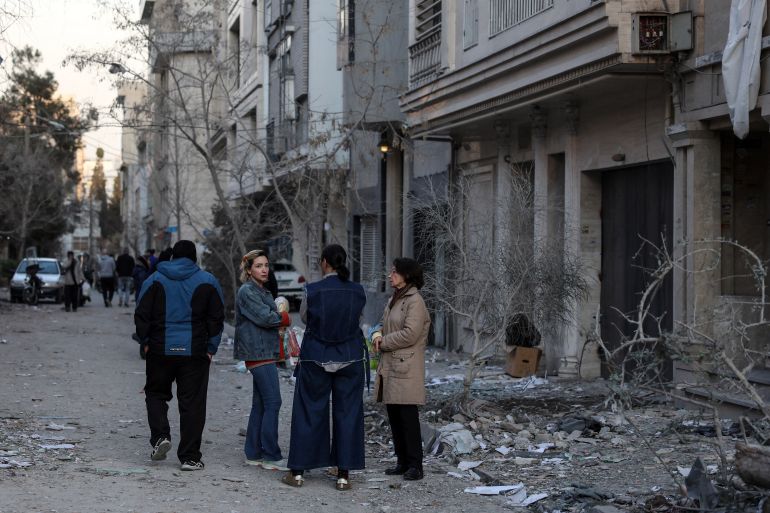
Residents stand on a street beside damaged residential buildings near Niloufar square in Tehran during the ongoing joint US-Israeli military campaign on Iran on March 2, 2026.
Residents stand on a street beside damaged residential buildings near Niloufar Square in Tehran during the ongoing joint US-Israeli military campaign on Iran on March 2, 2026 [AFP]

He also said Israel’s Air Force attacked sites affiliated with Iran’s ballistic missile launch platforms.

On another front in the widening conflict, the Israeli army launched simultaneous attacks on the Lebanese capital, Beirut, on Tuesday on positions purportedly belonging to Hezbollah.

The announcement followed Israeli air strikes early Monday on Beirut’s southern suburbs and southern Lebanon that killed at least 52 people and injured 154, according to state-run media.

Hezbollah earlier said it had launched an attack on the Ramat David Airbase in northern Israel, targeting radar sites and control rooms at the base by deploying “a swarm of drones” at dawn on Tuesday.

UN ‘deeply alarmed’ by attacks on civilians, schools and hospitals

Top UN officials have warned about the “serious” threat to children following the rapidly escalating military operations in Iran and across the region.

“We are deeply alarmed by attacks on civilians, including civilian infrastructures, schools, and hospitals. Schools and hospitals must not be attacked,” the special representative of the secretary-general for children and armed conflict, Vanessa Frazier, and the special representative of the secretary-general on violence against children, Najat Maalla M’jid, said in a joint statement.

The officials called for an immediate cessation of hostilities, stressing that “maximum restraint is imperative, and full compliance with international humanitarian and human rights law must be ensured at all times by all parties.”

Ski duo named GB’s Winter Paralympics flagbearers

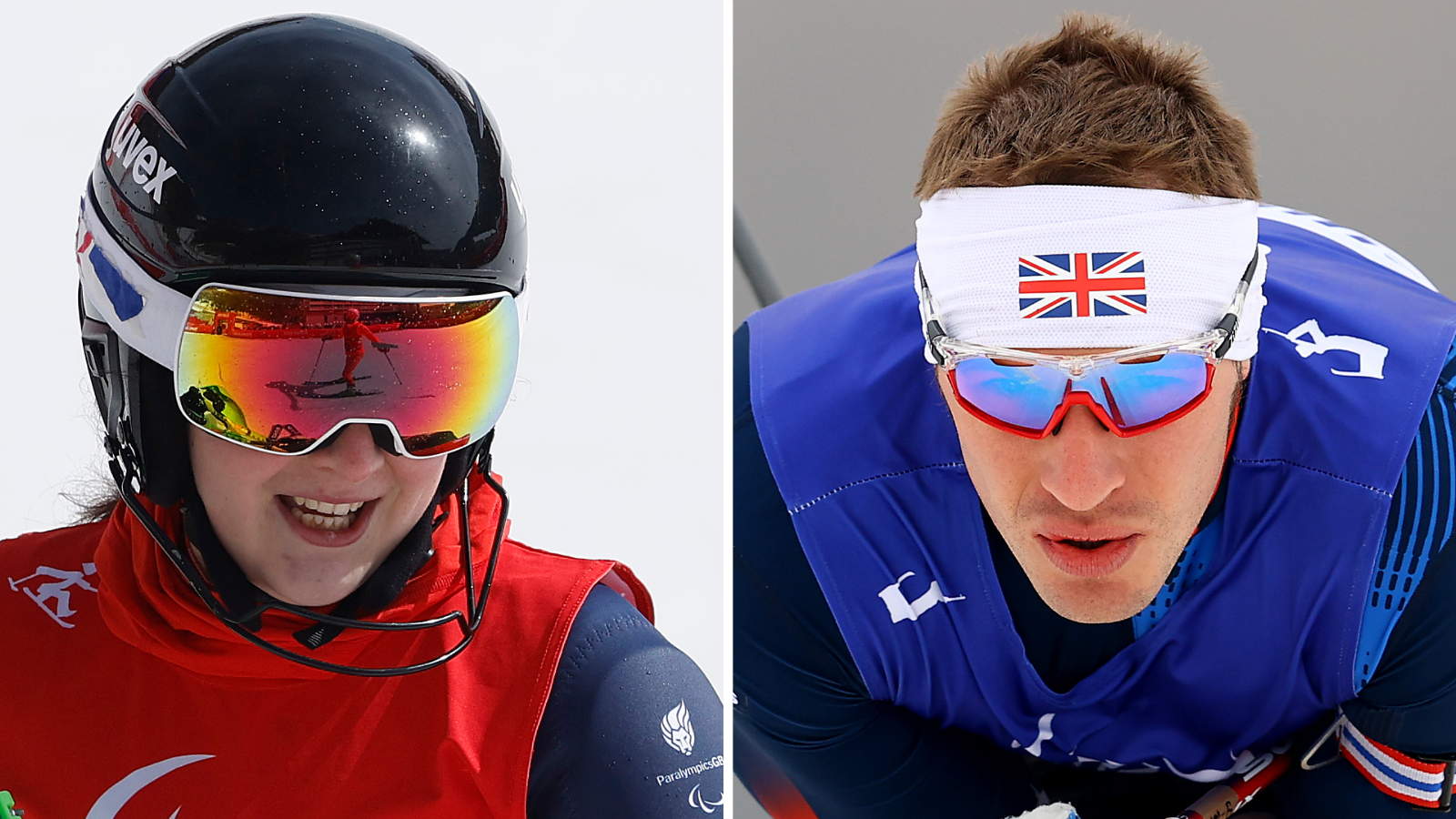
Skiing duo Menna Fitzpatrick and Scott Meenagh will be Great Britain’s flagbearers at the opening ceremony of the Winter Paralympics on Friday.

Welsh Para-Alpine skier Fitzpatrick is Britain’s most decorated Winter Paralympian with six medals.

The 27-year-old will take part in the Paralympics almost three months after sustaining a significant knee injury.

Scottish Para-Nordic skier Meenagh is set to compete in his third Paralympics after appearances at the 2018 and 2022 Games.

Meenagh, 36, became the first Briton to win a medal at the World Para Nordic Skiing Championships when he claimed silver in the 12.5km individual biathlon in 2023.

The opening ceremony for the event will be held at the Verona Arena, a Roman amphitheatre in the historic centre of the city.

Related topics

  • Winter Sports
  • Disability Sport

More on this story

    • 21 January 2018
    Scott Meenagh
    • 7 days ago
    Menna Fitzpatrick competing at the 2022 Winter Paralympics
    • 18 hours ago
    Milano Cortina logo for the Winter Paralympics

Real Madrid defeated by Getafe to fall four points behind Barca in La Liga

Real Madrid have been handed a shock home defeat by Getafe – their second consecutive loss in the Spanish football league, leaving them four points behind leaders Barcelona.

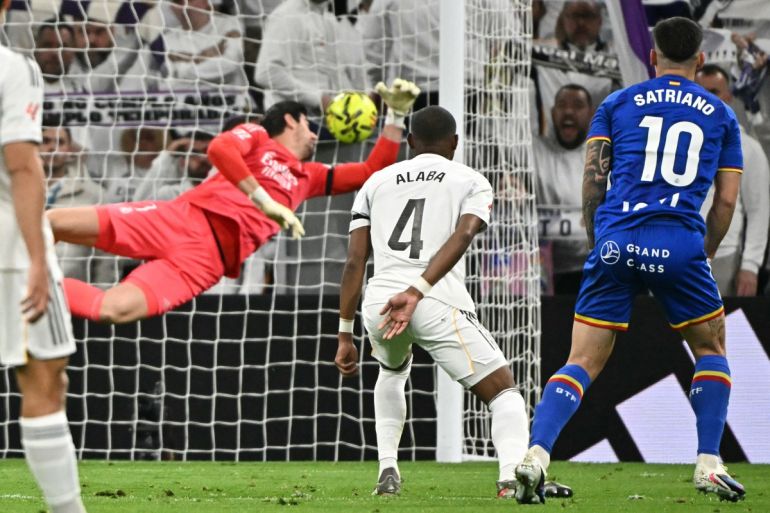
Martin ‌Satriano’s superb first-half volley earned Getafe a stunning 1-0 win at the Santiago Bernabeu on Monday.

Real dominated possession from kickoff and controlled the game but ⁠failed to turn pressure into goals, squandering several chances in an ill-tempered contest.

Alvaro Arbeloa’s side were left exposed in the 39th minute when a half-cleared cross dropped invitingly on the edge of the box, and Satriano struck a fierce volley into the top left corner.

Madrid forward Franco Mastantuono was sent off in stoppage time for apparent dissent, making a bad night worse for Los Blancos.

“Obviously, it’s a match where we could have done things better, but I think my players tried and we had more clear chances than them,” Arbeloa told reporters.

“However, in football, deserving isn’t enough, and Getafe played a great game.”

With French superstar Kylian Mbappe in France to treat a knee sprain, Madrid lined up with Gonzalo Garcia in attack alongside Brazilian star Vinicius Junior.

The Bernabeu crowd responded with boos at half-time, prompting Arbeloa to introduce Dani Carvajal, Dean Huijsen and Rodrygo, ‌but the changes had little effect.

Real Madrid were beaten at Osasuna last weekend, allowing rivals Barca to overtake them in the title race, and Hansi Flick’s side stretched their lead by thrashing Villarreal on Saturday.

Vinicius, in excellent form in 2026 after an inconsistent start to the season, spurned a fine early chance. The winger burst through on goal, but David Soria saved well with his leg.

A brilliant roulette from Arda Guler nearly earned Madrid the breakthrough, but Soria tipped over the Turkish forward’s strike.

Getafe were upset by a painful collision between Madrid defender Antonio Rudiger and Diego Rico, in which the German’s knee knocked the Spaniard’s head.

Uruguayan forward Satriano broke the deadlock with a delicious strike from the edge of the box after compatriot Mauro Arambarri nodded the ball into his path.

Getafe's Uruguayan forward #10 Martín Satriano scores the opening goal during the Spanish league football match between Real Madrid CF and Getafe CF at Santiago Bernabeu Stadium in Madrid on March 2, 2026. (Photo by Javier SORIANO / AFP)
Getafe’s Uruguayan forward Martín Satriano watches the ball fly past Real Madrid’s goalkeeper Thibaut Courtois [Javier Soriano/AFP]

Soria, who had a fine game, saved from Vinicius in the second half, and the Brazilian called for more support from Madrid’s fans.

However, the team were not giving them much to get excited about, although Rudiger came close to levelling with a header.

It was a disjointed display from a Madrid side who visit Celta Vigo on Friday in La Liga, before hosting Pep Guardiola’s Manchester City in the Champions League last 16, unsure if top scorer Mbappe will be fit to play.

In stoppage time, Mastantuono was dismissed, seemingly for something he said to the referee, before Getafe were also reduced to 10 men when Adrian Liso kicked the ball away and was shown a second yellow card.

“Nobody here is throwing in the towel, this is Real Madrid, you don’t give up until the last game,” added Arbeloa.

“Four points is a distance that we can cut back, and we will fight for that.”

Jose Bordalas’s Getafe rose to 11th and were able to celebrate their first win at the Bernabeu since 2008.

US sanctions Rwandan army and top officials for supporting M23 in DRC

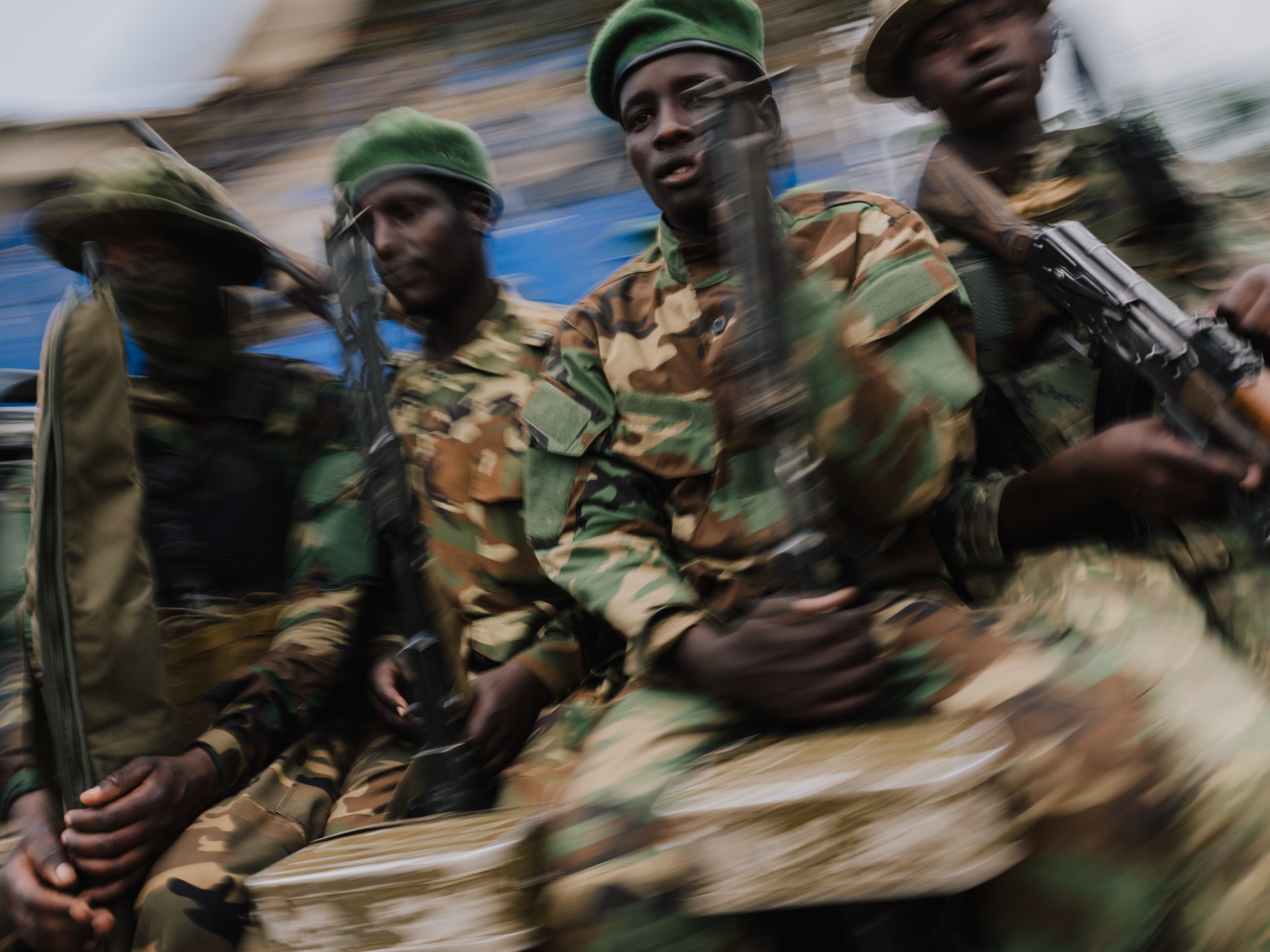
The United States has imposed sanctions on Rwanda’s military and four of its top officials for “direct operational support” of the M23 rebel group that has seized large swaths of territory in the eastern Democratic Republic of the Congo (DRC).

Rwanda has long rejected allegations from DRC, the United Nations and ⁠Western powers that it backs M23 and its affiliated Congo River Alliance (AFC), which captured key cities in the mineral-rich east, including the capitals of North and South Kivu provinces last year.

Recommended Stories

list of 3 itemsend of list

The US Department of the Treasury said on Monday that the rebels’ gains would not have been possible without Rwandan backing.

The US State Department separately added that M23 continued to capture territory even late last year “in clear violation” of a US-mediated agreement.

US President Donald Trump in December brought together the leaders of Rwanda and the DRC to sign a peace deal, predicting a “great miracle”.

But just days afterwards, the State Department noted, the M23 captured the key Congolese city of Uvira.

The Treasury Department said those included in Monday’s sanctions are Vincent Nyakarundi, the Rwandan Defence Force (RDF) army chief of staff; Ruki Karusisi, a major-general; Mubarakh Muganga, chief of defence staff; and Stanislas Gashugi, special operations force commander.

The US said they were critical to M23’s gains.

“M23, a US- and UN-sanctioned entity, is responsible for horrific human rights abuses, including summary executions and violence against civilians, including women and children,” State Department spokesman Tommy Pigott said in a statement.

“The continued backing from the RDF and its senior leadership has enabled M23 to capture DRC sovereign territory and continue these grave abuses,” he added.

‘A strong signal’

Rwandan government spokesperson Yolande Makolo said in a statement that the sanctions “unjustly” target Rwanda and “misrepresent the reality and distort the facts of the conflict” in eastern DRC.

She accused DRC of violating the peace agreement by allegedly conducting “indiscriminate” drone attacks and ground offensives.

Rwanda’s government also told the Reuters news agency that Kigali was “fully committed to disengagement of its forces in tandem with the DRC implementing their obligations” under US-led mediation, but accused DRC of failing to keep promises such as ending support for militias.

The Congolese government, however, said it welcomed the sanctions, describing them as “a strong signal in support of respect” for its territorial integrity and ⁠sovereignty.

US Treasury Secretary Scott Bessent said in a statement that the department “will use all tools at its disposal to ensure that the parties to the Washington Accords uphold their obligations”.

“We expect the immediate withdrawal of Rwanda Defence Force troops, weapons and equipment,” Bessent said.

Fighting continues in eastern DRC on several fronts, despite the accord signed between Kigali and Kinshasa in Washington, and a separate peace deal signed between M23 and the Congolese government in Qatar last year.

Though M23 later pulled out of Uvira under US pressure, the rebels still hold other key Congolese cities, including Goma and Bukavu. The US Treasury Department said on Monday that M23’s continued presence near Burundi’s border “carries the risk of escalating the conflict ‌into a broader regional war”.

M23 is the most prominent of about 100 armed factions vying for control in eastern DRC, near the border with Rwanda. The conflict has created one of the world’s most significant humanitarian crises, with more than seven million people displaced, according to the UN agency for refugees.

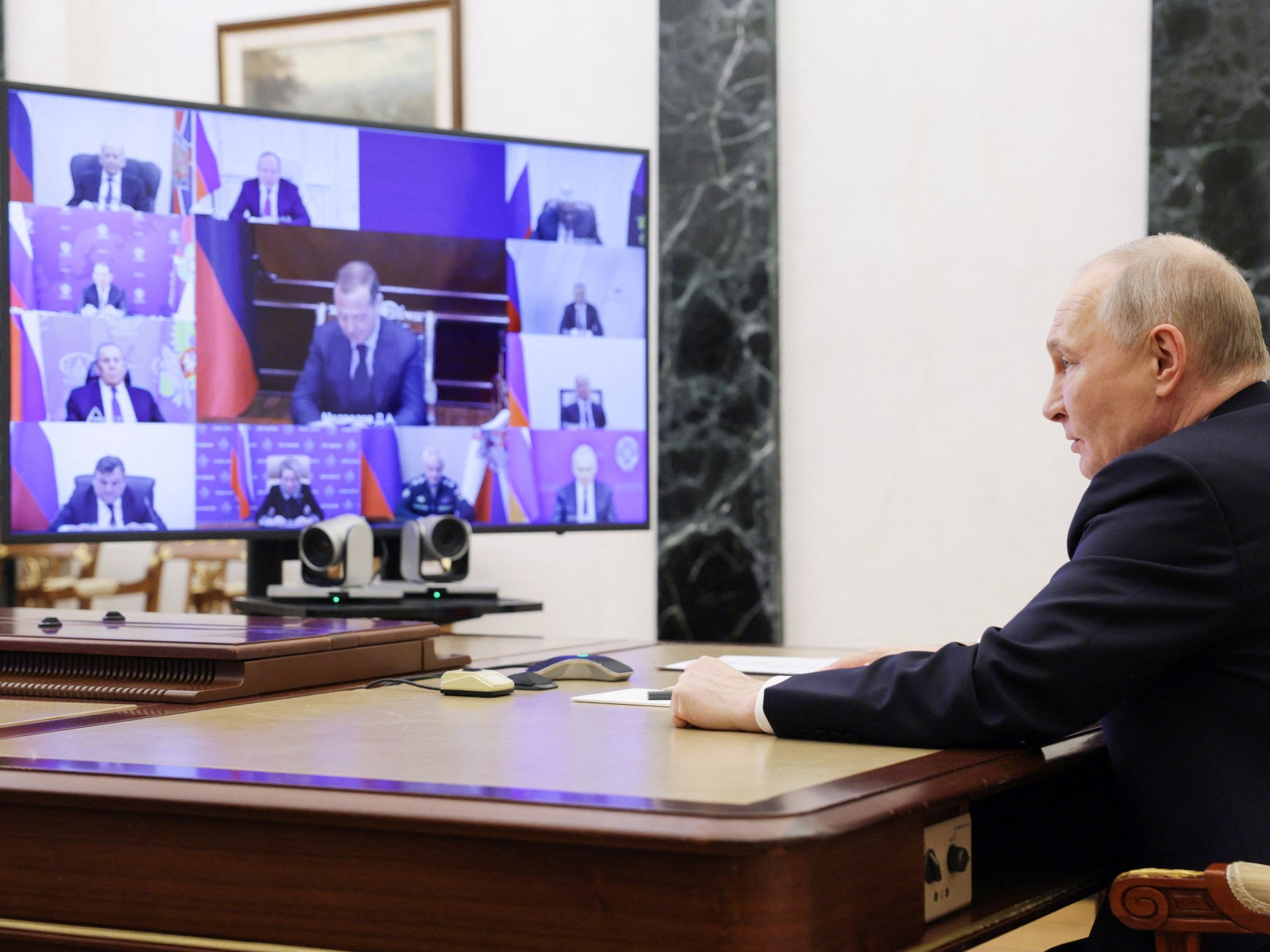
How Russia could benefit from the US-Israeli war on Iran

The US-Israeli attacks on Iran and the assassination of Supreme Leader Ayotallah Ali Khamenei have caused a measure of discomfort in Moscow. Some hawkish Russian commentators claim that Russia could be attacked in the same manner despite its vast nuclear arsenal. They see reckless statements by major Western officials about the possibility of war with Russia in the near future as proof of the intent.

Although the attack on Iran is a cause of concern in Moscow, it is also seen as a vindication of its own geopolitical strategy, including the aggression against Ukraine. It is a confirmation of the Kremlin’s long-held view of the US-led West as a rogue and irrational actor.

For Russian President Vladimir Putin, the US war on Iran likely echoes the events of 2011 in Libya, which heavily influenced his own threat perceptions. That year, a NATO-led military intervention resulted in the ouster of Libyan leader Muammar Gaddafi.

The NATO attack on Libya, which Putin’s protege and then-President Dmitry Medvedev had facilitated by approving Russia’s abstention during a United Nations Security Council vote, was one of the factors that pushed him to decide to return to the presidency.

In October 2011, a month after Putin accepted the nomination for another presidential run, Gaddafi was brutally murdered by rebels, and the video of his demise went viral on the Internet. The end of his regime, celebrated by Western leaders at the time, brought neither democracy nor prosperity to Libya. Instead it plunged the country into a civil war and fragmentation.

For Putin, it was a clear demonstration of what might await him personally and Russia at large should he tolerate the neoliberal “democratisation” crusade waged by the increasingly reckless and overconfident West. In December of that year, protests against fraud in legislative elections were staged by pro-Western urbanites in Moscow. This served as yet another red flag for the Kremlin.

Putin looked on for a few months before decisively clamping down on the protests on the eve of his inauguration in May 2012. It was a turning point in Russia’s domestic and foreign policy that led to Russia intervening in Ukraine’s Maidan Revolution upheaval less than two years later.

Watching the dramatic events unfold in Iran right now, Putin is likely feeling vindicated that his actions in Ukraine were justified and thankful to his Soviet predecessors that they built the world’s largest nuclear arsenal, which ensures Russia’s genuine sovereignty and the impregnability of his personalistic regime.

Despite himself starting a brutal war of aggression against Russia’s closest neighbour in Europe, Putin still considers himself a stalwart of the disappearing post-World War II order, whose demise – in his opinion at least – was precipitated by the US-led West becoming overconfident, intolerably arrogant and reckless.

The idea of launching all-out aggression in Ukraine has its roots in the 1930s Soviet doctrine of taking the war to the enemy’s territory. Ukraine and Georgia became “enemy territory” when NATO decided in 2007 to allow their membership. That idea was successfully tested first during the short-lived conflict in Georgia in 2008.

The attacks on Ukraine in 2014 and then the invasion of 2022 were charted by the Kremlin as preventive of the type of military intervention that Iraq, Libya and Syria experienced and that now Iran is facing.

Making Ukraine the decisive battlefield of its conflict with the West has allowed the Kremlin to shield the vast majority of the Russian population from any tangible impact of the war, which was successfully peddled to the Russian society as inevitable.

Iran entered the scene of the Russo-Ukrainian conflict as an unlikely ally of Russia, given the historically difficult relations between the two countries. It provided crucial drone technology in the heady days of Russia’s all-out invasion when many in the West were convinced that Ukraine could have a technological edge over Russia by deploying the Turkish Bayraktar drones. This support wasn’t a selfless act of sincere friendship – Tehran was paid billions of dollars, which helped prop up its struggling economy.

Russian-Iranian ties, however, are not strong enough for Moscow to intervene on the Iranian side now. What is more, the Kremlin has an informal nonattack pact with Israel, which is refusing to supply crucial weapons systems to Ukraine or join anti-Russian sanctions.  Because Israel does not apply Western sanctions, it has become a safe haven for members of the Russian oligarchy who have historically close links to the country.

Yet another reason for Russia’s neutrality is US President Donald Trump’s own near-neutral position on the Russia-Ukraine conflict and his attempts to end it at the negotiating table. Moscow doesn’t want to give European leaders a chance to disrupt the relationship it has forged with the Trump administration and prolong the war.

Even if it had a genuine desire to prop up the Iranian regime, Russia would have had very little capacity to do so. The only way it could help Iran is with military technology it has developed in the four years of the Ukraine war, but that could jeopardise relations with Israel and the US while Iran may not have the money to pay for it.

It is also important to note that the US-Israeli operation against Iran actually benefits Russia in the short term. The war has already caused a spike in the prices of oil and gas, which means greater revenue from energy sales for the Russian state coffers. Higher energy prices can also affect the ability of the European Union, Ukraine’s prime funder at the moment, to finance the country’s war effort.

Besides, a prolonged war in the Middle East would deplete US arsenals, which would otherwise be available to Ukraine, especially when it comes to crucial air defence missiles.

The US getting bogged down in the Middle East also would mean Moscow could secure greater leverage in the ongoing talks with Ukraine.

Domestically, Putin stands to benefit from the scenes of destruction and chaos in Iran as well. The war, which the US and Israel are now trying to sell as something that could help Iranians to build a freer and more prosperous country, will only increase the besieged fortress attitude among Russians and solidify the image of Putin as a protector of the nation, even if an authoritarian one.