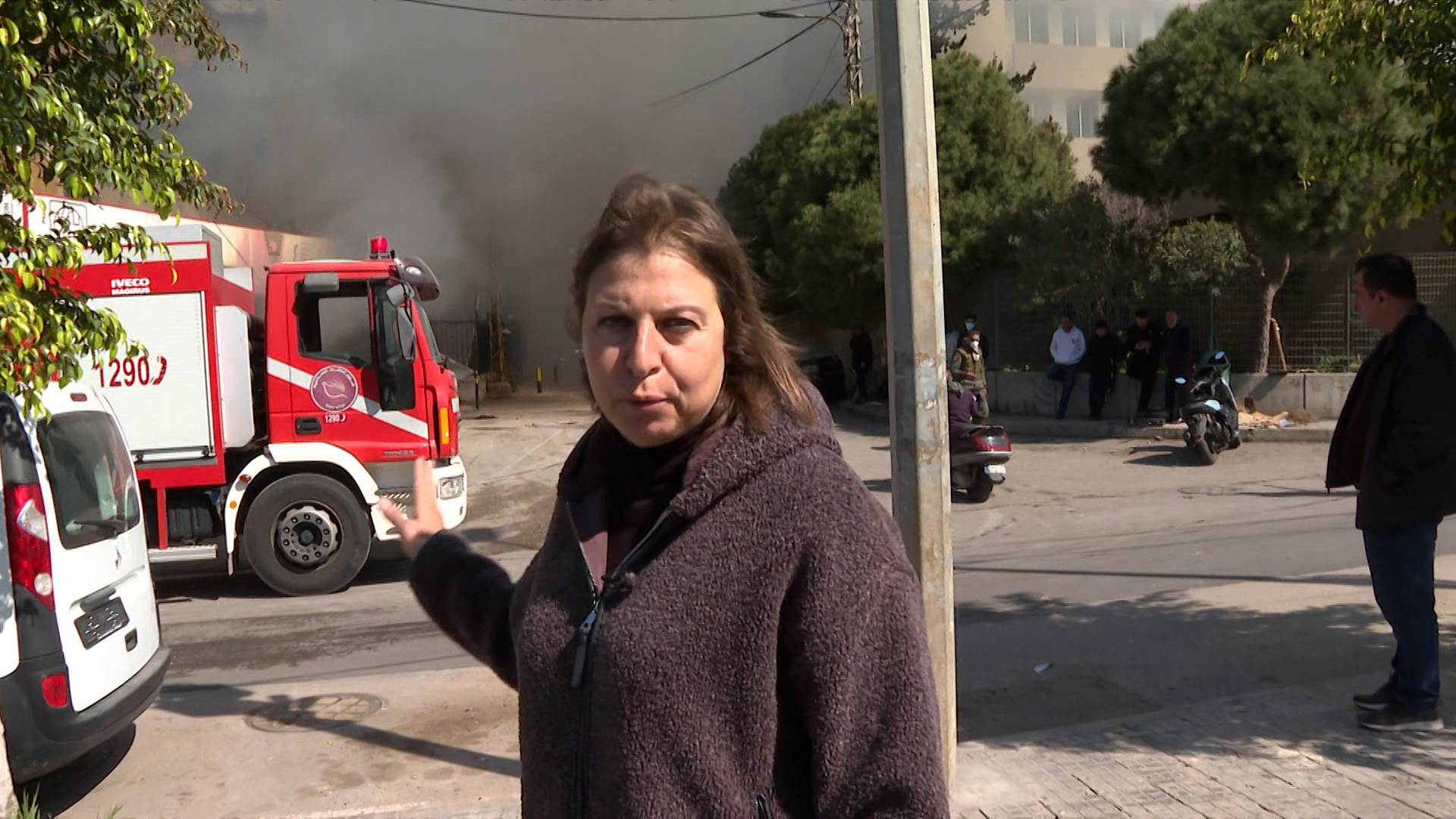
Al Jazeera’s Zeina Khodr reports from the site of an Israeli attack in Beirut’s southern suburbs, which Israel says targeted a ‘Hezbollah area’. Israeli forces have taken more land inside Lebanon, expanding a de facto buffer zone that has already displaced tens of thousands of people.
On Saturday morning, February 28, 2026, dozens of girls gathered at the “Shajareh Tayyebeh” (The Good Tree) school in the city of Minab in southern Iran when Israel and the United States began initial strikes on the country.
As the students began their studies, missiles struck the school, destroying the building and causing the roof to collapse on top of the children and their teachers.
Iranian authorities have put the final death toll at 165 people, most of them girls aged between 7 and 12. At least 95 other people were wounded in the attack.
As the images of the carnage spread on social media platforms, Israeli and US authorities sought to distance themselves from the attack.
Spokespeople for the US Department of Defense and the Israeli army told Time magazine and The Associated Press news agency that they were unaware that a school had been hit.
Some websites and social media accounts linked to Israel claimed the site was “part of an Islamic Revolutionary Guard Corps base”.
However, an analysis by Al Jazeera’s digital investigations unit of satellite imagery compiled over more than a decade, as well as recent video clips, published news reports and statements from official Iranian sources, tells a very different story.
The findings reveal that the school had been clearly separate from an adjacent military site for at least 10 years.
The investigation also shows that the strike pattern raises fundamental questions about the accuracy of intelligence information on which the bombing was based.
It may even raise questions about whether the strike was a deliberate targeting of the school.
The importance of Minab and the targeted military square
To understand the motives for including Minab in the first US-Israeli targets, the city must be placed within its broader geostrategic context.
Minab is located in Hormozgan in southeastern Iran, a province of enormous military importance as it directly overlooks the Strait of Hormuz and Gulf waters, making it a key hub for the operations of Iran’s Revolutionary Guard Corps (IRGC) naval forces, NEDSA.
The IRGC Navy embraces what is known as an “asymmetric warfare” strategy that relies on deploying fast boats, drones, and coastal missile platforms capable of disrupting shipping or targeting hostile naval vessels.
In this context, the “Sayyid al-Shuhada” military complex in Minab stands out; it includes key headquarters, most notably that of the “Asif Brigade”.
The Asif missile brigade is considered one of the most important strike arms of the IRGC Navy. By reviewing open sources and tracking official Iranian records, important details emerge about the school itself: The Shajareh Tayyebeh school in Minab is part of a broad network of schools structurally and administratively affiliated with the IRGC Navy.
These schools are classified as nonprofit institutions and are primarily intended to provide educational services to the sons and daughters of members of the IRGC Navy.
Registration messages posted on the channel on the Iranian messaging app, “Baleh”- a channel dedicated to communicating with parents of pre-school children at one school in the Shajareh Tayyebeh network – show that admission procedures give priority to the children of military personnel.
In more than one announcement, the children of IRGC Navy members are explicitly invited to attend on specific days to complete first-grade enrolment, with another notice stating that registration for children of non-members opens on different days.
However, this administrative link (to the IRGC) or the identity of the parents does not change the schools’ legal status as civilian facilities under international humanitarian law, unless they were being used in military operations.
And the children who attend them – whether they are the children of military personnel or civilians – remain protected people with special protection in armed conflicts, including the prohibition on intentionally targeting them or carrying out attacks that could harm them.
The Euro-Med Human Rights Monitor has called the bombing of the school as a “horrific crime and a consolidation of the collapse of civilian protection”, stressing in a statement that the mere presence of military facilities or bases nearby does not change the school’s civilian character, and does not absolve US and Israeli forces of their legal obligation to carefully verify the nature of the target before striking it.
The Monitor emphasised that children and teaching staff remain, in all circumstances, “protected persons” under international humanitarian law, and that any attack that fails to distinguish between them and potential military targets constitutes a serious violation.
What do we know about the strike and its timing?
On Saturday morning, the first day of the school week in Iran, US-Israeli strikes began on the country. Air raids started hitting various sites in the city of Minab and Hormozgan province.
But life in general was proceeding in a near-normal manner; children went to their schools, and photos and videos showed almost normal traffic on the roads surrounding the school.
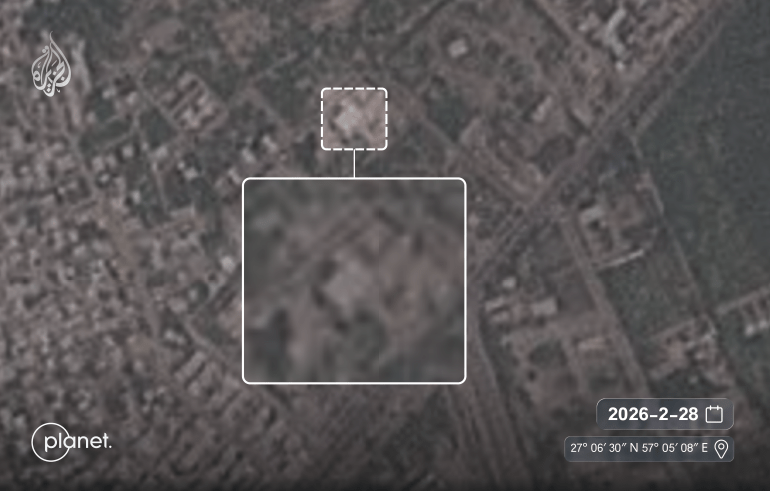
Documented satellite images from that day show that the school building was still completely intact and had not been hit by any strike until 10:23am local time (06:53 GMT).
[Al Jazeera]
Local and official Iranian sources say that by 10:45am (07:15 GMT), the school was directly hit by a guided missile.
To verify the scope and nature of the strike, Al Jazeera’s Digital Investigations Unit analysed two video clips posted on Telegram shortly after the bombing, and precisely geolocated each by matching visible landmarks with satellite imagery.
The first clip was filmed from a point southwest of the complex (at coordinates: 27°06’28.43″ N, 57°04’26.17″ E) and documents the first moments of smoke rising from inside the military block affiliated with the Sayyid al-Shuhada base (Asif Brigade), proving that the military base was indeed among the targets hit.
The second clip, however, the most indicative in this investigation, was filmed from a point southeast of the complex (at coordinates: 27°06’23.77″ N, 57°05’05.97″ E) and provides a wide viewing angle encompassing the entire complex.
[Al Jazeera]
This clip clearly shows two separate columns of thick black smoke rising simultaneously: The first from deep inside the military base, and the second from the geographically independent site of the girls’ school.
The visible distance between the two columns matches the distance separating the two areas as shown by the satellite imagery. This refutes any claim that the damage to the school was caused by shrapnel flying from the adjacent base, and strongly indicates that the school building was subjected to a direct, separate strike.
Timeline of separating the civilian building from the military base
To establish the architectural separation and rebut claims that the bombed building was an active barracks, the investigation team conducted a historical trace of archived satellite images via Google Earth covering the period from 2013 up to just before the 2026 attack. The school site coordinates are (27°06’35.4″N 57°05’05.1″E).
The chronological review reveals deliberate engineering to separate this part of the military complex and convert it entirely to civilian use over the past 10 years.
A 2013 satellite image showing the school area as a contiguous part fully integrated within the wall of the Sayyid al-Shuhada military complex and surrounded by guard towers [Google Earth/Al Jazeera]
The images show that the school building and its surrounding area were a connected, integrated part of the main military complex. The outer perimeter wall was unbroken, and the complex was surrounded by five security watchtowers positioned around the corners of the entire compound. There was only one main entry gate serving the whole complex, and the internal road network connected all buildings without barriers.
It can be said with a degree of confidence that, in 2013, the site was used exclusively as a military barracks with a strict security character, as there was no indication of an independent civilian use of any part of the complex.
But this changed radically in 2016. Satellite images dated September 6, 2016 capture the main turning point, when new internal walls were created and built, fully and tightly separating the school building area from the rest of the military block.
At the same time, two of the watch towers overseeing this block were dismantled and removed. Most importantly, three new external gates were opened directly onto the public street to serve students’ and staff entry and exit.
A 2016 aerial shot documenting the radical turning point, as isolating walls were built and three independent external gates were opened to separate the school building from the military barracks [Google Earth/Al Jazeera]
This radical modification documents the construction process and the official removal of the building from the military barracks system, converting it to an independent civilian purpose with dedicated entrances that do not pass through military checkpoints and are 200 to 300 metres (650 to 1000ft) away.
The civilian use becomes clearer over time. Images taken on May 5, 2018 show intense civilian activity: Civilian cars can be seen lined up at the new external entrances. The internal courtyard was also equipped with a children’s sports field, and the internal walls were painted in multiple colours with bright mural drawings appropriate to the students’ age group.
A 2018 satellite image confirming the site’s civilian use, showing a children’s sports field and civilian cars lined up in front of the school’s external gate [Google Earth/Al Jazeera]
This documentation can be regarded as definitive visual confirmation that the building was operating at full capacity as a primary school. These features (such as the playground, wall drawings, and the presence of civilian cars) are the same ones that later appeared in videos documenting residents storming the school on the day of the tragedy to search for their daughters.
The Martyr Absalan clinic as corroborating evidence
To prove that the attacking party was (or should have been) precisely aware of the site’s updated layout, we traced the newest construction projects in the same area.
On January 14, 2025 (just one year before the attack), the commander-in-chief of Iran’s Islamic Revolutionary Guard Corps, Major-General Hossein Salami, visited the city of Minab to inaugurate the Martyr Absalan Specialised Clinic.
The clinic, which cost 100 billion Iranian tomans (about $2m), was built on an area of 5,700 square metres (61,354 square feet) at another corner of the same original military complex – specifically on Resalat Street – to serve residents of eastern Hormozgan province.
Reports published to cover the clinic’s opening indicate it was equipped with the latest CT imaging devices, ultrasound equipment, and laboratories, and that it offered civilian medical specialities such as paediatrics, obstetrics and gynaecology, and dentistry – confirming its civilian nature.
The adjacent Martyr Absalan Specialised Clinic (lower centre, in yellow), which opened in early 2025 and was separated by an independent civilian entrance, and which sustained no damage during the latest bombardment [Google Earth/Al Jazeera]
As with the school years earlier, building the clinic required spatial separation from the military base. After the Martyr Absalan clinic opened in January 2025, a separate gate was opened to connect it directly to the external street to receive civilian patients, and a dedicated car park was established – measures mirroring what the school underwent when it was separated from the complex and given three independent gates.
Thus, what had been a single unified military complex became three independent sectors, clearly distinguishable in satellite imagery: The Shajareh Tayyebeh girls’ school, separated since 2016 with its own walls and gates; the Martyr Absalan Specialised Clinic, separated since early 2025 with an independent civilian entrance; and the Sayyid al-Shuhada military complex, which remained a closed and active site.
When the US-Israeli attack began on the morning of February 28, 2026, analysis of the strike locations revealed an odd pattern: Missiles hit the military base and the school, but bypassed the specialised clinic complex located between the two without touching it.
This exclusion cannot be explained as a coincidence; it strongly indicates that the executing party was operating with coordinates and maps that distinguished between the complex’s different facilities.
A visual analysis of missile impact sites shows the military base targeted (red area) and the school (green area), while the clinic complex (yellow area) was precisely left intact [Al Jazeera]
Here lies the fundamental contradiction exposed by this investigation: If the intelligence was up to date enough to spare a clinic that had been open for only one year, how did it fail to identify an elementary school that had been separated from the military complex and had become a clearly defined civilian institution for more than 10 years?
This contradiction leaves only two possibilities: Either the bombing of the school was the result of a grave intelligence failure caused by reliance on outdated databases that did not keep pace with successive changes in the complex’s layout, or it was a deliberate strike based on a linkage that treats the school as part of the military system.
Misleading claims
No sooner than when plumes of smoke began to rise from the school’s rubble than accounts on the X platform affiliated with, or sympathetic to, Israeli parties began circulating videos and images claiming the school had not been struck from the outside, but was destroyed after an Iranian air defence missile missed its target and fell back to the ground.
This narrative replicates the same tactic used during the bombing of al-Ahli Arab Hospital in Gaza in October 2023, when Israel rushed to accuse the Palestinian resistance of responsibility for the massacre via a rocket that missed its target.
However, open-source verification tools – specifically reverse image searches and geolocation using visual landmarks – quickly revealed that the most widely shared image in this campaign, which is claimed to show the impact of a failed Iranian missile that fell on the school, has nothing to do with the city of Minab in the first place.
By matching the terrain and landmarks visible in the image – especially the snow-covered mountains in the background – with satellite imagery, it became clear that it relates to an incident that occurred on the outskirts of Zanjan in northwestern Iran, about 1,300km (808 miles) from Minab.
The irony is that the nature of the two locations alone is enough to refute the claim: Minab is a coastal city in the far southeast overlooking the Gulf of Oman and the Strait of Hormuz, with a tropical climate and no snowfall, while Zanjan is a mountainous city in the northwest that is covered with snow in winter.
Iranian sources said what happened in Zanjan that day was a successful interception operation carried out by air defence units affiliated with the Islamic Revolutionary Guard Corps, during which two hostile drones were shot down. It was not possible to independently verify this information.
The Minab school incident is not an exception in the record of civilian facilities being targeted by the US and Israeli militaries; rather, it falls within a documented pattern stretching across decades of military operations and attacks, in which the same scene recurs: Strikes hit schools, hospitals, and civilian shelters, followed by immediate denial or shifting of blame to the other side, before independent investigations later reveal the falsity of official claims.
In April 1970, Israeli Phantom fighter jets bombed the Bahr al-Baqar elementary school in Egypt’s Sharqia governorate, killing 46 children out of 130 who were in their classrooms that morning.
Israel claimed the school was an Egyptian military facility, and Defense Minister Moshe Dayan said at the time that “the Egyptians may have put elementary school pupils in a military base.”
But an Israeli pilot who took part in the raid and was captured during the October 1973 war later revealed it had been a deliberate attack and that they knew it was merely a school.
In February 1991, the US Air Force dropped two “smart” bombs on the Amiriyah civilian shelter in Baghdad, killing at least 408 civilians – most of them women, children, and the elderly.
Washington said the facility had been turned into a military command centre, but Human Rights Watch later showed that the building bore clear markings indicating it was a public shelter and that large numbers of civilians were using it throughout the air campaign.
In April 1996, the Israeli army shelled the headquarters of the Fijian battalion of the UNIFIL international force in the town of Qana in southern Lebanon, where about 800 Lebanese civilians were taking refuge inside the UN compound. One hundred and six people were killed and more than 116 wounded.
Israel claimed it was providing cover for a special unit that had come under mortar fire from near the compound, but a UN investigation later concluded the Israeli bombardment was deliberate, citing video recordings showing an Israeli unmanned reconnaissance aircraft over the compound before the shelling began.
In October 2015, a US AC-130 aircraft bombed a Doctors Without Borders (known by the French acronym, MSF) hospital in the Afghan city of Kunduz, killing 42 people, including 24 patients and 14 staff members. The organisation had previously provided the hospital’s coordinates to all parties to the conflict. The US account changed several times – from describing the strike as “collateral damage” to claiming Afghan forces had requested it – before the US commander acknowledged that the decision was entirely American.
In the Gaza Strip, attacks on educational facilities have reached an unprecedented level since October 2023. By the early months of 2025, 778 of the enclave’s 815 schools had been partially or completely destroyed – about 95.5% of all schools. UNRWA reported that about one million displaced people sought refuge in its schools, which had been turned into shelters; nevertheless, at least 1,000 people were killed and 2,527 wounded inside these schools through July 2025. Journalistic sources also documented that the Israeli army set up a “special strikes cell” to target schools systematically, classifying them as “centres of gravity”.
People and rescue teams search for victims following an Israel strike on a school in Minab [Abbas Zakeri/Mehr News/WANA via Reuters]
Returning to the school in Minab, testimony by Shiva Amilairad, a representative of the Coordinating Council of Iranian Teachers’ Trade Unions, to Time magazine indicates that the decision to evacuate the school was made as soon as the US-Israeli attacks began. But, she said, the time between the warning issued by Iranian authorities (after detecting attacks on the city) and the moment the missile struck was far too short, and most parents were unable to reach the school to pick up their daughters.
She also confirmed that hospital morgue capacity was exhausted, forcing authorities to use mobile refrigerated trucks to preserve the bodies of the young girls; some families lost more than one child in the same incident.
With 100 days to go, the countdown is on for the biggest World Cup in history.
With 48 teams playing across 16 different cities, in three different countries, there is a lot to unpack before the first ball is kicked on 11 June at this summer’s tournament in the United States, Canada and Mexico.
Off the field, there are perhaps more questions than answers, with US attacks on Iran putting a question mark over the latter’s participation, mounting concern over the use of Immigration and Customs Enforcement agency officers at the tournament, plus an outbreak of cartel violence in raising safety concerns for fans planning to travel to co-host nation Mexico.
Who will win the World Cup?
European champions Spain are the favourites, having enjoyed an almost flawless route through qualification, with their only dropped points a 2-2 draw against Turkey.
The team’s midfield is packed with talent and includes Pedri, Fabian Ruiz, Martin Zubimendi and 2024 Ballon d’Or winner Rodri. Spain can also call on one of the best young players in the world, Barcelona’s Lamine Yamal.
Just behind Spain, this generation of England players are tipped to finally land some silverware, having finished runners-up at the last two European Championships.
Thomas Tuchel’s team qualified for the 2026 World Cup with a perfect record, winning all of their matches without conceding a goal. There are questions about how best to manage a squad brimming with stars, but with players like Jude Bellingham, Phil Foden and Europe’s leading goal scorer Harry Kane at Tuchel’s disposal, it’s a nice problem to have.
France are also strong contenders. Didier Deschamps’ squad have a fearsome front line, including Bradley Barcola, Michael Olise, Kylian Mbappe and perhaps the Premier League’s best signing this season, Hugo Ekitike.
The 2022 runners-up were unbeaten in European qualifying.
It would be remiss not to mention defending World Cup champions Argentina, who won the South American qualifying group by a big margin, finishing nine points ahead of second-placed Ecuador.
With two Copa Americas and one World Cup win in just four years, the Albiceleste are in a very good moment.
Finally, despitean underwhelming qualification campaign in which they finished fifth in the Conmebol table after losing six of 18 matches, who would confidently rule out five-time World Cup winners Brazil?
How will England get on?
Sami Mokbel
Senior football correspondent
To play this video you need to enable JavaScript in your browser.
The sweltering US conditions this summer will, in my mind, prove a determining factor towards England’s tournament.
On paper, the squad has the ability to go all the way to the final.
With world-class options throughout the squad, Thomas Tuchel’s team will head to the tournament as one of the favourites.
But after a punishing domestic season, you wonder how the soaring temperatures will impact England’s hopes of going deep into the World Cup.
England will get out of the group and will back themselves against anyone.
How will Scotland fare?
Tom English
BBC Scotland’s chief sports writer
To play this video you need to enable JavaScript in your browser.
It’s still mind-bending that Scotland, despite having so many world-class players at so many World Cups, have never made it out of a group.
For it to change this time they have to beat Haiti in the opening game in Boston. It’s bound to be stressful, but a narrow Scotland win is very possible.
Three points might – might – be enough to get them through as one of the third-placed teams, as long as they keep the goal difference respectable. Next, Morocco.
They look strong – their quality is a touch over-stated in my book – but a draw should not be beyond Scotland, presuming their stellar guys are fit and firing.
Four points will take them through in second or third. I think they’re good enough to do that.
That’s the target – a last-32 place and see how it goes from there. In this dream-like scenario, they’ll not need anything from the final group game against Brazil.
1 day ago
5 hours ago
Players to watch
Alex Bysouth
BBC Sport Senior Journalist
The obvious place to start is Lionel Messi who, four years on, is looking to back up Argentina’s success on what is effectively home turf these days.
Messi turns 39 this summer yet, while most mortals would be slowing down, he bagged 43 goals for Inter Miami last term and has two in two already this campaign.
Tasked with filling a Messi-shaped void at Barcelona was Lamine Yamal, another twinkle-toed La Masia starlet.
Qatar came too soon even for Yamal, who made his La Liga debut four months later, but the 18-year-old won Euro 2024 with Spain, scoring the goal of the tournament and creating the most assists.
The Ballon d’Or runner-up’s biggest obstacle this season has been a pubalgia problem, which he now believes is behind him. A hat-trick against Villarreal on Saturday suggests so, too.
Across the Clasico divide but also battling injury is Kylian Mbappe, World Cup winner in 2018 and runner-up last time out despite his hat-trick in the final.
Mbappe is France captain these days and, with perennial target man Olivier Giroud turning 40 this year, now plays through the middle for Real Madrid as well as the national team, providing a different threat.
Who are the outsider contenders?
Michael Emons
BBC Sport journalist
Norway have not played in the World Cup since 1998 and have never got past the last 16, but with Manchester City’s Erling Haaland scoring 16 goals in qualifying, they could be a surprise in the summer.
They were flawless in qualifying, winning all eight of their matches, including home and away victories over four-time winners Italy.
Morocco were another side to win all their qualifying games and they sit eighth in Fifa’s world rankings.
They will be looking to surprise five-time champions Brazil and will likely be confident of advancing from a group that also contains Scotland and Haiti.
Egypt, including Liverpool forward Mohamed Salah, will also expect to make it beyond the group stages with their section containing Belgium, New Zealand and Iran. Iran’s participation is however now in doubt after recent events in the Middle East.
Japan are the strongest of the Asian sides and eased through qualifying, conceding only three goals in 16 matches.
Their group sees them up against the Netherlands, Tunisia and another of the European qualifiers – either Ukraine, Sweden, Poland or Albania.
Colombia reached the last 16 in Qatar and will be looking for the same at least this time after a good South American qualifying campaign when they finished third, including wins over both Brazil and Argentina.
What about the host nations? Well, maybe Canada, in their third finals, could be a surprise.
What about Wales and Northern Ireland?
Both nations still have a chance to qualify for this summer’s tournament via European play-off semi-finals at the end of the month.
United States President Donald Trump’s second term in office has been defined by the abduction of Venezuela’s left-wing President Nicolas Maduro, joint US-Israeli strikes on Iran that killed the country’s Supreme Leader Ayatollah Ali Khamenei, among hundreds, and new threats against other leaders from Latin America to even Europe.
This policy is testing alliances, legal norms, and the idea that shock action abroad yields predictable outcomes at home. At its core is a message Trump repeats in different ways: “We can reach you – and we might not protect you if you do not do what we want.”
Recommended Stories
list of 4 itemsend of list
Trump talks directly to foreign leaders, promising swift punishment or personal favour, and casts himself as the only US president “with the gloves off”.
While his supporters see strength and candour, critics underline threats and deals aimed at domestic politics as much as foreign capitals.
A doctrine built around enemies
Trump’s decision to attack Iran has been described as the “biggest foreign policy gamble of his presidency”, with analysts saying he has pivoted from “swift, limited operations like last month’s lightning raid in Venezuela” to what could be a more protracted conflict that is already morphing into a wider regional war.
His doctrine is anchored in identifying adversaries – Iran, China, Russia and North Korea – alongside a cluster of actors such as Venezuela, Cuba, certain Latin American leaders, as well as drug cartels, Hezbollah and Hamas.
Analysts at the Atlantic Council say Trump’s National Security Strategy “elevates great power competition with China and Russia while casting Iran and North Korea as rogue regimes”, creating an organising map of enemies reflected in his rhetoric and operations.
The Foreign Policy Research Institute describes Trump’s strategy as “a deeply transactional document”, arguing that security guarantees and pressure on adversaries are framed around what others “pay” or concede to the US.
Iran and the regional spread of war
The Pentagon has named its Iran campaign Operation Epic Fury, with Trump insisting the US “did not start this war”, but intends to finish it – a claim rejected by Iran’s foreign minister in an interview with Al Jazeera.
Trump said US forces would “lay waste” to much of Iran’s military, deny Tehran a nuclear weapon, and “give Iranians a chance to topple their rulers”. Some media reports said he has privately claimed Iran would “soon have a missile that can hit the US”, even though intelligence assessments do not support that.
Analysts say Trump is hoping the US-Israeli strikes would incite a popular uprising to oust Iran’s rulers, even though outside airpower has never directly achieved government change without ground forces. The Atlantic Council warns the Iran attack risks drawing Washington into a wider regional war “without a clear endgame”.
A briefing from the Royal United Services Institute says if Iran’s retaliation causes significant US casualties, Washington will be under intense pressure to expand Operation Epic Fury into a larger military campaign.
Meanwhile, hawks in Washington see an opportunity. A report by the Foundation for Defense of Democracies says the attacks on Iran provide “a historic opportunity to help the Islamic Republic fall”.
Trump has told the US media the military operation could take “four weeks or less”, even as his defence secretary acknowledged it could be shorter or longer, depending on how Iran and its allies respond.
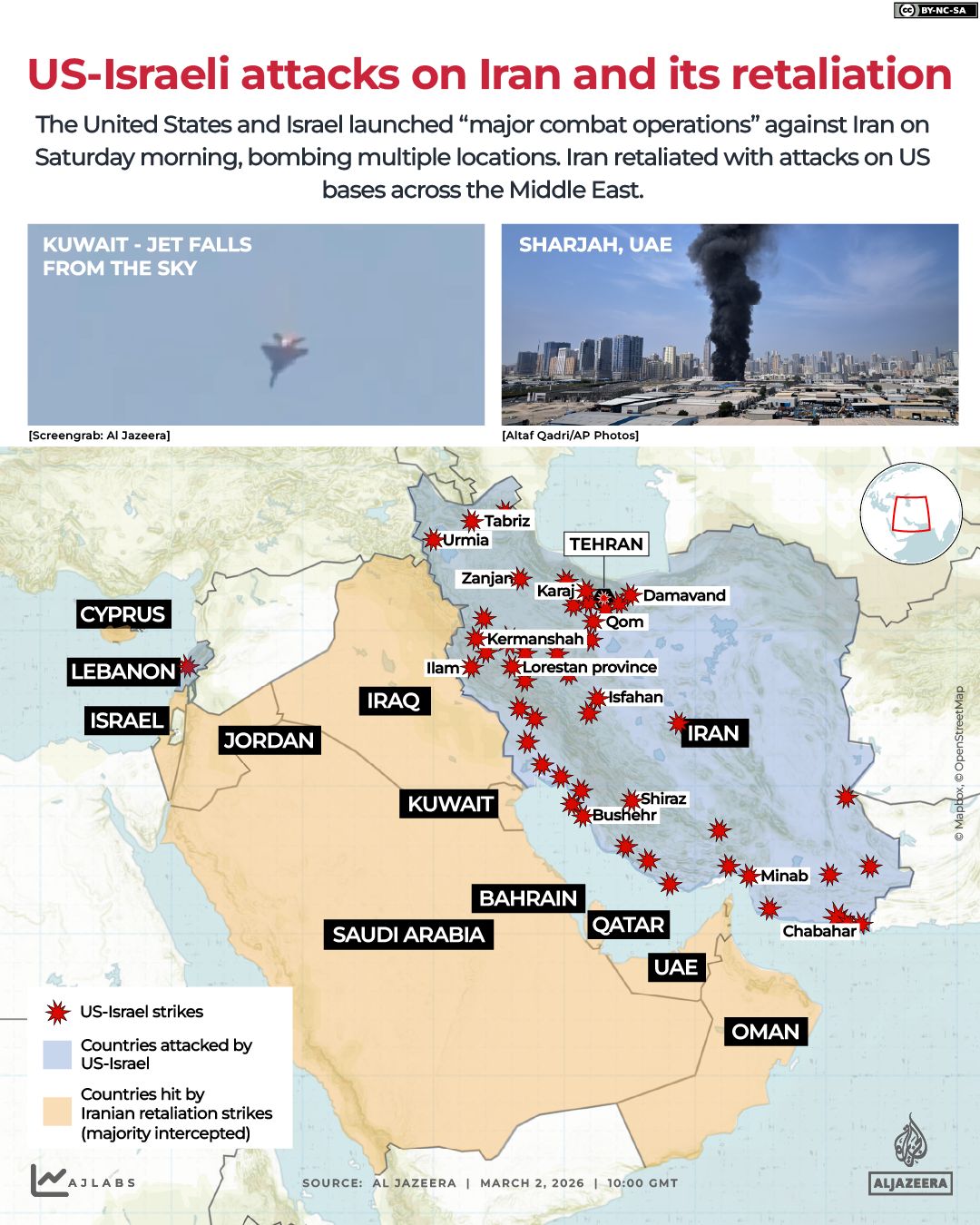
Within days of the Iran strikes on Saturday, the war has spread across the region, with Israel on Tuesday saying it has launched ground operations in Lebanon. Meanwhile, Iran’s retaliatory attacks have targeted US assets and even civilian infrastructure in the United Arab Emirates, Saudi Arabia, Qatar, Bahrain and other Gulf nations.
This is exactly the escalation experts had warned about: strikes framed as targeted decapitation of Iran’s leadership now pulling in a weakened Hezbollah and even Lebanese civilians, reinforcing the perception that the US is willing to put an entire region at risk to prove that it can reach one man or topple one regime.
Like he did in Venezuela by capturing Maduro in an in‑and‑out raid in Caracas after a CIA tip – an episode analysts say emboldens similar thinking elsewhere.
‘Troubling precedent’
The Caracas raid came on the back of a “maximum pressure” campaign, which saw sanctions, criminal cases and asset seizures in a high‑visibility operation. Maduro’s abduction gave the US considerable control over Venezuela’s vast oil reserves.
The Center for Strategic and International Studies calls the Maduro operation “a military victory with no viable endgame”, arguing that while the exfiltration of the president was tactically successful, the structural drivers of Venezuela’s crisis remained in place.
A Brookings analysis warned that the raid “sets a troubling precedent for US‑led regime change by special forces”, suggesting that other Latin American leaders may see it as a potential US “template” rather than a one‑off.
Like Colombia, whose President Gustavo Petro was referred to by Trump as “sick”, suggesting a Venezuela-like intervention there “sounds good to me”, and warning Petro to “watch his a**”.
Petro in January said the US was behaving like an empire that treats Latin American governments as subjects, warning that Washington risks shifting from “dominating the world” to being “isolated from the world”.
The killing or abduction of leaders or prominent figures from other nations violates international law. Experts say Trump’s expanding “targeted killing” doctrine erodes the taboo on assassinating political leaders, making reciprocity more plausible.
Protection as transaction
With allies, Trump’s posture is less kinetic but equally blunt.
Trump once boasted about telling a NATO partner, “You didn’t pay? You’re delinquent … No, I would not protect you. In fact, I would encourage [Russia] to do whatever the hell they want.”
The comments triggered alarm in European capitals and prompted what analysts described as efforts to “Trump‑proof” NATO by locking in higher defence spending and deeper political commitments.
The European Council on Foreign Relations alleges Trump has “exported MAGA to Europe”, turning NATO into “a protection racket in all but name” where security guarantees appear conditional on allies’ political and financial alignment.
A declassified White House memo from 2019 remains the clearest example of how Trump’s transactional logic extends to partners. The memo shows Trump responding to Ukrainian President Volodymyr Zelenskyy’s request for more weapons.
“I would like you to do us a favour though,” Trump purportedly said before asking Zelenskyy to investigate former US President Joe Biden and his son – a conversation that led to Trump’s first impeachment.
Who could be next?
Put together, the Maduro raid, the Iran attack, threats to Petro and pressure on NATO suggest who could be next: Latin American leaders labelled soft on drug cartels; the Iran‑aligned groups in Iraq, Syria and Lebanon; or smaller European nations branded “delinquent” by Trump.
US media reports say Trump’s advisers have urged him to focus on the domestic economy, warning that a prolonged confrontation with Iran could alienate parts of his “America First” base that are sceptical of open‑ended wars.
Meanwhile, Trump’s backers cite the rising NATO outlays, the Maduro raid and Iran strikes as proof that Trump “does what he says”. Some argue that degrading Iran’s nuclear programme, even without regime change, would still count as a victory for Trump.
Critics, however, worry that the Iran campaign could escalate into the biggest US military campaign since the Afghanistan and Iraq wars, with some of Trump’s stated claims on Iran not backed by intelligence.
A middle-aged man identified as Ben Daniels has been killed by suspected armed herdsmen.
The victim was waylaid on Monday while returning from the farm near Ayede-Ogbese in Akure North Local Government Area of Ondo State.
Sources disclosed that the farmer and one other person named James Unekwu were riding on a motorcycle at about 9:00 p.m when they were attacked.
While James managed to escape, the assailants allegedly killed Ben and dumped his body along the road.
On Tuesday, some aggrieved residents of the area barricaded the highway, protesting, calling on government and security agencies to address the insecurity in the area.
READ ALSO: Abducted Ondo Community Leader Found Dead
The Public Relations Officer of Ondo State Police Command confirmed the incident to Channels Television.
According to him, the incident was reported to the police on Monday night by a concerned citizen.
The Command’s spokesman disclosed that police operatives promptly mobilised to the scene, evacuated the corpse, and deposited it at the mortuary for preservation and autopsy.
Jimoh noted that the victim who escaped is currently in police protective custody.
He appealed to residents to remain calm and refrain from blocking highways or engaging in activities that may disrupt public peace, as such actions infringe on the rights of other road users.
He assured that due process will be followed to ensure the perpetrators are brought to justice.
On his part, the Ondo State Commissioner of Police, Adebowale Lawal, while reacting to the incident, assured the good people of the state that the Command remains resolute in combating crime and criminality.
Meanwhile, a youth leader in Isua-Akoko, Akoko South-East Local Government Area of Ondo State, Ojo Abbey, popularly known as Obesere, has been found dead days after he was allegedly abducted.
Abbey was said to have been kidnapped on February 22, 2026, while returning to the community from Edo State.
It was gathered that he was taken to an unknown destination before he was later found dead in a forest.
A source in the community who spoke under anonymity disclosed that after searching for the deceased for days, his decomposing body was eventually discovered in a forest near Igara, in Edo State, last Saturday.
The Police Public Relations Officer of Ondo State Police Command, DSP Abayomi Jimoh, confirmed the incident in a statement on Monday.
He said a suspect who had been arrested in connection with the murder was currently in police custody, assisting with ongoing investigations.
“The incident was reported at Isua Division at about 1945hrs on 22nd February, 2026, by a resident who stated that one Ojo Abbey, male, was allegedly abducted by armed men suspected to be herdsmen while returning from Ibilo, Edo State.
“Upon receipt of the report, the Divisional Police Officer immediately mobilised patrol teams to the scene. The victim’s vehicle, a Nissan Almera with registration number KJA 440 DB, was recovered and secured at the station,” Jimoh stated.
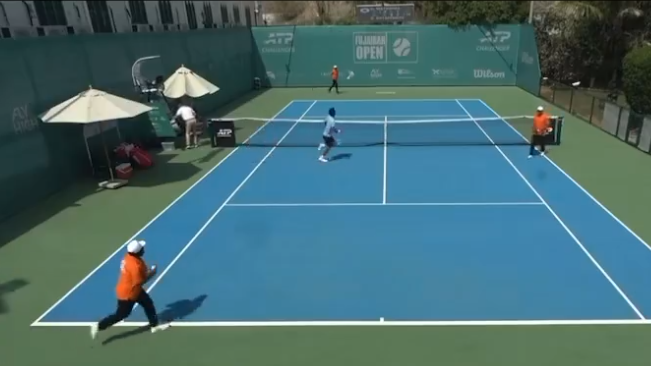
Players and officials ran from the court at an ATP Challenger event in the United Arab Emirates when an Iranian drone attack led to a fire breaking out at an oil terminal located about 10km away.
Two matches were stopped in Fujairah – which is about 90 miles east of Dubai – shortly after the city’s port was targeted on Tuesday morning. The ATP later cancelled the rest of the tournament.
A live feed on the ATP website showed Japan’s Hayato Matsuoka and Russia’s Daniil Ostapenkov, along with the umpire and line judges, dash off court early in the third set.
Tournament officials could be heard shouting instructions to leave the court.
“Relevant authorities responded to a fire that broke out in the Fujairah Oil Industry Zone, resulting from falling debris following the successful interception of a drone by air defence systems,” the Government of Fujairah media office said in a statement.
Iranian drone and missile attacks have been fired towards the UAE over the past three days, in response to US and Israeli strikes on Iran.
Defence teams were still “working to contain the incident”, the statement added. No injuries were reported.
Ukrainian player Vladyslav Orlov said he heard “jets flying around” while playing his match, adding there was a lot of smoke in the air.
“It’s not very safe here right now,” he added.
The ATP initially postponed play for the remainder of the day before cancelling the rest of this week’s event and another Challenger Tour event in Fujairah scheduled for next week.
It added: “The safety and wellbeing of our players and tournament personnel is our highest priority. Players remain on site and are being fully supported, with accommodation and all immediate needs covered while onward travel arrangements are explored.
1 day ago
7 hours ago
British players Max Basing and Zach Stephens are among the players in the draw for this week’s cancelled event.
Around 40 players, team members, officials and media remain stranded in Dubai.
Former world number one Daniil Medvedev and British doubles player Henry Patten were among those unable to leave after the Dubai Tennis Championships when airspace was closed in the region at the weekend.
All scheduled flights remain suspended, with only a limited number of planes – prioritising passengers with earlier bookings and those in transit through Dubai – taking off.
The possibility of the players driving out of Dubai and hiring private jets from neighbouring Oman has been explored over the past few days.