US father found guilty of murder in Apalachee school shooting in Georgia

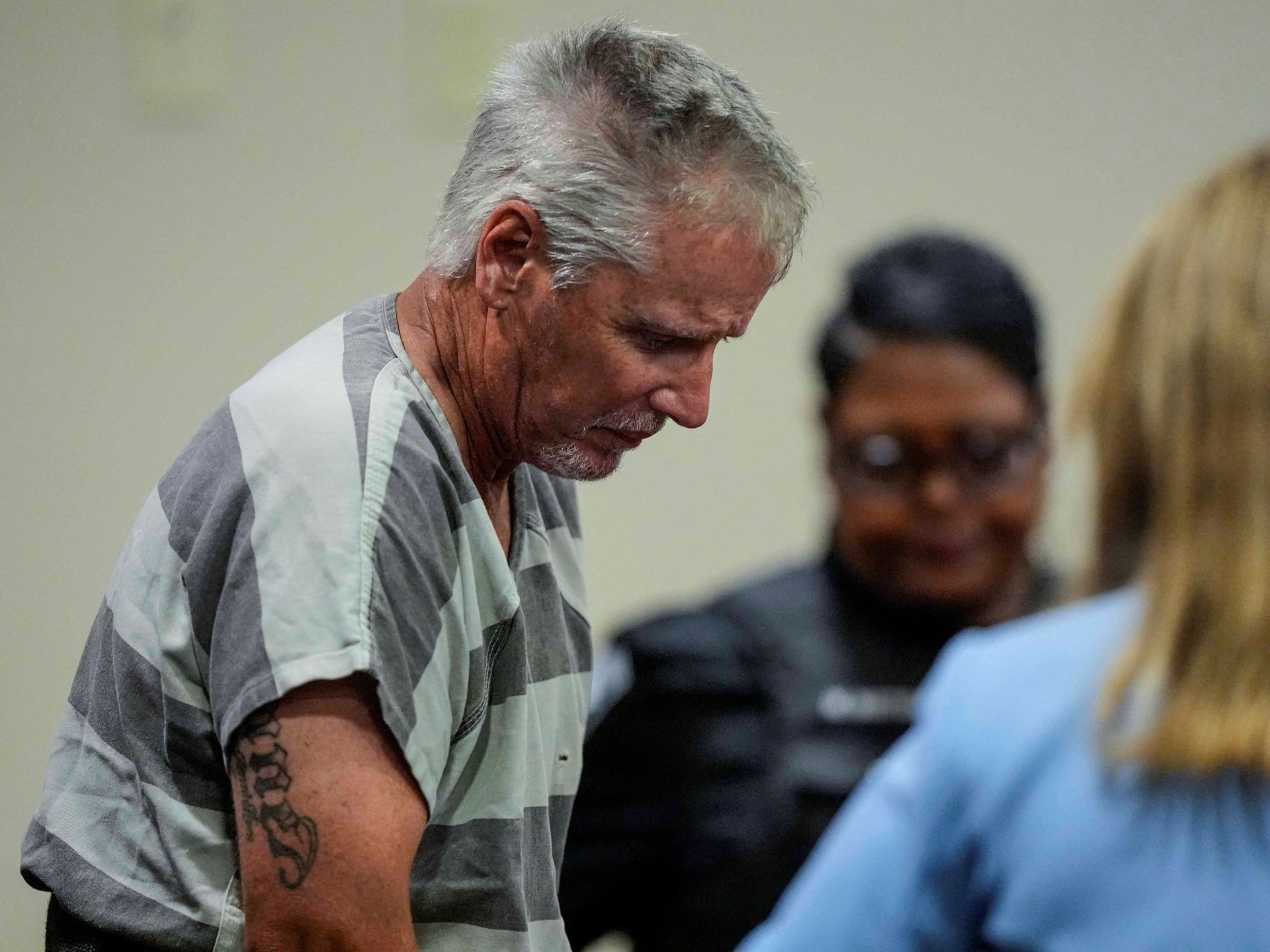
The father of a school shooter in the United States has been convicted of second-degree murder and involuntary manslaughter for his son’s attack on Apalachee High School in Winder, Georgia, on September 4, 2024.

A jury in the southern state returned the verdict on Tuesday after less than two hours of deliberation.

Recommended Stories

list of 3 itemsend of list

The father, Colin Gray, was found guilty on all charges. His son, Colt Gray, was 14 years old when he opened fire in the high school he attended, killing two students and two teachers and injuring seven others.

Colin Gray’s case is the latest instance of a parent facing prison time for alleged negligence in the lead-up to a school shooting.

His conviction follows a pair of guilty verdicts in 2024 for the parents of another school shooter, Jennifer and James Crumbley, who were charged with involuntary manslaughter.

Prosecutors in the Georgia case accused Gray of enabling his son’s attack on the high school by providing access to a gun and ammunition.

Among the charges against Gray were two counts of second-degree murder for the killings of students Mason Schermerhorn and Christian Angulo, both 14.

Georgia law allows for second-degree murder charges in cases where alleged cruelty to children causes the death of a child.

In addition, Gray was convicted on two counts of involuntary manslaughter for the killings of the two teachers, Richard Aspinwall, 39, and Cristina Irimie, 53. He was also found guilty of reckless conduct.

Gray will face up to life in prison. His sentence is expected to be set at a later date.

His defence team, however, argued that Gray should not be held accountable for the actions of his teenage son, and that his son alone made the decision to carry out the school shooting.

His lawyers also described Gray as a struggling single dad, caring for three children.

Gray himself testified that, until the shooting took place, he did not believe his son capable of carrying out such violence.

“I could have done better,” he told the court when asked about his son’s mental health.

But the father denied seeing warning signs in advance of the shooting, and he explained that he had told his son that the gun was solely for outings to the shooting range or hunting.

Gray had pleaded not guilty before Tuesday’s conviction.

But prosecutors argued Gray ignored red flags before the attack, including his son’s increasing fascination with past school shootings.

They maintained that, as a father, Gray had a responsibility to keep guns out of his son’s hands and prevent harm from occurring, particularly as his son faced mental health challenges.

“We talk a lot about rights in our country,” Barrow County District Attorney Brad Smith said following the verdict.

“But God gave us a duty to protect our children, and I hope that we remember that, as parents, as community members, to protect our children because that is our God-given duty.”

Colt Gray’s mother, Marcee Gray also testified in court that she had urged Colin Gray to take away the teenager’s guns in the lead-up to the shooting.

She and Colin Gray had been separated at the time, and she was not charged in relation to the attack.

Gray reportedly gave his son a semiautomatic AR-15-style rifle for Christmas. Shortly before Colt Gray opened fire at Apalachee High School, the 14-year-old texted his father, “I’m sorry, it’s not ur fault.” He also texted his mother an apology.

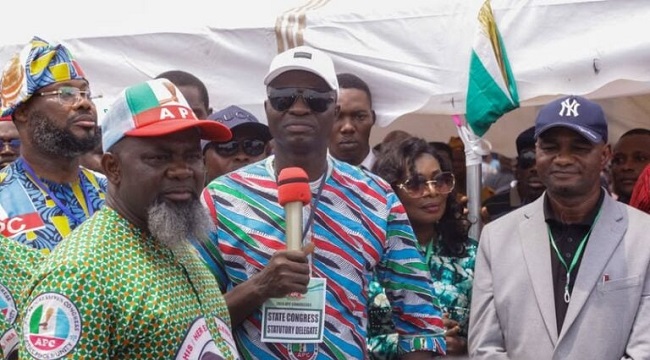
Ebonyi APC Holds Congress, Re-elects Okoro-Emegha As Chairman

The Ebonyi State chapter of the All Progressives Congress (APC) has re-elected Stanley Okoro-Emegha as substantive state chairman of the party for another four-year term.

Also returned were Chinedu Alphonsus-Nwali as State Deputy Chairman and Charles Chukwuma-Ofoke as State Secretary, alongside 33 other members of the State Working Committee.

The officials were re-elected unopposed through a consensus arrangement in line with the APC constitution during the State Congress held on Tuesday, March 3, 2026, at Pa Ngele Oruta Township Stadium in Abakaliki, the state capital.

The motion adopting the consensus arrangement was moved by Peter Onyekachi Nwebonyi, Senator representing Ebonyi North Senatorial District and Deputy Chief Whip of the Senate, and seconded by the Speaker of the Ebonyi State House of Assembly, Rt. Hon. Moses Ije-Odunwa.

READ ALSO: Three Senators Absent As APC Holds State Congress In Kebbi

Speaking at the congress, the state party leader and Governor of Ebonyi State, Francis Nwifuru, commended President Bola Tinubu for what he described as stabilising leadership that has strengthened the party ahead of the 2027 general elections.

He also praised party leaders and stakeholders in the state for reposing confidence in the State Working Committee under Okoro-Emegha’s leadership.

Governor Nwifuru assured that his administration would provide a level playing field for opposition parties and urged them to conduct their campaigns with civility and decorum when the time comes.

He further thanked lawmakers from Ebonyi State, both at the state and National Assembly levels, for joining the ruling party, stating that all members of the State and National Assembly from Ebonyi have now aligned with the APC.

In his acceptance speech, Okoro-Emegha, on behalf of the State Working Committee, expressed appreciation to Governor Nwifuru and party stakeholders for their continued trust and support.

He pledged to work with his colleagues to advance, promote, and protect the interests of the governor, party leaders, and members across the state.

The Chairperson of the APC Electoral Committee and former Speaker of the Anambra State House of Assembly, Rt. Hon. Mrs. Rita Maduagwu, said the consensus process complied with the party’s constitution and guidelines for the congress.

She congratulated Okoro-Emegha and the newly re-elected State Working Committee members, urging them to remain committed to the party and President Tinubu as preparations for 2027 intensify.

Are US-Israeli attacks against Iran legal under international law?

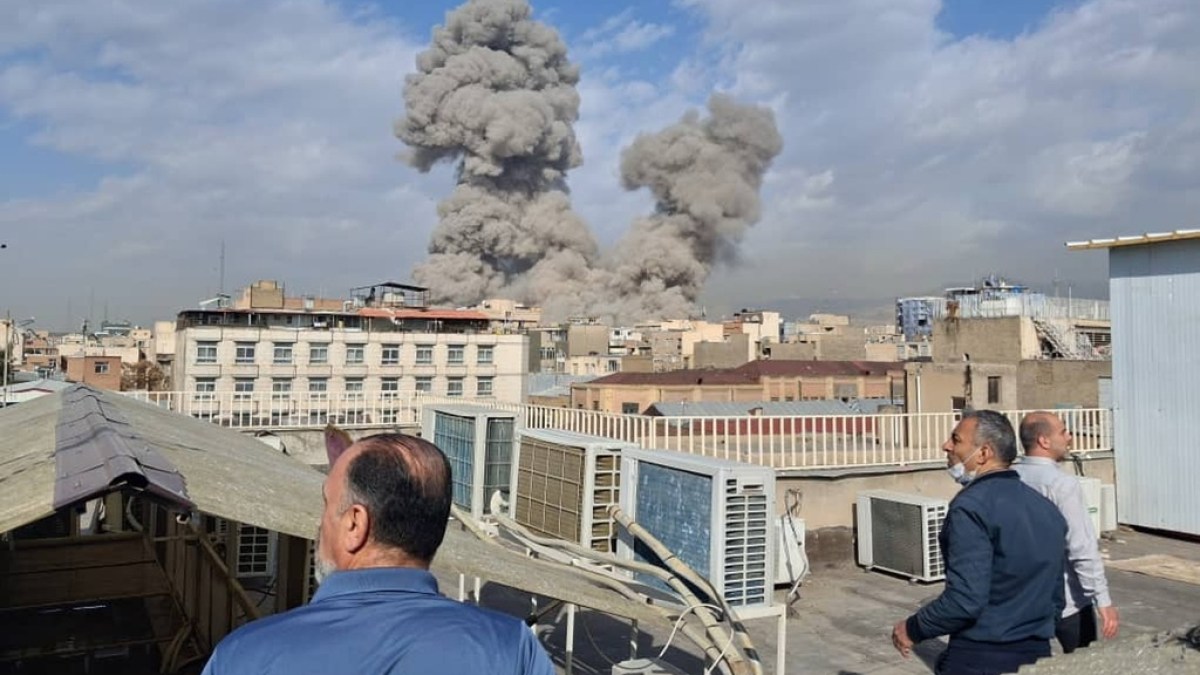
US and Israeli strikes against Iran, which have sparked a regional war, likely violate the UN Charter’s prohibition on aggression and lack any valid legal justification, experts say.

“This is not lawful self-defence against an armed attack by Iran, and the UN Security Council has not authorised it,” the United Nations special rapporteur on the promotion of human rights and “counterterrorism”, Ben Saul, told Al Jazeera.

Recommended Stories

list of 3 itemsend of list

“Preventive disarmament, counterterrorism and regime change constitute the international crime of aggression. All responsible governments should condemn this lawlessness from two countries who excel in shredding the international legal order.”

The administration of United States President Donald Trump did not seek authorisation from the UN Security Council – or even from domestic lawmakers in Congress – for the war.

And Iran did not attack the US or Israel prior to the strikes that killed Iranian Supreme Leader Ali Khamenei and several other senior officials, as well as hundreds of civilians.

Yusra Suedi, assistant professor in International law at the University of Manchester, said there are grounds to believe that the attacks against Iran amount to a crime of aggression.

“This was an act of use of force that was unjustified,” Suedi told Al Jazeera.

International law is a set of treaties, conventions and universally accepted rules that govern relations between countries.

Imminent threat?

The Trump administration has argued that Iran posed a threat to the US with its missile programme and nuclear programme, arguing that military action was necessary.

But the UN Charter prohibits unprovoked attacks against other countries.

“All Members shall refrain in their international relations from the threat or use of force against the territorial integrity or political independence of any state, or in any other manner inconsistent with the Purposes of the United Nations,” the founding document of the UN says.

Rebecca Ingber, a professor at Cardozo School of Law at Yeshiva University who previously served as an adviser to the US Department of State, said that the prohibition of the use of force is a “bedrock” principle of international law that allows for only limited exceptions.

“States may not use force against the territorial integrity of other states except in two narrow circumstances — when authorised by the UN Security Council or in self-defence against an armed attack,” said Ingber.

Suedi said one instance in which the use of force can be legal is when a country seeks to thwart an imminent attack by another state.

Trump has said that the goal of the war is to “defend the American people by eliminating imminent threats from the Iranian regime”.

But Suedi cast doubt over that assertion.

“Imminence in international law is really understood to be something that is instant, something that is overwhelming, something that leaves really no other choice but to act first, something that is pretty much happening now,” Suedi said.

She noted that Trump himself had said repeatedly that the June 2025 US attacks on Iran “obliterated” the country’s nuclear programme, and that Tehran and Washington were holding talks when the war broke out on Saturday.

“There really was no evidence of an imminent threat, and that the attack was a pre-emptive strike,” Suedi told Al Jazeera.

“If it’s pre-emptive, it means that you are acting to counter something that is in the future, hypothetical, speculative, and that is not imminent, but that’s exactly what happened here. That is illegal under international law.”

US officials, including Trump, have said that Iran was building a ballistic missile arsenal to protect its nuclear programme and later build a nuclear bomb.

‘Scattershot’ arguments

Trump has also said that he is seeking “freedom” for the Iranian people, as the US president’s aides have described the regime in Tehran as brutal.

In January, Iran responded to a wave of anti-government protests with a heavy security crackdown. The violence killed thousands of people.

Trump encouraged the demonstrators to take over government buildings at that time, promising them that “help is on the way”.

Experts say a humanitarian intervention to help protesters in Iran would have required UN Security Council authorisation to cross the legal threshold.

“The rationales have been scattershot,” Brian Finucane, a senior adviser for the US programme at the International Crisis Group, said of the US justifications for the strikes.

“Certainly none of them amount to a serious international legal argument.”

Beyond the possible breaches of the UN Charter, the US-Israeli attacks risk violating provisions of international humanitarian law that are meant to shield civilians from war.

An Israeli or US attack on a girls’ school in the southern Iranian city of Minab on Saturday killed at least 165 people, local officials have said.

“Civilians are already paying the price for this military escalation,” Annie Shiel, US Director at Center for Civilians in Conflict (CIVIC), told Al Jazeera in an email.

“We are seeing deeply alarming reports of attacks on schools and critical civilian infrastructure in Iran and across the region, with devastating casualties, including many children. These strikes risk igniting a wider regional catastrophe.”

Embrace of military power

The strikes on Iran are the latest instance yet of Trump’s reliance on the brute force of the US military power to promote his global agenda.

During Trump’s second term, the US has threatened to use military force to seize the Danish territory of Greenland, killed at least 150 people in a campaign targeting alleged drug trafficking vessels in Latin America, and abducted Venezuelan President Nicolas Maduro in a military attack that killed at least 80 people.

The legality of all of these policies has been questioned domestically and internationally, with UN experts saying that the boat strikes amount to extrajudicial killings.

Trump told The New York Times in January that he is driven by his own morality.

“I don’t need international law. I’m not looking to hurt people,” the US president said at that time.

In recent years, both Democratic and Republican US administrations have also continued to send Israel billions of dollars of weapons despite the Israeli military’s genocidal war on Gaza, which has been documented by rights groups and UN experts.

Ingber, the law professor, said that the use of wanton military force has contributed to a sense of impunity for powerful states and has degraded the international law system that has sought to place some constraints on conflict since the end of World War II.

“The prohibition on the use of force is a relatively recent innovation in the span of things. This rule is policed through the actions and reactions of states, and it feels fragile right now,” she said. “Do we want to go back to a world where states could use force as a tool of policy?”

Iran itself has lashed out against countries across the region in response to the US strikes, launching missiles and drones at military bases as well as civilian targets – including airports, hotels and energy installations.

“In the context of war, from the moment that the first strike was launched, the rules of warfare apply, and they’re very clear that civilian objects and spaces cannot be targeted,” Suedi said.

She said Iran also appears to have violated international law with its response.

Suedi told Al Jazeera that Russia’s invasion of Ukraine and Israel’s brutal assault on Gaza have been showing the “unravelling fragility” of international law.
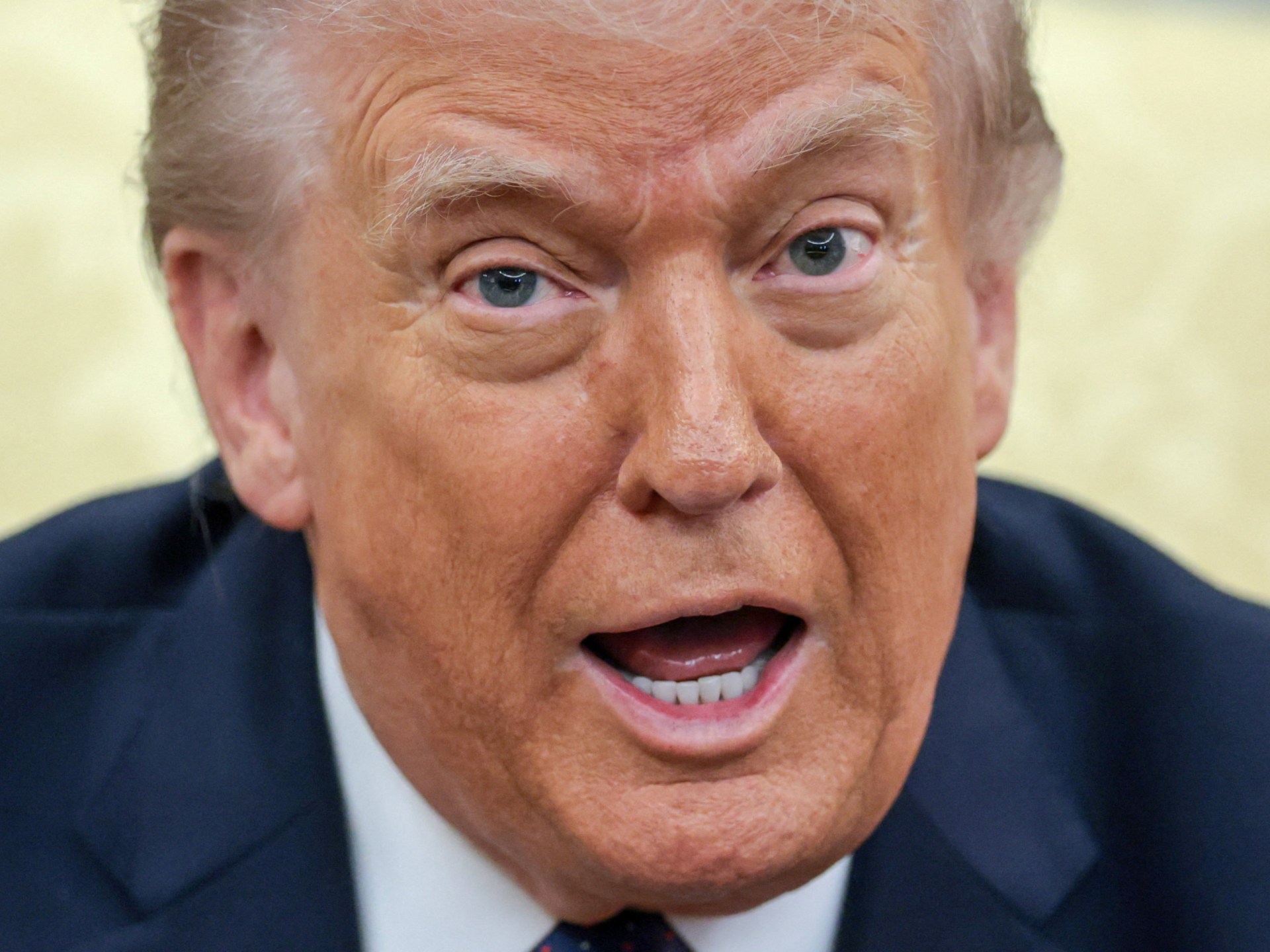
Trump: ‘We’re going to cut off all trade with Spain’

NewsFeed

“We’re going to cut off all trade with Spain.” Donald Trump targeted Spain in an Oval Office tirade, complaining about Madrid’s refusal to let its bases be used for attacks on Iran. He also joined the German chancellor in saying Spain doesn’t spend enough on its military.

Three Senators Absent As APC Holds State Congress In Kebbi

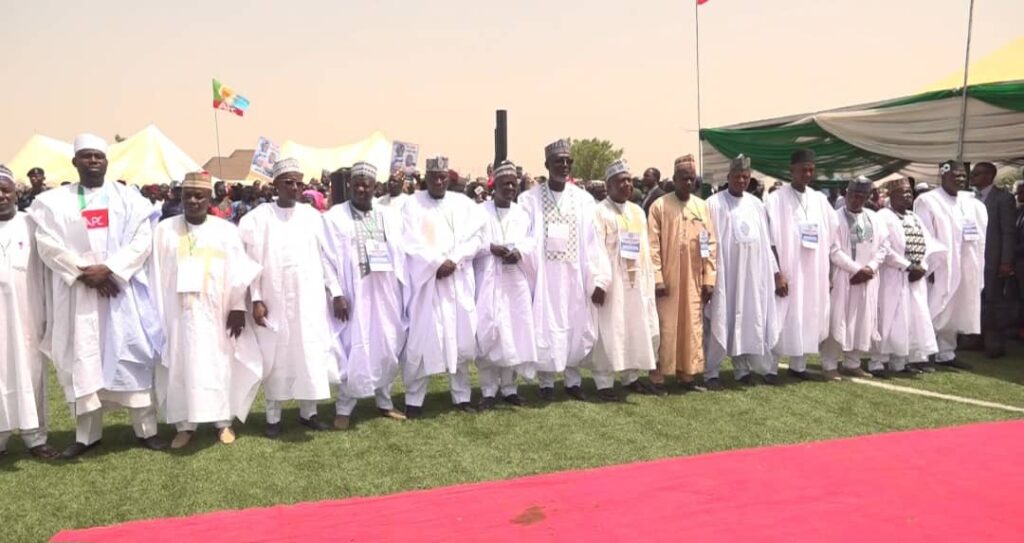
More than 1,000 delegates drawn from the 21 local government areas of Kebbi State participated in the state congress of the All Progressives Congress (APC) held in Birnin Kebbi, where Abubakar Kana was returned as state chairman for a second term.

The congress was attended by key APC stakeholders, led by Governor Nasir Idris. However, three senators who recently defected from the Peoples Democratic Party (PDP) to the APC were absent.

Chairman of the state congress committee, Modibbo Bello, said the exercise was conducted peacefully and largely through a consensus arrangement under the supervision of the Independent National Electoral Commission (INEC).

According to him, the consensus approach ensured a smooth and orderly process.

READ ALSO: Oyo APC Elects Ex-Deputy Gov Moses Adeyemo As State Chairman

In his remarks, Governor Idris said former governors of the state between 1999 and 2023 had played significant roles in promoting unity in Kebbi. He added that his administration was building on that foundation to achieve greater progress.

“I congratulate all those elected and commend the committee from Abuja for ensuring a peaceful and transparent congress. I urge party members to continue working together for the progress of our party. This congress stands out as one of the best in the country,” the governor said.

In a development that drew attention, the three senators who recently joined the APC were not present at the congress, and none of their supporters was seen at the venue.

The lawmakers are Adamu Aliero, representing Kebbi Central; Yahaya Abdullahi, representing Kebbi North; and Garba Maidoki, representing Kebbi South.

Loyalists and close associates of the senators, who spoke to Channels Television on condition of anonymity, alleged that since the commencement of the congresses, their members had not been included from the ward level through to the local government congresses.

The sources further claimed that in the case of Senator Aliero, a former governor of the state, none of his loyalists was given any position at the ward level, let alone at the local government level.