Democratic senators voiced alarm after a classified briefing on the US‑Israeli war with Iran, warning the Trump administration lacks clear objectives as lawmakers say they fear it could lead to a prolonged conflict and US ground troops.
The US launched a major military campaign against Iran on Saturday, striking targets across the country as part of what the administration of President Donald Trump has named Operation Epic Fury.
The escalation has already resulted in casualties, growing regional tensions and instability in the region.
As the strikes continue, we ask: Is the United States now effectively at war with Iran? Why did Washington decide to attack? And could the conflict expand to include US ground troops?
Here is what we know so far:
How many people have died during the attacks?
In Iran, at least 787 people have been killed, according to the Iranian Red Crescent.
Six Americans have been killed in action and 18 service members have been injured, as the US continues its strikes on Iran and Iran counterattacks, sending missiles and drones at Israel and US assets in the region.
US Defense Secretary Pete Hegseth said a projectile breached air defences and struck a fortified US military position. He did not disclose the location of the facility, but reports indicated that the casualties occurred in Kuwait.
“You have air defences and a lot coming in, and you hit most of it, and we absolutely do. We have incredible air defenders,” Hegseth said.
“Every once in a while, you might have one, unfortunately – we call it a ‘squirter’ – that makes its way through, and in that particular case, it hit a tactical operations centre,” he added.
In Iran, the deadliest single reported incident occurred in the southeastern city of Minab, where a strike hit an elementary school for girls. At least 165 students were killed.
Is the US at war with Iran?
The US Constitution gives Congress the exclusive power to declare war, but the president serves as commander-in-chief with the authority to respond to immediate threats.
“Our Constitution says in Article I, Section 8, that Congress has the authority to declare war,” David Schultz, a professor in the political science and legal departments at Hamline University, explained to Al Jazeera.
“Article II says that the president is commander in chief,” he added.
Because of this framework, modern presidents can bypass formal declarations by labelling military actions as defensive or emergency measures.
In fact, “the last time the US formally declared war was World War II”, Schultz explained, while conflicts such as in Vietnam and Iraq were fought without a formal declaration.
“So I would argue that if we look at the history of the US, the vast majority of conflicts have not been formally declared wars, but presidents have dragged us into them,” he said.
In 1973, Congress passed the War Powers Resolution, which attempts to limit unilateral presidential military action to 60 days.
Under the law, the president must also notify Congress within 48 hours of hostilities beginning.
Trump notified Congress of the strikes, telling lawmakers the threat from Iran had become “untenable” despite efforts to reach a diplomatic solution, even though Oman – which was mediating between the US and Iran – had said that the parties were close to a deal.
Democratic lawmakers have challenged the justification for the strikes and raised concerns about potential violations of the War Powers Resolution.
Ultimately, the difference between an “attack” and a “war” often comes down to duration and intensity, Paul Quirk, a professor of political science at the University of British Columbia, said.
“Americans will call it an attack if it’s brief,” Quirk added. “But if, as appears likely, it continues for weeks or months, then it becomes a war in practice.”
Why did the US attack Iran?
The Trump administration has provided several key reasons for the attack:
Stopping Tehran’s nuclear programme
Trump and Vice President JD Vance have explicitly stated that a primary goal is ensuring Iran cannot obtain a nuclear weapon.
“The goal of the strikes is to eliminate the Iranian nuclear programme once and for all,” Trump said.
However, the administration has not provided evidence for the claim that Iran was close to having a nuclear weapon before the US launched its attacks. In fact, the International Atomic Energy Agency has said — as recently as yesterday — that it had no evidence that Iran even had a nuclear weapons programme.
Preemptive defence:
The US argues that the strikes were a proactive, defensive measure to prevent Iran from attacking US troops, bases, and allies. In fact, the attacks have triggered a fusillade of missiles and drones fired by Iran against Gulf nations that host US troops.
Secretary of State Marco Rubio suggested that the US acted because Israel had been preparing its own military strike on Iran.
“We knew that there was going to be an Israeli action… and we knew that if we didn’t preemptively go after them before they launched those attacks, we would suffer higher casualties,” Rubio said.
However, experts say the administration’s messaging has not been consistent.
Trump himself has contradicted Rubio. At a media interaction on Tuesday, he said that the US attacked Iran because he thought Tehran was going to strike first.
“We don’t know what the administration’s goals are. They’ve been all over the map,” Christopher Preble, a senior fellow at the Stimson Center, told Al Jazeera.
Regime change:
Trump has also openly called for the Iranian people to “take over” their government and “seize control of your destiny”.
Targeting Iran-backed groups:
An objective of the campaign has also been to dismantle Iranian support for groups such as Hezbollah in Lebanon, the Houthis in Yemen, and Hamas in Gaza.
Will there be US boots on the ground in Iran?
So far, the US has relied on air and naval strikes, and there has been no formal announcement of a ground invasion. But Trump has not ruled out the possibility.
When asked directly whether US troops could be deployed in Iran, Trump said he would “never say never”, adding that the administration would do “whatever is necessary”.
Experts say air strikes alone are unlikely to permanently end Iran’s nuclear programme, which Tehran insists has always been of a peaceful nature.
“You cannot destroy, demolish, eradicate any country’s nuclear capabilities. They always have the ability to reconstitute,” Preble said.
If the US were to deploy ground troops, however, the scale of the challenge — whether Trump’s goal is targeting Iran’s nuclear facilities, missiles, or imposing regime change — would be significant.
“The difference, if you compare Iran to Iraq in 2003, is that it’s a country three to four times larger than Iraq was at the time,” Preble said.
“The US never had sufficient troops in Iraq to fully pacify the country… and the US doesn’t have that many troops today to prevent a nation the size of Iran from descending into chaos.”
The US 2003 invasion of Iraq toppled leader Saddam Hussein within weeks, but the subsequent occupation turned into a years-long insurgency that required more than 150,000 American troops at its peak.
Any ground operation, experts say, would be extremely difficult.
“It would make the US mission in Iraq look simple by comparison,” Preble added. “And of course, the Iraq mission was not simple. It would be extraordinarily costly and potentially very protracted – mostly for the people of Iran, but also for American service members.”
How long can the US sustain high-tempo air operations in Iran?
This depends on three main factors: military resources, funding and political will.
Lawmakers could compel the Trump administration to scale back or end operations by passing a resolution to block the continuation of the campaign.
“Whether Democrats can persuade enough Republicans to break ranks remains uncertain, especially given the narrow Republican majority in both chambers,” Al Jazeera’s Rosiland Jordan reported from Washington, DC.
Military capacity is another limiting factor. Stockpiles of missiles, precision-guided munitions, interceptor systems and other equipment are finite.
Kathmandu, Nepal – On the eve of Valentine’s Day last month, a former king in Nepal was on a helicopter, making his way to the capital, Kathmandu, from Jhapa, a district to the southeast where he has business interests.
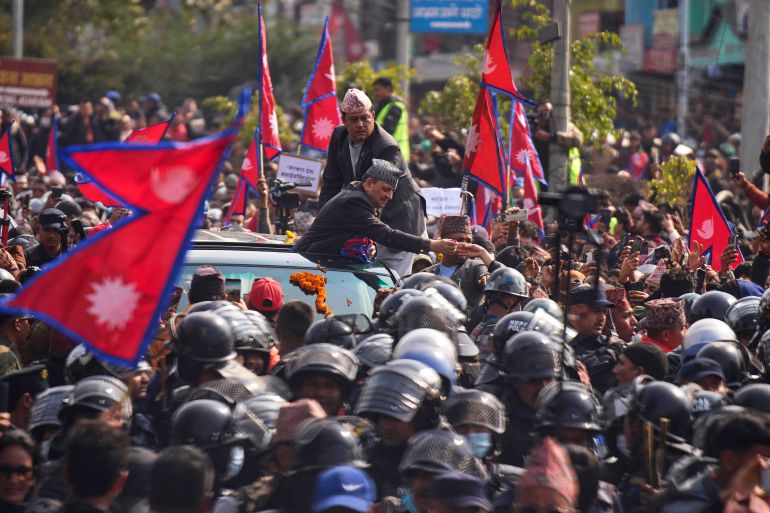
Gyanendra Bir Bikram Shah landed in Kathmandu to a red carpet welcome by thousands of supporters, with chants of “Raja aau, desh bachau!” (“Come back, king, save the country!”), a slogan popular among Nepal’s royalists, ringing out.
Four days later, on the eve of Nepal’s Democracy Day, the 78-year-old former monarch released a video message with English subtitles, speaking of his “unwavering sense of duty and responsibility” towards a nation he suggested was trapped in an “unusual whirlwind of distress”.
“The country is in one of the most painful situations in its history,” he said.
“In a democracy, it is appropriate for state systems and processes to operate in accordance with constitutional principles. While periodic elections are natural processes in a democratic system, prevailing sentiments suggest that elections should proceed only after national consensus to avoid post-election conflict or unrest.”
Shah’s explicit opposition to the parliamentary election – scheduled for Thursday – was aimed at Nepalis who have a lingering nostalgia for the monarchy, which was abolished in 2008 after seven years of Shah on the throne.
Why Shah is hopeful
Since the 239-year-old monarchy was abolished in 2008, Nepal, an impoverished nation of 30 million people, has been plagued with political instability.
It has seen 14 governments and nine prime ministers since, with power rotating between the former Maoist rebels’ party, the Communist Party of Nepal (Unified Marxist-Leninist), and the Nepali Congress.
However, a Gen Z-led uprising in September last year challenged the dominance of Nepal’s established political parties and forced the formation of an interim government, which is overseeing the March 5 election.
The youth-led challenge to an ageing political class has reignited debates in Nepal about a possible return of monarchy, and whether the prospect has significant public support.
There is marginal political support, too.
The Rastriya Prajatantra Party (RPP), which won 14 of the 275 seats in the 2022 parliamentary election, openly advocates for the restoration of a constitutional monarchy. Its leader, Rabindra Mishra, told Al Jazeera that Shah’s call for consensus on the issue echoed his own thoughts.
“I believe we need national consensus and a systemic overhaul of the system,” Mishra said, while campaigning in his constituency in Kathmandu. “I have been saying the election should be slightly postponed to forge consensus before announcing new dates. But we are not a formidable political force. The major parties are moving ahead with the election regardless.”
A year ago, Shah had put up a similar show of support in Kathmandu, fuelling speculation about whether he was trying to test the waters to push for the restoration of the constitutional Hindu monarchy. The demonstration turned violent after Durga Prasai, the royalist businessman who had mobilised crowds for the rally, broke the police barricade with his car and entered the restricted zone, which was not designated for demonstrations. Two people were killed, more than 100 were injured, and more than 100 were arrested for clashing with police.
A supporter blows a conch shell as people gather to welcome Shah upon his arrival at Tribhuvan International airport in Kathmandu, Nepal, Friday, on February 13, 2026 [Niranjan Shrestha/ AP Photo]
‘Trying to remain relevant’
Critics see calculated political signalling behind Shah’s public appearances.
Baburam Bhattarai, an ex-prime minister and former Maoist leader, said Shah’s statements were concerning.
“These kinds of public statements during crucial times are not good,” Bhattarai told Al Jazeera. “The Constituent Assembly lawfully abolished the monarchy and established a democratic republic. He should think about how to contribute responsibly as a citizen. Suggesting elections should not happen just before they take place sends the wrong message.”
Political analyst CK Lal offered a more tempered view.
“He [Shah] has seen power, and that nostalgia does not fade easily,” Lal told Al Jazeera. “Perhaps he hopes that if circumstances change, keeping the idea alive may prove useful. But at present, he appears to be trying to remain relevant. It is difficult for anyone who once held absolute authority to accept irrelevance.”
Supporters gather to welcome Shah upon his arrival at Tribhuvan International airport in Kathmandu, Nepal, on February 13, 2026 [Niranjan Shrestha/ AP Photo]
‘Unifying symbol’
The RPP’s election manifesto describes the monarchy as a “guardian institution”, necessary for a country in crisis.
“To move forward, both wheels must be strong,” said party leader Mishra, using the metaphor of a royal chariot. “We are not proposing the monarchy will run the government. Political parties will govern. The monarchy would serve as a unifying symbol above partisan politics.”
Mishra said Nepal faces internal security challenges and regional geopolitical pressures, and a ceremonial monarchy could provide stability.
But Bhattarai rejects this, saying the idea of a Hindu monarchy conflicts with Nepal’s religious, ethnic and cultural fabric, and its secular constitution.
“Monarchy is obsolete,” he said. “It will not solve our crises. These are inherent challenges that can only be addressed through democratic processes. Nepal is an inclusive, secular state. We cannot reverse that.”
Lal, however, argued that the monarchy retains a limited but symbolic resonance among some people.
“It would be presumptuous to say it is not a force,” he said. “But it is not a considerable force. It appeals mainly to religiously minded elders and cultural conservatives. The younger generation has no lived experience of monarchy. To them, it appears antiquated.”
Supporters perform Hindu rituals to commemorate the birthday of former King Shah, sitting on the right, at his residence in Kathmandu, Nepal, on July 7, 2025 [Niranjan Shrestha/ AP Photo]
Calls to restore Hindu state
Nepal’s monarchy under the Shah dynasty ended in 2006, when Maoist-led mass protests forced Shah, who had seized power and imposed emergency rule, to reinstate parliament. In 2008, a constituent assembly formally abolished the monarchy and declared Nepal a secular federal democratic republic.
Now, the RPP advocates for reinstating Nepal as a Hindu state. Nepal was the world’s only officially Hindu kingdom until 2008.
Mishra frames the proposal as cultural preservation rather than religious majoritarianism. “Nepal is a centre of both Hinduism and Buddhism,” he said. “We do not oppose any religion.”
However, he insisted: “To protect Nepal’s identity and maintain social cohesion, we need a Hindu king as the head of state.”
More than 80 percent of Nepal’s population is Hindu.
Bhattarai dismissed the idea as “romanticism”.
“Religion is a personal faith,” he said. “A nation state does not have a religion – people do. Enforcing one religious identity on a diverse society is anti-democratic.”
Lal pointed out that calls to restore the monarchy and a Hindu state are closely intertwined. “From a monarchist perspective, a Hindu state is a first step,” he said. “For Hindu nationalist forces, it may be an end goal. There appears to be a convergence of interests.”
Since 2008, Shah has not formally entered politics, though he maintains a visible public presence. He appears at restaurants, night clubs, and other public places on his birthday and during festivals, casually posing for photographs with people. His occasional private visits abroad, including to India, have drawn political scrutiny, though he holds no official diplomatic role.
India’s governing Bharatiya Janata Party of Prime Minister Narendra Modi also holds the ideology that India ought to be a Hindu state.
At a pro-monarchy rally in 2025, a prominent poster showed Yogi Adityanath, a Hindu nationalist politician who is the chief minister of the Indian state of Uttar Pradesh, which borders Nepal. Adityanath is also the chief priest at Gorakhnath Temple, which the Shah dynasty considers sacred, and has been publicly sympathetic to the idea of Nepal as a Hindu state.
But Lal downplayed speculation about Shah being backed by India, home to the world’s largest Hindu population.
“Foreign governments support winners, not losers. Their [India’s] interests lie with whoever holds power,” he said. “Despite a close relationship between the monarchy and the [Hindu nationalist] lobby in India, which is the ruling class now, they know that the monarchy has almost no relevance in Nepal.”
Monarchists mainly draw their support for the institution from an 18th-century treatise called Dibya Upadesh (Divine Counsel). Attributed to the “Prithvipath” philosophy of Nepal’s unifier, King Prithvi Narayan Shah. The idea describes Nepal as “a yam between two boulders”, referring to its precarious position between India and China, and urges its leaders to pursue cautious diplomacy, economic self-reliance and internal unity.
The RPP’s Mishra argues that these principles remain relevant.
“What Prithvi Narayan Shah formulated more than 240 years ago is still applicable today, in foreign policy, diplomacy, economic protection and national stability,” he told Al Jazeera. “We already had our organic values in Dibya Upadesh, but we went looking elsewhere for ideological models.”
But analyst Lal dismissed the idea that an 18th-century doctrine could guide a 21st-century republic.
“It is largely nostalgia. Invoking Prithvipath does not address contemporary geopolitical and economic realities. Nepal today operates in a completely different global context,” he said.
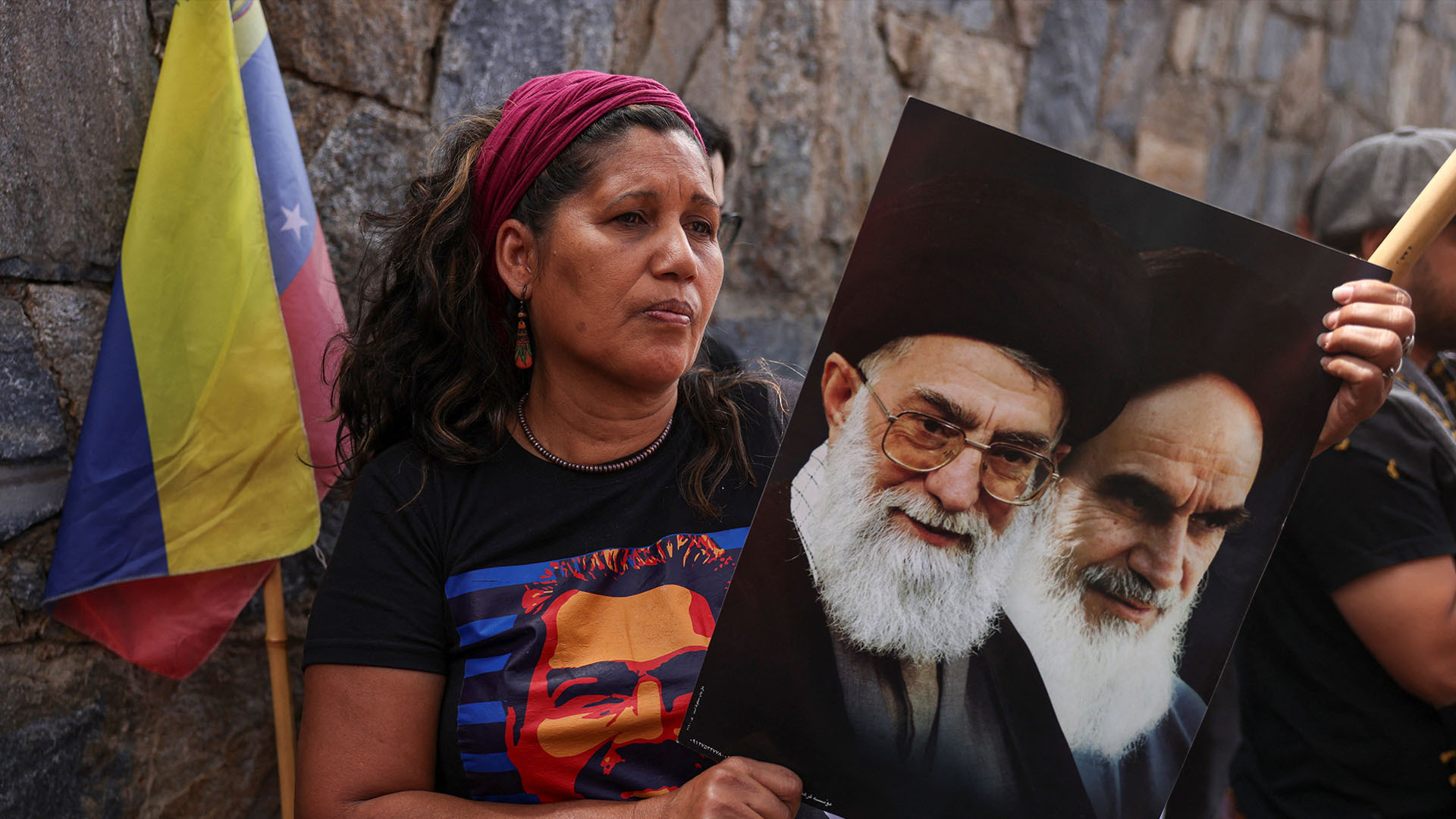
Protesters in Venezuela have rallied outside the Iranian Embassy to condemn the US-Israeli war on Iran, joining global demonstrations against the escalating conflict.
Attacks on key energy facilities in Qatar and Saudi Arabia, along with Iran blockading the Strait of Hormuz, are sending global oil and gas prices soaring. Analysts warn the disruptions could drive up energy costs worldwide, affecting gasoline, electricity, and heating. Al Jazeera’s Marah Rayan looks at the impact.
To play this video you need to enable JavaScript in your browser.
Aadam Patel
Football reporter at Molineux
Arne Slot began the week by saying that he found most Premier League games no longer a joy to watch.
The Liverpool boss certainly won’t have changed his mind after his side’s performance in their 2-1 defeat at bottom club Wolves.
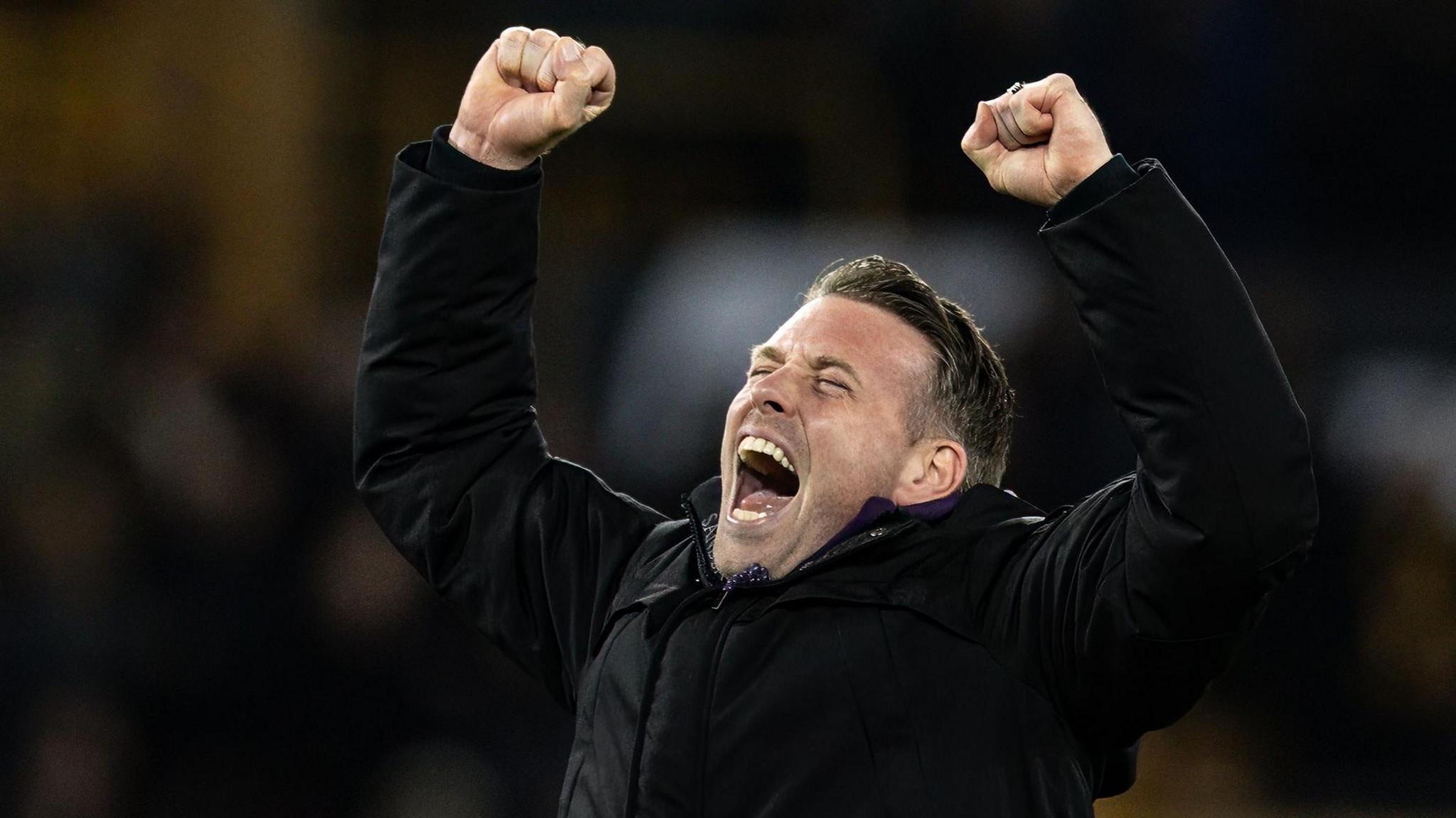
As Rob Edwards raced down the touchline in Jose Mourinho-esque fashion to celebrate Andre’s 94th-minute winner, Liverpool felt very different emotions. The sight of the away end at Molineux emptying before the final whistle summed it up.
Yet again this season, just when it seemed as if Liverpool were making progress, they suffered a brutal defeat.
Liverpool have nine league games left and right now, the possibility of missing out on next season’s Champions League is a genuine concern.
The financial impact of that cannot be underestimated. Slot will know his side simply cannot afford to miss out.
On Tuesday, Liverpool failed to create enough and were punished defensively. And again, they conceded an injury-time winner.
For Slot, the concerns are only growing, even if he attempted to defend his side by saying that Wolves have hit form.
“How do I sum this up? Same old story,” said Slot after the game.
“My expectations have changed throughout the season because I expected more from us and what we are fighting for now. But it’s another setback and we didn’t help ourselves with this result, not at all.
“That [dropping points] is a concern because it is not the first time we have dropped points against teams that are in these positions.
“But we are not the first team to drop points here, last week it was [Aston] Villa, the week before Arsenal. So they are having a good momentum.”
For a team historically known for scoring late winners, it has been a different story for Liverpool this season.
They have lost five Premier League games thanks to injury-time goals – the most ever by any team in a single campaign.
‘Any time you beat them, you have to enjoy the moment’
Molineux has seen as many Premier League wins in the past five days as it had in the previous 10 months. But through its history, it can’t have seen many more dramatic than this.
Make no mistake, Wolves were well worth the three points here. At 1-1, they pushed for a winner and got their reward, albeit with a slice of luck with the deflection off Joe Gomez.
“This is Liverpool Football Club – never mind this position you’re in, any time you beat them, you’ve got to enjoy the moment,” said Edwards.
“They’re an amazing football club with an amazing manager and loads of great players. So it was a big, big night for us.”
The Wolves head coach joked afterwards that he had injured himself when sprinting down the touchline after his team’s late winner.
“What we’re trying to do is improve,” he added. “We’re trying to build some momentum. We know the position we’re in. I know I’ve lost myself in that moment there. People might think we’re bottom of the league but you saw the energy around this place. You have to enjoy it. We’re trying to turn things around.
“There is a belief that we are going in the right direction. Whatever happens until the end of that 38th game, we’ll just keep fighting.”
With victories against Aston Villa and Liverpool in their past two Premier League games, Wolves are the first bottom-placed side to beat two teams in the top five in a single season since West Brom in 2017-18, and the first to ever do so in consecutive matches.
While Liverpool are fighting for Champions League football, Wolves are fighting against the impossible and sit 11 points from safety with eight games remaining.
This result, in all likelihood, will ultimately have no impact on their future in the Premier League, but Rodrigo Gomes, the scorer of their first goal on Tuesday, is keeping the faith.
“We know we are in a tough position,” he told BBC Sport. “It’s very difficult but we need to keep believing. If it is possible, we need to keep believing.
“Now we need to work, game by game and not think ‘if we win this game or this game, we avoid relegation’. Game by game, working like this every week then maybe – we will see.”
As one Wolves fan told BBC Sport on his way out of Molineux: “It’s crazy how we are where we are in the table.”
For a side and fanbase who have endured plenty this season, this was a night they will not forget in a hurry.