The Iran strikes could become a midterm reckoning – for Trump and Israel

It is clear that the latest United States-Israel-Iran war stands to fundamentally reshape the politics of the Middle East. Less obvious is its immediate impact on US politics, especially the 2026 midterm elections and the durability of US support for Israel.

While the core of US President Donald Trump’s base has come out in support of the joint US-Israel strikes, some influential figures on the American right have denounced them. These condemnations have heightened tensions already at play within the MAGA (Make America Great Again) base, and dovetail with conservative concerns about Israel’s influence over US foreign policy.

With the midterm elections approaching, this is not a good time for intraparty division. Conservative quarrelling over war with Iran and broader support for Israel could cost Republicans in November.

The stakes for Republicans are high: All 435 seats in the US House of Representatives and 35 of 100 Senate seats will be on the ballot, and Republicans currently control both chambers of Congress. Control of Congress will shape whether Trump’s agenda advances, how forcefully a Democratic majority might engage the White House through oversight, and how secure Israel’s position in Washington remains.

‘Israel’s war’ and MAGA dissent

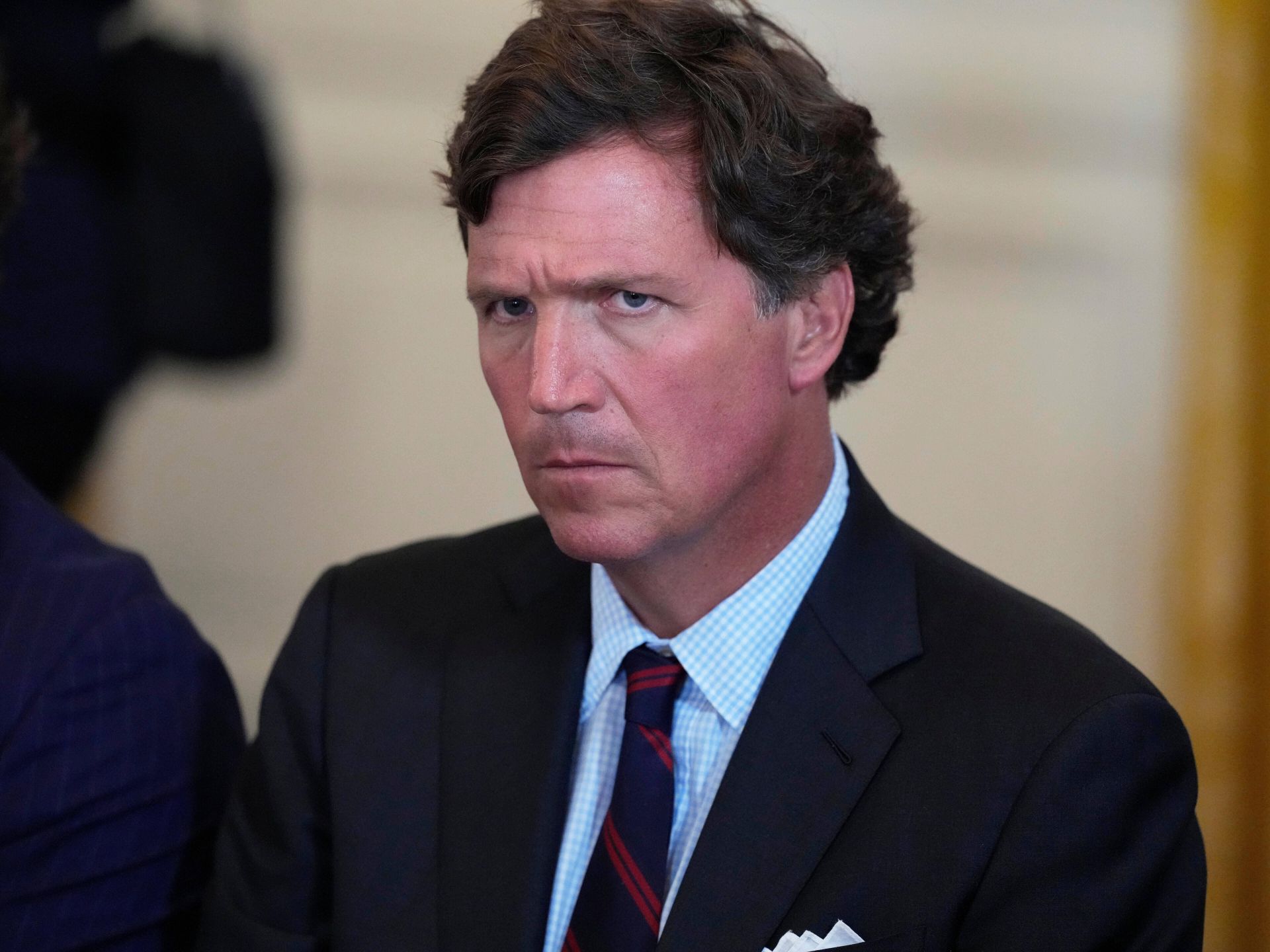
In the days leading up to Saturday’s initial strikes, influential right-wing journalist Tucker Carlson, a leading critic of Israel’s influence over the US government, repeatedly warned against military escalation.

On his Thursday programme, broadcast to tens of millions of social media followers, Carlson argued that Israel was pushing the US into conflict to secure absolute hegemony in the Middle East.

On Monday evening, Carlson commented on the war’s opening phase, doubling down on his pre-war analysis, calling the war “Israel’s war” and arguing that it only “happened because Israel wanted it to happen”.

Other prominent conservatives have criticised the war. Former Congresswoman Marjorie Taylor Greene posted on X that the strikes were “murdering [Iranian] children” and contrary to an “America First” agenda.

Conservative commentator Candace Owens has made more than a dozen posts arguing that Israel goaded the US into battle.

The views of Carlson, Greene and Owens matter. The three have tens of millions of social media followers between them and represent influential voices inside the MAGA movement. Their criticisms signal a widening split over the Republican policy programme.

Megyn Kelly, Matt Walsh and the Hodge Twins, among other influential MAGA figures, have also condemned the war as a betrayal of “America First” principles.

One undercurrent in recent conservative criticism is the assertion that Trump’s decision to go to war contradicts core MAGA principles. To make this point, commentators on the right have resurrected old statements and social media posts by Trump administration figures, including Trump, Secretary of State Marco Rubio, Vice President JD Vance and Director of National Intelligence Tulsi Gabbard, among others.

For example, as president-elect in 2016, Trump said that under his leadership, the US would “stop racing to topple … foreign regimes”. Also, in numerous 2012 and 2013 tweets, Trump suggested that then-President Barack Obama would attack Iran to either distract from domestic problems, shore up his re-election bid or compensate for sagging poll numbers.

In 2023, Vance lamented the US invasion of Iraq as a “disaster” and said US “foreign policy is still held hostage by men… [who] will support the next war, and then the next one, until [the] country is hollowed out.” In 2024, Vance condemned the idea of war with Iran.

In both 2016 and 2020, Gabbard railed against “warmongers”. In a 2020 interview, Gabbard said an “all-out war with Iran would make the wars that we’ve seen in Iraq and Afghanistan look like a picnic.”

By surfacing these archival statements, critics are arguing not just that the war with Iran is wrong, but that it violates the ideological commitments upon which the MAGA coalition was built.

A fractured party

Even before the Iran war, Republicans were more divided than at any point in recent memory. For the better part of two years, Carlson, Owens, Greene and a host of others have criticised Republican policy towards Israel and the Palestinians. The decision to go to war with Iran, ostensibly on behalf of Israel, has further amplified the divide.

Some conservatives, including influential white nationalist Nick Fuentes, are so angry that they have suggested voting for Democrats rather than Republicans in the midterm elections.

If these calls gain traction, Republican prospects in the midterms could be jeopardised.

Recent polling suggests Republicans have reason to be concerned.

A Reuters news agency poll conducted after the start of military operations suggests that only about a quarter of Americans approve of Trump’s decision to go to war. More concerning for Trump, perhaps, is that only 55 percent of Republicans approve. This is a remarkably low figure, especially in comparison with the more than 90 percent Republican support that George W Bush had for his invasion of Iraq in March 2003.

All of this is significant because midterm elections have historically served as referendums on the sitting president and his party. All members of the House face voters every two years, and the president’s party almost always loses seats in midterm cycles, especially when a president’s approval rating is below 50 percent. Trump, whose approval rating has hovered between 36 percent and 38 percent, recently became the first president ever with a sub-50 percent approval rating in both his first term and during the first year of his second term.

Even before the war with Iran, early electoral barometers favoured Democrats. In 2025, Democratic candidates racked up a series of victories, sweeping gubernatorial races and winning local contests in diverse areas, providing key midterm momentum.

A shifting political landscape

Iran may prove to be the latest battlefield in a broader transformation of US public opinion about Israel.

For decades, Americans have sympathised much more with Israelis than Palestinians – on average, between 2001 and 2018, Israelis held a 43 percent advantage in Gallup polling.

Last week, however, a Gallup poll suggested – for the first time in its history – that American sympathies lie more with Palestinians than Israelis.

Importantly, the shift has been driven largely by changes in Republican sympathies. Since 2024, support for Israel has declined by 10 percent among Republicans.

This is crucial because Republican voters have long formed the backbone of Israel’s support in the US. If Republican support weakens, Israel’s unique protection in US politics could weaken along with it.

When the dust settles on the war with Iran, many Americans may come to see the conflict through the same lens as Carlson, Owens, Greene and others – as a war waged on Israel’s behalf.

If the war is long and costly, as Trump indicated on Monday that it might be, that perception will harden.

The 2026 midterms, then, may not only serve as a referendum on Trump and Republicans, but also on the “special relationship” that the US has with Israel.

Trump has called himself “the best friend to Israel … they’ve ever had”. He may believe he is helping an old friend, but a war pursued to achieve Israel’s absolute regional hegemony could, paradoxically, weaken its most important source of strength: US backing.

If Republican divisions over Iran translate to congressional losses, the consequences will not be limited to Trump’s agenda. A Congress reshaped by voter backlash may wind up less reflexively supportive of pro-Israel policies.

Israel’s genocide in Gaza has already transformed US public opinion on Israel and strained the foundations of US support in ways that were once unthinkable. The war on Iran could be the straw that breaks the camel’s back – not only for Trump’s party, but for the political consensus that has long guaranteed US support for Israel.
Leeds director warns regeneration is now or ‘never’

Leeds United director Peter Lowy has urged the government to support plans to regenerate the Elland Road area and warned that the development will ‘never’ happen if it fails to materialise this time around.

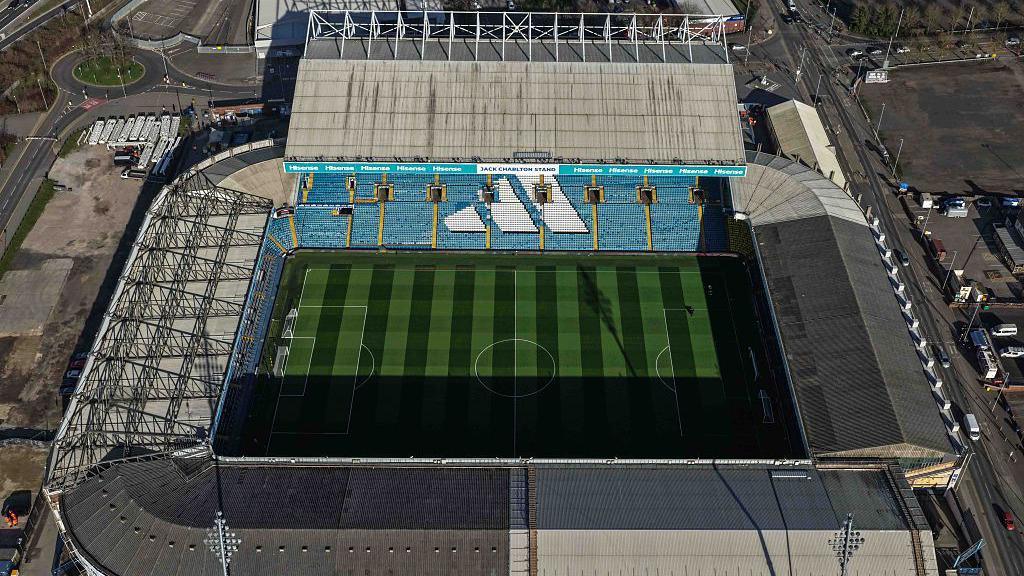
The club had plans to redevelop Elland Road approved by Leeds City council in January, which will see the stadium’s capacity increase from 37,645 seats to approximately 53,000.

Australian billionaire businessman Lowy, whose family founded and built Westfield, feels the stadium’s expansion is a once-in-a-generation opportunity to regenerate the area of south Leeds.

West Yorkshire Mayor Tracy Brabin has pledged to build a mass transit system for the region, but in December it emerged the scheme would be delayed by several years.

But Lowy has warned it is “now or never” for a wider project for the area to move forward.

“Leeds is ready for it,” he said. “If we don’t get it done this time, it will never happen.

‘Stars aligned’ for stadium ‘masterplan’

Lowy, who stressed that the expansion of Elland Road will continue regardless of the government’s plans for the area, said stakeholders need to deliver on infrastructure projects as part of a “masterplan” for the area. .

BBC Radio Leeds reported on 20 January that Lowy met with Chancellor Rachel Reeves to discuss funding a light rail system from Leeds station to White Rose including a stop at Elland Road.

Reeves – who has been the MP for Leeds West and Pudsey, formerly Leeds West, since 2010 – said recently the investment from LFG can “create jobs, unlock opportunities and bring more people into the local economy”.

“The football club is managed properly. The football club has the capital to do the expansion,” Lowy said.

“If the government can actually allocate the capital, and build the infrastructure [then] we could raise and invest somewhere between a billion and two billion pounds on that side.

“If we can work with the government and they can move in a reasonable time period for government, we can invest the capital and build.”

Lowy acknowledged building work had yet to begin but said he was “confident we can get there” and was keen to “push” the government.

“We are doing all the pre-work with the city, just like we did on the stadium, for a masterplan for the area, and last week Leeds Council approved a masterplan that we’ve been working with them on,” he added.

“We have the ability, if the transportation system is there, to build 2,500 housing units, maybe 200,000 square feet of offices, local retail, fresh food markets.

Farke contract talks ‘not on the table’

Daniel Farke claps Leeds fans after their 1-0 defeat to SunderlandGetty Images

Lowy said there have not been any discussions over a new contract for Leeds boss Daniel Farke.

The 49-year-old German was appointed in July 2023 on a four-year deal and guided Leeds back into the Premier League in his second season.

Leeds are currently 15th in the table – six points above the final relegation place – and Lowy said the focus was on survival with “talk about all that stuff [contracts] later”.

“We have not yet stayed in the Premier League,” he added. “We are not yet secured and so we’re not talking about it. It’s like the same thing last year that really bugged me.

“We were on a run-in to win the league or to win the Championship and everyone’s talking about should Daniel be the manager next year or not.

Calvert-Lewin success and wanting him to stay

Lowy said Leeds had not been surprised by the impact made by Dominic Calvert-Lewin this season and it was important to “put the club in a position” where the striker “wants to stay”.

Calvert-Lewin, 28, has scored 10 goals in the Premier League for Leeds having joined the club on a free transfer following his release by Everton.

“You see DCL in training, you see him on the pitch, he’s incredibly fit, he’s playing fantastic football. As he got up to fitness you could see it’s just at Everton he didn’t have the platform,” Lowy added.

“But you could see the ability, and the team that we have saw DCL’s ability. We thought the risk was minimal, and the upside was huge.

Analysis

Adam Pope

BBC Radio Leeds reporter

Considering it was on the morning of an important Premier League clash with Sunderland, Lowy was surprisingly relaxed.

He is an avid supporter who said he still finds seeing the green of the Elland Road pitch magical and how he loves to arrive early and sit in the empty stadium.

He was at ease talking at length about his passion not only for Leeds United but the redevelopment of the stadium and the importance of the government’s support for the mass transit project in helping connect the ground and surrounding area to the city centre.

Lowy revealed £10-£20m has already been committed to improving the ground and how a huge effort is ongoing to regenerate the south Leeds area, which is severely underserved.

He was adamant the club is in a healthy financial position with regards to Profit and Sustainability Rules (PSR) and although it was too early to discuss Farke’s future, he said the manager’s credentials to work effectively in the Premier League were not in question.

Related topics

  • Premier League
  • Football
  • Leeds United

More on this story

  • Badge outside Leeds
  • Ask Me Anything logo

Leeds director warns expansion is now or ‘never’

Leeds director Peter Lowy has warned the club’s planned expansion of Elland Road must progress this time or he fears it may never materialise.

Plans to redevelop the club’s ground and increase the capacity from 37,645 seats to approximately 53,000 were approved in January by Leeds City Council.

Leeds hope the regeneration can meet demand from supporters, with 26,000 people currently on a waiting list for a season ticket.

Despite past proposals to redevelop Elland Road, there have been no major modifications to the ground since the £5.5m construction of the East Stand in 1993.

Billionaire Australian businessman Lowy is the principle of the Lowy Family Group (LFG) – the family who founded and built Westfield – and a major investor in 49ers Enterprises, who bought Leeds in 2023.

In a wide-ranging interview with the Leeds United podcast ‘Don’t Go To Bed Just Yet’ on BBC Radio Leeds, Lowy said he was keen for the project to move forward.

“Leeds is ready for it,” he said. “If we don’t get it done this time, it will never happen.

‘Stars aligned’ for stadium ‘masterplan’

Lowy said the “stars are aligned” for the stadium expansion to progress and that stakeholders – including the government – need to deliver on infrastructure projects as part of a “masterplan” for the “regeneration of south Leeds”.

BBC Radio Leeds reported on 20 January that Lowy meet with Chancellor Rachel Reeves to discuss funding a light rail system from Leeds station to White Rose including a stop at Elland Road.

Reeves – who has been the MP for Leeds West and Pudsey, formerly Leeds West, since 2010 – said recently the investment from LFG can “create jobs, unlock opportunities and bring more people into the local economy”.

“The football club is managed properly. The football club has the capital to do the expansion,” Lowy said.

“If the government can actually allocate the capital, and build the infrastructure [then] we could raise and invest somewhere between a billion and two billion pounds on that side.

“If we can work with the government and they can move in a reasonable time period for government, we can invest the capital and build.”

Lowy acknowledged building work had yet to begin but said he was “confident we can get there” and was keen to “push” the government.

“We are doing all the pre-work with the city, just like we did on the stadium, for a masterplan for the area, and last week Leeds Council approved a masterplan that we’ve been working with them on,” he added.

“We have the ability, if the transportation system is there, to build 2,500 housing units, maybe 200,000 square feet of offices, local retail, fresh food markets.

Farke contract talks ‘not on the table’

Daniel Farke claps Leeds fans after their 1-0 defeat to SunderlandGetty Images

Lowy said there have not been any discussions over a new contract for Leeds boss Daniel Farke.

The 49-year-old German was appointed in July 2023 on a four-year deal and guided Leeds back into the Premier League in his second season.

Leeds are currently 15th in the table – six points above the final relegation place – and Lowy said the focus was on survival with “talk about all that stuff [contracts] later”.

“We have not yet stayed in the Premier League,” he added. “We are not yet secured and so we’re not talking about it. It’s like the same thing last year that really bugged me.

“We were on a run-in to win the league or to win the Championship and everyone’s talking about should Daniel be the manager next year or not.

Calvert-Lewin success and wanting him to stay

Lowy said Leeds had not been surprised by the impact made by Dominic Calvert-Lewin this season and it was important to “put the club in a position” where the striker “wants to stay”.

Calvert-Lewin, 28, has scored 10 goals in the Premier League for Leeds having joined the club on a free transfer following his release by Everton.

“You see DCL in training, you see him on the pitch, he’s incredibly fit, he’s playing fantastic football. As he got up to fitness you could see it’s just at Everton he didn’t have the platform,” Lowy added.

“But you could see the ability, and the team that we have saw DCL’s ability. We thought the risk was minimal, and the upside was huge.

Analysis

Adam Pope

BBC Radio Leeds reporter

Considering it was on the morning of an important Premier League clash with Sunderland, Lowy was surprisingly relaxed.

He is an avid supporter who said he still finds seeing the green of the Elland Road pitch magical and how he loves to arrive early and sit in the empty stadium.

He was at ease talking at length about his passion not only for Leeds United but the redevelopment of the stadium and the importance of the government’s support for the mass transit project in helping connect the ground and surrounding area to the city centre.

Lowy revealed £10-£20m has already been committed to improving the ground and how a huge effort is ongoing to regenerate the south Leeds area, which is severely underserved.

He was adamant the club is in a healthy financial position with regards to Profit and Sustainability Rules (PSR) and although it was too early to discuss Farke’s future, he said the manager’s credentials to work effectively in the Premier League were not in question.

Related topics

  • Premier League
  • Football
  • Leeds United

More on this story

  • Badge outside Leeds
  • Ask Me Anything logo

Asian Stocks Tumble, Oil Extends Gains On Iran War

Seoul shares collapsed more than 12 per cent as Asian equity markets were hit by panic selling Wednesday, while oil rose amid fears the US-Israel war on Iran will fan inflation and hammer the global economy.

As the joint strikes on the Islamic Republic moved into a fifth day, observers warned that the continued choking of crude supplies from the Middle East would continue to push prices higher and deal a blow to hopes for any more monetary easing.

US President Donald Trump pledged that if needed, the navy would escort oil tankers through the Strait of Hormuz — through which about a fifth of global oil supplies flow — and ordered Washington to provide insurance for shipping.

That provided some relief to traders and pared a rally in prices Tuesday.

However, Iranian strikes on several neighbours threatened to broaden the conflict, while uncertainty about how long the war would go on and news that some oil fields in the region had been closed continued to put upward pressure on the commodity.

Both main oil contracts rose around one per cent Wednesday.

West Texas Intermediate has soared 12 per cent to more than $75 since last Friday, before the attacks began, while Brent is up more than 13 per cent to sit above $82.

With some warning that they could top $100 a barrel, equity markets are taking a pounding.

“Asian equities are now staring at a third consecutive day of losses, and the reason is not mysterious,” wrote Stephen Innes at SPI Asset Management.

“When crude edges higher, the invoice lands hardest in Asia, where imported energy is not just a line item but a structural dependency.

“Export-driven economies suddenly find themselves recalculating margins with a more expensive barrel sitting quietly in the background of every factory floor and shipping lane.”

Seoul was at the forefront of the selling, having rallied to multiple record highs since the start of the year on the back of the AI tech boom.

Trading on the Kospi and Kosdaq was halted after they both sank more than eight percent, and when business resumed, they extended losses.

The Kospi crashed more than 12 per cent — after shedding more than seven percent Tuesday — as panic-selling set in, and traders unwound their positions

That left the index suffering its worst two-day collapse since 2008 during the global financial crisis.

Chip giants Samsung and SK hynix, which have been at the forefront of Seoul’s surge this year, dived around 10 per cent.

Japan’s Nikkei 225 was off more than four percent, with chipmakers Advantest and Tokyo Electron losing more than four per cent.

Elsewhere in Asia, Hong Kong, Sydney, Singapore, and Taipei all dived more than two per cent, while Bangkok tumbled eight per cent to also spark a trading halt. Shanghai, Wellington, Manila, and Jakarta were also deep in negative territory.

The selling followed big losses in Europe, where London fell 2.8 per cent but both Frankfurt and Paris dropped by more than three per cent — hit by a spike in natural gas prices to their highest levels since Russia’s invasion of Ukraine.

The prospect of energy costs spiking has hammered hopes for any more central bank interest rate cuts, as officials were already concerned about still-elevated inflation.

Analysts said the Federal Reserve, European Central Bank, and Asian central banks would likely delay interest rate cuts, but the Bank of England, as well as those in parts of Latin America and Central Europe, could be forced to hike.

READ ALSO: South Korea’s Kospi Index Drops More 12% On Mideast Worries

Key Figures At Around 0400 GMT

Seoul – Kospi: DOWN 12.6 per cent at 5,065.14

Tokyo – Nikkei 225: DOWN 4.3 per cent at 53,834.75

Hong Kong – Hang Seng Index: DOWN 2.8 per cent at 25,051.33 (break)

Shanghai – Composite: DOWN 1.4 per cent at 4,063.57 (break)

West Texas Intermediate: UP 0.8 per cent at $75.12 per barrel

Brent North Sea Crude: UP 1.0 per cent at $82.22 per barrel

Euro/dollar: DOWN at $1.1603 from $1.1617 on Tuesday

Pound/dollar: DOWN at $1.3329 from $1.3358

Dollar/yen: DOWN at 157.53 yen from 157.59 yen

Euro/pound: UP at 87.06 pence from 86.98 pence

New York – Dow: DOWN 0.8 per cent at 48,501.27 (close)

London – FTSE 100: DOWN 2.8 per cent at 10,484.13 (close)

Asian Stocks Tumble, Oil Extends Gains On Iran War

Seoul shares collapsed more than 12 per cent as Asian equity markets were hit by panic selling Wednesday, while oil rose amid fears the US-Israel war on Iran will fan inflation and hammer the global economy.

As the joint strikes on the Islamic Republic moved into a fifth day, observers warned that the continued choking of crude supplies from the Middle East would continue to push prices higher and deal a blow to hopes for any more monetary easing.

US President Donald Trump pledged that if needed, the navy would escort oil tankers through the Strait of Hormuz — through which about a fifth of global oil supplies flow — and ordered Washington to provide insurance for shipping.

That provided some relief to traders and pared a rally in prices Tuesday.

However, Iranian strikes on several neighbours threatened to broaden the conflict, while uncertainty about how long the war would go on and news that some oil fields in the region had been closed continued to put upward pressure on the commodity.

Both main oil contracts rose around one per cent Wednesday.

West Texas Intermediate has soared 12 per cent to more than $75 since last Friday, before the attacks began, while Brent is up more than 13 per cent to sit above $82.

With some warning that they could top $100 a barrel, equity markets are taking a pounding.

“Asian equities are now staring at a third consecutive day of losses, and the reason is not mysterious,” wrote Stephen Innes at SPI Asset Management.

“When crude edges higher, the invoice lands hardest in Asia, where imported energy is not just a line item but a structural dependency.

“Export-driven economies suddenly find themselves recalculating margins with a more expensive barrel sitting quietly in the background of every factory floor and shipping lane.”

Seoul was at the forefront of the selling, having rallied to multiple record highs since the start of the year on the back of the AI tech boom.

Trading on the Kospi and Kosdaq was halted after they both sank more than eight percent, and when business resumed, they extended losses.

The Kospi crashed more than 12 per cent — after shedding more than seven percent Tuesday — as panic-selling set in, and traders unwound their positions

That left the index suffering its worst two-day collapse since 2008 during the global financial crisis.

Chip giants Samsung and SK hynix, which have been at the forefront of Seoul’s surge this year, dived around 10 per cent.

Japan’s Nikkei 225 was off more than four percent, with chipmakers Advantest and Tokyo Electron losing more than four per cent.

Elsewhere in Asia, Hong Kong, Sydney, Singapore, and Taipei all dived more than two per cent, while Bangkok tumbled eight per cent to also spark a trading halt. Shanghai, Wellington, Manila, and Jakarta were also deep in negative territory.

The selling followed big losses in Europe, where London fell 2.8 per cent but both Frankfurt and Paris dropped by more than three per cent — hit by a spike in natural gas prices to their highest levels since Russia’s invasion of Ukraine.

The prospect of energy costs spiking has hammered hopes for any more central bank interest rate cuts, as officials were already concerned about still-elevated inflation.

Analysts said the Federal Reserve, European Central Bank, and Asian central banks would likely delay interest rate cuts, but the Bank of England, as well as those in parts of Latin America and Central Europe, could be forced to hike.

READ ALSO: South Korea’s Kospi Index Drops More 12% On Mideast Worries

Key Figures At Around 0400 GMT

Seoul – Kospi: DOWN 12.6 per cent at 5,065.14

Tokyo – Nikkei 225: DOWN 4.3 per cent at 53,834.75

Hong Kong – Hang Seng Index: DOWN 2.8 per cent at 25,051.33 (break)

Shanghai – Composite: DOWN 1.4 per cent at 4,063.57 (break)

West Texas Intermediate: UP 0.8 per cent at $75.12 per barrel

Brent North Sea Crude: UP 1.0 per cent at $82.22 per barrel

Euro/dollar: DOWN at $1.1603 from $1.1617 on Tuesday

Pound/dollar: DOWN at $1.3329 from $1.3358

Dollar/yen: DOWN at 157.53 yen from 157.59 yen

Euro/pound: UP at 87.06 pence from 86.98 pence

New York – Dow: DOWN 0.8 per cent at 48,501.27 (close)

London – FTSE 100: DOWN 2.8 per cent at 10,484.13 (close)

Russia, China raise diplomatic voices against US-Israeli attacks on Iran

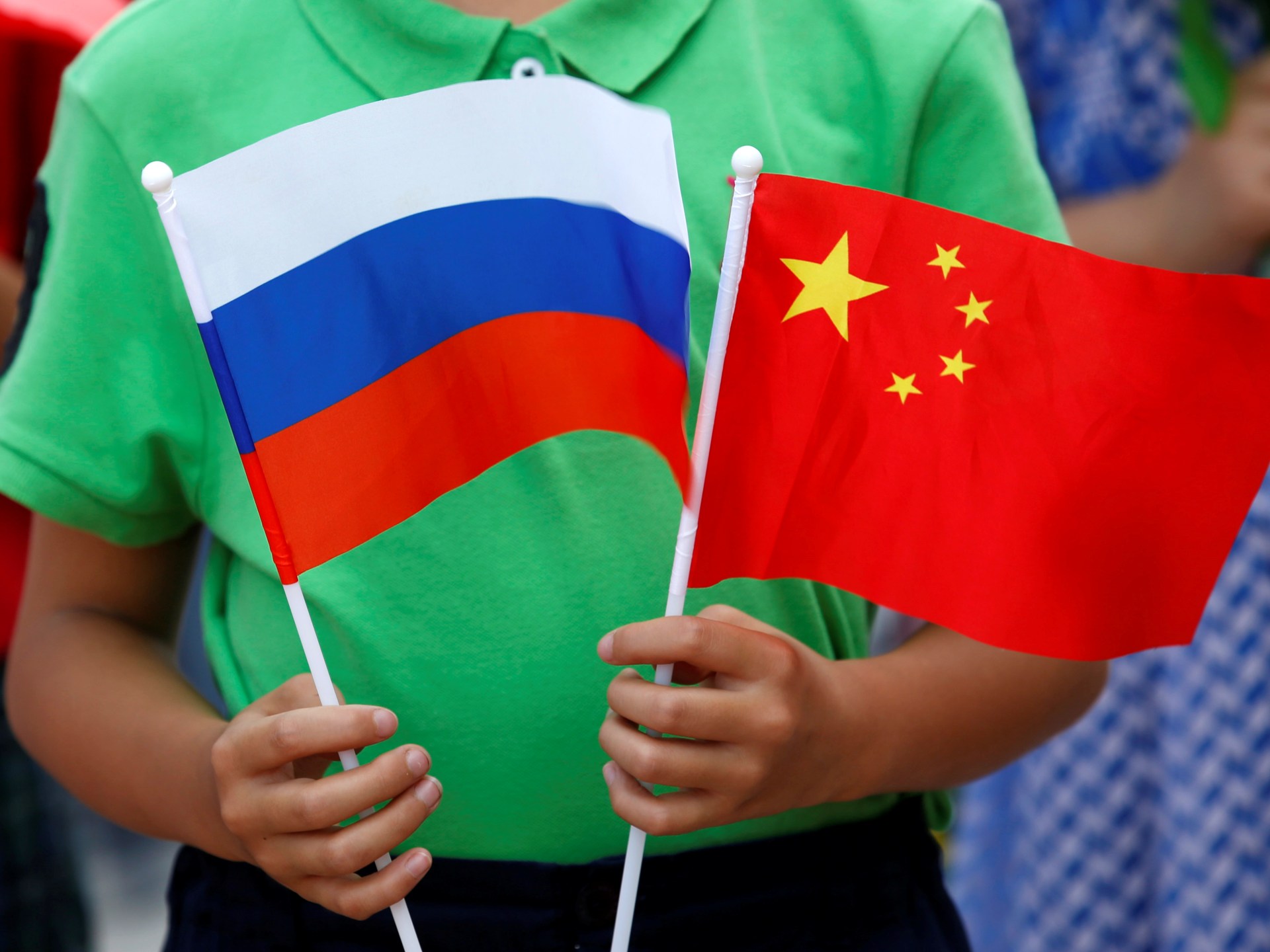
Russia and China have criticised the US and Israeli attacks on Iran, with Moscow saying it had seen no evidence that Tehran was developing nuclear weapons, and Beijing demanding an immediate halt to the joint attacks.

Chinese Minister of Foreign Affairs Wang ⁠Yi told his Israeli counterpart, Gideon Saar, on Tuesday that the attack on Iran came as negotiations between Washington and Tehran had “made significant progress, including addressing Israel’s security concerns”, China’s Foreign Ministry said in a statement.

Recommended Stories

list of 4 itemsend of list

“Regrettably, this process has been interrupted by military action. China opposes any military strikes launched by Israel and the US against Iran,” Wang told the Israeli foreign minister during a phone call, according to the ministry.

“China calls for an immediate cessation of military operations to prevent the further escalation and loss of control of the conflict,” Wang said.

“Force cannot truly solve problems; instead, it will bring new problems and serious long-term consequences,” he added.

According to the Chinese Foreign Ministry, Saar agreed to a request from Wang to take “concrete measures to ensure the safety of Chinese personnel and institutions” in Iran.

The call on Tuesday with Israel and Beijing’s apparent efforts to stabilise the spiralling regional situation followed calls Wang made on Monday to discuss the conflict with the foreign ⁠ministers of Iran, Oman and France.

‘US doesn’t attack those who have nuclear bombs’

Russian Foreign Minister Sergey Lavrov also criticised the US and Israel on Tuesday, saying their war on Iran could lead to the very outcome they claimed they wanted to prevent: nuclear proliferation.

Lavrov told a news conference that the logical consequence of the US and Israel’s actions could be that “forces will emerge in Iran… in favour of doing exactly what the Americans want to avoid – acquiring a nuclear bomb”.

“Because the US doesn’t attack those who have nuclear bombs,” Lavrov said.

Lavrov also said that Arab countries could now join the race to acquire nuclear weapons, given the experience of recent days and “the nuclear proliferation problem will begin to spiral ⁠out of control”.

Israel is widely seen as the Middle East region’s only nuclear-armed state, which it neither confirms nor denies.

“The seemingly paradoxical declared noble goal of starting a war to prevent the proliferation of nuclear weapons could stimulate completely opposite trends,” he said.

Lavrov, who said that Moscow had still seen no evidence that Iran was developing ⁠nuclear weapons, spoke with his Iranian counterpart, ⁠Abbas Araghchi, on Tuesday, and said that Russia stood ready to help find a diplomatic solution to the conflict, while rejecting the US and Israel’s use of “unprovoked military aggression” in the region.

As the US and Israel launched their first strikes on Iran on Saturday, Russia’s Foreign Ministry accused the close allies of carrying out a “premeditated and unprovoked act of armed aggression against a sovereign and independent UN member state”.

The two countries had hidden their true intention of regime change in Tehran “under the cover” of negotiations to normalise relations with Iran, the ministry said.

The US and Israel were “swiftly pushing the region toward a humanitarian, economic, and potentially even radiological disaster”, the ministry warned.

“Responsibility for the negative consequences of this manmade crisis, including an unpredictable chain reaction and spiralling violence, lies entirely with them,” the statement added.