The Cross River State House of Assembly has suspended Dickson Ovat Agbor, the member representing Obubra I State Constituency, indefinitely over alleged violent conduct.
The decision was reached during the plenary on Thursday following a motion moved by Davies Etta and seconded by Francis Asuquo.
In the motion, the assembly strongly condemned the alleged violent behaviour involving Agbor, describing it as conduct unbecoming of a lawmaker and contrary to the ethical standards expected of members of the legislative arm of government.
After deliberations, the House resolved that Agbor be placed on indefinite suspension from all legislative activities.
READ ALSO: Cross River Assembly Removes LG Chairman, Orders Bye-Election
The assembly also approved the constitution of a committee to investigate the matter and report its findings back to the House for further legislative action.
Following the resolution, Agbor was escorted out of the chamber by the sergeant at arms, in compliance with the directive of the House.
In his remark, the Speaker of the House, Elvert Ayambem, stated that the House remains committed to upholding discipline, dignity, and the integrity of the legislature.
Ayambem emphasized that members of the assembly must conduct themselves in a manner that reflects the trust reposed in them by the people.
The United States-Israeli war on Iran is estimated to have cost Washington $3.7bn so far in its first 100 hours alone, or nearly $900m a day, driven largely by the huge expenditure of munitions, according to new research.
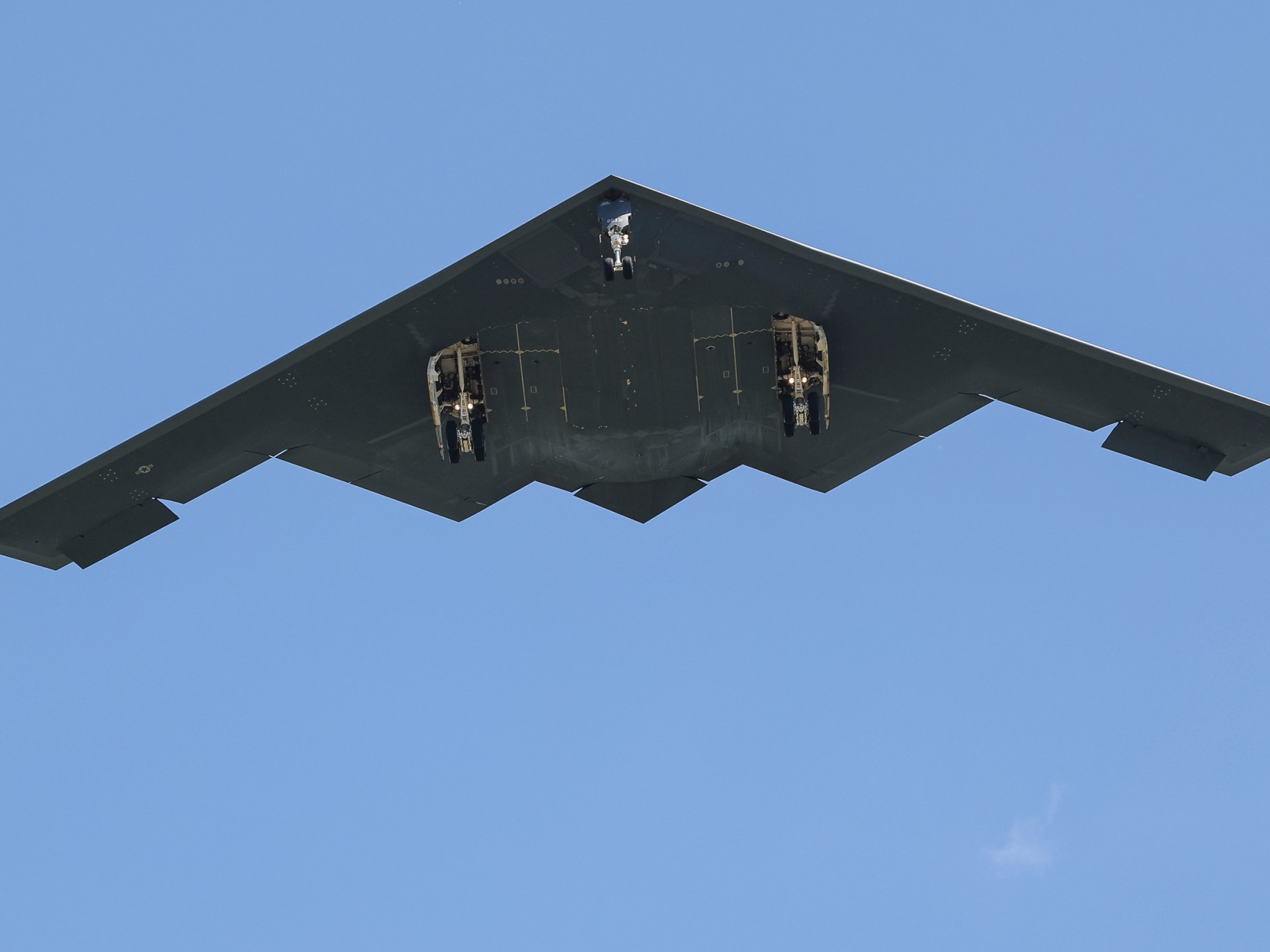
An analysis by Washington-based think tank the Center for Strategic and International Studies (CSIS) underlined the colossal cost of the war, which entered its seventh day on Friday, as the US attacks Iran with stealth bombers and advanced weapons systems.
Recommended Stories
list of 4 itemsend of list
Researchers Mark Cancian and Chris Park said only a small amount of the estimated $3.7bn cost of the war in the first 100 hours – or $891.4m each day – was already budgeted for, while most of the costs – $3.5bn – were not.
That meant the Pentagon would likely need to request more funding soon to cover the unbudgeted costs, they said, which was likely to prove a political challenge for the Trump administration and provide “a focal point for opposition to the war,” they said.
Domestic cost-of-living concerns, inflation, and now a knock-on effect of rising gas prices due to the conflict are likely to further diminish support among US citizens for the war. It is also dividing Trump’s “America First” base, which he had promised in his presidential campaigns to not enter “foreign wars”.
Noting that the US Department of Defense had released limited specifics on its operations, the researchers said their analysis drew on Congressional Budget Office (CBO) estimates of the operations and support costs for each unit, adjusting for inflation and unit size, and adding 10 percent for costs of “a higher operational tempo”.
Their analysis said the US had expended more than 2,000 munitions of various types in the first 100 hours of the war, and estimated it would cost $3.1bn to replenish the munitions inventory on a like-for-like basis, with the costs increasing by $758.1m a day.
Unbudgeted costs ‘substantial’
United States Defense Secretary Pete Hegseth has said that the US bombardment on Iran is “about to surge dramatically”, entailing “more fighter squadrons … more defensive capabilities” and “more bomber pulses more frequently”.
The report’s authors said that while air campaigns typically settled to a less frenetic pace after the intense early period of a conflict, “nevertheless, the unbudgeted costs here will be substantial”.
They said this was unlike the recent US operations that led to the abduction of Venezuela’s Nicolas Maduro, where most costs were already in the budget.
“That means that the [Department of Defense] will need additional funds at some point because the level of budget cuts needed to fund this conflict internally would likely be politically and operationally difficult,” said the report.
It said the Trump administration might decide to ask for a supplemental appropriation to cover the war and any other unexpected expenses across the government, as the George W Bush administration had done at the beginning of the wars in Iraq and Afghanistan.
“The political challenge for the administration will be that any funding action will become a focal point for opposition to the war,” it said.
The human cost
There has already been a huge human cost to the war.
More than 1,332 people have been killed so far in Iran since the US and Israeli bombardment began on Saturday, according to the Iranian Red Crescent, with UNICEF saying at least 181 children are believed to be among the dead.
In Lebanon, the death toll from Israeli attacks this week has risen to at least 123 people, the Lebanese Ministry of Public Health said, as a new wave of strikes pounded the country, in one of the fiercest fronts in the wider war.
Nizaar Kinsella, Football reporter, Dale Johnson, Football issues correspondent and Chris Wathan, BBC Sport Wales
7 Comments
Loved by their fans but loathed by rivals, free‑spending Wrexham have done to the English Football League what Chelsea did to European football in 2003.
The Welsh club’s rise from the fifth‑tier National League to the Championship has been dramatic, and they have now reached the FA Cup fifth round for the first time in 19 years – hosting a glamour tie against Chelsea on Saturday, live on BBC One and BBC iPlayer (17:45 GMT).
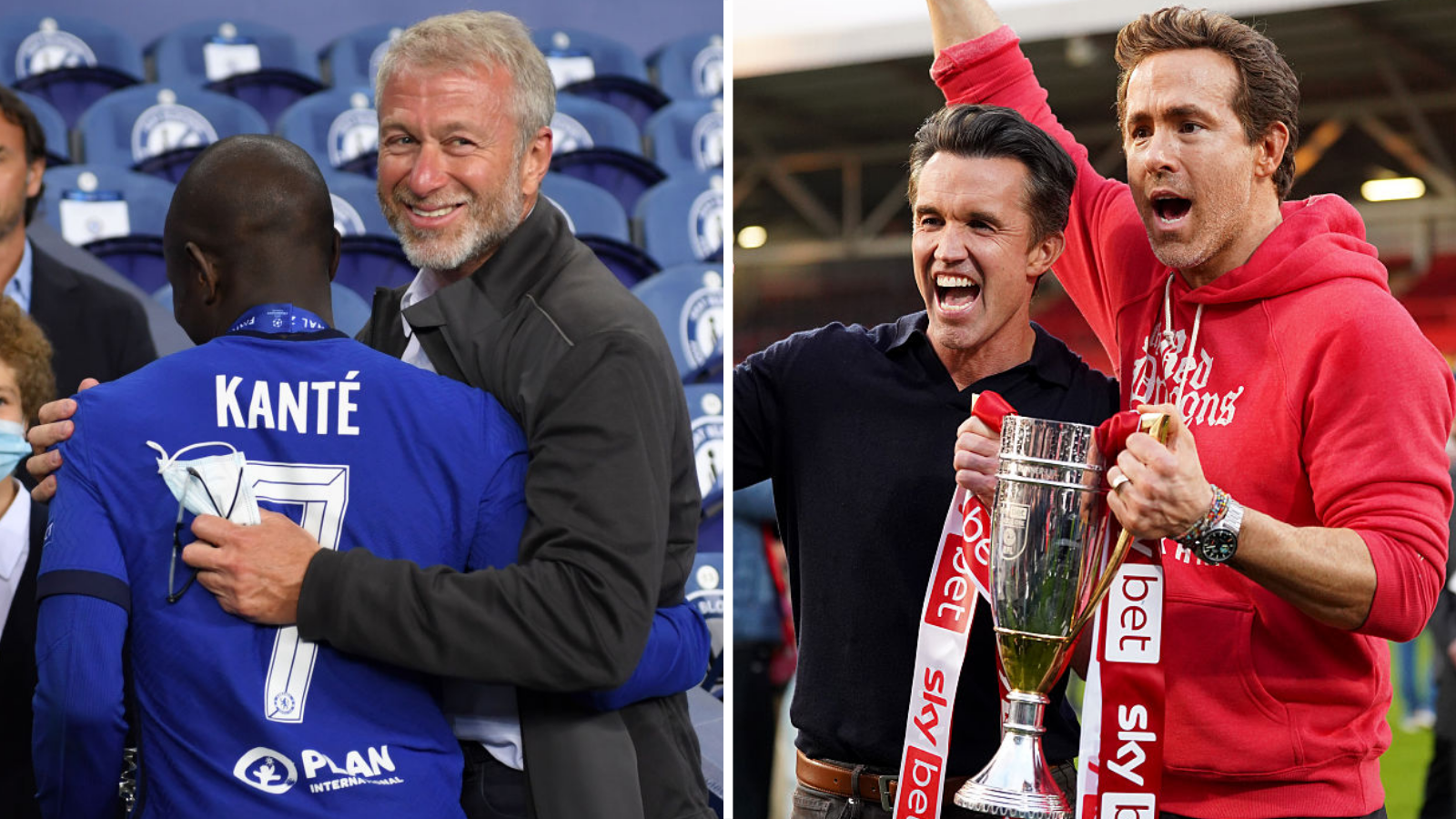
The match, one of the biggest in Wrexham’s 162-year history, comes after significant financial backing from Hollywood owners Ryan Reynolds and Rob McElhenney, who bought Wrexham for a nominal amount in 2021. That investment has prompted accusations from rivals that the club are buying success.
Chelsea faced similar criticism in 2003 when a little-known Russian oligarch, Roman Abramovich, transformed the club by buying it for £140m and writing off £80m of debt. Using his private wealth, Abramovich did not need to balance the books and spent £121.3m on 11 players in his first summer in charge.
Some argue his arrival paved the way for the Abu Dhabi‑backed takeover of Manchester City and Qatar’s acquisition of Paris St‑Germain, moves that prompted the Premier League and European football authorities to introduce financial controls.
Players, infrastructure and their own John Terry
Getty Images
In simple terms, a major financial investment has brought success on the pitch.
Wrexham have strengthened their first team with significant signings. Striker Paul Mullin (currently on loan at Bradford City), score 38 goals as he helped end the club’s 15‑year stay in the National League as champions in 2023.
Beating rivals to experienced players such as Steven Fletcher and James McClean has been owed in part to the substantial wages on offer. This season, Wrexham shattered their transfer record to sign Nathan Broadhead from Ipswich Town in a deal worth up to £10m.
Yet, just as Chelsea had John Terry, at the heart of the project is academy‑produced defender Max Cleworth.
Wrexham chief executive Michael Williamson told BBC Sport at the FT Business of Football Summit: “You saw in this last transfer window, going from League One to the Championship, we brought in 13 new players, right? Which is a massive change.
“People say, ‘Oh, you had a transfer market where your net spend was £30m’. Well, that’s because we had no players we could sell. Norwich probably spent just as much, if not more, but they also sold a lot of players – same with Ipswich.
“Max Cleworth was playing with us in the National League and now has the most minutes for our club in the Championship. So it’s about building the foundation and then adding the supplements.”
Not everyone likes missing out on transfers – Bayern Munich’s former chairman Karl-Heinz Rummenigge called on the European Union to regulate the spending, while then Shrewsbury Town manager Gareth Ainsworth said it was “not fair” to be competing with Wrexham because of “all the money they had”.
As the Abramovich playbook showed, spending must come at all levels – and happen quickly. Chelsea moved from a second‑rate training ground at Harlington, shared with Imperial College, to a state‑of‑the‑art facility, invested heavily in their academy and women’s team, and made two attempts to redevelop Stamford Bridge under their former owner.
Wrexham, meanwhile, operate a Category Three academy but aim to reach Category One.
Their women’s team is also receiving increased investment, moving to semi‑professional status and competing for the Welsh league title after beating rivals Cardiff City in the Welsh League Cup. They also bought them a stadium.
Chelsea’s visit also exposes the strains of Wrexham’s rapid growth, with about 250 media representatives expected – far above the usual 80 at Championship matches.
“If we arrive in the Premier League, there are things we’ll have to do to other stands in relation to broadcast, building out TV gantries and providing media spaces,” Williamson added. “That would be the next kind of infrastructure investment.”
Only three stands will remain open at the 10,600‑seat Stok Cae Ras until the new Kop stand opens next April, taking capacity to more than 18,000.
“The Kop stand will have new amenities, fan engagement areas and an iconic design for the town, city and club,” Williamson said.
Wrexham’s next “North Star”, according to Williamson, is hosting matches as part of the UK bid for the 2035 Women’s World Cup. That would require expanding capacity further to about 24,000.
Chelsea were copied, now Wrexham are
Getty Images
The number of international supporters around Wrexham, like Chelsea, highlights how they are bigger than ever, although they started from a much lower base.
Chelsea had financial issues of their own under former owner Ken Bates and a 50‑year top‑flight title drought, while Abramovich was surprised by the level of attention football brought him after buying the club.
By contrast, Wrexham supporters famously clubbed together to raise £100,000 in 2011, saving the club before passing it on to Reynolds and McElhenney, following a period of suspicion after being burned by previous owners. It is why their visible investment and presence in the local community has been welcomed.
Having put up £2m initially, Wrexham are now valued at a reported £350m, attracting further minority investors, including the Allyn family and Apollo Sports Capital.
Two lucrative overseas friendlies against Chelsea underlined how their niche but growing fanbase can match Premier League opposition, having also faced Manchester United and Bournemouth in the United States. On Wednesday they announced they will be back in the US for pre-season for matches against Premier League trio Leeds, Liverpool and Sunderland.
Meanwhile, record-breaking revenues were reported in their last accounts while in League Two, behind only five Championship clubs despite being two divisions lower.
“You can’t not be excited about the growth in the brand and profile of Wrexham in the United States – it’s impossible to ignore,” CBS executive vice‑president of programming, Dan Weinberg, told BBC Sport in the summer. CBS broadcasted all Wrexham’s League One matches live in the US, making them the first club in the third tier to achieve that feat.
Weinberg added: “We showed more Wrexham matches – just as we showed more EFL matches – in the United States than ever before. Wrexham is a clear example of a club with outsized appeal in the US market because of everything Rob and Ryan have done to grow their brand.”
Since Wrexham’s 2021 takeover, rapper Snoop Dogg has bought into Swansea City, former NFL quarterback Tom Brady into Birmingham City and fellow NFL star JJ Watt into Burnley. YouTuber KSI became also became minority stakeholder in non-league London club Dagenham & Redbridge on Tuesday.
Tens of thousands of people are scrambling to leave the Middle East after being left stranded by the United States-Israeli war on Iran, with some wealthy travellers spending huge sums to charter private flights out of the region.
Much of the region’s airspace remains closed amid the conflict, with only a limited number of flights departing from a handful of regional gateways, including Dubai in the United Arab Emirates, Saudi Arabia’s capital Riyadh, and Oman’s Muscat.
Recommended Stories
list of 4 itemsend of list
“People are panicking now,” said Kirti Arora, 37, who was left stranded in Qatar’s capital, Doha, along with her husband while they were en route from India’s capital, New Delhi, to Spain’s Madrid. “Many are desperate to leave.
“We don’t wish to leave the hotel and plan our own trip or route as there’s a lot of stress at borders and explosions are happening at odd hours,” Arora said.
More than 23,000 flights have been cancelled since the US and Israel launched attacks on Iran on Saturday, according to analytics firm Cirium.
Evacuations
Dozens of countries, including the US, the United Kingdom, France and Germany, have organised chartered flights to repatriate their citizens. But those efforts have been hampered by logistical challenges amid the near-shutdown of commercial aviation in one of the world’s busiest regions for international travel.
The US Department of State said on Thursday it would ramp up charter flights for its citizens, amid criticism of the Trump administration’s lack of assistance for stranded travellers. Nearly 20,000 US citizens have returned to their country since the conflict began, according to the State Department, which announced the departure of its first chartered flight on Wednesday.
On Thursday, French authorities, who are assisting with the repatriation of 5,000 French citizens, said a government-chartered Air France flight was forced to turn back to the UAE due to missile fire near Dubai.
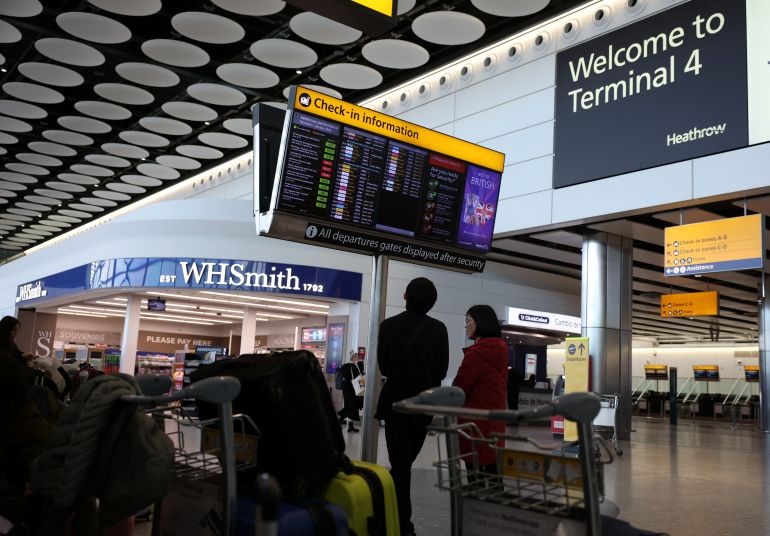
Travellers check a departure board at Heathrow Airport Terminal 4, in London, UK, on March 2, 2026 [Isabel Infantes/Reuters]
More than 138,000 British nationals, most of them in the UAE, have contacted UK authorities for assistance since the outbreak of the conflict, according to the UK Foreign Office, though most of those are not expected to seek evacuation from the region.
So far, British authorities have organised three chartered flights, the first of which landed in London on Friday after departing Muscat nearly 24 hours behind schedule.
Canadian Foreign Minister Anita Anand said on Wednesday that she expected chartered flights for about 2,000 stranded citizens to depart from the UAE within the next 72 hours.
“The cost to travel to Oman has become astronomical,” said British-Canadian national Dilini Reynold, who was left stranded in Dubai while on vacation. “People are really taking advantage of the situation. The tickets from Oman to London are ridiculously expensive, too.”
Reynold said he hoped to leave Dubai on Sunday after booking a one-way ticket for about 1,000 pounds ($1,337).
“I have also asked a British travel agent to keep a lookout for tickets on Etihad just in case,” he said. “Emirates tickets over the weekend are going at 4,000 pounds ($5,348) one-way. Everything is so ridiculously pricey. I feel the aviation authority should really work on adding more repatriation flights out of Dubai.”
Emirates airline planes are parked on the tarmac at Dubai International Airport in Dubai, the UAE, on March 2, 2026 [Fadel Senna/AFP]
Amid the travel chaos, travellers with deep pockets have turned to private jet brokers to charter their own flights out of the region.
Altay Kula, sales and market director at JET-VIP in France, said it has been difficult to keep up with demand due to a mismatch between inquiries and the supply of aircraft.
Kula said scheduling a large-cabin business jet from the Gulf to Europe cost between $120,000 and $200,000, with the company typically aiming to organise departure within 12 to 24 hours of an inquiry.
“From our perspective as a charter brokerage, we are also seeing travellers who would not normally consider private aviation turning to this option,” Kula said. “With fewer commercial alternatives available and increased uncertainty around schedules, private jets are becoming, in some cases, one of the only ways for passengers to secure a reliable departure within a short timeframe.”
‘First come, first served’
Adam Steiger, president of Air Charter Advisors, said his company had seen a tenfold rise in enquiries, from both residents and companies looking to relocate families and essential staff amid the regional conflict.
“I would describe the mood among our clients as one of ‘calculated urgency’,” Steiger said. “While there isn’t outward panic, there is a clear desire to beat further potential airspace closures. Our clients are prioritising certainty and safety over cost at this moment.”
Muhammad Umar Malik, manager of Prime Jet Services, said his company had organised 10 flights, with prices starting at $100,000 for a small jet departing Dubai or Muscat for the Turkish city of Istanbul.
“There is a great increase in demand; however, this doesn’t reflect in a surge in bookings as most do not have the means to afford this, and we have lost usual business,” Malik said, explaining that local people were not flying at this time in the region, where the Muslim holy month of Ramadan is being observed.
“The mood is the ones who fly are the ones who are panicking,” Malik said.
Referring to the level of competition for private flights, Alexander Graham, director of Luxe Jets, told Al Jazeera: “It is first-come, first-served.
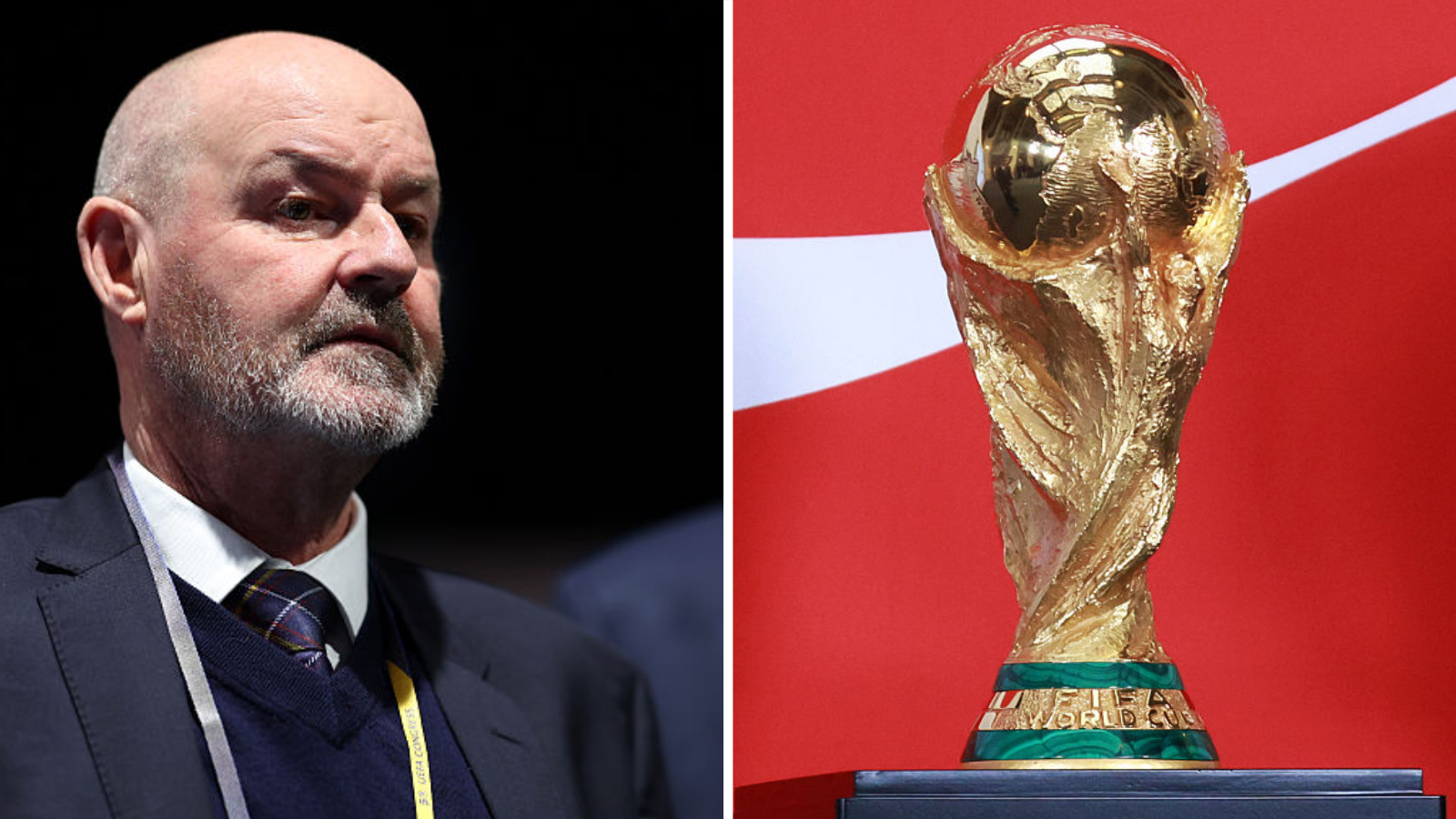
One hundred and seven days on and we’re still pinching ourselves. It wasn’t a dream. Scotland are going to the World Cup.
And 100 days from now, they will end their 28-year wait and kick a ball on the biggest stage of all once again against Haiti on Sunday, 14 June, 02:00 BST – live on the BBC.
As the clock counts down, things have become a little more real. But only a wee bit.
Scouting reports of stars from Brazil, Morocco and Haiti are being hastily fired around group chats, Steve Clarke has sorted his Scotland squad’s base camp in Charlotte and the Tartan Army know they can don their sporrans in stadiums stateside.
2 days ago
4 days ago
Who’s a goer in goals?
As has been the case of late, Scotland are suffering from something of a goalkeeper crisis.
Craig Gordon was heroic between the sticks back in November, despite conceding three goals in Athens and two against the Danes at Hampden.
However, the 43-year-old has been all-but ruled out of this month’s friendlies against Japan and Ivory Coast with a shoulder injury.
The Hearts goalkeeper has missed the Scottish Premiership leaders’ past two matches, having sat on the bench for the four proceeding games.
That’s also where Angus Gunn has been spending his time recently. Although it is an improvement given he missed 10 Premier League matchday squads for Nottingham Forest either side of a knee injury in November and December.
Liam Kelly has kept two clean sheets in his two games for Rangers since Scotland qualified for the World Cup (both in the Scottish Cup), while Falkirk’s Scott Bain remains the only goalkeeper Clarke has recently included in his squads to be playing regular football.
Who could make a late run?
It will need to be a pretty decent run to catch the eye of the fiercely loyal Clarke, mind you.
For Euro 2024, Celtic winger James Forrest timed his upturn in form to perfection and made the plane to Germany, while Bristol City defender Ross McCrorie was the only uncapped player there.
Ryan Jack was something of an outsider, given his lack of game time at Rangers, but the midfielder had long been one of Clarke’s trusted servants.
Current Bournemouth winger Ben Gannon-Doak, then uncapped, was named in the squad, but was forced out by an injury.
Other than that, many would have comfortably been able to name Clarke’s squad. Nothing too much has changed since then, with the head coach seldom shaking up his squad.
He does still sometimes surprise us – and has previously said “there’s always room for an outsider” – and this month’s double-header could allow for a shock inclusion or two since there are a few regulars struggling with injury.
9 hours ago
3 days ago
Getty Images
Further back, Stephen O’Donnell has made a case for a recall with his fine form at high-flying Motherwell. And the 33-year-old isn’t the only Steelman involved in the conversation among punters, with uncapped Stephen Welsh and one-time cap Paul McGinn also being touted.
All three have played a pivotal role in the Fir Park side’s incredible defensive record – conceding just 18 goals in 28 games – this season. It’s one of the best in Europe.
Another side making folk sit up across the continent are Heart of Midlothian, with Harry Milne one of the Premiership leaders’ standout performers.
What’s going on with the preparations?
While the squad selection is very much in the head coach’s hands, there are a few things outside his control causing a bit of a stir.
Most notably, the dispute between Foxborough town chiefs – where the Gillette Stadium, which is due to host Scotland’s first two group games against Haiti and Morocco, is located – and those responsible for security funding over a reported shortfall.
However, Massachusetts governor Maura Healey insisted “the World Cup is going to happen”.
“It is going to be in Massachusetts,” she said. “It’s going to be great to have people come from all over the world and see our awesome state.”
Another state Scots will see is New Jersey. There’s just a little uncertainty over the opposition.
Although it was not officially announced, it was understood Scotland’s final pre-tournament friendly was to be against Peru.
However, it appears Spain will now play Peru, forcing the Scots to find another opponent for the fixture on 6 June.
Clarke expressed his desire to face a South American nation and Venezuela have been widely linked as the replacements.
There will also be a new face opposite Clarke for Scotland’s second match at the finals, in the form of Mohamed Ouahbi, after Morocco parted ways with head coach Walid Regragui on Thursday.
The 50-year-old led them to the semi-finals of the 2022 World Cup – the first African side to reach that stage of the tournament – and to the final of this year’s Africa Cup of Nation, which was held in Morocco.
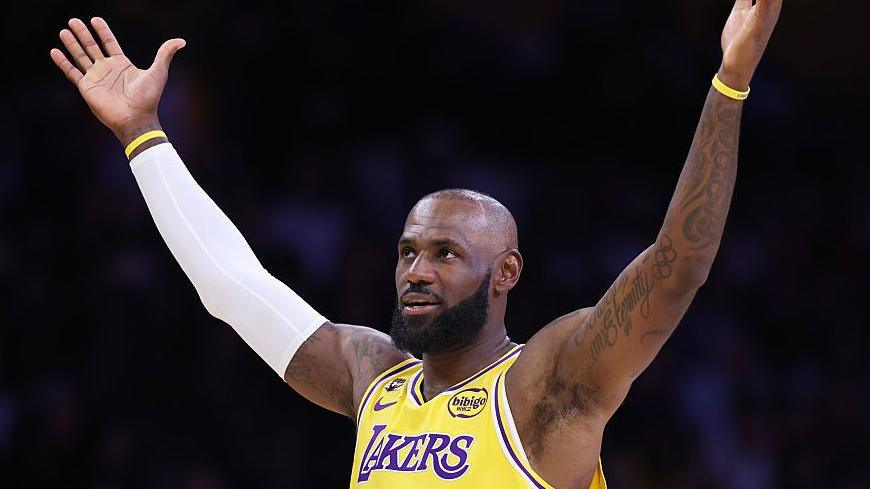
LeBron James surpassed Kareem Abdul-Jabbar for the most field goals scored in NBA history as the Los Angeles Lakers lost at the Denver Nuggets on Thursday.
James scored 16 points for the Lakers in the 120-113 defeat and passed Abdul-Jabbar’s tally of 15,837 during the first quarter.
The 41-year-old, who is playing in an unprecedented 23rd NBA season, passed Abdul-Jabbar to become the top scorer in NBA history in February 2023.
Last year he became the first player to reach 50,000 points combined in the regular season and post-season, and currently has 43,127 in the regular season alone.
“Being mentioned with some of the greatest to ever play this game has always been humbling,” said James, the league’s four-time Most Valuable Player.
“I grew up watching, reading [about], idolising a lot of the greats, and if I was able to be part of the NBA, I wanted to put myself in position that I can be named with some of the greats by doing something right.
“It’s a pretty cool feat, but it’s hard for me to kind of wrap my head around it or what it looks like.”
Lakers coach JJ Redick likened the evolution of James’ career to that of Bruce Springsteen, saying: “You get to the end and you’re like, ‘this guy’s greatest hits are like insane’.
“And LeBron’s greatest hits, he just keeps adding to them. He just plays and plays and plays and the greatest hits, he’s got a hell of a catalogue.”
James passed Abdul-Jabbar’s points record before field goals as three-point shots were introduced midway through the NBA legend’s career.
The six-time champion spent most of his 20-year career with the Lakers and retired in 1989 having scored 55.9% of his 28,307 shots. James has a 51.6% scoring rate.
The four-time champion is set to claim another record as Thursday’s game was his 1,606th in the regular season, putting him five behind Robert Parish.
James earned his 22nd All-Star selection this year and says he has not decided whether he will continue playing next season.
Fellow All Stars Nikola Jokic and Jamal Murray each scored 28 points for Denver, who stayed fifth in the Western Conference standings, one spot above the Lakers.