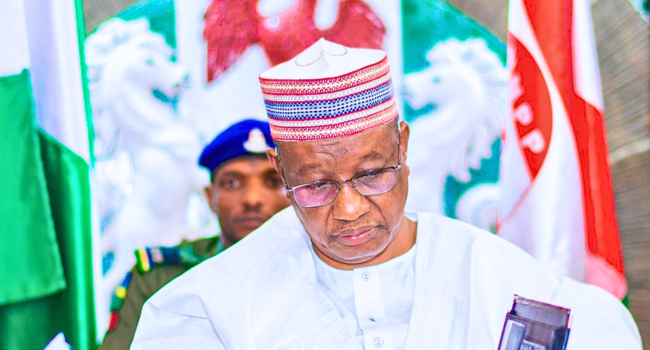
The Kwankwasiyya Movement has cautioned the Kano State House of Assembly and the state government against proceeding with moves to impeach the Deputy Governor of Kano State, Aminu Abdussalam Gwarzo, warning that such action could deepen political divisions in the state.
In a statement issued on Friday, the spokesperson of the movement, Dr. Habibu Sale Mohammed, described the impeachment process as troubling and urged political actors in the state to avoid actions that could be perceived as politically motivated.
“The people of Kano are closely watching the unfolding events, and there is growing concern that the impeachment move may be driven more by political considerations than by genuine constitutional necessity,” he said.
According to him, although the constitution provides mechanisms for legislative oversight, impeachment remains one of the most serious powers available to lawmakers and must not be used for political convenience.
“Impeachment must never be reduced to a tool for settling political disagreements or rearranging political alignments. It must be guided strictly by justice, fairness and the interest of the people,” he added.
READ ALSO: Kano Assembly Moves To Impeach Deputy Gov Gwarzo Over Alleged ₦1.6bn Funds Diversion
Dr. Sale Mohammed also reminded the state leadership that the electoral victory that brought the present administration to power was the result of the collective efforts of thousands of Kwankwasiyya supporters across the 44 local government areas of the state.
“The victory that produced this government was not the achievement of any single individual. It was the product of the sacrifices, loyalty and unity of Kwankwasiyya faithful across Kano State,” he said.
He warned that actions perceived as targeting key figures within the administration could send the wrong message to supporters who worked tirelessly during the elections.
“Those in power must remember the collective struggle that made their success possible. Political authority should never be used in a way that creates the impression of abandoning the alliances and loyalties that built the movement,” he said.
The spokesperson further urged members of the Kano State House of Assembly to exercise their constitutional responsibilities with caution and independence.
“The authority of the Assembly comes directly from the people, and such authority must be exercised with wisdom, fairness and a clear sense of responsibility to the electorate,” he said.
He added that political actions perceived as persecution could create unnecessary tension within the state’s political landscape.
“History has shown that when political power is used in ways that appear unjust or vindictive, the people ultimately deliver their verdict through democratic means,” he said.
Dr. Sale Mohammed stated that the Kwankwasiyya Movement remains committed to peace, democratic stability and the protection of the political mandate given by the people of Kano.
Who: India vs New Zealand What: ICC 2026 Men’s T20 World Cup final Where: Narendra Modi Stadium, Ahmedabad, India When: Sunday, March 6, 7pm (13:30 GMT) How to follow: Al Jazeera’s live coverage begins at 08:30 GMT.
Defending champions India have the chance to become the first side to win the T20 World Cup on three occasions when they face New Zealand on Sunday in Ahmedabad.
Recommended Stories
list of 4 itemsend of list
The 2026 edition, which began on February 7, concludes with the favourites – and tournament co-hosts – facing the dark horses in the Kiwis in the finale.
The New Zealanders have their own piece of history on their mind, as they seek their first T20 World Cup crown.
Al Jazeera Sport takes a closer look at the game.
What are India’s strengths and weaknesses?
Samson, Bumrah and the 12th man continue to excel
The holders head into the final in the same manner that they started the tournament – as red-hot favourites.
Their performances in between, however, will offer great hope to New Zealand.
The clear strength for India has been the depth that they can call upon. Abhishek Sharma is the highest-ranked T20 batter in the world, but has had an underwhelming tournament – enter Sanju Samson.
With two fifties in his last two innings, Abhishek’s opening partner has been key to India’s revived hot streak that has propelled them to the final.
Samson has slotted in between Abhishek and Ishan Kishan, who remains a powerful option at the top of the order, but the sheer destruction of the former – as well as breaking up the left-handed combination of the latter two – has proved the game-changer with the bat for India.
Jasprit Bumrah’s final over against England, conceding six runs in the tightly contested semifinal, was considered the defining moment in the victory.
Even Player of the Match Samson afterwards conceded the award should have gone to Bumrah, as India would not have been in the final without him.
The right-arm seamer’s accuracy, especially under pressure, is unerring. Top-ranked T20 bowler Varun Chakravarthy, who has claimed 12 victims, leads the spin attack.
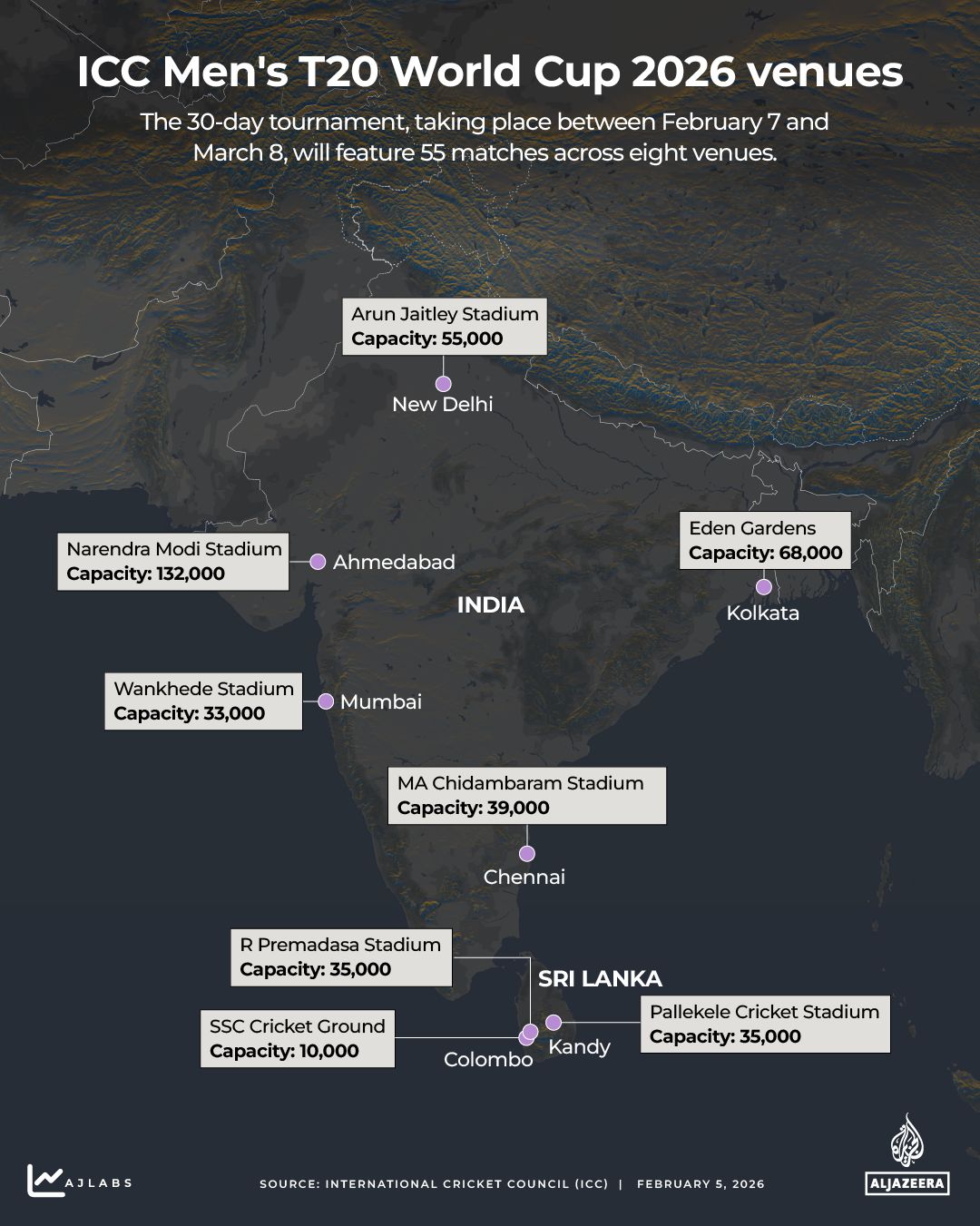
Home support in a 35,000-strong Wankhede stadium was also seen as a huge factor in the semifinal win for India, although there was a deafening silence and England ran the hosts close.
Now, “the 12th man on the field” for India, as the crowd is often known, will see a 132,000 support mostly cheering on the Boys in Blue.
Shaky batting continues to dog India
Samson’s brilliance has not fully masked the fact that the rest of the top order are struggling to find form.
Abhishek came into the tournament as the world’s number one T20 batsman, but then had three consecutive ducks.
A fifty against Zimbabwe in the Super Eights showed glimpses of his talent, but he fell cheaply against West Indies and England.
What are New Zealand’s strengths and weaknesses?
Better than the sum of their parts
When New Zealand, one of the smallest nations to feature at major ICC events, have been at their best over the years, it has been when they have strung together a tightly knit team.
This edition is no different.
Although not including some of the stellar names that have donned the Black Cap over the years, the Kiwis have strength across their one to 11 that is more than capable of taking down any side, as South Africa learned to their cost in the semifinals.
Mitchell Santner’s captaincy, let alone his world-renowned spinning ability, perhaps best encapsulates the team. Understated but undeterred by the glitz, glamour and ego of some of their more illustrious opponents.
Back by batting all-rounders Glenn Phillips and Rachin Ravindra, Santner is able to draw on all-round ability at any given time.
The power and destruction offered by the opening pair of Tim Seifert and Finn Allen was on full display against the Proteas in the semifinals, in particular for the latter with his astonishing century.
The depth of matchwinners extends to the bowling with the pace of Lockie Ferguson, and the guile of fellow seamers, Matt Henry and Jacob Duffy, while Ish Sodhi and Cole McConchie, who came to the fore with 2-9 against South Africa, are ably supporting their skipper in the spin department.
Fielding
If you want to see a real outstanding fielding display over the last decade or more, then New Zealand will continually feature prominently.
Phillips is the stand-out fielder in the world, and his ability perhaps pushes the Kiwis to be regarded as the best fielding side in the tournament.
Everything is made to look simple in the field, but the reputation for the spectacular – and often gravity-defying acrobatic efforts – has made Kiwi fielding almost worth the admission price alone.
Lower-order slip-ups
As high as New Zealand can climb, the lack of a truly superstar status can also see them fall short on occasions.
Reaching the last four with two defeats to their name – the only side to have lost that many beyond the Supers Eights – is to be admired, but is also a warning.
The power-hitting at the top of the order is perhaps a slight imbalance towards the middle-order, where the Kiwis may need some players to step up – in particular a finisher, but what better time to come to the fore than in the final.
How have India fared at the 2026 T20 World Cup?
India have endured a mixed tournament so far, with their top-order batters failing to fire.
A below-par victory in their opening group-stage match against the USA was quickly forgotten, following a comprehensive win to seal qualification against rivals Pakistan. With their progress to the second phase assured, India sealed top spot with a third win in three by beating the Netherlands.
For India, the Super Eights began with a defeat at the hands of South Africa, the side they overcame in the 2024 final, making the match against Zimbabwe a must-win.
Abhishek Sharma returned to form with a fifty at the top in a 72-run win against the Africans; however, all-rounder Hardik Pandya was named Player of the Match for his half-century and his performance with the ball.
The crunch match, however, came against West Indies, with the winner claiming the second qualifying spot from the group.
Sanju Samson produced one of the calmest innings under the pressure of a run chase to send India into the semifinals with a five-wicket win in Kolkata.
Samson, who returned to the Indian playing XI in the previous match after being overlooked for the three games prior to it, remained not out on 97 as India pulled off an impressive win in front of a packed Eden Gardens crowd on Sunday.
The right-hander produced just as sparkling an innings in the semifinal against England, striking 89 at Wankhede Stadium. Even though Jacob Bethell struck a century for the English, it was the Indians who held on for a seven-run win.
[Al Jazeera]
How have New Zealand fared at the T20 World Cup?
New Zealand began their campaign with a comfortable five-wicket win over Afghanistan, who failed to contain the Kiwis’ batting prowess. Their second match was the Finn Allen and Tim Seifert show as they crushed the United Arab Emirates by 10 wickets in their chase of 175.
Santner’s side were handed their first defeat by South Africa as they failed to contain the Proteas in pursuit of 176 and ended up losing by seven wickets. They wrapped up their group stage with a comfortable eight-wicket win over Canada.
Their first Super Eights game against Pakistan ended in a washout. The second one, against co-hosts Sri Lanka, was where New Zealand collected two crucial points and a healthy net run-rate to ensure they remained on course for the semis.
England made a late comeback to beat New Zealand in their final Super Eights match, but Pakistan’s failure to hand Sri Lanka a big defeat sealed the Blackcaps’ passage into the knockouts.
The semifinal against South Africa saw New Zealand ranked as heavy underdogs given their opponent’s unbeaten run. The formbook was thrown out the window, however, as the Kiwis claimed a crushing nine-wicket win against the Proteas.
What’s India’s best result at the T20 World Cup?
Winners: 2007, 2024
What’s New Zealand’s best result at the T20 World Cup?
Runners-up: 2021
Form guide: India
Last five games (most recent result first): W L W W W
Form guide: New Zealand
Last five games (most recent result first): W W W L W
India vs New Zealand: Head-to-head
Head-to-head record (T20Is)
Total matches: 30
India wins: 18
New Zealand wins: 11
Tied: 1
Team news: India
India are likely to stick with the same XI that sent them through to the final.
The Blackcaps are also likely to stick with the team that saw them beat South Africa.
Predicted New Zealand XI:
Tim Seifert (wicketkeeper), Finn Allen, Rachin Ravindra, Glenn Phillips, Daryl Mitchell, Mark Chapman, Mitchell Santner (captain), Matt Henry, Ish Sodhi, Lockie Ferguson, Jacob Duffy
How can I follow and stream the India vs New Zealand semifinal?
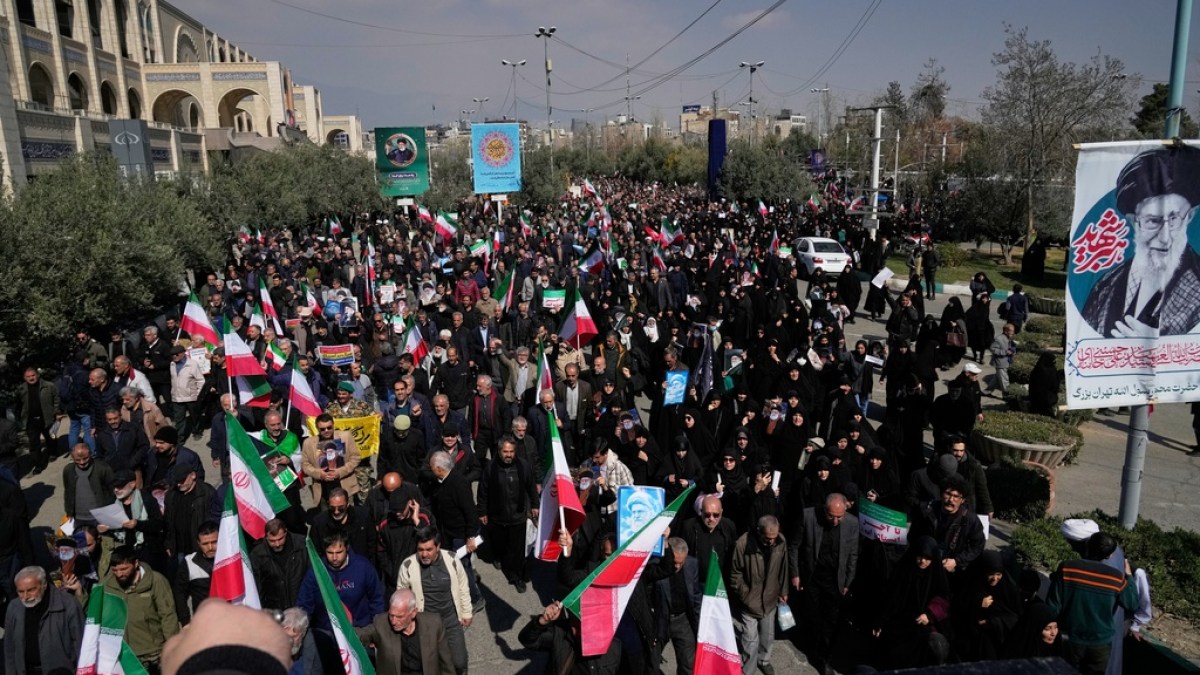
Iranian officials have rejected Donald Trump’s push to be involved in the selection of the country’s next leader, insisting that only Iranians can decide the future of their country.
Iran’s Parliament Speaker Mohammad Bagher Ghalibaf appeared to ridicule on Friday the US president’s assertion that he wants to have a say in appointing the successor of assassinated Iranian Supreme Leader Ali Khamenei.
Recommended Stories
list of 3 itemsend of list
“The fate of dear Iran, which is more precious than life, will be determined solely by the proud Iranian nation, not by [Jeffrey] Epstein’s gang,” Ghalibaf wrote on X, referring to the late sex offender who had ties to rich and powerful figures in the US.
Earlier on Friday, Iran’s Deputy Foreign Minister Saeed Khatibzadeh noted that under the US federal system, Trump has no say over the mayoral elections in New York.
“Can you imagine this colonial approach – that he would like to see democracy at home, but he would like to topple down the democratically elected president of Iran?” Khatibzadeh said at the Raisina Dialogue conference in New Delhi.
In recent days, the US president has repeatedly said that he would like the Venezuela scenario to play out in Iran – keeping the ruling structure in place, but replacing the leadership with one that is willing to fulfil Washington’s demands.
“I’m saying there has to be a leader that’s going be fair and just. Do a great job. Treat the United States and Israel well, and treat the other countries in the Middle East – they’re all our partners,” he told CNN on Thursday.
A day earlier, he told Axios that he has “to be involved in the appointment” of the new supreme leader as he was in selecting Venezuela’s President Delcy Rodriguez after US forces abducted her predecessor, Nicolas Maduro, in January.
Rodriguez previously served as Maduro’s vice president, but since rising to power, she has earned Trump’s praise after agreeing to allow the US to sell Venezuela’s oil and cutting off fuel exports to Cuba.
But experts have cast doubt on whether Trump could find an Iranian Rodriguez within the ruling system that appears to remain standing despite the intense US-Israeli air campaign.
“It’s just wishful thinking,” Sina Azodi, assistant professor of Middle East Politics at George Washington University, said of Trump’s push to play a role in selecting the next supreme leader.
Azodi told Al Jazeera that there may be varying views on relations with the US among the qualified candidates to replace Khamenei, but they are all loyal to the Islamic Republic system.
“You could make the argument that the next supreme leader would bring a different approach because it will most likely be one of the second generation revolutionaries; Ali Khamenei was a first generation revolutionary,” Azodi said, referring to the 1979 Islamic revolution.
“But again, Delcy Rodriguez does not exist in Iran.”
The next supreme leader will be selected by an elected council of 88 members known as the Assembly of Experts.
Trump has specifically voiced opposition to the possible appointment of Khamenei’s son Mojtaba, calling him a “lightweight”.
Earlier on Friday, Trump said any deal with Iran must lead to the country’s “unconditional surrender”.
US and Israeli officials have been claiming that Iran is suffering heavy blows, with Pentagon chief Pete Hegseth saying that Iranian leaders “can’t do anything” about the “death and destruction” Washington is unleashing on their country.
But officials in Tehran have projected defiance and confidence, saying their attacks on Israel across the Gulf will make the US regret launching the war.
“Trump still doesn’t realise what calamity he has brought upon himself and the American soldiers by martyring our Imam [Khamenei], and he wants to dictate terms to a nation,” Ghalibaf said on Friday.
Azodi said both sides are engaging in war propaganda. He added that while there is no doubt that the US and Israel have superior firepower, Iran has an ability to “absorb punishment” because of its size and sense of identity and culture.
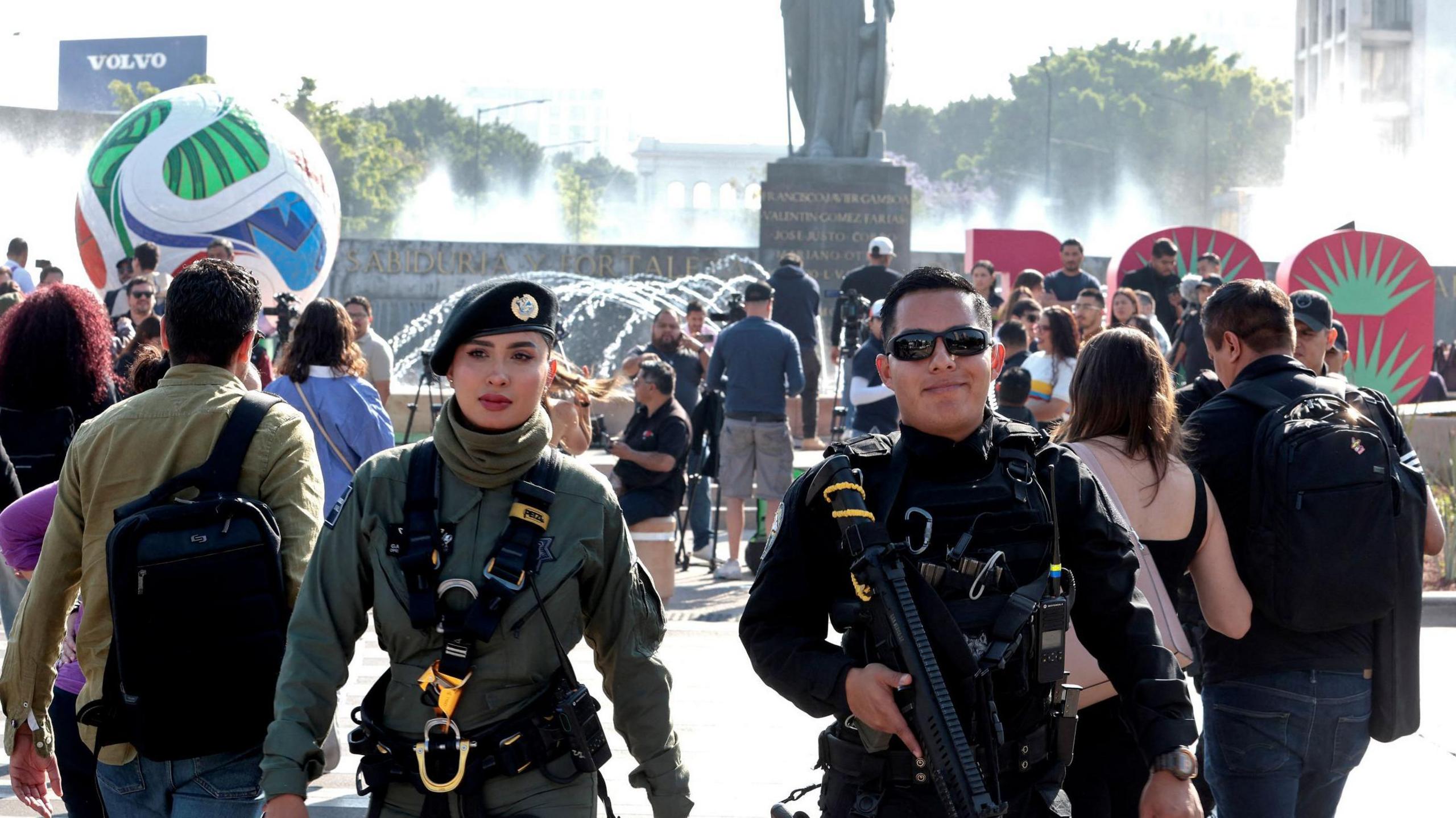
World Cup co-hosts Mexico have announced plans to deploy nearly 100,000 security personnel to protect fans at this summer’s tournament, amid ongoing drug cartel violence in the country.
Mexico, hosts alongside the United States and Canada, will stage World Cup fixtures across three cities – including Guadalajara, the capital city of Jalisco where the violence began last month and more than 12,000 people are reported missing.
Mexico will also host matches in Mexico City and Monterrey, both spared by the violence, when the World Cup is held between 11 June and 19 July.
The Jalisco New Generation (CJNG) drug cartel, one of the country’s most feared criminal organisations, has engaged in gun shootouts with the Mexican military, blocked roads and burned vehicles in response to the killing of its leader Nemesio Oseguera Cervantes – known as ‘El Mencho’ – in an army operation.
El Mencho was Mexico’s most wanted man and was also sought by the United States, which had placed a $15m bounty on him.
He was buried on Monday in a cemetery near the military base in Zapopan. On Friday, Mexico’s President Claudia Sheinbaum presented her plan to ensure the safe staging of the World Cup.
Fifa and Sheinbaum have insisted that the violence will have no impact on the World Cup, when millions of visitors are expected.
Mexico’s ‘Plan Kukulkan’, named after the serpent deity of the Mayan civilisation, covers the host cities and their nearby tourist destinations and will oversee a security deployment of “just over 99,000 personnel”, according to the head of Mexico’s World Cup co-ordination centre, Roman Villalvazo Barrios.
That figure includes 20,000 military personnel and 55,000 police officers, as well as members of private security companies, and involves around 2,500 military and civilian vehicles, 24 aircraft, anti-drone systems, and dogs trained to detect explosives and other substances.
Fifa president Gianni Infantino has said he feels “very reassured” that Mexico can still successfully stage World Cup games.
The opening match of the tournament between Mexico and South Africa will be in Mexico City.
If the Republic of Ireland come through the World Cup play-offs later this month, they would face South Korea in their first match in Guadalajara and hosts Mexico in Mexico City in another group game.
The United States Customs and Border Protection (CBP) agency has announced it will need an additional 45 days to set up a system to process refund requests for the tariffs recently struck down by the Supreme Court.
The announcement came on Friday as lawyers representing CBP were called to a closed-door meeting with Judge Richard Eaton from the US Court of International Trade.
Recommended Stories
list of 3 itemsend of list
Eaton had ruled on Wednesday that the US government owes refunds to importers who were charged tariffs under President Donald Trump’s use of the International Emergency Economic Powers Act (IEEPA).
The invocation of that law for Trump’s sweeping tariff campaign was deemed illegal in a February 20 Supreme Court decision.
In a court filing (PDF) on Friday, Brandon Lord, the director of CBP’s trade policies programme, indicated the agency would not be able to comply with the ruling from Eaton this week, which proposed automatic tariff refunds with interest.
He explained that CBP needed time to reprogram the record system it uses to catalogue the duties collected from importers.
“Given the volume of entries made each year, CBP is unable to affirmatively review and liquidate each entry, and the majority of entries automatically liquidate,” Lord said in the court filing.
“As of March 4, 2026, over 330,000 importers have made a total of over 53 million entries in which they have deposited or paid duties imposed pursuant to the International Emergency Economic Powers Act.”
Automating the process, Lord added, would save the CBP more than four million hours of manual labour. But setting up the new system would require at least 45 days. Lord underscored what he described as the vast nature of the task.
“CBP has never been ordered to, nor has it attempted to, process a volume of refunds anywhere near the volume of total entries and Entry Summary lines on which IEEPA duties have been deposited,” he wrote.
Lord, however, did not indicate when companies could expect to receive their tariff refunds.
For its part, the US Court of International Trade suspended this week’s order “to the extent that it directs immediate compliance”. That appeared to be prompted by CBP’s appeal for more time to set up the refund process.
CBP estimates that tariff deposits made under the IEEPA were valued at about $166bn, as of March 4. The Supreme Court ruled last month that Trump overstepped his powers by using IEEPA to ratchet up tariffs on countries around the world, a central element of Trump’s political programme.
The US president has said that he will keep tariffs in place using alternative statutes.
Wednesday’s ruling from Judge Eaton came in response to a complaint filed by an importer, Atmus Filtration, but his decision opened the door to all importers subject to IEEPA tariffs to request refunds.
CBP said in the filing that companies will not have to file lawsuits to receive reimbursements under the system that will be set up in the coming months.
“This new process will require minimal submission from importers,” Lord said.
He did, however, signal that importers would have to register electronically to receive refunds. As of February 6, he said that only 21,423 importers had signed up, out of approximately 330,566 who were eligible.
The Federal High Court of Nigeria has announced that it will proceed on its 2026 Easter vacation from April 7 to April 13, 2026.
The Director of Information of the court, Dr Catherine Christopher, disclosed this in a statement on Friday.
She said the decision was “pursuant to the provisions of Order 46, Rule 4(c) of the Federal High Court (Civil Procedure) Rules 2019 (as amended).”
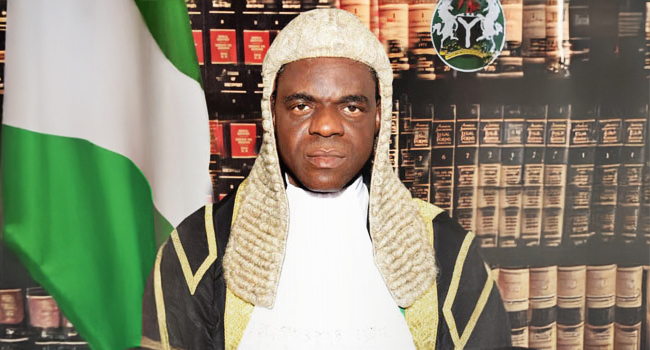
According to the circular, the Chief Judge of the court, John Terhemba Tsoho, approved the vacation period, adding that normal sittings would resume on April 14 across all judicial divisions.
The court, however, stated that the core judicial divisions in Abuja, Lagos, Port Harcourt and Enugu would remain open during the vacation to attend to matters of extreme urgency.
The statement noted that only cases relating to the enforcement of fundamental rights, arrest or release of vessels, and issues concerning dire national interest would be entertained during the period.
READ ALSO: Court Grants ₦200m Bail Each To Malami, Wife, Son
“The court shall resume normal sittings on Tuesday, April 14, 2026, in all judicial divisions.
“During the vacation period, the Abuja, Lagos, Port Harcourt and Enugu core judicial divisions shall remain open to the public strictly for matters of extreme urgency.
“It should be noted that only matters relating to the enforcement of fundamental rights; arrest or release of vessels; and matters concerning dire national interest shall be entertained by the vacation judges during the period,” the statement read.
It added that the following judges had been designated to serve as vacation judges in the respective divisions.
In the Abuja Judicial Division, the judges are Emeka Nwite and Musa S. Liman, while the Lagos Judicial Division will have Akintayo Aluko and Ogazi F. Nkemakonam.
For the Port Harcourt Judicial Division, the designated judges are Phoebe M. Ayua and Adamu T. Mohammed, while the Enugu Judicial Division will be handled by Mabel T. Segun-Bello.
The circular further advised the vacation judges and heads of divisions to promptly refer any matter requiring urgent attention to the Chief Judge for necessary directives.