Wake up before it’s too late: Oppose the unjust, cruel war on Iran

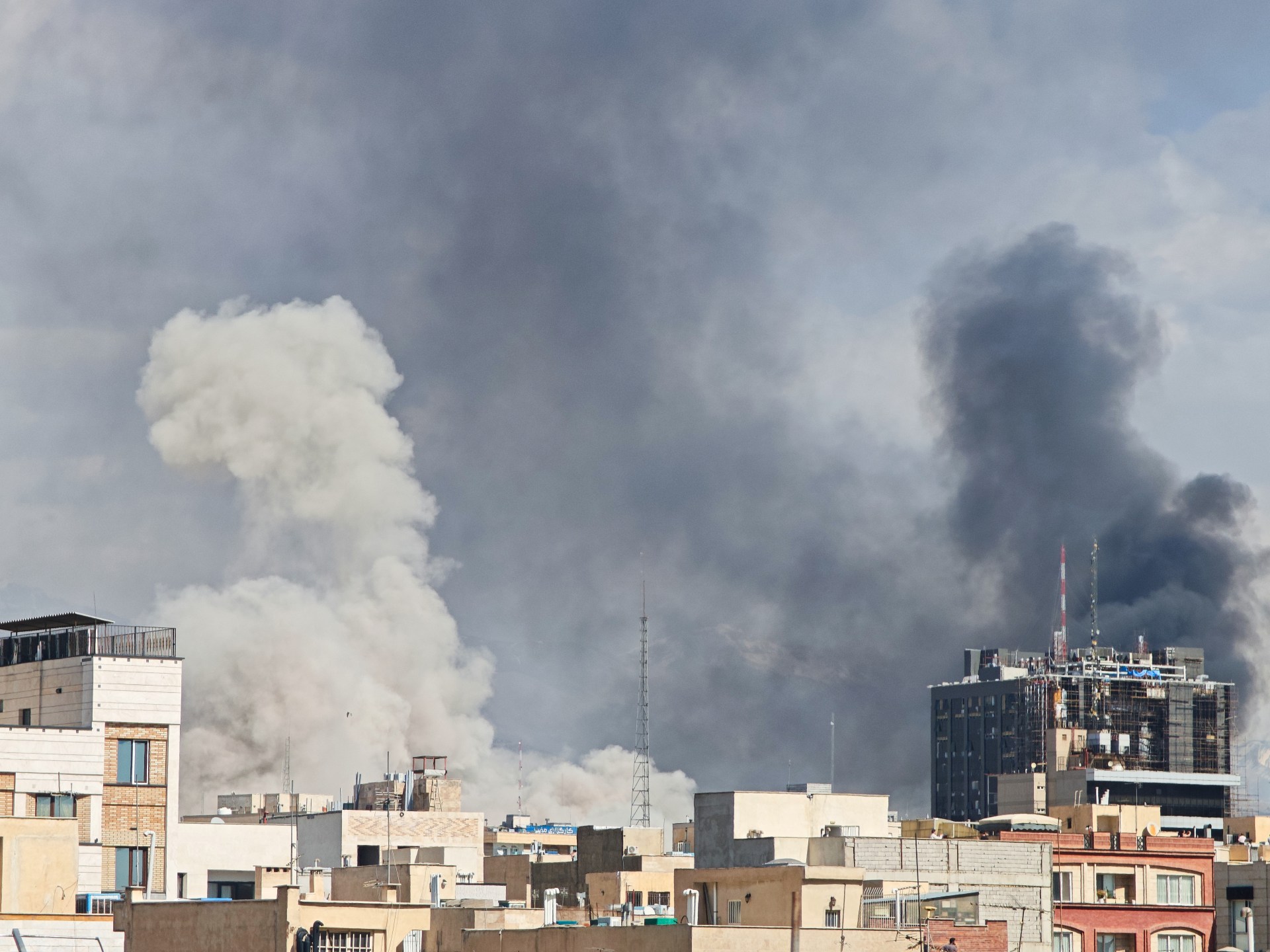
Today is the eighth day of the American-Israeli axis of aggression against Iran. In a flagrant violation of Iran’s territorial integrity and national sovereignty, they have launched, as of Saturday 28 February, an unprovoked, unwarranted act of aggression against my country. They started this merciless aggression by targeting Iran’s Supreme Leader’s compound at the heart of the capital, Tehran. The leader, also a highly respected Shia religious jurist across the region and beyond, was martyred along with a number of his family members, including his 14-month-old granddaughter on the 10th day of the holy month of Ramadan.

At the same time, they launched massive air and missile strikes across Iran against military and civilian infrastructure. In just one case, they struck an elementary school in Minab, south-western Iran, where 165 innocent schoolgirls and 26 teachers were brutally slaughtered.

It is now clear that the US/Israeli targeting of this elementary school was deliberate and pre-planned. A detailed investigative report, based on satellite imagery, strike patterns, and geolocation analysis, has demonstrated that the attack directly struck the civilian school building during class hours. The purpose was to preoccupy Iran’s armed forces and emergency response capacity so that the aggressors could subsequently target other strategic sites.

The military aggression continues, and many civilian sites have been targeted, resulting in massive loss of innocent life and destruction of civilian infrastructure.

This renewed aggression was imposed on the Iranian nation while Iran and the United States were engaged in a diplomatic process. The foreign minister of Oman, acting as mediator, had announced that “significant progress” had been achieved in the latest round of negotiations on Thursday 26 February in Geneva.

This attack represents yet another betrayal of diplomacy and demonstrates that the US has zero respect for the basics of diplomacy. Despite being fully aware of the hostile intentions of the United States and the apartheid regime of Israel, Iran once again entered into negotiations to leave no room for doubt before the international community – to demonstrate the legitimacy of the Iranian people’s cause and to expose the baselessness of any pretext for aggression. These events show that the United States does not truly believe in diplomacy and instead seeks to impose its will on other nations.

The Iranian nation, proud and resilient, has proven that it does not yield to threats or foreign intervention. The millennia-old history of Iranian civilisation bears witness to the fact that Iranians have never bowed to aggression or domination.

For example, about 900 years ago, Farid al-Din Attar — one of the greatest poets in Iranian history — recounts in his book Tadhkirat al-Awliya that when Bayazid Bastami uttered the ecstatic phrase, “Subhani, ma a‘zama sha’ni” (“Glory be to me, how great is my station”), some accused him of heresy and attacked him with knives. Yet, as the story goes, with every stab, instead of Bayazid bleeding, it was the attackers’ own bodies from which blood flowed.

Iran is like Bayazid in this story. History shows that despite every blow struck against it, it is ultimately the aggressors — the ones who wield the knives — who are erased, while Iran endures and remains. This is what can be called the theory of Iran’s continuity amid super-crises and foreign aggression — a pattern repeatedly demonstrated throughout the many invasions and attacks Iran has endured over the past several centuries.

The airstrikes carried out by the Zionist regime and the United States against Iran constitute a violation of Article 2(4) of the Charter of the United Nations and amount to a clear act of armed aggression against the Islamic Republic of Iran. United Nations experts stated in their statement on March 4 that this act of aggression is “unlawful”. Furthermore, the assassination of the Supreme Leader and other Iranian officials represents a manifest violation of the immunity of state officials and of international conventions, including the 1973 Convention on the Prevention and Punishment of Crimes against Internationally Protected Persons.

Responding to this aggression is Iran’s lawful and legitimate right under Article 51 of the Charter of the United Nations. The Armed Forces of the Islamic Republic of Iran will employ all necessary capabilities to counter this criminal aggression and repel the enemy’s hostility. This right shall continue until the aggression ceases and the matter is properly addressed by the United Nations Security Council. As the state acting in self-defence, Iran will determine the measures that are necessary and proportionate to this armed attack.

In exercising this right, Iran had no option but to target certain US military facilities in the region. These defensive operations are not directed against host countries but are undertaken solely in defence of Iran. The facilities targeted were used by the United States to prepare and launch military attacks against Iran.

Iran fully respects the territorial integrity and political independence of its neighbouring countries. Every state has a responsibility, under international law and the principle of good neighbourliness, not to allow its territory, airspace, or facilities to be used for acts of aggression against Iran. As expressly affirmed by the authorities of the Islamic Republic of Iran, any point of origin, base, or territorial platform from which acts of aggression against Iran are initiated—irrespective of the state in which such forces may be stationed—shall, consistent with Article 3(f) of the Annex to General Assembly Resolution 3314 (XXIX) on the Definition of Aggression, be regarded as a lawful military objective in the exercise of Iran’s inherent right of self-defence under Article 51 of the Charter of the United Nations. We need concrete and objective assurances that no further aggression will originate from US facilities located within these countries.

Iran underscores the critical responsibility of the United Nations and its Security Council to take immediate action in response to this breach of international peace and security. We call upon the Secretary-General, the President of the Security Council, and its members to fulfill their duties without delay.

All Member States of the United Nations—particularly countries in the region and the Islamic world, members of the Non-Aligned Movement, and all governments committed to international peace and security—are expected to condemn this act of aggression and to take urgent and collective measures in response. States must exercise vigilance and not be drawn into the designs of the aggressors.

Our message to the international community is clear: these acts of aggression and the ongoing harrowing crimes signal an unprecedented erosion of the international legal order. Inaction in the face of such unlawful conduct will not only embolden the United States and the Israeli regime but will also inflict lasting and irreparable damage upon the foundations of the international legal order.

The world is at a critical juncture. It shall decide whether it wants to be ruled by merciless bullying and force or whether it wants to save the rule of law from vanishing.

This will not be the last unlawful resort to force unless the international community acts decisively and responsibly.

States must not adopt a policy of indifference and appeasement. Failure to uphold fundamental principles of international law is a recipe for a dark global dictatorship that will bury the United Nations and annihilate the very basic tenets of humanity.

Every nation, every Muslim, every person of human conscience, has a responsibility to act. The world must wake up before it is too late. Otherwise, similar acts of aggression and crimes will unfold within your own borders.

The Iranian nation is defending itself by all means. We fight back in this unjust brutal war of aggression against two nuclear-armed regimes.

This is an unjust war imposed on a civilization. History will judge you all. Those who choose to take sides with the aggressors as well as those who prefer to keep silent in the face of this brutal injustice will all be regarded as accomplices.

Be on the right side of history and oppose this cruel, unjust war.
Iran’s strikes on the Gulf: Burning the bridges of good neighbourliness

When the United States and Israel launched their coordinated assault on Iran in the early hours of February 28, 2026, an operation Washington has named “Operation Epic Fury”, the Gulf states did not cheer. They watched with dread.

For years, they had invested enormous diplomatic capital in preventing precisely this moment. They had engaged Tehran, maintained embassies, and offered repeated assurances that their territories would not serve as launchpads against the Islamic Republic.

That Iran’s response has been to turn its missiles on these same neighbours is not only a strategic miscalculation of historic proportions, but is also a profound moral and legal failure that risks poisoning relations for generations to come.

A record of genuine restraint

The Gulf Cooperation Council (GCC) states did not arrive at this crisis as Iran’s enemies. They arrived as reluctant bystanders, having spent years threading a needle between Washington and Tehran with deliberate, often thankless, care.

Saudi Arabia chose dialogue in 2019 and pursued a full diplomatic rapprochement with Tehran. That process culminated in the landmark 2023 Chinese-brokered normalisation agreement and the reopening of embassies. Riyadh’s bet was that engagement, not confrontation, was the path to stability. Even as the current crisis mounted, Saudi Arabia explicitly confirmed to Iranian authorities that it would not permit its airspace or territory to be used to target Iran. The kingdom’s word was given. It was not honoured in return.

Qatar had invested years in mediation, serving as the indispensable interlocutor between Hamas and Israel, and between Iran and the United States. Doha hosted indirect nuclear talks and pleaded for diplomatic solutions when few others would.

Oman, for its part, served as the quiet conduit for the very negotiations that, as recently as the eve of the war, held out the slim hope of a deal. Oman’s Foreign Minister Badr Albusaidi voiced optimism that peace was “within reach” on the day before the bombs fell.

Across the GCC, governments gave repeated and public assurances to Iran and to the world that their territories would not be used to launch attacks against the Islamic Republic. These assurances were credible. They were substantive commitments backed by years of diplomatic engagement.

Iran itself tacitly acknowledged their sincerity: On March 5, Tehran issued a notable public expression of appreciation to Saudi Arabia for upholding its commitment not to allow its territory to be used against Iran. That acknowledgement makes Iran’s actions all the more contradictory and indefensible.

For these are not the actions of hostile neighbours. These are the actions of states that understood the neighbourhood they lived in and chose, repeatedly, the hard road of diplomacy.

The response that shocked the region

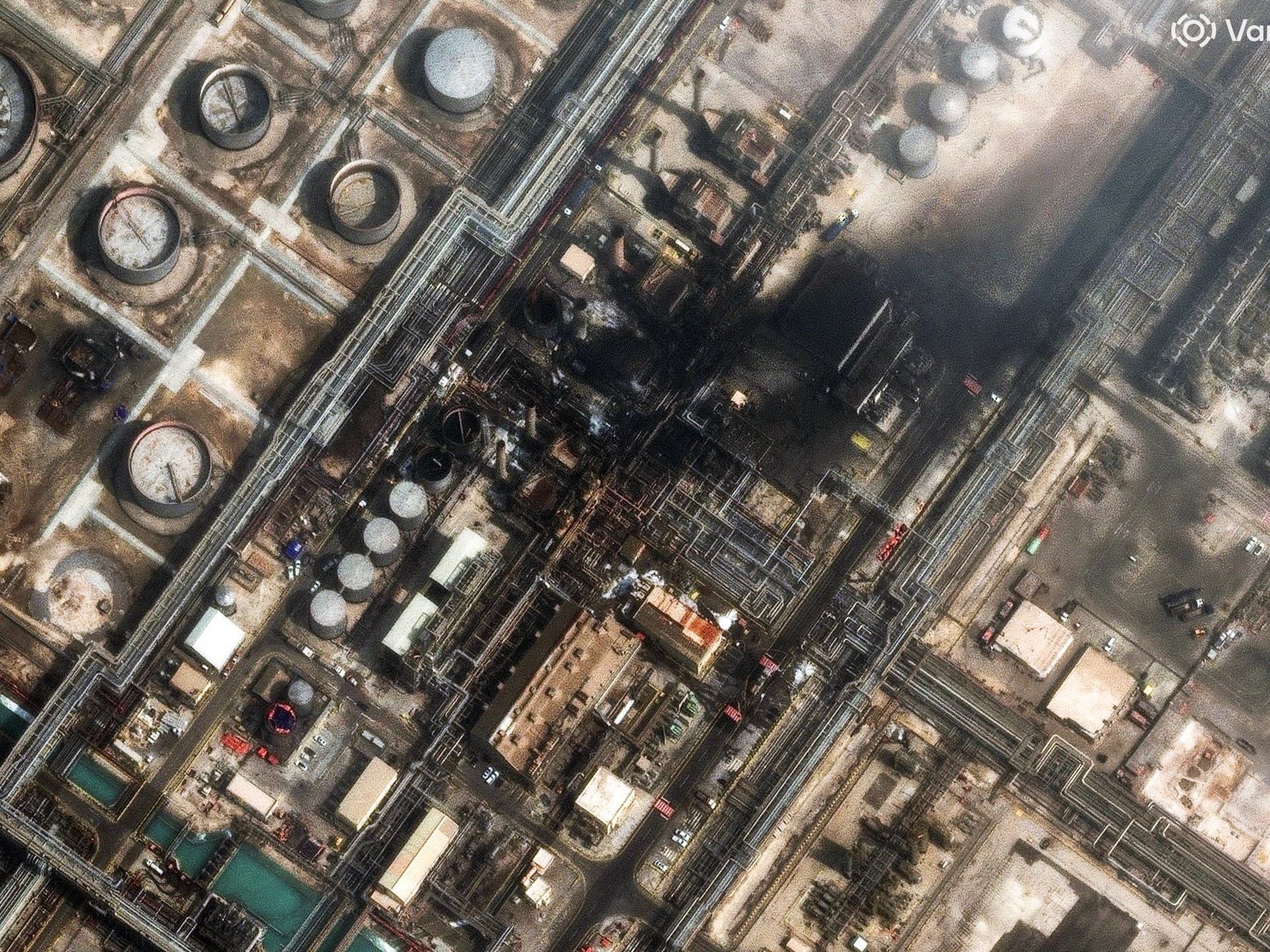
Iran’s response has repaid years of Gulf good faith with a barrage more ferocious than anything directed at the countries that launched the war. Official statistics show that in the early days of the war, Iran fired more than twice as many ballistic missiles and approximately 20 times more drones at Gulf states than at Israel. Three people were killed and 78 were injured in the UAE alone; Saudi Arabia’s largest refinery was set ablaze; major airports across the Gulf were targeted; and Qatar’s Ras Laffan, a pillar of global liquefied natural gas (LNG) supply, was struck.

The closure of the Strait of Hormuz, through which a fifth of the world’s oil and a significant share of global LNG passes daily, sent immediate shockwaves through international markets. Iranian threats of attacks brought commercial shipping through the passage to a near-standstill, severing the artery that connects Gulf energy producers to the economies of Asia, Europe and beyond. With Saudi, Emirati and Qatari exports frozen in place and insurance markets in freefall, the spectre of a prolonged closure raised alarms not seen since the tanker wars of the 1980s, pushing the world measurably closer to an economic shock that no recovery playbook is designed to absorb.

Illegal, counterproductive and unacceptable

Iran’s attacks on Gulf sovereign territory are not merely strategically misguided; they are illegal under international law. The Gulf states are not parties to the conflict between Iran, Israel and the United States. They did not authorise military operations against Iran from their soil. Targeting civilian infrastructure, airports, hotels, refineries and ports in states that are not combatants violates fundamental principles of international humanitarian law, including the prohibition on attacks against civilian objects and the requirement of distinction between military and civilian targets.

Tehran has sought to justify the attacks by arguing that the presence of US military bases on Gulf soil makes those states legitimate targets. This logic does not hold. The GCC states gave ironclad assurances to Iran, continuously and emphatically, both before the war and up to its very eve, that their territories would not be used to attack Iran. The GCC’s own extraordinary ministerial statement of March 1, 2026, made this explicit, noting that the attacks came “despite numerous diplomatic efforts by GCC countries to avoid escalation and their confirmation that their territories will not be used to launch any attack on the Islamic Republic of Iran”.

The joint GCC-European Union ministerial meeting of March 5 repeated this point. Iran’s own Deputy Foreign Minister Hamid Ghanbari told Al Jazeera that Iran “regrets any humanitarian loss caused by the current military escalation”, an implicit recognition that the attacks have caused harm that cannot be sanitised by strategic framing.

Qatar, whose outreach to Iran was among the most sustained and sincere of any Gulf state, issued what officials described as the strongest condemnation in the country’s history, calling the strikes “reckless and irresponsible.” The GCC Ministerial Council, convening in an emergency extraordinary session on March 1, issued a sweeping collective condemnation describing the attacks as “heinous” and a “serious violation of these countries’ sovereignty, good neighbourly principles, and a clear breach of international law and the UN Charter”.

The Council affirmed that member states “will take all necessary measures to defend their security and stability”, including the option of self-defence, language of a gravity rarely heard from the Gulf’s diplomatic establishment. The unanimity and sharpness of that collective voice reflect the depth of the betrayal felt across the region.

The strategic logic Iran is operating on – that attacking Gulf states will pressure Washington to end the war – is not only flawed in practice, it actively serves Israeli interests. By spreading the conflict to the Gulf, Tehran is doing precisely what Israel could not do alone: steering the war away from the Israeli-Iranian axis and transforming it into a confrontation between Iran and its Arab neighbours.

Every missile fired at Dubai or Doha or Riyadh shifts the narrative, pulls the Gulf states deeper into a conflict they sought to avoid, and weakens the very actors most capable of mediating a way out. This is a strategic miscalculation of the first order. The interest of the wider region lies in preventing Israel from emerging as the unchallenged hegemon of the Middle East, a scenario that becomes more likely, not less, the more Iran pushes its Arab neighbours out of their potential role as honest brokers and into the arms of a deeper security alignment with Washington. Iran, in targeting the Gulf, is not resisting the new regional order; it is inadvertently constructing it.

The need for off-ramps before the ladder locks

The most urgent imperative now is to act before the window closes. A ceasefire must be pursued proactively and without condition. Wars reach critical thresholds at which point each side becomes so committed to its position, its sacrifices, and its narrative of necessity that finding an exit becomes nearly impossible.

There are signs that the threshold is approaching. Iran has declared it will fight until the “enemy is decisively defeated”. The United States Senate failed to invoke war powers to restrain President Trump’s operations. Iran’s proxies, such as Hezbollah in Lebanon and militias in Iraq, are actively engaging in operations. Every passing day narrows the corridor of possibility.

What is needed, urgently, is a coordinated international effort to construct the off-ramps that neither Washington nor Tehran can build alone. This requires the engagement of every country in the vast geography that this war is already shaping: the Gulf states, whose energy infrastructure sustains much of the global economy; the Asian powers: China, India, Japan, South Korea, whose energy security, trade routes, and financial stability are directly imperilled by a prolonged Gulf conflict; the European states that depend on Gulf LNG and have long advocated for the diplomatic track; and African nations whose access to food and fuel runs through the Strait of Hormuz.

Qatar and Oman retain a unique and irreplaceable capacity to serve as interlocutors, as both have done in every prior moment of brinkmanship, Qatar as the indispensable mediator between rival parties, Oman as the trusted back-channel between Tehran and the West.

China, which brokered the Saudi-Iranian rapprochement of 2023 and has deep economic stakes in both Tehran and the Gulf, has both incentive and leverage. European governments, which championed the nuclear deal for over a decade and now face the immediate pain of halted LNG shipments, have every reason, economic and strategic, to push back firmly against Washington’s course. A prolonged Gulf war not only starves Europe of energy, it drains the attention and resources Europe can least afford to divert while Russia remains undefeated on its eastern flank. A concerted global effort is needed to give both Washington and Tehran a face-saving exit, one that allows each to declare victory and step back before this conflict metastasises into a regional war that could dwarf Iraq and Afghanistan combined.

The Gulf states have demonstrated, through years of patient, continuous diplomacy, that good neighbourliness with Iran was their preferred choice. Iran has responded to that choice with missiles. Tehran would be wise to remember that the Gulf states it is now bombarding are the same neighbours best placed to offer it a way out, through their mediation expertise and their global leverage. An off-ramp must be built, but the window to build it will not stay open indefinitely.

‘Resilient’ Ireland find a way to beat ‘tremendous’ Wales

Matt Gault

BBC Sport NI senior journalist
  • Comments

For a moment, Ireland threatened to run off into the night.

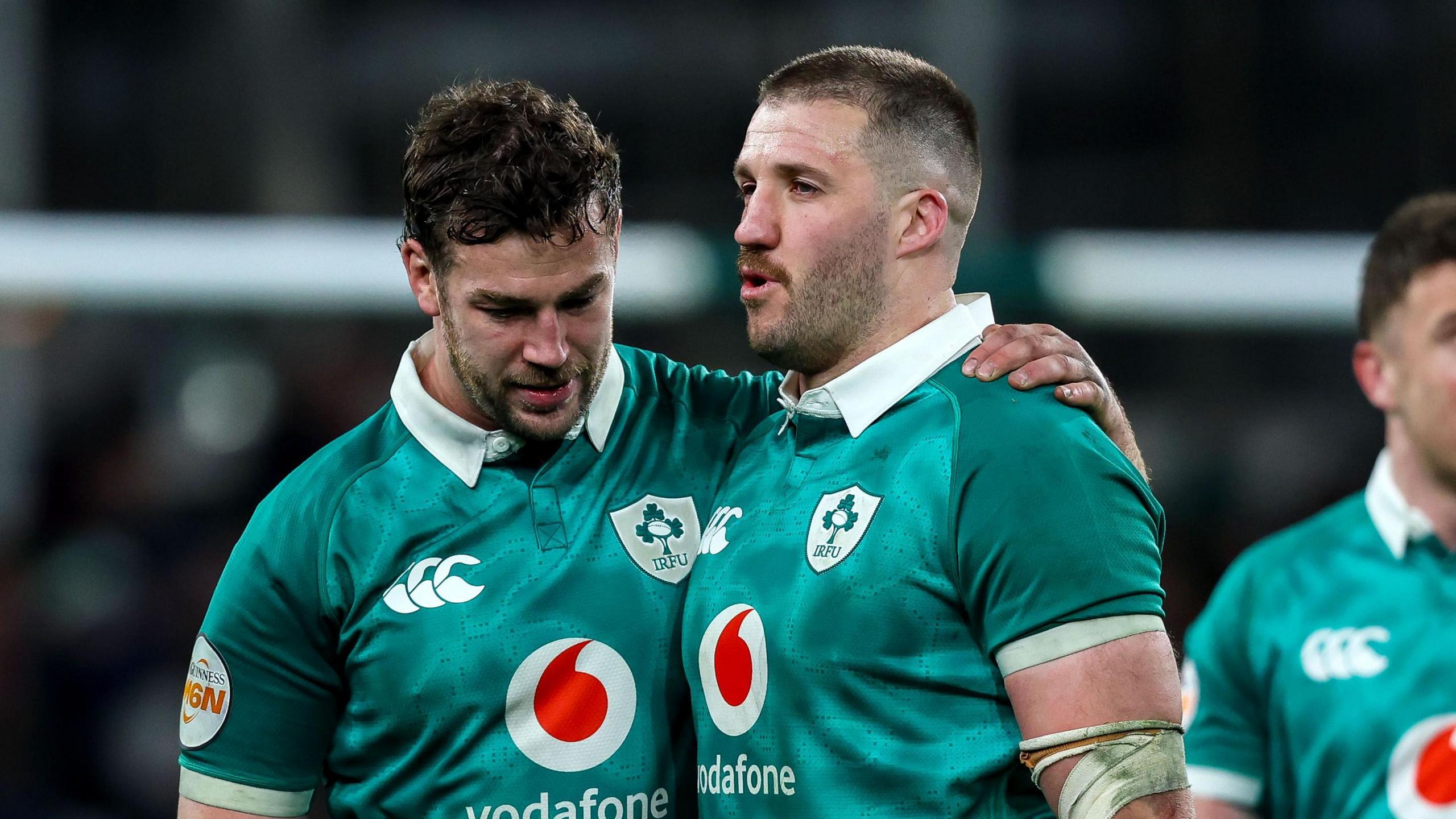
After Jacob Stockdale ended his five-year wait for an international try, Ireland celebrated a second try against Wales just 10 minutes into Friday’s Six Nations game when Jack Conan crashed over.

But the home support’s excitement at the possibility of a thumping turned to frustration when the try was ruled out for Tom O’Toole’s knock on.

It set up a nervy night for Ireland when their post-England euphoria was quickly forgotten as they set about keeping a stubborn and spirited Wales side quiet.

In their record away win over England, Ireland ruthlessly built up a 22-0 lead before the hosts replied.

On Friday, though, a hard-hitting Welsh defence stopped the hosts from building an insurmountable advantage.

And when asked for his observations, Ireland head coach Andy Farrell was quick to both praise Wales after they provided his side a more uncomfortable examination than England last time out.

“I actually thought Wales did fantastically well to stay in the game,” he said.

“Like Caelan [Doris, Ireland captain] said, if it goes to 14 points, it’s a different game you’re looking at, but they played tough, they hung on in there and kept it close on the scoreboard. I thought they were tremendous tonight.

“It was a proper Test match and for us to come away with a bonus-point win, we’d certainly take that with how the game unfolded, because it was a different game to the game that we played last time round.

    • 1 hour ago
    • 1 hour ago
    • 2 hours ago

Ireland beat Wales by a combined 46 points in their home Six Nations wins in 2022 and 2024.

But having already been denied a home bonus point by Italy in this campaign, Farrell again used the word “resilience” after they absorbed Welsh pressure in the second half with the score 19-17 before Jamie Osborne killed the game off.

Wins like at Twickenham come once every so often. But edging out Test slugfests is what makes a team – and Farrell recognises that.

“It doesn’t always go your own way in Test match rugby, especially when the other team turns up and plays like that,” he explained.

“I thought we were resilient in how we went about our business.

Jack ConanGetty Images

While Farrell bemoaned Ireland’s inability to convert the type of chances they had gobbled up against England, there were positives.

Conan, who missed the England game because of illness, was outstanding and got his deserved try in the second half after his earlier one was chalked off.

Robert Baloucoune, one of the breakout stars of Ireland’s campaign, impressed again while Jamie Osborne produced another all-action display at full-back as he scored for the third game in a row.

Joe McCarthy and Josh van der Flier both made significant impacts off the bench – a theme for Ireland this year – while Jack Crowley scored a try and produced some lovely moments in attack which were offset by some dodgy goal-kicking.

“He was on the sideline for a while with his coat off, he was itching to get on,” Farrell said of McCarthy, whose adventurous burst down the left wing helped set up Osborne’s try.

“He got on and certainly made a difference. There were some great highlights within the game, one was Joe going down the touchline and kicking the ball.

Triple Crown shootout will be ‘special’

Digging deep for a bonus-point win leaves Ireland with a chance of the title and the Triple Crown.

While they need results to go their way before reclaiming the championship, victory over Scotland in Dublin next week will clinch a fourth Triple Crown in the past five years.

Scotland, who aim to stun France and boost their own title hopes on Saturday, have not won the Triple Crown since 1990.

Even if France win the title at Murrayfield on Saturday, Ireland and Scotland are set up for an unmissable game in Dublin.

“We need to make the most of the extra day, as far as recovery is concerned, then we bounce into what’s going to be a special week for us,” said Farrell.

“Playing against Scotland, they’ll be relishing coming here I’m sure. It doesn’t get any bigger for us.

“It definitely would [be special], we should never take a Triple Crown for granted at all.

Related topics

  • Irish Rugby
  • Northern Ireland Sport
  • Rugby Union
  • Ireland Rugby Union

Iran war is latest threat to a global economy rattled by Trump

As the United States and Israel’s war on Iran unfolds over the coming days and weeks, the scale of the fallout for the global economy will be measured at the petrol pump.

The biggest threat the conflict poses to global economic health lies in rising energy prices.

Recommended Stories

list of 4 itemsend of list

Iran’s effective closure of the Strait of Hormuz and Iranian attacks on key energy production facilities in Qatar and Saudi Arabia have paralysed a substantial chunk of the world’s energy supply.

For a global economy already rattled by US President Donald Trump’s tariffs and what many see as his unravelling of the post-World War II order, much now depends on how long the disruption lasts.

A sustained surge in energy prices would drive up the cost of everyday goods.

Central banks would then likely raise borrowing costs to curb inflation, dampening consumer spending and dragging down economic growth.

“It’s really a question on how long the disruption of flows through the Strait of Hormuz lasts and whether there will be destruction of physical assets,” said Anne-Sophie Corbeau, an analyst at Columbia University’s Center on Global Energy Policy.

“For the moment, the market is pricing a short disruption and no destruction. But that may change in the future. We simply do not know right now how this whole crisis ends.”

Strait of Hormuz
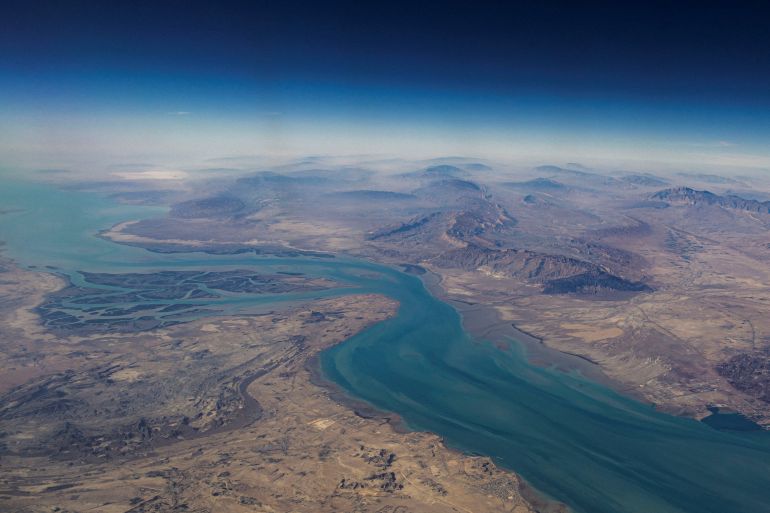
An aerial view of the island of Qeshm, separated from the Iranian mainland by Clarence Strait, in the Strait of Hormuz, on December 10, 2023 [Reuters]

While Iran’s threats to shipping have halted traffic through the Strait of Hormuz, the conduit for one-fifth of the world’s oil, crude prices have seen relatively modest gains so far.

Brent crude hovered about $84 a barrel on Friday morning, US time, up about 15 percent compared with pre-conflict prices.

That gain pales in comparison with past crises.

During the 1973-74 oil embargo led by OPEC’s Arab members, prices quadrupled in just three months.

Since then, the world’s dependence on Middle Eastern oil has declined substantially.

Today, the US is the biggest producer globally, producing some 13 million barrels a day, more than Iran, Iraq and the UAE combined, according to the US Energy Information Administration.

But if supply disruptions extend beyond a few weeks, oil prices could rise precipitously.

Storage capacity constraints

The seven oil-producing Gulf nations – Bahrain, Kuwait, Oman, Qatar, Saudi Arabia and the UAE – are likely to run out of crude oil storage capacity in less than a month if the Strait of Hormuz remains closed, according to an analysis by JPMorgan Chase.

With storage capacity depleted, producers would be forced to cut production.

“While there will be some capacities elsewhere, and some options to use pipelines rather than shipping, it is incredibly difficult to replace the sheer volume as we are talking about an average of 20 million barrels of oil per day that usually cross the Strait of Hormuz,” said Sarah Schiffling, a supply chains expert at the Hanken School of Economics in Helsinki.

“This important maritime chokepoint provides very significant leverage in the global economy.”

This week, Goldman Sachs analysts estimated that global oil prices will likely hit $100 a barrel – a threshold not seen since Russia’s 2022 invasion of Ukraine – if shipping through the waterway stays at the current reduced levels for five weeks.

In an interview published by The Financial Times on Friday, Qatar’s energy minister Saad al-Kaabi warned that producers in the region could halt production within days and that oil could soar as high as $150 a barrel.

Such increases would reverberate through the global economy.

The International Monetary Fund has estimated that global economic growth is reduced by 0.15 percent for every 10 percent rise in oil prices.

The pain would not be spread evenly.

About 80 percent of the oil shipped through the strait goes to Asia.

India, Japan, South Korea and the Philippines, which are all highly dependent on foreign energy imports, would be among the economies most vulnerable to spikes in the cost of necessities such as food and fuel.

“The effect would be felt in Asia and Europe in particular,” said Lutz Kilian, an economist at the Federal Reserve Bank of Dallas.

“Some countries, such as China, have ample oil reserves to help weather a temporary outage, while others do not.”

Liquefied natural gas (LNG), which is also shipped through the strait and has fewer alternative suppliers outside the region than crude oil, has already seen much steeper price rises.

European prices of LNG surged by as much as 50 percent on Monday after state-run QatarEnergy, which ships about one-fifth of global supply through the waterway, announced a halt to production following drone attacks blamed on Iran.

“Gas will be more impacted because the market was still relatively tight and stocks are low in Europe as we are at the end of winter; also, there is no replacement for the LNG lost,” Corbeau said.

oil
The sun sets behind an oil pump in the desert oil fields of Sakhir, Bahrain, on September 29, 2016 [Hasan Jamali/AP]

Prolonged uncertainty

With US President Donald Trump signalling that he intends to continue the assault on Iran for at least several more weeks, the extent to which Tehran is willing – or able – to keep the strait closed will be critical to the global economy.

At least nine commercial vessels have been targeted in attacks in or near the strait since the start of the conflict, prompting multiple insurance firms to cancel coverage for vessels in the Gulf.

While traffic through the strait has not halted, it is down about 90 percent compared with normal levels, according to ship tracker MarineTraffic.

“The uncertainty itself is probably the most dangerous part. Supply chains hate uncertainty,” Schiffling said.

“It is possible to plan for almost anything, but not knowing what will happen makes it really challenging to adapt operations.”

On Wednesday, Trump said he had ordered the US International Development Finance Corporation to start insuring shipping lines in the region in order to keep trade flowing.

Trump also said the US Navy could begin escorting vessels through the strait if necessary.

“As long as Israel and the US are able to suppress Iranian drone and missile attacks in the strait to the point that the bulk of the oil tankers gets through, and as long as the United States provides back-up insurance for shippers and their cargo, the global economy may make it through this war without a recession,” Kilian said.

Cuba announces fifth death after shootout with Florida-tagged speedboat

The government of Cuba has announced that a fifth person died as a consequence of a fatal shootout last month involving a Florida-flagged speedboat that allegedly opened fire on soldiers off the island nation’s north coast.

The island’s Ministry of Interior said late on Thursday in a statement that Roberto Alvarez Avila died on March 4 as a result of his injuries.

Recommended Stories

list of 3 itemsend of list

It added that the remaining injured detainees “continue to receive specialised medical care according to their health status”.

On February 26, authorities in Cuba said that Cuban soldiers confronted a speedboat carrying 10 people as the vessel approached the island and opened fire on the troops.

They said the passengers were armed Cubans living in the United States who were trying to infiltrate the island and “unleash terrorism”. Cuba said its soldiers killed four people and wounded six others.

“The statements made by the detainees themselves, together with a series of investigative procedures, reinforce the evidence against them,” the Cuban Interior Ministry said in its statement.

It added that “new elements are being obtained that establish the involvement of other individuals based in the US”.

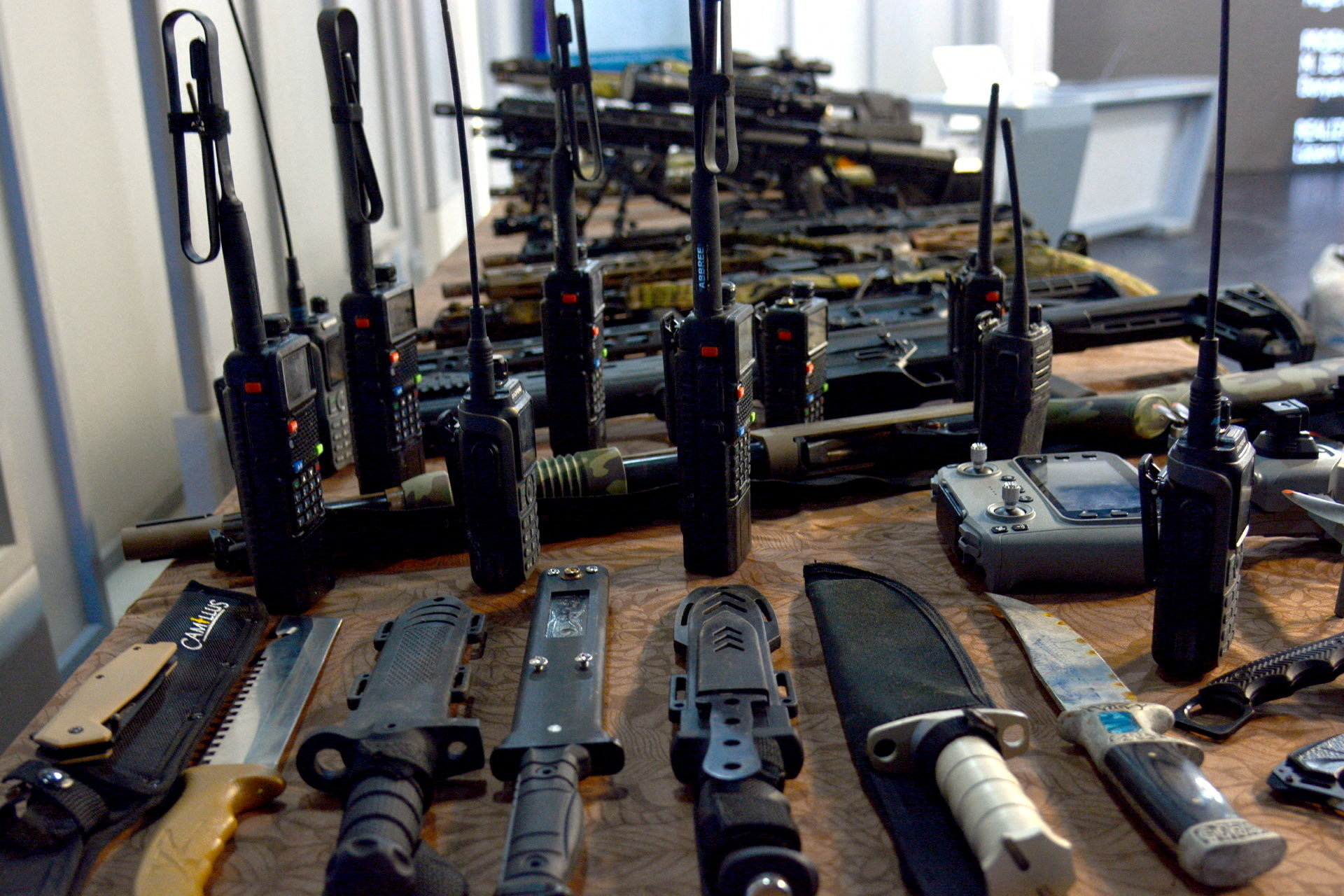
Earlier this week, Cuba said it had filed terrorism charges against six suspects who were on the speedboat. The government also unveiled items it claimed to have found on the boat, including a dozen high-powered weapons, more than 12,800 pieces of ammunition and 11 pistols.

Cuban authorities have provided few details about the shooting, but they said the boat was roughly 1.6 kilometres (1 mile) northeast of Cayo Falcones, off the country’s north coast.

They also provided the boat’s registration number, but The Associated Press news agency was unable to readily verify the details because boat registrations are not public in the state of Florida.

The shooting threatened to increase tensions between US President Donald Trump and Cuban authorities.