Why international law is still the world’s best defence

Conceived in the long shadow of global devastation, the post–World War II order was constructed -imperfect yet purposeful – to shield humanity from a similar catastrophe.

In 1943, as the tides of battle in World War II began to turn in favour of the Allied powers, United States President Franklin D Roosevelt warned: “Unless the peace that follows recognises that the whole world is one neighbourhood, and does justice to the whole human race, the germs of another world war will remain as a constant threat to mankind.”

Today, that coveted peace is increasingly fragile.

The post-war architecture conceived to avert great-power conflict, institutionalise interstate cooperation, reduce hot wars, and entrench human rights within binding international law is now under acute pressures. It faces a combustible mix of resurgent ultranationalism, hyperintensified zero-sum strategic rivalries and hegemonic power plays, the fragmentation of longstanding alliances, and the brazen repudiation of established norms.

Multilateral institutions that once underwrote stability are increasingly marginalised or instrumentalised in the service of Machiavellian politics. Foundational treaties are hollowed out or breached outright, compliance regimes weakened, and enforcement mechanisms rendered inert—leaving the post-war international system exposed to the very coercive power politics it was designed to contain.

The result is a palpable drift towards an unchecked “force-based order”, under which might displaces right, and power eclipses principle.

International orders do not suddenly unravel because of political declarations broadcast at podiums, nor because of the conduct of aberrant outliers. They collapse when those collectively entrusted with their stewardship neglect to properly defend them – when resolve gives way to timidity, principle is bartered for political expedience, and moral clarity is supplanted by double standards.

Unless the international community acts with resolve to defend and modernise the international order – fortifying rather than constraining it, including by making it more representative and meaningfully inclusive – the global system will drift toward a far more volatile and perilous disequilibrium.

The United Nations charter – one of the central instruments of the post-war legal infrastructure – is under threat. The charter enshrines the bedrock rule of the modern international order that no state may threaten or use force except in self-defence or with UN Security Council authorisation.

That peremptory norm – the foundation of the collective security architecture – is now visibly fraying. As raw power eclipses legal restraint, and the silence or equivocation of the many emboldens the few, the prohibition on the illegal use of force risks sliding from binding law into empty rhetoric.

Almost overnight, the threat of force – and even unilateral military action undertaken without legal authorisation or meaningful deliberation – has begun to crystallise into a disturbing new normal. This accelerating erosion of established norms is not a passing anomaly; it is a structural shift with profound implications for international peace and security.

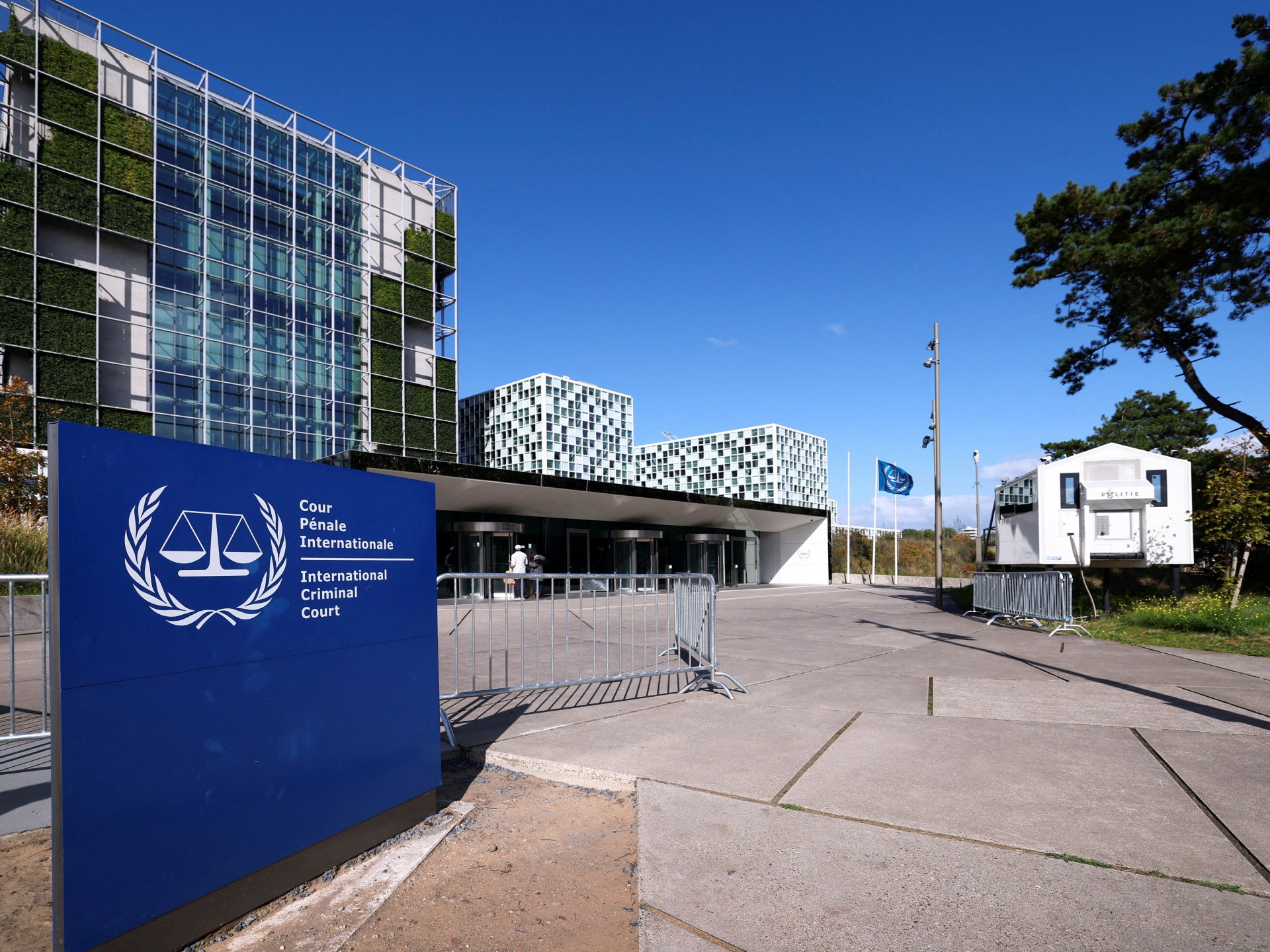
Institutions of international law, which have played a decisive role in preventing conflict and advancing accountability are also threatened.

The International Court of Justice – the UN’s highest judicial body – has successfully adjudicated numerous interstate disputes, demonstrating the power of legal mechanisms over hard power and military confrontation.

Efforts to hold perpetrators of atrocities to account – from Nuremberg to the creation of UN ad hoc tribunals – paved the way for the International Criminal Court (ICC). Its creation in 2002 sent a powerful message that mass atrocities as merely politics by other means must no longer receive a pass, that perpetrators must be held accountable, and that impunity can no longer be tolerated. The historic cultivation of these norms may be considered a crowning achievement as this normative transformation has not only awakened humanity’s consciousness regarding atrocities, but has also reshaped expectations of accountability for such grave crimes, and recast the very narrative and language with which we confront these vital questions.

And yet, those very powers that once shaped, and at least on the surface, nurtured these norms and institutions of international justice, now blatantly erode their integrity—whether by defiance, selective invocation, or politicisation. Thus, the edifice of collective restraint trembles, vulnerable to the machinations of those who prize unbridled power above principle.

To be sure, such regression diminishes the security and prosperity of all participants in the international system, irrespective of their size or influence.

Yet another grave assault on the very foundation of human rights advocacy lies in the entrenched “culture” of convenient indignation and performative empathy by states and self-serving and ideologically inclined actors alike.

Such expedient outrage and hollow sympathy erode the credibility of the pursuit of justice, undermining the universality of dignity for which we strive.

International law cannot be invoked à la carte, nor enforced with expedient selectivity.

Perhaps the greatest threat to international justice is not just outright opposition from ill-wishers but indifference and arbitrary application. The contrasting global reactions to different theatres of conflict in the past decade alone lay bare the hypocrisy that undermines faith in the universality and effectiveness of international law.

When our compassion is contingent upon political expedience, convenience or dictated by the fleeting spotlight of media attention or social media clickbait, we betray the fundamental, universal principle at the heart of human dignity.

Just as questionable are those who conveniently brandish the language of human rights not as “the equal and inalienable rights of all members of the human family”, but as a tactical instrument of lawfare deployed against political adversaries. Such deceptive tactics not only trivialise the suffering of victims but can also fuel and perpetuate the very conditions that enable even graver human rights abuses. Indeed, ancient wisdom bears counsel: “beware of false prophets, who come to you in sheep’s clothing, but inwardly they are ravenous wolves”. In this environment, smaller states and middle powers, in particular, cannot afford passivity. They must coordinate with strategic clarity and act with resolve to defend and reinforce a rules-based global system anchored in real and principled commitment to international law and the peaceful settlement of disputes.

Perspective is important. The Western world, even when considered as a whole, comprises about 11 to 15 percent of the global population; the remaining 85 to 89 percent of humanity resides beyond it.

In a century increasingly defined by multipolarity, the convergent interests of the so-called Global North and Global South in safeguarding peace and stability within – and one hopes beyond – their respective spheres of influence must rise above the complacencies and double standards that have long underwritten the status quo.

True advocacy demands courage – to uphold and apply the law equally and impartially, even when doing so is uncomfortable, unpopular, or personally costly. It is the discipline to defend rights not only when they align with powerful interests, or “tribal” and prevailing sentiments but wherever justice demands it.

The legitimacy and potency of international justice are also fundamentally anchored in ethical leadership and an unwavering fidelity to principle. It is incumbent upon the stewards of international institutions, courts and tribunals to embody integrity, impartiality, and steadfast dedication to their mandates. When these ethical foundations are shaken or compromised, the repercussions are deep and lasting: public confidence disintegrates, victims suffer renewed injustice, adversaries are emboldened, and the quest for justice is dealt a blow. The character and courage of those at the helm are not mere virtues, but the cornerstone upon which the entire edifice of international justice stands.

This is our clarion call: should we permit the foundations of international law to erode—whether through selective justice, passive indifference, or the cynical calculus of unprincipled politics—the world would slip once more into the shadows of anarchy and chaos.

We cannot yield to a world order defined by unchecked aggression, the erosion of sovereign borders under predation, and the unravelling of hard-won international norms. To acquiesce to such decline is to legitimise disorder as a governing principle, invite instability, normalise coercion, and accelerate a descent into systematic violence.

The cost would be borne by societies worldwide, in shattered security, fractured institutions, and immeasurable human suffering.

It is our shared responsibility to avert this regression.

By steadfastly upholding international law, nations around the world do more than safeguard their own futures; they erect barriers against the reckless impulses of would-be aggressors, protecting all – including the aggressors themselves – from the dire consequences of unfettered conflict.

Indifference is not an option. Wilful blindness is complicity.

In standing in firm defence of international law, we are not only enforcing norms – we are shaping the trajectory of our civilisation and honouring the enduring promise of humanity itself.

The rule of law is one of humanity’s quiet triumph – a beacon guiding our gradual rise from unbridled brute force towards greater order, justice, and civilisation.

We must never allow the law to fall silent, for it stands as humanity’s foremost defender.
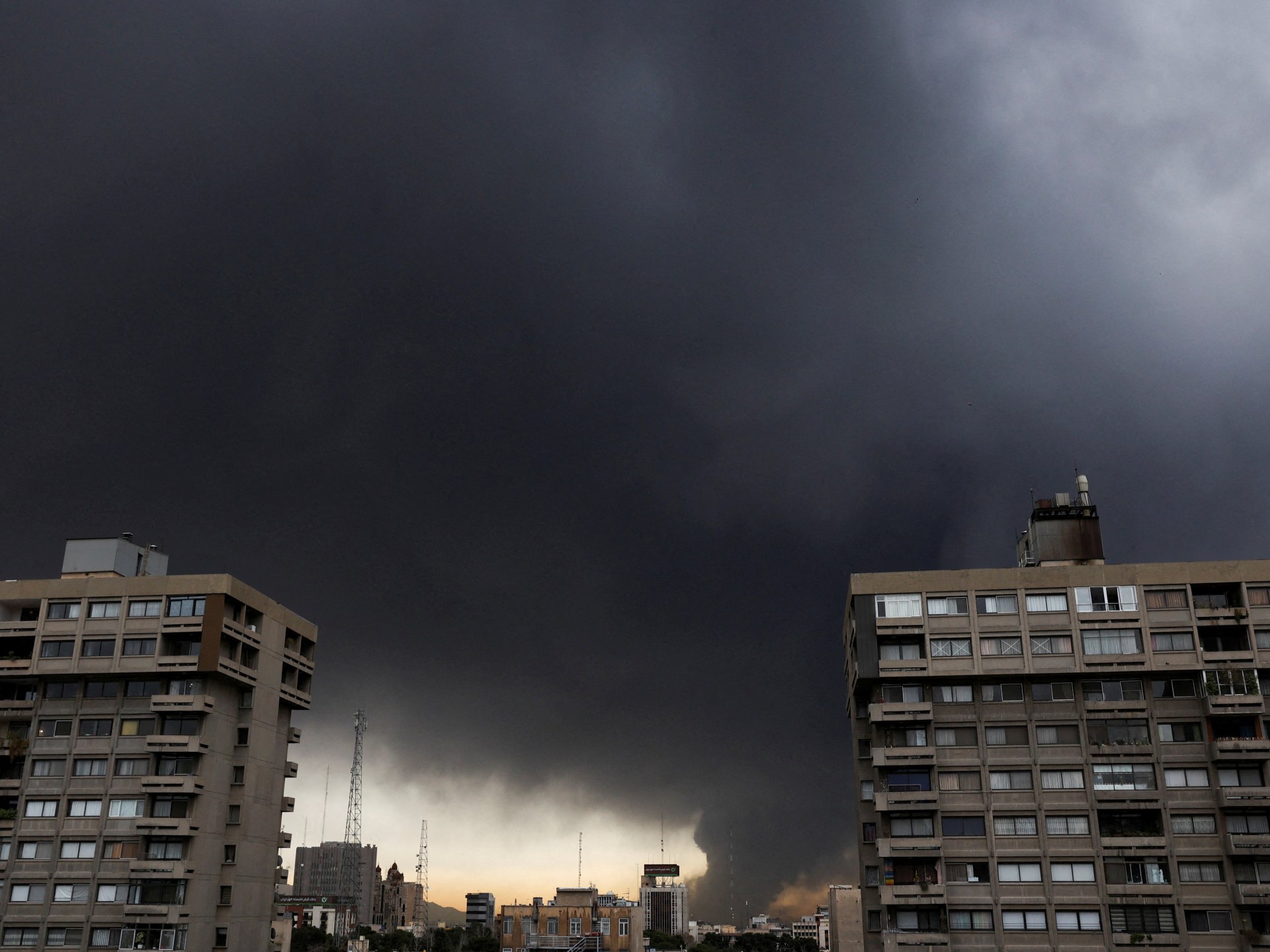
Dark haze over Tehran as US-Israeli forces bomb oil storage facilities

Huge fireballs and thick plumes of smoke rose over Tehran after joint United States-Israeli air strikes hit fuel depots in the Iranian capital.

Iran’s oil distribution company said four of its employees were killed in the blitz, as a dark haze hung over the city on Sunday and the smell of burning oil lingered in the air.

Saturday’s strikes triggered large fires after hitting four oil storage facilities and an oil transfer and production centre in Tehran and neighbouring Alborz province, the Fars news agency reported. Iranian state media described the incident as an “attack from the US and the Zionist regime”.

The facilities targeted were the Aghdasieh oil warehouse in northeast Tehran, the Tehran refinery in the south, the Shahran oil depot in the west, and an oil depot in the city of Karaj. Witnesses said oil from the Shahran depot had leaked into nearby streets.

Israel said it had struck “a number of fuel storage facilities in Tehran” that were used “to operate military infrastructure”.

Shortly after the attacks, which appeared to mark a new phase in the war, Israeli Prime Minister Benjamin Netanyahu said his government would press on with the assault and strike Iran’s rulers “without mercy”.

“We have an organised plan with many surprises to destabilise the regime and enable change,” he said in a video statement. “We have many more targets.”

Joint US-Israeli attacks on Iran have continued for a ninth day, killing more than 1,300 people in Iran and about 300 in Lebanon, according to officials. About a dozen people have been killed in Israel.

The new boss at work may not be human

A year ago, engineers at Snowflake, the American cloud-based data platform, still spent part of their day on routine tasks – such as scanning dashboards to ensure systems were running smoothly and chasing colleagues for data to complete trend analyses.

Now, says Qaiser Habib, the company’s Toronto-based head of Canada engineering, AI agents handle much of that groundwork, allowing engineers to focus on higher-level decisions.

Recommended Stories

list of 4 itemsend of list

Habib spends 20 to 30 hours a week interacting with five AI agents. Snowflake has built agents to review product design or to help on-call engineers to help during an outage or an incident, among other uses. He estimates the average engineer works with three or four agents daily, using them to carry out coding projects under human supervision.

“You don’t have to bother a human for basic questions any more,” Habib said, noting that he still collaborates with colleagues on more complex work, such as troubleshooting coding problems.

As companies experiment with AI agents – systems designed to plan, reason and carry out multistep tasks – the technology is beginning to reshape office hierarchies across the United States and Canada. Unlike chatbots, which respond to prompts, AI agents can adapt to changing contexts such as business goals and draw on reference tools including calendars, meeting transcripts and internal databases, to complete work with limited human oversight.

In some workplaces, AI systems are not just completing tasks but also assigning them to human workers. As the technology improves, AI agents are also beginning to manage each other. One agent might generate code, for example, while another reviews it for errors and fixes bugs before a human signs off on the final version.

These agent-to-agent workflows can help companies scale faster. But they also intensify concerns that AI is moving beyond assistance into supervision – and potentially, job replacement.

The leaner office

Anthropic recently expanded access to its cowork agents, allowing users without technical expertise to grant Claude – its AI assistant – permission to specific folders on their computers so it can read, edit, create and organise files autonomously.

The growing use of AI agents is transforming how organisations function around the world, even in companies that aren’t focused on building technology products. For example, some companies are using AI tools to track performance, recommend promotions, role changes, and even identify roles for elimination.

The shift comes as white-collar jobs continue to disappear, particularly in the US. A slew of US employers have announced mass layoffs, mostly affecting entry-level and middle-management workers, and executives have pointed to automation and AI-driven efficiency as part of the rationale. When Amazon said in October that it planned to eliminate about 14,000 jobs, executives cited AI’s potential to help the company operate with fewer layers and greater efficiency. UPS, Target and General Motors also announced deep cuts last year, and this January saw more layoffs than any January in the US since 2009. Several more companies, including Pinterest and HP, continued to cite AI initiatives as part of the reason.

Goldman Sachs has estimated that 6 to 7 percent of US workers could lose their jobs due to AI adoption, with higher risks for computer programmers, accountants, auditors, legal and administrative assistants, and customer service representatives. Overall employment effects, the bank said in August, may be “relatively temporary” as new roles emerge.

Middle management squeezed

Early predictions suggested AI would mainly replace entry-level technical jobs, and some experts tie recent high unemployment rates for new graduates to AI adoption. But the bigger disruption, said Roger Kirkness, founder of AI software firm Convictional in Toronto, is occurring in middle management.

His company’s tools translate executive strategy into operational tasks – a role once handled by supervisors – delivering daily assignments and feedback to employees through a user-friendly inbox interface.

In companies of more than 50 people, “where CEOs can’t speak with each manager, our platform continually surfaces the context that the organisation has that is relevant to leadership decision-making”, Kirkness told Al Jazeera.

This doesn’t mean humans have become irrelevant. But there is growing pressure to reskill, and those who thrive in strategic thinking are better-positioned to adapt to AI-integrated work environments, Kirkness said.

“People are basically becoming managers of their prior jobs,” he said, because AI is now able to perform many of the tasks that previously fell within their roles. Instead of completing tasks such as coding or designing marketing assets, humans are focusing on higher-level strategy while monitoring AI systems, he added.

However, recent research indicates that job cuts reflect companies’ anticipation of AI’s potential, rather than its current ability to replace human workers fully.

A December Harvard Business Review survey of 1,006 global executives found that while AI has played little direct role in replacing workers so far, many companies have already cut jobs or slowed hiring in anticipation of its promised impact.

Most CEOs say they’re still waiting on AI’s payoff: 56 percent report no revenue or cost benefits so far, according to consulting firm PwC’s latest Global CEO Survey of 4,454 executives across 95 countries and territories.

Trust and control

Stefano Puntoni, a behavioural scientist at the University of Pennsylvania’s Wharton School, has found that AI usage is also already affecting workplace communication habits. His research shows employees are often more willing to delegate tasks to AI than to colleagues, which can help to reduce burnout. “There’s no social cost,” he said. “You don’t worry about burdening an AI.”

Still, Puntoni argues the biggest barrier to adoption is psychological, not technical. Even effective systems can fail if workers do not trust them. Generative AI, he said, can threaten employees’ sense of competence, autonomy and connection.

“If workers feel threatened, they may want the system to fail,” Puntoni said. “At scale, that guarantees failure.”

In other words, deploying AI primarily as a cost-cutting tool can backfire. Layoffs framed as efficiency gains may reduce cooperation and limit the productivity benefits companies hope to unlock with technology, Puntoni said.

Trust, Kirkness agreed, is the real constraint. To build staff confidence in the tools it sells – and to avoid layoffs – Convictional adopted a four-day workweek, framing it as a way to share AI-driven productivity gains with employees.

“Mass layoffs in the name of automation destroy trust,” he said.

The human premium

In the US, lawsuits have begun to challenge AI-driven corporate decisions, particularly in areas such as insurance claim denials and alleged AI-enabled hiring discrimination.

Some experts warn that as AI systems become more autonomous, humans risk losing meaningful oversight – and that these agents themselves could become targets for cyberattacks. Yet regulation has struggled to keep pace with innovation. Neither the US nor Canada has clearly defined rules governing AI agents.

Business leaders are testing which functions can be automated and which still require sustained human involvement. For some workers, that uncertainty has become a source of unease.

One employee at a multinational firm, who is based in Vancouver, said she sometimes wonders whether the online “coach” used to support employee development is an AI system or a human relying so heavily on AI tools that the distinction has blurred. She requested anonymity because of concerns about professional repercussions.

Some organisations are setting boundaries. New Ground Wellness, a Canadian clinical counselling and wellness firm, uses AI tools such as chatbots in its daily operations, but recently declined a 20,000 Canadian dollar ($14,600) proposal for an agentic AI intake system that would match therapists with clients.

After receiving feedback from callers, the company concluded that the efficiency gains would not outweigh potential damage to trust. Their decision also reflects multiple surveys showing a strong preference among Western consumers for human customer service workers.

Israeli settlers kill two Palestinians in occupied West Bank

Israeli settlers have shot dead two Palestinians during an assault on a town in the occupied West Bank, WAFA news agency WAFA reports – the latest in a series of assaults that have killed at least six Palestinians in a week.

The agency, citing a statement from the Palestinian Health Ministry, on Sunday said the attack occurred overnight on the village of Abu Falah in the northeast of Ramallah.

It identified the victims as Fare’ Jawdat Hamayel, 57, and Thaer Farouq Hamayel, 24. Both were shot in the head, the agency reported.

A third resident died later from the fumes of a tear gas canister fired by Israeli soldiers who accompanied the settlers to disperse residents when they tried to confront the attackers, WAFA said. It identified him as Muhammad Hassan Murrah, 55.

In a post on X, Palestinian Vice President Hussein al-Sheikh condemned the “brutal attack on innocent citizens”, saying three were killed and seven others injured.

The Israeli military said forces were dispatched to the Abu Falah area “following a report of Palestinians being attacked by Israeli civilians near homes”, the AFP news agency reported.

“Later, it was reported that two Palestinians were killed as a result of gunfire. Additionally, it was reported that another Palestinian died from suffocation,” it said in a statement, according to the report.

The Israeli military said it was “looking into” the incidents, the AFP news agency reported.

Exploiting the United States-Israeli war on Iran, the settlers have stepped up harassment and attacks on Palestinians, particularly in rural areas of the West Bank. WAFA said the killings in Abu Falah raised to at least six the number of Palestinians killed by settlers in the West Bank since the US-Israeli assault on Iran began a week ago.

On Saturday, the Palestinian Health Ministry, based in Ramallah, and a local mayor said Israeli settlers shot dead a Palestinian man and wounded his brother in an attack on the village of Wadi al-Rakhim in the southern West Bank.

Mohammad Rabai, head of the village council in nearby at-Tawani, told AFP that settlers had entered homes in the area and attacked the family of 27-year-old Amir Mohammad Shnaran, who later died.

The Israeli military said soldiers and police were dispatched to the scene after reports of a “violent confrontation” between Israelis and Palestinians. It said an investigation was under way.

Israeli soldiers or settlers have killed more than 1,000 Palestinians, both members of resistance groups as well as civilians, in the occupied West Bank since the start of Israel’s genocidal war on Gaza in October 2023, according to Palestinian Health Ministry figures.

Rahm claims LIV Golf title in Hong Kong

Mandeep Sanghera

BBC Sport journalist

LIV Golf Hong Kong final leaderboard:

-23 J Rahm (Spa); -20 T Detry (Bel); -19 T Pieters (Bel); -18 H Varner III (US); -17 M Wolff (US)

Selected others: -14 S Garcia (Spa), G McDowell (NI); -13 R Bland (Eng), P Casey (Eng); -11 L Westwood (Eng)

Jon Rahm produced a final-round 64 to claim victory at the LIV Golf event in Hong Kong as he beat Thomas Detry – one of the players he helped leave the Middle East – to the title.

Belgium’s Detry was only able to play in the tournament after Rahm arranged a private jet to fly eight LIV players out of the Middle East amid the conflict in the region.

Spaniard Rahm and Detry, along with American Harold Varner III, were tied for the lead on 17 under going into the final day.

Rahm struck eight birdies and two bogeys in his fourth round to take victory, with Detry carding a 67 as he finished second on 20 under.

“I just tried to stay very patient and committed to each shot, knowing that I was doing everything right and things were going to happen.

“I think that was the theme pretty much every round this week.”

Related topics

  • Golf

More on this story

    • 5 days ago
    Jon Rahm playing from a bunker. His ball is in the foreground of the image.