One ‘party state’: Guinea dissolves main opposition parties

Guinea’s government has dissolved 40 political parties, including the country’s three main opposition groups, in a move critics say marks the final step towards a one-party state under President Mamady Doumbouya.

The Ministry of Territorial Administration and Decentralisation issued the decree late on Friday, citing the parties’ failure to meet their legal obligations.

Recommended Stories

list of 2 itemsend of list

Beyond stripping them of their legal status, the order froze their assets and banned the use of their names, logos and emblems, with a government-appointed curator assigned to oversee the transfer of their holdings.

The three most prominent parties dissolved are the Union of Democratic Forces of Guinea (UFDG), the Rally of the Guinean People (RPG) – the party of ousted former President Alpha Condé – and the Union of Republican Forces (UFR).

All three had already been suspended last August, weeks before a constitutional referendum that cleared the way for Doumbouya to stand in December’s presidential election.

UFDG leader Cellou Dalein Diallo, speaking from exile, accused Doumbouya of dismantling democratic life to entrench his grip on power. In a video posted to Facebook on Sunday, he said the dissolution was part of a deliberate drive to build a “party-state” and urged supporters to “rise as one” against a government that had lasted “far too long”.

He said that dialogue and legal routes had been exhausted, while his party’s communications coordinator went further, describing the decree as “the final act of a true political farce” aimed at cementing single-party rule.

Ibrahima Diallo, a leader in the pro-democracy National Front for the Defence of the Constitution, said the move had “formalised a dictatorship” and warned that Guinea was sinking into “profound uncertainty”.

The crackdown is the latest in a sustained campaign against dissent under Doumbouya, who seized power in a 2021 coup before winning a presidential election in December, a vote from which all major opposition figures were barred.

Since taking power, his government has shut down media outlets, banned protests and arrested or driven into exile scores of opposition figures and civil society activists.

Several relatives of prominent dissidents have also been abducted, and two well-known pro-democracy activists have been missing since July 2024.

Wave of coups

A wave of coups has brought military leaders to power in Africa, across a belt stretching from the Atlantic through the Sahel region to the Red Sea since 2020, while an attempted coup in Benin failed in late 2025.

The development has led to what analysts have described as a “coup belt“.

Madagascar’s and Guinea-Bissau’s armies most recently removed civilian leaders in their respective countries from power in late 2025, underscoring growing discontent with elected governments.

Although often carried out with popular backing, the military takeovers have also seen civil liberties clawed back.
UPDATED: Iran Names Khamenei’s Son As New Supreme Leader

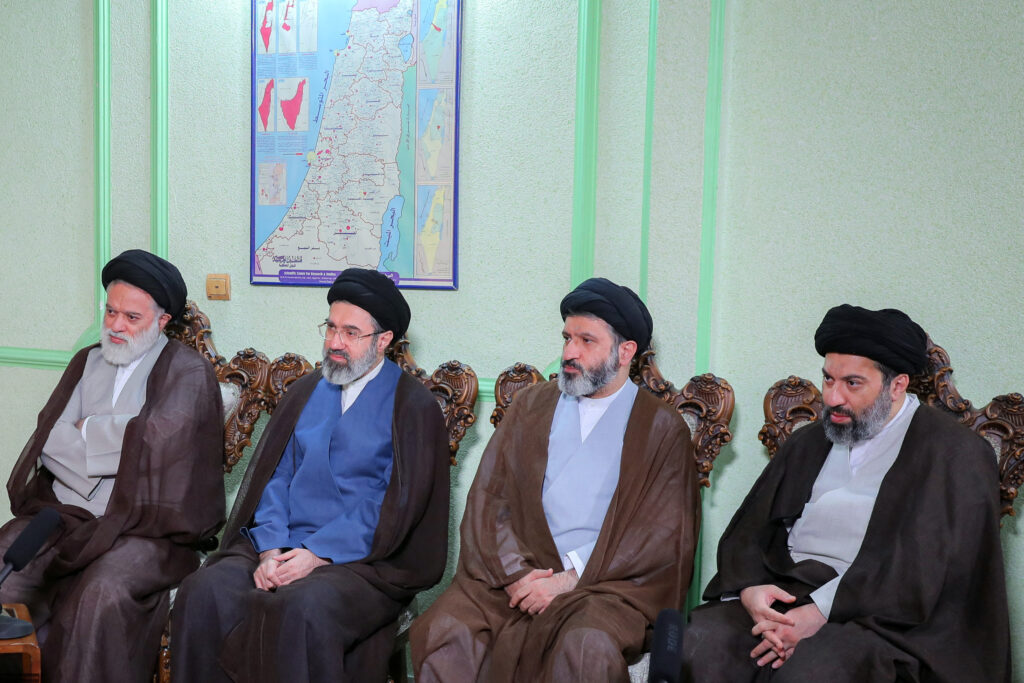
Iran’s ruling clerics on Sunday appointed the slain leader’s son, Ayatollah Mojtaba Khamenei, as the country’s new supreme leader, defying threats from the United States and Israel to oppose him.

Nine days after US-Israeli strikes killed the elder Ayatollah Ali Khamenei and plunged the Middle East into war, the clerical government’s Assembly of Experts convened to choose their next leader.

Mojtaba Khamenei, 56, “is appointed and introduced as the third leader of the sacred system of the Islamic Republic of Iran, based on the decisive vote of the respected representatives of the Assembly of Experts”, the clerical body said in a statement.

It said that the clerical body “did not hesitate for a minute” in choosing a new leader, despite “the brutal aggression of the criminal America and the evil Zionist regime”.

US President Donald Trump has previously dismissed the younger Khamenei as a “lightweight” and insisted again on Sunday that he should have a say in the new leader’s appointment.

“If he doesn’t get approval from us, he’s not going to last long,” he told ABC News before the announcement was made.

US President Donald Trump speaks during a press conference in the Brady Press Briefing Room of the White House in Washington, DC, on February 20, 2026.

But Tehran’s top diplomat said Sunday that the decision was Iran’s alone, adding it would “allow nobody to interfere in our domestic affairs”.

Speaking on NBC’s “Meet the Press”, Foreign Minister Abbas Araghchi went on to demand Trump “apologise to people of the region” for starting the war.

The younger Khamenei is regarded as a conservative figure, notably because of his ties with the Revolutionary Guards, the ideological arm of the Islamic republic’s military.

Israel’s military had previously warned any successor that “we will not hesitate to target you”.

Air ‘Unbreathable’

This video grab taken from UGC images posted on social media on March 7 and 8, 2026 shows fire erupting at an oil depot in Iran’s capital Tehran. (Photo by UGC / AFP)

Overnight, Israel struck five oil facilities in and around Tehran, killing at least four people and sparking blazes that left the skies filled with acrid smoke.

Tehran’s governor told the IRNA news agency that fuel distribution had been “temporarily interrupted” in the capital.

A dark haze hung over the city of 10 million people, blocking out the sun, and the smell of burning fuel lingered in the air.

READ ALSO: New Iran Leader Won’t Last Long Without My Approval – Trump 

Authorities warned the fumes could be toxic and urged citizens to stay indoors, but many windows were blown out by the force of the blasts.

“The blaze has been burning for more than 12 hours; the air has become unbreathable. I can’t even go out to do the daily shopping,” said one 35-year-old from Tehran.

“At first, I supported this war. After Khamenei’s death, I celebrated with my friends: we drank wine and we danced.

“But since yesterday… people say there’s not even any gasoline left at the gas stations,” she said, in a text message to contacts in Europe.

As the war extended into its ninth day, Iran’s Revolutionary Guards said they had enough supplies to continue their drone and missile war over the Middle East for up to six months.

Several blasts were heard over Israel’s commercial hub Tel Aviv after the Israeli military said it had detected a salvo of missiles from Iran. The Magen David Adom emergency services said six people were wounded in central Israel.

Advanced Missiles

(COMBO) This combination of pictures created on February 28, 2026, shows (L to R) US President Donald Trump, Iran’s Supreme Leader Ayatollah Ali Khamenei, and Israel’s Prime Minister Benjamin Netanyahu. (Photo by Chaim GOLDBERG and Andrew CABALLERO-REYNOLDS / various sources / AFP)

Trump again refused to rule out sending American ground troops into Iran but continued to insist that the war was all but won despite the ongoing Iranian missile and drone strikes.

Guard’s spokesman, Ali Mohammad Naini, said Iran had so far used only first- and second-generation missiles but would use “advanced and less-used long-range missiles” in the coming days.

Saudi Arabia said on Sunday that two people were killed and 12 wounded by a “military projectile” in Al Kharj province, having earlier said it intercepted a wave of drones headed for targets including the diplomatic quarter of its capital, Riyadh.

Kuwait, meanwhile, said an attack hit fuel tanks at its international airport, and Bahrain reported a water desalination plant had been damaged.

Iran’s health ministry said Sunday that at least 1,200 civilians had been killed and around 10,000 wounded — figures AFP could not independently verify.

Lebanon’s health minister said at least 394 people had been killed in Israeli air strikes since Lebanon was dragged into the war a week ago, including 83 children and 42 women.

Two Israeli soldiers have been killed during the fighting in southern Lebanon, the military said.

Trump, meanwhile, attended the return of the bodies of six American service members killed in a drone strike on a US base in Kuwait last Sunday.

No Clear Way Out

Analysts warn there is still no clear path to ending a conflict that US and Israeli officials say could last a month or longer.

Trump has suggested Iran’s economy could be rebuilt if a leader “acceptable” to Washington replaces the late Supreme Leader.

Iran names Khamenei’s son as new supreme leader after father’s killing

Iran has named Mojtaba Khamenei as its new supreme leader, just over a week after the assassination of his father, Ayatollah Ali Khamenei, in joint United States-Israeli strikes that have plunged the entire region into a sprawling war.

The 56-year-old, who will now be charged with leading the Islamic Republic through the biggest crisis in its 47-year history, was named by clerics as his father’s successor on Sunday.

Key leaders, Iran’s powerful Islamic Revolutionary Guard Corps (IRGC), and the armed forces were quick to pledge their backing to the new leader.

Ali Larijani, secretary of the Supreme National Security Council, who has been tasked with steering Iran’s security strategy since the US and Israel launched their all-out offensive, called for unity around the new supreme leader.

Parliament Speaker Mohammad Bagher Ghalibaf welcomed the choice, saying that following the new supreme leader was a “religious and national duty”.

Mojtaba Khamenei has never run for office or been subjected to a public vote, but has for decades been a highly influential figure in the inner circle of the supreme leader, cultivating deep ties to the IRGC.

In recent years, Khamenei has increasingly been touted as a top potential replacement for his father. His selection could be a sign that more hardline factions in Iran’s establishment retain power, and could indicate that the government has little desire to agree to a deal or negotiations in the short term as the war enters its second week.

Al Jazeera’s Ali Hashem described Khamenei as his “father’s gatekeeper”.

“He adopts the positions of his father with respect to the United States, with respect to Israel. So we are expecting a confrontational leader. We’re not expecting any moderation,” he said.

“However, if this war comes to an end and he is still alive, and he is able to continue running the country, there is going to be big potential… to find new routes for Iran,” Hashem said.

Rami Khouri, a distinguished public policy fellow at the American University of Beirut, said Khamenei’s appointment signals “continuity” and that it remains to be seen whether the new supreme leader will push for negotiations to end the war.

Either way, he said, the appointment was “an act of defiance”. Iran is “telling the Americans and Israelis, ‘You wanted to get rid of our system? Well … this is a more radical person than his father who was assassinated,’” he said.

Heidari Alekasir, a member of the Assembly of Experts that was tasked with choosing the supreme leader, said the candidate had been picked based on the late Khamenei’s advice that Iran’s top leader should “be hated by the enemy” instead of praised by it.

“Even the Great Satan [US] has mentioned his name,” the senior cleric said in reference to US President Donald Trump’s earlier statement that Mojtaba Khamenei would be an “unacceptable” choice for him to lead Iran.

Israel’s military had previously warned any successor that “we will not hesitate to target you”.

On Sunday, Trump again promised to exert influence over who is selected as Iran’s next supreme leader, saying that, without Washington’s approval, whoever is picked for the role is “not going to last long”.

The selection of Khamenei’s son is certain to enrage Trump.

Supreme leader not decided by ‘Epstein’s gang’

The 88-member Assembly of Experts said on Sunday that it “did not hesitate for a minute” in choosing a new supreme leader, despite “the brutal aggression of the criminal America and the evil Zionist regime”.

Earlier, the clerical body had indicated it had reached a majority consensus on its choice, without naming who it was, with one member saying, “The path of ⁠Imam Khomeini and ⁠the path of the martyr Imam Khamenei has been ⁠chosen. The name of ⁠Khamenei will continue.”

Mojtaba Khamenei studied under conservative clerics in the seminaries of Qom, the heart of Shia theological learning, and holds the clerical rank of hojjatoleslam, a mid-level clerical ranking.

Ali Khamenei, who led Iran for 37 years, succeeding Ayatollah Ruhollah Khomeini, who had led the 1979 revolution, was killed in a US-Israeli strike on Tehran on February 28, at the outset of the war, which has now unleashed chaos throughout the Middle East.

The ⁠Israeli ⁠military has already threatened to kill any replacement for Khamenei, while Trump said the war may only end once Iran’s military and leaders have been wiped out.

“He’s going to have to get approval from us,” Trump told ABC News. “If he doesn’t get approval from us, he’s not going to last long,” Trump said on Sunday of any new supreme leader.

Iranian officials have rejected Trump’s push to be involved in the selection of the next leader, insisting that only Iranians can decide the future of their country.

On Friday, Iranian Parliament Speaker Mohammad Bagher Qalibaf appeared to ridicule the US president’s demands.

“The fate of dear Iran, which is more precious than life, will be determined solely by the proud Iranian nation, not by [Jeffrey] Epstein’s gang,” Ghalibaf wrote on X, referring to the late sex offender who had ties to rich and powerful figures in the US.

Dark skies

As clerics selected the new supreme leader, a dark haze hung over Tehran after Israel struck five oil facilities in and around the capital city overnight, setting them ablaze and filling the skies with acrid smoke.

As the war extended into its ninth day, the IRGC said they had enough supplies to continue their drone and missile attacks across the Middle East for up to six months.

IRGC spokesman Ali Mohammad Naini said Iran had so far used only first- and second-generation missiles, but would use “advanced and less-used long-range missiles” in the coming days.

Trump again refused to rule out sending American ground troops into Iran, but continued to insist that the war was all but won, despite the ongoing Iranian missile and drone strikes.

If anyone is letting Borthwick down, it’s us – Earl

To play this video you need to enable JavaScript in your browser.

England’s Ben Earl has defended Steve Borthwick’s record as head coach following their defeat by Italy and claimed that “large parts of their performance were brilliant”.

England slumped to a 23-18 loss in Rome – their first ever against Italy in 33 matches – and face the prospect of their worst finish in the Six Nations.

They need to beat title-chasing France in Paris on Saturday to avoid finishing the championship with a record four defeats from five games.

With pressure mounting on Borthwick after three dismal defeats, the Rugby Football Union issued a statement of support on Sunday morning.

England number eight Earl also backed his head coach, saying the players should be held responsible for the team’s alarming form.

“Just have a think about what this team’s achieved since Steve took over. We’ve gone third in the World Cup,” said Earl.

“We’ve won 12 out of 15 games, but had won 12 on the bounce. We’ve beaten the All Blacks for the first time in Twickenham since 2012.

“The noise is actually bonkers, I think it’s crazy. If anyone is letting Steve down, it’s us, the group.

To play this video you need to enable JavaScript in your browser.

    • 9 hours ago
    • 1 day ago

‘I actually thought we played pretty well’

England led 18-10 heading into the final quarter but once again fell apart as they crashed to another woeful defeat.

However, Earl, who won his 50th cap on Saturday, believes there was plenty to admire in Rome.

“There’s an element of pride really because I actually thought we played pretty well,” said the Saracens number eight.

“There was a moment in that game I thought there was only one team that was going to win.

“If that game ended at 60 minutes, you’d say that was an unbelievable performance by England, but unfortunately the result didn’t go our way.

‘Italy won a couple of moments in last 20 minutes’

England have lost their way in remarkable fashion after an opening win over Wales but Earl believes the team are learning from every defeat.

“Italy are a very good team,” he said. “They’re going to go and beat some good teams.

“That doesn’t mean that we can’t improve, but I thought there were large parts of that performance that were brilliant.

“It was a performance where we brought the gameplan to life and Italy won a couple of moments in the last 20 minutes to win the game. That’s Test match rugby. That’s another lesson for us.

To play this video you need to enable JavaScript in your browser.

Related topics

  • England Rugby Union
  • Rugby Union

More on this story

    • 22 hours ago
    • 2 hours ago
    France captain Antoine Dupont, Scotland skipper Sione Tuipulotu and Ireland's leader Caelan Doris

Marches for International Women’s Day denounce war, abuse and oppression

Thousands of demonstrators have taken to the streets around the world to mark International Women’s Day, taking a stand on a number of issues including the US-Israeli war on Iran and gender-based violence.

In Spain, where the government drew the ire of the United States for refusing to allow it to use Spain’s military bases for strikes against Iran, thousands of women took to the streets of major cities to call for an end to the war.

Recommended Stories

list of 3 itemsend of list

“It is within our power to stop the war, to stop the barbarity, and to win rights,” said Yolanda Diaz, Spain’s second deputy prime minister. “We proclaim ourselves in defence of peace, in defence of the Iranian people, in defence of Iranian women.”

On the first day of the joint US-Israeli war on Iran, strikes on a primary school in the city of Minab killed 165 girls, most between the ages of seven and 12, during class hours – the deadliest single attack on civilians so far.

A man holds a banner mocking US President Donald Trump, Israeli Prime Minister Benjamin Netanyahu and Russia's President Vladimir Putin
A banner mocks US President Donald Trump, Israeli Prime Minister Benjamin Netanyahu and Russian President Vladimir Putin at an International Women’s Day rally in Madrid, Spain on March 8, 2026 [Thomas Coex/AFP]

In France, where more than 150 demonstrations were held, 73-year-old rape survivor Gisele Pelicot led a march calling for an end to sexual violence, telling a crowd in Paris, “We won’t give up”.

Pelicot became a global symbol in the fight against sexual violence after she waived her right to anonymity during the 2024 trial of her ex-husband and dozens of strangers who raped her while she was unconscious.

Across the Atlantic, activists gathered at Zorro Ranch in the US town of Albuquerque, New Mexico, where the late convicted sex offender Jeffrey Epstein is alleged to have sexually abused and trafficked underage girls and young women.

“The years-long cover-up and protection of Jeffrey Epstein’s allies and co-conspirators exposed a culture of impunity that tells survivors their pain is negotiable when powerful men are involved,” said Rachel O’Leary Carmona, executive director of Women’s March.

In New York, protesters gathered outside Trump Tower for a “Believe Survivors” demonstration after this week’s publication of FBI documents by the US Justice Department describing interviews with a woman who alleged President Donald Trump sexually assaulted her when she was a minor.

People protest outside Trump Tower
People protest outside Trump Tower during a ‘Believe Survivors’ demonstration against US President Donald Trump and the late convicted sex offender Jeffrey Epstein on International Women’s Day in New York City, on March 8, 2026 [Angelina Katsanis/Reuters]

In Puyo, an Amazonian town in Ecuador, members of various Indigenous groups gathered to raise their voices about the degradation of the environment, and oil and gas expansion. “We want to live in a healthy environment and in harmony with the forest, so we are asking for respect and that public policies for nature are put in place,” said Ruth Penafiel, 59, from the Kichwa community in the northern Amazon.

In Brazil, Sunday’s marches channeled outrage over the alleged gang rape of a 17-year-old girl in Rio de Janeiro’s Copacabana neighbourhood in January. The case gained national attention this week when four suspects handed themselves over to authorities.

International Women's Day
A woman with tape reading ‘living is my right’ over her mouth takes part in a march marking International Women’s Day on Copacabana beach in Rio de Janeiro, on March 8, 2026 [Silvia Izquierdo/AP]

In Pakistan’s capital, Islamabad, police briefly detained several women’s rights activists attempting to hold a rally in defiance of a government ban on public gatherings imposed amid a surge in militant violence in the country. Aurat March, a network of women’s rights activists, condemned the crackdown, saying participants had been peacefully exercising their right to protest.

Women’s rights activists shouted slogans during a protest in Istanbul, Turkiye. In China and Russia, vendors sold flowers wrapped in pink. And in Phnom Penh, Cambodia, local workers lifted fists and umbrellas as they celebrated.