Insecurity: Students, Residents Protest, Block Roads In Oyo

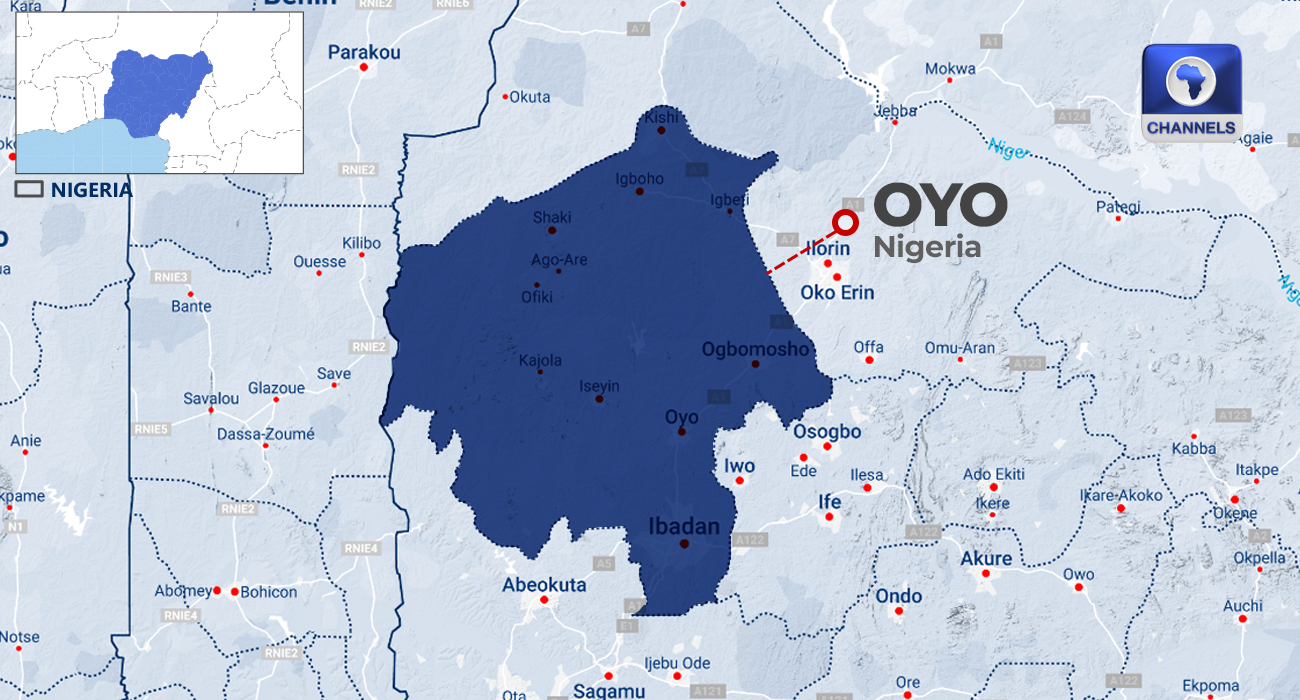
Traffic gridlock paralysed both the old and new Ibadan–Oyo roads for hours on Tuesday as students and residents staged a protest, blocking vehicular movement to register their grievances over rising insecurity.

The protesters, joined by students in the area, accused the police of unjust treatment of residents of Jobele and neighbouring communities, which have recently experienced violent attacks.

Tension gripped Jobele in Afijio Local Government Area of Oyo State as residents protested alleged cases of kidnapping, banditry and other criminal activities in the community. The demonstrators blocked the Ibadan–Oyo Road, disrupting both human and vehicular movement.

The protesters decried the worsening security situation in the area and called on relevant security agencies to urgently intervene to safeguard lives and property.

According to the protesters, suspected kidnappers invaded one of the communities along the axis on Monday.

READ ALSO: Ondo Residents Block Akure/Owo Expressway, Protest Abduction Of Worshippers

They said: “On Monday, the suspected kidnappers invaded one of the communities along the axis. An attempt was made to kidnap a lady but she narrowly escaped by scaling the fence.

“Even though she narrowly escaped, she received a deep machete cut on one of her hands. This was not the first time such an incident would happen in the area.

“We are not going to leave the road until our safety is guaranteed by the relevant security agencies.”

There are reports that the community has recorded not fewer than seven kidnapping-related incidents in recent times, with the latest attack occurring between Saturday night and Sunday morning.

Some of the protesters noted that “during the attack, a victim was brutally wounded by the perpetrators. The victim was rushed to the General Hospital and later referred to Ogbomoso for advanced treatment. Unfortunately, one of his hands has been amputated due to the severity of the injuries sustained.

“Following this disturbing development, concerned residents of Jobele decided to take responsibility for the safety of their community by keeping vigil throughout Sunday night into Monday morning.

“At about 1:00 a.m., community members apprehended a suspicious individual allegedly found with a gun, a cutlass and other dangerous weapons.

“In good faith and as law-abiding citizens, the suspect was handed over to the police at the Jobele Police Station for proper investigation and prosecution.

“However, in a shocking twist, when community members visited the police station this morning to inquire about the suspect, they discovered that the suspect had already been released without any explanation and without involving the members of the community who apprehended him.

“This development caused outrage among residents and, in response, community members, including students, blocked the Old Oyo–Ibadan Road and the major Ibadan–Oyo–Ogbomoso highway, demanding to know why the suspect was released and who ordered the release.

“We call on the relevant authorities, including the Nigeria Police Force, the Oyo State Police Command and the Oyo State Government, to urgently investigate this matter and address the growing insecurity in Afijio Local Government Area.”

Reacting to the development, the Police Public Relations Officer, DSP Ayanlade Olayinka, said: “The Commissioner of Police, Oyo State Police Command has ordered a thorough investigation into the allegation of unprofessional conduct by operatives of the Jobele Division, which reportedly resulted in the protest witnessed on Tuesday, 10th March.

“In line with the directive of the Commissioner of Police, the ASP who led the patrol team involved and the Divisional Police Officer (DPO) have been issued queries respectively, while the Inspector concerned has been defaulted and detained pending the outcome of the investigation.

“The investigation has since commenced in accordance with established rules, regulations and the law to ascertain the circumstances surrounding the incident and ensure appropriate disciplinary actions where necessary,” he concluded.
12 days: How 2025 Iran blueprint trapped US, Israel in longer war

In eastern Tehran, a resident named Sepehr keeps the front door of his apartment unlocked. It is a grim, calculated routine, allowing his family to sprint to an underground car park the moment the booming explosions return to shake their windows.

As thick, toxic smoke from burning oil facilities blankets the city of 10 million, the reality of a limitless conflict has set in. “The war might last weeks, so my family and I will only leave if it gets too bad,” Sepehr says. “For now, life goes on”.

For Iranians and the wider Middle East, there is a haunting sense of deja vu. Today marks the 12th day of the joint United States and Israeli military war against Iran. Exactly at this point during the June 2025 escalation, a fragile, US-brokered truce took effect, halting 12 days of intense bombardment.

Top military leaders and hundreds of civilians were killed in Iran by Israeli strikes, and 28 were killed in Israel, with Iran’s largely symbolic salvo on Al Udeid Air Base in Qatar, which hosts US assets, marking the final curtain of that 12-day war.

Things look much more perilous for the region and the world beyond this time.

The current conflict bears little resemblance to last year’s contained warfare. A drastic strategic pivot – from degrading nuclear infrastructure to executing a “decapitation” strike against the Iranian leadership – has shattered the previous rules of engagement, dragging the region into an open-ended war of attrition with zero diplomatic off-ramps.

The death of diplomacy

During the June 2025 war, Israeli and US forces largely concentrated their firepower on specific nuclear and military facilities in Natanz, Fordow, and Isfahan, though Tehran also came under heavy attack. While devastating, the defined scope of those targets left room for negotiations. The conflict ended on June 24 after intense mediation by Oman, which had been facilitating indirect nuclear talks in Geneva.

This time, the US and Israel adopted a fundamentally different objective. The opening salvo on February 28, 2026 assassinated Supreme Leader Ayatollah Ali Khamenei and several family members in Tehran. The strike was seemingly based on the assumption that eliminating the head of state would precipitate the instant capitulation of the government.

That has not happened. And now another Khamenei, the second son Mojtaba, has been selected as the new supreme leader, with the powerful Islamic Revolutionary Guard Corps (IRGC) and key leaders all pledging loyalty.

US President Donald Trump has oscillated between demanding the “unconditional surrender” of Iran, calling for a popular uprising, and offering amnesty to military commanders who switch sides. Yet, despite Washington and Israel claiming they have struck more than 5,000 targets and decimated Iran’s air force and navy, the government in Tehran has not collapsed.

Iran says US and Israeli forces have bombed nearly 10,000 civilian sites in the country and killed more than 1,300 civilians since the war began.

Surviving the shock: The ‘mosaic defence’

The gamble that Iran’s state apparatus would fracture without its supreme leader fundamentally misjudged Iranian military doctrine. Analysts note that Tehran spent two decades designing a framework to survive exactly this scenario.

Formulated by the IRGC, the concept of “decentralised mosaic defence” diffuses command and control across regional layers. Coupled with a “fourth successor” redundancy plan, it ensures that even if senior leaders are killed and central communications are severed, local combat units retain the authority and capacity to act.

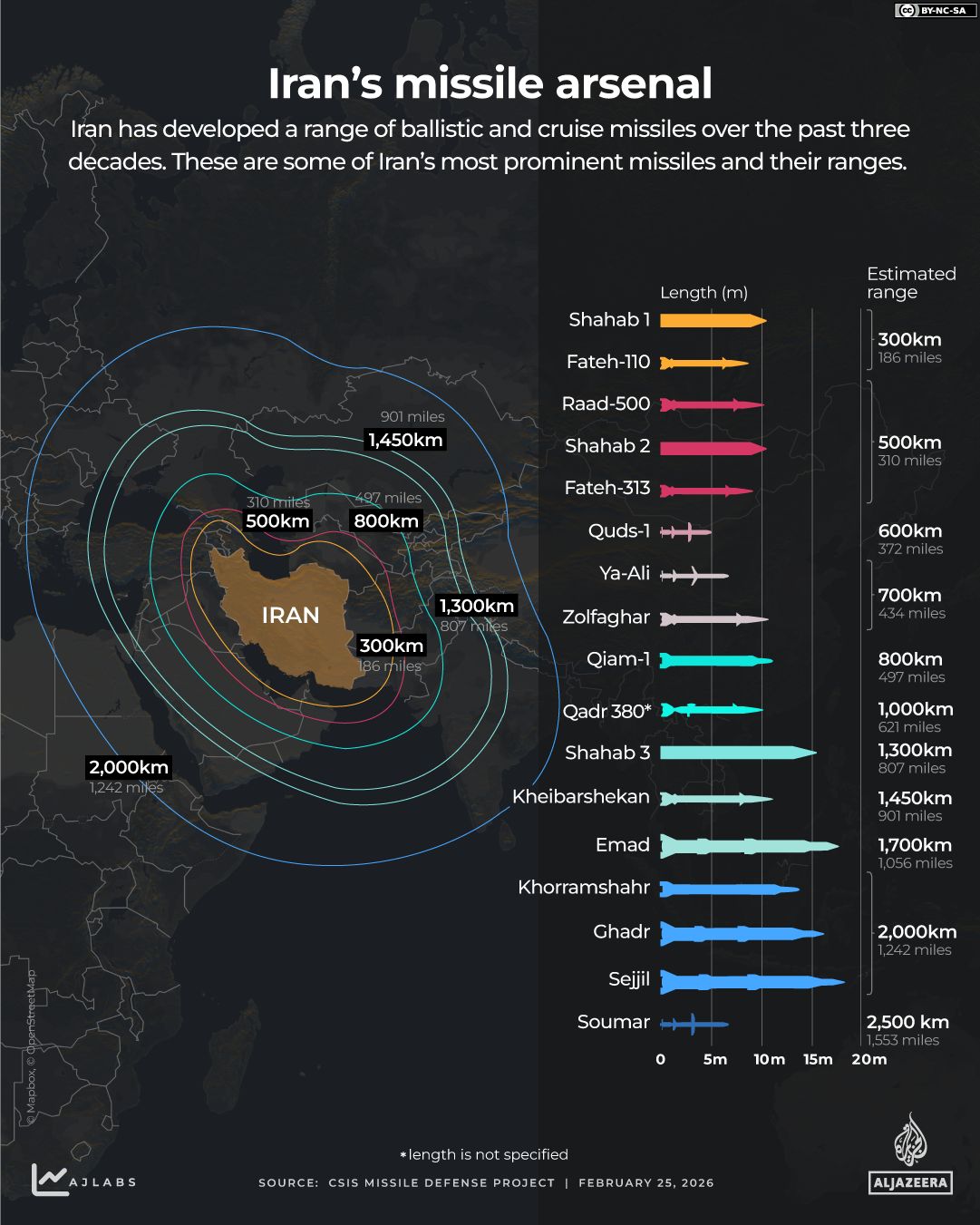
Consequently, the Iranian establishment swiftly appointed Mojtaba Khamenei as the new supreme leader, and Iran’s vast missile forces continued firing. Using a mix of short- and medium-range ballistic missiles, as well as drone swarms, Iran has turned time into a strategic weapon, aiming to deplete Israeli interceptor stockpiles and inflict continuous economic paralysis.

A wider, costlier battlefield

The absence of an off-ramp has allowed the war to metastasise across the region. In 2025, Iran’s retaliation was largely contained to Israel and specific US assets. In 2026, Tehran has widened the map, launching strikes across nine countries.

Missiles and drones have hit US military presence and civilian infrastructure in all Gulf states, including Bahrain, Kuwait, Qatar, Saudi Arabia, Oman and the United Arab Emirates. The Iranian military has also restricted traffic through the Strait of Hormuz, driving Brent crude oil prices past $100 a barrel, with wild swings ongoing, and prompting fears of a global energy crisis.

INTERACTIVE - Strait of Hormuz - March 2, 2026-1772714221
(Al Jazeera)

The financial burden of this limitless war is staggering. According to the Center for Strategic and International Studies (CSIS), the first 100 hours of Operation Epic Fury cost the US approximately $3.7bn, mostly unbudgeted. Israel, already reeling from the economic strain of its prolonged wars in Gaza and Lebanon, faces mounting domestic pressure as daily sirens force millions into bunkers.

The human burden

While politicians and generals debate the shifting parameters of “victory”, civilians are absorbing the catastrophic costs. At least 1,255 people have been killed in Iran, alongside 570 in Lebanon, 13 in Israel, and eight US soldiers.

Among the Iranian dead are 200 children and 11 healthcare workers. In the southern city of Minab, a strike obliterated the Shajareh Tayyebeh girls’ elementary school, killing 165 people, mostly young students. While the US says it’s investigating that strike, independent analysts say the presence of Tomahawk missile debris seems to point blame firmly towards Washington.

Trump recently claimed the war would be over “very soon”, but the reality on the ground suggests a prolonged tragedy.

4 day week, fewer car trips in Philippines as Iran fallout bites

NewsFeed

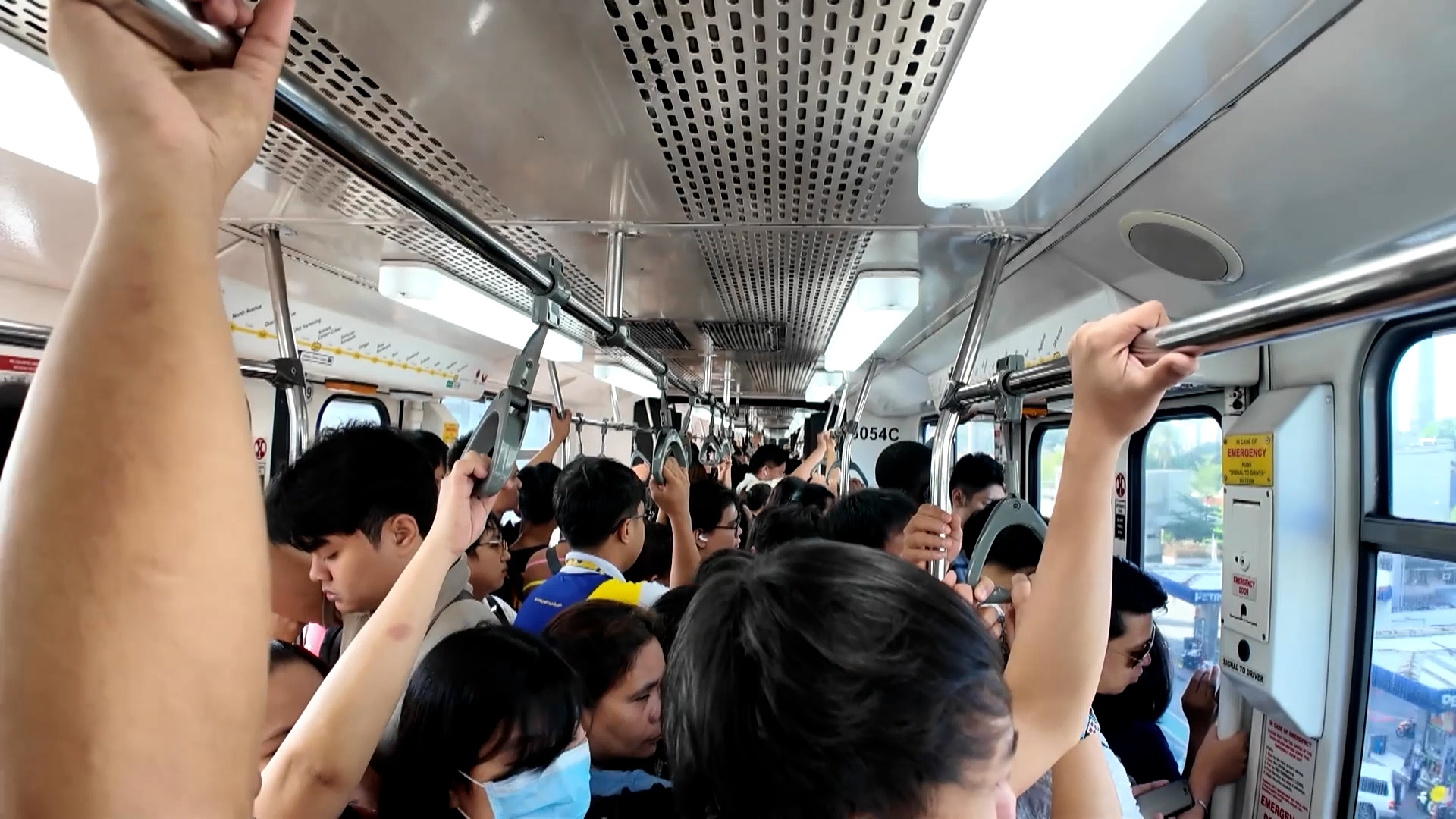
Rising fuel prices are pushing more people to use public transport and prompting a four-day work week in Manila as the impact of the US-Israeli war on Iran is felt globally. Al Jazeera’s Jamela Alindogan reports on how the government is cutting non-essential travel to save energy costs.

Sheff Wed facing 15-point deduction as bidder confirmed

  • 4 Comments

Sheffield Wednesday are facing a points deduction for next season if a deal with their new preferred bidder goes through.

Administrators have begun an exclusive period of negotiation with American private equity company Arise Capital Partners.

But any takeover could leave the Owls facing a 15-point deduction as Arise’s offer would not meet the EFL’s requirement to repay creditors 25p in the pound, which would mean starting life back in League One with a significant handicap.

New investors were sought after a proposed £47.8m deal led by former professional poker player James Bord collapsed.

A consortium led by David and Michael Storch and Tom Costin, who were one of three bidders back in December, have made a lower offer but it “represents the best available outcome currently achievable”, the administrators said in a statement.

“Our focus remains unchanged – to secure a responsible sale of the club, protect its future and achieve the best possible outcome for creditors,” it added.

Former Newcastle owner Mike Ashley is also understood to have made a bid to buy the club.

Arise have put up a “substantial deposit” for the deal and evidence of funds to complete the takeover, including to cover the club’s losses for eight weeks, allowing them to continue trading.

The club’s Supporters Trust welcomed the news, saying in a statement: “The Trust are grateful to David and Michael Storch and Tom Costin for meeting us.

“The meeting was very positive and we found them warm and engaging, passionate and interested.

But the deal would leave Wednesday with a significant task to return to the Championship at the first attempt, after they were relegated with 13 games to play.

The club will fulfil their remaining nine fixtures this season and all staff will continue to be paid.

“We are thrilled and excited to take this important step toward stewardship of this historic football club,” said Storch, managing partner of Arise.

Related topics

  • Sheffield Wednesday
  • Football
  • England Sport

More on this story

    • 26 July 2022
    Sheff Wed badge
  • Sheffield Wednesday

Sheff Wed to be docked 15 points if preferred bidder deal completed

  • 163 Comments

Sheffield Wednesday will be handed a 15-point deduction for next season in League One if a deal with their new preferred bidder goes through.

Administrators have begun an exclusive period of negotiation with American private equity company Arise Capital Partners.

However, Arise’s offer would not meet the EFL’s requirement to repay creditors 25p in the pound, which would mean the Owls starting life back in League One with a significant handicap.

New investors were sought after a proposed £47.8m deal led by former professional poker player James Bord collapsed.

A consortium led by David and Michael Storch and Tom Costin, who were one of three bidders back in December, have made a lower offer but it “represents the best available outcome currently achievable”, the administrators said in a statement.

“Our focus remains unchanged – to secure a responsible sale of the club, protect its future and achieve the best possible outcome for creditors,” it added.

Former Newcastle owner Mike Ashley is also understood to have made a bid to buy the club.

Arise have put up a “substantial deposit” for the deal and evidence of funds to complete the takeover, including to cover the club’s losses for eight weeks, allowing them to continue trading.

The club’s Supporters Trust welcomed the news, saying in a statement: “The Trust are grateful to David and Michael Storch and Tom Costin for meeting us.

“The meeting was very positive and we found them warm and engaging, passionate and interested.

But the deal would leave Wednesday with a significant task to return to the Championship at the first attempt, after they were relegated with 13 games to play.

The club will fulfil their remaining nine fixtures this season and all staff will continue to be paid.

“We are thrilled and excited to take this important step toward stewardship of this historic football club,” said Storch, managing partner of Arise.

Related topics

  • Sheffield Wednesday
  • Football
  • England Sport

More on this story

    • 26 July 2022
    Sheff Wed badge
  • Sheffield Wednesday

UN aid worker killed in DR Congo’s rebel-held Goma

A French aid worker for the United Nations children’s agency has been killed in the eastern Congolese city of Goma, France’s president said, after M23 rebels who control the city said air strikes hit a house there.

“A French humanitarian from UNICEF has been killed in Goma,” French President Emmanuel Macron said on X on Wednesday. “I call for respect for humanitarian law and for the personnel who are on the ground and who are committed to saving lives,” he added.

Recommended Stories

list of 3 itemsend of list

Goma is the capital of the Democratic Republic of the Congo’s (DRC) North Kivu province, a strategic city that Rwanda-backed M23 rebels seized from government control in January 2025.

Since taking up arms again in 2021, M23 has captured swathes of the mineral-rich Congolese east, unleashing a fresh spiral of violence in a region long plagued by fighting.

M23 spokesperson Lawrence Kanyuka said a drone attack in the early hours of Wednesday hit a residential building in the centre of Goma. He said Karine Buisset, a French national and UNICEF employee, was in the residence at the time and had been killed. The UN has yet to comment.

Video shared online and verified by Al Jazeera showed a house with part of its roof destroyed, and a trail of smoke emerging from one side. Sources on the ground, speaking to Al Jazeera, confirmed the structural damage.

An aid worker close to the house that was hit told the AFP news agency that he heard the sound of a drone, followed by a loud explosion that blew a “hole in the roof” of the building.

Local residents and humanitarian sources told AFP that several sites were hit and several people may have been killed.

Kanyuka said a “combat drone” had been used against the city, and blamed the Congolese government for the attack.

“This morning, the city of Goma was struck by a drone-led terrorist attack … targeting the United Nations and the European Union,” he wrote on X.

“This act of aggression constitutes an intolerable provocation targeting a densely populated urban area and deliberately endangering thousands of innocent civilians,” Kanyuka said.

The Congolese government has not yet commented on the M23 claims.

‘Violations’ of peace deal

The incident comes a day after the DRC’s army, also known as FARDC, said it shot down two drones belonging to Rwandan forces and “their allies” after they entered Congolese airspace in neighbouring South Kivu province.

The drones were downed in Mikenge “after they illegally violated Congolese airspace in the Minembwe area”, said an X account affiliated with the FARDC.

“This act of aggression constitutes a new provocation and a violation of the Washington Accord,” it said, adding that the Congolese forces “remain vigilant, disciplined, and ready to defend” DRC’s sovereignty and territorial integrity.

M23 rebels seized the capitals of both North and South Kivu provinces last year, as well as other cities.

They have advanced across several areas in the resource-rich east, even after an agreement signed with the Congolese government in Qatar last year, and following a separate accord signed between the DRC and Rwanda in the United States on December 4.

DRC’s government, the UN and the US all accuse Rwanda of supporting M23, something Kigali denies as it says it is facing threats from armed groups in the DRC.

The US sanctioned Rwanda’s military and four of its senior officers on March 2, accusing them of backing the M23.