Sudan’s devastating war rages on as regional rivalries deepen

Sudan’s civil war will soon enter its fourth year, with no end in sight. The conflict has drawn in other regional actors, who support and sustain the war by backing Sudan’s belligerents. This risks precipitating a much wider fallout in the region, with severe consequences in and out of Sudan. Sudanese civilians are paying the price.

Militarily, momentum has swung back and forth between the Sudanese army and the paramilitary Rapid Support Forces (RSF). Today, the front line largely runs along west-central Kordofan, with no decisive breakthrough in sight. As the war edges towards its fourth year, the conflict is steadily regionalising into the Horn of Africa and the Red Sea, making any settlement that much harder to reach. External patrons with deep pockets are turning Sudan into an indirect theatre of confrontation. Their money, weapons and logistical support shape battlefield calculations, sustain fighting capacity, and at times shift military momentum, prolonging the conflict and reducing incentives for compromise.

On one side stands the Sudanese army, which has assembled a coalition of supporters: Egypt, Eritrea, Turkiye, Qatar, Iran and, increasingly, Saudi Arabia, initially a neutral mediator. These countries, along with the United Nations and the Arab League, recognise army chief Abdel Fattah al-Burhan as Sudan’s head of state. Most frame their backing as support for a government confronting an internal rebellion.

On the other side, the United Arab Emirates has been the RSF’s main patron, providing financial, military and logistical support. That backing helped the RSF sustain major operations, including the long fight for el-Fasher. When the city fell after a siege stretching roughly 18 months, images and testimonies of atrocities spread: Executions, torture, abductions and sexual violence. The horror prompted a wave of critical coverage of Abu Dhabi’s role, but this has not had an effect on Emirati support.

Sudan’s geostrategic position helps explain why outside powers remain deeply invested. The country sits at the crossroads of the Red Sea, the Horn of Africa, the Sahel and North Africa. For some regional powers, the war is not only about Sudan itself, but about their own national security interests as well as the projection of influence in a rapidly changing and contested regional order.

Sudan’s African neighbours are also being drawn into the conflict, sometimes due to direct national interests and other times due to the incentives offered to serve as transit hubs for arms and supplies. These dynamics risk worsening existing fault lines across the Horn of Africa and potentially merging multiple regional conflicts, with Sudan at the epicentre.

Tensions swallow diplomatic efforts

On September 12, 2025, after months of US-led negotiations, the Quad – the United States, Saudi Arabia, the UAE and Egypt – proposed a roadmap to end the war. There was some initial diplomatic progress within the Quad format, including agreement on broad principles and indirect talks. In theory, alignment among these external backers could generate meaningful pressure on both the SAF and the RSF to negotiate an end to the war.

But, instead, mounting tensions between two Quad members, Saudi Arabia and the UAE, now overshadow the roadmap negotiations.

In December, those tensions erupted publicly. The UAE-backed Southern Transitional Council in Yemen launched a surprise offensive near the Saudi border against Saudi-backed forces, provoking Riyadh’s ire and triggering a rare, open rupture between the two Gulf heavyweights. Saudi Arabia publicly rebuked the UAE and demanded a full UAE withdrawal. The UAE then announced a pullout. Yet the rift has not closed. Saudi-aligned media now regularly accuse the UAE of “destabilising the region”, including in Sudan.

The UAE-Saudi feud risks deepening the intractable nature of the war. It could, for example, drive even more overt support for the army from Egypt, Turkiye, Qatar and Saudi Arabia. And few expect the UAE to scale back its support for the RSF.

The US must push harder

The US remains at the centre of the push to end the war, despite ongoing questions about whether the Trump administration is committed to seeing those efforts through. Those questions are likely to grow amid the war launched by the US and Israel against Iran, which has retaliated by also striking states across the Gulf.

All of these developments raise doubts about whether Quad negotiations over Sudan will make progress in the short term. As Gulf states respond to an unprecedented security threat, their attention is unlikely to be trained on Sudan. Yet the same crisis could also create an opening. Faced with a shared security challenge, Riyadh and Abu Dhabi may find reason to set aside some of their differences, including over Sudan. If they do, the effects could be constructive, helping revive stalled diplomatic efforts to end the war. The US and European powers, as well as other regional actors such as Turkiye, Egypt and other Gulf states, should try to help broker a Saudi-Emirati detente, and use it as a critical step on the way towards a truce in Sudan. Any such truce between the two warring parties would, in turn, need to set in motion an intra-Sudanese political process, possibly facilitated by the African Union and the UN.

There is also an urgent need to cool temperatures in the Horn of Africa, which appears on the precipice of a wider regional war driven in part by rivalries over Sudan’s conflict. It is time for African and other leaders to step up and try to ward off any escalation.

Even as the war with Iran intensifies and consumes global attention, it is vital not to forget that Sudan’s conflict is also primed to spread unless more is done to stop it.
IEA agrees release of 400m barrels of oil from strategic reserves

DEVELOPING STORY,

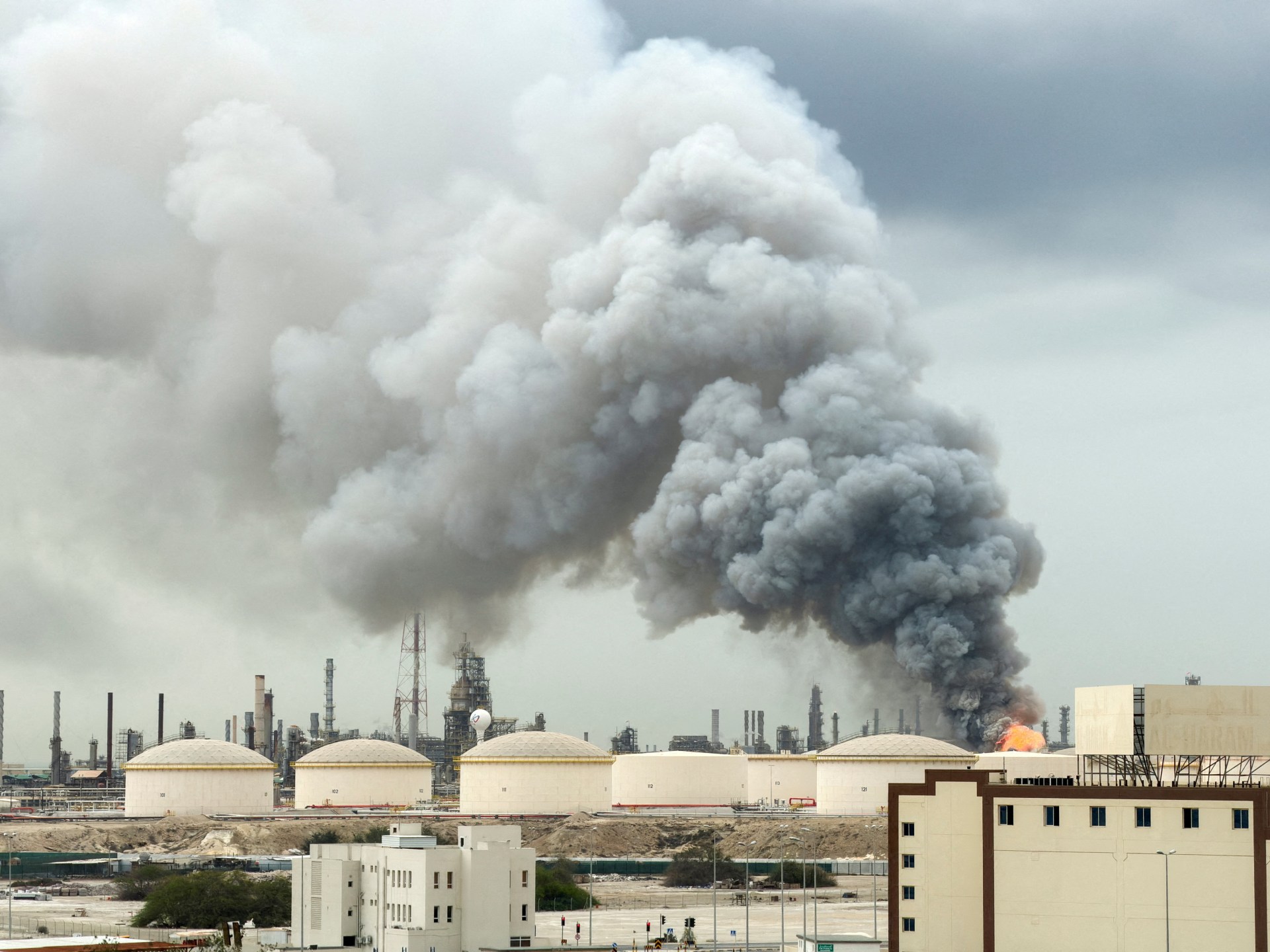
The International Energy Agency has agreed to release 400 million barrels of oil from its members’ strategic reserves, in an attempt to counter soaring global energy prices amid the United States-Israeli war on Iran.

The proposed release is larger than the 182 million barrels of ⁠oil that IEA member ⁠countries released in 2022 ⁠after Russia launched its ⁠full-scale invasion ⁠of Ukraine.

Recommended Stories

list of 3 itemsend of list

“The oil market challenges we are facing are unprecedented in scale, therefore I am very glad that IEA Member countries have responded with an emergency collective action of unprecedented size,” said IEA executive director Fatih Birol in a statement on Wednesday.

“Without sufficient routes to market and with no more available storage, Middle East oil producers have started to reduce production,” Birol said. “And we have seen further attacks and damage to energy and energy-related infrastructure. Refinery operations have also been disrupted, with major implications for jet fuel and diesel supplies in particular.”

IEA member countries hold more than 1.2 billion barrels of emergency oil stocks, with a further 600 million barrels of industry stocks held under government obligation.

Since the US and Israel launched their war on February 28, Iran has effectively closed the Strait of Hormuz, a crucial shipping route for oil produced by Gulf states. About a fifth of global oil supplies transit the waterway.

In response to the US and Israeli attacks, Iran has also targeted oil fields and refineries in Gulf Arab states, aiming at generating enough global economic pain to pressure the US and Israel to halt the war.

Germany and Austria said earlier they would release parts of their oil reserves following an IEA request for members to release the record 400 million barrels to help temper energy price spikes due to the Iran war. Japan also said it will release some of its reserves starting Monday.

Group of Seven (G7) energy ministers met Tuesday at IEA headquarters in Paris to look at ways to bring down prices. Birol said afterward that they discussed all available options, including making IEA emergency oil stocks available to the market.

The IEA reserves were established in 1974 following the Arab oil embargo.

Three More Senators Defect From PDP To APC

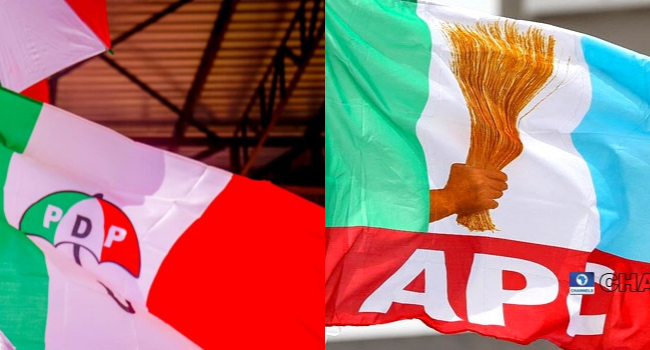
The Senate has announced the defection of three more senators from the People’s Democratic Party (PDP) to the All Progressives Congress (APC).

The lawmakers are Senator Amos Yohanna of Adamawa North, Senator Aminu Iya Abbas of Adamawa Central, and Senator Ikra Aliyu Bilbis of Zamfara Central.

Their defection letters were read on the floor of the Senate during plenary on Tuesday by the President of the Senate, Senator Godswill Akpabio.

The senators cited internal crises within the PDP in their respective states as the major reason for their decision to join the APC.

Following the latest defections, the number of APC senators has risen to eighty-three, while the PDP’s representation has dropped to nineteen. Other parties’ representation stands at: Labour Party – zero; NNPP – one; SDP – one; ADC – four; and APGA – one.

READ ALSO: Zamfara Governor Lawal Dumps PDP For APC

Commenting on the wave of defections, the Senate President described it as a sign that the country is moving in the right direction. He recalled that the Senate under the 8th Assembly had lost 34 APC members to the PDP, but noted that the situation has now reversed.

He stated that the PDP has emptied itself into the ruling party, adding that he agreed with the Senate Leader that something must be right somewhere.

Akpabio credited the development to economic reforms introduced by President Bola Tinubu, including the harmonisation of foreign exchange rates, the removal of fuel subsidy, and measures aimed at strengthening fiscal management.

‘Wrong person at wrong time’ – but if not Tudor then who?

  • 493 Comments

Where do Tottenham Hotspur go from here?

A calamitous 5-2 defeat by Atletico Madrid in the Champions League on Tuesday marked a new low point in Spurs’ shambolic season.

On Wednesday, Tottenham said interim manager Igor Tudor would speak with the media on Friday at a news conference before the club’s Premier League match at Liverpool.

Tudor, hired in part for having a positive short-term impact at the clubs he has managed, has overseen four consecutive defeats in a dismal 25-day reign since succeeding Thomas Frank on 14 February.

While hopes of Champions League progress appear in tatters following their latest chastening defeat, it is Tottenham’s Premier League situation which remains most pressing.

It is the need to avoid an unthinkable first relegation from the top flight since 1977 which will inform the club’s next steps.

Just 10 months after winning the Europa League, Spurs sit one point above the relegation places with nine games remaining.

“In footballing terms, this is an absolute crisis that Tottenham are in,” commentator John Murray said on BBC Radio 5 Live.

What do Spurs need in a manager?

Among the factors which led to Tudor’s appointment, Tottenham admired his work improving teams on a short-term basis – including at Italian giants Juventus.

Tudor was given the Juventus job on a permanent basis after achieving Champions League football with a run of just one defeat in nine at the end of the 2024-25 season.

But he has so far failed to have any such impact in north London.

Former Tottenham goalkeeper Paul Robinson told BBC Radio 5 Live that Tudor “was not the right appointment from the start”.

“We talk about a new manager bounce, when a new manager comes in and the players react and they get one or two results. That’s what Tottenham were looking for,” Robinson said.

“For Tottenham, it’s the wrong person at the wrong time. You saw the performance of the players. The minimum requirement is maximum effort.

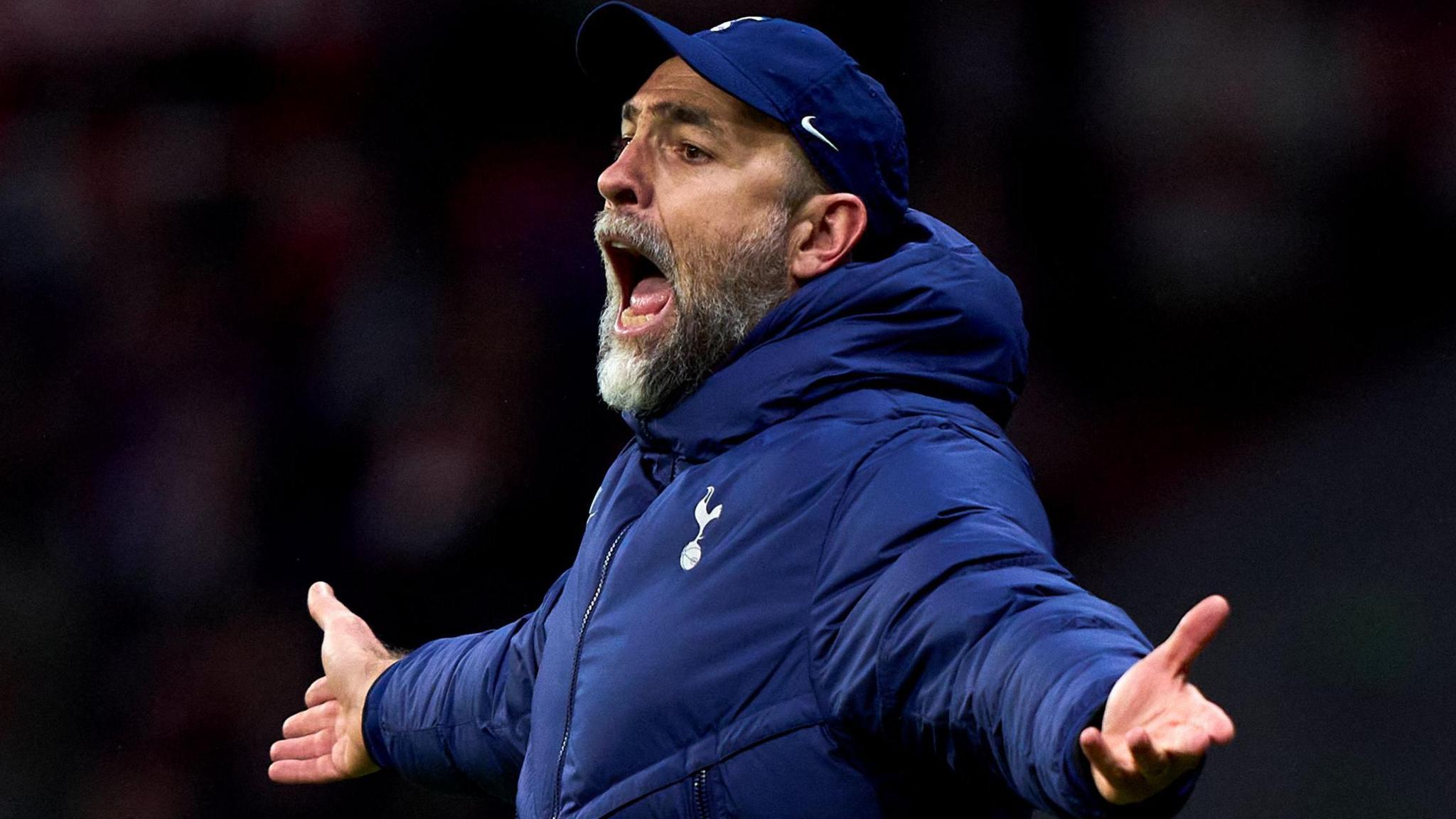
An image of Igor Tudor and a table displaying his results as Tottenham manager

Tottenham must now dust themselves down for a meeting with Premier League holders Liverpool at Anfield on Sunday, a stadium where they have conceded 17 goals in their past four visits in all competitions.

A crucial home game against relegation rivals Nottingham Forest follows next week’s return leg against Atletico Madrid.

But the mood within the squad has also been clear off the pitch, with Spurs midfielder Yves Bissouma admitting the players view their situation as “a big emergency”.

Former Spurs boss Tim Sherwood has accused Tudor of “adding fuel to the fire” in that regard.

Speaking on the No Tippy Tappy Football podcast, Sherwood said: “He hasn’t given the players a lift at all.

The bottom six in the Premier League - Leeds  (31 points), Tottenham (29 points), Nottingham Forest (28 points), West Ham (28 points), Burnley (19 points), Wolves (16 points)

A man manager with the ability to restore confidence in a squad which ended the club’s 17-year trophy wait last season, but also finished 17th in the league, would seem of paramount importance – should Tottenham decide to make a change.

Not least given the nature of Tuesday’s loss in Madrid, during which 22-year-old goalkeeper Antonin Kinsky was taken off after a brutal opening 17 minutes and was consoled by team-mates but ignored by his manager as he left the pitch.

However, former Tottenham winger Chris Waddle said it is also on the players “to stand up and be counted”.

“The players are drained of confidence,” said Waddle.

“We can talk all day about management and the players but the biggest thing in football is; if you’ve got no confidence, don’t play.

Who could Spurs call upon?

Where might Tottenham look if they did decide to place man-management at the top of their search priorities?

Former Spurs midfielder Ryan Mason previously stepped up as the club’s interim head coach in both 2021 and 2023, overseeing 13 games in the Premier League, before being appointed as assistant coach to Ange Postecoglou.

Mason ended his seven-year coaching career at Spurs last summer to take over at West Brom, but he was sacked by the Championship club in January.

Meanwhile, former Tottenham boss Sherwood, speaking on Sky Sports, said he could do a short-term stint as the club’s head coach to help guide them out of trouble.

Another former Spurs manager, Mauricio Pochettino, was said to be a candidate to permanently replace Frank, but his contract with the United States men’s national team does not expire until after this summer’s World Cup.

One former Spurs manager who appears to have ruled himself out of contention is 79-year-old Harry Redknapp.

“I won’t [take the job] – I don’t expect to get a call,” Redknapp told BBC Radio 5 Live. “My focus this week is enjoying myself at Cheltenham.”

Spurs may choose to look further afield – but their current options, within the search parameters as they were a month ago, appear limited.

In addition to a track record of having an immediate impact, Spurs sought someone with top level managerial experience who plays attacking football.

When Spurs initially began their search to replace Frank, himself dismissed after less then eight months in charge, former Marseille boss Roberto de Zerbi, former Borussia Dortmund manager Edin Terzic and ex-Red Bull Leipzig boss Marco Rose were among the other potential short-term options.

Ex-Brighton boss De Zerbi left his role as manager of Marseille by mutual consent after just under two years in charge, three days before Spurs confirmed their appointment of Tudor.

Terzic has been out of work since asking Dortmund “to terminate his contract with immediate effect” in June 2024, after leading the club to the Champions League final.

Rose was sacked by RB Leipzig in March 2025, having won 72 of his 127 matches in charge and lifted the German Cup in 2023.

Within the Premier League, Oliver Glasner, Andoni Iraola and Marco Silva are among the names who will be available this summer – but would any be prepared to leave their respective clubs earlier to help Spurs’ cause?

FA Cup-winning manager Glasner has confirmed he will leave Crystal Palace this summer, but his immediate future was understood to be in doubt in February amid a poor run of results.

Bournemouth are reportedly set to open contract talks with Iraola in an effort to ward off interest from Crystal Palace, Tottenham and Manchester United.

Related topics

  • Premier League
  • Tottenham Hotspur
  • Football

More on this story

  • Tottenham Hotspur stadium
  • Ask Me Anything  logo

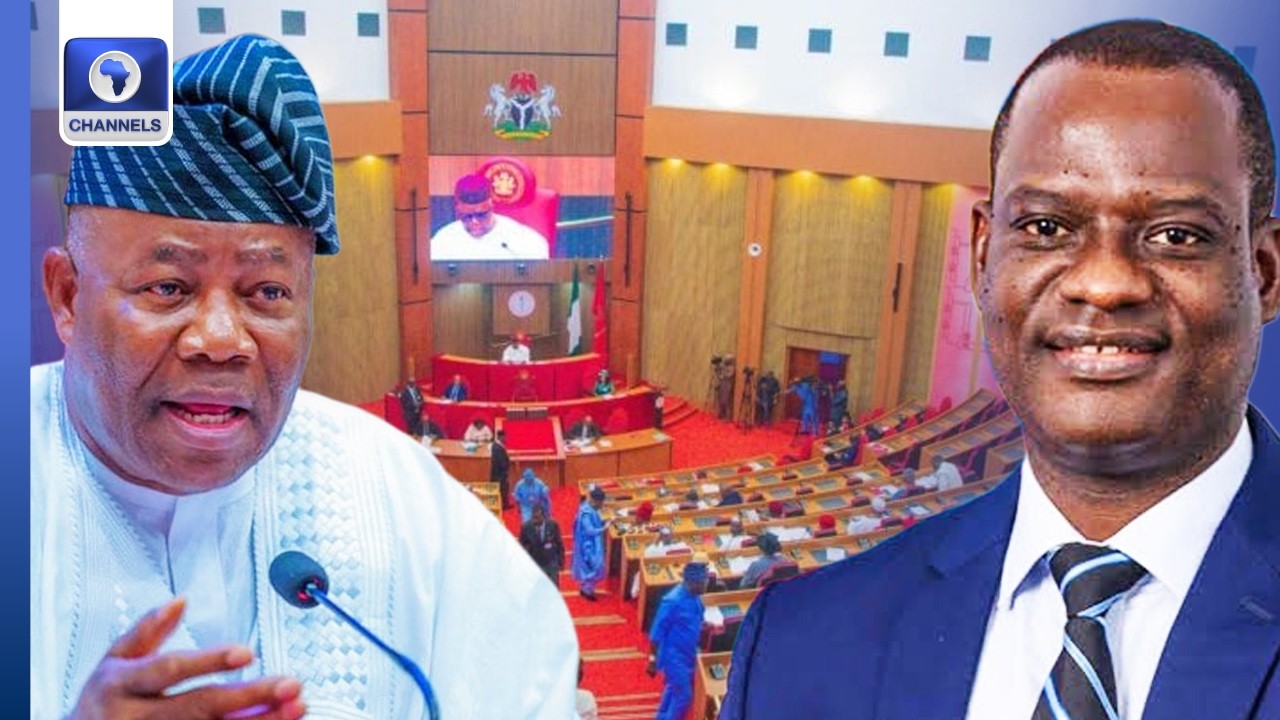
LIVE: Senate Screens Ministerial Nominee Taiwo Oyedele


The Senate is screening Taiwo Oyedele following his nomination as the Minister of state for Finance. 

His screening is taking place days after President Bola Tinubu nominated him to serve in the post in a minor cabinet reshuffle.

Tinubu subsequently wrote to the Senate, asking the lawmakers to confirm Oyedele’s appointment.

Watch his screening below:

Dempsey’s rise from Wallabies cast-off to Scotland powerhouse

Andy Burke

BBC Sport Scotland

Watching Jack Dempsey’s towering displays for Scotland in this Six Nations, it is hard to believe he was cast aside by his native Australia for lacking physicality.

Their loss has been Gregor Townsend’s gain since the 31-year-old switched allegiance in 2022. Dempsey has made his own a position that for a long time was a problem for the Scots.

There have been some capable Scottish number eights in the Six Nations era. Some versatile back-rowers who slotted in when required.

Some who were out-and-out eights who carried hard but only fleetingly or for chunks of games, failing to get Scotland enough front-foot ball to survive against the big guns.

    • 19 hours ago
    • 2 days ago
    • 19 hours ago

“If you look at the professional era, Dempsey is probably the best we’ve had,” says former Scotland number eight Johnnie Beattie.

“Simon Taylor would be – when he was fit – the best we’ve had, and now probably Dempsey. His performances this year have been right up there.

“He’s really dynamic, impactful, has tireless workrate and he’s got a real point of difference. He gives us go forward and metres that are hard earned.”

Dempsey’s route to the Scotland team was one of the more unusual paths in Test rugby. “A long and weird road”, as he once described it.

He played 14 times for Australia and appeared at the 2019 Rugby World Cup.

But then he fell out of favour when Dave Rennie, the former Glasgow coach who has recently taken charge of the All Blacks, was named Wallabies head coach in 2020. “We always felt he lacked a bit of physicality,” Rennie once explained.

‘Everyone likes lining up with a tough bloke’

To play this video you need to enable JavaScript in your browser.

Physicality has not been a problem for Dempsey in the dark blue jersey. He is famously single-minded in his approach to the game.

“I’m not the first one on the team sheet for my defence. I’m there to get the ball in my hands,” he told the BBC’s Scotland Rugby Podcast in 2023.

He combines power and clever footwork to ensure he is not easily put down, and contact is normally taken on his terms.

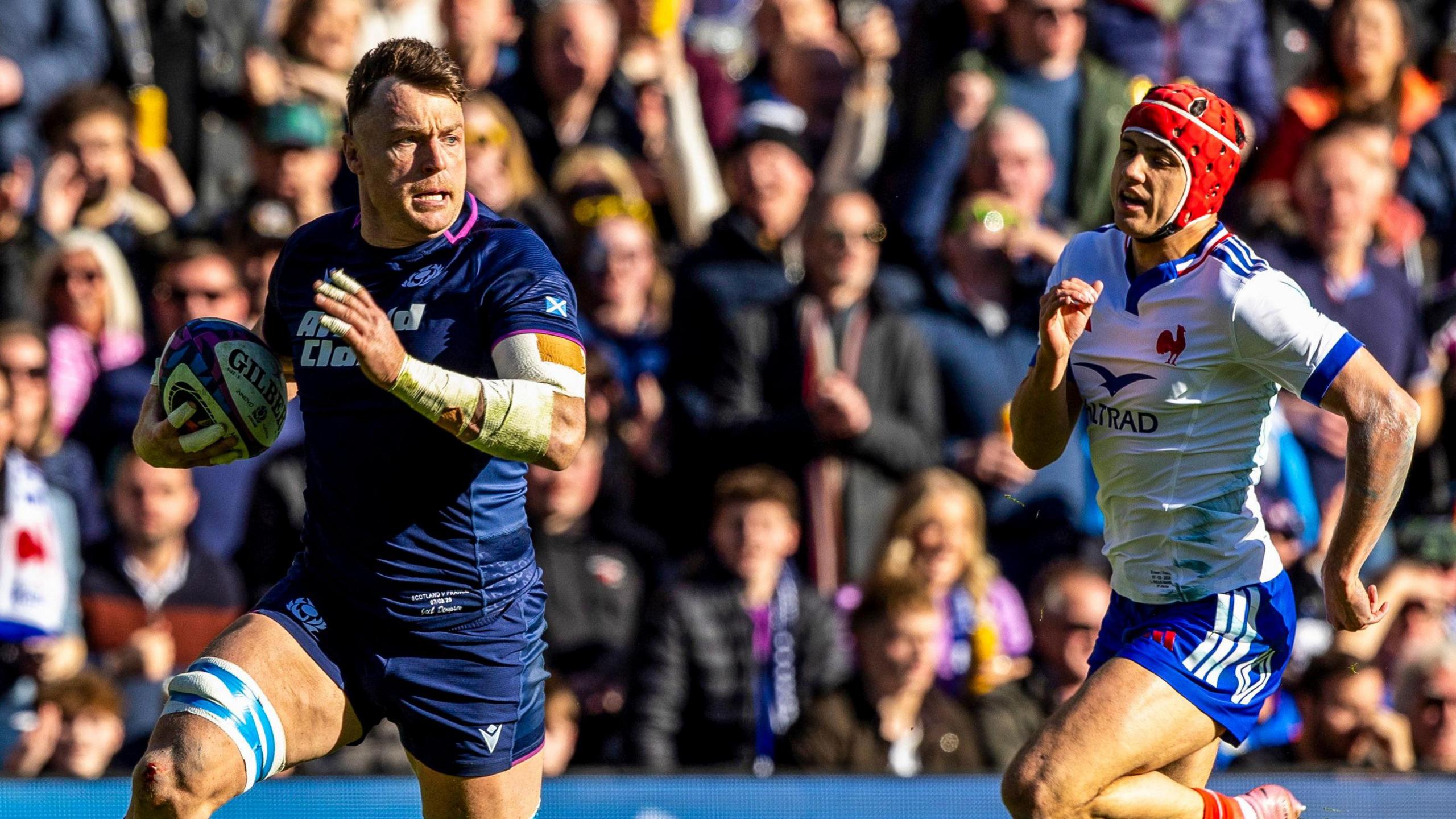
Dempsey’s powerful carries have generated precious front-foot ball and been a focal point for a Scottish attack that has shredded both England and France in this Six Nations. He was a standout performer in both games.

A sliding doors moment in Scotland’s campaign was Dempsey recovering from what looked like a tournament-ending bicep injury suffered against England.

He missed the victory over Wales in Cardiff, but unexpectedly returned to take his place in the starting team to face France, played the full 80, and was immense.

“Everybody likes lining up with a tough bloke,” says Scotland defence coach Lee Radford.

“To be able to bounce through the pain barrier like he has, how physically he plays the game, both with the ball and without it, there’s a lot of the little stuff.

“There was the clip of him snapping his bicep. He finds his way out to an edge defensively, but stays on the field and then makes a right shoulder shot that should have been a left because he’d snapped his bicep.

“So to stay on the field and come up with those plays says a lot about the character of the bloke.

From Rome to rapture – Townsend’s revival rolls toward Dublin

BBC Scotland rugby podcast

11/03/26

Dempsey is a fascinating character.

He rarely appears in front of the media, but when he does, he tends to have a captive audience. He speaks thoughtfully, with refreshing candour and, much like his ball-carrying, he is direct and to the point.

He has spoken about the adjustment of swapping Sydney for Glasgow. At the Waratahs, he would invariably hit the beach after training – not an option available to him most of the year round in the West of Scotland.

Having spent nine months out injured last year, Dempsey spoke after his return in October how tough his spell on the sidelines had been.

“I love Glasgow, it’s my home, but there’s not a huge amount to do when you’re not playing rugby,” he said.

Getting back on to the pitch and doing what he does best was the sole focus during that period. His performances for club and country since have been those of a man playing every game as if it’s his last.

“I think he offers a point of difference that none of the other back rows have in terms of his ability to break a tackle, generate space and time for others, and move Glasgow or Scotland up the field,” Beattie said.

To play this video you need to enable JavaScript in your browser.

Related topics

  • Scotland Rugby Union
  • Scottish Rugby
  • Rugby Union

Related internet links