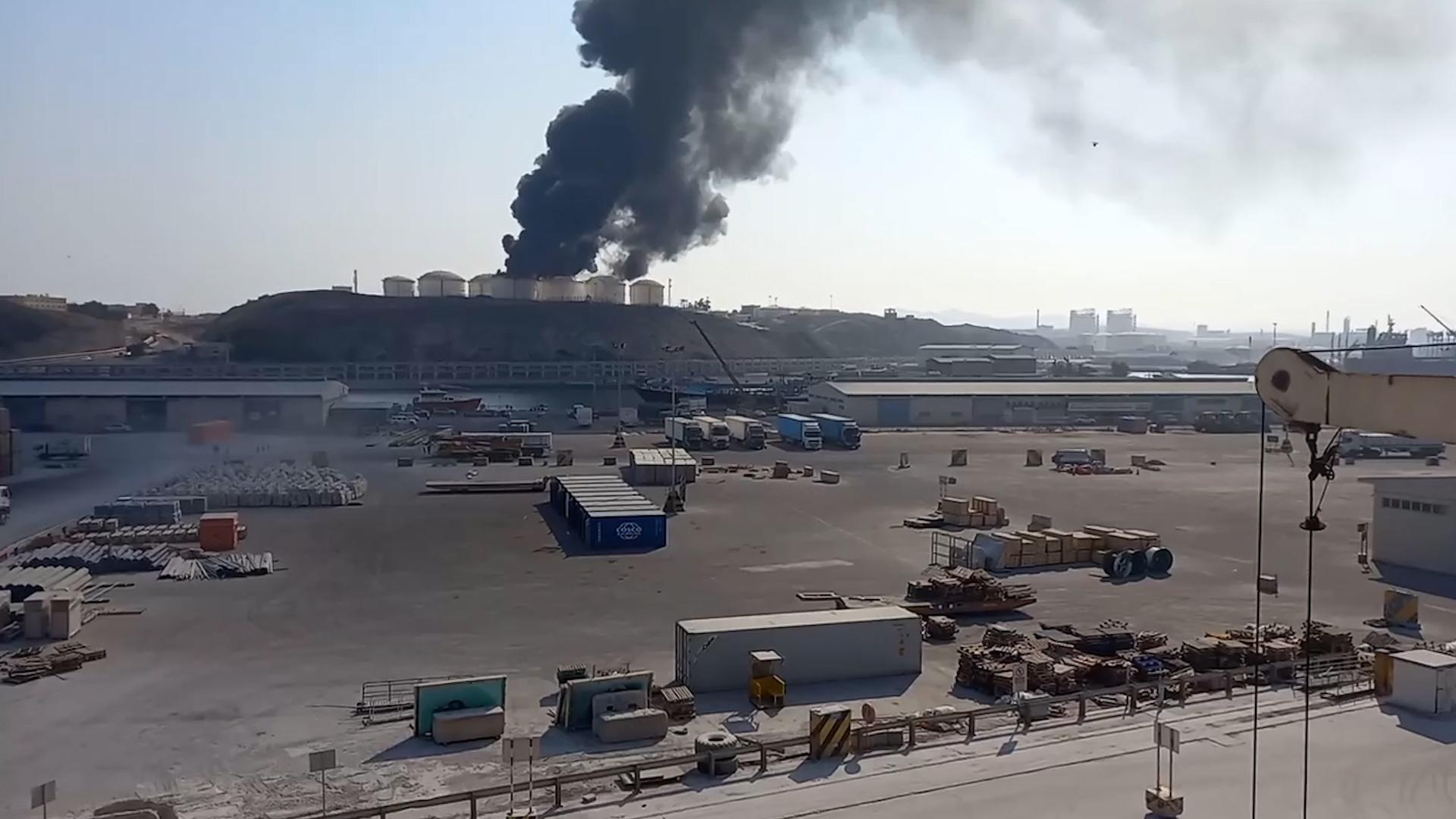
Drones have struck oil storage facilities in Oman’s Salalah port, as local authorities say they are responding to a huge blaze. Iran continues to target energy production and storage sites throughout the Gulf in response to ongoing US and Israeli attacks on the country.
“Super excited” Sammi Kinghorn has revealed pregnancy means she will not compete at the Commonwealth Games in Glasgow this summer.
The Paralympic 100m T53 gold medallist will be an ambassador for the event, which is returning to the Scottish city after a 12-year absence.
Kinghorn is a three-time European and world champion in T53 events and competed at the Games in Scotland’s largest city in 2014.
“It’s a really difficult decision,” the 30-year-old told BBC Radio Scotland’s Lunchtime Live. “I don’t think that’s something that’s spoken about often.
“You never know if you’re going to be able to come back so you have to be prepared that this might be it, you might be finishing you’re sporting career.
“I definitely would’ve been there and hopefully fighting for the medals. Watching it, I’ll probably be that little bit sad.
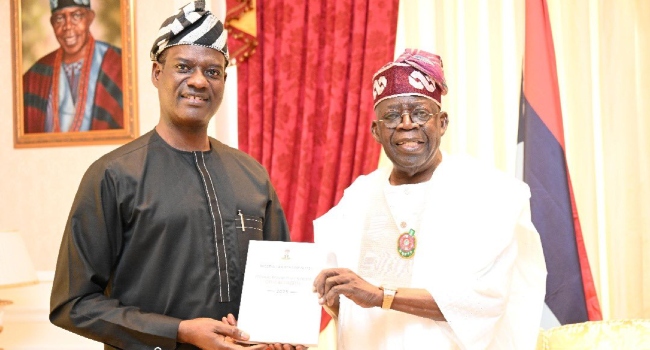
Taiwo Oyedele has described his nomination as the Minister of State for Finance as a call to serve Nigeria.
Oyedele, the outgoing chairman of the Presidential Committee on Fiscal Policy and Tax Reforms, said this during his screening for the position.
“With over two decades of experience working with national governments, multilateral institutions, and global corporations, my journey across the private sector, academia, and public policy has focused on fiscal governance and economic transformation,” the 50-year-old told senators on Wednesday.
“However, this moment is not about personal accomplishments; it is a call to serve at a critical time when Nigeria faces significant fiscal challenges and remarkable opportunities.”
READ ALSO: Tinubu Nominates Taiwo Oyedele As Minister Of State For Finance
President Bola Tinubu nominated Oyedele to replace Doris Uzoka-Anite, who was moved to serve as the minister of Budget and National Planning (state).
Days after his nomination, President Tinubu forwarded his name to the Red Chamber, seeking the lawmakers’ confirmation.
At the event, Oyedele praised Tinubu for nominating him as a minister, and tagged his appearance before the Senate as a honour.
“I am deeply honoured to appear before this distinguished chamber today. I thank President Bola Ahmed Tinubu, GCFR, for the confidence reposed in me through this nomination, and I thank the Senate for the opportunity to share my vision,” the public policy expert, accountant, and economist told the lawmakers.
Before his appointment, Oyedele served as the tax reforms committee chair, masterminding the enactment of a new tax regime in Nigeria.
While he was appointed to that position in July 2023, it took Oyedele and his team over two years to rejig Nigeria’s tax laws.
Though there were pushbacks initially about the laws, they eventually went live on January 1, signalling a fresh era.
Speculation has been mounting in the United States about whether American soldiers will be deployed on the ground in Iran as the US-Israeli war entered its 12th day on Wednesday.
Democratic Senator Richard Blumenthal said he was the angriest he had been in his political career after he attended a classified Iran war briefing for the Senate Armed Services Committee on Tuesday.
Recommended Stories
list of 4 itemsend of list
“I emerge from this briefing as dissatisfied and angry, frankly, as I have from any past briefing in my 15 years,” Blumenthal told reporters, adding that he had more questions than answers concerning the US goals.
“I am most concerned about the threat to American lives of potentially deploying our sons and daughters on the ground in Iraq. We seem to be on a path toward deploying American troops on the ground in Iran to accomplish any of the potential objectives here.”
It was the latest condemnation of the war on Iran by Democrats, who have faced Republican opposition in their attempts to rein in US President Donald Trump’s powers to go to war without the approval of Congress.
Democrats accused Trump’s Republican administration of failing to adequately justify why the US attacked Iran in the first place and why the war should continue.
Senator Chris Murphy, another Democrat who also attended the briefing, wrote in a post on X on Wednesday that while officials claimed the goal of the war was to destroy Iran’s military assets, they could not detail any long-term plan.
Trump said at the start of the war that the US aimed to stop Iran from producing nuclear weapons although Tehran has maintained that its nuclear programme is for civilian purposes only.
Analysts said a ground operation would be “extremely” difficult in Iran’s vast, rugged terrain but not impossible.
Here’s what we know about a possible US deployment and what such a mission could look like:
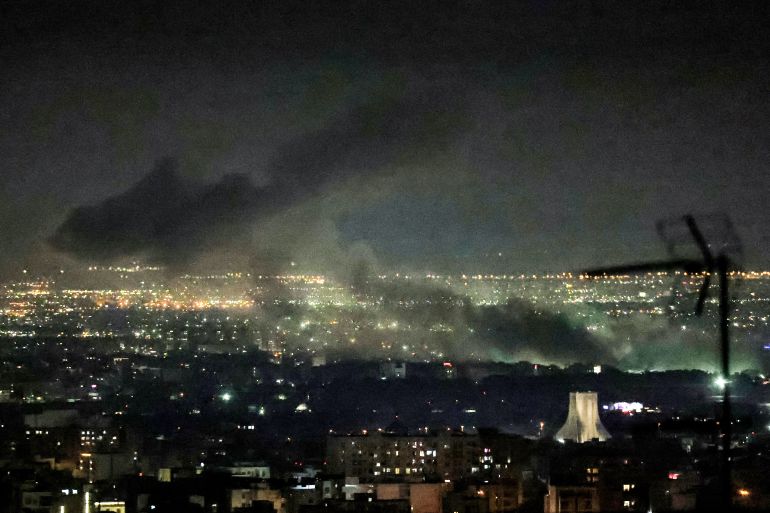
Smoke rises from air strikes near Azadi Tower in western Tehran on March 10, 2026 [AFP]
What are US officials saying?
The US government has not confirmed whether American soldiers would be deployed in Iran, but officials have also not ruled out the possibility.
Defense Secretary Pete Hegseth told the CBS TV network this week that the US is “willing to go as far as we need to” and Washington will ensure Iran’s “nuclear ambitions are never achieved”.
White House Press Secretary Karoline Leavitt said last week that ground operations are “not part of the plan right now” but Trump was keeping options open.
Secretary of State Marco Rubio’s speech at a congressional briefing last week provided some clues as to why a ground force might be needed.
Rubio said the US needed to physically secure nuclear material in Iran.
“People are going to have to go and get it,” Rubio said without clarifying who that would be.
His statement came around the same time that it emerged Trump had spoken to Iranian Kurdish rebel groups based in Iraq along its border with Iran.
It’s unclear what was discussed, but analysts said it could involve the US seeking to use Kurdish armed forces as a proxy on the ground.
Most Americans oppose deploying US troops in Iran, polls suggested.
About 74 percent of respondents, most of whom leaned to the political left, were against it, according to a Quinnipiac University poll this week. In a snap text message poll at the start of the war, most respondents also told The Washington Post they were against the war.
According to a Reuters-Ipsos poll conducted in the hours after the war began on February 28, 43 percent of respondents said they disapproved of the war and another 29 percent said they were unsure. Only one in four respondents approved of the US-Israeli attacks.
An American soldier wipes his face during a sandstorm in the Iraqi desert south of Baghdad in 2003 [File: Peter Andrews/PA/CMC via Reuters]
Which countries has the US invaded in recent decades?
The US has engaged in multiple combat operations since the end of the Cold War.
Washington and its NATO allies invaded Afghanistan in October 2001 in the wake of the September 11 al-Qaeda attacks that year on New York and the Pentagon. Then-US President George W Bush stated that the aim was to dislodge al-Qaeda fighters and capture Osama bin Laden, the armed group’s leader.
The invasion was the start of a 20-year-long war and occupation in Afghanistan, during which 170,000 to 210,000 people were killed. About 130,000 NATO soldiers were involved. When the US finally withdrew in 2021, 2,500 US soldiers were still stationed there.
Similarly, US troops and allied forces invaded and occupied Iraq in March 2003 to destroy alleged “weapons of mass destruction” and remove Saddam Hussein from power. It sparked the Iraq war, which led to between 150,000 and a million deaths. About 295,000 soldiers were involved at the start, and about 170,300 were withdrawn at the end of the war in December 2011.
Recently, US special forces attacked Venezuela and abducted President Nicolas Maduro and his wife. During the limited mission on January 3, the US military bombed Venezuelan air defences before a ground unit moved into Maduro’s Caracas compound. Venezuelan officials said at least 23 Venezuelan security officials were killed, and Cuba said 32 of its nationals who formed part of Maduro’s security detail were killed.
How might a ground invasion in Iran unfold?
Iran is four times larger than Iraq and features difficult mountainous terrain.
Unlike the Iraq invasion, a mission to physically recover nuclear material in Iran would likely be tightly defined with precise goals and involve far fewer soldiers to reduce risk, analysts said.
“It is far more likely to refer to limited, specialised operations involving small units targeting specific facilities, potentially supported by rapid-deployment forces, such as the 82nd Airborne Division,” Thomas Bonnie James, a professor at Qatar’s AFG College with The University of Aberdeen, told Al Jazeera.
The elite US Air Force division is trained for rapid parachute deployments in conflict zones to capture airfields or other key locations. The same unit was deployed during World War II, in Afghanistan and the Iraq wars.
The mission’s goal would be to locate and neutralise enriched uranium in Iran.
The target, the analyst said, would be Iran’s most critical nuclear facilities: the Natanz Nuclear Facility, the Fordow Fuel Enrichment Plant and the Isfahan Nuclear Technology Center. Kharg Island, the economically important coral island from which most of Iran’s oil exports flow, could also be targeted.
“Any limited ground operation would likely begin with gaining air superiority and suppressing Iranian air defences to allow aircraft and support assets to reach targets safely,” James said.
Rapid-deployment forces, such as the 82nd Airborne Division, would secure entry points, including airfields or staging areas. Specialised units like the US Navy SEALs or the US Army Special Forces would then carry out the most sensitive tasks on the ground, he said.
The mission would likely involve “penetrating hardened facilities, collecting intelligence, and locating or securing sensitive nuclear materials with the overall emphasis on speed, precision and limited exposure”, James said.
Once complete, a rapid exit strategy would likely kick in, he added, with troops moving swiftly to extraction points and exiting the country in a short period.
A satellite image shows the Natanz Nuclear Facility with new damage from the US-Israeli war with Iran near Natanz, Iran, on March 2, 2026 [Reuters]
How could Iran respond?
After the US and Israel’s ignition of the war on Iran, Iran has launched multiple strikes on Israel and US military assets across the Gulf.
Other infrastructure has also been hit in Iraq, Bahrain, Kuwait, Qatar, Saudi Arabia, Jordan, Oman and the United Arab Emirates.
Analysts said this response is a clear indicator of how Iran could react to a US ground invasion.
A US ground mission, which would require sustained air support and a large ground contingent, could be risky and is likely to trigger “a severe response” from Tehran, Neil Quilliam of the UK think tank Chatham House said.
Even a small operation could escalate the conflict and trigger more Iranian missile strikes or attacks by Iranian proxy groups, such as Hezbollah in Lebanon and Yemen’s Houthis, experts say.
“These would be high-risk, complex and lengthy operations taking place in very hostile environments and against facilities heavily protected by the country’s security forces” at a time when Iran’s military command still appears intact, Quilliam added.
Hasn’t the US already attacked Iran’s nuclear sites?
Indeed, it has.
During the 12-Day War on Iran in June, the US attacked Iran’s three biggest nuclear facilities under Operation Midnight Hammer: Fordow, Natanz and Isfahan. This was an elaborate covert mission that officials said was aimed at wiping out Tehran’s nuclear enrichment capabilities.
Within 30 minutes and under the cover of night, US stealth bombers entered Iran’s airspace and dropped powerful bunker-buster bombs, designed to penetrate hardened mountainous structures that Fordow and Natanz are built into. A US submarine then fired two dozen Tomahawk missiles on the Isfahan research and production site.
US officials said the bombers had withdrawn from Iranian airspace by the time Tehran detected it was under attack.
Trump claimed the sites were “obliterated” while Israel also said it had assassinated several Iranian nuclear scientists.
However, Iranian officials at the time said the attack on its facilities had been expected and Fordow had been evacuated in advance.
Rafael Grossi, head of the International Atomic Energy Agency, then warned that Iran could resume uranium enrichment – the process of bringing uranium up to weapons-grade standard – “in a matter of months” because some facilities were “still standing”.
Grossi said Tehran had stockpiles of 60-percent enriched uranium by the time of the strikes and it wasn’t clear if they had been moved. At that level, uranium is just below weapons grade, and if refined further, could be used to produce nuclear bombs.
The resumption of hostilities between Israel and Hezbollah has surprised few who have been watching closely. The question was never whether conflict would return, only when. The arrangements that followed the November 27, 2024 ceasefire between Lebanon and Israel were widely understood to be temporary and structurally weak, leaving the underlying dynamics of confrontation largely untouched.
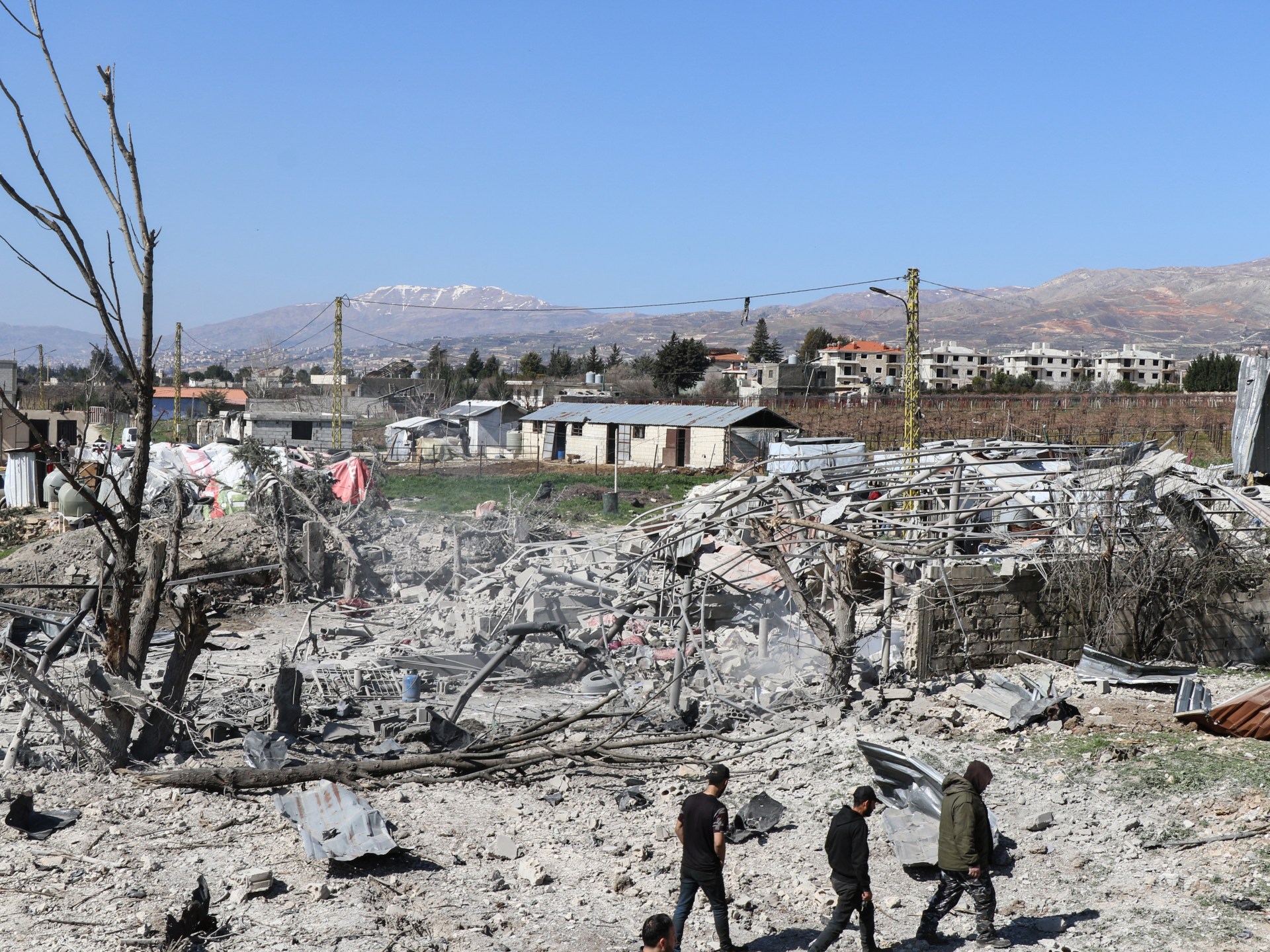
The ceasefire agreement, brokered by the United States and France, formally aimed to end active hostilities between Hezbollah and Israel. In practice, however, the agreement never truly halted the conflict. Israeli forces maintained a presence in Lebanese territory, and military strikes against Lebanon continued on an almost daily basis. The agreement itself contained a significant ambiguity: It granted the Israeli military the ability to conduct operations whenever it perceived a potential threat to its security.
This clause introduced a fundamental imbalance. The monitoring mechanism, chaired by the US and including France, with the participation of the Lebanese Armed Forces (LAF), the Israeli military and the United Nations Interim Force in Lebanon (UNIFIL), was tasked with overseeing the agreement but lacked the authority to independently verify whether the threats cited by Israel were real or whether the locations targeted were indeed Hezbollah positions. Even more critically, the mechanism did not establish a clear process for verifying or adjudicating violations of the agreement. As a result, accountability remained elusive from the outset.
The only international actor systematically documenting violations was UNIFIL, in line with UN Security Council Resolution 1701. According to UNIFIL records, between November 27, 2024 and the end of February 2026, more than 10,000 Israeli violations of Lebanese airspace and 1,400 military activities were recorded inside Lebanese territory. These incidents resulted in approximately 400 deaths and more than 1,100 injuries in Lebanon.
The monitoring mechanism itself collapsed with the resumption of hostilities between Hezbollah and Israel after the start of the US-Israeli war on Iran. During its last, and probably final, meeting at the end of February, Israeli representatives did not attend, marking the end of the framework intended to supervise the ceasefire arrangements.
Meanwhile, Israeli forces still maintain control of five positions inside Lebanese territory near the villages of Labbouneh, Marwahin, Aitaroun, Hula and Sarada, in addition to establishing two buffer zones. According to the terms of the November 2024 ceasefire agreement, Israeli forces were expected to withdraw from these locations to allow the deployment of the LAF, but this transition never materialised.
During this period, UNIFIL worked with the LAF to facilitate the redeployment of the Lebanese army in southern Lebanon, with several positions transferred back under Lebanese state control. However, continued Israeli strikes and military presence prevented the LAF from fully re-establishing authority in the south and restoring legitimate government institutions across the area.
The renewed conflict that erupted on March 2, 2026 appears even more asymmetric, unpredictable and violent than the previous confrontation. One major reason is the absence of any active diplomatic mediation capable of containing escalation. Unlike earlier phases of the conflict, when international diplomacy, however limited, attempted to prevent full-scale war, this new round has unfolded in a relative diplomatic vacuum.
Since the beginning of the broader confrontation in 2023, Israeli political and military leaders have repeatedly stated their intention to create security buffer zones north of the Blue Line that would be largely free of civilian presence. The pattern of attacks observed since late 2024 suggests a sustained effort to produce precisely such a reality on the ground. The scale of destruction in southern Lebanon supports this interpretation, with many villages near the Blue Line suffering extensive damage and several communities almost destroyed. Notably, much of this destruction occurred after the November 27 ceasefire, at a time when much of the civilian population had already been evacuated and Hezbollah attacks towards Israel had ceased.
Attempts to restore local governance and services in the affected villages have faced immediate setbacks. Whenever local authorities tried to re-establish an administrative presence using temporary facilities such as prefabricated buildings or containers, those structures were frequently attacked. These attacks have prevented the return of civilian life and the re-establishment of local institutions.
Recent reports indicate the presence of Israeli forces in additional southern Lebanese villages, including Ramyah, Yaroun, Hula, Kafr Kela, Khiam, Kfar Shouba, Aitaroun and Markaba. If confirmed, this would represent a further extension of Israeli operational presence inside Lebanese territory, with no withdrawal timeline in sight.
These developments place significant strain on international law, particularly the principles of sovereignty and civilian protection. Yet the response from the international community has been strikingly muted. Diplomatic initiatives capable of mediating the conflict have so far failed to materialise.
The situation was further exacerbated by a controversial decision adopted by the UNSC on August 31, 2025, largely driven by the US administration during the annual debate on renewing the mission’s mandate.
The new resolution granted the peacekeeping force its last renewal, requesting a cessation of operations by the end of 2026 and final closure by 2027. Should this decision remain in effect, southern Lebanon could soon find itself without any international presence capable of monitoring events, supporting civilians and assisting the LAF in their redeployment.
The implications of such an absence are profound, and the risk of miscalculation and uncontrolled escalation would significantly increase.
The alleged use of white phosphorus along the Blue Line, coupled with repeated spraying of chemical pesticides reportedly aimed at preventing farmers from replanting their crops, suggests a deliberate effort to keep the area devoid of population and civilian infrastructure. These practices reinforce the depopulation of the border zone while further undermining the already severely damaged agricultural economy of southern Lebanon, with potentially long-term socioeconomic consequences.
Compared with the 2023–2024 conflict, the current hostilities have also expanded geographically. Air raids and attacks are now occurring across a broader range of locations in Lebanon, including areas previously considered relatively safe. This widening scope has heightened public anxiety and may destabilise Lebanon’s already fragile political balance.
Lebanon’s domestic situation remains extremely delicate. Continued military pressure risks shifting political alliances, weakening state institutions and further undermining Lebanese security forces.
For many Lebanese citizens, the expanding pattern of attacks is reviving memories of past periods of civil unrest and internal instability. Such dynamics may serve Israeli strategic interests by further weakening Lebanon internally.
The resumption of Hezbollah attacks against Israel, reportedly following the assassination of Iranian Supreme Leader Ayatollah Ali Khamenei, may also reflect the dynamics of what the group perceives as an existential confrontation shaped in part by ideological imperatives. Hezbollah has long portrayed itself as a pillar of the “axis of resistance”, and continued engagement against Israel reinforces this identity.
At the same time, Hezbollah faces an internal political challenge. Within Lebanon’s evolving political landscape, the organisation has sought to reaffirm its relevance. In this context, renewed military activity can serve as a means of demonstrating that armed resistance remains necessary.
The LAF had, in recent months, attempted to reclaim areas in southern Lebanon, doing so with considerable determination despite limited resources. Yet these efforts were never matched by the level of international support that had been promised. A weakened and fragmented international community, often constrained by geopolitical alignments and the dominance of US and Israeli strategic priorities, proved unable to deliver sustained backing.
The latest developments have now pushed Israel towards preparing for the possibility of a ground invasion of Lebanon. Such an operation would follow a long historical pattern of Israeli military interventions in the country, including those in 1978, 1982, 2006 and, most recently, 2024.
If a ground offensive were to materialise, the consequences for Lebanon and regional stability could be severe. The current trajectory suggests a dangerous convergence of military escalation, institutional fragility and diplomatic paralysis. Without renewed international engagement and credible mediation, the Israel-Lebanon frontier risks sliding into another prolonged and devastating phase of conflict.
The first auction of its kind in a major British sport saw the Hundred create some of the highest paid sportswomen in the UK.
As a result of the investment made in the Hundred by sales of stakes in the eight teams, women’s salaries have increased immensely, with many deals outstripping the maximum £65,000 on offer 12 months ago.
All-rounder Danielle Gibson, pace bowler Issy Wong and 18-year-old spinner Tilly Corteen-Coleman received deals in excess of £100,000 in the inaugural Hundred auction.
In the auction, the English youngsters were among the top buys at Piccadilly Lights in London.
Overseas players also commanded huge fees in the auction, with Australia wicketkeeper Beth Mooney and former New Zealand captain Sophie Devine bought for £210,000 by Trent Rockets and Welsh Fire respectively.
Gibson, 24, went for £190,000 to Sunrisers Leeds despite suffering with a back injury in recent times, while 23-year-old Wong was bought for £130,000 by Southern Brave.
But it was the £105,000 deal for Corteen-Coleman that caught the eye, providing a huge jump in her £12,500 wage in last year’s competition.
The left-armer has had two seasons with Southern Brave and was part of the team beaten in last year’s final by Northern Superchargers.
Brave had to compete with London Spirit and MI London to take the England Under-19 international back to Southampton.
Spinner Linsey Smith, all-rounder Em Arlott and batter Paige Scholfield were among the other players to attract fees of more than £100,000.
This is the first time squads in the Hundred have been assembled by means of an auction. Previously, players have been selected in a draft system.
It is the latest in the changing face of the Hundred after stakes in all eight franchises were sold last year, raising more than £500m to be distributed across the game in England and Wales.
6 hours ago
To play this video you need to enable JavaScript in your browser.
Before the auction, teams were allowed to make a maximum of four direct signings, meaning established internationals such as England captain Nat Sciver-Brunt and spinner Sophie Ecclestone, along with overseas stars Ellyse Perry and Smriti Mandhana, had already been snapped up.
Sciver-Brunt and pace bowler Lauren Bell were the most lucrative pre-signings, bought for £140,000 by Trent Rockets and Southern Brave respectively.
In the women’s Hundred, teams have £880,000 to assemble their squads. It is the second most lucrative women’s cricket league in the world, behind India’s Women’s Premier League (WPL) with its pot of about £1.3m.
India batter Mandhana, a Hundred pre-signing for Manchester Super Giants for £90,000, is the highest-paid player in the WPL, on about £370,000.
The sums spent on some of the players for the latest edition of the women’s Hundred are a huge increase on a salaries available to women in the first season of the competition in 2021, when the highest wage available was £15,000.
The lowest base price for women in the auction is £15,000, and there was criticism from Sam Billings, a Hundred-winning captain with Oval Invincibles, now MI London.
“Auction will always only benefit a few and probably deserved for those few players,” Billings wrote on X.
“However, the disparity is too much. The draft structure was clearly far better from an overall player standpoint. As players we did feed this back.”
In total, the eight franchises are investing up to £7.2m in salaries for the women’s Hundred alone in 2026. As a commercial return, some are expecting to break even within two years.
In February BBC Sport reported that the four Hundred franchises linked to teams in the Indian Premier League would not consider buying players from Pakistan.
The England and Wales Cricket Board and the eight franchises then released a joint statement saying “players must not be excluded on the grounds of their nationality”.
There are two Pakistan players – Fatima Sana and Sadia Iqbal – in the women’s auction. A Pakistani woman is yet to feature in the Hundred and neither Sana nor Iqbal were bought on Wednesday, as expected.