How the Premier League run-in is shaping up

Chris Collinson

BBC Sport statistician
  • 14 Comments

It’s tense at the top and nail-biting at the bottom.

With fewer than 10 rounds of games left, we take a look at how the Premier League title race, the fight for Champions League places and the relegation battle are shaping up.

At the summit, Arsenal enjoy a seven-point lead over Manchester City but have played a game more.

Looking at the remaining fixtures, the Gunners have a slightly easier run-in on paper, although their eight remaining games include what could be a title-defining trip to the Etihad on 19 April.

While some have questioned Arsenal’s ability to go on and win the league, it’s clear that Manchester City haven’t been the terrifying force of seasons past.

In fact, only twice under Pep Guardiola have they had fewer points after 29 games than their haul of 60 this term – in their first season under him back in 2016-17 (58) and last season (48).

Good news for Arsenal fans is that the most dominant team statistically – in terms of expected goal difference per game, excluding penalties – have won the Premier League in three of the past four seasons.

The exception came when Manchester City pipped the Gunners to the title two years ago.

With fifth place likely to lead to Champions League qualification again, just three points separate Manchester United, Aston Villa, Chelsea and Liverpool for a place in the top five, with one of those sides looking set to miss out.

Some would say Aston Villa have the easiest run-in of the quartet. After a tough trip to Old Trafford this weekend, they face four of the bottom six in their next six games, although whether playing sides fighting for survival is an advantage at this stage is debatable.

A couple of months ago Aston Villa looked almost nailed on for a top-five finish as they sat at least eight points clear of the other three teams despite their underlying numbers being much worse.

In the battle at the bottom, Wolves and Burnley are all but down barring a footballing miracle, which leaves one spot that is likely to be filled by one of Leeds, Tottenham, Nottingham Forest and West Ham.

With the most points on the board already, Leeds have the kindest run-in on paper, with just one game against a side from the top six (Manchester United on 13 April) and home games against both of the bottom two.

However, the reason why Tottenham and Nottingham Forest fans have reason to be nervous is that West Ham’s performances have improved considerably under Nuno Espirito Santo’s guidance in recent weeks.

Related topics

  • Premier League
  • Football
    • 17 October 2025
    A graphic of Premier League players from every team in the division in 2025-26 season, with the Premier League trophy in front of them.
  • Quiz logo

More on this story

‘Hiding in plain sight’ – but why have Aberdeen appointed Robinson now?

Martin Dowden

BBC Sport Scotland

Why have Aberdeen suddenly moved to make St Mirren’s Stephen Robinson their new manager? Enough is enough seems to be the obvious answer.

Saturday’s abject end to their Scottish Cup defence at Dunfermline marked the latest low in a 16-month downward spiral that even lifting that trophy last season cannot mask.

Aberdeen have been going in one direction – the wrong one – for some time.

After talking an age since Jimmy Thelin’s departure in January to flirt with options including Eirik Horneland and Sandro Schwarz, a sudden need for urgency appears to have engulfed Pittodrie.

Under the influence of sporting director Lutz Pfannenstiel, all the signals were that a full-time appointment would come in the summer. Taking time to get the right person. Learning from previous errors.

That notion appears to have been thrown out the window.

Having announced the appointment of Robinson – after meeting a release clause in his contract – it seems the club have settled on a candidate they could have approached months ago.

“For me, he was a candidate right from the start, hiding in plain sight,” Aberdeen legend Willie Miller told BBC Scotland.

“I think it’ll be a surprise to most observers – fans included – that it has taken so long to identify someone that’s right under your nose.”

    • 1 day ago
    • 18 June 2023

What has brought this to a head?

“Atrocious,” interim manager Peter Leven said after their cup exit. “Furious, I can’t defend them anymore. We’re in trouble.”

Unusually blunt words post-match from any manager but who could blame him?

Every time there’s been a glimmer that Aberdeen might be on a path to take something positive from a season of disappointment, they have badly stumbled.

Eighth in the Premiership, with eight wins from 29 league games; out of the League Cup in September; their Conference League adventure a joyless trudge.

Then Saturday’s collapse against second-tier Dunfermline.

“Going out of the Scottish Cup, and the way Aberdeen went out, was getting to an unacceptable stage,” Miller explained.

“Getting a new permanent manager in place is the right thing to do and it’s probably taken too long.

To play this video you need to enable JavaScript in your browser.

What will Robinson offer at Pittodrie?

A lot, based on his CV.

St Mirren have consistently punched above their weight to claim three consecutive top-six finishes and a long-awaited return to European football.

Add in a League Cup victory this season, with a Scottish Cup semi-final against Celtic to follow.

The former Northern Ireland midfielder also has a detailed knowledge of what it takes to operate successfully in the Scottish Premiership.

Consider two cup finals in one season when manager of Motherwell prior to his time in Paisley and you have a compelling case of consistent over-achievement.

Yet the timing is curious.

Graphic

What’s in it for Robinson?

The timing is good from his point of view. He would be taking over a club pretty much at rock bottom in terms of expectation, with the sense that the only way is up.

Leaving a club hovering just three points above the relegation play-off spot offers a timely escape on a personal front, but he might feel uneasy with the idea that he is deserting a sinking ship.

In football, these opportunities appear and can disappear fast and the ideal time just never happens.

The chance to work with far greater resources will also no doubt appeal, although working within a different structure under Pfannenstiel will be different and may prove challenging.

Robinson clearly had a strong connection with all at St Mirren and that will have been a key driver of success on and off the pitch. He’ll need to replicate that.

He will know this is a step up, too. When asked after Thelin’s departure about being favourite for the Aberdeen role, Robinson simply suggested he couldn’t control that. He didn’t exactly close down speculation.

It’s a fine opportunity for him personally, although early indications are that he will meet a mixed response from Aberdeen fans.

Stephen Robinson graphic

What are Aberdeen fans saying?

Craig: This won’t be a popular appointment for fans who like the excitement of a foreign name but it is exactly what is required. After years of being the softest side in the league, endlessly recycling possession with no threat up top, I welcome someone that will bring fight and purpose to the side which presently lacks bite.

Chris: No thanks, would rather take our chances in avoiding the play-off spot with Peter Leven. Have we even asked Jens Berthel Askou?

Bruce: Finally! It’s about time the club realised they need a strong man-manager and effective coach who is seasoned in the SPFL. Robinson has overachieved for years – let’s hope we can entice him to Pittodrie.

Get in touch

Related topics

  • Aberdeen
  • Scottish Premiership
  • Scottish Football
  • Football

The war of signals: How Russia and China help Iran see the battlefield

When three senior American officials told The Washington Post that Russia was providing Iran with sensitive intelligence, including the precise locations of US warships and aircraft operating across the Middle East, they revealed more than a tactical alliance. They exposed the architecture of a new kind of war. A war without front lines. A war fought not with tanks or missiles, but with radar beams, satellite feeds and encrypted coordinates. In the Gulf today, the battlefield is the electromagnetic spectrum, and both sides are fighting, above all else, to blind the other.

Russian President Vladimir Putin reportedly denied that Moscow was sharing such intelligence with Iran during a call with US President Donald Trump. The denial, however, changes little. Russia has received Iranian drones and munitions for its war in Ukraine. It has watched the US supply Ukraine with targeting intelligence used to strike Russian positions, including, reportedly, locations near Putin’s residences. Moscow’s calculus is not hard to read. Intelligence is a currency. Putin is simply spending it.

Signals as weapons

As former CIA officer Bruce Riedel once observed, in modern warfare, coordinates are often more valuable than bullets. Whoever knows where the enemy is wins. That axiom is now playing out in real time across the Gulf. Russia’s intelligence pipeline has allowed Iran to locate US and Israeli assets with a precision Tehran could not achieve alone. Iran operates only a limited constellation of military reconnaissance satellites — wholly insufficient for tracking fast-moving naval assets across open water. Russia does not share that limitation. Its advanced overhead surveillance network, including the Kanopus-V satellite — re-designated “Khayyam” upon transfer to Iranian operational use — provides Tehran with round-the-clock optical and radar imagery. For Iran, this is not a supplement to its military capability. It is the nervous system of its precision-strike doctrine.

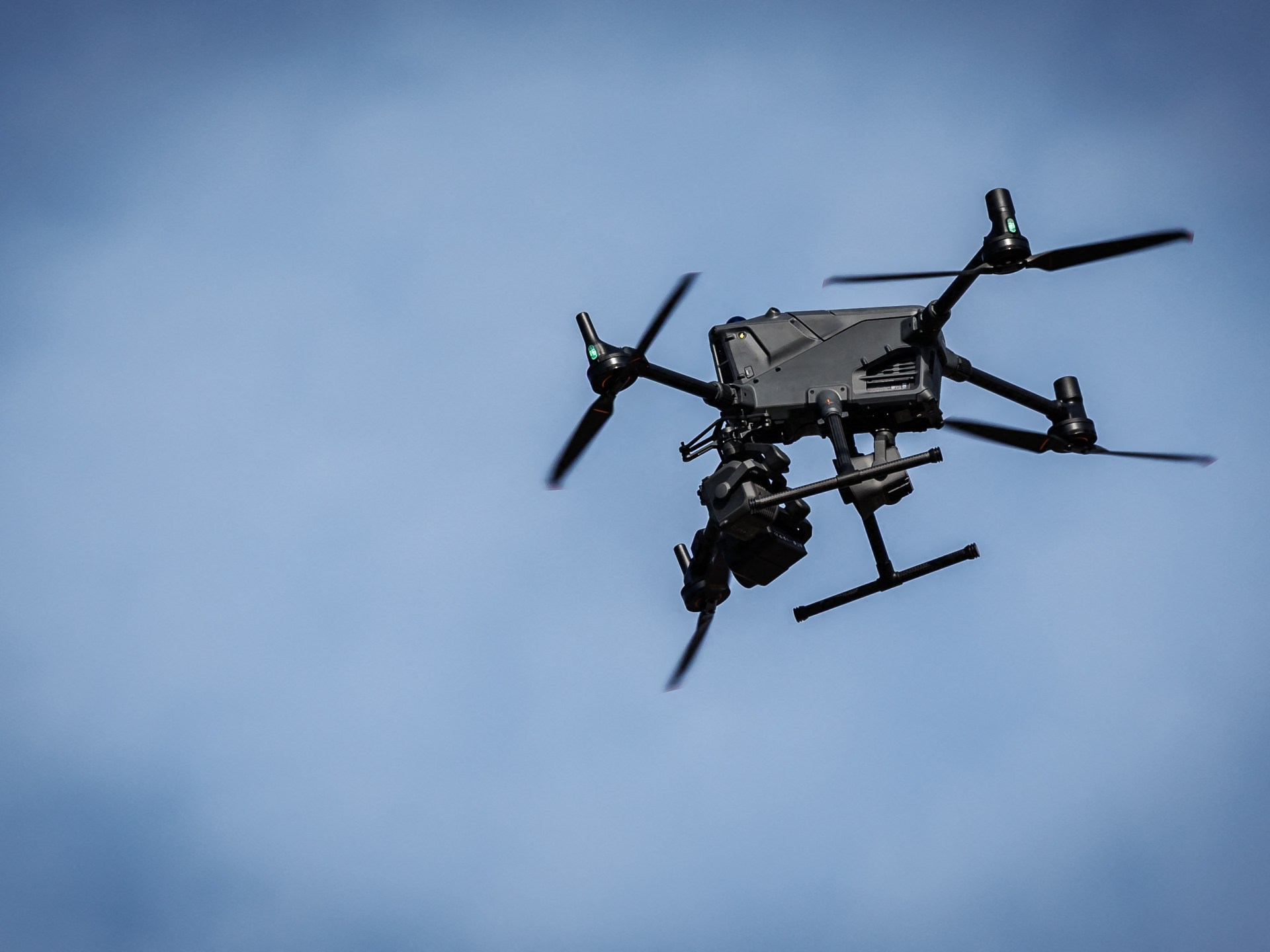
The drone that slammed into a US military facility in Kuwait, killing six American service members, did not find its target by accident. Pentagon officials, speaking on condition of anonymity, noted that several recent Iranian strikes hit facilities directly associated with US operations — targets whose coordinates do not appear on any public map. The sourcing is not hard to trace.

China’s silent hand

Beijing’s role is quieter. But it is no less consequential. China has spent years reshaping Iran’s electronic warfare landscape — exporting advanced radar systems, transitioning Iranian military navigation from US GPS to China’s encrypted BeiDou-3 constellation, and drawing on its expanding satellite network to support signals intelligence and terrain mapping for Iranian forces. Retired Israeli air force Brigadier-General Amos Yadlin once put it plainly: every second counts. If Iran can shave minutes off detection and targeting, it changes the balance in the skies. China has done more than shave minutes. It has reshaped the entire kill chain.

The YLC-8B anti-stealth radar — a Chinese-supplied UHF-band system — uses low-frequency waves designed to reduce the effectiveness of radar-absorbent coatings on US stealth aircraft. The B-21 Raider and the F-35C were engineered to be invisible. Against a YLC-8B, they are considerably less so. And now, Reuters reports that Iran is nearing a deal to acquire 50 CM-302 supersonic antiship missiles — the export variant of China’s YJ-12, capable of travelling at Mach 3 and sea-skimming at altitudes that compress a ship’s reaction window to seconds. Military analysts call them “carrier killers”. The USS Abraham Lincoln and USS Gerald R Ford are currently operating within their engagement envelope.

US-Israeli countermoves

The US and Israel are not passive. They are hunting. US and Israeli intelligence teams have been tracking Iranian leadership movements, mapping Islamic Revolutionary Guard Corps (IRGC) command nodes, and — in the opening phase of Operations Roaring Lion and Epic Fury — destroying Iranian radar infrastructure with a speed and precision that exposed how brittle Tehran’s defensive integration actually was. As former Israeli air force commander Major-General Eitan Ben-Eliyahu has noted, destroying a radar is not just about knocking out a machine; it blinds the enemy. In the war’s first hours, they erased many of them.

Yet the IRGC’s spokesman, Ali Mohammad Naeini, claimed that Iran had destroyed nearly 10 advanced US radar systems across the region — a statement that, if even partially accurate, offers a partial explanation for how Iranian missiles reached targets in Israel, the Gulf capitals and beyond. US Defense Secretary Pete Hegseth, asked directly about Russia’s intelligence assistance on CBS’s 60 Minutes, answered with studied brevity: “We’re tracking everything.” That is either a reassurance or a warning. Possibly both.

A new balance of power

For decades, the Gulf was a theatre of overwhelming US-Israeli technological dominance. That dominance has not vanished. But it has been eroded, quietly and deliberately, by years of Chinese hardware transfers and Russian intelligence sharing. As a senior US military commander recently acknowledged, signals are the new bullets: whoever controls the spectrum controls the fight. Neither side controls it decisively. That, in itself, is a profound shift.

This struggle also has precedent, though not a comforting one. In 1991, coalition forces jammed Iraqi radar networks and misled Saddam Hussein’s defences so thoroughly that US aircraft struck with near-impunity. Electronic countermeasures were decisive. Baghdad fought blindly, and it lost. Iran has studied that war closely for three decades. It has studied every subsequent conflict in which a technologically inferior force was dismantled from the air. Russia’s satellite feeds and China’s radar architecture are, in part, Iran’s answer to those lessons. Tehran is determined not to become the next Baghdad.

There is a deeper strategic logic at work that goes beyond Iran’s immediate survival. China is not arming Tehran out of ideological solidarity. It is treating the conflict as a live-fire laboratory. Every potential CM-302 engagement against a US carrier strike group can generate targeting and intercept data that Beijing’s military planners will study exhaustively, refining doctrine for the one scenario China actually cares about: Taiwan. Russia, meanwhile, has watched Western sanctions and Ukrainian targeting intelligence hollow out its own military credibility. Enabling Iran to bleed US forces and drain their interceptor stocks in the Gulf is not merely transactional. It is a form of strategic debt collection.

The implications are not abstract. The Gulf is becoming the first theatre where electronic warfare may prove more decisive than conventional firepower. Alliances are being redrawn not by troop deployments or treaty signings, but by intelligence flows and satellite constellations. Russia and China are not sending divisions to Tehran’s aid. They are doing something more durable: they are teaching Iran how to see.

Radar beams are now as lethal as missiles. Intelligence is the decisive currency. In this signals war, Iran is fighting for parity it has never had — and for the first time, it has partners capable of providing it. For the US and Israel, the challenge is no longer simply to outgun Tehran. It is to ensure that when the trigger is pulled, Iran is the one firing blind.

The question is no longer whether the Gulf will erupt. It already has. The question is who will be able to see clearly when the smoke finally lifts.
Draper Dumps Djokovic Out Of Indian Wells, Alcaraz Moves On

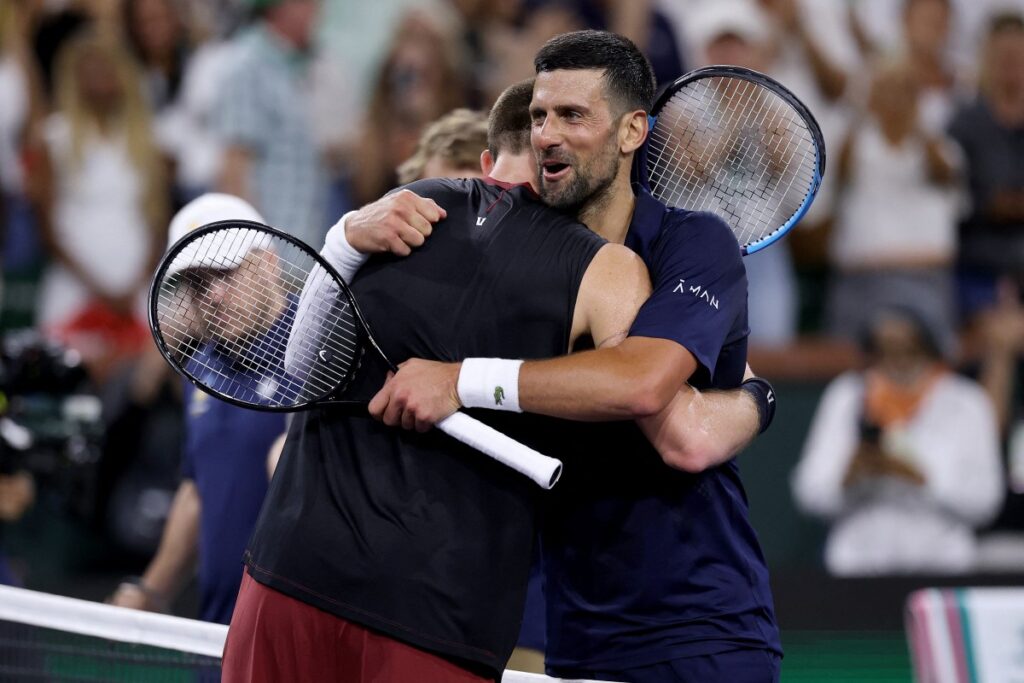
Novak Djokovic was dumped out by Jack Draper in a slugfest Wednesday as the defending champion won 4-6, 6-4, 7-6 (7/5) to reach the quarter-finals at Indian Wells.

World number one Carlos Alcaraz sailed into the last eight of the Masters 1000 event for the fifth straight year and there were straight-sets wins for Daniil Medvedev and Cameron Norrie.

But Britain’s Draper did it the hard way, wearing down 38-year-old Djokovic in a punishing third set to deny the Serb superstar his first return to the quarter-finals since he won his fifth Indian Wells title in 2016.

“I came out here tonight and I won that match through determination and trying to problem-solve and do my best and have a great attitude,” said Draper, who kept the former world number one on the move with multiple drop shots.

READ ALSO: PSG Thump Chelsea 5-2 In UCL Last 16 First Leg

The margins were razor-thin over the first two sets. The tide turned on an epic point in the opening game of the third that saw both players chasing down drop shots and scrambling for lobs before Djokovic sealed it with an overhead for a 40-30 lead.

He flopped on the court exhausted and was on his knees again after Draper won the next point. Djokovic would go on to hold serve, but he said it was the difference in the match for him.

“One point,” he said. “It was great winning that point in that game, but I just ran completely out of gas.”

Novak Djokovic of Serbia falls to the court with exhaustion against Jack Draper of Great Britain in their fourth round match of the BNP Paribas Open at Indian Wells Tennis Garden on March 11, 2026 in Indian Wells, California. Clive Brunskill/Getty Images/AFP (Photo by CLIVE BRUNSKILL / GETTY IMAGES NORTH AMERICA / Getty Images via AFP)

Draper broke Djokovic in his next service game, but couldn’t close it out when he served for the match at 5-4.

The reprieve wasn’t enough for Djokovic, who led 4-3 in the tiebreaker but couldn’t hang on.

“He played a sloppy game to close it out 5-4, and, you know, I got the crowd, you know, backing me, and I felt the energy,” Djokovic said. “It was, like, maybe I’m gonna take this one. It was so, so close.”

Draper, playing just his second tournament since missing the better part of six months with an arm injury, was delighted.

“To come out here against Novak, for me the greatest tennis player there is, I’m just incredibly proud of myself,” he said.

He won’t have long to savor the victory, with a quarter-final against two-time finalist Daniil Medvedev coming up on Thursday.

Medvedev beat American Alex Michelsen 6-2, 6-4.

 Alcaraz shines

Alcaraz advanced with a sparkling 6-1, 7-6 (7/2) victory over Casper Ruud, extending his perfect start to 2026.

Alcaraz, who lifted the trophy in the California desert in 2023 and 2024, was untouchable in the first set, conjuring winners from every angle of the court.

Carlos Alcaraz of Spain plays a forehand against Casper Ruud of Norway in their fourth round match of the BNP Paribas Open at Indian Wells Tennis Garden on March 11, 2026 in Indian Wells, California. Clive Brunskill/Getty Images/AFP (Photo by CLIVE BRUNSKILL / GETTY IMAGES NORTH AMERICA / Getty Images via AFP)

“My first set, I think I was unplayable to be honest,” Alcaraz said. “I was really, really happy about playing at that level.”

Ruud stepped it up in the second set, but even he could only smile when Alcaraz seized a 5-1 lead in the tiebreaker with another leaping volley, the Spaniard closing proceedings fittingly with a backhand winner.

Alcaraz, 22, became the youngest man to complete a career Grand Slam with his victory at the Australian Open.

He followed that up with the Qatar Open title and with three wins under his belt in Indian Wells is now 15-0 on the season.

He next faces 29th-ranked Briton Norrie, who beat Australian qualifier Rinki Hijikata 6-4, 6-2.

Norrie, the 2021 Indian Wells champion, beat Alcaraz in the second round of the Paris Masters 1000 last year.

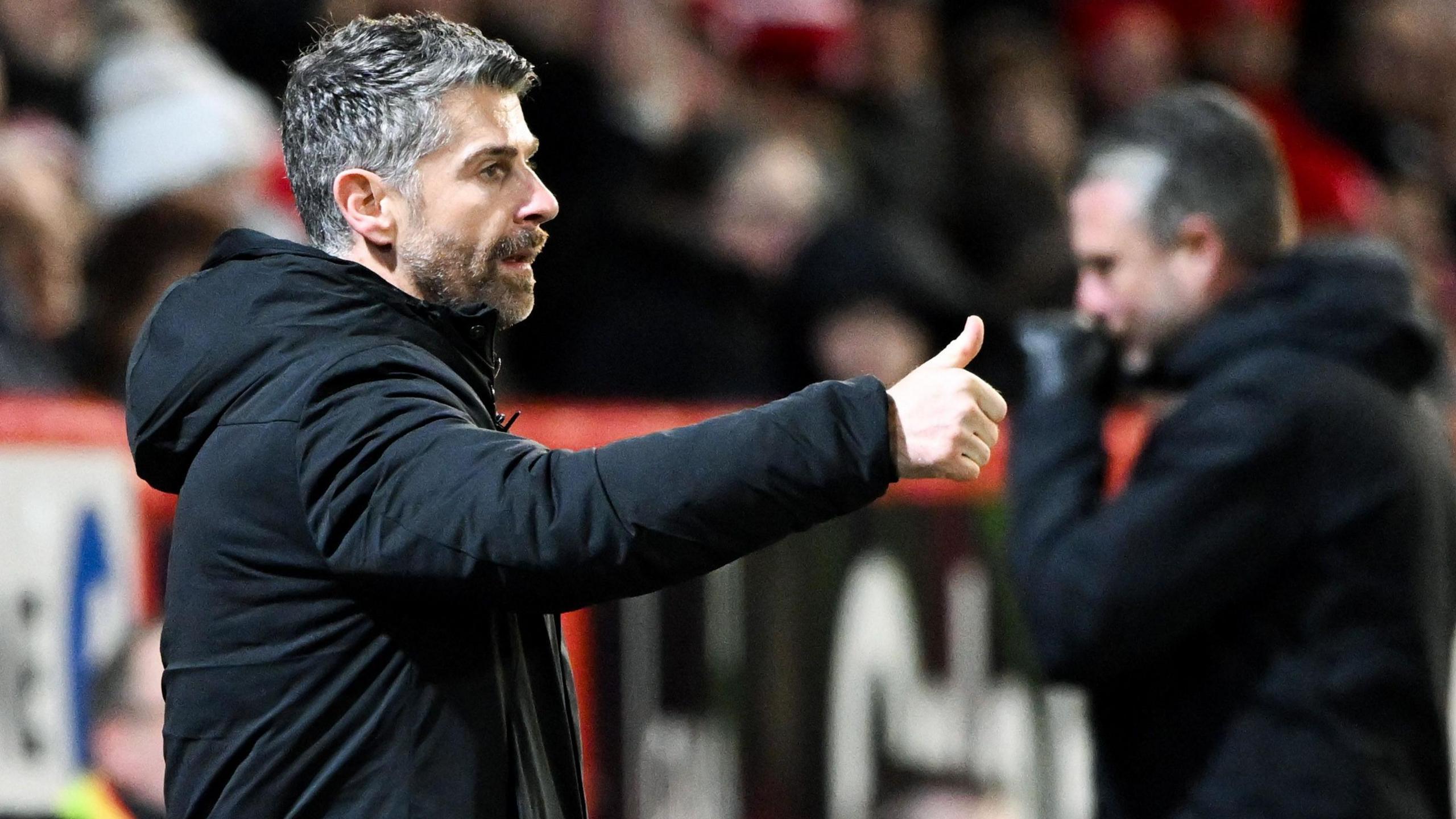
Aberdeen announce Robinson as new head coach

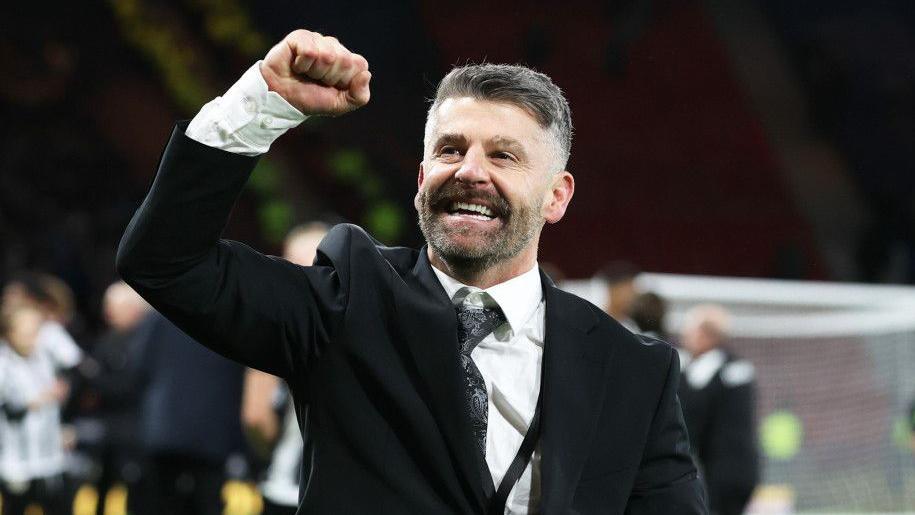
Stephen Robinson has been confirmed as the new head coach at Aberdeen, joining from Scottish Premiership rivals St Mirren.

The 51-year-old has agreed a contract until the summer of 2029 and takes assistant Brian Kerr with him to Pittodrie.

Robinson was described as “a proven leader with a strong track record of overachieving” by Dons chairman Dave Cormack.

In a club statement, Cormack added: “He has demonstrated he can consistently deliver strong results, punching well above the resources he’s had to work with, during the last eight years in Scottish football and proven he can build resilient, competitive teams with solid foundations.

“There is a strong desire to re-establish a clear identity for our club, to become harder to play against and restore competitiveness in our matches. For those reasons we believe Stephen is the right head coach to deliver exactly that.”

Former Motherwell boss Robinson joined St Mirren in February 2022 and steered them to League Cup glory in December, following three successive top-six finishes.

However, the Paisley club currently sit 10th, one place and five points below Aberdeen and just three ahead of Kilmarnock in the relegation play-off spot.

Having been under contract until 2028, St Mirren say Aberdeen triggered a compensation clause to release Robinson.

“While we are sad to see Stephen leave the club, he departs with the best wishes of everyone after four years of outstanding service,” said chairman John Needham.

Craig McLeish, Jamie Langfield and Allan McManus will take temporary charge at St Mirren until a replacement is found.

On his departure, Robinson explained: “When this opportunity arose, there was no way I could turn it down. “Aberdeen has a tremendous history and there’s no mistaking it is a huge club.

“We will put a team out on the pitch to get the points we need to finish this season as strongly as we can.

    • 40 minutes ago
    • 1 day ago

Peter Leven had been the caretaker at Aberdeen, with help from Tony Docherty, following the sacking of Jimmy Thelin in early January.

The Scottish Cup holders suffered a 3-0 defeat by second-tier Dunfermline Athletic in Saturday’s quarter-final and have won just once in eight outings.

“Nobody within the football club would dispute that performances and results this season have been unacceptable and well below that of what is expected here at Aberdeen,” added Cormack.

“However, during these testing periods comes an opportunity to sharpen focus and re-evaluate where changes are required and given recent results, we recognised the need to make the permanent appointment quickly.”

Related topics

  • Aberdeen
  • St Mirren
  • Scottish Premiership
  • Scottish Football
  • Football

More on this story

  • Aberdeen flag
    • 18 June 2023
    Football Habit ad