Middle East War Enters Seventh Day As Israel Strikes Beirut

The raging Iran war, which has spread across the Middle East and beyond, entered its seventh day on Friday after Israeli forces announced a “next phase” in the conflict and bombed Beirut’s southern suburbs.

The Israeli military had earlier issued an unprecedented evacuation warning for the entire area — “save your lives and evacuate your residences immediately” — that sent residents fleeing in panic.

The war has been felt as far away as the Sri Lankan coast, where a US submarine torpedoed an Iranian warship, and Azerbaijan, which threatened retaliation after a drone hit an airport.

On the political front, US President Donald Trump rejected the possibility of Mojtaba Khamenei, son of the late Iranian supreme leader Ali Khamenei, replacing his slain father, dismissing him as a “lightweight”.

“I have to be involved in the appointment, like with Delcy,” Trump told Axios in an interview, drawing a comparison to Venezuela, where interim president Delcy Rodriguez has cooperated with him after the United States ousted her boss, Nicolas Maduro, in a military raid.

“Khamenei’s son is unacceptable to me. We want someone that will bring harmony and peace to Iran,” Trump told the publication, threatening more war in the future if a better alternative were not found.

The remarks suggest a willingness to work with someone from within the Islamic Republic rather than toppling the government entirely, despite Trump’s repeated exhortations for Iranians to rise up and take back their country.

READ ALSO: US Approves Temporary Sale Of Stranded Russian Oil To India

Beirut strikes

Lebanon was dragged into the widening conflict on Monday, when Hezbollah attacked Israel to avenge the killing of Khamenei.

Israel responded with air strikes and sent ground troops into some Lebanese border villages, and on Thursday, it targeted Beirut’s southern suburbs, saying it was “striking Hezbollah infrastructure”.

The Israeli warning that preceded the strikes sent people fleeing from the area, with massive traffic jams on the outskirts of the suburbs as people fired guns in the air, urging residents to leave as soon as possible.

On a Beirut beach, hundreds of families, many of them scared and angry, milled around after leaving, having nowhere else to go.

“We fled from the suburbs; we were humiliated,” one man told AFP, declining to give his name.

Lebanese authorities say at least 123 people have been killed since Monday, with 683 wounded and at least 90,000 displaced.

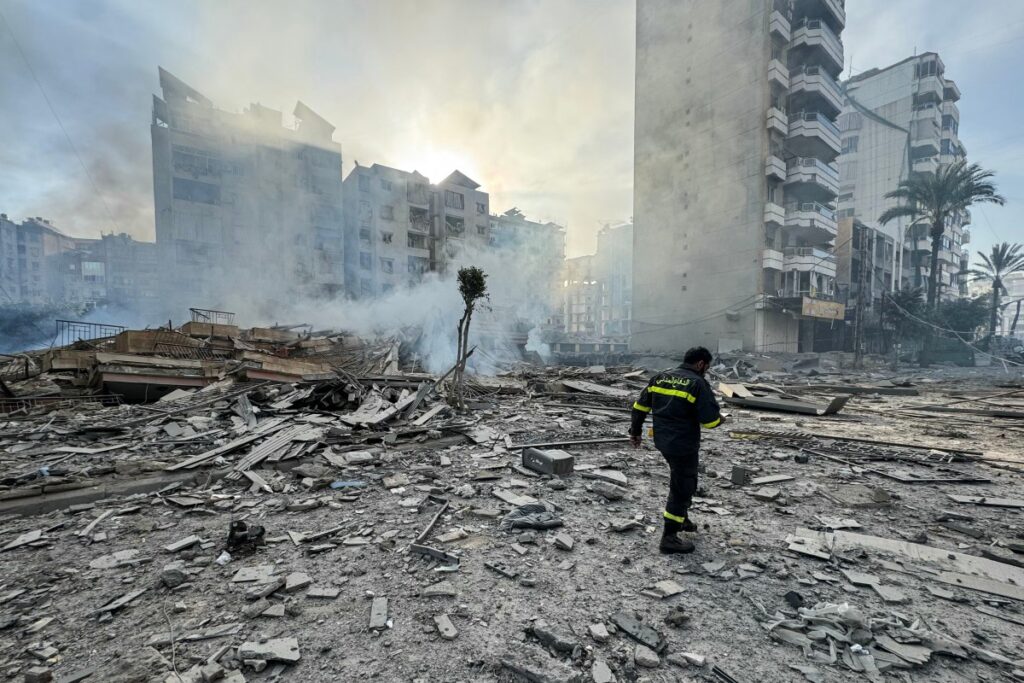
Smoke rises from the site of an Israeli airstrike that targeted Beirut’s southern suburbs, the Haret Hreik neighbourhood, on March 5, 2026. (Photo by Ibrahim AMRO / AFP)

On Iran’s borders, neighbouring Azerbaijan warned that a drone attack on an airport “will not go unanswered”, raising fears of another country entering the war.

Iran denied being behind the strike and blamed Israel, but that did not stop Azerbaijani President Ilham Aliyev from accusing Tehran of “terrorism”.

Australia, meanwhile, deployed two military aircraft to the theatre, and Canada’s Prime Minister, Mark Carney, said he would not rule out his armed forces taking part.

Following fresh strikes on Iran’s capital, AFPTV images showed blackened vehicles and mangled buildings, with smoke still rising from some.

“We’re going through a very important page of our history, and I’m not afraid,” a 30-year-old Tehran resident told AFP. “Hope is the only thing that we have right now.”

An Iranian state-run foundation said the death toll from US and Israeli strikes on the country had risen to 1,230, a number AFP could not independently verify.

The US military has reported the deaths of six of its personnel since the war began on Saturday.

Iranian Foreign Minister Abbas Araghchi struck a defiant tone Thursday, saying Tehran had not sought a ceasefire and did not “see any reason why we should negotiate with the US”.

Regarding the possibility of a ground invasion, he told US broadcaster NBC News: “We are confident that we can confront them, and that would be a big disaster for them.”

Israel, meanwhile, said 60 percent of Iran’s missile launchers and 80 percent of its air defence systems had been destroyed.

Announcing a “next phase” in the campaign, army chief Eyal Zamir said Israel had “additional surprises ahead”.

The latest Iranian missile barrage sparked a wave of explosions across Tel Aviv, and firefighters worked to contain a blaze at a residential building near Israel’s commercial hub on Friday.

Gulf under fire 

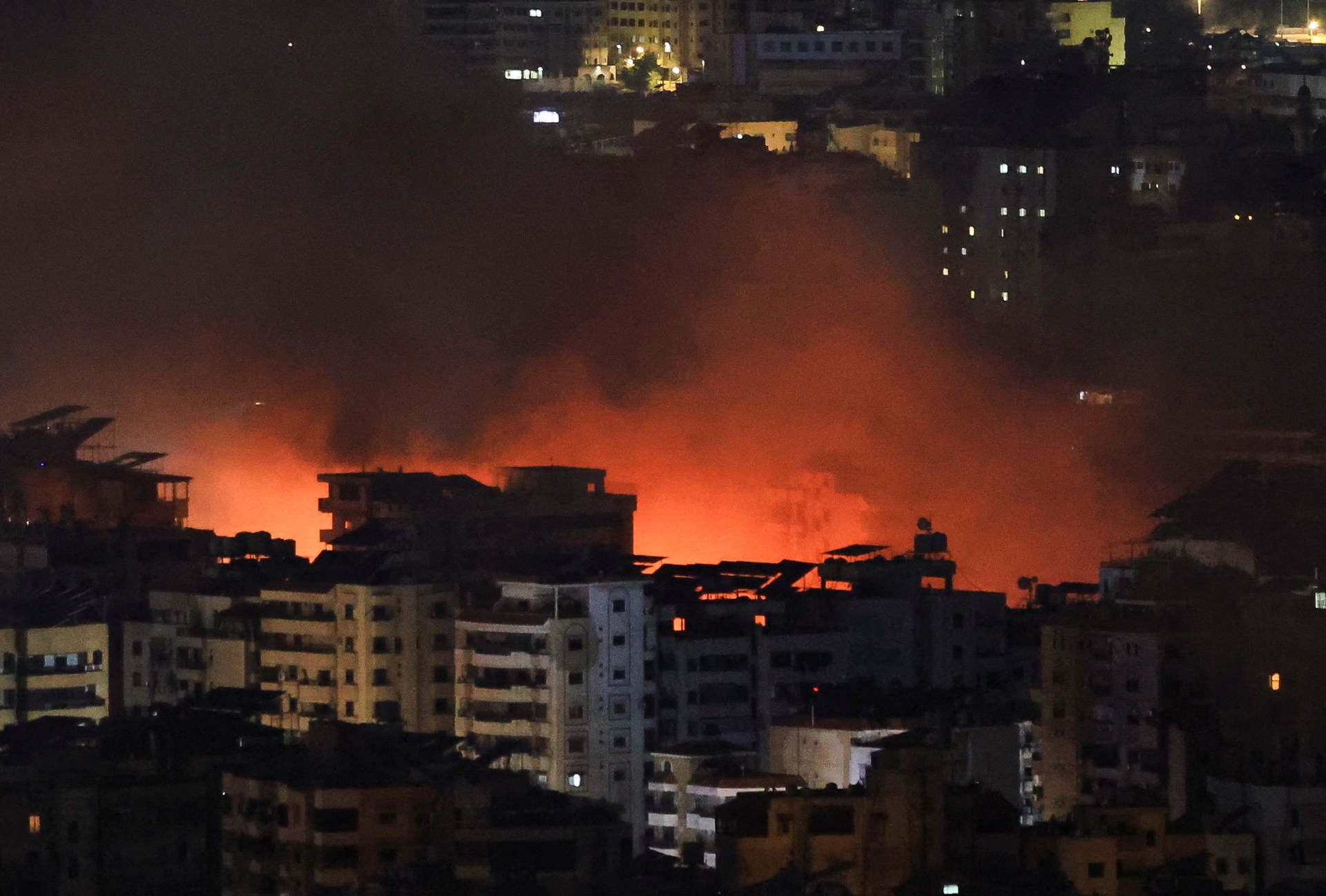
Smoke rises from the site of Israeli airstrikes that targeted areas in Beirut’s southern suburbs overnight, March 5 to 6, 2026. Photo by IBRAHIM AMRO / AFP

The conflict has not spared the rich Gulf monarchies, usually seen as a haven in a volatile region, as Iran has lashed out at cities and energy infrastructure.

Thirteen people, seven of them civilians, have been killed in countries around the Gulf since the war began, including an 11-year-old girl in Kuwait.

Bahrain said early Friday that Iran had targeted two hotels and a residential building in the capital, Manama, but that there was “no loss of life”.

Saudi Arabia said it had intercepted three ballistic missiles launched towards an air base.

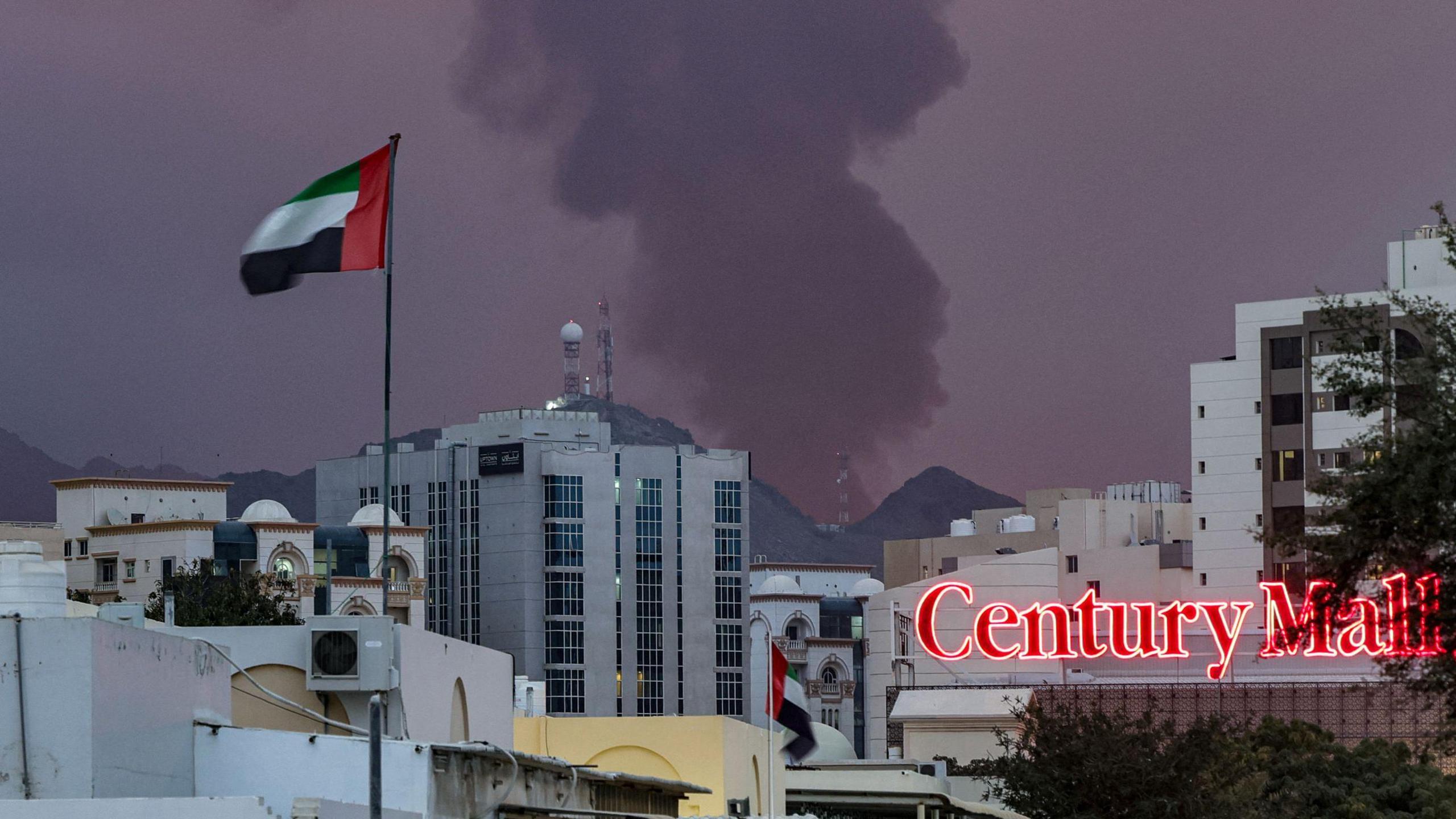
And Qatar said on Thursday that it intercepted a missile attack as loud blasts, described by AFP journalists as the most intense yet, reverberated across Doha, with thick black smoke billowing across the horizon.

Falling debris from an intercepted drone injured six people in the Emirati capital Abu Dhabi, officials added.
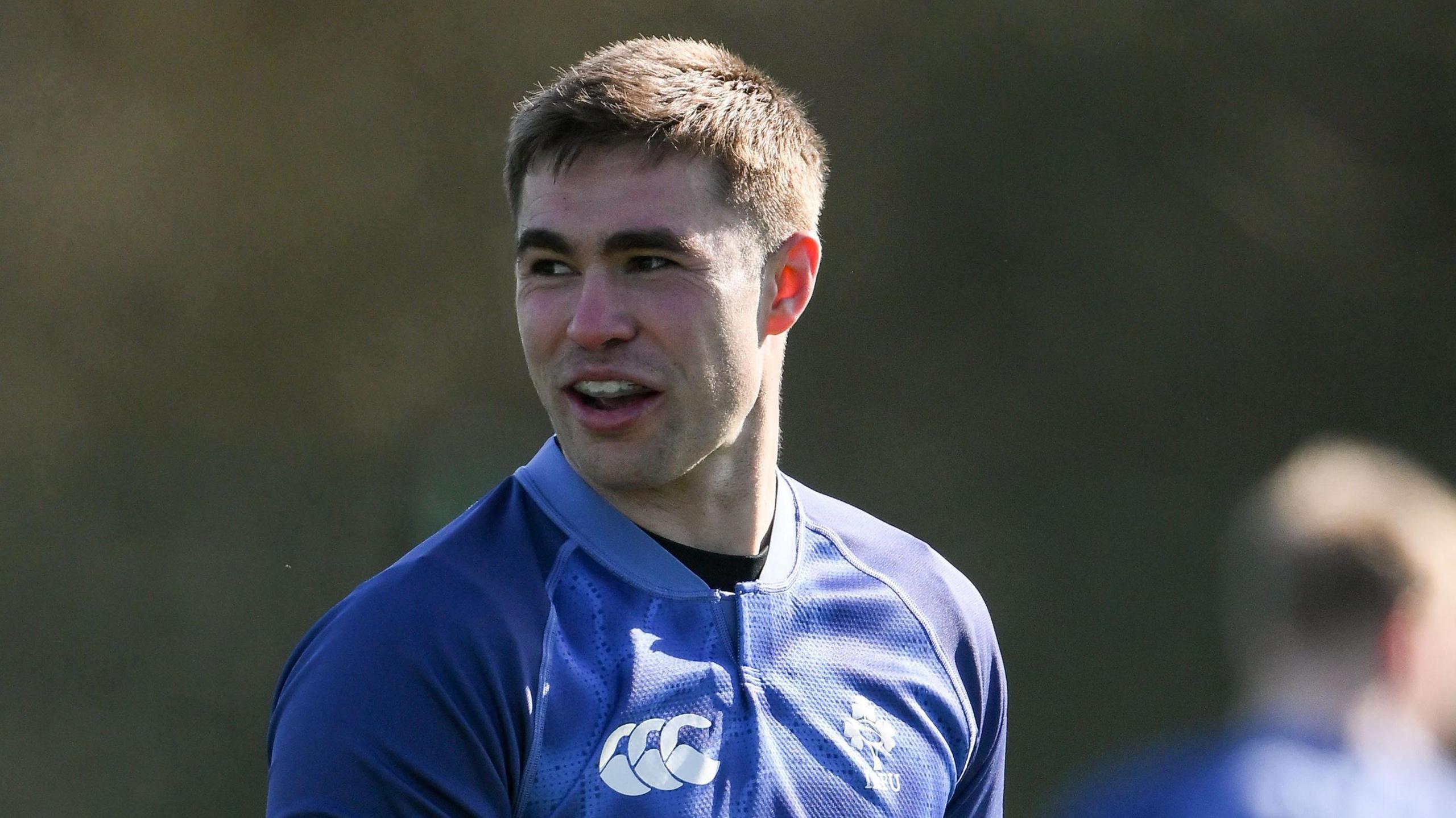
‘Not about proving a point’ – Crowley stays present after reclaiming shirt

Matt Gault

BBC Sport NI senior journalist

From Stuart McCloskey’s takedown of Marcus Smith to the coaching box’s delirious celebrations, Ireland’s resounding win over England conjured a series of enduring images.

McCloskey, who battered England with his buccaneering carries, was an obvious poster boy for the win. As were Rob Baloucoune, whose work at both ends of the field was lauded by head coach Andy Farrell, and Jamison Gibson-Park, who pulled the strings ingeniously in the record 42-21 win.

Given the intense scrutiny he has faced as one of the two key actors in Ireland’s fly-half debate, the headline-hogging endeavours of his team-mates would have suited Jack Crowley just fine.

Reinstated to the Ireland line-up for the England game following Sam Prendergast’s indifferent start to the Six Nations, Crowley re-established himself as Ireland’s first-choice 10 with a quietly confident display.

    • 1 day ago
    • 3 days ago
    • 2 days ago

‘It wasn’t about proving a point’

It was an important game for Crowley. Having played second fiddle to Prendergast for much of last year’s Six Nations, his Munster form elevated him back to the line-up for Ireland’s Chicago reunion with the All Blacks in November.

He kept his place for the following week’s win over Japan but Prendergast was entrusted from the start for the last two November games – against Australia and South Africa – and the first two Six Nations fixtures with France and Italy.

And while Crowley made a significant impact off the bench against Italy, his day ended with a missed touch-finder that wrecked his side’s hopes of securing a bonus point.

Even with that, Crowley did not feel the England game was about “proving my point”.

“Being honest, no [there was no extra pressure],” said the 26-year-old, who is retained at fly-half for Friday’s game against Wales in Dublin (20:10 GMT).

Jamison Gibson-Park and Jack Crowley in action against EnglandGetty Images

The online debate surrounding Crowley and Prendergast moved Farrell to launch an impassioned plea for “keyboard warriors” to “cop on” following the Italy win.

It has been a constant discussion point ever since a then 21-year-old Prendergast was elevated to the starting line-up during the 2024 autumn internationals. That one plays for Leinster and the other Munster has only fanned the flames.

Having been through his own battle for the shirt with Ronan O’Gara, Johnny Sexton – now an Ireland assistant coach – last year revealed he told Crowley and Prendergast to delete their social media accounts.

But while online commentary had Farrell visibly irritated a few weeks ago, Crowley appeared unperturbed when the topic was raised before the Wales match.

“It is [easy] if you just if you just put it away, don’t engage with it,” he said.

“It’s like anything. You have a choice and you can choose to not engage. You can choose to engage. And it’s just like creating good habits day to day, like with your nutrition or diet or training performance, you make a choice and you commit to it.”

Social media comments are one thing but Crowley understands that the atmosphere during games can affect players too.

Against England, his opposite number George Ford was ironically cheered for finding touch after missing two earlier efforts.

“I think pre-empting situations where you’re going to be under pressure, whether it’s in play or whether it’s your individual technique,” he said when asked how to deal with a hostile environment.

“For us it might be kicking, but for line-out throwers, it might be the pressure that they could be getting in hostile environments. So during the week, just feeling what it might be like to be under a little bit of pressure.

Ireland v Wales, Aviva Stadium

2026 Six Nations

Watch on iPlayerListen on Sounds

With the shirt in his possession once more, the onus is now on Crowley to continue his solid form heading into a World Cup year.

For him, that means sticking to his process of trying to simplify in-game decisions in the face of the uncertainty and chaos that Test rugby brings.

“I’m not focusing too much on what’s going well and what’s not going well [in his own game], I’m just focusing on how I can bring my best day to day.

Related topics

  • Irish Rugby
  • Northern Ireland Sport
  • Rugby Union
  • Ireland Rugby Union

Crowley stays present after reclaiming Ireland spot

Matt Gault

BBC Sport NI senior journalist

From Stuart McCloskey’s takedown of Marcus Smith to the coaching box’s delirious celebrations, Ireland’s resounding win over England conjured a series of enduring images.

McCloskey, who battered England with his buccaneering carries, was an obvious poster boy for the win. As were Rob Baloucoune, whose work at both ends of the field was lauded by head coach Andy Farrell, and Jamison Gibson-Park, who pulled the strings ingeniously in the record 42-21 win.

Given the intense scrutiny he has faced as one of the two key actors in Ireland’s fly-half debate, the headline-hogging endeavours of his team-mates would have suited Jack Crowley just fine.

Reinstated to the Ireland line-up for the England game following Sam Prendergast’s indifferent start to the Six Nations, Crowley re-established himself as Ireland’s first-choice 10 with a quietly confident display.

    • 1 day ago
    • 3 days ago
    • 2 days ago

‘It wasn’t about proving a point’

It was an important game for Crowley. Having played second fiddle to Prendergast for much of last year’s Six Nations, his Munster form elevated him back to the line-up for Ireland’s Chicago reunion with the All Blacks in November.

He kept his place for the following week’s win over Japan but Prendergast was entrusted from the start for the last two November games – against Australia and South Africa – and the first two Six Nations fixtures with France and Italy.

And while Crowley made a significant impact off the bench against Italy, his day ended with a missed touch-finder that wrecked his side’s hopes of securing a bonus point.

Even with that, Crowley did not feel the England game was about “proving my point”.

“Being honest, no [there was no extra pressure],” said the 26-year-old, who is retained at fly-half for Friday’s game against Wales in Dublin (20:10 GMT).

Jamison Gibson-Park and Jack Crowley in action against EnglandGetty Images

The online debate surrounding Crowley and Prendergast moved Farrell to launch an impassioned plea for “keyboard warriors” to “cop on” following the Italy win.

It has been a constant discussion point ever since a then 21-year-old Prendergast was elevated to the starting line-up during the 2024 autumn internationals. That one plays for Leinster and the other Munster has only fanned the flames.

Having been through his own battle for the shirt with Ronan O’Gara, Johnny Sexton – now an Ireland assistant coach – last year revealed he told Crowley and Prendergast to delete their social media accounts.

But while online commentary had Farrell visibly irritated a few weeks ago, Crowley appeared unperturbed when the topic was raised before the Wales match.

“It is [easy] if you just if you just put it away, don’t engage with it,” he said.

“It’s like anything. You have a choice and you can choose to not engage. You can choose to engage. And it’s just like creating good habits day to day, like with your nutrition or diet or training performance, you make a choice and you commit to it.”

Social media comments are one thing but Crowley understands that the atmosphere during games can affect players too.

Against England, his opposite number George Ford was ironically cheered for finding touch after missing two earlier efforts.

“I think pre-empting situations where you’re going to be under pressure, whether it’s in play or whether it’s your individual technique,” he said when asked how to deal with a hostile environment.

“For us it might be kicking, but for line-out throwers, it might be the pressure that they could be getting in hostile environments. So during the week, just feeling what it might be like to be under a little bit of pressure.

Ireland v Wales, Aviva Stadium

2026 Six Nations

Watch on iPlayerListen on Sounds

With the shirt in his possession once more, the onus is now on Crowley to continue his solid form heading into a World Cup year.

For him, that means sticking to his process of trying to simplify in-game decisions in the face of the uncertainty and chaos that Test rugby brings.

“I’m not focusing too much on what’s going well and what’s not going well [in his own game], I’m just focusing on how I can bring my best day to day.

Related topics

  • Irish Rugby
  • Northern Ireland Sport
  • Rugby Union
  • Ireland Rugby Union

‘We should not have played’ – how tennis was caught in Middle East conflict

Jonathan Jurejko

BBC Sport tennis news reporter

Explosions could be heard outside of the Dubai hotel.

With the United Arab Emirates coming under attack by Iranian missiles, the players who were there for an ATP Challenger tournament in nearby Fujairah did not expect to take to the court.

To their surprise, they were told it was safe to play in the port city about an hour’s drive east of Dubai, home to a key global oil storage and bunkering hub.

“We expected to stay in shelter because that’s what the governments were advising,” Australian player James McCabe, who was practising on court when he heard explosions and fighter jets overhead, told BBC Sport.

The UAE has come under attack after US-Israeli strikes on Iran, which began last Saturday, prompted retaliatory strikes across the region.

The ATP decided on Monday to proceed as planned with the tournament after holding discussions with the local government about its viability.

On Tuesday, players ran from the courts when a nearby oil terminal was set ablaze by debris from a drone attack.

The rest of the tournament was eventually cancelled, along with a second tournament at the same venue next week, leading to worried players desperately asking for support and scrambling for flights.

Two players – Russia’s Marat Sharipov and Uzbekistan’s Sergey Fomin – remain stranded in the UAE, along with their coaches. Everyone else has found a way to leave.

Players and officials run off court at the ATP Challenger event in FujairahATP

“A lot of the players didn’t want to play in Fujairah. But the ATP made the decision that it was safe to go.

“After the oil refinery was hit, it was still in the air that we could be going back on the court the next day – that was the scary part.

“It took them 10 hours to cancel the tournament. If the tournament had continued, I would have pulled out.”

The men’s governing body concluded it was safe to play following discussions with local government officials about the risk, with extra security measures put in place and the event being held behind closed doors.

All the players had already arrived in the UAE – meaning the draw was not affected by any travel disruptions – and that was highlighted as another factor in the decision.

But the knock-on effect has led to huge stress for the players, who are mainly ranked outside of the top 200 and far from financially secure as they try to make ends meet in their pursuit of reaching the main ATP Tour.

Costly demands & cancelled plans – how players tried to flee

Anger among the players reached boiling point when an ATP representative sent an email informing them that a chartered flight out of the Middle East was being arranged – but would cost them $5,000 (£3,750) each.

Prize money for winning the Fujairah tournament would have been almost $9,500 (£7,100). Losing in the first-round would have been $600 (£470).

After players made the situation public, the ATP said it would cover the cost of the chartered flight, which went to Milan via a stop in Egypt.

Sharipov was not able to fly to Italy because he does not have a European visa.

Disembarking in Egypt was an option, but meant leaving his luggage – including the racquets, kit and equipment which are his livelihood – with no guarantee when he would be reunited with it.

The 23-year-old felt he had no option but to stay in the UAE and search for alternatives.

“The ATP knew I could not travel to Europe so I think they should have said ‘we will sort something out for you’,” Sharipov told BBC Sport.

“They did not do this. They just said ‘there is a flight that you cannot make’. That’s really bad in my view.”

McCabe was able to leave on Tuesday, managing to book on to the first flight back to Sydney.

“It was a bit of a shock that the ATP didn’t support us with the flights getting out of there. We were left to our own devices,” said 22-year-old McCabe.

“As soon as we heard we needed to pay five grand everyone was pulling their hair out.”

The pair say those who arranged their own flights will not be reimbursed by the ATP. They have also been told players will receive no compensation in the absence of prize money.

Marat Sharipov celebrates with a trophyMarat Sharipov

McCabe said he was grateful to the Professional Tennis Players’ Association (PTPA) for offering $2,500 in support and also praised the UAE government for covering hotel costs for as long as players such as Sharipov need them.

Sharipov says he has spent $7,000 on four cancelled flights – on various routes from the region to Russia – because some airspace is still closed.

He continues to play the waiting game. He has a ticket booked to Armenia on Friday morning, but fears that will be cancelled too as many flights from Dubai continue to be grounded.

For the world’s best players, it was very different. Sharipov’s compatriots Daniil Medvedev, Andrey Rublev and Karen Khachanov were among a group also stuck in Dubai following the ATP 500 tournament there.

They were able to drive to Oman for a flight to Istanbul, then make the onward journey to California in time for the prestigious ATP 1000 tournament in Indian Wells.

“It’s not about the money in times like this,” said Sharipov, who was also entered the doubles with Fomin.

“But I think the ATP should help the players on the lower circuits like Challenger Tour more – because we don’t have that much.

Related topics

  • Tennis

More on this story

  • Some tennis balls
    • 16 August 2025
    BBC Sport microphone and phone

Fubara Pledges Support For Air Force To Boost Security In Rivers

Rivers State Governor Siminalayi Fubara has pledged continued collaboration with the Nigerian Air Force to strengthen security across the state, particularly in the fight against oil theft and other criminal activities.

Governor Fubara made the pledge while receiving the Chief of the Air Staff, Air Marshal Sunday Aneke, during his first official visit to Rivers State.

The governor said the state government’s support for the Air Force, including the donation of an aircraft in 2025, was a deliberate decision taken at the State Executive Council meeting to enhance security operations.

According to him, the aircraft was donated because the state government was not making use of it, adding that it was better deployed to assist security agencies in tackling crime and oil theft.

Fubara explained that the upgrading of the Nigerian Air Force base in Port Harcourt would improve operational efficiency, as it would enable the Air Force to conduct air operations discreetly rather than relying on the international airport, where their strategies could be exposed.

READ ALSO: Why Rivers Introduced Mental Health Services At Primary Healthcare Level For Residents — Fubara

The governor noted that improved security would ultimately boost the state’s revenue.

He stressed that the protection of lives and property remains one of the core responsibilities of his government.

Governor Fubara also restated the state government’s commitment to support the Nigerian Air Force Officers’ Wives Association (NAFOWA) in building a school for children with special needs.

Responding to requests for the transfer of a public primary school located within the Air Force base in Port Harcourt, as well as the Mother and Child Hospital in the area, to the Air Force, the governor said the state government would make the necessary enquiries before making a decision.

The Rivers leader commended Air Force personnel for their service to the nation, noting that attaining high ranks in the military is a rare privilege achieved by only a few individuals.

The governor observed that the Rivers State Government and the Nigerian Air Force have maintained a strong partnership over the years, dating back to the administrations of previous governors.

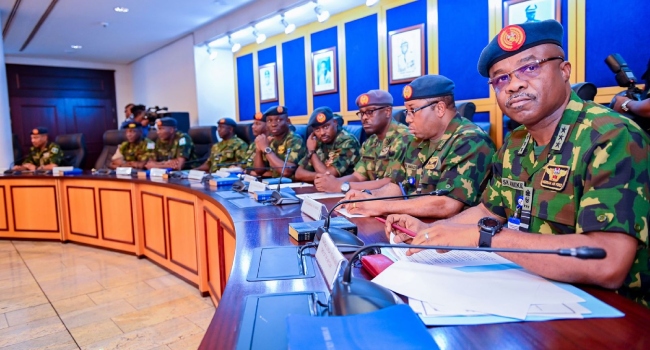
The Chief of the Air Staff, Air Marshal Sunday Aneke and Governor Fubara. X @SimFubaraKSC

In his remarks, Aneke described Rivers State as strategically important to Nigeria due to its oil resources and the presence of key federal government facilities.

He assured that the Nigerian Air Force would continue to serve the interests of the state and the country.

Air Marshal Aneke commended the Rivers State Government for its numerous interventions in support of the Air Force, including the donation of an aircraft, provision of residential accommodation, and the resurfacing of the runway at the Nigerian Air Force base in Port Harcourt, which he described as meeting world-class standards.

He also acknowledged the governor’s promise to support the construction of a school for children with special needs, an initiative championed by the president of NAFOWA, who is his wife.

But he requested the transfer of the state primary school located within the air force base to the Nigerian Air Force.

Air Marshal Aneke also sought the transfer of the Mother and Child Healthcare facility near the base, noting that the Air Force could maximise its use to improve access to healthcare.

In addition, he called for collaboration with the state government in the area of security surveillance, suggesting that Rivers State could procure unmanned aerial vehicles (drones) to be operated by trained Air Force personnel.

According to him, drones and other air platforms have significantly changed modern warfare, stressing that effective security operations now depend more on technology and strategy than on the number of personnel.

More than 120 killed in Israel’s Lebanon attacks as Beirut, south, east hit

The death toll from Israeli attacks on Lebanon this week has risen to at least 123 people, the Lebanese Ministry of Public Health says, as a new wave of strikes pounded the country and Hezbollah warned Israeli residents to evacuate towns within 5km (3 miles) of their northern border, in one of the fiercest fronts in the wider United States-Israel war on Iran.

“The toll from the Israeli aggression on Monday … increased to 123 martyrs and 683 wounded,” a ministry statement said on Thursday.

Recommended Stories

list of 4 itemsend of list

Lebanese state media said early on Friday that Israel had launched air strikes on several towns in southern Lebanon.

“Enemy warplanes launched nighttime strikes on the towns of Srifa, Aita al-Shaab, Touline, as-Sawana and Majdal Selem,” the official National News Agency (NNA) reported.

Another strike hit the eastern Lebanese town of Douris at dawn, the NNA said.

Hezbollah’s message to evacuate the border areas came less than a day after Israel threatened residents that they should leave Beirut’s southern suburbs, prompting a huge exodus from a swath of the capital’s densely populated area known as Dahiyeh, where some half a million people live.

The Israeli army said it has conducted 26 rounds of attacks in Dahiyeh. It claims to have hit various infrastructure used by Hezbollah, including the headquarters of the group’s Executive Council and a warehouse with drones.

“Your military’s aggression against Lebanese sovereignty and safe citizens, the destruction of civilian infrastructure and the expulsion campaign it is carrying out will not go unchallenged,” Hezbollah said.

Hezbollah claimed responsibility for a wave of attacks early on Friday on Israeli ground forces, including those who have entered Lebanon’s territory in recent days.

In a statement on Telegram, Hezbollah said its fighters had attacked Israeli forces in several areas, including Maroun al-Ras and Kfar Kila, within Lebanese territory.

Hezbollah also attacked Israel’s Yoav military camp in the occupied Golan Heights and a navy base in Israel’s Haifa port, the statement said.

There were no immediate reports of casualties.

Israel has said it will not evacuate its border towns and has sent more soldiers into Lebanon, claiming it was a defensive measure meant to protect its citizens who live nearby.

In contrast, tens of thousands of people in Lebanon have fled their homes after threats from Israel, with a mass exodus from Beirut’s southern suburbs leaving the area “almost empty”, the NNA said.

Hundreds of displaced families were left to seek shelter on a Beirut beach, where they waited despondently – many for the second time, after evacuating during a 2024 war between Israel and Hezbollah.

‘We are not animals’

Zeina Khodr, reporting from Beirut, said the humanitarian crisis is growing rapidly, as people seeking shelter can be seen “on the side of the roads on almost every corner”.

“There aren’t enough schools to shelter the hundreds of thousands of people who were forced to flee their homes after Israel’s forced displacement threat for Beirut’s southern suburbs yesterday,” she said.

“People are telling us: ‘We are not animals; we are human beings, our children are cold.’”

She noted that the Lebanese government has opened a number of shelters and told people to head to the north of the country.

Khodr added: “But many do not have any means of transport. It’s not just Lebanese who live in Beirut’s southern suburbs, but also Syrian refugees and Palestinian refugees.”

Lebanon was pulled into the war in the Middle East on Monday, as Hezbollah opened fire, prompting Israeli air strikes focused on Beirut’s southern suburbs and on southern and eastern Lebanon.