Killing of Saif Gaddafi removes alternative to Libya’s rival governments

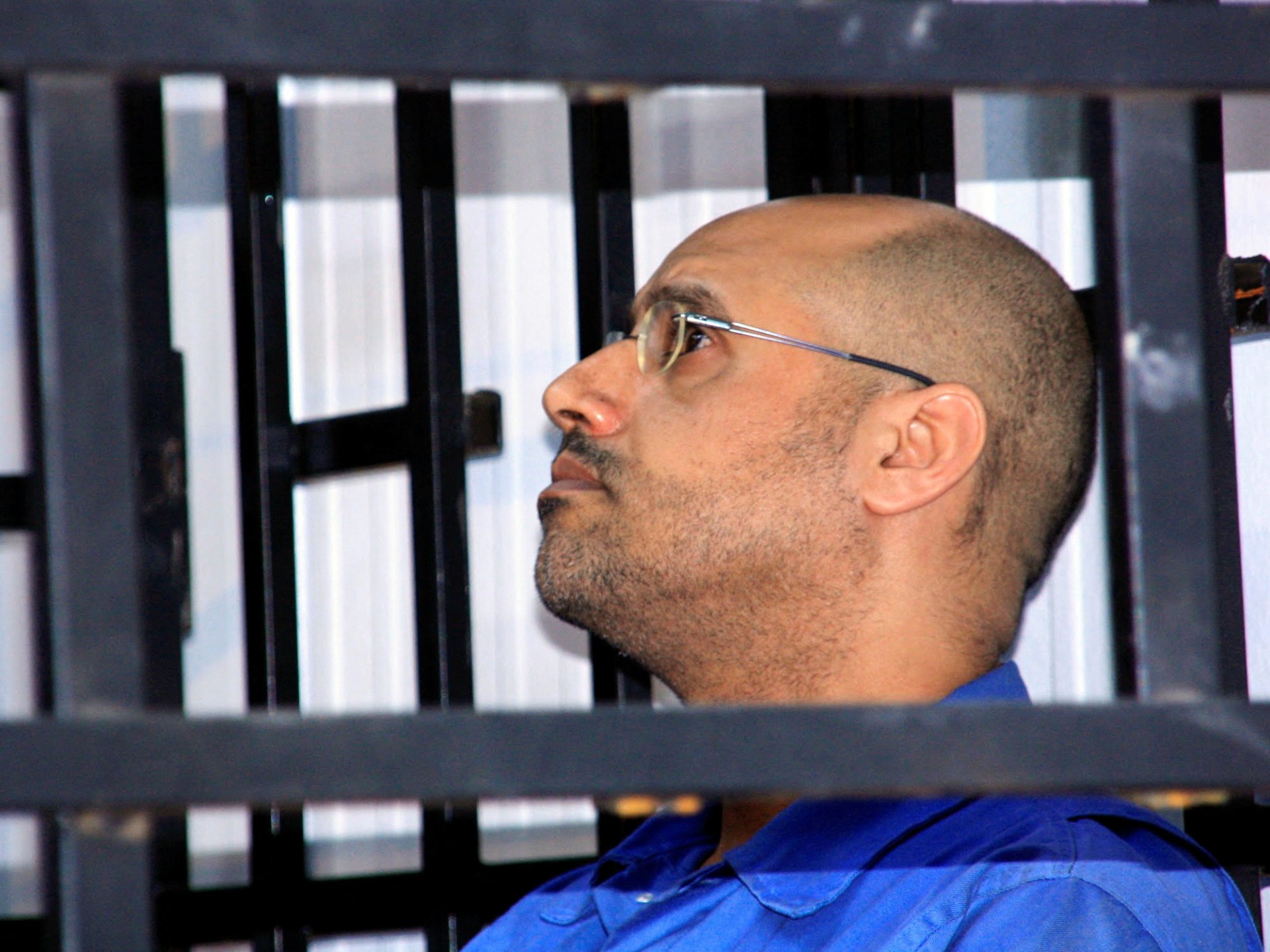
The killing of Saif al-Islam Gaddafi, the most prominent surviving son of former Libyan dictator Muammar Gaddafi, removes a figure who commanded symbolic influence among some Libyans, even as he was reviled by others as the representative of a hated regime.

The 53-year-old, killed on Tuesday in the western Libyan town of Zintan, was an alternative to the country’s current power duopoly, split between the United Nations-recognised government in the capital, Tripoli, and the so-called Libyan National Army in the east of the country.

Recommended Stories

list of 3 itemsend of list

The killing occurred less than a week after a reported January 28 meeting at Paris’s Elysee Palace brought together Saddam Haftar, son of eastern strongman Khalifa Haftar, and advisers to Tripoli-based Prime Minister Abdul Hamid Dbeibah.

Then, on Sunday, a meeting brokered by the United States in Paris brought together senior officials from the two rival Libyan administrations to discuss efforts towards national unity.

However, the manner of Gaddafi’s death – his political team said that four masked men had stormed his house and shot him – has once again highlighted the insecurity Libya still faces, and the murky nature of the country’s political divides.

Saif al-Islam as heir to Gaddafi

Saif al-Islam Gaddafi had some influence in Libya despite having no notable military force under his command, and no control over territory, unlike his rivals.

He was once seen as his father’s Western-friendly, reform-minded heir before he dropped that image dramatically during the 2011 revolution to help lead a brutal crackdown on protesters. In a televised speech at the time, he denounced the protesters and endorsed his father’s crackdown, threatening “rivers of blood”.

“That speech during the protests marked the end of Saif the reformer and the birth of Saif the son of [Muammar] Gaddafi,” Anas El Gomati, director of the Sadeq Institute, a Libyan think tank, told Al Jazeera.

After rebels captured Saif al-Islam Gaddafi in 2011, he spent six years held in Zintan by a local militia. Emadeddin Badi, a senior fellow at the Global Initiative against Transnational Organized Crime and Libya expert, said that his captors eventually became more sympathetic to him “and were acting as his bodyguards”.

“He was not a captive in the traditional sense whatsoever and even had a social life there, married with kids,” Badi said.

After his release in 2017, Gaddafi kept such a low profile that many speculated he might be dead. He resurfaced publicly with a New York Times interview in 2021, where he hinted at a political comeback, and later moved to pursue presidential ambitions.

When he registered to run for president in 2021, it became a major controversy that contributed to the collapse of the entire electoral process.

Saif al-Islam was disqualified because of an earlier war crimes conviction, but the disputes around his candidacy contributed to derailing the vote.

Still, he retained support among some groups who, amid Libya’s descent into civil war and rival fiefdoms, were nostalgic for the perceived stability of the Gaddafi era.

His father, Muammar Gaddafi, came to power in 1969, amid a wave of coups in the Arab world along a crescent from South Yemen, through Somalia and Sudan that year.

Gaddafi presided over a regime, which, although dictatorial, saw a period of economic growth in the country, fuelled by Libya’s oil reserves.

The regime was also known for mass human-rights abuses, including the execution of political opponents.

“Saif al-Islam is popular among Gaddafi-era reformists and among those who saw him as that reformist candidate promising change,” Claudia Gazzini, senior Libya analyst at the International Crisis Group, told Al Jazeera.

His real power wasn’t military but symbolic, El Gomati said. That ideological disposition is referred to locally as the Greens, after the elder Gaddafi’s “Green Book” outlining his political theories.

“Saif didn’t really control forces, or territory, but controlled an important narrative and represented something for people who were nostalgic for the days of Gaddafi’s rule,” El Gomati said.

What impact does this have in Libya?

Saif al‑Islam’s death is likely to matter most in eastern Libya, because of the overlap between the supporters of the man who controls that region, military commander Khalifa Haftar, and Gaddafi’s base.

Despite that overlap, Saif al-Islam Gaddafi and Khalifa Haftar deeply distrusted each other, mainly because Haftar had defected from the Gaddafi regime decades ago, and attempted a rebellion against Muammar Gaddafi after having initially helped him come to power.

Tensions between Khalifa Haftar and Saif al-Islam Gaddafi flared in 2021 when Haftar-aligned militias blocked a court hearing on the latter’s election appeal after he was blocked, withdrawing only after demonstrations by his supporters.

“They [the Gaddafi family] considered him [Khalifa Haftar] a traitor for rebelling against the Gaddafi regime, and it was thought Haftar was trying to replicate the system their father had built,” Gazzini said. “Haftar had always feared the popularity Saif had.”

But that meant that Khalifa Haftar was attempting to fill a space left by Muammar Gaddafi, but one that Saif al-Islam was still trying to occupy himself. In effect, that made Saif al-Islam a threat to Haftar, as they were competing over the same constituency.

“The immediate beneficiary [of the killing] is Haftar,” said El Gomati. “Saif represents an alternative to the authoritarian model which Haftar built.”

Despite his symbolic importance, analysts still expect the immediate fallout from Saif al-Islam’s assassination to be limited.

The people who once supported the Gaddafi regime have split apart dramatically since 2011, with many former loyalists now working within the competing eastern and western power structures.

“This stirs waters, but won’t hit Libya with a storm,” Gazzini told Al Jazeera, noting that while Saif al-Islam Gaddafi’s death is significant, Libya’s basic political deadlock isn’t likely to change a great deal after the killing.
Mixed emotions among Palestinians as Rafah crossing partially reopens

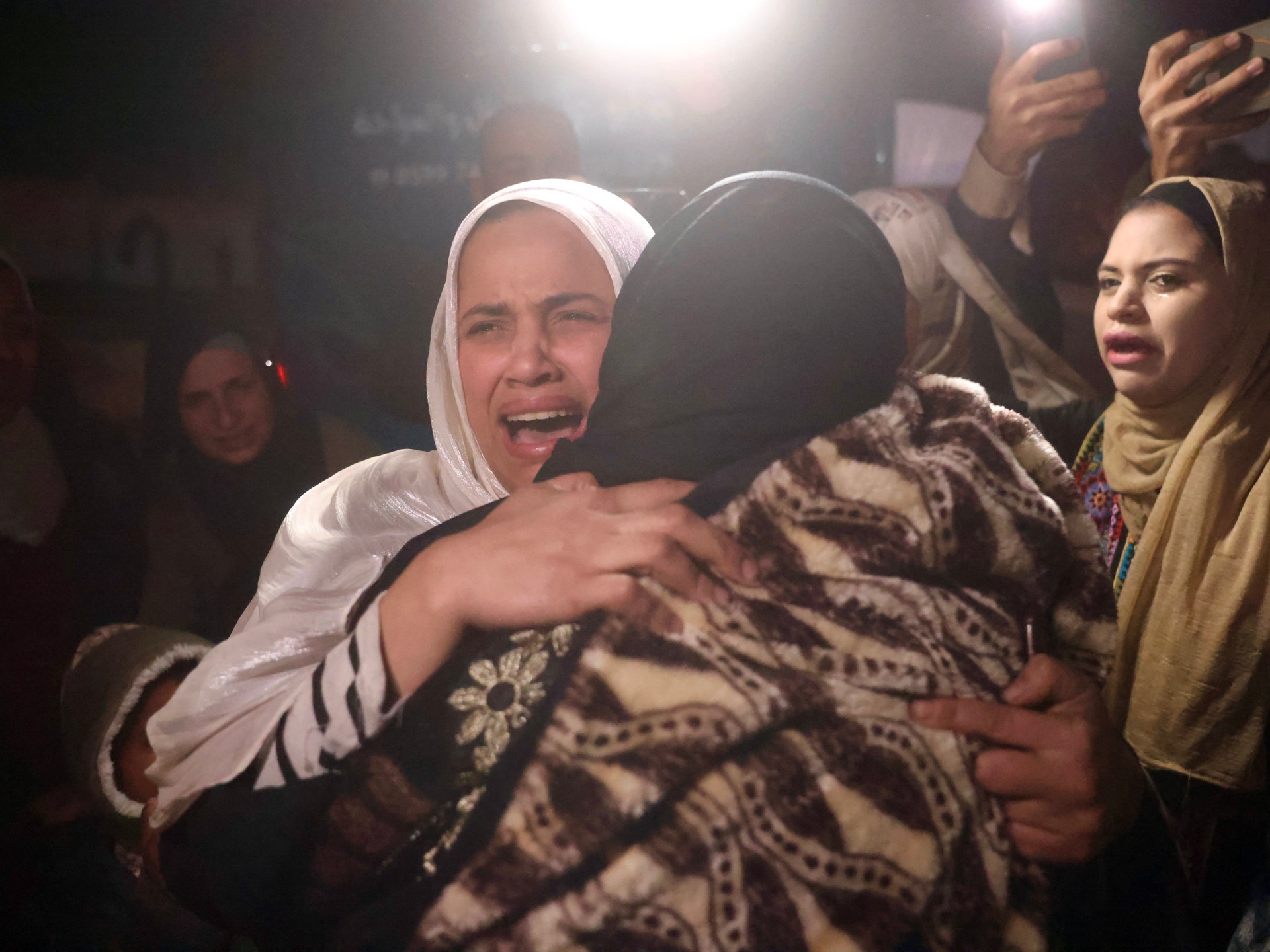
Palestinians wept with joy as the Rafah crossing with Egypt partially reopened, allowing a small number of people to return to war-torn Gaza.

Emotional crowds gathered around a bus bringing returnees to Nasser Hospital in Khan Younis late at night, filming on their phones and lifting children to the windows to greet arrivals.

“We were exhausted from this humiliating journey,” said Rotana al-Riqib, a Palestinian woman in her thirties returning from Egypt. “The Israelis took us to the crossing – me, my mother and another woman from Khan Younis – and interrogated us. They don’t let us bring in anything. They confiscated everything we had, even my children’s belongings. They only left us some clothes.”

The crossing, Gaza’s only exit point that does not lead to Israel, had remained largely closed since Israeli forces took control of it in May 2024 during Israel’s genocidal war against the Palestinian people in Gaza. Only about two dozen people crossed in both directions on the first day – far fewer than the expected 200, according to sources on both sides.

“They don’t want a large number of people to return to Gaza,” al-Riqib added. “Rather, they want a large number to leave.”

Egypt has consistently warned against the displacement of Palestinians from Gaza and has reportedly demanded equal numbers entering and exiting the territory each day.

Ali Shaath, head of a Palestinian committee overseeing Gaza’s governance, called Rafah’s reopening a “window of hope” for the war-devastated territory.

Although 150 people were scheduled to leave and 50 to enter on Monday, only 12 Palestinians – nine women and three children – were permitted to return from Egypt, according to Gaza’s Interior Ministry and border officials.

Gaza’s Interior Ministry reported that eight people departed Gaza, while an Egyptian border source counted 12 people – five injured individuals and seven companions – entering Egypt.

“Things were very difficult, and inspections were taking place everywhere,” said Samira Said after returning through Rafah.

The reopening, long demanded by the United Nations and humanitarian organisations, forms a crucial element of US President Donald Trump’s Gaza truce proposal, where humanitarian conditions remain critical.

For Gaza’s sick and injured, the crossing represents potential access to Egyptian medical care. Mohammed Abu Salmiya, director of Gaza City’s al-Shifa Hospital, reported 20,000 patients urgently requiring treatment, including 4,500 children.

Gaza City resident Umm Mohammed Abu Shaqfa, 37, whose 11-year-old daughter needs treatment unavailable in the occupied Palestinian territory, said, “We are still waiting to travel through the Rafah crossing for treatment in Egypt. Opening the crossing is a glimmer of hope. Every day, I go to the Ministry of Health office and the World Health Organization to check if my daughter’s name is on the list.”

Briton Kavanagh steps in to face Moreno at UFC Mexico

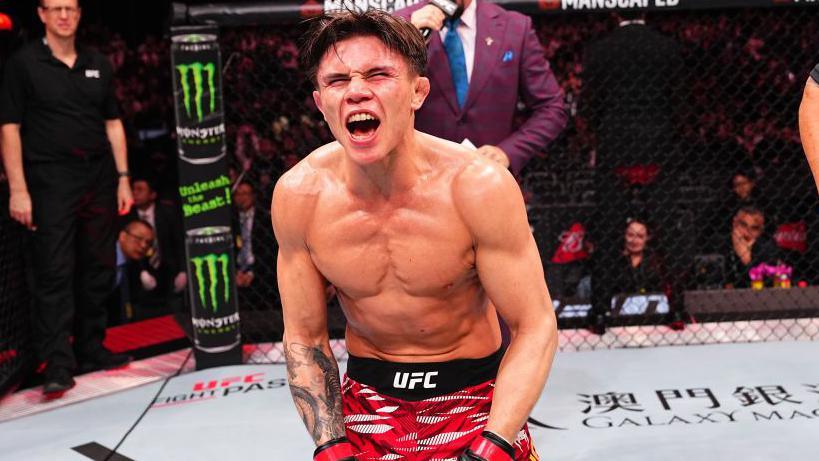
Briton Lone’er Kavanagh has stepped in at less than a month’s notice to fight Brandon Moreno in Mexico on 28 February.

Earlier this week Asu Almabayev withdrew from the flyweight contest with Moreno because of injury.

Kavanagh, 26, had been booked to fight at UFC London on 20 March and will now face by far his toughest test to date against the former flyweight champion.

The Mexican will have the weight of a famously feverish home support behind him, but is at a crossroads in his career with three defeats in his past five appearances.

Moreno, 32, was stopped by Tatsuro Taira in his last outing in December but remains ranked at number four in the division.

Kavanagh, ranked 15th, can boost his status considerably with a win on away soil.

The Londoner suffered the first defeat of his MMA career in his last bout in August, losing by stoppage to Charles Johnson.

Though Kavanagh is now off the UFC London card, there will still be plenty of British fighters in action.

Related topics

  • Mixed Martial Arts
    • 1 day ago
    Max Holloway and Charles Oliveira face off
    • 28 April 2024
    Split image of Claressa Shields, Paddy Pimblett and Chris Eubank Jr

More MMA from the BBC

    • 16 August 2025
    BBC Sport microphone and phone

Trump hails ‘excellent’ phone call with China’s Xi amid trade tensions

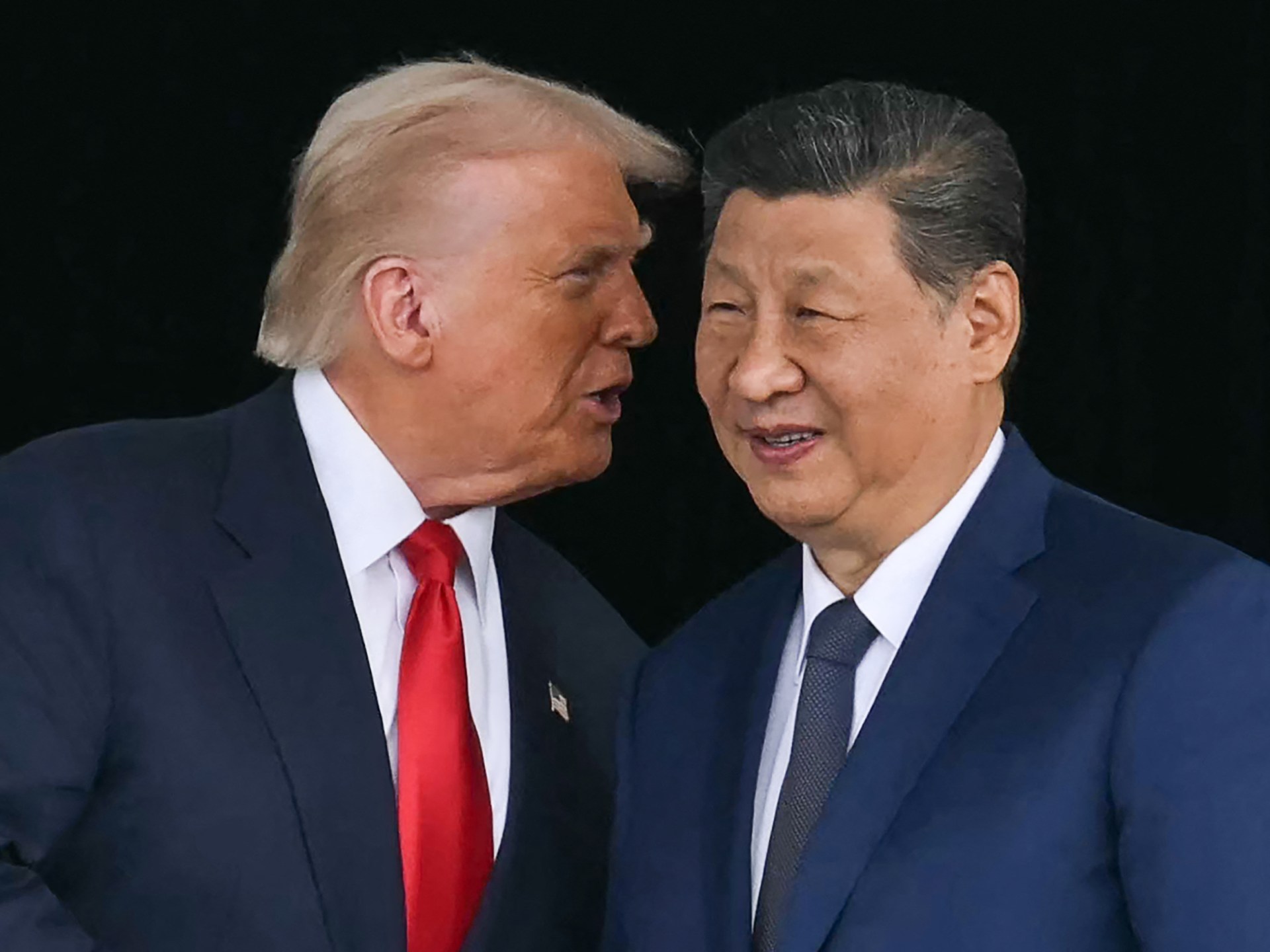
United States President Donald Trump says he had an “excellent” phone call with Chinese President Xi Jinping, which covered issues including trade, energy, Taiwan, Iran, and Russia’s war in Ukraine.

The Wednesday phone call came several hours after Xi spoke with Russian President Vladimir Putin, during which both pledged to strengthen ties amid a “turbulent” international environment.

Recommended Stories

list of 3 itemsend of list

“All very positive,” Trump said in a social media post. “The relationship with China, and my personal relationship with President Xi, is an extremely good one, and we both realise how important it is to keep it that way.”

The US president is expected to travel to China in April and has touted his personal relationship with Xi, even as the two countries continue to spar over competing interests in tech, trade, and geopolitical flashpoints, such as the future of Taiwan.

Trump stated that the two leaders discussed the situation in Iran, which has been roiled by recent protests and a harsh security crackdown and that Trump has threatened to attack if Tehran does not make deep concessions on a range of issues, but did not offer further details.

A readout of the call from the Chinese government shared by the Xinhua state news agency does not mention Trump’s expected visit, but says that Trump and Xi have maintained “good communication”, including an in-person meeting in Busan, South Korea, last year.

The Chinese leader said that differences with the US could be handled amicably so long as they were based on equality and respect, but noted that reunification with Taiwan, the self-governing island that China sees as an essential part of its territory, remains a key priority for Beijing.

“Xi stressed that the Taiwan question is the most important issue in China–US relations,” the readout states, adding that the US should approach arms sales to Taiwan with “great prudence”.

“Taiwan is China’s territory. China must safeguard national sovereignty and territorial integrity, and it will never allow Taiwan to be separated from China.”

The US approved an $11bn arms package for Taiwan in December, one of the largest ever, to bolster Taiwan’s defence capabilities.

Trump said that China has agreed to increase its purchase of US soya beans from 12 million tonnes in the current season up to 20 million tonnes, which he celebrated as a boon for US agricultural production.

Gaza on the agenda as Turkiye’s Erdogan meets Egypt’s el-Sisi in Cairo

Turkish President Recep Tayyip Erdogan and Egyptian President Abdel Fattah el-Sisi have condemned recent “ceasefire” violations in Gaza after a spate of Israeli attacks and have urged the full implementation of the US-backed plan to end Israel’s two-year genocidal war against the Palestinian people of Gaza.

The two leaders made the remarks on Wednesday during a joint press conference in Cairo, where Erdogan is on an official visit for talks and the signing of cooperation agreements with his Egyptian counterpart.

Recommended Stories

list of 3 itemsend of list

Erdogan said the Palestinian cause topped their agenda as a humanitarian tragedy continues to unfold in Gaza. He added that Turkiye and Egypt would continue coordinating on peace efforts in the enclave, where Israeli attacks today have killed 23 people, including children, despite the truce.

The two leaders also discussed a range of broader international issues, including their concerns about Iran, Sudan and Somaliland.

Both stressed the need for a truce and a comprehensive peace deal to end Sudan’s nearly three-year civil war.

Erdogan, whose country is attempting to mediate between the US and Iran amid rising tensions, said diplomacy was the “most appropriate method” to resolve their disputes, including over Iran’s nuclear programme.

The Turkish president also criticised Israel’s recognition of Somaliland last year, calling the move a violation of Somalia’s sovereignty.

Seeking $15bn in bilateral trade

Erdogan and el-Sisi inked numerous bilateral agreements covering defence, health and agriculture, and discussed plans to deepen trade ties, according to Turkish state news agency Anadolu.

“We also affirmed the necessity of working to raise the volume of trade exchange to $15bn and removing any obstacles that may hinder achieving this goal,” said el-Sisi, who along with Erdogan was to attend the closing session of a bilateral business forum in the Egyptian capital.

Erdogan’s Cairo visit followed a trip a day earlier to Saudi Arabia, where Ankara says it also plans to strengthen economic and energy cooperation. It was Erdogan’s first visit to the kingdom in more than two years, signalling warmer ties after years of strain following the 2018 killing of journalist Jamal Khashoggi by Saudi agents inside the Saudi consulate in Istanbul.

“The two sides agreed to strengthen their cooperation in the fields of oil, petroleum products, and petrochemicals,” as well as in “electricity and renewable energy … building on Saudi Arabia’s massive energy investments”, said a statement by the Turkish presidency.

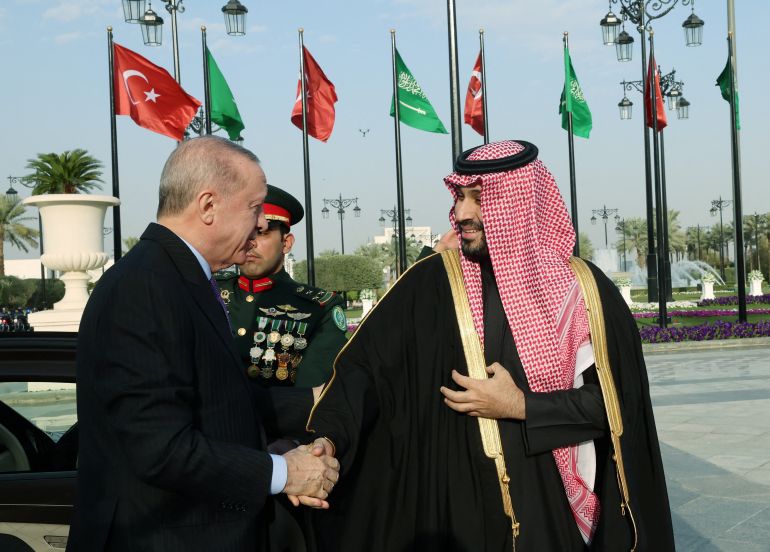
Turkish President Tayyip Erdogan is welcomed by Saudi Crown Prince Mohammed bin Salman in Riyadh, Saudi Arabia, February 3, 2026. Murat Cetinmuhurdar/Turkish Presidential Press Office/Handout via REUTERS ATTENTION EDITORS - THIS PICTURE WAS PROVIDED BY A THIRD PARTY. NO RESALES. NO ARCHIVES.
Turkish President Recep Tayyip Erdogan is welcomed by Saudi Crown Prince Mohammed bin Salman in Riyadh, Saudi Arabia, February 3 [Murat Cetinmuhurdar/Turkish Presidential Press Office/Handout via Reuters]

Swansea Council say they ‘were told Ospreys wouldn’t exist’

Dan Moffat

BBC Wales

Swansea Council says it has been told that regional rugby in Swansea will not exist beyond the end of next season if a takeover of Cardiff by Ospreys’ owners Y11 Sport & Media is successful.

In a statement after a meeting with Welsh Rugby Union (WRU) and Ospreys officials, the council said it had issued a pre-action legal letter to the WRU and Y11, warning of legal action if the restructure of Welsh professional rugby was not paused.

The WRU wants to reduce the number of men’s professional teams in Wales from four to three, which could be achieved by eliminating Ospreys as a top-tier side through a takeover process of Cardiff by Ospreys’ owners Y11 Sport & Media.

The WRU said the Swansea Council statement was inaccurate, but confirmed it had received the pre-action legal letter.

Ospreys say “no decisions have been made regarding Ospreys’ future after the 2026-27 season, and no statements have been made by Lance Bradley [chief executive] or anyone else associated with Ospreys which contradict that.”

Y11 have also been asked to comment.

Council’s ‘deep frustration’

Swansea Council had said it would publish the minutes of the meeting, which took place on 22 January, but in its statement claimed they had not done so because the WRU, Y11, and Ospreys objected to it.

The meeting included officials from Swansea Council, the WRU chief executive Abi Tierney, and Ospreys chief executive Lance Bradley.

In a statement, the council listed a number of what it called “key facts” that it claims were said at the meeting.

The statement includes that Bradley confirmed there would not be a professional Ospreys team playing regional rugby after 2027 if the takeover of Cardiff by Y11 went through.

It is claimed that Mr Bradley also said a merger with Swansea RFC could follow, which would see a merged team competing in the semi professional Super Rygbi Cymru instead of the United Rugby Championship (URC).

The council statement said: “Council representatives left the meeting with a clear understanding that the basis of the WRU’s and Y11’s proposals for the future, if the acquisition of Cardiff Rugby by Y11 is completed, was that the Ospreys would not continue as a professional regional team after 2026-27.”

“The council expressed deep frustration that, despite extensive and recent discussions about the redevelopment of St Helen’s, it had not been informed earlier of these proposals. This lack of transparency and engagement is wholly unacceptable.”

The council claim that the WRU’s restructuring proposals would breach UK competition law and has issued pre-action letters to the WRU and Y11 requesting that they pause their plans.

The WRU has proposed cutting one of its four men’s professional sides – Cardiff, Dragons, Ospreys and Scarlets – to three.

The WRU has stated there will be one licence in Cardiff, one in the west and one in the east, with Llanelli-based Scarlets, and Dragons in Newport, expected to be handed those.

    • 3 days ago
    • 5 days ago
    • 24 January

Uncertainty over St Helen’s

Ospreys will continue playing in the URC and Europe next season, but their future beyond the end of the 2026-27 campaign looks even more in doubt.

There has been ongoing uncertainty around what will happen with the £5m development St Helen’s ground in Swansea, that was set to be the Ospreys’ new home from the start of next season.

Swansea Council, which is funding the project, said its legal action would be aimed at safeguarding the future of regional rugby in the city.

In its pre-action legal letter, Swansea Council said the decision to cut the number of regions was “a restriction of competition and has not been carried out in a fair, transparent or non-discriminatory way.”

It also said that the WRU’s ownership of Cardiff created a “clear conflict of interest.”

The council has asked for a response to its pre-action letter by 13 February.

“Coming out of the meeting we were clear on what we were told, we felt the public had a right to understand what the conclusion of that meeting meant,” said Rob Stewart, leader of Swansea council told BBC Wales.

“We’ve respected parts of the meeting, but there are some clear themes around the fact the decisions seems to have been made to end regional rugby here in Swansea.

“We felt the public of Swansea deserved to know what the proposals were.

“There was not an agreement to all parts of the minutes between the Ospreys and the WRU.

“So we felt it better to put out a statement that was not challengeable in terms of legal aspects, rather focus on the main themes and conclusions, which are not in doubt.

“We’re continuing to support the Ospreys, to continue seeing them play regional rugby here in Swansea, but that does mean having a legal challenge towards the WRU and Y11.”

When asked whether a legal challenge was the best use of public money, Stewart said: “For our region here, there’s in excess of £12m of direct impact to the economy, 20,000 people play rugby in Swansea every week.”

“All of that is at risk so it is in the public interest, and as a public body we have to stand up for what’s right.

What the WRU and Ospreys say

The WRU said: “We can confirm that we have received a pre-action letter from Swansea Council, alongside a public statement which is inaccurate in reference to a recent meeting we attended.

“As you will understand we will be taking our own advice and so cannot comment on this at this time.

“This WRU board has worked in good faith since it took office some two years ago to create a new way forward for Welsh rugby given the significant financial and performance issues we are all facing.

“We appreciate that these are difficult issues for everyone concerned, but we have conducted ourselves with future long term success in mind.”

Ospreys say they noted the statement from Swansea Council regarding discussions on the future of regional rugby in Wales.

The Ospreys statement said: “As has been stated previously, Ospreys continues to operate as a professional club and is focused on supporting its players, staff, and supporters while competing in the URC under existing agreements.

“No decisions have been made regarding Ospreys’ future after the 2026-27 season, and no statements have been made by Lance Bradley or anyone else associated with Ospreys which contradict that.

“Given the sensitivity of these matters, and the fact that they involve multiple parties and ongoing discussions, it would be inappropriate for Ospreys Rugby to comment on interpretations of meetings, unfinalised proposals, or legal correspondence.

Related topics

  • Welsh Rugby
  • Ospreys
  • Rugby Union