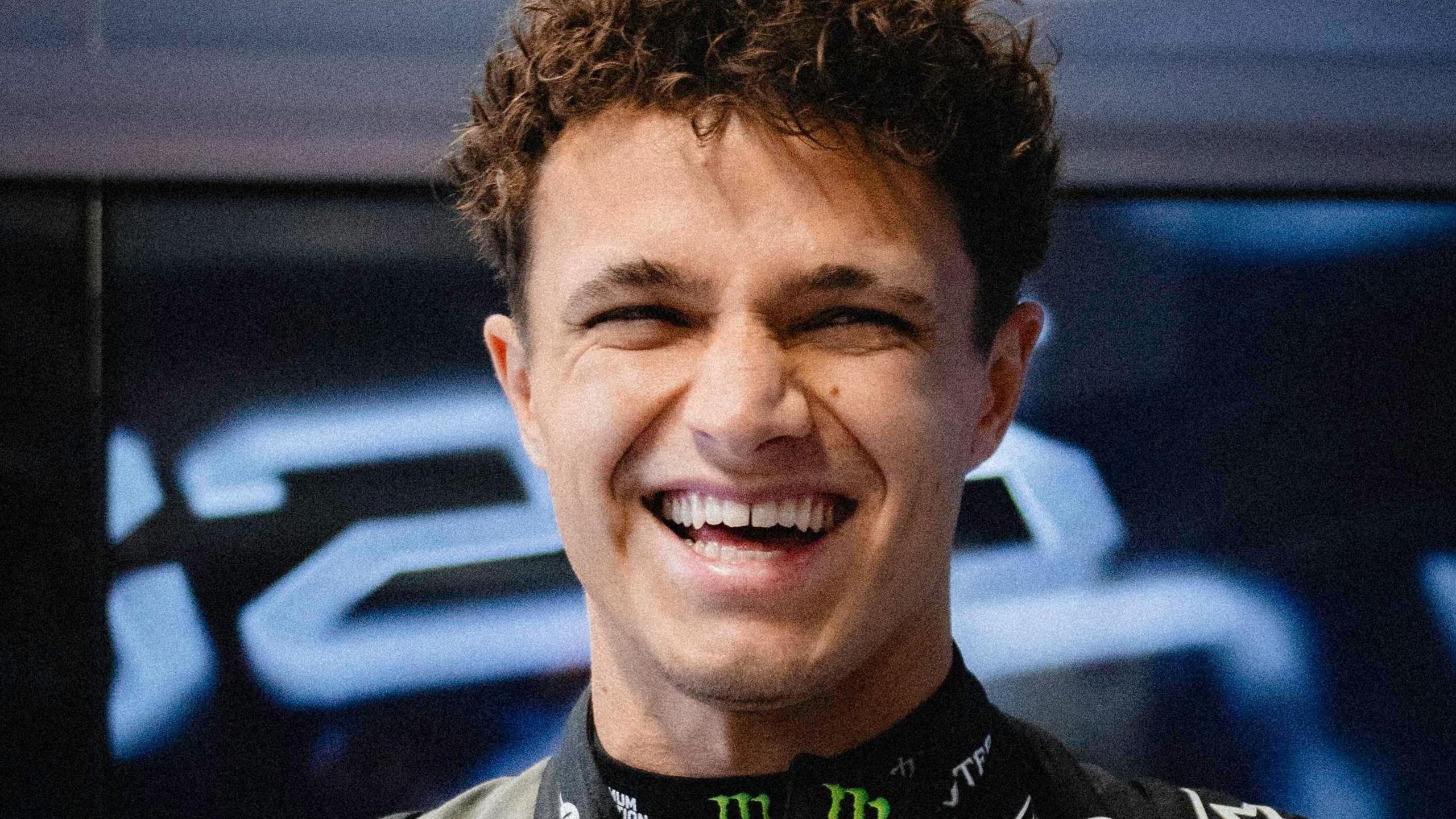
‘More chaos in races’ from new F1 rules – Norris

Andrew Benson

F1 correspondent
  • 116 Comments

World champion Lando Norris says he expects “more chaos in races” this year as a result of the new rules introduced to Formula 1.

The sport has its biggest regulation change in history, with engines, chassis, fuel and tyres all subject to new requirements.

Energy management of the battery will be a central feature, with engines that now have more of their total power output provided by the electrical hybrid elements.

Briton Norris said: “You’re going to see more chaos in races where a driver has to be a little bit more on top of all of these different situations that can happen.

The McLaren driver said the use of the new ‘boost button’, which gives an extra burst of electrical energy, and the effect that has on the battery’s state of charge will be central to the new format of F1.

“You’ll be able to force people more in different positions and create racing potentially in better ways than you have been able to in the past,” Norris said.

“And that’s probably a better thing, a good thing.”

Norris is basing his early assessment of the cars on the ‘shakedown’ test that was held in Barcelona last week. There are two further three-day pre-season tests in Bahrain over the next two weeks, starting on 11 February.

He says the new engines and the need to manage energy could lead to drivers swapping positions more often.

Lando Norris in the new McLarenMcLaren

Cars ‘feel more powerful and quicker’

The engines are still 1.6-litre V6 turbo hybrids, as they have been since 2014, but one of the two electrical motors that recovered energy has been removed.

The total amount of electrical energy has been increased by a factor of three, but the battery is more or less the same size. If the battery is fully depleted, the engine loses 350kw (470bhp), leading to potentially dramatic speed differentials.

Drivers will be backing off towards the end of straights – and being careful about when they apply the throttle – to ensure the most efficient energy usage, even on a qualifying lap.

The cars are also smaller and lighter, have less downforce and have ‘active aerodynamics’ – where both front and rear wings open on the straights to increase speed and the possibility for energy recovery.

Norris said the new car “certainly feels more powerful and quicker” on the straight.

“The biggest challenge at the minute is battery management and knowing how to utilise that in the best way,” he said.

“It’s not simple. You can explain it in quite simple terms. It’s just you have a very powerful battery that doesn’t last very long, so knowing how to use it in the right times, how much energy, how much of that power you use, how you split it up around the lap…

“The biggest challenge is how you can recover the batteries as well as possible, and that’s when it comes down to using the gears, hitting the right revs.

“Obviously, you’ve got some turbo lag now, which we’ve never really had before. All of these little things have crept back in, but I don’t think that changes too much.

“In a perfect world, I probably wouldn’t have [all] that in a race car, but it’s just F1. Sometimes you have these different challenges.”

His team-mate Oscar Piastri said the cars were “not as alien as I think we might have feared” and insisted he “didn’t think F1 had lost its identity at all”.

The Australian added: “There’s going to be some things to get used to but in terms of some of the fears that maybe we had before we got on track, a significant majority of those have been alleviated now.

“There’ll be some differences, but I think fundamentally they’re still the fastest cars in the world.”

    • 5 days ago
    • 17 December 2025

The reduced downforce has lowered cornering speeds and ensured some of the quicker corners, where drivers did not have to slow down before, will be more challenging.

Norris said: “Quite a lot more corners that were easy flat in previous years or the last few years are going to become much bigger corners again.

“So that’s a good thing in some ways and therefore you can see more racing.

“But you might have different strategies because what was then flat last year and not really a grip-limited section, now when you put a new set of tyres on you’ll be able to gain in a lot more parts of the track.”

‘I want to be champion again’

Norris won his first title last year in a close season-long battle with Piastri and Red Bull’s Max Verstappen.

The 26-year-old said he was revelling in the fact he had achieved his “life’s ambition” and was keen to continue his success.

“If I don’t achieve something again, I always have something that I’m very proud about. If anything, I enjoyed last year a lot – and of course I really want to do it again.”

Norris’ success in 2025 was the consequence of a big step in performance in the second half of the season, after assiduous work with his team on improving following a difficult first few races.

“I’m always trying to improve on my things,” he said. “I know there’s still areas that I’m not at the level I need to be – and it’s still a good level – but when you’re fighting these guys, you need to be close to perfection. There’s still plenty of things I want to work on and I want to be better on, but the baseline level of where I’m at now is already pretty good.

Related topics

  • Formula 1

More on this story

    • 2 days ago
    George Russell speaking to Max Verstappen at an FIA-F1 news conference during the 2025 Singapore Grand Prix
    • 1 day ago
    A graphic representation showing Williams' 2026 livery on what the team describe as "a simplified version of the 2026 car"
    • 10 December 2025
    Arvid Lindblad holds up a number one sign after winnng an F2 race

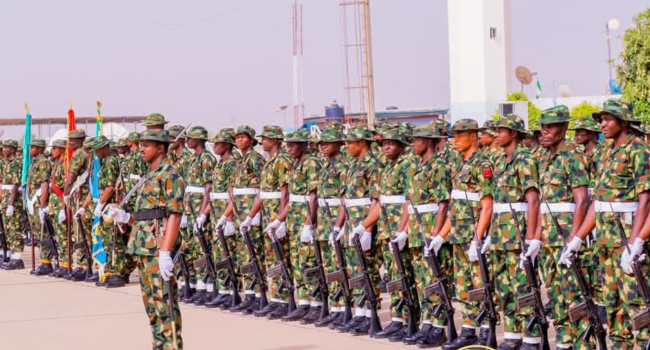
Tinubu Orders Deployment Of Troops To Kwara After Deadly Attack

President Bola Tinubu has deployed an army battalion to Kwara State following an attack by terrorists, which left scores of people dead and properties destroyed.

Presidential spokesman, Bayo Onanuga, said in a statement late Wednesday that the deployment is to “checkmate the barbaric terrorists and protect defenceless communities.”

The new military command will spearhead Operation Savannah Shield, Onanuga said.

While condemning the attack, Tinubu described the gunmen “as heartless for choosing soft targets in their doomed campaign of terror.”

He expressed rage that the attackers killed the community members who rejected their attempt at indoctrination.

“It’s commendable that the community members, even though Muslims, refused to be conscripted into a weird belief that promoted violence over peace and dialogue,” he said while condoling with the families of those who died during the attack.

The president also called for cooperation between federal and state agencies to give succour to members of the community and ensure those who committed the atrocities do not go scot-free.

READ ALSO: Security Operatives Rescued 309 Hostages, Killed 55 Terrorists In Kogi, Kwara — Police

Gunmen killed over 160 people, burned shops and a traditional ruler’s home, and wounded people fled into the bushes after the late Tuesday attack.

The refusal of the villagers to be indoctrinated by an extremist group, Mahmuda, was said to have led to indiscriminate shooting, as two vehicles belonging to the village head were used by the bandits to transport many villagers who were abducted.

The attack on Woro Village in Kwara State came after the military recently carried out operations in the area against what it called “terrorist elements”.

Last month, the military said it had launched “sustained coordinated offensive operations against terrorist elements” in Kwara State.

“Troops also stormed remote camps hitherto inaccessible to security forces where several abandoned camps and logistics enablers were destroyed, significantly degrading the terrorists,” the military said in a January 30 statement.

In response to the latest security woes, Kwara State imposed curfews in certain areas and closed schools for several weeks before ordering them to reopen on Monday.

‘I’ve been flying through the air without skis on – that is a weird feeling’

Emma Smith

BBC Sport journalist

What do you do if you fall 40 feet on to hard-packed snow? If you’re a Winter Olympian, you pick yourself up and try again.

There is a fine line between success and failure in winter sports, where a few millimetres when landing difficult tricks on snow can make the difference between a medal or serious injury.

Dealing with the fear of what might happen if things go wrong is just as important for an elite Winter OIympic athlete as honing any other skill of their craft.

The jeopardy is real as athletes heading to the Milan-Cortina Games push the limits of what is physically possible in their sports while pushing themselves out of their comfort zones.

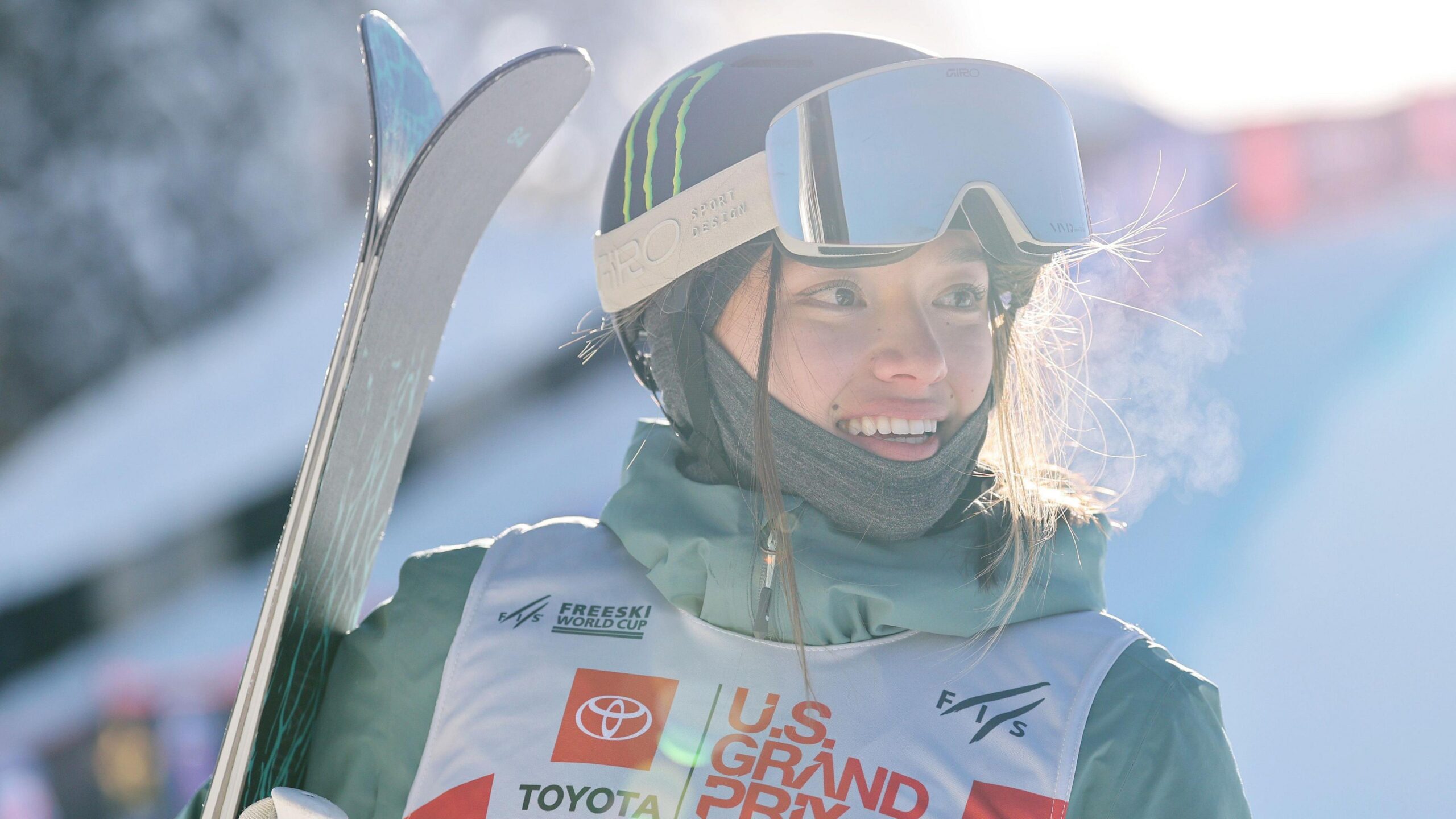
“The biggest challenge of my sport is definitely overcoming the fear,” says freestyle skier and Team GB Winter Olympic medal hopeful Zoe Atkin, who is preparing for her second Winter Games.

The 23-year-old competes in ski halfpipe, where competitors drop into a 22-foot deep pipe and complete as many tricks as they can while jumping as high out of the halfpipe as possible.

They are judged on the amplitude – the height they reach – as well as the difficulty of the tricks and how well they have executed them.

Stanford University student Atkin is studying symbolic systems in the United States. It has aided in her quest to emulate older sister Izzy and win an Olympic medal.

“Symbolic systems is interdisciplinary. It’s a lot to do with computer science as well as cognitive science. It’s studying machines that simulate the brain.

“Being able to understand fear from a biological process has helped me on the slopes,” she says.

For Atkin, fear is at its lowest, maybe unexpectedly, on competition day.

“That’s just nervousness around the result and performing to your best, which is easier to combat,” she tells BBC Sport. ”I do meditation in the morning, to focus on the now.

“The fear comes in training;  when you are practising something you are not familiar with, that is when the uncertainty comes in.

‘I’ve flown through the air without skis on my feet’

Zoe’s sister Izzy claimed slopestyle bronze in Pyeongchang in 2018.

It gave Britain a first skiing medal at a Winter Olympics – 16 years after Alain Baxter lost his slalom bronze when he failed a drugs test after using an over-the-counter nasal decongestant that he believed to be permitted.

Zoe was watching from the stands eight years ago in South Korea with her parents, and her sister’s achievements spurred her on to pursue her own skiing career.

“Working with a sports psychologist has been important – when I was younger, I felt more intense fear, which was a barrier to performance,” Atkin says.

“I am pretty young still, but there were a lot of expectations internally, things I want to achieve.”

She heads into the Games as the reigning world champion and this season has finished on the podium in each of the World Cups, including a win at Copper Mountain and claimed gold at the X Games.

“Now I’ve won things, surely I shouldn’t be afraid and I should have confidence?” she says.

“But no matter how established you are, there’s always a comfort zone you need to push to progress. It’s always a continuous progress, a journey I now have more fully embraced.”

Atkin has been fortunate in that she has avoided serious injuries, unlike her sister who broke her pelvis just before the 2022 Winter Olympics and has since retired from competitive skiing.

GB team-mate Kirsty Muir has also had her fair share of injuries.

The 21-year-old competes in ski slopestyle and big air. She rides rails and performs tricks of large ramps.

She knows all too well about the horrors of serious injury in the line of duty.

In December 2023, a scan revealed that repeated blows to her knee had resulted in a torn cruciate ligament, ruling her out for a year.

Muir, having “never not skied for that long in my life”, says she is fit and firing for Milan-Cortina – but admits the road back was hard.

“The sport progresses continually, so having that much time off was difficult,” Muir tells BBC Sport.

Muir has won World Cup events in ski slopestyle and big air this season and also won at the X Games but is no stranger to the occasional crash landing.

The key to overcoming that fear, she says, is accepting they will happen.

“The injury wasn’t my scariest, as it didn’t happen at a specific moment,” she says. “It’s more when things out of your control go wrong.

“I’ve had skis come off my feet or my goggles come over my eyes when about to jump, and I’ve been flying through the air without skis on my feet. That is a weird feeling.

‘You need to be OK with falling’

Kirsty Muir crashes, as a ski comes loose and snow is churned upGetty Images

In the moment before beginning a run, with a giant halfpipe or slopestyle course or big air jump in front of them, what is running through an athlete’s mind?

Atkin thinks of nothing at all.

“Meditation is more like an umbrella term for mindfulness,” she says. ”But I do sit down, doing the hand pose, for about 10 minutes before going up. You can overthink things and overinflate the risks, wonder if fears are plausible and reframing them – it lets me disregard thoughts that are unhelpful, like ‘what if I fall?’.

“I’ve had scary falls. It is all part of the process; it takes a certain mental strength – to be OK with falling.

“Part of our training is falling safely; if you are about to over-rotate, it is better to open and land on your side. That air awareness is something you train on. We can take big falls and know we are prepared to take them.

“I was working on this trick I previously had a mental block on.

“I would sit at the top, full of fear, trip and fall on my hip repeatedly. But I committed to finishing it – little steps every day, pushing myself to confront my fear. That allowed myself to build my confidence, and it felt like a personal victory as well.”

GB Snowsport, the national governing body, has worked with athletes on calming techniques – including by taking some freediving, to learn how to stay focused when out of their comfort zone, as well as breathing techniques under high pressure.

According to Muir, the best way to prepare is to start that preparation long, long before you drop in.

“The times I feel fear are when I am trying something new, that feels more like a leap of faith,” she says.

“When we are going for a new trick, it is never from zero to 100. You do each step to make sure you are comfortable. Then you go for it, which is difficult.

“I centre myself – there is a moment you have got to try. Those moments are scariest, but most rewarding. It is thinking toward that moment.

“The most important thing is accepting that our sport is risky, but it is something I have chosen to do. I am the one in control.

‘Foo Fighters is my competition song’

Kirsty Muir in the air on her skis, with a tower and other buildings blurred in the backgroundGetty Images

In the battle to make sure fear doesn’t win, Atkin and Muir have very different approaches.

Atkin says: “I can tell me it is just bodily reactions, and it is understandable – it would be crazy if I didn’t feel fear. Just reframing fear as something more positive, that you can do it even if you have that fear.

“If you were to take a regular person and drop them in a halfpipe, logically you feel fear. But we train our whole lives for one specific thing.”

Muir’s attitude is a little less logical. While thoroughly grounded in training and technique as a world champion athlete, there is also superstition and a little bit of music sprinkled in the mix.

“I have a lucky snood – the face masks people use when they ski – always on my person,” she says.

“I got it off one of the skiers I admired at the dry ski slope when I was younger, and I’ve always had it with me.

“And I have The Pretender by Foo Fighters as my competition song – I only play it at comps, that helps me switch off. Then during training, I have rock music.

Related topics

  • Winter Sports
  • Insight: In-depth stories from the world of sport
  • Winter Olympics
  • Freestyle Skiing

How Team GB Winter Olympians beat The Fear

Emma Smith

BBC Sport journalist

What do you do if you fall 40 feet on to hard-packed snow? If you’re a Winter Olympian, you pick yourself up and try again.

There is a fine line between success and failure in winter sports, where a few millimetres when landing difficult tricks on snow can make the difference between a medal or serious injury.

Dealing with the fear of what might happen if things go wrong is just as important for an elite Winter OIympic athlete as honing any other skill of their craft.

The jeopardy is real as athletes heading to the Milan-Cortina Games push the limits of what is physically possible in their sports while pushing themselves out of their comfort zones.

“The biggest challenge of my sport is definitely overcoming the fear,” says freestyle skier and Team GB Winter Olympic medal hopeful Zoe Atkin, who is preparing for her second Winter Games.

The 23-year-old competes in ski halfpipe, where competitors drop into a 22-foot deep pipe and complete as many tricks as they can while jumping as high out of the halfpipe as possible.

They are judged on the amplitude – the height they reach – as well as the difficulty of the tricks and how well they have executed them.

Stanford University student Atkin is studying symbolic systems in the United States. It has aided in her quest to emulate older sister Izzy and win an Olympic medal.

“Symbolic systems is interdisciplinary. It’s a lot to do with computer science as well as cognitive science. It’s studying machines that simulate the brain.

“Being able to understand fear from a biological process has helped me on the slopes,” she says.

For Atkin, fear is at its lowest, maybe unexpectedly, on competition day.

“That’s just nervousness around the result and performing to your best, which is easier to combat,” she tells BBC Sport. ”I do meditation in the morning, to focus on the now.

“The fear comes in training;  when you are practising something you are not familiar with, that is when the uncertainty comes in.

‘I’ve flown through the air without skis on my feet’

Zoe’s sister Izzy claimed slopestyle bronze in Pyeongchang in 2018.

It gave Britain a first skiing medal at a Winter Olympics – 16 years after Alain Baxter lost his slalom bronze when he failed a drugs test after using an over-the-counter nasal decongestant that he believed to be permitted.

Zoe was watching from the stands eight years ago in South Korea with her parents, and her sister’s achievements spurred her on to pursue her own skiing career.

“Working with a sports psychologist has been important – when I was younger, I felt more intense fear, which was a barrier to performance,” Atkin says.

“I am pretty young still, but there were a lot of expectations internally, things I want to achieve.”

She heads into the Games as the reigning world champion and this season has finished on the podium in each of the World Cups, including a win at Copper Mountain and claimed gold at the X Games.

“Now I’ve won things, surely I shouldn’t be afraid and I should have confidence?” she says.

“But no matter how established you are, there’s always a comfort zone you need to push to progress. It’s always a continuous progress, a journey I now have more fully embraced.”

Atkin has been fortunate in that she has avoided serious injuries, unlike her sister who broke her pelvis just before the 2022 Winter Olympics and has since retired from competitive skiing.

GB team-mate Kirsty Muir has also had her fair share of injuries.

The 21-year-old competes in ski slopestyle and big air. She rides rails and performs tricks of large ramps.

She knows all too well about the horrors of serious injury in the line of duty.

In December 2023, a scan revealed that repeated blows to her knee had resulted in a torn cruciate ligament, ruling her out for a year.

Muir, having “never not skied for that long in my life”, says she is fit and firing for Milan-Cortina – but admits the road back was hard.

“The sport progresses continually, so having that much time off was difficult,” Muir tells BBC Sport.

Muir has won World Cup events in ski slopestyle and big air this season and also won at the X Games but is no stranger to the occasional crash landing.

The key to overcoming that fear, she says, is accepting they will happen.

“The injury wasn’t my scariest, as it didn’t happen at a specific moment,” she says. “It’s more when things out of your control go wrong.

“I’ve had skis come off my feet or my goggles come over my eyes when about to jump, and I’ve been flying through the air without skis on my feet. That is a weird feeling.

‘You need to be OK with falling’

Kirsty Muir crashes, as a ski comes loose and snow is churned upGetty Images

In the moment before beginning a run, with a giant halfpipe or slopestyle course or big air jump in front of them, what is running through an athlete’s mind?

Atkin thinks of nothing at all.

“Meditation is more like an umbrella term for mindfulness,” she says. ”But I do sit down, doing the hand pose, for about 10 minutes before going up. You can overthink things and overinflate the risks, wonder if fears are plausible and reframing them – it lets me disregard thoughts that are unhelpful, like ‘what if I fall?’.

“I’ve had scary falls. It is all part of the process; it takes a certain mental strength – to be OK with falling.

“Part of our training is falling safely; if you are about to over-rotate, it is better to open and land on your side. That air awareness is something you train on. We can take big falls and know we are prepared to take them.

“I was working on this trick I previously had a mental block on.

“I would sit at the top, full of fear, trip and fall on my hip repeatedly. But I committed to finishing it – little steps every day, pushing myself to confront my fear. That allowed myself to build my confidence, and it felt like a personal victory as well.”

GB Snowsport, the national governing body, has worked with athletes on calming techniques – including by taking some freediving, to learn how to stay focused when out of their comfort zone, as well as breathing techniques under high pressure.

According to Muir, the best way to prepare is to start that preparation long, long before you drop in.

“The times I feel fear are when I am trying something new, that feels more like a leap of faith,” she says.

“When we are going for a new trick, it is never from zero to 100. You do each step to make sure you are comfortable. Then you go for it, which is difficult.

“I centre myself – there is a moment you have got to try. Those moments are scariest, but most rewarding. It is thinking toward that moment.

“The most important thing is accepting that our sport is risky, but it is something I have chosen to do. I am the one in control.

‘Foo Fighters is my competition song’

Kirsty Muir in the air on her skis, with a tower and other buildings blurred in the backgroundGetty Images

In the battle to make sure fear doesn’t win, Atkin and Muir have very different approaches.

Atkin says: “I can tell me it is just bodily reactions, and it is understandable – it would be crazy if I didn’t feel fear. Just reframing fear as something more positive, that you can do it even if you have that fear.

“If you were to take a regular person and drop them in a halfpipe, logically you feel fear. But we train our whole lives for one specific thing.”

Muir’s attitude is a little less logical. While thoroughly grounded in training and technique as a world champion athlete, there is also superstition and a little bit of music sprinkled in the mix.

“I have a lucky snood – the face masks people use when they ski – always on my person,” she says.

“I got it off one of the skiers I admired at the dry ski slope when I was younger, and I’ve always had it with me.

“And I have The Pretender by Foo Fighters as my competition song – I only play it at comps, that helps me switch off. Then during training, I have rock music.

Related topics

  • Winter Sports
  • Insight: In-depth stories from the world of sport
  • Winter Olympics
  • Freestyle Skiing

Ireland out to avenge haunting defeat as Six Nations begins

Matt Gault

BBC Sport NI senior journalist in Paris
  • 2 Comments

Six Nations: France v Ireland

Venue: Stade de France, Paris Date: Thursday, 5 February Kick-off: 20:10 GMT

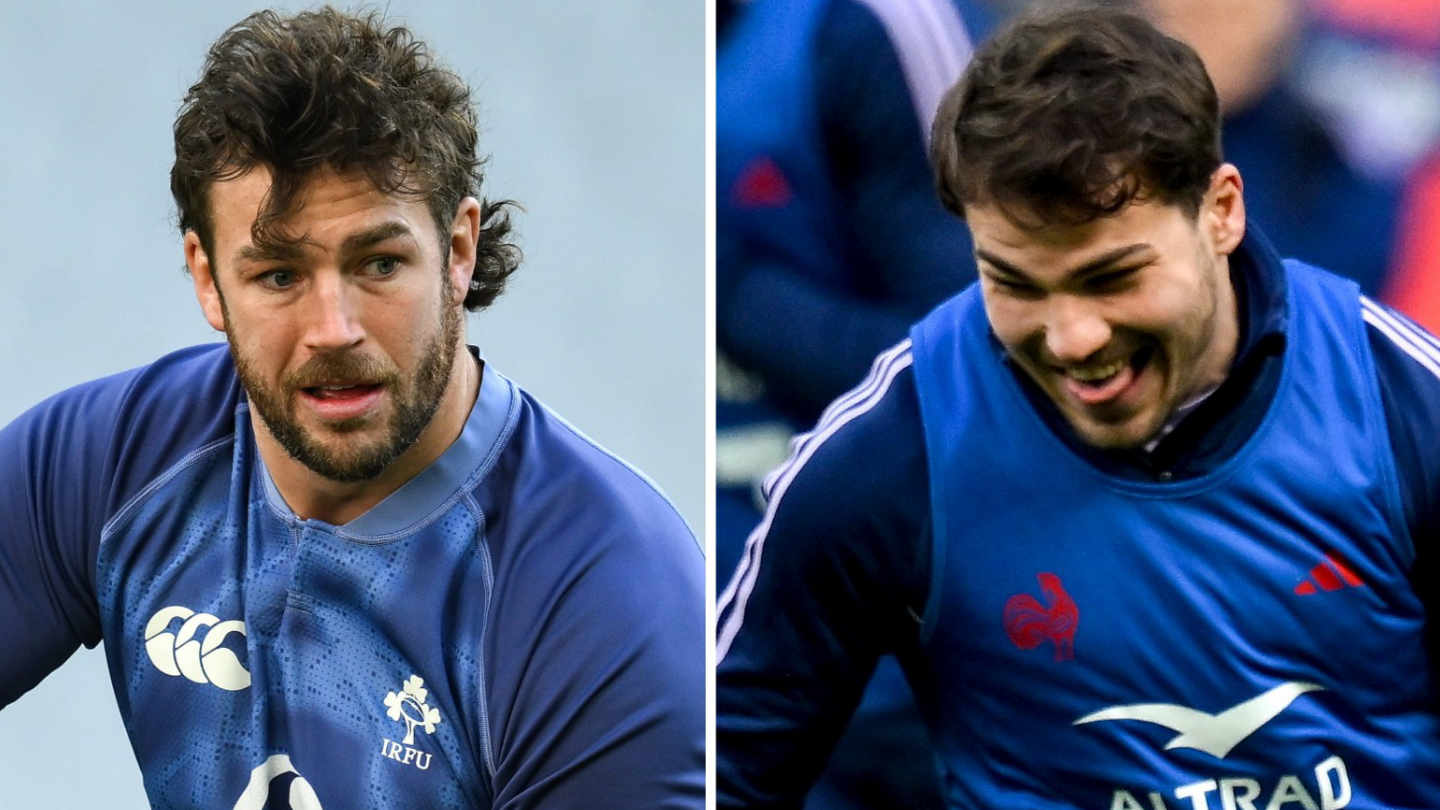
On the eve of the Six Nations, Ireland captain Caelan Doris used an amusing analogy to describe the world’s best player and highlight one of the myriad of challenges facing his side in Thursday’s Stade de France tournament opener.

Asked about returning France captain Antoine Dupont, Doris described the famously elusive scrum-half as “one of those little fish you try to touch and they dart away from you”.

“He’s done me several times,” admitted Doris.

“I can think of one particular instance in 2023 where I feel I have him coming up one side of the breakdown and then he twirls and goes around me and beats three defenders on the other side.”

Doris and Ireland can only hope that Dupont, back from a spell on the sidelines caused by a collision with Irish players last year, isn’t so slippery on Thursday.

The Toulouse star is the heartbeat of a French attack that could dent Ireland’s title hopes again.

In Dublin last year, not even Dupont’s withdrawal after 30 minutes could stop a rampant French side from ripping Ireland to shreds with 34 unanswered second-half points.

    • 23 hours ago
    • 1 day ago
    • 1 day ago

To avenge last year’s mauling, Ireland must move past preparations that were hit by injury and disciplinary issues and summon the type of mettlesome, high-intensity display that led them to victory over South Africa in this stadium at the World Cup.

And given that France scored a record 30 Six Nations tries last year, Farrell’s side will be required to apply scoreboard pressure from the outset.

To help, Farrell has turned to Jacob Stockdale, who aims to recapture the headline-hogging form of 2018 when his record-breaking seven-try haul earned him the player of the tournament award in Ireland’s Grand Slam campaign.

While he has predominantly played full-back for Ulster this season, Stockdale has edged out James Lowe to start on the left wing in what will be his first Six Nations appearance since 2021.

Stockdale coming up against rapid Bordeaux wing Louis Bielle-Biarrey – the man who broke his try-scoring record last year – will be an intriguing sub-plot and a severe examination of the Ireland player’s defence.

On the try-scoring front, Ireland could do with Dan Sheehan carrying his 2025 form into the French capital and a big effort from their bench.

Sam PrendergastGetty Images

As ever in the Test arena, there will be much focus on the two fly-halves.

For Ireland, Sam Prendergast will again start the Six Nations at 10 after beginning last year’s campaign with the shirt.

A slick operator with ball in hand, Prendergast has the passing and vision to open up the French defence, but his own defensive frailties have been under the microscope it seems since France’s Paul Boudehent ran through his attempted tackle last year.

But the 22-year-old received the backing of his captain after fending off competition from Jack Crowley and Harry Byrne.

“Obviously, his defence has caught quite a bit of flak,” said Doris.

“But it’s an area that…I’m in the same club as him in Leinster and I see day-to-day the work he puts in. Same here in camp.

“So that side of his game is improving. In terms of his attack, the ceiling is so high for him.”

France’s fly-half Matthieu Jalibert is older, has more Test caps and has been in sensational form for Bordeaux this season.

But he, too, is under pressure after being dropped by Les Bleus boss Fabien Galthie following last year’s loss to England.

“Everyone believes in Matthieu – his team-mates, the coaching staff, and even you lot given that all the journalists were clamouring for him to start the Six Nations given the season he’s having,” said Dupont.

Familiar French faces missing

Uini Atonio and Damian PenaudInpho

Three months on from an evisceration at the hands of the Springbok scrum, a patched-up Irish pack will be tasked with keeping the Parisian crowd quiet.

On paper, it is a huge ask. Farrell is without starting Test Lions props Andrew Porter and Tadhg Furlong, while Paddy McCarthy and Jack Boyle’s unavailability further weakens his hand at loose-head.

It means a first Six Nations start for 30-year-old Jeremy Loughman, who is a solid scrummager and has plenty of minutes under his belt for Munster this season. His club-mate Michael Milne – whose two caps came against Georgia and Portugal – provides loose-head cover.

Farrell also hopes tight-head Thomas Clarkson’s exposure to the Lions last summer will help guide the 25-year-old through the biggest game of his career.

Of course, the French front row is also missing a familiar face, with Uini Atonio forced into retirement because of a heart problem. The 35-year-old prop had started 18 of France’s past 20 Six Nations games, but in Dorian Aldegheri, Galthie has a reasonably experienced replacement.

In addition to Atonio, France are without Gregory Alldritt and Gael Fickou – who both captained the squad in Dupont’s absence – and record try-scorer Damian Penaud, all of whom have been axed by Galthie, while Thibaud Flament is missing for personal reasons.

Such a radical shake-up points to French eyes on the future, with the returning Dupont the only member of Thursday’s matchday squad possessing more than 50 caps.

Line-ups

France: Ramos; Attissogbe, Depoortere, Moefana, Bielle-Biarrey; Jalibert, Dupont (capt); Gros, Marchand, Aldegheri, Ollivon, Guillard, Cros, Jegou, Jelonch.

Replacements: Mauvaka, Neti, Montagne, Auradou, Meafou, Nouchi, Serin, Gourgues.

Ireland: Osborne; O’Brien, Ringrose, McCloskey, Stockdale; S Prendergast, Gibson-Park; Loughman, Sheehan, Clarkson, McCarthy, Beirne, C Prendergast, Van der Flier, Doris (capt).

Replacements: Kelleher, Milne, Bealham, Ryan, Conan, Timoney, Casey, Crowley.

Related topics

  • Irish Rugby
  • Northern Ireland Sport
  • Rugby Union
  • Ireland Rugby Union

More on this story