‘The shirt used to weigh heavy – now England players double in size in it’

  • 187 Comments

There was a time, maybe a couple of years ago, when the England shirt used to weigh heavy on the players.

The pressure seemed to inhibit them. They were not expressing themselves. Everything was safety-first and a bit meek.

No longer.

Now, that England shirt seems to make the players double in size. They have embraced this team and this stage and are relishing showing the Allianz Stadium crowd what they are capable of.

They are enjoying their rugby. And we are enjoying watching them.

Perversely, it is because the mood is so good around the team that coach Steve Borthwick and the players can be so focused on the bits and pieces which went wrong in the 48-7 win over Wales to open their Six Nations campaign.

There were no cartwheels or laps of honour after the final whistle. The players looked like they were happy with the win but focused on the next task – and aware that they will have to be better when they take on a wounded Scotland in Edinburgh on Saturday.

To play this video you need to enable JavaScript in your browser.

Freeman option gives England midfield depth

Tommy Freeman is rapidly approaching world-class status.

The package that he brings to Test rugby – the pace, size, aerial ability and appetite for the ball – is pretty special.

He was a starter for the British and Irish Lions in all three Tests against Australia in the summer and he is inked into this England team as one of those who will always have a place when fit.

However, there is a question over which number Borthwick will write next to Freeman’s name.

This was Freeman’s 23rd England appearance but only his third as a centre.

Considering that relatively paltry midfield experience, he was pretty damn good against Wales.

He hit superb lines, either hitting the ball up bravely into the heart of Wales defence or acting as a decoy, and worked instinctively with Northampton team-mate Fraser Dingwall inside him at 12.

They are turning into a dangerous and cohesive pairing – and England have been crying out for a midfield combination with those qualities for ages.

Where once the supply of centres was quite low, there are now a bunch of alternatives.

Ollie Lawrence, who is working his way back from a minor knee injury, may be available for Scotland. Max Ojomoh was very impressive against Argentina in the autumn. Seb Atkinson has credit in the bank from his performances on the summer tour of Argentina.

It means England can mix and match according to the opposition.

Do they want a punch in midfield or the ability to distribute quickly into wide channels? Gas around the outside or the ability to probe behind with kicks?

The ability to change tactics with different midfield selection is very, very exciting.

South Africa – the gold standard for everyone in world rugby at the moment – have the same.

The mix of Damian de Allende, Jesse Kriel, Canan Moodie, Damian Willemse and even Andre Esterhuizen gives them different ways of playing.

    • 14 hours ago
    • 4 hours ago

Arundell defensive development strengthens starting claims

Inevitably, Henry Arundell’s first-half hat-trick for England caught the eye against Wales, but it will have been the smaller details that most impressed Borthwick.

Defensively, Arundell has been questioned in the past, but he was strong in that area against Wales.

When you see him up close, he is strong and solid, as well as fast. He packs 15st 2lb into a 6ft frame and is physical and intimidating in defence. But he is also canny.

His positioning was good against Wales. He did not step out of shape and get isolated, as he has done previously.

His six months or so at Bath, under Johann van Graan and defence coach JP Ferreira, have really brought Arundell’s game on in that respect.

Late in the game, with England well over the horizon and the win secure, he also came in off his wing, looking for work and holes to exploit with his pace.

To play this video you need to enable JavaScript in your browser.

Borthwick has depth to be bold

After France and England’s dominant first-round performances, the expectation around their final-round meeting in Paris on 14 March has risen another notch.

But you would be foolish to draw a straight line from this opening weekend to a Grand Slam decider on the final one.

There are going to be tougher moments for each side before that. The test will be how they react to being under the pump, away from home in tricky conditions. Scotland showed how hard that can be during their defeat by Italy on Saturday.

Borthwick will not be looking too far ahead, but one lesson he can already take from France is the ability to create competitive internal environments.

Opposite number Fabien Galthie shook up his squad selection for the tournament, leaving out established players Damian Penaud, Gael Fickou and Gregory Alldritt. Perhaps they will come back in for later fixtures. Perhaps not.

But the new faces – and the sense of playing for your place – pushed France to a great performance against Ireland.

To play this video you need to enable JavaScript in your browser.

Related topics

  • England Rugby Union
  • Rugby Union

Seifert half-century helps NZ beat Afghanistan

To play this video you need to enable JavaScript in your browser.

Timothy Abraham

BBC Sport Journalist
  • 19 Comments

Men’s T20 World Cup, Group D, Chennai

Afghanistan 182-6 (20 overs): Gulbadin 63 (35); Ferguson 2-40

New Zealand 183-5 (17.5 overs): Seifert 65 (42); Mujeeb 2-31

New Zealand won by five wickets

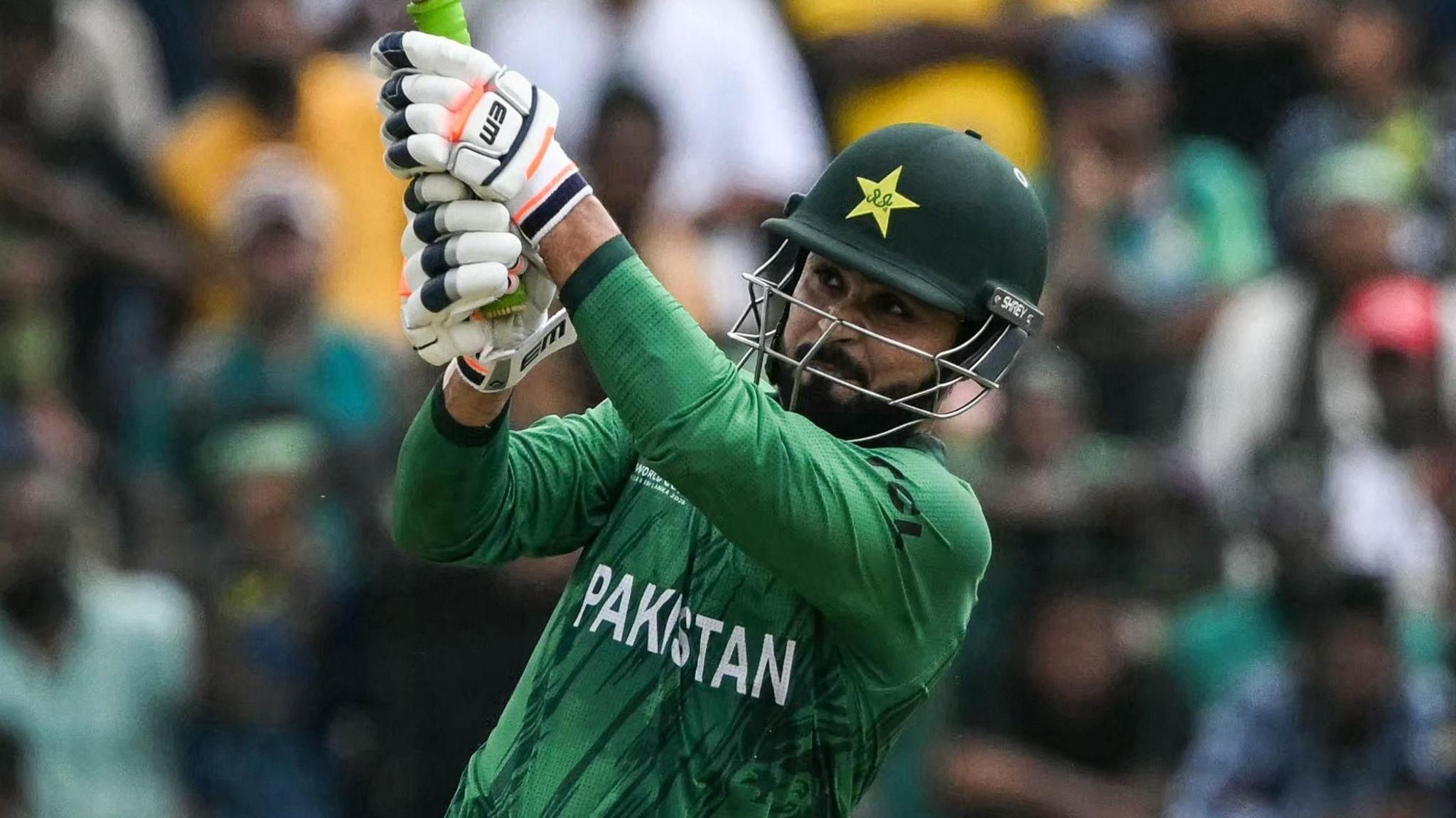
New Zealand pulled off their highest run chase in T20 World Cup history as they opened their Group D campaign with a five-wicket win over Afghanistan.

Set a tricky 183 in Chennai, the Black Caps recovered from a parlous 14-2 thanks to opener Tim Seifert’s 65 off 42 balls.

The Kiwis still had work to do at 155-5 with four overs remaining but Daryl Mitchell and Mitchell Santner upped the ante and Afghanistan’s seamers had no answer to their measured aggression.

Mitchell finished unbeaten on 25 off 14 balls while Santner whacked 17 not out off eight as New Zealand won with 13 balls to spare.

Gulbadin Naib had earlier provided the backbone of Afghanistan’s 182-6 with a pugnacious 63 off 35 balls.

The all-rounder struck three fours and four sixes at a strike rate of 180.00 as he shared stands with Rahmanullah Gurbaz and Sediqullah Atal.

Lockie Ferguson claimed 2-40 while Matt Henry, Jacob Duffy and Rachin Ravindra chipped in with a wicket each.

New Zealand looked in trouble when Mujeeb Ur Rahman removed Finn Allen and Rachin Ravindra for 1 and 0 respectively.

But Seifert and Glenn Phillips rebuilt with a third-wicket partnership of 74 before the latter was bowled by Rashid Khan for a 25-ball 42.

Seifert hammered back-to-back sixes off Mohammad Nabi – bringing up his half-century in the process – only to fall a couple of deliveries later to the experienced spinner when he holed out to square leg.

Related topics

  • New Zealand
  • Afghanistan
  • Cricket

More on this story

    • 1 day ago
    • 16 August 2025
    BBC Sport microphone and phone
    • 17 hours ago
    Suryakumar Yadav bows after hitting a half-century

Polls open in Portugal for first presidential run-off in 40 years

Polls have opened in the second round of Portugal’s elections, viewed as a high-stakes choice between the socialists and a resurgent far right.

Voting began at 9am local time (09:00 GMT) on Sunday for the presidential election, with 11 million voters at home and abroad eligible to cast their ballots.

Recommended Stories

list of 3 itemsend of list

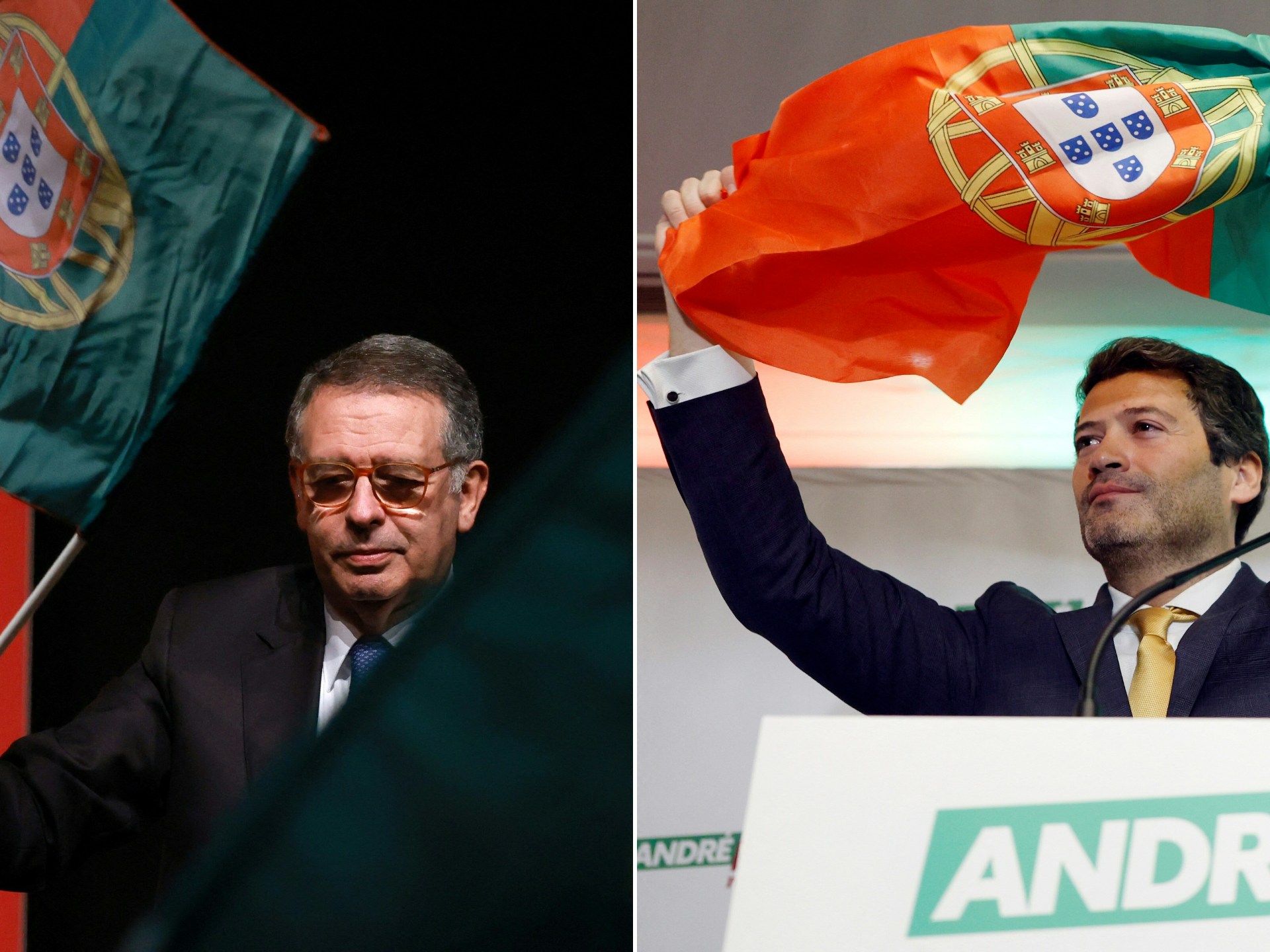
Voters are set to choose between the Socialist Party leader, Antonio Jose Seguro, and Andre Ventura, leader of the nationalist party Chega, which means “enough” in Portuguese.

Exit polls are expected by about 9pm local time (21:00 GMT). Most official results are likely by 00:00am local time (00:00 GMT).

The election is the first to go to a run-off in forty years, after no candidate managed to secure a majority of 50% in the first round of votes, held in January.

Seguro, 63, secured 31.1 percent of the vote in the first round, while outspoken far-right leader Ventura won 23.5 percent.

While Ventura is almost certain to be beaten by Seguro, the far right’s score will be watched closely.

Sunday’s vote will decide who takes on the emblematic, but largely ceremonial, role of the president.

The vote is taking place as heavy storms and flooding continue to affect the country. Despite an improvement in the weather overnight from Saturday to Sunday, at least 14 of the most affected constituencies have postponed voting for nearly 32,000 people by one week.

The storms have killed at least seven people, triggered flooding, and caused damage estimated at 4 billion euros ($4.7bn).

But Ventura’s call to postpone the whole vote has been rejected.

Prime Minister Luis Montenegro said the storms had caused a “devastating crisis” but that the threats to voting could be overcome.

Tinubu To Meet King Charles, Pay State Visit To UK

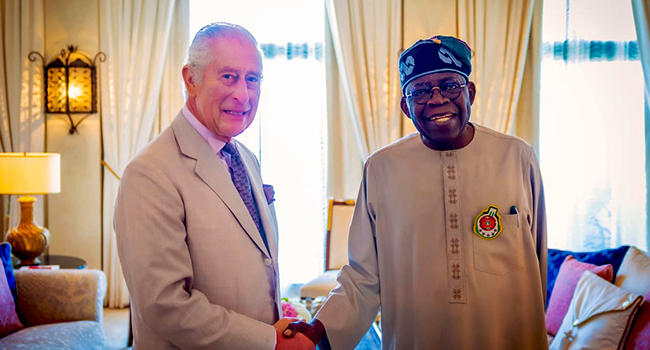
President Bola Tinubu is set to embark on a historic State Visit to the United Kingdom later this month, following an invitation from King Charles III.

Tinubu and his wife, Oluremi Tinubu, will be received at Windsor Castle, west of London, on March 18-19 by Charles and Queen Camilla, the palace said.

The British Royal Family confirmed this in a statement posted on its official X account on Sunday.

“The President of the Federal Republic of Nigeria, Mr. Bola Ahmed Tinubu, accompanied by the First Lady, Mrs. Oluremi Tinubu, has accepted an invitation from His Majesty The King to pay a State Visit to the United Kingdom from Wednesday, 18th March to Thursday, 19th March 2026.

“The King and Queen will host the State Visit at Windsor Castle,” the Royal family stated.

Presidential aide, Bayo Onanuga, also confirmed the development, describing it as a landmark moment in Nigeria–UK relations.

“First state visit of a Nigerian leader to the UK in 37 years confirmed. President Tinubu and First Lady Remi Tinubu to be hosted by King Charles and Queen Camilla from 18th March to 19th March 2026,” he wrote on X.

London and Abuja concluded a strategic partnership in November 2024 to strengthen their cooperation on economic, immigration, and security matters.

The visit is significant as it marks the first time a Nigerian leader will be received in the United Kingdom with full state honours since 1989, when then military president, General Ibrahim Babangida, was hosted by Queen Elizabeth II.

READ ALSO: Tinubu Arrives In Türkiye For State Visit

Babangida’s four-day visit included a stay at a royal residence and a State Banquet at Buckingham Palace.

Only two other Nigerian leaders had undertaken formal State Visits to the UK: General Yakubu Gowon in June 1973 and President Shehu Shagari in 1981.

Although several Nigerian presidents have travelled to the UK since 1989, those visits were categorised as private, working, or official engagements, which do not carry the ceremonial weight and pageantry of a State Visit.

Leaders such as Olusegun Obasanjo, Umaru Musa Yar’Adua, and Muhammadu Buhari, who attended King Charles III’s coronation in 2023, all visited under non-state designations.

Meanwhile, President Tinubu has met King Charles III twice since assuming office.

Their first meeting took place in December 2023 on the sidelines of the COP28 Climate Summit in Dubai, while a second, private meeting was held in September 2024 at Buckingham Palace, where discussions focused on climate change and global security.

Since his inauguration in May 2023, President Tinubu has undertaken more than 10 foreign trips to several countries.

While many were working visits, summit attendances, or private stays, several have been officially classified as state or official visits involving formal invitations and ceremonial protocols.

President Bola Tinubu and Turkish President Recep Tayyip Erdoğan, in Türkiye on Tuesday, January 27, 2026. Photo: State House.

Notable among them are his recent state visit to Türkiye, where he met President Recep Erdoğan and signed nine strategic agreements covering defence, energy, and trade; a state visit to Brazil in August 2025 following an invitation from President Luiz Inácio Lula da Silva; and an official state visit to China in September 2024 during the Forum on China–Africa Cooperation.

Other official engagements include visits to Equatorial Guinea in August 2024 for talks on maritime security and gas cooperation, the Netherlands in April 2024 for the Nigerian-Dutch Business and Investment Forum, Qatar in March 2024 at the invitation of Emir Sheikh Tamim bin Hamad Al Thani, and the Benin Republic in August 2023 as a special guest at its 63rd Independence Anniversary.

Burna Boy Ahead Of Davido, Wizkid In Nigeria, Globally — 2Baba

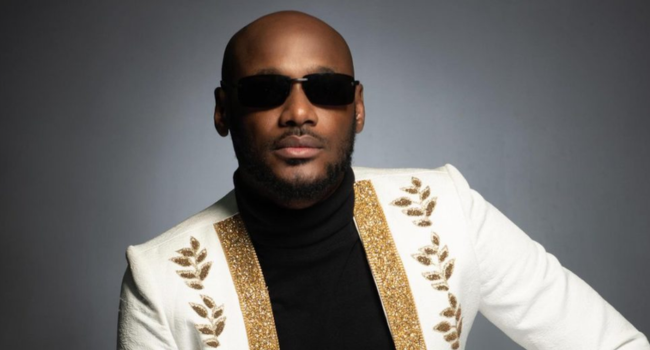
Nigerian music legend Innocent Idibia, popularly known as 2Baba or Tuface, has stirred fresh debate within the Afrobeats community after describing Burna Boy as the leading Nigerian artist ahead of Davido and Wizkid.

The ‘African Queen’ crooner offered his perspective on the current hierarchy of Nigeria’s biggest music stars.

While noting that all three artists have produced songs he enjoys, 2Baba said Burna Boy currently operates on a different musical level.

“I have my favourite songs from each, from all of them. But my own, if I must be put on the spot to say something, I think Burna is on top of the game right now,” he said on Mic On Podcast.

2Baba cautioned against direct comparisons between artists, describing such debates as unfair and subjective, likening musicians to painters who create distinct works of art.

“Different artists have different styles. There’s nothing like this one sing pass. Different people have different tastes in what they want and what they like,” he explained.

READ ALSO: Comparing Fela With Wizkid Is Ridiculous, Disrespectful – 2Baba

He added that his assessment was not based on commercial success or personal achievements, but on his understanding of the global music landscape.

“I’m going into a general aspect of this. I don’t know their bank accounts. I don’t have any information about their personal successes or all that. So I can’t speak on that.

“But from what I can measure from at least common sense and understanding of the music world, I think right now Burna is at the top of this chain.

“Not just in Nigeria, in Africa, in the world. He’s on that,  but everybody’s doing fantastically well,” the singer said.

Burna Boy, Davido and Wizkid are widely regarded as the “Big Three” of Nigerian Afrobeats and have long been compared over who holds the title of the country’s leading artist.

Afrobeats, a contemporary genre distinct from the Afrobeat pioneered by the late Fela Anikulapo Kuti, has grown into a global sound over the years.

Early contributors such as D’banj and Timaya helped lay the foundation, while artists including Wizkid, Davido and Tiwa Savage propelled the genre onto the international stage.

In recent years, acts such as Burna Boy, Tems, Rema, Asake and Ayra Starr have further expanded Afrobeats’ global reach, earning major international recognition and award nominations.

Burna Boy, Davido, Wizkid and Ayra Starr were all nominated at the most recent Grammy Awards, although they were edged out by South African star Tyla.

Despite its growing influence worldwide, Afrobeats continues to face scrutiny over whether it rivals the global dominance of genres such as pop, hip-hop and Latin music.

Another recurring criticism is the perceived lack of unity among Nigeria’s top artists. Unlike Latin music stars, who frequently collaborate, leading Afrobeats acts have largely operated independently.

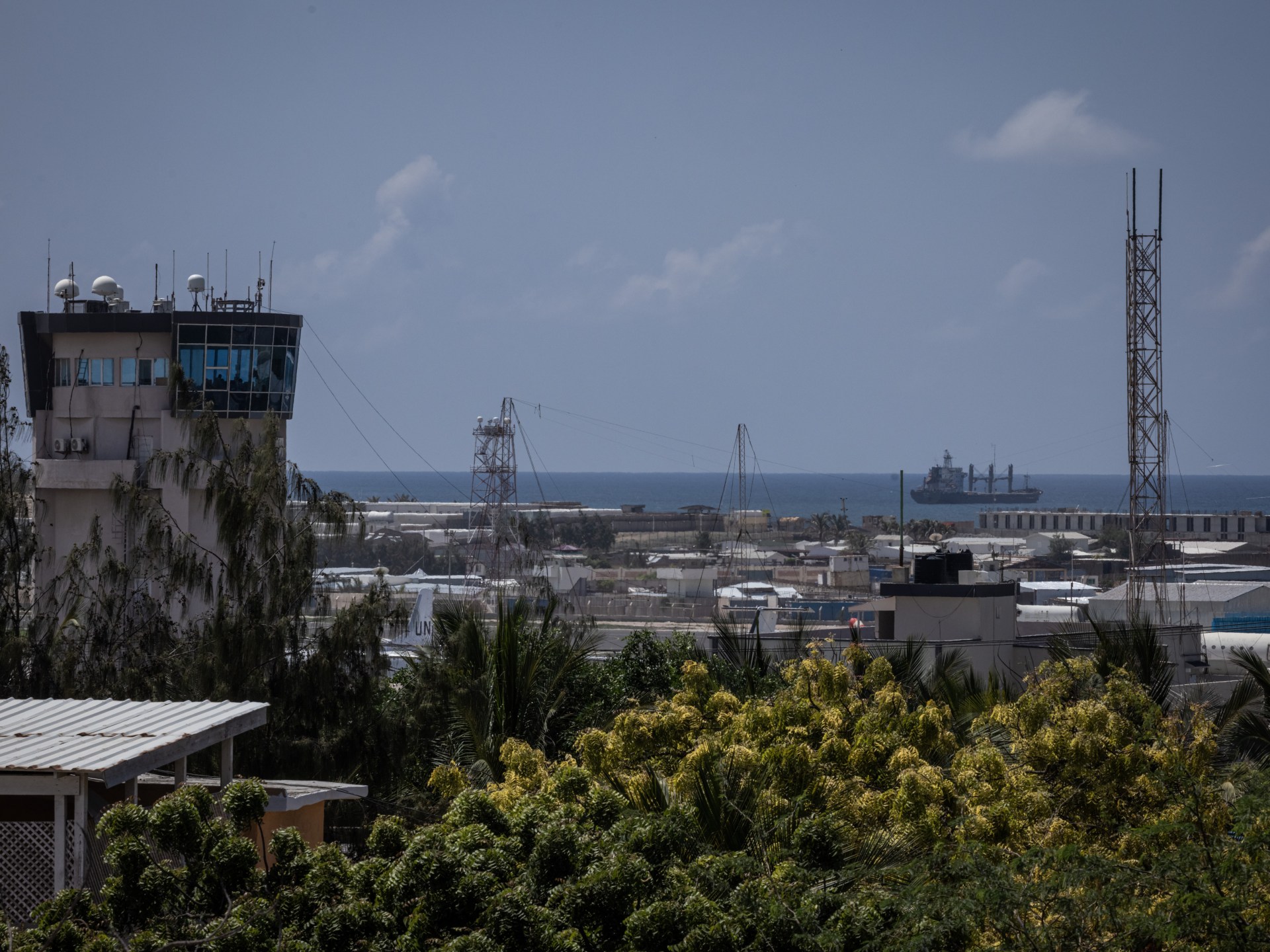
Somalia is the missing pillar of Red Sea and Gulf of Aden stability

Global markets rarely reveal their vulnerabilities quietly. They do so when shipping lanes come under threat, energy prices surge, or supply chains fracture. Few regions illustrate this reality more starkly than the Red Sea and the Gulf of Aden, which are now among the world’s most contested maritime corridors. What unfolds along these waters no longer remains local. It shapes economic security across the Arab world and far beyond.

Yet, amid growing attention to this strategic corridor, one factor remains persistently underestimated: Somalia.

For decades, Somalia was viewed primarily through the lens of conflict and fragility. That narrative no longer reflects today’s reality. The country is undergoing a consequential transition, moving away from prolonged instability, rebuilding state institutions, and re-emerging as a sovereign actor with growing regional relevance. Situated at the intersection of the Arab world, Africa, the Red Sea, and the Gulf of Aden, Somalia is not peripheral to regional stability; it is central to it.

Geography alone explains much of this significance. With the longest coastline in mainland Africa, Somalia lies adjacent to the Bab al-Mandeb passage connecting the Red Sea to the Gulf of Aden and the wider Indian Ocean. A substantial share of global maritime trade and energy shipments passes through this corridor. Disruptions along Somalia’s coast, therefore, have immediate implications for shipping reliability, energy markets, and food security — issues of direct concern to Gulf states and Arab economies.

For the Arab world, Somalia should be understood not as distant terrain but as a front-line partner in regional security. Stability along Somalia’s coastline helps contain threats before they reach the Arabian Peninsula, whether in the form of violent extremism, illicit trafficking networks, piracy, or the entrenchment of hostile external military presences along Africa’s eastern flank.

Somalia is not attempting to build stability from scratch. Despite persistent challenges, tangible progress has been made. Federal governance structures are functioning. National security forces are undergoing professionalisation. Public financial management has improved. Diplomatically, Somalia has reasserted itself within the Arab League, the African Union, and multilateral forums. These gains continue to be built on daily and reflect a clear commitment to sovereign statehood, territorial unity, and partnership rather than dependency. Somalia today seeks strategic alignment grounded in mutual interest, not charity.

Somalia’s relevance also extends beyond security. Its membership in the East African Community integrates the country into one of the world’s fastest-growing population and consumer regions. East Africa’s rapid demographic expansion, urbanisation, and economic integration position Somalia as a natural bridge between Gulf capital and African growth markets.

There is a clear opportunity for Somalia to emerge as a logistics and transshipment gateway linking the Gulf, the Red Sea, East Africa and the Indian Ocean. With targeted investments in ports, transport corridors, and maritime security, Somalia can become a critical node in regional supply chains supporting trade diversification, food security, and economic resilience across the Arab world.

At the heart of Somalia’s potential is its dynamic population. More than 70 percent of Somalis are aged below 30. This generation is increasingly urban, digitally connected, and entrepreneurial. Somali traders and business networks already operate across Southern and Eastern Africa, spanning logistics, finance, retail, and services. A large and dynamic diaspora across the Gulf, Europe, North America, and Africa further amplifies this reach through remittances, investment, and transnational expertise.

None of these momentums, however, can be sustained without security. A capable, nationally legitimate Somali security sector is the foundation for durable stability, investment confidence, and regional integration.

For Gulf states and the wider Arab world, supporting Somalia’s security sector is therefore not an act of altruism. It is a strategic investment in a reliable stabilising partner. Effective Somali security institutions contribute directly to safeguarding Red Sea and Gulf of Aden maritime corridors, countering transnational terrorism before it reaches Arab shores, protecting emerging logistics infrastructure, and denying external actors opportunities to exploit governance vacuums. Such support must prioritise institution-building, Somali ownership, and long-term sustainability, not short-term fixes or proxy competition.

The stakes are rising. The Red Sea and the Gulf of Aden are entering a period of heightened strategic contestation. Fragmentation along their African coastline poses a direct risk to Arab collective security. Recent developments underscore this urgency.

Israel’s unilateral recognition of the northern Somali region of Somaliland, pursued outside international legal frameworks and without Somali consent, is widely viewed as an attempt to secure a military foothold along these strategic waters, risking the introduction of the Arab-Israeli conflict into the Gulf’s security environment.

Even more troubling are emerging narratives advocating the forced displacement of Palestinians from Gaza, with proposals to relocate them to Somaliland against their will. Such ideas, whether formally advanced or not, represent grave violations of international law and human dignity. Exporting the consequences of occupation and war onto African soil would not resolve conflict; it would multiply it.

For the Arab world, this should serve as a wake-up call. Allowing external actors to fragment sovereign states or instrumentalise fragile regions for unresolved conflicts carries long-term consequences. Somalia’s unity and stability, therefore, align squarely with core Arab strategic interests and with longstanding Arab positions on sovereignty, justice and self-determination.

Somalia is ready to be part of the solution. With calibrated strategic support, particularly in security sector development and logistics infrastructure, Somalia can emerge as a cornerstone of Red Sea and Gulf of Aden stability, a gateway to East Africa, and a long-term partner for the Arab world.

The question is no longer whether Somalia matters in the regional and global Red Sea and Gulf of Aden discussions and plans. It is whether the region will act on that reality before others do.