Hope and scepticism as Yemen’s Saudi-backed gov’t announces a new cabinet

After weeks of consultations in Riyadh, the Saudi-backed Presidential Leadership Council (PLC), Yemen’s internationally recognised government, has announced a new cabinet, whose members have diverse political and regional affiliations, as part of efforts to govern the divided Arab nation.

The move on Friday came weeks after the collapse and dissolution of the Southern Transitional Council (STC) and withdrawal of United Arab Emirates forces from southern Yemen. The UAE-backed southern separatists briefly took over two Yemeni provinces bordering Saudi Arabia, drawing military action from Riyadh. The events have strained ties between the two regional powers.

Recommended Stories

list of 4 itemsend of list

The cabinet announcement has triggered mixed reactions and a war of words with some seeing a glimmer of hope and a step towards establishing government authority while others view it as a redistribution of power and wealth among the country’s rival elites.

The 35-member cabinet, which has 10 more members compared with the previous cabinet, has representations from diverse professional backgrounds, including administration, economics, law and academia.

Yaseen Al-Tamimi, a Yemeni political researcher, said the large size of the government represents a forced return to the era of what she called an “appeasement” policy, which attempts to placate different groups and regions.

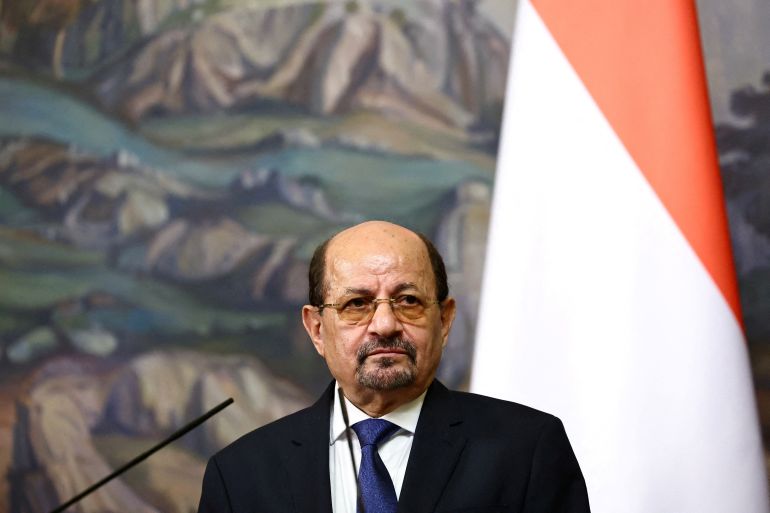
Yemeni Foreign Minister Shaya Mohsin Zindani attends a news conference.
Prime Minister Shaya Mohsen al-Zindani said the new government’s focus will be on improving living conditions and services for citizens [File: Evgenia Novozhenina/Pool/ via Reuters]

Although such a large number of ministries places a heavy burden on the budget, the current phase in the country necessitates this type of appeasement, Al-Tamimi told Al Jazeera.

The different political groups in the country need to feel that they have been given a share of power to push them to act in line with the government’s agenda, according to Al-Tamimi.

“I see this formation of the new cabinet as satisfactory. It reflected the amount of effort that was made over the past weeks to appear with this composition of competent people with a certain amount of political and national responsibility.”

In a statement on his Facebook page, Prime Minister Shaya Mohsen al-Zindani said the new government’s focus will be on improving living conditions and services for citizens, combating corruption and developing institutional performance to contribute to ending Houthi control of large parts of the country, restoring state institutions and consolidating stability.

The PLC took control of southern Yemen with the backing of Saudi Arabia last month while northern Yemen, where most of the population is located, is under the control of the Iran-backed Houthi group.

The Houthis took over the capital, Sanaa, in September 2014 and toppled the UN-recognised government in February 2015. The PLC governs from the southern port of Aden.

What is needed for the new cabinet to succeed

Mohammed Al-Samei, a Taiz-based political journalist, expressed hope after the new ministers were appointed. He described them as competent and deserving of their posts and said their success will depend on how united they are.

“The success of this government remains contingent on the existence of a firm political will from the prime minister, the Presidential Leadership Council and the various political forces. The new cabinet will not achieve true success unless these parties unite to serve the nation, away from side conflicts,” Al-Samei told Al Jazeera.

Beyond the cabinet’s domestic political will, Al-Samei indicated that continued Saudi financial support will be indispensable.

“Today, the new government faces serious challenges, including providing services and improving the livelihoods of citizens. Overcoming these challenges will be possible with the support of Yemen’s political process sponsors, particularly Saudi Arabia,” Al-Samei added.

A day before the announcement of the new cabinet, Information Minister Moammar al-Eryani noted that Saudi Arabia had expressed its readiness to pay all salaries in Yemen’s south, including the salaries of soldiers.

Al-Eryani said the move aims to restructure the military forces, make them subordinate to the state and receive their instructions from the supreme commander of the armed forces, Rashad Al-Alimi, who is the chairman of the PLC.

Vice Foreign Minister Mustafa Noman, who is in Doha to attend the Al Jazeera Forum, also pointed to the role Saudi Arabia is playing in providing financial help to the government.

“The Saudi government has taken the responsibility for one year. This is not going to be enough unless we have regular functioning of infrastructure operations and security,” Noman told Al Jazeera.

He said the biggest challenge the government is going to face in the coming days is to restructure the security forces, which he added needed to be brought under the Ministries of Interior and Defence.

Without stability, the government cannot work smoothly, Noman said, adding that only after security is established can infrastructure and services work and government functions resume.

The diplomat said the government has to be resolute to do its job or it will face a great failure, which would create a vacuum. “And the vacuum will be filled by AQ [al-Qaeda] and ISIS [ISIL] and other nonstate actors operating in Yemen.”

The new government has to also address the mounting humanitarian challenges facing Yemen, where about 18 million Yemenis – about half the population – face acute food shortages while tens of thousands are facing famine-like conditions.

Women’s representation

Unlike the previous cabinets, the new cabinet includes three women, sparking positive reactions from activists and civil society members.

Afrah Al-Zuba has been named the minister of planning and international cooperation. Ishraq Al-Maqatri is the new minister of legal affairs, and Ahed Jaasous has been appointed minister of state for women’s affairs.

“Today is a significant political moment. The newly formed cabinet includes women in key and influential positions,” Najiba Al-Naggar, a Yemeni community and human rights activist, told Al Jazeera.

“This is not a minor detail. It is a political indicator and a clear message about the direction of this phase. It signifies recognition of women’s competence and indicates that the state has begun to treat women’s participation as a constitutional right, not as temporary appeasement.”

Fatima Saleh, a university graduate in Sanaa, told Al Jazeera that the war has marginalised women’s political role.

“I have not heard a woman minister for years. The announcement of three women ministers in this new cabinet is a proud moment for girls and women in Yemen,” Saleh said.

She acknowledged that she and millions of women in northern Yemen are unlikely to get a direct benefit, but the move is an indicator that the leadership of the UN-recognised government does not “underestimate women as other radical groups” do in Yemen.

The public divide in the south

In southern Yemen, where the public remains sharply divided over Saudi Arabia’s role, sentiments about the new cabinet have been mixed. Southern separatists, led by STC, have been seeking sovereignty for the south.

Ahmed Maher, a journalist from Aden, said it is too early to judge the government, indicating its performance will determine its credibility.

“The formation of the government is a new beginning, not the end,” he said. “Those who work for Yemen and its citizens will remain while those who persist in their racism and mistakes will depart.”

On Saturday, the Hadramout Tribal Confederation and the Inclusive Hadramout Conference – two tribal blocs in Hadramout governorate, which PLC forces retook from the STC in early January – expressed in a statement their disapproval of the formation of the new government, saying the cabinet formation mechanism has “failed to bring about any fundamental change to the existing reality, given the absence of a just and comprehensive political solution that addresses all pending issues”.

The two tribal groups reaffirm “their unwavering commitment to the Hadramout self-governance vision as the strategic option that establishes lasting stability and sustainable peace”.

This statement was issued after southern separatists protested on Friday in Seyoun, a city in Hadramout, calling for independence and pledging to continue their struggle against Yemen’s UN-recognised government and Saudi intervention in southern Yemen.

In December, southern separatists backed by the UAE took over the Hadramout and al-Mahra governorates, reaching the Saudi border. The kingdom considered such a move a threat to its national security. Saudi-backed fighters have ‌since largely retaken those areas.

Abdulkareem Nasser, a southern separatist in Seyoun, said the new cabinet does not represent the southern people, who have their own flag, vision and identity.

“We [southern separatists] will continue our struggle and will not accept the agenda of this government and its sponsor [Saudi Arabia],” he said.

“Our demand is clear: an independent state. We cannot abandon an independent state for water and electricity services. No government can persuade or force us to give up on our aspirations,” Nasser said.

Reviving unity

Although the members of the new cabinet belong to different regions and political groups, Al-Samei maintained that healing Yemen’s damaged unity remains a formidable challenge.

“The war has eroded the country’s unity. The status quo separation between the south and the north has been ongoing for years, and the southerners are not fully united. It is a massive mission for the new government to tackle these challenges,” Al-Samei said.

“If the new government is capable of stabilising the south and pushing into the north to recapture it from the Houthis, that could mean Yemen’s unity will be revived.”

Houthis have not recognised the authority of the PLC, saying they are the legitimate government in the country. In the Houthis’ eyes, the Saudi-backed government officials are “mercenaries”.

Abdullah Ali, a Houthi fighter in Sanaa, told Al Jazeera that it is the people who grant the leaders legitimacy, not the UN or Saudi Arabia.
Operatives Arrest 184, Rescue Minors In Anti-Trafficking Raids In Plateau

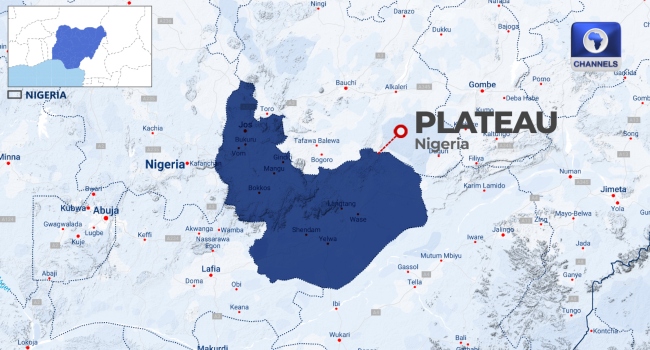
No fewer than 184 persons have been arrested by the Plateau State Anti-Human Trafficking Taskforce following overnight raids across several locations in Jos and surrounding areas.

The Attorney-General and Commissioner for Justice, Philemon Daffi, who also chairs the Plateau State Taskforce on Anti-Human Trafficking, disclosed this on Saturday while addressing journalists at the Ministry of Justice Secretariat in Jos.

He described the operation as a breakthrough in the state’s fight against human trafficking and child exploitation.

According to Daffi, the intelligence-driven operation was carried out simultaneously at multiple locations late Thursday night and stretched into the early hours of Friday, leading to the arrest of suspected traffickers and the rescue of vulnerable persons held in exploitative conditions.

He said those arrested comprise three pregnant women, seven female minors, 41 female adults, nine male minors and 123 male adults, bringing the total number of suspects in custody to 184.

All suspects, he added, are currently undergoing profiling, after which those found culpable will be prosecuted in accordance with the law.

“Last night and towards the early hours of today, the Plateau State Anti-Human Trafficking Taskforce executed a surgical, multi-location raid that resulted in strategic arrests and the rescue of numerous vulnerable citizens who had been trapped in the shadows of societal decay,” Daffi said.

READ ALSO: Police Arrest 23 Suspects, Recover Illicit Drugs In Akwa Ibom

He said the operation’s success came after months of review, training, and data-driven intelligence, with lessons from past operations closing loopholes used by traffickers.

“We are no longer just reacting. We are out-thinking and out-manoeuvring the syndicates that believed Plateau State was a safe harbour for their depravity,” he stated.

Daffi condemned child prostitution in strong terms, describing it as outright human trafficking and a gross violation of the Child’s Rights Law.

He stressed that the state would no longer treat such cases as social misdemeanours or acts of vagrancy.

“Let there be no ambiguity: child prostitution is slavery. Where a minor is involved, there is no consent. It is exploitation, coercion and a heinous crime against humanity,” he said.

He also warned adults who patronise minors, describing them as predators who sustain the demand for exploitation, and vowed that offenders would face the full weight of the law without the option of fines or lenient penalties.

As part of tougher enforcement measures, the Attorney-General announced the immediate implementation of a ‘seal, seize and demolish’ policy against properties and establishments linked to human trafficking and child exploitation.

He said any facility found harbouring minors for profit would be sealed, its assets forfeited to the state, and structures dedicated to such crimes demolished where necessary.

“We are sanitising Plateau State to ensure that only legitimate and lawful businesses thrive. There is no room in the ‘Home of Peace and Tourism’ for those who profit from the destruction of our children,” he said.

The Taskforce also raised concerns about family complicity and parental negligence, warning that relatives who traffic their own children would be prosecuted.

Daffi added that parents who abandon their duty of care and expose their wards to traffickers would also be held criminally liable.

“Poverty is not an excuse for selling your child or ward into bondage. If you will not protect your children, the State will, and we will hold you accountable for that failure,” he warned.

He reaffirmed Plateau State’s commitment to the crackdown, noting the Taskforce is boosting capacity with training, better infrastructure, and victim rehabilitation.

Sending a message to traffickers and their collaborators, Daffi said the latest operation signalled the end of impunity in the state.

Iran Rejects US Demands, Insists Uranium Enrichment Will Continue

Iran will never surrender the right to enrich uranium, even if war “is imposed on us”, its foreign minister, Abbas Araghchi, said Sunday, defying pressure from Washington.

“Iran has paid a very heavy price for its peaceful nuclear programme and for uranium enrichment,” Abbas Araghchi told a forum in Tehran.

“Why do we insist so much on enrichment and refuse to give it up even if a war is imposed on us? Because no one has the right to dictate our behaviour,” he said, two days after he met US envoy Steve Witkoff in Oman.

READ ALSO: Japan Votes In Snow-hit Snap Polls 

Araghchi also said he hoped talks with the United States would resume soon, while reiterating Tehran’s red lines and warning against any American attack.

According to excerpts published on his official Telegram channel during an interview with the Al Jazeera network, Araghchi said that Iran’s missile programme was “never negotiable” in Friday’s talks in Oman.

Israeli Prime Minister Benjamin Netanyahu is expected to raise the ballistic missiles programme in a meeting with US President Donald Trump in Washington next week.

Araghchi, meanwhile, warned that Tehran would target US bases in the region if the US attacked Iranian territory.

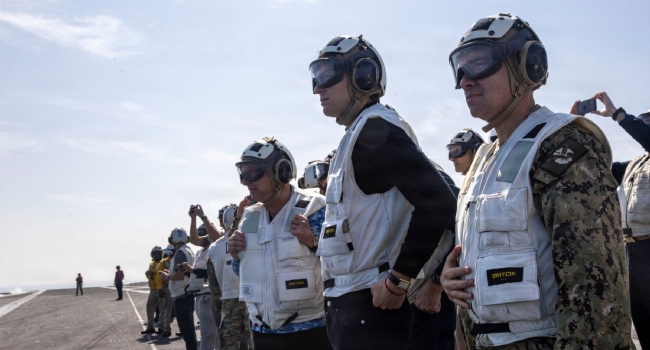
It came as lead Iran negotiators, Steve Witkoff and Jared Kushner, visited the USS Abraham Lincoln aircraft carrier in the Arabian Sea, signalling the persistent threat of US military action.

The US military’s Central Command (CENTCOM) said the two top officials visited the nuclear-powered vessel in a post on social media.

In his own social media post, Witkoff said the aircraft carrier and its strike group were “keeping us safe and upholding President Trump’s message of peace through strength”.

– ‘Good start’ –

Araghchi on Saturday said that despite the talks in Muscat being indirect, “an opportunity arose to shake hands with the American delegation”.

He called the talks “a good start”, but insisted “there is a long way to go to build trust”. He said the talks would resume “soon”.

Trump on Friday called the talks “very good”, and pledged another round of negotiations next week.

Despite this, he signed an executive order effective from Saturday that called for the “imposition of tariffs” on countries still doing business with Iran.

The United States also announced new sanctions against numerous shipping entities and vessels, aimed at curbing Iran’s oil exports.

More than a quarter of Iran’s trade is with China, with $18 billion in imports and $14.5 billion in exports in 2024, according to World Trade Organization data.

– ‘Defence issue’ –

Araghchi told Al Jazeera that nuclear enrichment was Iran’s “inalienable right and must continue”.

“We are ready to reach a reassuring agreement on enrichment,” he said.

“The Iranian nuclear case will only be resolved through negotiations.”

He also said Iran’s missile programme was “never negotiable” because it relates to a “defence issue”.

Washington has sought to address Iran’s ballistic missile programme and its support for militant groups in the region — issues which Israel has pushed to include in the talks, according to media reports.

Tehran has repeatedly rejected expanding the scope of the negotiations beyond the nuclear issue.

Netanyahu is set to meet Trump on Wednesday to discuss the Iran talks, the premier’s office said in a statement Saturday.

Netanyahu “believes any negotiations must include limitations on ballistic missiles and a halting of the support for the Iranian axis”, it said, referring to Iran’s allies in the region.

On Saturday, Araghchi criticised what he labelled a “doctrine of domination” that allows Israel to expand its military arsenal while pressuring other states in the region to disarm.

Friday’s negotiations were the first since nuclear talks between Iran and the United States collapsed last year following Israel’s unprecedented bombing campaign against Iran, which triggered a 12-day war.

During the war US warplanes bombed Iranian nuclear sites.

Araghchi told Al Jazeera that if attacked again, “we will attack their bases in the region”, referring to the United States.

– Protests toll –

Friday’s talks between the two arch enemies came amid a major US military buildup in the region in the wake of Iran’s crackdown on protests that began in late December, driven by economic grievances.

The authorities in Iran have acknowledged that 3,117 people were killed in the recent protests, publishing on Sunday a list of 2,986 names, most of whom they say were members of the security forces and innocent bystanders.

International organisations have put the toll far higher.

Pro-Palestine groups to protest Israeli president’s visit to Australia

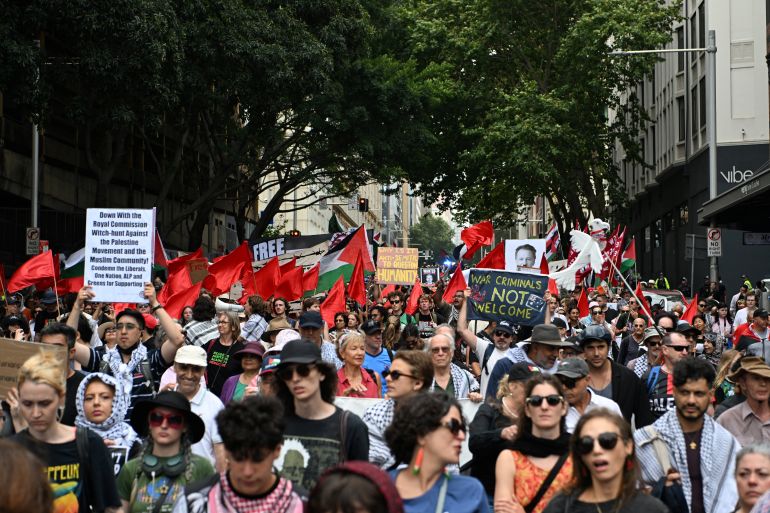
Pro-Palestinian groups are planning several rallies across Australia to oppose a visit by Israeli President Isaac Herzog despite the government’s restrictions on rallies.

Herzog is scheduled to visit Sydney on Monday to honour the victims of December’s Bondi Beach attack, which killed 15 people at a Hanukkah celebration in Australia’s worst mass shooting in decades.

Recommended Stories

list of 4 itemsend of list

In response to the attack, the state of New South Wales, where Sydney is located, passed legislation allowing police to restrict public protests for up to three months. Authorities have invoked these powers in parts of central Sydney during Herzog’s visit.

But the Palestine Action Group plans to hold a protest at Sydney’s Town Hall on Monday, according to the ABC News broadcaster.

Organisers of the protest said they plan to walk from Town Hall to Macquarie Street despite the route falling within the restriction zone as the state government urged them to choose a different location.

Similar protests are planned Monday in other Australian cities, including Perth, Melbourne and the capital, Canberra.

The Australia Palestine Advocacy Network (APAN), a national coalition for Palestinian human rights, said the Israeli president should not be welcomed and he must be held “accountable”.

“Isaac Herzog is not a ceremonial guest. He is the head of state of a government carrying out genocide in Gaza, enforcing occupation, and maintaining apartheid over Palestinians. His rhetoric was cited by the International Court of Justice in assessing the risk of genocide,” APAN posted on X.

Rights group Amnesty International’s Australia chapter also urged people to take to the streets on Monday when Herzog arrives, citing his role in Israel’s genocidal war in Gaza.

“President Herzog has unleashed immense suffering on Palestinians in Gaza for over two years – brazenly and with total impunity,” it said. “Welcoming President Herzog as an official guest undermines Australia’s commitment to accountability and justice. We cannot remain silent.”

The progressive Jewish Council of Australia also opposed Herzog’s visit, saying, “We refuse to let our grief for the Bondi massacre be used to legitimise” the Israeli leader.

People protest against Israeli President Isaac Herzog's upcoming visit to Australia, at Hyde Park, in Sydney, Australia, February 1, 2026. REUTERS/Flavio Brancaleone
People protest against Herzog’s visit to Australia at Sydney’s Hyde Park on February 1, 2026 [Flavio Brancaleone/Reuters]

Last week, a coalition of civil society groups lodged a legal complaint that urged authorities to deny Herzog a visa and open a criminal investigation under Australian law.

Australian human rights lawyer Chris Sidoti, a member of a United Nations inquiry into rights abuses in Israel and Palestinian territory, called for Herzog’s arrest. But the Australian Federal Police ruled it out with officials citing the Israeli president’s “full immunity” on civil and criminal matters, including genocide.

Meanwhile, Australian Prime Minister Anthony Albanese urged the protesters to respect the solemn nature of Herzog’s trip.

“President Herzog is coming particularly to engage with members of the Jewish community who are grieving the loss of 15 innocent lives,” Albanese told reporters. “The nation needs to look towards uniting.”

But activists said the Israeli leader, whom a UN commission of inquiry has found to be responsible for inciting genocide against Palestinians, should not be immune to protests.

In September, the UN’s Independent International Commission of Inquiry found that Herzog “incited the commission of genocide” by saying all Palestinians – “an entire nation” – were responsible for the October 7, 2023, Hamas-led attacks on southern Israel.

Police Arrest 23 Suspects, Recover Illicit Drugs In Akwa Ibom

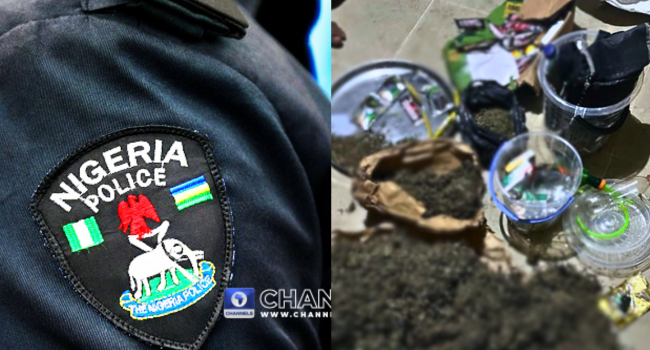
The Akwa Ibom State Police Command has arrested 23 male suspects in connection with criminal activities and recovered large quantities of suspected illicit drugs during a raid of black spots at the Ibaka Fishing Port.

The operation, carried out by operatives of the Command, followed actionable intelligence and targeted suspected criminal hideouts within the Ibaka axis.

According to a press statement signed by the Police Public Relations Officer, Timfon John, the raid was conducted between 9:40 p.m. on Wednesday, 5 February 2025, and 12:15 a.m. on Thursday, 6 February 2025.

“Between 9:40 p.m. on Wednesday, 5th February 2025, and 12:15 a.m. on Thursday, 6th February 2025, operatives of the Command, acting on credible information, carried out a strategic night operation targeting criminal hideouts within the Ibaka axis,” the statement read.

The force spokesperson disclosed that several identified black spots within the Ibaka Fishing Port were searched during the operation, leading to the arrest of “Sampson Newstyle, Godgift Benabinte, Michael Asukwo, Prince Ene, Goodnews Asukwo, Golden Edu, and 17 other suspects.”

READ ALSO: Security Operatives Neutralise IED Planted By Terrorists In Zamfara

Items recovered from the suspects include “large commercial quantities of dried leaves suspected to be Indian hemp, chemically enhanced variants of the same substance, illicit locally brewed drinks, as well as containers and devices used for inhaling hard drugs.”

The Police spokesperson noted that investigations are ongoing to determine the extent of the suspects’ involvement in criminal activities and to identify other individuals connected to the drug network operating in the area.

“Investigation is ongoing to determine the extent of the suspects’ involvement in criminal activities and to identify other individuals connected to the drug network operating within the area,” DSP John said.

He added that the Ibaka axis remains calm, with enhanced patrols and surveillance deployed to forestall any resurgence of criminal activity.