Pakistan vs USA – T20 World Cup 2026: Match time, team news and form guide

Who: Pakistan vs USA
What: ICC T20 World Cup 2026 – Group A
When: Tuesday, February 10 at 7pm (13:30 GMT)
Where: Sinhalese Sports Club (SSC), Colombo, Sri Lanka
How to follow: Al Jazeera Sport has live coverage of the Pakistan vs USA match at 10:30 GMT

Pakistan will be eager to improve on their opening-day performance of the T20 World Cup, while the United States will look to cause an upset when both teams meet in their Group A fixture in Colombo on Tuesday.

Recommended Stories

list of 4 itemsend of list

Salman Ali Agha’s team were heading towards a shock loss against the Netherlands before a lower-order rescue act took them over the line on Saturday.

A few hours later, the USA nearly sprang a surprise against defending champions India when they met in the group’s second fixture, but were unable to register what could have been the biggest shock in the tournament’s history.

Now, both teams meet in a crucial second game that could shape their fate in the tournament.

Pakistan are renowned for throwing form and predictions out of the window, and the USA will look to capitalise on their opponents’ unpredictability to get their first points of the tournament.

What happened in the last Pakistan vs USA game?

The USA pulled off one of the biggest shocks in the T20 World Cup’s history when they beat the 2009 champions in a thrilling match in 2024.

The win, which came in a super over after scores were tied following the regulation 20 overs, sent shockwaves through the cricket world.

Pakistan’s star-studded team posted a meagre total of 159 in their 20 overs, which the USA equalled on the last ball of their innings, taking the game to a super over.

Team USA’s calmness trumped Pakistan’s nerves as they rewrote history books.

The 2024 tournament cohosts had never played Pakistan in any format of the game prior to the match.

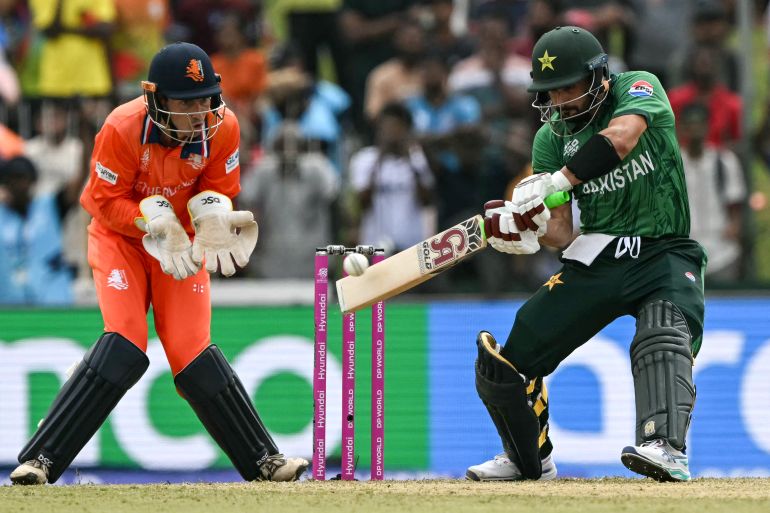
Pakistan's Sahibzada Farhan in action.
Pakistan’s Sahibzada Farhan, right, plays a shot as Netherlands’ wicketkeeper and captain Scott Edwards reacts during their opening T20 Cricket World Cup group stage match at the Sinhalese Sports Club Ground in Colombo on February 7, 2026 [Ishara S. Kodikara/AFP]

Form guide: Pakistan

Pakistan entered the T20 World Cup on the back of an impressive series sweep against Australia and then won their first game against the Netherlands.

Last five games (most recent first): W W W W L

Form guide: USA

Despite the loss against India, the USA [please complete the sentence.]

Last five games (most recent first): L W W L W

Team news: Pakistan

Pakistan are unlikely to change the team that won the first match.

Predicted XI: Sahibzada Farhan, Saim Ayub, Salman Agha (captain), Babar Azam, Usman Khan (wicketkeeper), Shadab Khan, Mohammad Nawaz, Faheem Ashraf, Shaheen Shah Afridi, Salman Mirza, Abrar Ahmed

Team news: USA

The USA are expected to field the same team that shook up the Indian side.

Predicted XI: Andries Gous, Saiteja Mukkamalla, Monank Patel, Sanjay Krishnamurthi, Milind Kumar, Shubham Ranjane, Harmeet Singh, Mohammad Mohsin, Shadley van Schalkwyk, Ali Khan, Saurabh Netravalkar


Mohammad Nawaz of Pakistan reacts.
Mohammad Nawaz, right, and his Pakistan teammates will be hoping to avenge their loss to the USA from the T20 World Cup 2024 [Robert Cianflone/Getty Images]

Police Foil Dispatch Officer’s Staged Kidnapping In Edo Over ₦1.3m Gambling Loss

The Edo State Police Command has uncovered a staged kidnapping involving a 21-year-old dispatch officer who allegedly attempted to conceal a ₦1.3 million gambling loss.

The Police Public Relations Officer of the Command, Moses Yamu, disclosed the incident in a statement issued on Monday.

According to the statement, the case was reported on January 30, 2026, at about 4:00 pm, when one Moses Ekes informed the Okpella Police Division that his nephew, David Ekes, an employee of Dibecs Industry Limited, had been missing since January 27.

“On 30/01/2026 at about 1600hrs, one Moses Ekes ‘M’, of Dibecs Industry Limited, reported at the Okpella Police Division that his nephew, David Ekes ‘M’, aged 21 years, a dispatch officer with the company, dark in complexion, about 5ft tall, and fluent in Ijaw and English languages, had been missing since 27/01/2026 at about 2030hrs.

“The said David Ekes left his quarters alone on a black, unregistered motorcycle from Factory 2 to Factory 3, contrary to company policy, and was not seen or heard from thereafter. The motorcycle was later discovered parked along the road leading to Factory 3 and subsequently recovered to the company’s main office,” the statement read.

READ ALSO: Three Children Abducted In Ebonyi, Police Begin Investigation

Following the report, operatives of the Okpella Police Division visited the scene, carried out a search of the surrounding bush area and commenced an investigation.

However, in a twist, the police said information was received the following morning, January 31, at about 8:00 am, that the missing dispatch officer had returned on his own in a weakened state.

“He was taken to a hospital in Okpella, where police operatives visited and monitored his condition,” the statement added.

Upon his discharge, the suspect initially claimed that he had been kidnapped by three unidentified men, who allegedly forced him to trek barefoot through the forest for more than three days, during which his Tecno Camon mobile phone was taken and funds withdrawn from his First Bank account

According to the police, investigators further established that the suspect reportedly travelled to Abuja shortly after the loss, sold his mobile phone, lodged in a hotel and staged his own kidnapping to cover up the missing funds.

“Discrete investigation, however, has revealed that between 25/01/2026 and 26/01/2026, the suspect lost a total sum of ₦1,308,000.00, belonging to his company and a customer, through online gambling on a visual sporty betting platform.

“He then immediately travelled to Abuja, sold his mobile phone, lodged in a hotel, and deliberately staged his own kidnapping to cover up the financial loss. The suspect has since confessed to the crime and will be arraigned in court to serve as a deterrent to others,” the police said.

Reacting to the incident, the Commissioner of Police in Edo State, Monday Agbonika, warned members of the public against false distress reports and criminal deception, noting that such actions waste critical security resources and undermine public trust.

Latin America: In the Shadow of the US | Ep 1 – Coups

Cold War shadows fall across Latin America as US-backed coups shatter democracies, spark brutal dictatorships, covert operations and revolutionary resistance.

Episode 1: Coups examines how 1960s Latin America experienced military coups in the shadow of the Cold War strategy of the United States.

It describes the Brazilian military’s 1964 overthrow of President Joao Goulart, driven by American fears of agrarian reform and “another Cuba”, which forced activists like Jean Marc von der Weid into exile.

In Chile, President Salvador Allende’s peaceful socialist experiment faced secret economic blockades before General Augusto Pinochet’s military coup in 1973 established his brutal regime.

This triggered Operation Condor in 1975, a coordinated campaign of political repression by regional right-wing dictatorships that assassinated Chilean diplomat Orlando Letelier in Washington, DC, in 1976.

Meanwhile, Panama’s populist leader Omar Torrijos waged a diplomatic battle to reclaim the Panama Canal from US control after decades of tension.

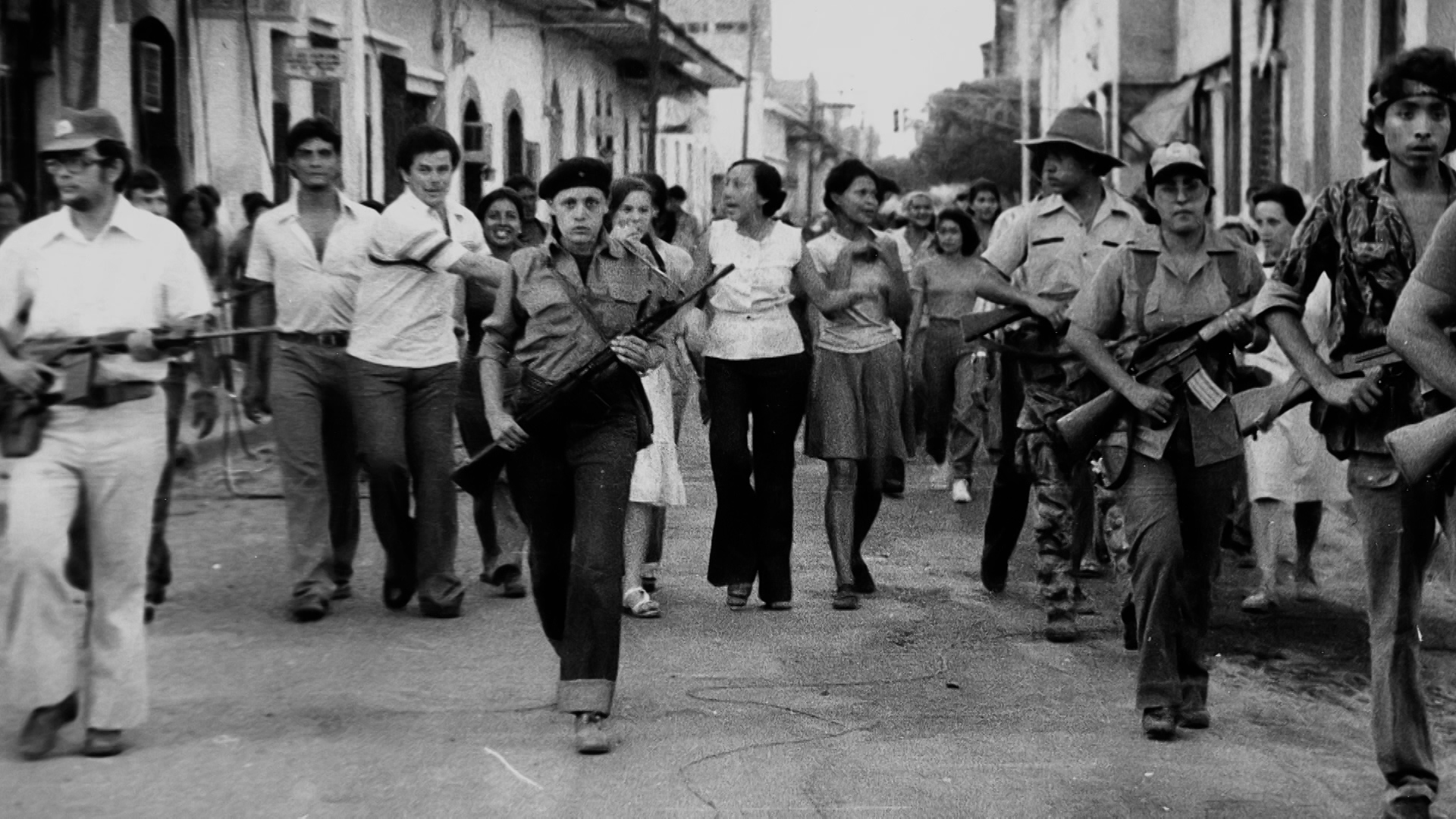
The episode concludes with Nicaragua’s Sandinistas overthrowing the Somoza family dictatorship through armed resistance, fuelled by regional alliances and clandestine aid networks.

Lebanese group accuses Israel of abducting its leader in raid

A Lebanese party with an armed wing has accused Israel of abducting one of its members during a cross-border raid in southern Lebanon.

The al-Jamaa al-Islamiya accused Israel on Monday of seizing its official Atwi Atwi from his home in the Hasbaiyya district and taking him to an unknown location.

Recommended Stories

list of 3 itemsend of list

Al-Jamaa al-Islamiya, which has claimed responsibility for multiple attacks against Israel during the war with Lebanese armed group Hezbollah, condemned “infiltration” by Israeli forces.

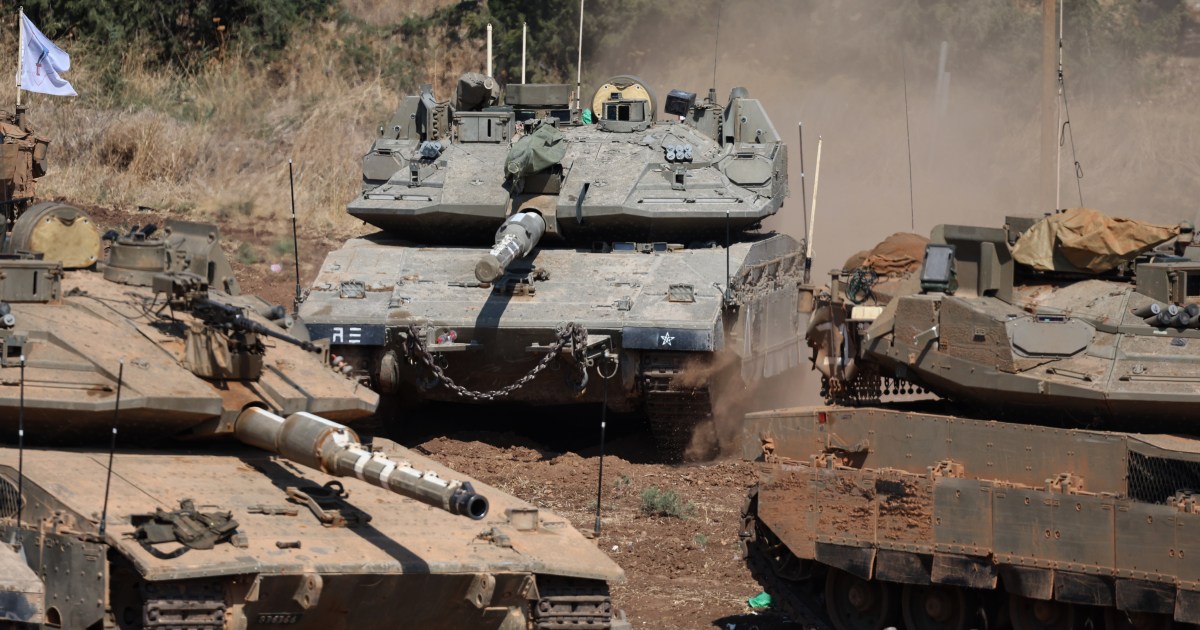
Israel has frequently carried out military operations in southern Lebanon despite a November 2024 ceasefire aimed at ending more than a year of fighting with Hezbollah.

It occupies five points on Lebanese territory that it deems strategic. However, as per the ceasefire deal, it should withdraw from the Lebanese territory.

Under the truce, Hezbollah, a powerful political and military force in Lebanon, was to withdraw fighters from south of the Litani River, about 27km (17 miles) north of the border with Israel, and dismantle any remaining military infrastructure there.

In a statement, the Israeli military said, following “intelligence indications gathered in recent weeks”, Israeli soldiers “conducted a targeted raid … and apprehended a senior terrorist”.

The man was “transferred for further questioning in Israeli territory”, the army added, accusing al-Jamaa al-Islamiya of having launched “attacks against the State of Israel and its civilians in the north”.

Lebanon’s state-run National News Agency (NNA) reported that Israeli troops entered the area at about 4am (02:00 GMT) before abducting Atwi, who is a former mayor of the village of Hibbariyeh.

Lebanon accuses Israel of having abducted several other citizens since the start of the hostilities.

Hezbollah lawmaker Hussein Hajj Hassan said last month that Israel was holding “20 Lebanese prisoners”, alleging 10 had been abducted “inside Lebanese territory after the ceasefire”.

Separately on Monday, three people, including a child, were killed in an Israeli air raid in southern Lebanon, Lebanese media reported.

I am one of 22,000 Gaza patients waiting in desperation for evacuation

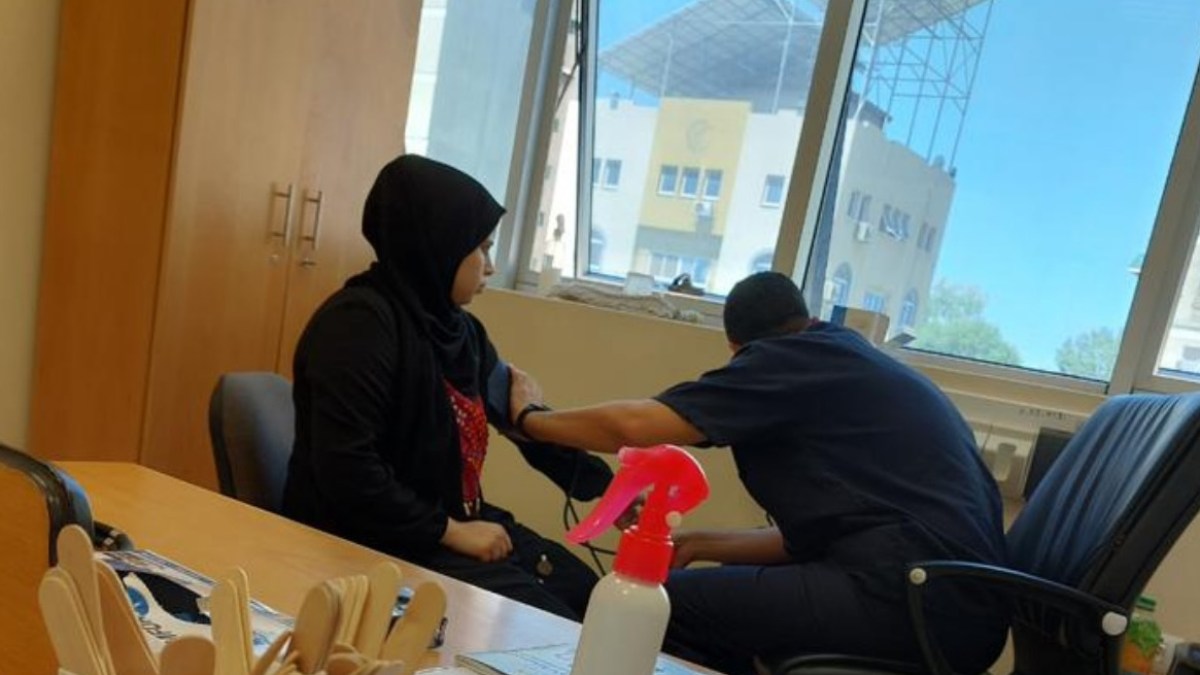
As I write these lines, I am receiving treatment at al-Shifa Hospital in Gaza City for kidney disease. Actually, I don’t know whether what I am receiving can actually be termed “treatment” or if it is only an attempt to postpone the inevitable.

Due to acute shortages of medicine and equipment in Gaza, doctors here make decisions based more on what is accessible than what is medically necessary. I am one such case. The necessary medicine and some of the tests I need are not available in Gaza right now.

My doctor informed me today, after new tests, that my condition has worsened and I urgently need to be evacuated from Gaza. He will do a referral for me so I can be put on the list of the 22,000 Palestinians who are languishing in pain while waiting to leave so they can get urgently needed medical care abroad.

My body, like this hospital I am in, is functioning at the bare minimum.

Life was difficult before the war, but at least there existed a reliable healthcare system, albeit a shaky one. Whenever medicine and tests were unavailable in Gaza, I was able to go to the West Bank and get treatment there. In 2023, I went to a hospital in al-Khalil (Hebron), where the Palestinian Ministry of Health covered my treatment. I returned to Gaza only a few days before the war began.

In the following two years, receiving any form of adequate medical care for my condition became impossible. My body – like the bodies of so many other chronically ill Palestinians – became another battlefield.

Israel’s carpet bombing of Gaza destroyed hospitals one after the other. They were raided, burned, their equipment destroyed, doctors and nurses killed or forcibly disappeared, critical patients pushed out on the streets and left to die.

At the beginning of the war, the nephrology department at al-Shifa Hospital, where I had been receiving treatment for years, was badly damaged. The health authorities tried to rehabilitate it, but it was shelled again multiple times. Today, it is barely functioning and missing much of its equipment.

In May 2024, Israel took over the Rafah border crossing between Gaza and Egypt and closed it. Essential medications vanished, including painkillers and antibiotics.

The medications I need – methyldopa tablets and amlodipine tablets, which I must take twice daily – are nowhere to be found.

In parallel, the Israeli army bombed water treatment plants and pipes and cut off the supply of clean water, forcing us to drink contaminated water from wells. That made my condition even worse.

This breakdown was painful and slow for me. As I stopped doing my routine tests and my prescription drugs ran out, my body began giving warning signals, but no one had the tools to respond.

I began suffering from severe swelling throughout my body. I constantly felt unable to move and experienced extreme fatigue. My health deteriorated drastically, and I lost 24kg (53lb) due to exhaustion and hunger. My current state of complete health collapse is the direct result of a healthcare system that was purposefully demolished and denied the opportunity to give adequate care to its patients.

Disease doesn’t wait for an end to hostilities. Kidneys do not comprehend the politics of opening and closing border crossings. A human body cannot survive on contaminated water and a piece of bread.

When I found out that the Rafah crossing had reopened last week, I felt a glimmer of hope. Then I learned that one of my relatives who is not sick was able to leave through the crossing simply because he has “connections”. Just five critical patients were allowed to leave on the first day of the reopening. My fleeting hope quickly gave way to intense despair.

This is the double cruelty ill Palestinians face: We are denied access to adequate medical care in Gaza because hospitals were destroyed and then are told that connections – not medical necessity – determine whether we can seek care abroad, whether we live or die.

I do not have links to any international organisations or local authorities. I am merely a patient whose body is gradually failing.

I have no idea if I will be able to leave in time. Time is always a prerequisite for hope, and time is not on my side.

My son Zakaria is what keeps me going. I gave birth to him after a lengthy and difficult medical journey, knowing that I will never be able to bear another child because doing so would cost me my health.

In Gaza, the human body is no longer a carrier of life and dreams but a record of survival. Doctors are no longer medical professionals but warriors fighting a battle with their bare hands. Hospitals are no longer places of healing but final lines of defence.

In this place of despair and agonising limbo, I hang on to the fleeting hope that the world will hear our cry for help.

Zimbabwe cruise to World Cup victory over Oman

Timothy Abraham

BBC Sport journalist
  • 9 Comments

Men’s T20 World Cup, Group B, Colombo

Oman 103 all out (19.5 overs): Shukla 28 (21); Muzarabani 3-16

Zimbabwe 106-2 (13.3 overs): Bennett 48* (36); Mehmood 2-12

Zimbabwe won by eight wickets

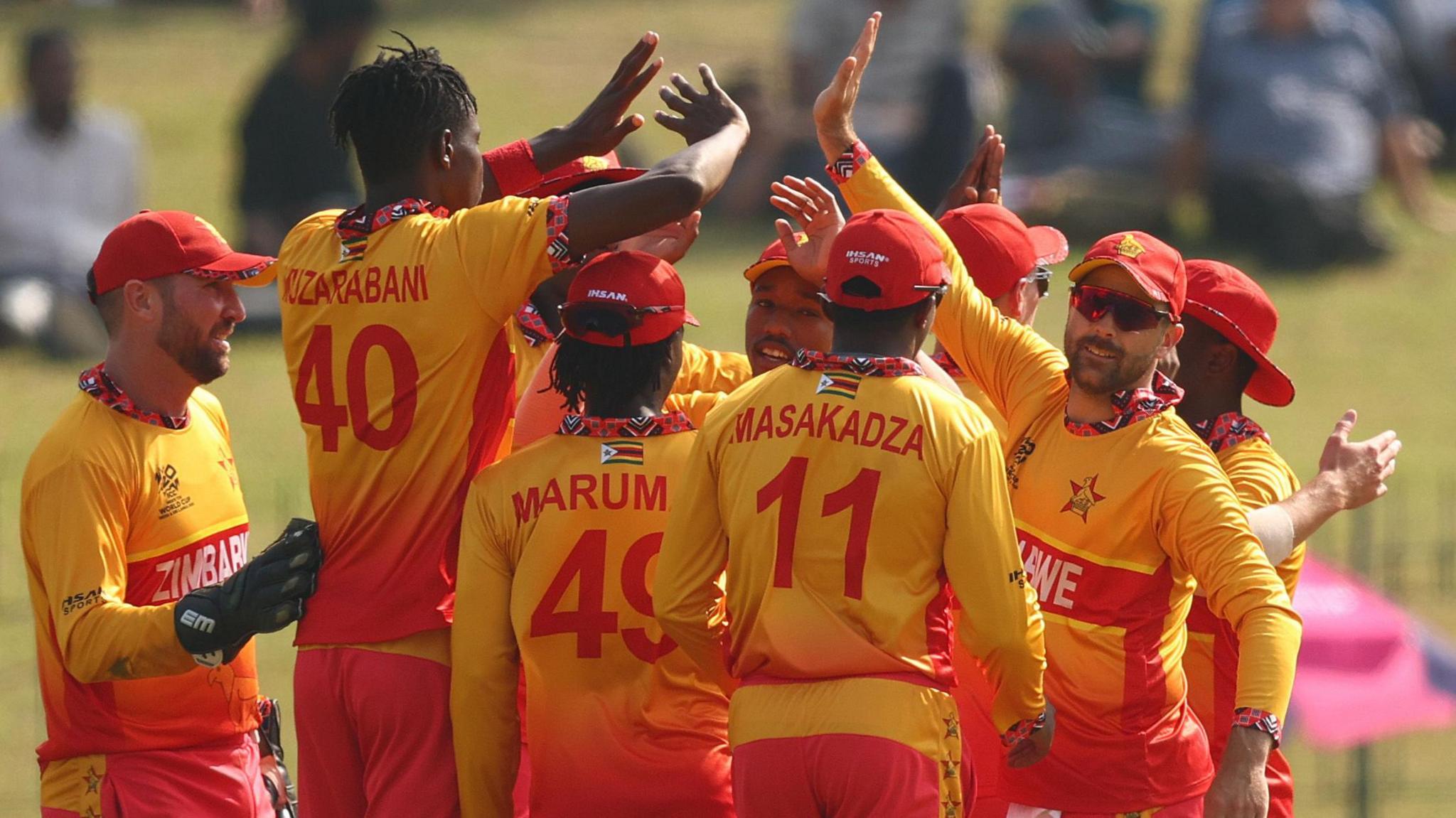
Zimbabwe opened their T20 World Cup campaign with a comfortable eight-wicket win over Oman thanks to an unbeaten 48 from Brian Bennett.

Oman struggled with the pace and bounce of Zimbabwe’s attack at the Sinhalese Sports Club in Colombo as they were knocked over for 103.

Blessing Muzarabani blew away the associate nation’s top order with 3-16 and at 27-5, Oman were in danger of being bowled out for fewer than their lowest total in World Cups – 47 against England at North Sound in 2024.

But a 44-run stand between Sufyan Mehmood and Vinayak Shukla at least added some respectability to the scorecard for Oman, who are ranked 20th in the world.

Shukla top-scored with 28 off 21 balls while Mehmood ground out 25 off 39 deliveries as they were two of only three Oman players to make it into double figures

The other was Nadeem Khan, who hit their only six of the innings, en route to an 18-ball 20 before he was dismissed by superb diving catch in the deep by Bennett.

Richard Ngarava and Brad Evans finished with 3-17 and 3-18 respectively for the the Chevrons.

Zimbabwe, who failed to qualify for the last World Cup, made relatively light work of the run chase as they knocked off the total in 13.3 overs.

Mehmood winkled out Tadiwanashe Marumani and Dion Myers in the same over – the second on review after a superb catch by wicketkeeper Shukla – to cause Zimbabwe a few nerves at 30-2.

But Oman were unable to make any further inroads as opener Bennett hit seven fours during a fluent knock off 36 balls.

Related topics

  • Zimbabwe
  • Cricket

More on this story

    • 4 hours ago
    Michael Leask celebrates a wicket
    • 16 August 2025
    BBC Sport microphone and phone