‘Ireland flopped in Paris – but will be different against Italy’

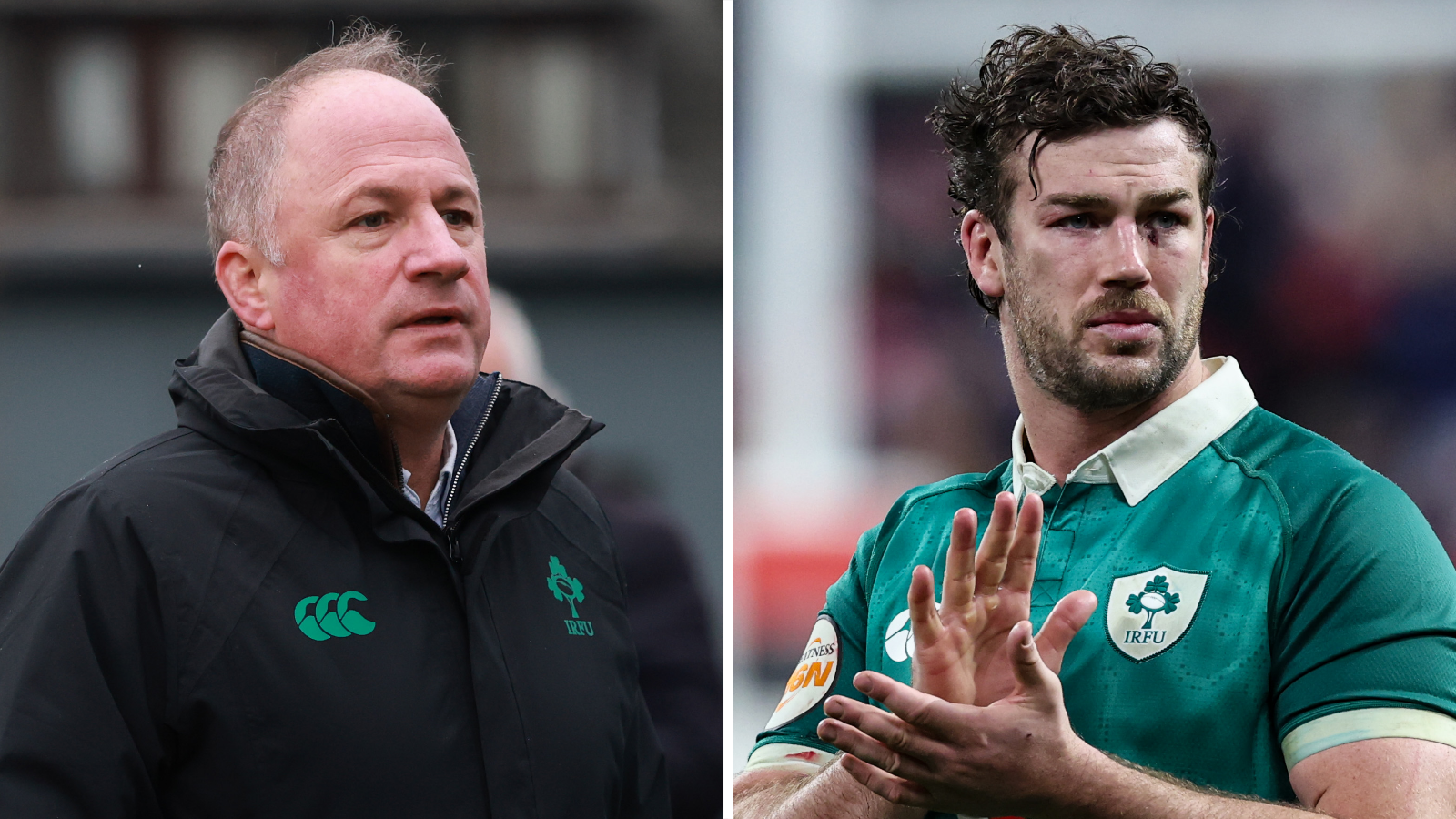
Ireland performance director David Humphreys says last week’s humbling defeat in France “has to be fuel” for the rest of the Six Nations.

Ireland were outclassed 36-14 in Paris, a result that led head coach Andy Farrell to criticise his team’s “lack of intensity”.

Humphreys says Ireland “didn’t perform” at the Stade de France and must use the underwhelming start as motivation for the remaining four matches.

Italy visit Dublin on Saturday (14:10 GMT) and will be high on confidence after shocking Scotland in their opener.

“Nobody enjoyed Thursday night. Paris is a tough place to go, but what you want to do is go and perform, and we didn’t perform,” the performance director of the Irish Rugby Football Union (IRFU) told BBC Sport NI.

“That’s the beauty of the Six Nations. We have a chance to go this weekend, and over the next five weeks, to really show what Irish rugby is about.

    • 20 hours ago
    • 4 days ago

Humphreys said the IRFU entered the Six Nations with “optimism and expectation” because of the success over the past decade.

Ireland won back-to-back championships in 2023 and 2024, the first of which was a Grand Slam, but slipped to third in the table last year.

It was a bruising weekend for Irish rugby as an Ireland XV were hammered 52-14 by England ‘A’ on Friday, while the Under-20s’ Six Nations campaign started with a 50-21 loss to France.

“Expectation is high and it’s built off the success of this team over the past 10 or 20 years,” said the former fly-half, who won 72 Ireland caps.

“We wanted better on Thursday night. For us, the disappointment and level of performance from Thursday night has to fuel the next four or five weeks.

‘Everyone knows of Jack Kyle’s reputation’

To play this video you need to enable JavaScript in your browser.

Humphreys was speaking at the unveiling of a plaque to mark the 100th birthday of Ireland legend Jack Kyle at Affidea Stadium in Belfast.

Kyle, who passed away in 2014, won 46 caps for Ireland and six for the British and Irish Lions as a fly-half, and is regarded as one of the greatest players of his generation.

In 1948, the Belfast man helped Ireland win the Five Nations Grand Slam for the first time and in 2002 was voted the greatest player in Ireland history.

When his playing career was over, Kyle worked for more than 30 years as a consultant surgeon in Chingola, Zambia.

“No matter where you go in the world of rugby, if you talk about Jack Kyle then everyone knows who he is,” Humphreys said.

“You only see snippets of players from Jack’s generation and you would love to have the coverage that we have now.

Related topics

  • Irish Rugby
  • Rugby Union

Captain Itoje returns to England XV to face Scotland

To play this video you need to enable JavaScript in your browser.

Chris Jones

Rugby Union Correspondent
  • 86 Comments

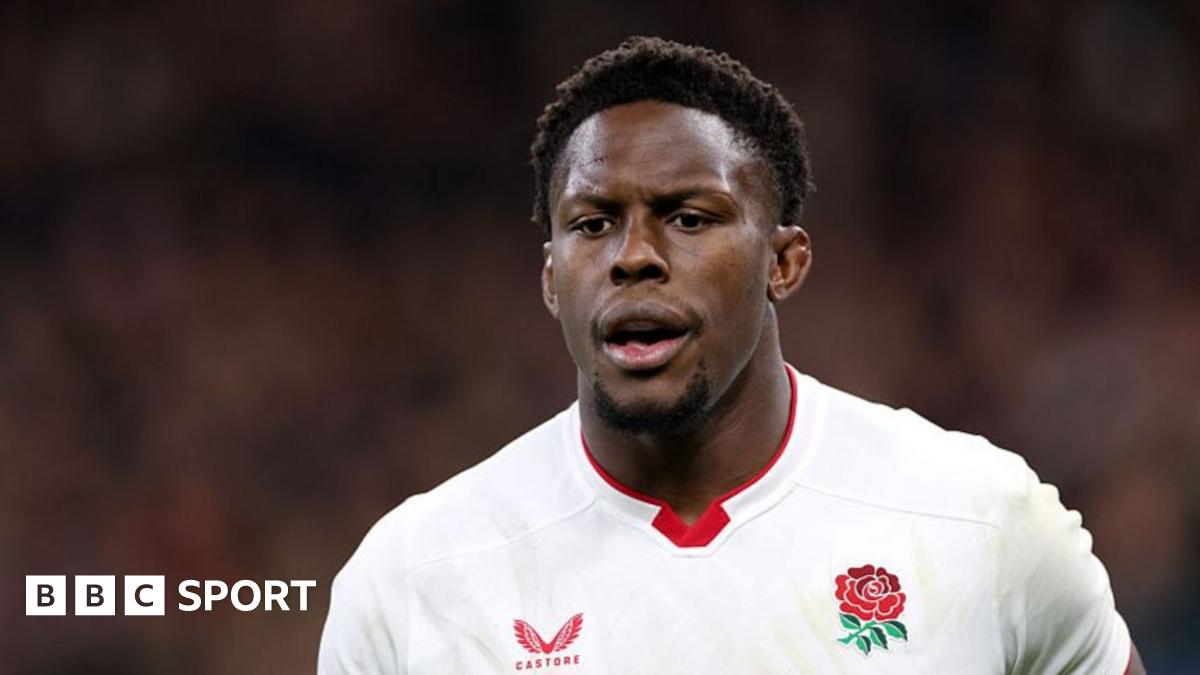
Captain Maro Itoje returns to the England starting XV for Saturday’s Six Nations match against Scotland in Edinburgh.

Itoje, who was on the bench for the 48-7 win against Wales, starts in the second row as one of two changes to the forward pack.

Luke Cowan-Dickie is at hooker with Jamie George, who led the side in Itoje’s absence last weekend, among the replacements.

In the one other change to England’s matchday squad from their opening win, fly-half Fin Smith comes on to the bench in place of namesake Marcus.

After four straight defeats from 2021 to 2024, England regained the Calcutta Cup with a narrow 16-15 victory last year in Twickenham.

Itoje back into pack but backline unchanged

Up until last weekend, Itoje had started every England Six Nations game since 2020.

However, he missed the start of their training camp in Girona to attend his mother Florence’s funeral in Nigeria and came on as a second-half replacement against Wales.

The British and Irish Lions skipper partners another Lion Ollie Chessum at lock, with Alex Coles on the bench.

England’s backline is unchanged, with Henry Arundell on the left wing after his first-half hat-trick last weekend, and Northampton pair Fraser Dingwall and Tommy Freeman in the midfield despite the availability of Ollie Lawrence.

England team to face Scotland

Steward; Roebuck, Freeman, Dingwall, Arundell; Ford, Mitchell; Genge, Cowan-Dickie, Heyes, Chessum, Itoje, Pepper, Underhill, Earl.

    • 2 days ago
    • 1 day ago

‘We need to right some wrongs’

England travel north on a run of 12 straight wins, while Scotland’s stuttering form from the autumn continued as they were edged out by Italy in Rome.

Pre-tournament favourites England and France both won at a canter in the opening round, meaning a final-day meeting between the sides in Paris looms large.

However, number eight Ben Earl insists England’s sole focus is on reversing a poor run of form in Scotland.

England have failed to win at Murrayfield for six years, their last victory coming in a 13-6 scrap in a storm in 2020.

“I promise you no-one is talking about Paris in our camp,” he told the Rugby Union Weekly podcast.

“No-one. We said in our huddle [after Wales]: ‘Well done, but we haven’t won at Murrayfield for years.’

Scotland v England, Murrayfield

2026 Six Nations

Watch on iPlayerListen on Sounds

Related topics

  • Scotland Rugby Union
  • England Rugby Union
  • Rugby Union

More on this story

Why did Saif al-Islam Gaddafi have to die?

Saif al-Islam Gaddafi was shot 19 times inside his compound in Zintan, a mountain town in western Libya, where he had lived since his capture in 2011. Four masked men entered the compound after disabling the security cameras. Roughly 90 minutes earlier, his guards had withdrawn from the area for reasons that remain unexplained. When the shooting ended, the assailants did not flee. They left. No gunfight. No pursuit. No claim of responsibility. The perpetrators vanished into the kind of silence that, in Libya, usually means the killers have nothing to fear from an investigation.

Saif was the son of Muammar Gaddafi, who ruled Libya for more than four decades before being overthrown and killed in the 2011 revolution. Since 2014, the country has been divided between two rival power centres. In the west, successive governments in Tripoli, the latest led by Prime Minister Abdul Hamid Dbeibah, derive their authority from United Nations recognition. In the east, renegade military commander Khalifa Haftar controls territory through military force, backed by the United Arab Emirates, Russia, and Egypt, while a paper government in Benghazi provides civilian cover for what is effectively military rule. Neither side has faced a national election, nor intends to.

The mechanics of the killing tell their own story. This was not violence born of chaos. It was an operation, executed within a narrow window by actors who understood Saif’s movements, his protection, and the informal rules governing both. Members of his inner circle have described it as an inside job. Reaching him required more than weapons. It required access to his routines, to his guards, and to the layered arrangements that had kept him alive in secret. For years, Saif had lived in varying degrees of concealment, protected by local understandings and, at times, by Russian-linked security support. By the night of the attack, all that protection had been withdrawn. Whoever planned the operation knew it would be.

Motive alone is not evidence. But method and capability narrow the field.

When Abdelghani al-Kikli, the commander of Tripoli’s largest militia, Stabilisation Support Apparatus (SSA), was assassinated last year by a rival brigade, the result was immediate chaos. Armed clashes shut down large parts of the capital – factional and noisy, and instantly legible. The Zintan operation bears no resemblance. Its precision and the silence that followed point to a different kind of actor. Critics, liabilities, and inconvenient figures within Haftar’s orbit have often been removed quietly. Mahmoud al-Werfalli, a senior officer in Haftar’s forces and a man wanted by the International Criminal Court, was shot dead in broad daylight in Benghazi in 2021. No serious investigation followed. Others have disappeared in a similar fashion. These operations do not require total territorial control. They rely on networks, intimidation and the expectation of impunity.

None of these constitutes proof. Libya rarely offers proof. Only patterns. But patterns have infrastructure.

The political order Muammar Gaddafi built did not disappear in 2011. It was disassembled and repurposed. Haftar took its fragments, tribal patronage networks, security hierarchies, and the militia economy, and reassembled them around his own family, anchored by a praetorian guard, the Tariq bin Ziyad Brigade, commanded by his son Saddam, the recently appointed deputy general commander of the self-styled Libyan National Army and the most likely successor to his father.

Former loyalists of the old regime were not excluded from this system, but they were never trusted within it. Pro-Gaddafi political figures and commanders were encouraged to return under Haftar and absorbed after 2014 only on strictly conditional terms. Figures such as Hassan Zadma, once aligned with Saif’s brother Khamis’s infamous 32nd Brigade, were coopted for their utility, not integrated as partners. When their presence threatened Haftar’s control, they were marginalised or dismantled.

Saif himself was never offered even that conditional inclusion. He remained outside the system, tolerated, contained, and watched, a reminder of an alternative line of inheritance that could never be fully neutralised. He had lived under the persistent threat of assassination since 2017.

Saif did not represent change. He represented an alternative. The danger he posed was structural. Haftar’s coalition is held together not by ideology but by patronage, and patronage is distributed unevenly. Some tribes and armed groups receive more than others. Loyalty is transactional, calibrated to what each faction can extract. In the event of Haftar’s death, those who feel short-changed would see succession as an opportunity to renegotiate their terms, or defect to whoever offers a better deal. The only figure with a history and surname symbolic enough to draw them in was Saif, heir to the very system Haftar had repurposed. He would not have dismantled it. He would have ruled through it, with the same patronage logic and the same authoritarian reflexes. Same system, different family.

That made him extraordinarily difficult to accommodate. Forty-eight hours before the killing, Saddam Haftar met Ibrahim Dbeibah, the prime minister’s nephew and head of Libya’s national security apparatus, secretly at the Elysee Palace in Paris. There was no official readout. Leaks suggest a single agenda: whether Libya’s rival camps could form yet another interim unity government, one that would bring the LAAF formally under the state, divide ministries and institutions between the Haftar and Dbeibah families, and postpone elections for what would now be over a decade. Libyans have not voted since 2014. That grievance has deepened with every failed transition, every broken promise of elections, every new interim arrangement designed to keep the same people in power. A family carve-up negotiated in Paris would have made it volcanic. Saif did not need a programme to exploit that. He only needed to be on the ballot. In the aborted 2021 presidential election, he polled significantly ahead of Haftar. If the only viable candidates are authoritarians, the anti-establishment authoritarian wins. He could not be absorbed into such an arrangement without destabilising both sides, and he could not be left outside it without becoming the vehicle for every Libyan’s rage against it.

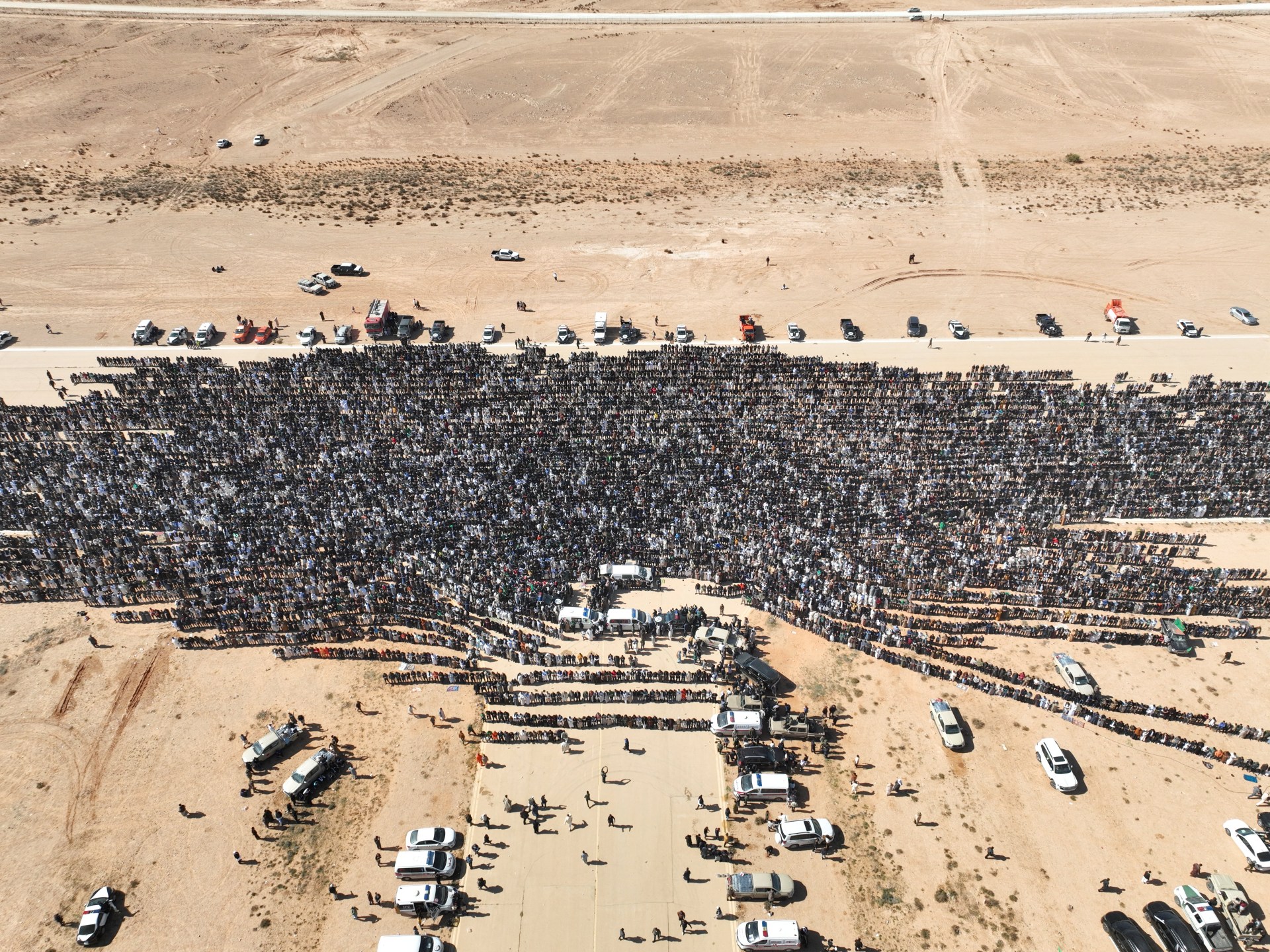
Five days after his killing, Saif’s tribe buried him in Bani Walid, a town long associated with loyalists of his father. They had wanted Sirte, his father’s tribal seat. Haftar’s forces denied them. Condolence receptions were blocked. Public mourning was prevented. Saif spent a decade being told where he could live, who he could see, and when he could speak. His killers decided where he could die. His rivals decided where he could be buried. No one has been arrested. No one will be. In Libya, silence after a killing is never the absence of an answer. It is the answer.

Wales bring in James as scrum coach to replace Jones

  • 21 Comments

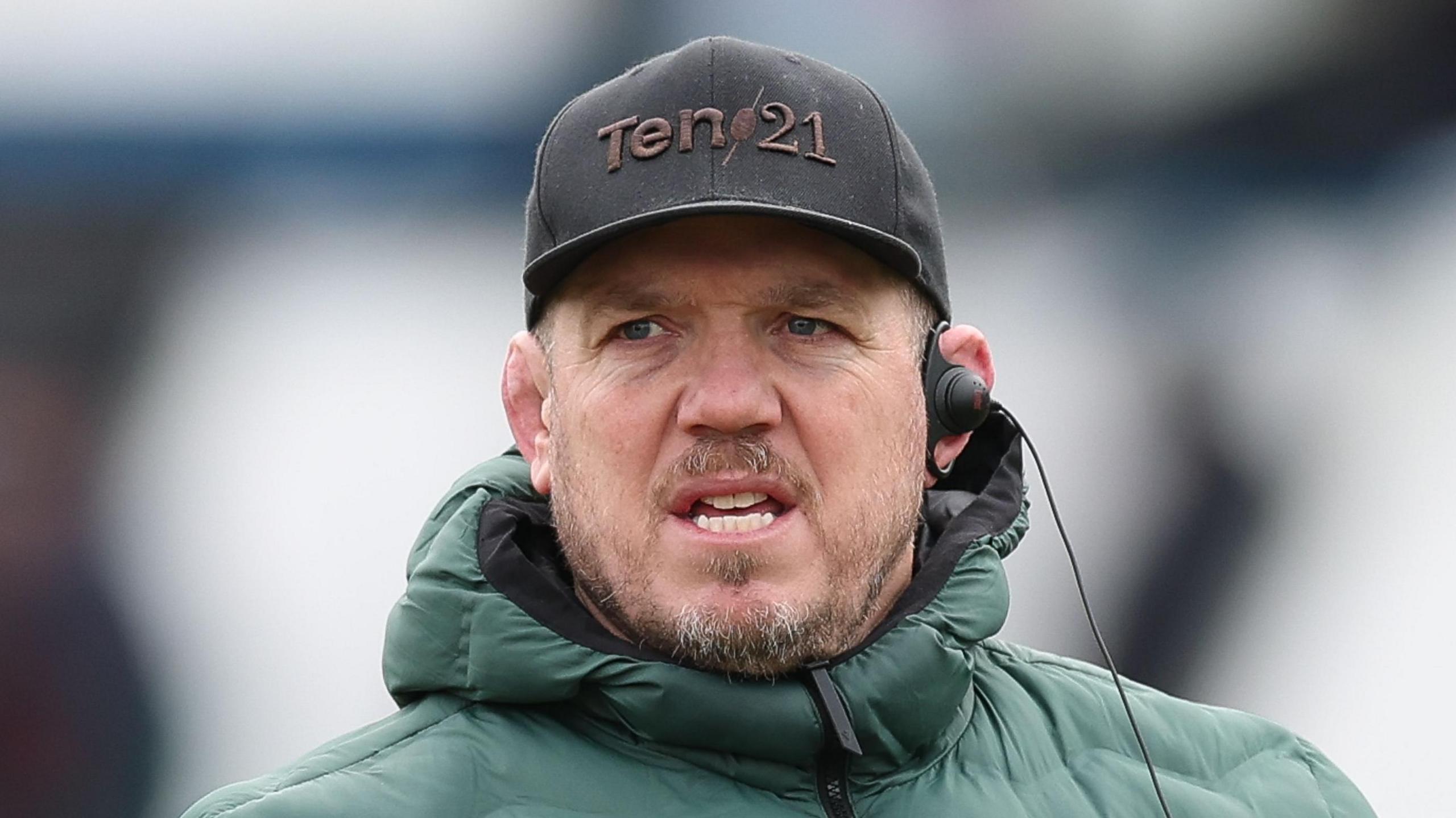
Wales have appointed Paul James to replace scrum coach Duncan Jones who suffered a ‘freak injury’ in training.

Jones, 47, has had surgery after injuring both knees following an accidental collision during a live training session last week.

His fellow Ospreys coach James, 43, will step into the role for the rest of the Six Nations, following the opening 48-7 defeat against England.

James, who won 66 caps, has been coaching with the Ospreys since December 2018 and was scrum and set-piece coach for Wales Under-20s in 2021.

“It’s great to add Paul to the coaching team and my thanks to the Ospreys for enabling this opportunity at short notice,” said Wales head coach Steve Tandy.

“We’re all disappointed for Duncan with his injury. He’s been a huge part of the environment will be missed around the group and we wish him all the best with his recovery.”

Jones added: “I’m absolutely gutted a freak injury means I’m unable to continue in camp with Wales this Six Nations.

“I’ve enjoyed the opportunity to coach international rugby and being able to work with this great group of players and staff.”

Tandy has Matt Sherratt and Danny Wilson as permanent assistants while Dragons duo Dan Lydiate and Rhys Patchell have returned to Wales duty having helped with defence and kicking, respectively, in the autumn campaign.

Related topics

  • Welsh Rugby
  • Wales Rugby Union
  • Ospreys
  • Rugby Union

More on this story

    • 1 day ago
    Wales players Adam Beard, Alex Mann and Tomos Williams look dejected after losing to England at Twickenham
    • 1 day ago
    Wales players in a huddle after the 48-7 defeat against England
    • 2 days ago
    Dewi Lake with the English red rose flag behind him

Why are Aberdeen taking so long to appoint a manager?

Andy Coyle

BBC Sport Scotland

“It could be six days, it could be six weeks, it could be six months.”

Those were sporting director Lutz Pfannenstiel’s words last month when asked for a timescale on Aberdeen appointing a new manager.

The German identified a need for someone who would be “fresh air” but also bring “a certain emotion and a certain fire”.

Pfannenstiel wanted to find a manager who would fit a pre-determined playing style, motivate the players and also fit into the culture of the club.

The club had just taken the decision to sack Jimmy Thelin, eight months after the Swede led the team to their Scottish Cup triumph, and Pfannenstiel said searching for the right man to tick off the wish list of attributes and skills wasn’t something that should be rushed.

He warned that rushing to a “quick shot” appointment would be the wrong move.

Patience is a virtue but after 37 days since Thelin’s exit Aberdeen fans are growing anxious.

Five games have been played in that time with mixed results, and two more postponed.

    • 39 minutes ago
    • 1 hour ago
    • 3 days ago

Horneland has emerged as leading candidate but no appointment made

Speaking a week after Thelin’s departure, chief executive Alan Burrows said that in addition to the list of managers they had identified as possible candidates, the club had also been approached by plenty of candidates keen to take over.

Candidates from the Premiership as well as from abroad were linked with the job.

Burrows had talks planned with his sporting director to whittle down a “very long” list to something more manageable before speaking to candidates.

At the end of January there was a third update as Pfannenstiel revealed the list was down to three or four candidates with interviews imminent. But he added that no rush decision would be made because of “public pressure”.

The club have a very specific idea of what they want from the next boss and want to be convinced they have the ideal person to lead the team to sustained success.

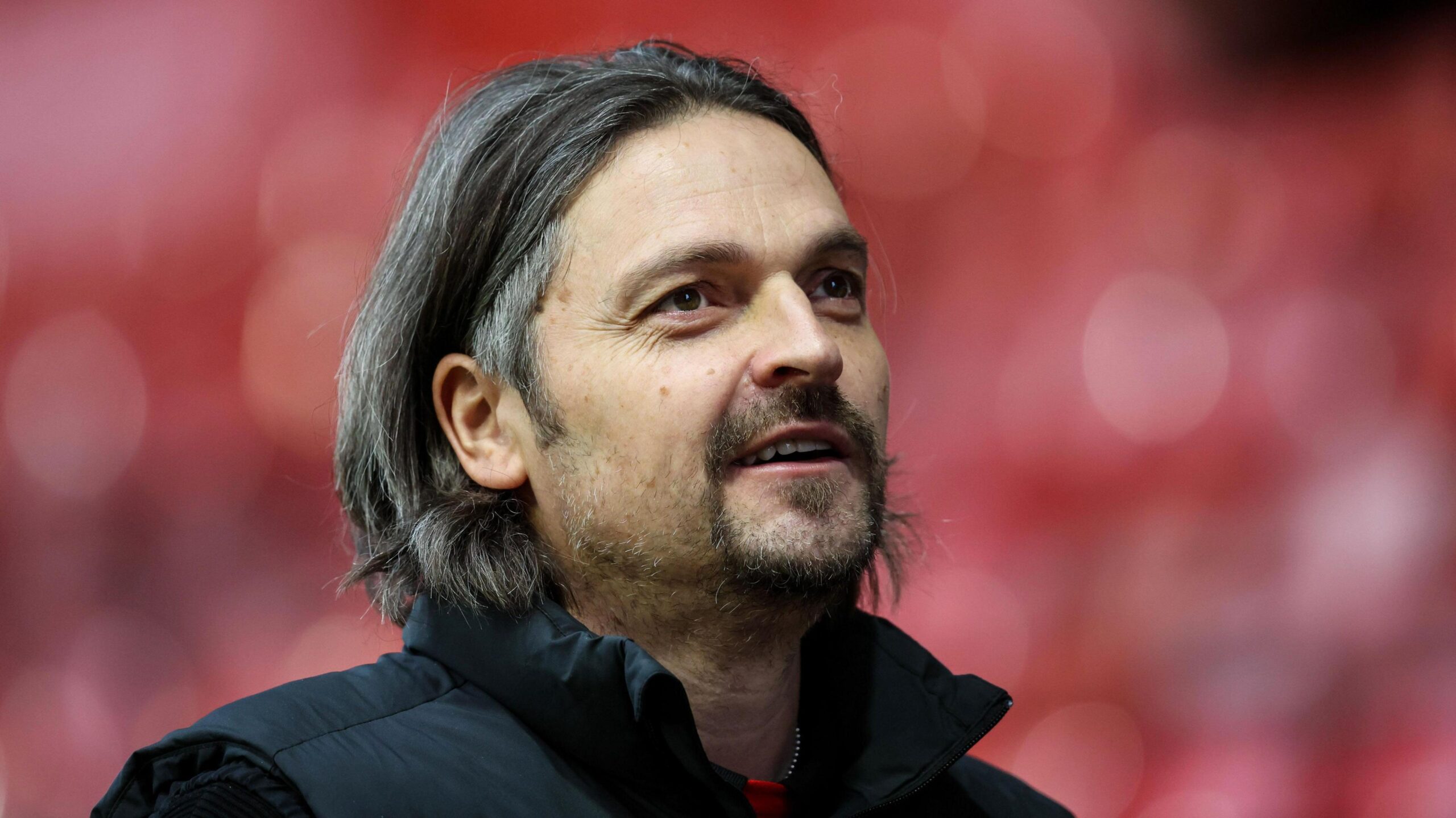
Only in the last week has a front-runner emerged, with Norwegian coach Eirik Horneland emerging as the leading candidate.

The former Rosenborg and Brann boss, who left his position as St Etienne manager last month, was in Aberdeen last week for talks as he appeared to be closing in on the job.

Days later, as Leven continues to work on a day-to-day basis as interim manager, there’s still no further update on the search for Thelin’s successor.

Taking time to get the right man might be no surprise given Aberdeen’s previous manager search.

After Barry Robson was dismissed in January 2024, it took until April for the club to announce Thelin as his permanent successor, and even then he didn’t start until the summer.

Leven had caretaker spells either side of Neil Warnock’s brief and colourful stint as interim boss in the meantime.

‘It’s taking too long and players need stability’ – Neilson

Former Hearts head coach Robbie NeilsonSNS

Speaking on the BBC’s Scottish Football Podcast, Neilson said he had not applied for the post and is happy working in the City Football Group as assistant at Belgian club Lommel SK.

However, he believes Aberdeen should have been prepared for a quicker appointment.

“Whoever comes in now, if it isn’t Horneland, they’re probably going to be looked on as second, third or fourth choice and I think that’s the difficulty of it.” he said.

“I totally understand they want to get the right guy in but in my opinion a sporting director, even when the manager is doing well, should have a list of three or four targets.

“You have to be prepared for success and failure. It’s taking too long.

“You look at the transfer window in January with six players in and nine players out and it’s a another massive turnover after 15 players in the summer. They really need to get a bit of stability.”

Neilson also joked that the weather in the north east, and a particularly rain-soaked spell, might have an effect on the appointment.

“One thing I did see is that the potential manager was over last week. And the time he comes in is in a world record no-sunshine stretch of days.

“If he’s landed on the Monday and not seen the sun by Friday, he might think ‘I’ve got an opportunity in Spain, where am I going?'”

The former Scotland international also says the playing squad will be growing anxious about the length of time without a decision, which has a knock-on effect for the interim boss.

“For Peter Leven it must be very difficult,” Neilson said. “He’s seeing the stuff in the news and then turning up every morning to take the team.

“Players will be speaking about it and he’s trying to get his authority and ideas to the team while players are thinking ‘he’s probably not going to be here tomorrow’. And then he has to take another game, and another.

“They really need to get someone in. If it’s Horneland, fantastic and let’s see how he does.

Related topics

  • Aberdeen
  • Scottish Premiership
  • Scottish Football
  • Football

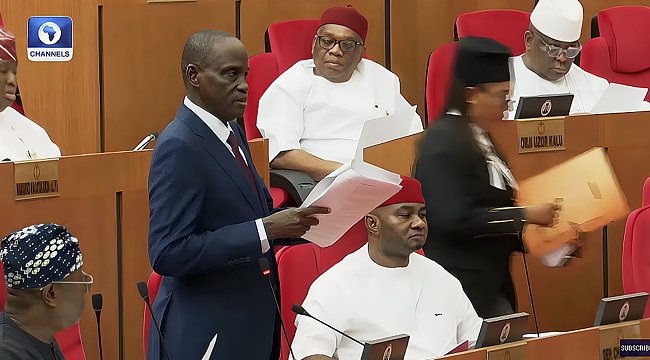
Senate Reverses Stance To Allow E-Transmission Of Election Results, Retains Manual Backup

The Senate has amended the Electoral Act to permit the electronic transmission of election results, leaving safeguards to address potential technical challenges.

The decision follows the upper chamber’s move on Tuesday to rescind its earlier position, which had rejected the compulsory electronic transmission of results from polling units to the Independent National Electoral Commission’s (INEC) Result Viewing Portal (IREV).

Following the new amendment, the Senate approved electronic transmission (without the real time phrase) as part of the electoral process but stipulated that where internet connectivity fails, the Form EC8A will remain the primary instrument for result collation.

Under the proposal, electronic transmission would serve as the primary method of uploading results.


READ ALSO: Senate Sets Up 12-Member Committee To Work With Reps On Electoral Amendment Bill

However, in the event of technical challenges such as network failures, the motion provides for a fallback option allowing the manual transmission of results using Form EC8A, duly signed and stamped by the presiding officer.

The proposal, however, sparked concerns among lawmakers, particularly over the reliance on Form EC8A as the primary source of election results, where disputes arise.

The differing views led to sharp divisions on the floor of the Senate, prompting Senator Enyinnaya Abaribe to call for an individual vote on the matter to clearly determine the position of each lawmaker.

However, rather surprisingly, Senator Abaribe withdrew his call for individual votes moments later.

Senator Enyinnaya Abaribe

The votes and proceedings were then approved and adopted by the upper chamber.

12-member committee

Meanwhile, the upper chamber has appointed a 12-member conference committee to harmonise differences between its version of the Electoral Act (Amendment) Bill and that of the House of Representatives.

Senate President, Godswill Akpabio, announced the decision during an emergency plenary session on Tuesday.

“After consultation with the leadership, we have moved the number from nine to 12. I will now read out the names of the conference committee members from the Senate,” Akpabio said on the floor of the Senate.

The members are:

1. Senator Simon Bako Lalong – Chairman

2. Senator Mohammed Tahir Monguno – Member

3. Senator Adamu Aliero – Member

4. Senator Orji Uzor Kalu – Member

5. Senator Abba Moro – Member

6. Senator Asuquo Ekpenyong – Member

7. Senator Aminu Iya Abbas – Member

8. Senator Tokunbo Abiru – Member

9. Senator Niyi Adegbonmire (SAN) – Member

10. Senator Jibrin Isah – Member

11. Senator Ipalibo Banigo – Member

12. Senator Onyekachi Nwebonyi – Member

‘Tinubu to sign bill February’

He urged the committee to treat its assignment as urgent, expressing optimism that the process could be concluded swiftly.

The Senate President said that the outcome would be transmitted promptly to President Bola Tinubu for assent within February.

He expressed optimism that President Bola Tinubu, in the next one week, would sign the bill into law as an act of Parliament.

Rowdy session

Proceedings at Tuesday’s Senate sitting became tense, as repeated interruptions and heated exchanges disrupted debates in the Red Chamber.

The atmosphere shifted after lawmakers began deliberation on a motion sponsored by Senator Tahir Monguno, which triggered sharp divisions among members.

Monguno proposed that the Senate rescind its earlier approval of Clause 60(3) of the Electoral Act (Repeal and Enactment) Bill, 2026—a provision that outlines the process for transmitting election results electronically.

The debate culminated in Senate President Godswill Akpabio lending his support to a revised framework that designates electronic transmission as the primary mode of uploading results, while allowing manual submission via Form EC8A strictly where technical challenges occur.

Controversial clause

The Senate’s emergency plenary session followed mounting public outrage over recent changes to the Electoral Act, with particular attention on provisions governing the electronic transmission of election results.

At the heart of the dispute is Clause 60(3), which the Senate amended last week by removing the requirement for real-time electronic transmission. Instead, lawmakers retained the 2022 Electoral Act provision granting the Independent National Electoral Commission (INEC) the discretion to determine how election results are transmitted.