- 22 Comments
The Formula 1 cars that will start the new season at this weekend’s Australian Grand Prix are very different from the ones that finished 2025.
Over the winter, the teams have been wrestling with the biggest rule change in F1 history – engines, chassis, tyres and fuel are all subject to new regulations.
On the surface, the cars look similar – they are still single-seaters with front and rear wings and exposed wheels.
But the engine design has changed, the chassis have a new aerodynamic philosophy, the fuels are fully sustainable carbon-neutral concoctions made from waste biomass or synthetic industrial processes, and the tyres are smaller.
The engines
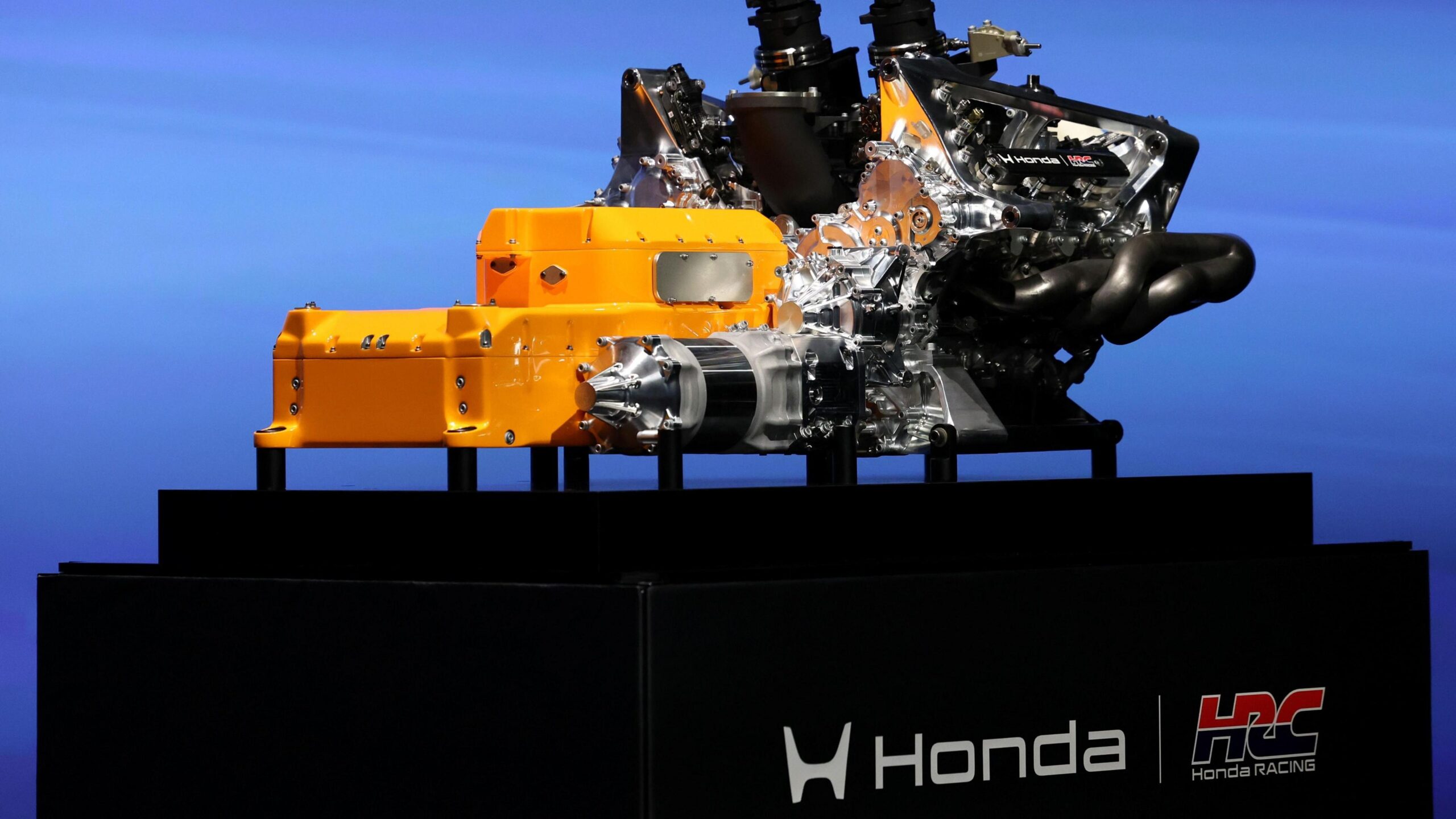
Just as last year, the engines are 1.6-litre V6 turbo hybrids producing close to 1,000bhp. But their architecture has changed and so has the split between internal combustion engine (ICE) and electrical parts of the power-units.
The split between ICE and electrical is more or less 50-50 (in reality, it’s more like 52-48, but that’s less catchy), where last year it was about 80-20.
The electrical side now produces up to 350kw (470bhp), three times as much as last year. But the battery is about the same size.
Between 2014-25 the engines had two motor generator units recovering energy – one on the rear axle known as the MGU-K (for kinetic) and one on the turbo shaft known as the MGU-H (heat).
Now, though, the MGU-H, which was ingenious but highly complex and expensive, has been removed, leaving only the K.
The idea was to attract more car manufacturers into F1. On that basis, it was a success – Audi, General Motors and Ford have all entered F1 because of the new rules, and Honda has reversed a decision to quit.
But the removal of the MGU-H, and the decision not to allow energy recovery from the front axle, has left the cars energy starved.
Their batteries are constantly being emptied and recharged but it’s impossible to recover enough energy to have maximum power at all times. This has led to some significant changes for the drivers, more of which in a moment.
The cars
 Getty Images
From 2022-25, the cars were based around an aerodynamic philosophy known as ‘ground effect’. They had curved venturi tunnels under the car – essentially turning the underside of the car into two giant wings – which created an area of low pressure that sucked the car to the track.
Governing body the FIA decided to abandon this approach because it led to cars that needed to be run low and with very stiff suspension for optimum performance. The drivers have welcomed this change because the previous cars were uncomfortable to drive and led to back problems.
The new cars have reverted to what is known as a “step-plane” philosophy. The underside is flat in the area between the wheels, with a central part – the chassis, in which the driver sits – lower than the floor on either side.
In addition, the cars have been made narrower, smaller and about 30kg lighter, to increase their manoeuvrability.
For now, the cars will be a little slower around a lap – it was about two seconds or so in pre-season testing in Bahrain. But that will change as development matures the designs.
The most obvious change, though, is to the front and rear wings.
The engine formula was arrived at before the chassis rules, and it quickly became obvious that the cars would be energy starved. So compromises had to be made to help the cars work better with the new engines and harvest sufficient energy.
Braking is the predominant way of recovering energy in a hybrid car, but the old cars would not have been braking for long enough to generate sufficient electricity.
To increase top speeds and increase braking distances, the rule-makers came up with moveable aerodynamics, which will be known as ‘straight-line mode’ – the front and rear wings will lie flat on the straights to reduce drag.
The tyres were reduced in width for the same reason – by 25mm at the front and 30mm at the rear.
The knock-on effect of that is that the old drag-reduction system (DRS) overtaking aid, which opened the rear wings on the straights for a speed boost for a car if it was within one second of the car in front, could no longer be used. The wings were already open for another reason.
Australian Grand Prix
The complicated bit
So far, so relatively simple. But this is F1, so it gets complicated pretty quickly.
The need to recover energy to a much greater extent than last year, and the limited ways of doing that, have led to the driving challenge changing significantly.
Of course, in the corners, the drivers are still pushing the car to the limit of grip and going in, through and out of the bends as quickly as possible. The vast majority of the time, anyway.
Energy recovery has even changed that, though. In many corners, particularly slow-speed ones, drivers will be using higher gears than would be optimum if cornering speed were the only concern.
That’s to keep the turbo spinning so the engines can be run against the MGU-K to charge the battery.
But that’s just one way of recovering energy. The others are:
There are other layers of complication beyond that. We won’t go too deep, but one thing to know about is that, as things stand, teams are allowed to recover energy at the maximum 350kw during lift and coast, but only at 250kw when super-clipping.
There is ongoing debate about whether that should change and the full 350kw be allowed at all times, to make energy recovery more efficient and easier.
The engineers work out in advance the optimum use of the energy recovery and deployment around the lap to produce the best overall lap time.
Now we come to why we caveated the concept of the drivers being on the limit of grip in corners at all times. That’s because sometimes it’s more lap-time efficient not to deploy energy in high-speed corners, and save it for acceleration out of slow-speed ones.
What about using the energy?
 Getty Images
Generally, energy use is pre-set by the team. But there are situations in which the driver can take over control of the system.
One of these is the overtake mode described above. The other is a “boost” mode. This simply means that at the press of a button the driver can request maximum power from the battery.
Unlike overtake, this can be used at any point around the track, for both attack and defence.
Drivers will have to calculate whether to use it on a risk versus reward basis.
Related topics
- Formula 1
- 2 days ago

- 4 hours ago

- 2 days ago

- 1 day ago

- 7 days ago

- 3 days ago

- 5 days ago

- 24 February

- 6 days ago

- 24 February


Leave a Reply