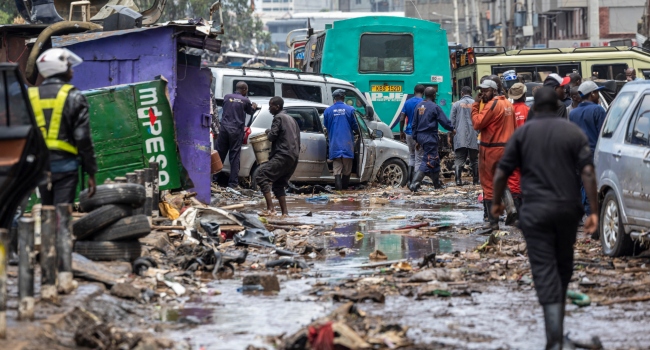
At least 23 people have been killed in flash flooding in Nairobi, police said Saturday, as search and rescue operations continued amid widespread devastation.
Torrential rains lashed the Kenyan capital late Friday, turning major streets into rivers and flooding thousands of homes and businesses.
Rescue teams were still pulling out bodies and rescuing trapped residents on Saturday, while AFP reporters saw heavily damaged roads and infrastructure from the city’s vast slums to upmarket areas like Parklands.
“The river banks broke as the rains continued and cars were swept off and water flowed into our shops destroying property for many people,” said Frederick Wasonga, who sells car accessories in the city centre.
Derrick Juma, a panel beater in the same area, said two of his neighbours had died.
READ ALSO: In Finland, Kids Take Hovercraft To School Over Frozen Baltic Sea
“One person was electrocuted… Another one was heavily rained on and as he took cover outside a restaurant, he died out in the cold,” Juma told AFP.
Police said they had rescued at least 29 people overnight and “remain fully deployed, actively responding to distress calls and continuing with search and rescue missions” as more rain started to fall late Saturday.
“We are seeing devastation… A huge number of areas in the city were affected, but also counties all over the country,” Kenyan Red Cross spokesman Munir Ahmed told AFP.
President William Ruto said he had ordered the deployment of an emergency response team to coordinate rescue efforts.
“We recognise that these floods once again highlight the urgent need for lasting solutions to the perennial challenge of flooding in our urban areas,” he said on X.
There was widespread anger at Nairobi governor Johnson Sakaja, who had vowed to deal with drainage and road infrastructure when he took office in 2022.
“Sakaja should be in jail not in office,” said well-known activist Nelson Amenya on X.
“There’s no storm water drainage system… I haven’t seen any active flood management or even preparation for it by the county of Nairobi,” he said.
Multiple studies have tracked the increasing frequency of extreme wet and dry periods in east Africa in the last 20 years, including one on rainfall variability published by Scientific Reports in 2024.
AFP reported on an emergency-level drought in northeastern Mandera county last month that had killed large numbers of livestock.
Neighbouring countries like Somalia and Ethiopia are also affected.
Kenya Airways said they had been forced to divert several flights away from Nairobi to Mombasa due to the rains.
The Kenyan Red Cross said hundreds of households in neighbouring counties had also been affected, and vast swathes of farmland destroyed.
“I would call for joint efforts between the government humanitarian agencies to deal with this problem, and to understand why we are having this havoc,” said Ahmed of the Red Cross.

Leave a Reply