Archive January 27, 2026

Iran’s currency drops to record low against dollar as tensions soar


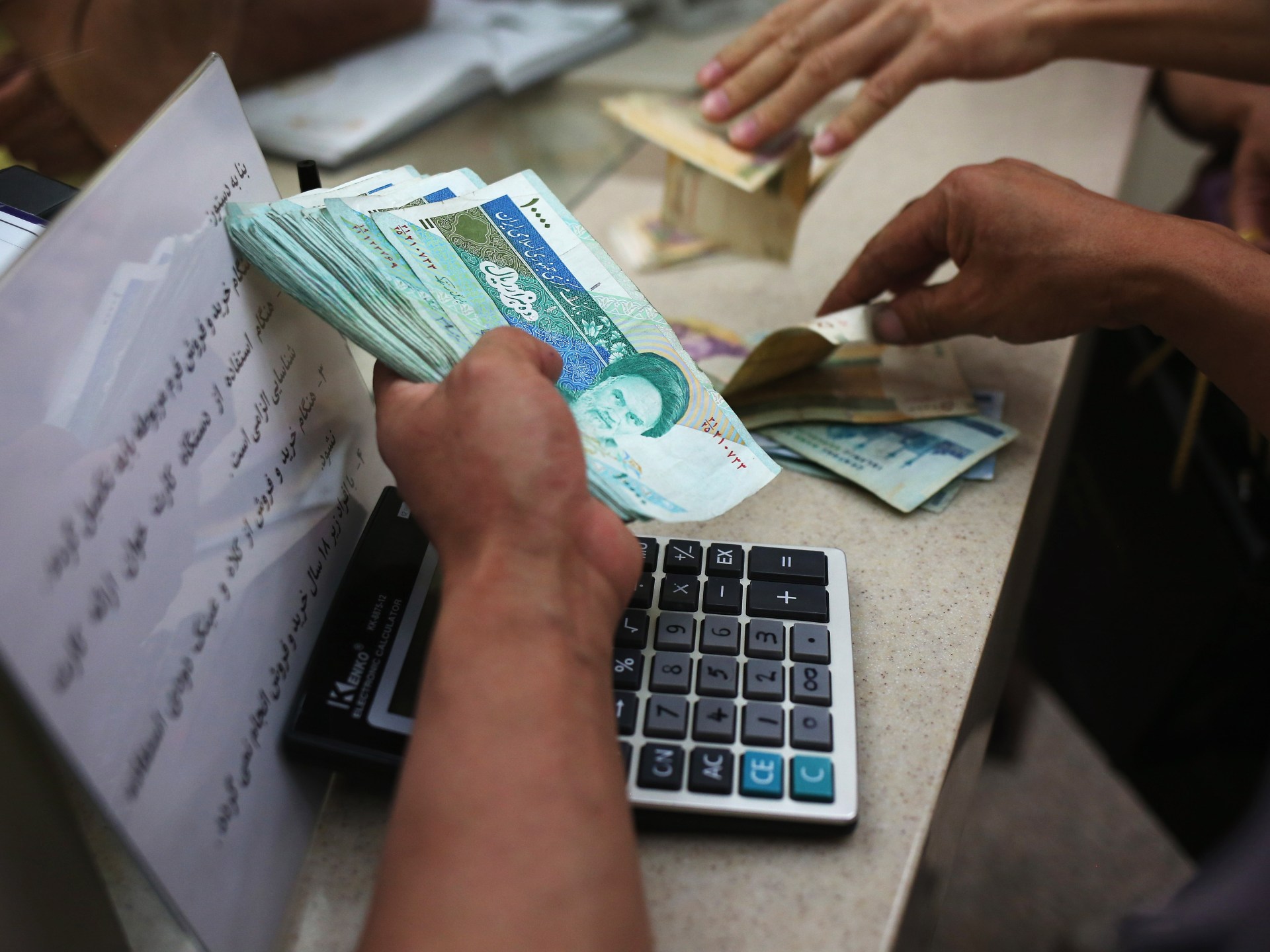
Iran’s currency has dropped to ⁠a record ‍1,500,000 rials to ‍the US ⁠dollar, according to several Iranian ​currency ‌tracking websites, weeks after protests ‌sparked by ‌the ⁠rial’s dwindling value rocked ‌the country.

Exchange shops on Tuesday offered the record-low rial-to-dollar rate in Tehran, deepening the economic hardship for large swaths of the Iranian populace suffering from decades of extensive economic mismanagement and international sanctions.

Recommended Stories

list of 3 itemsend of list

Iran’s newly appointed ‍Central Bank Governor Abdolnaser Hemmati said that “the foreign exchange market is following its natural course.”

This latest dip comes nearly a month after shopkeepers in Tehran’s Grand Bazaar shut their stores in protest against the falling value of the rial, hyperinflation and a government decision to end certain food and fuel subsidies.

The demonstrations that began in the capital on December 28 quickly spread across the country, with protesters demanding political change. They were met by a violent crackdown by Iranian security forces, the scale of which is only starting to become clear as the country faced more than two weeks of internet blackout – the most comprehensive in its history.

Iran’s government said at least 3,117 people were killed in the unrest, saying 2,427 were civilians and security forces, and labelled the rest “terrorists.”

The US-based Human Rights Activists News Agency, which verifies each death with a network of activists in Iran, put the death toll at 5,777 protesters, 214 government-affiliated forces, 86 children and 49 civilians who were not participating in the demonstrations.

Iranian state media accused forces abroad of escalating the protests as Tehran remains unable to address the country’s ailing economy, squeezed by international sanctions over its nuclear programme.

Economic instability has also been fuelled by spiralling tensions with the US and Israel. US President Donald Trump on Tuesday said the situation with Iran was “in flux” after he ordered what he described as a “big armada” to the region.

On Monday, the USS Abraham Lincoln, and the guided missile destroyers accompanying it, entered the US Central Command’s “area of responsibility”, marking a significant escalation in the US military posture near Iran.

Two Iranian-aligned armed groups in the Middle East have signalled their willingness to launch new attacks, likely trying to back Iran after Trump threatened military action over the killing of protesters. Gulf Arab states said they want to stay out of any attack, despite hosting US military personnel.

At the same time, Trump stressed diplomacy remains an option. “They want to make a deal. I know so. They called on numerous occasions. They want to talk.”

Iraq presidential vote delayed as Kurdish blocs struggle to pick candidate

The election for Iraq’s next president has been postponed in order for more consultation between the two Kurdish parties to come to a decision.

The Kurdistan Democratic Party (KDP) and the Patriotic Union of Kurdistan (PUK) requested a delay in the parliamentary vote scheduled for Tuesday, according to the Iraqi News Agency (INA).

Recommended Stories

list of 4 itemsend of list

According to a sectarian quota system, the prime minister’s position is held by a Shia, the parliament’s speaker is a Sunni, and the presidency is largely ceremonial for Kurds.

A PUK member typically assumes the presidency in accordance with a deal reached between the two main Kurdish parties. The KDP selects the region’s president and regional leader, in contrast, from the region’s semi-autonomous Kurdish region.

However, the KDP chose Foreign Minister Fuad Hussein as the primary candidate in this instance.

Whoever is nominated by the two Kurdish parties still needs the support of the Shia and Sunni blocs in the parliament, according to Al Jazeera’s Mahmoud Abdelwahed, who is based in Baghdad.

The new president will have 15 days to choose a prime minister, presumably Nouri al-Maliki’s former leader, after the election.

Al-Maliki, 75, has previously served as Iraq’s prime minister for two terms, including two terms in 2006 and 2014. He abruptly resigned under American pressure. He is perceived as having ties to Iran.

Maliki was approved by the Coordination Framework, a coalition of Shia parties with a majority in parliament on Saturday. US Secretary of State Marco Rubio warned against an Iraqi pro-Iranian government the following day.

Washington “has conveyed to it a negative view of previous governments led by former prime minister Maliki,” according to an Iraqi source close to the coordination framework.

The United States will make its own sovereign decisions regarding the next government, according to US representatives in a letter.

Another Iraqi source confirmed the letter, noting that Maliki was confident that Washington’s concerns would be addressed by the Shia alliance, which had continued to advance with its decision.

Alcaraz dominates De Minaur to reach last four

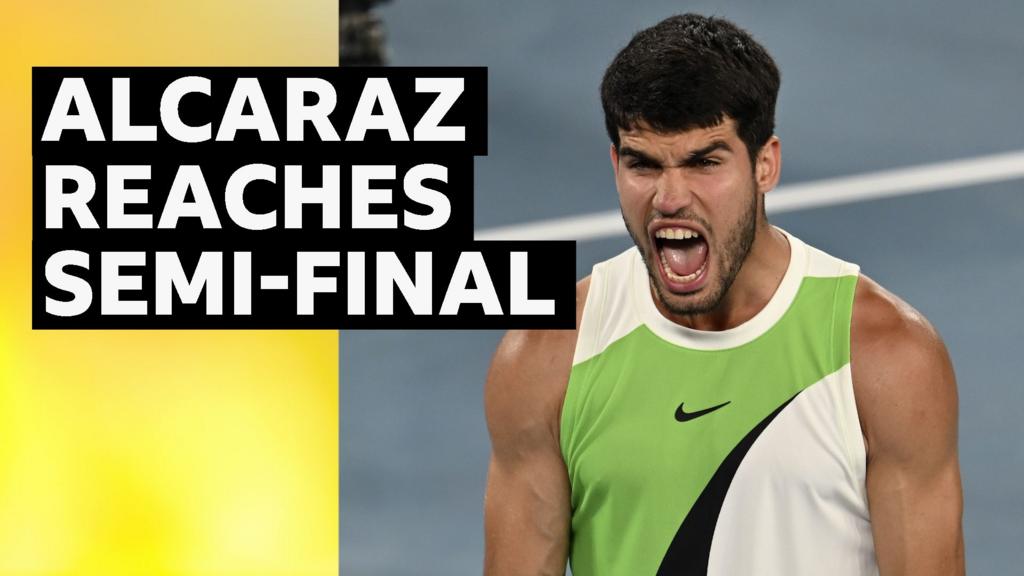
Carlos Alcaraz won the Australian Open quarter-final against home favorite Alex de Minaur to cement his record-breaking victory as the youngest man to win a grand slam.

Alcaraz defeats De Minaur to advance to the semi-finals.

Alcaraz dominates De Minaur to reach last four

Carlos Alcaraz won the Australian Open quarter-final against home favorite Alex de Minaur to cement his record-breaking victory as the youngest man to win a grand slam.

Alcaraz defeats De Minaur to advance to the semi-finals.

Trump’s ‘Board of Peace’ puts rights abusers in charge of global order

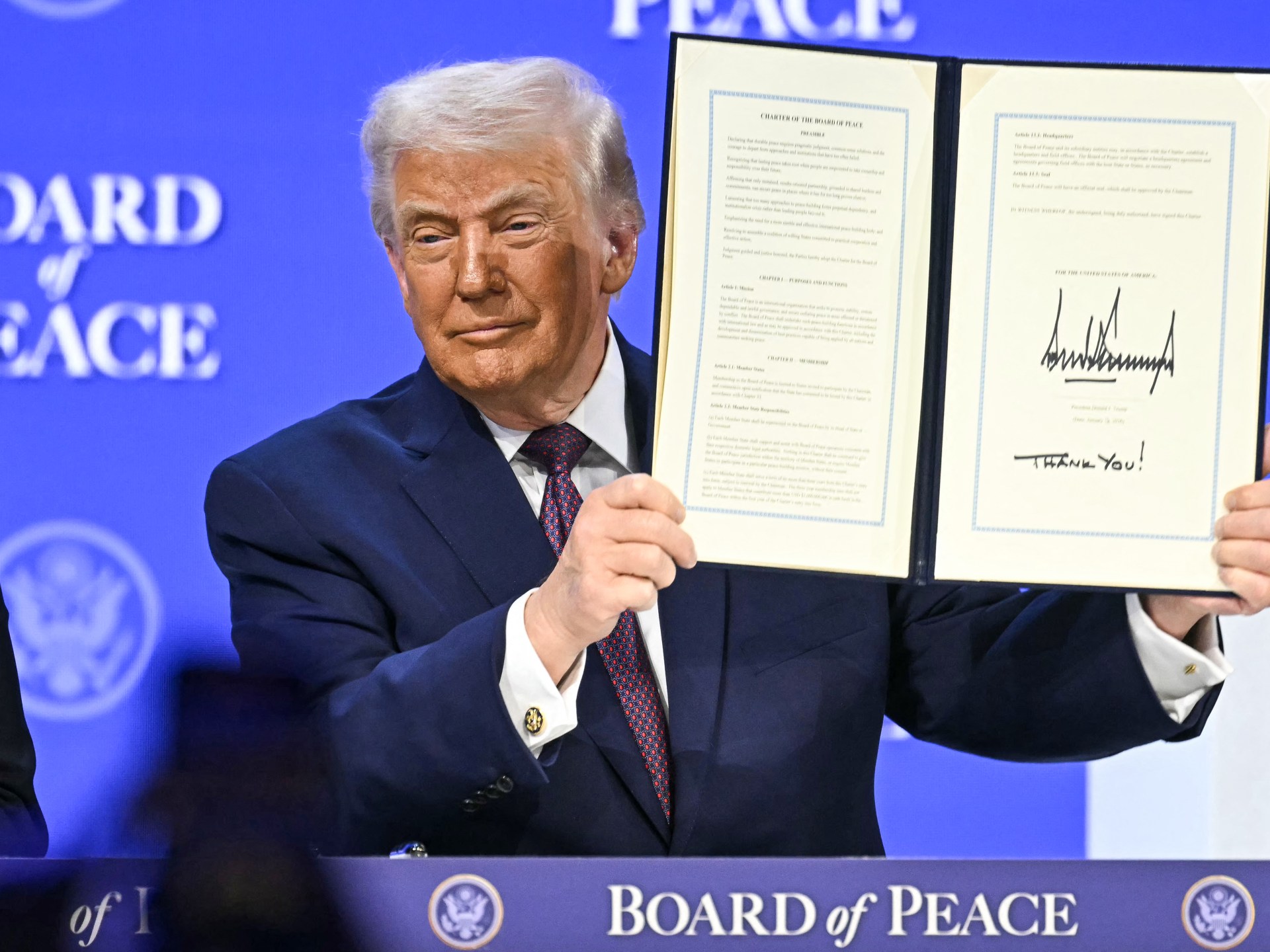
The Trump administration has worked diligently to undermine the UN, particularly its efforts to uphold universal human rights, since taking office a year ago. Donald Trump, the current US president, wants to form a “Board of Peace,” with himself as the chairman forever. While many nations were invited, those signing up appear to be a rogues’ gallery of leaders and governments with varying levels of appalling human rights records.

In order to stop another World War II crime against humanity and genocide, the United States was instrumental in founding the UN in 1945. The US has always had a love-hate relationship with the UN, always being wary of perceived threats to its autonomy. However, the Trump administration has criticized what it perceives as “anti-American” and “hostile agendas,” insisting on the hate and displacing the love.

Numerous vital UN programs have been ignored and underfunded by the administration. Additionally, a significant portion of the assessed contributions, which member states are required to pay, has been withheld. The administration has discontinued funding the UN population fund, which supports and defends women and girls in armed conflicts and crisis zones, and has withdrawn from the UN World Health Organization, UN climate bodies, and international climate agreements.

In UN negotiations, US negotiators have pushed Trump’s ideological agenda and demanded that some of the language used in statements and resolutions be removed. Because the Trump administration views them as “woke” or politically correct, the UN diplomats claim that targeted language includes words like “gender,” “diversity,” and “climate.” The administration has had a few successes with its ideological campaign in the UN Security Council, but it has had a difficult time in the General Assembly, where the US is one of 193 members without a veto and has had some success.

The administration appears to be determined to reincarnate the Security Council in a Trumpian manner, though. According to the proposed charter of the Board of Peace, it is “an international organization that seeks to promote stability, restore dependable and lawful governance, and ensure enduring peace in areas affected or threatened by conflict.”

The Russian and Chinese governments, which have worked tirelessly for years to de-emphasize human rights at the UN, are undoubtedly hearing something about human rights because the charter doesn’t mention them.

According to the $1 billion fee for permanent membership, Trump’s board appears to be a sort of pay-to-play, global club. It’s difficult to imagine this body prioritize ending suffering, hatred, and bloodshed, as Trump remarked at the World Economic Forum’s launch event on the sidelines of the forum. There are several well-known human rights abusers and leaders who have been linked to war crimes. Vladimir Putin, the president of Russia, and Benjamin Netanyahu, the prime minister of Israel, are two of the people Trump has invited to join. Both of them are facing international criminal court (ICC) arrest warrants for war crimes and crimes against humanity. Trump has invited leaders from China, Belarus, and Kazakhstan to his board, each with their own appalling human rights records.

According to the charter, Trump would have the power to “adopt resolutions or other directives” as chairman of the board.

Hungary and Bulgaria are the only European Union members who have so far ratified joining. Viktor Orban, Hungary’s far-right populist prime minister, has long supported Trump. Trump threatened to significantly raise French wine and champagne tariffs in response to French President Emmanuel Macron’s refusal to accept a position.

Trump also gave Canada a seat on the board that was a permanent one. However, he withdrew the offer following Davos speech by Prime Minister Mark Carney. Carney sharply criticised the use of economic coercion by great powers against smaller nations while not mentioning Trump or the US. Carney urged middle-class nations to unite and combat bullying from great powers.

Following an additional two years of Israeli forces’ atrocities that left at least 70, 000 Palestinians dead, with whom the US was associated, the Board of Peace was originally intended to be in charge of Gaza’s administration. Gaza is not mentioned in the board’s charter. However, Jared Kushner, Trump’s son-in-law, led a side event at Davos that focused on Gaza. The “Gaza Executive Board,” a subsidiary of the Board of Peace, will consist of Kissner.

Kushner gave the impression of a “New Gaza,” complete with glittering office buildings and pristine beaches crowded with people. Tony Blair, the Trump negotiator Steve Witkoff, and senior Türkish and Qatari officials make up the Gaza Executive Board, which is unoccupied.

Governments should collaborate to uphold international human rights, humanitarian law, the rule of law, and accountability rather than handing out $1 billion checks to Trump. They should use all available resources to combat unfair US actions, including Trump’s sanctions against prominent Palestinian human rights organizations, ICC judges, and UN special rapporteurs. They should demand answers from all warring parties, whether in Gaza, Sudan, Ukraine, Myanmar, or anywhere else.

Anything less would put Trump in danger of winning and would make it easier for him and his board to support the UN and other important international organizations. The UN has its issues, including those relating to the protection of human rights. However, it is still worthwhile to strengthen rather than to replace it with an allies of war criminals and rights violators.
Djokovic’s path to 25 opens up – but clear obstacles remain


Increasingly, it feels like a case of “now or never” for Novak Djokovic.

The longer time ticks on, the less likely it is that 38-year-old Djokovic will claim the elusive 25th Grand Slam title he so dearly craves.

If he is going to move clear of Australia’s Margaret Court in terms of all-time major victories, the smart money goes on Djokovic doing it at Melbourne Park.

History shows how much he loves the place. Djokovic has lifted a record 10 men’s titles at the Australian Open and, overall, won 102 of his 112 matches on Melbourne’s hard courts.

Given that body of work, his fans are starting to believe the stars are aligning – with several reasons enhancing that belief in recent days.

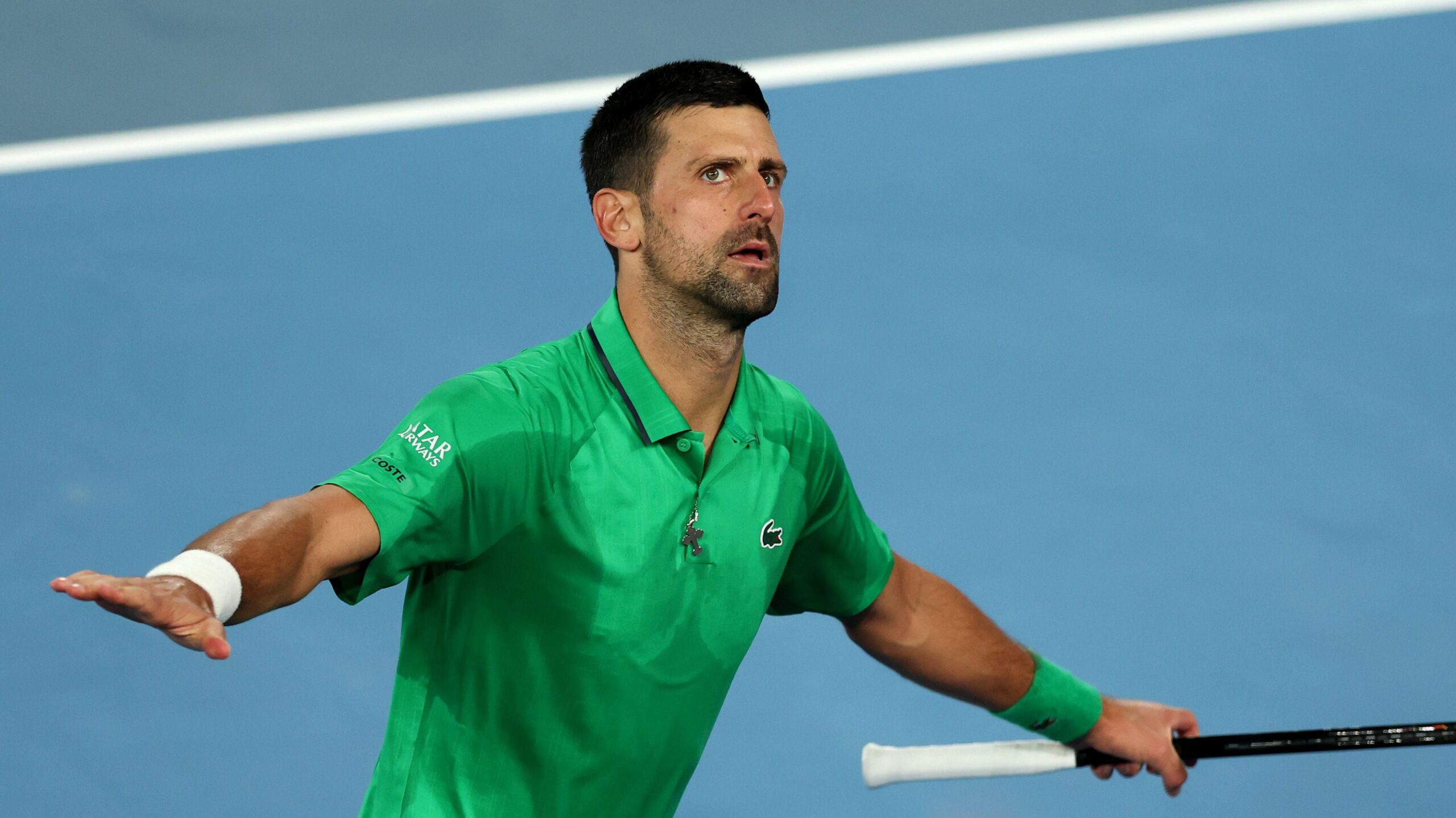
Firstly, fourth seed Djokovic had a narrow escape when he recklessly cracked a ball close to a ball girl during his third-round win over Botic van de Zandschulp.

Djokovic admitted afterwards he was “lucky”. Had the ball struck the girl, he would almost certainly have been defaulted and seen another attempt at number 25 aborted by his own carelessness.

Secondly, Djokovic was handed a walkover on Sunday following injured opponent Jakub Mensik’s withdrawal from their last-16 match.

For some players, going three days without a match can leave them cold.

Given Djokovic’s advancing years and ability to find his best form without playing regularly, it feels like a bonus heading into Wednesday’s quarter-final.

Feeling fresher by playing a match fewer than future opponents – Lorenzo Musetti in the quarter-finals on Wednesday, then potentially Carlos Alcaraz and Jannik Sinner – could be crucial.

Thirdly, Djokovic knows his aura – as well as his game – has overawed Musetti in the past, ensuring he remains the favourite to reach the last four.

    • 4 hours ago

While there are positive signs, it is obvious some conundrums remain the same for Djokovic.

Whether his ageing body can hold up at the business end of a Grand Slam – even with the benefit of being gifted a round off – remains to be seen.

And the pertinent question has not gone away: will Djokovic have enough in the tank to potentially beat Alcaraz and Sinner back-to-back?

Alcaraz and Sinner have won the past eight Grand Slams between them, a run going back to Djokovic’s victory at the 2023 US Open, and both remain in the men’s draw.

Djokovic is not delusional. He knows 22-year-old Alcaraz and 24-year-old Sinner are a cut above the rest, but retains belief he can oust them.

Last year, Djokovic reached the semi-finals of all four majors – a remarkable feat which showed he remains that duo’s nearest challenger based on ability.

The physical durability needed to land his 25th major was missing.

Djokovic beat Alcaraz in the Australian Open quarter-finals, but the effort expended in fighting through a hamstring injury ruined his chances of challenging Alexander Zverev.

Suffering a leg injury in the French Open semi-final against Sinner harmed his chances, then he considered retiring from their Wimbledon semi-final because of a groin problem.

    • 5 hours ago
    • 4 hours ago

“On [any] given day when I’m feeling good physically and mentally, when I’m playing well, I can challenge anybody, and I still believe I can beat all of them,” said the Serb.

“If that’s not the case, I wouldn’t be here.”

Djokovic has attempted to release pressure – internally and externally – by claiming he does not see this latest Melbourne tilt as “make or break” for his chances of surpassing Court.

Some believe Djokovic will not win another major again if he does not lift the Australian Open title on Sunday.

That still feels a foolish prediction, especially given his nous and experience on the Wimbledon grass.

By that point, though, he will be into his 40th year. He turns 39 in May.

But would you dare rule Djokovic – a man who has made a career of achieving the seemingly unachievable – out of anything?

Related topics

  • Tennis

More on this story

  • Some tennis balls
    • 16 August 2025
    BBC Sport microphone and phone