Fears of a US attack on Iran are again heightened after Donald Trump demanded Tehran submit to his demands or face an attack “like with Venezuela.”
Trump says US ready to attack Iran with ‘speed and violence’

Fears of a US attack on Iran are again heightened after Donald Trump demanded Tehran submit to his demands or face an attack “like with Venezuela.”
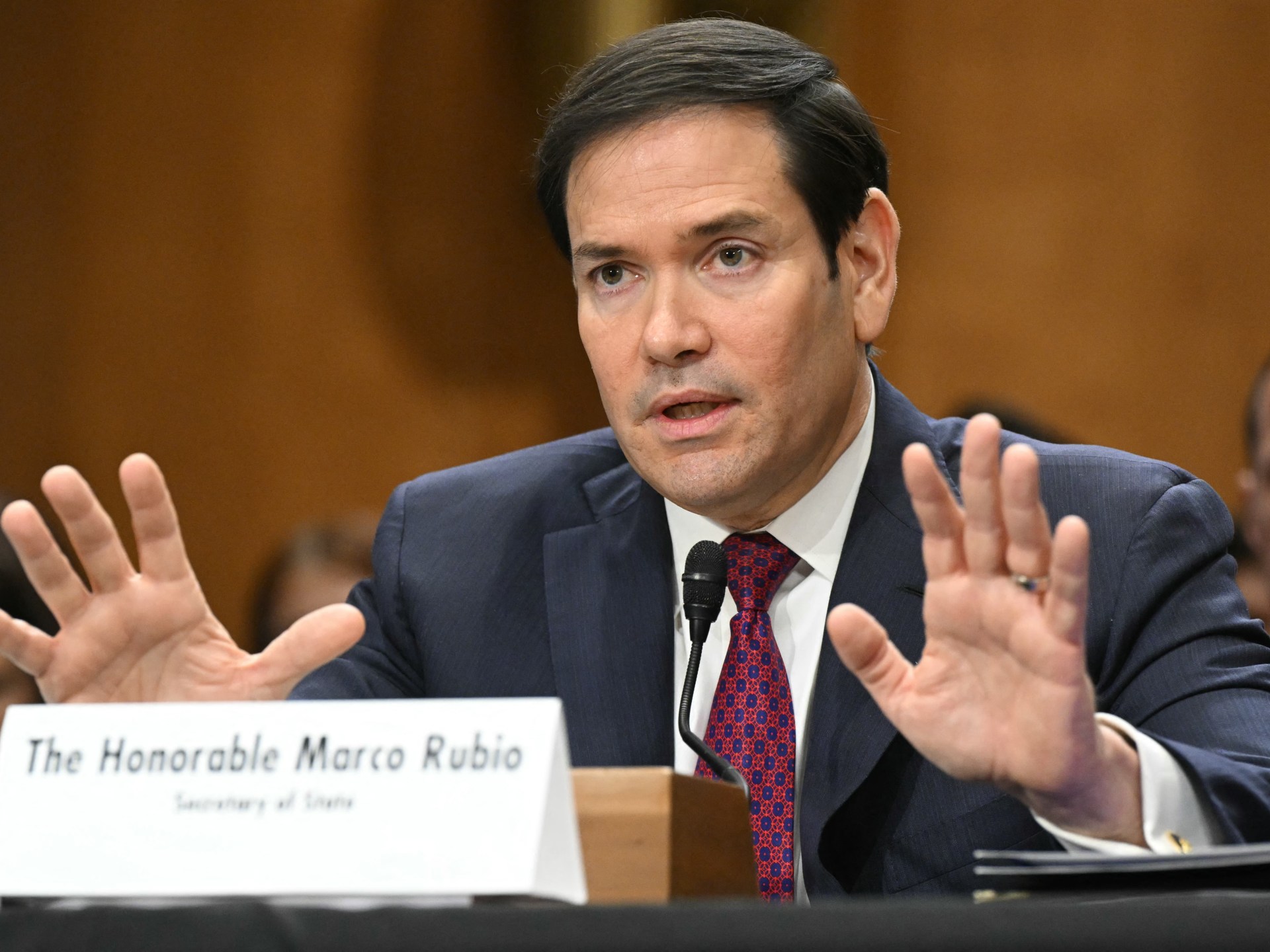
Secretary of State Marco Rubio has defended the United States abduction of Venezuelan leader Nicolas Maduro before a Senate committee, arguing the operation did not constitute an act of war while framing the attack as a strategic necessity.
The hearing before the Senate Foreign Relations Committee on Wednesday offered the latest window into the administration’s thinking behind the extraordinary January 3 abduction of Maduro, who remains in a New York prison awaiting drug trafficking and narco-terrorism conspiracy charges.
list of 3 itemsend of list
Rubio began the hearing by underscoring the operation as a “strategic” necessity for the Trump administration, while downplaying what United Nations Experts have decried as a flagrant violation of international law.
Rubio described Venezuela under Maduro as a “base of operation for virtually every competitor, adversary and enemy in the world”. He listed Venezuela’s alleged ties to Iran, Russia and Cuba.
“[Having Maduro in power] was an enormous strategic risk for the United States, not halfway around the world, not in another continent, but in the hemisphere in which we all live, and it was having dramatic impacts on us, but also on Colombia and on the Caribbean Basin and all sorts of other places,” he told lawmakers.
“It was an untenable situation, and it had to be addressed, and now the question becomes what happens moving forward,” he said.
Rubio said the US had three objectives in the South American country, the culmination being “a phase of transition where we are left with a friendly, stable, prosperous Venezuela – and democratic”.
In that, Rubio defended the decision of US President Donald Trump to continue working with the government surrounding Maduro, including interim President Delcy Rodriguez, while not initially supporting an opposition takeover.
Rubio said the first objective was avoiding civil war in Venezuela and aiming to “establish direct, honest, respectful, but very direct and honest conversations with the people who today control the elements of that nation”.
He said the second objection aims for “period of recovery … and that is the phase in which you want to see a normalised oil industry”.
Speaking before Rubio, Senator Jeanne Shaheen, the top Democrat on the Senate, focused little on the wider international law implications of the Trump administration’s approach to Venezuela.
Instead, she emphasised the cost, noting that the military operation and ongoing naval blockade have been estimated by some outside analysts to cost $1bn.
“So it’s no wonder that so many of my constituents are asking, why is the president spending so much time focused on Venezuela instead of the cost of living and their kitchen table economic concerns?”
Senator Rand Paul, a Republican, was more direct, asking Rubio is the operation against Maduro constituted an act of war.
“We just don’t believe that this operation comes anywhere close to the constitutional definition of war,” Rubio responded, arguing that Maduro’s election in 2024 had been contested and that he had been indicted on US drug trafficking charges.
Paul, who has been a vocal advocate of passing legislation asserting congressional oversight over future actions in Venezuela, described the arguments as “empty”.
During his testimony, Rubio appeared to downplay the prospect of future attacks on Venezuela, even as a blockade on sanctioned oil tankers remains in effect and US military assets remain surged to the region.
“We are not postured and do not expect to take military action,” Rubio said. Still, he declined to rule out future strikes to protect US interests.
The secretary of state also laid out plans for Venezuela’s oil industry, which has been a key emphasis of the Trump administration.
He said Washington and Caracas reached an agreement that “on the oil that is sanctioned and quarantined, we will allow you to move it to market … In return, the funds from that will be deposited into an account that we will have oversight over, and you will spend that money for the benefit of the Venezuelan people.”
He called the plan a “short-term mechanism”.
“And so we have created that, we hope to do is transition to a mechanism that allows that to be sold in a normal way, a normal oil industry, not one dominated by cronies, not one dominated by graft and corruption,” Rubio added.
He further hailed a law passed by Venezuela’s legislature that allows for more international access to the country’s oil industry.

Fulham have agreed a £27m deal with Manchester City to sign Oscar Bobb.
BBC Sport reported this week that a deal between the two clubs was close and well-placed sources have confirmed an agreement has now been struck for the attacker to join Fulham.
Sources say City will retain a 20% sell-on clause, as well as matching rights for any future bids received by the Cottagers.
Bobb has fallen down the pecking order at City after the January arrival of Antoine Semenyo from Bournemouth.
“I know there are rumours, I know there are talks,” manager Pep Guardiola said on Saturday after City’s win over Wolves.
Asked if Bobb wants to leave the club, Guardiola replied: “I think so.”
Bobb, who has also had interest from Bundesliga side Borussia Dortmund, has featured 15 times for City this season without scoring.
He last played on 17 December against Brentford in the Carabao Cup, when he hobbled off injured inside the opening 20 minutes.
Fulham have lost only one of their last seven Premier League games under Silva and sit seventh in the table following their 2-1 win over Brighton on Saturday.
Bobb has featured six times for Norway this year, helping them qualify for this summer’s World Cup, and would unite with compatriot Sander Berge at Craven Cottage.
He missed almost the whole of last season after fracturing a bone in his leg during training in August 2024.
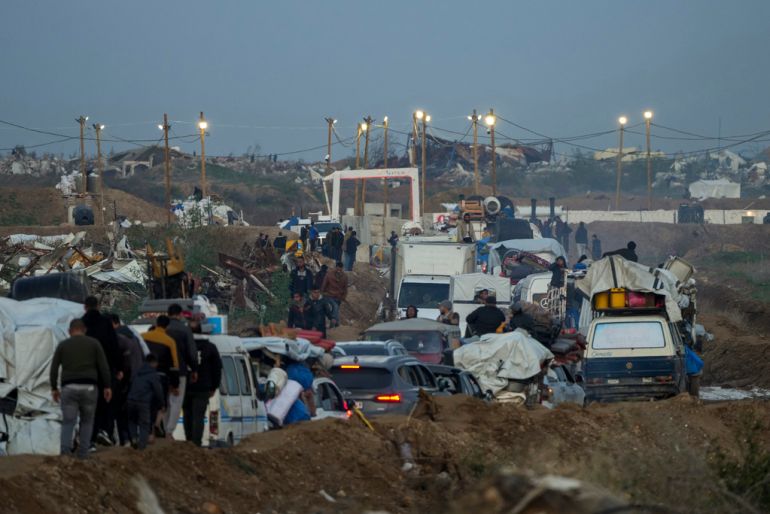
The United Kingdom’s controversial rollout of facial recognition technology will rely on software that appears to have already been deployed in Gaza, where it is used by the Israeli army to track, trace, and abduct thousands of Palestinian civilians passing through checkpoints.
Home Secretary Shabana Mahmood announced on Monday that British police would massively increase the use of facial recognition technology used for surveillance purposes.
list of 3 itemsend of list
Enquiries by Al Jazeera to the Home Office’s procurement agency, Blue Light Commercial, confirmed that the Israeli-based firm Corsight AI had been subcontracted by UK company Digital Barriers to provide the artificial intelligence-powered facial recognition software.
Under the Home Office’s proposals, the UK’s current fleet of 10 live facial recognition vans will be expanded to more than 50, which will be deployed nationwide to identify individuals on police watchlists, raising fears over civil liberties among campaigners and concerns about its accuracy among Israeli intelligence operatives who have used it in Gaza.
Announcing their selection as one of three suppliers of the software in April, following a six-month trial by police in Essex, Digital Barriers confirmed that it and its subcontractor, Corsight, had been selected to be part of what it said was a 20 million pounds ($27.6m) roll-out.
However, despite the UK government’s belated – if tempered – criticism of Israel’s actions in Gaza, where it has widely been accused of committing genocide, it has pressed forward in partnering with a firm that has operated as part of Israel’s surveillance architecture in Gaza.

Essex police previously declined to comply with a Freedom of Information request granted to the advocacy group Action on Armed Violence (AOAV) in April 2025, asking if their officers had met directly with representatives of Corsight. Essex police claimed that determining that information would exceed cost and time limits, a statement from AOAV read.
In March 2024, more than a year before Corsight and Digital Barriers were selected by the UK government, the New York Times reported that Corsight technology was being deployed in Gaza by the Israeli cyber-intelligence division Unit 8200. However, misgivings over its accuracy, including the wrongful arrest and detention of hundreds of Palestinians, led to a number of Israeli security officials expressing their doubts about the system to reporters.
Israel has been repeatedly criticised for its use of artificial intelligence in Gaza, including the use of AI to identify bombing targets.
Corsight’s website shows its board of directors includes a former Israeli intelligence officer, Igal Raichelgauz. Other members include a former Israeli security, or Shin Bet, officer, Yaron Ashkenazi, and retired Major-General Giora Eiland, who is said to have given his name to the so-called “General’s Plan“, to isolate and starve northern Gaza in October 2024.
The conditions imposed upon northern Gaza as a result of that plan are thought to have killed more than a thousand people, through either direct bombardment, sickness or starvation, and reduced the area’s healthcare system to rubble.

Shortly after the imposition of the siege, the UK took issue with Israeli actions, condemning them
at the United Nations. Also writing at the time, the UK’s former Foreign Secretary David Lammy criticised Israel’s tactics of siege and starvation, describing the conditions that Israel had imposed upon northern Gaza as “dire” and urging for aid to be allowed in.
Responding to the news of Corsight’s involvement in the UK police scheme, Amnesty International’s UK Crisis Response Manager, Kristyan Benedict, said, “The UK government has clear legal obligations to help prevent and punish genocide and is still scandalously failing to meet its responsibilities.”
“The government must ban investments in companies and financial institutions contributing to maintaining Israel’s genocide, unlawful occupation, and system of apartheid, including companies involved in weapons production, surveillance, and policing equipment or technology,” Benedict added.
Al Jazeera has written to the UK home secretary to ask what, if any, due diligence was carried out in selecting partners for their rollout of facial recognition technology, but has yet to receive a response.

Interim manager Martin O’Neill is “disappointed” the Scottish FA fast-track tribunal rejected Celtic’s appeal against Auston Trusty’s red card against Heart of Midlothian.
The United States centre-half brought down Hearts striker Pierre Landry Kabore on Sunday and was initially shown a yellow card by referee Steven McLean.
The video assistant referee advised an on-field review and McLean deemed Trusty had denied a goalscoring opportunity, so upgraded the yellow card to red.
Hearts then equalised to earn a draw that maintained their six-point lead over the defending champions in the Scottish Premiership.
The decision of the officials was backed by the SFA’s fast-track tribunal on Tuesday, and Trusty will be suspended for this weekend’s game against Falkirk.
Celtic said they “will be ensuring further discussions with the SFA” as they “seek to understand the rationale for this and other decisions”.
O’Neill, who insisted after the game he “did not see” how it could be a red card, said on Wednesday that “it was nice to get the backing of a lot of referees who’ve refereed big, big matches when they were interviewed afterwards”.
“I never had a problem with it in my first spell here 25 years ago, never had a problem at all with it all – I just expected no decisions to come our way!” joked the 73-year-old when asked about the standard of refereeing in Scotland.
“I have a lot of paranoia about me. I’m seeing a shrink at the moment it. I’m perfectly all right… but he’s not.”
O’Neill, in interim charge for a second period this season, conceded that Celtic “obviously need to strengthen the squad” before the winter transfer window closes.
“It’s what we are trying to do. Whether we have anyone in before the weekend I don’t know, but we are making strenuous efforts,” he added.
“I think we can do something, the days are pressing but I’m hopeful. I’m reasonably confident we can do it.
“If we get through in the Europa League there are at least a couple of games, and you need a proper squad for that.
Celtic face Utrecht at home in the Europa League knowing a win would seal a place in the knockout rounds.
Celtic have eight points and are in 24th in the table, the last play-off spot, and face 34th-place Utrecht in their final match.
A draw would not be enough to progress if Ludogorets, Feyernood and Basel won, while Steaua Bucharest and Go Ahead Eagles could also finish above Celtic with handsome wins.
If Celtic lose, Ludogorets would just need a draw to leapfrog Celtic because of their superior goal difference.
“We’ve put ourselves in this position. We have to win, it’s as simple as that,” said O’Neill, who confirmed Kelechi Iheanacho trained on Wednesday and is available for selection.
“If we do, then we get through – but it’s not as easy as that. Despite their recent record, these boys can play. I’ve had a look at them.
“They are a very decent side who come here with nothing to concern themselves – just coming to enjoy themselves, and that’s dangerous.


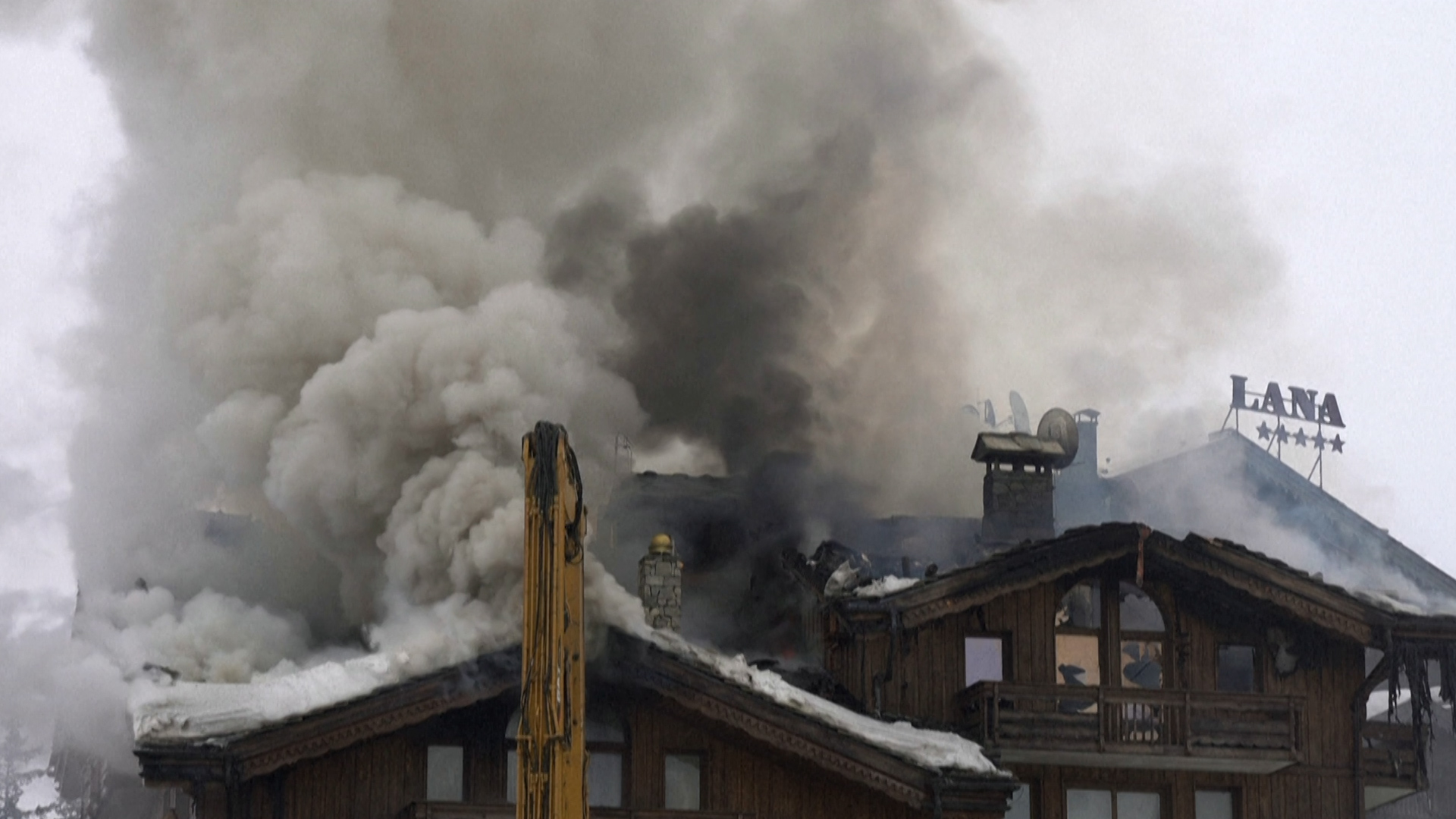
An intense fire tore through the five-star Les Grandes Alpes hotel in Courchevel in the French Alps, forcing the evacuation of nearly 300 people. Over 100 firefighters battled flames spreading under the roof.