Archive January 28, 2026

Fresh or undercooked? Djokovic unsure where fortune leaves him

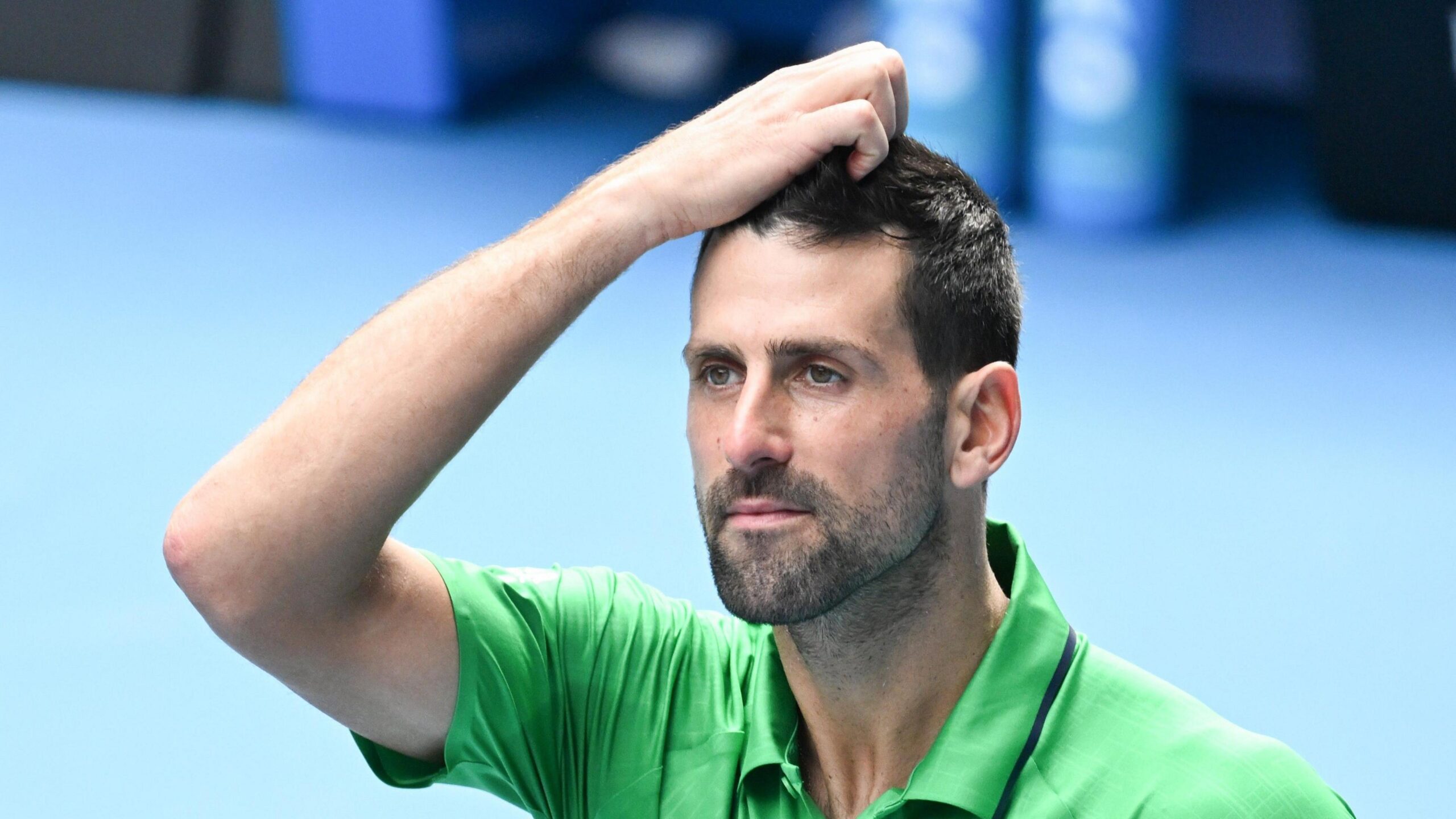
Novak Djokovic is planning to double his thanks tonight.

Partly in gratitude for what has happened so far at the Australian Open. Partly in hope for what lies ahead as he chases a record 25th Grand Slam singles title.

Djokovic could not hide his relief when Italian fifth seed Lorenzo Musetti, who led their quarter-final by two sets to love, had to quit with injury.

It was more fortune for the 10-time Melbourne champion, having already received a fourth-round walkover when Czech opponent Jakub Mensik withdrew with an abdominal issue.

Feeling fresh is a positive for the 38-year-old Serb going into Friday’s semi-final against Jannik Sinner.

But equally, being undercooked against the 24-year-old Italian, who is bidding for a third straight title, is a worry.

Djokovic has played just two sets since his third-round win on 24 January – and he lost both of those.

    • 1 hour ago
    • 2 hours ago

Djokovic says he largely feels fine physically, with a blister on his foot his biggest concern.

It is a marked difference to some of his previous Australian Open campaigns.

Last year, he quit in the semi-finals because of a hamstring tear sustained in a super-human effort to beat Carlos Alcaraz in the previous round.

In 2023, he won the title despite playing with a three centimetre tear in his hamstring.

Two years earlier, he also triumphed despite tearing an abdominal muscle in the third round.

Djokovic cannot afford any physical issues if he is going to beat Sinner and then potentially 22-year-old Alcaraz in Sunday’s final.

“You always have some minor issues with your body, at least for me every single day,” Djokovic said.

“But major issues, no. Thankfully, that’s still not posing a challenge for me and obstacle in order for me to be able to play and move around the way I want to.”

Djokovic feels being injury-free is a stroke of luck as he attempts to become the oldest Grand Slam men’s champion in the Open era.

Considering his meticulous pursuit of almost every record there is in the sport, it feels wrong to put anything Djokovic down to fortune.

But avoiding a default in the third round, followed by a walkover and then a retirement, is an enviable pattern.

Against Musetti, Djokovic also recovered from falling victim to his own exemplary sportsmanship.

As he served to stay in the second set, Djokovic conceded a point by admitting to umpire James Keothavong he touched a ball on its way out. The Italian would go on to claim the game.

“I’m going to double my prayers tonight,” Djokovic said.

There is no doubt Djokovic needs to be sharper both technically and mentally if he is to end Sinner and Alcaraz’s recent dominance at the majors.

Musetti was superb against Djokovic, but there was no escaping the fact the Serb was poor by his lofty standards.

“I think I’ve underperformed for the level that I showed throughout this tournament,” Djokovic added.

“I have to play better – no doubt about it.

Related topics

  • Tennis

More on this story

  • Some tennis balls
    • 16 August 2025
    BBC Sport microphone and phone

Ireland replace Aki for ‘disciplinary reasons’

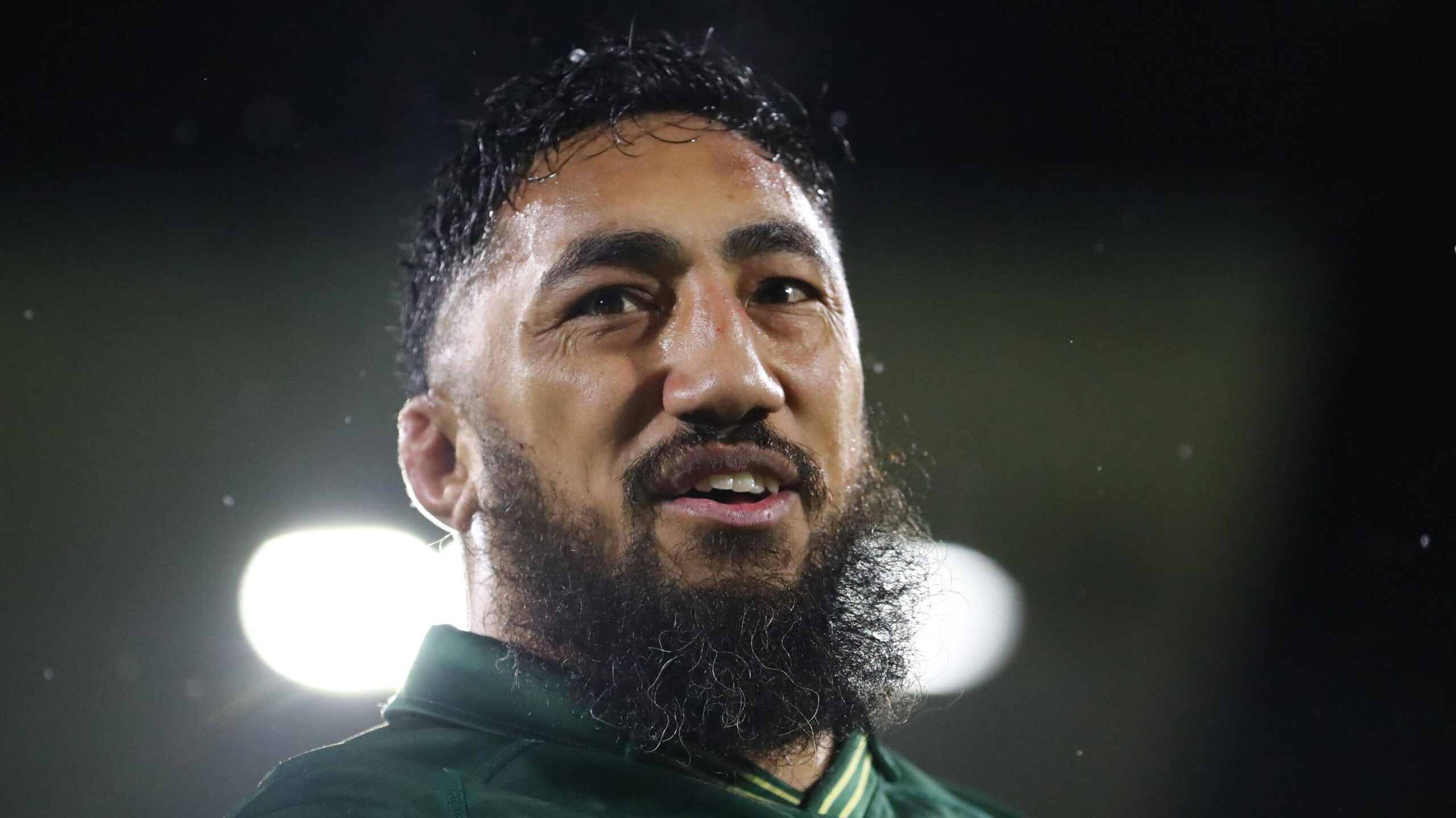
Bundee Aki has not travelled with the Ireland squad for their Six Nations training camp in Portugal, with the Connacht centre the subject of a misconduct complaint after his side’s defeat by Leinster on Saturday.

The 35-year-old, a World Rugby player of the year nominee in 2023, is “alleged to have engaged with the match official team on several occasions in a manner which may be deemed to be in breach of the league’s disciplinary rules” during the United Rugby Championship (URC) loss.

He will face an independent disciplinary committee on Wednesday.

Andy Farrell’s side take on France in Paris on 5 February to begin the Six Nations and Aki has been replaced in the squad by Ulster’s uncapped centre Jude Postlethwaite.

An Irish Rugby Football Union (IRFU) statement said: “The IRFU does not tolerate any form of disrespect shown towards match officials and does not condone actions that fall below the standards expected of players representing Irish rugby.”

“The IRFU are investigating the matter further internally and no additional comment will be made at this time.”

Ireland have already lost two players from the 37-man squad named by Farrell last week.

Prop Jack Boyle was injured playing for Leinster against Connacht, while Munster flanker Tom Ahern has also pulled out.

Related topics

  • Irish Rugby
  • Rugby Union
  • Ireland Rugby Union

Sudan’s war displaced crisis peaks as millions eye return to ruined homes

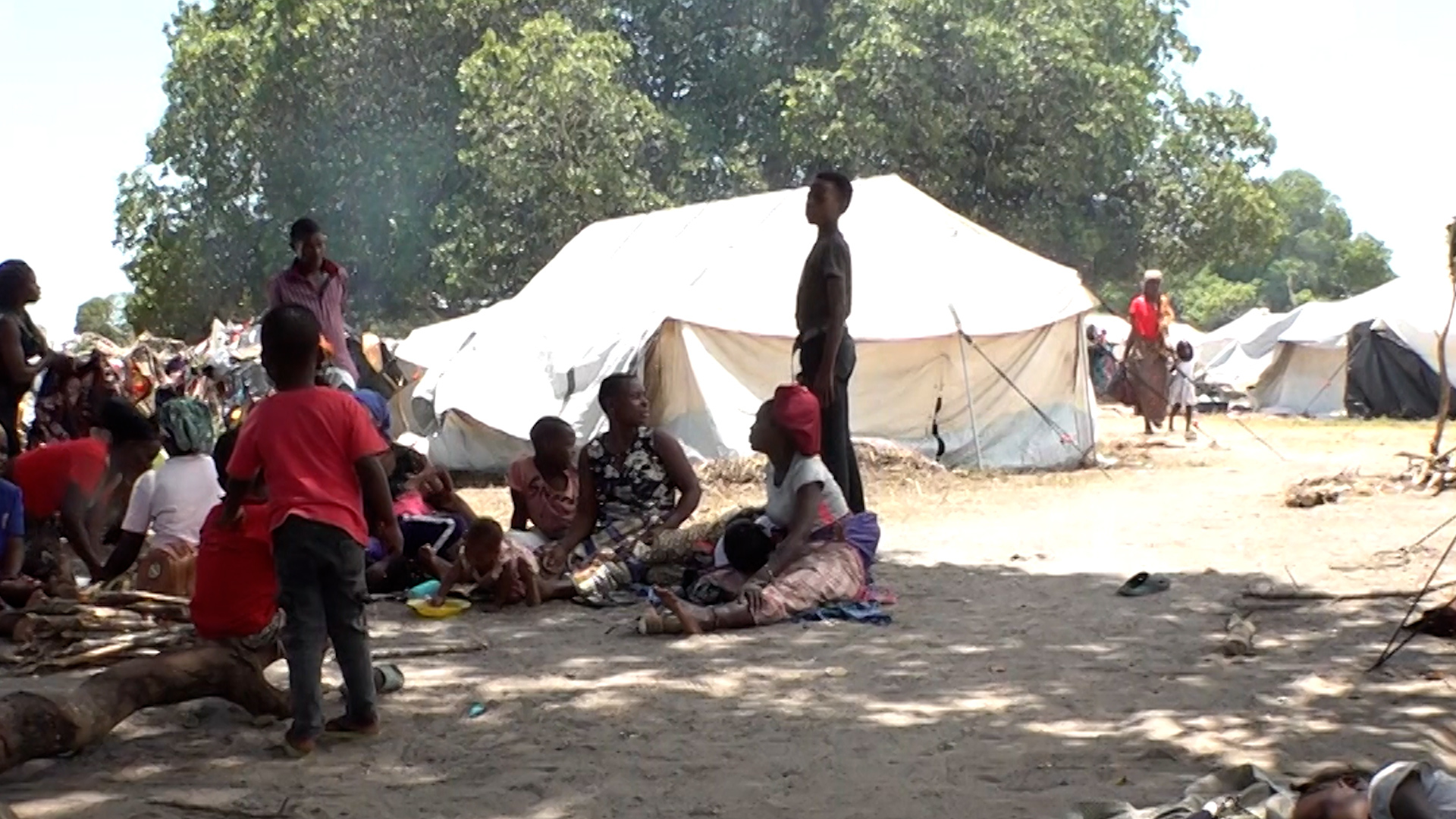
Sudan has moved to the forefront of the global humanitarian landscape, now hosting the world’s largest internal displacement crisis. According to the United Nations refugee agency (UNHCR), approximately 14 million people have been forced from their homes within the country.

These staggering figures in Sudan are part of a broader global surge in forced displacement. UNHCR estimates suggest the number of forcibly displaced people worldwide exceeded 122 million by the first half of 2025.

However, amid geopolitical shifts sweeping the Middle East, a countertrend has emerged. For the first time in a decade, the global number of displaced persons dropped by 5.9 million by mid-2025. This shift raises critical questions: what drives people back to conflict zones, and how do they survive in the ruins?

Al Jazeera Arabic spoke with experts, officials and returnees to understand the “Khartoum case” – a phenomenon where civilians are trickling back to the Sudanese capital despite the destruction, driven by nostalgia and a fragile sense of stability following the government’s recent return to the city.

A region in flux

While the global numbers show a slight decline, the regional reality remains grim. The conflict between the Sudanese army and the Rapid Support Forces (RSF), which erupted in April 2023, has placed immense pressure on infrastructure across all Sudanese states.

Elsewhere in the region, the situation is equally dire. In the Gaza Strip, internal displacement affects nearly two million people—the vast majority of the population. Many have been displaced multiple times due to the Israeli offensive that began in October 2023.

Adnan Abu Hasna, media adviser for the UN agency for Palestinian refugees (UNRWA), describes the situation in Gaza as unique. With 90 percent of homes, schools and infrastructure destroyed, Abu Hasna notes that 2.5 million Palestinians are, in effect, homeless, making a return to normalcy “almost impossible” amid total destruction.

Meanwhile, protracted conflicts continue to drive displacement figures in Syria, where 12 million remain displaced, and in Yemen, where the number exceeds five million.

The Khartoum experiment

Khartoum presents a unique case study in the dynamics of return. The recent resumption of government operations from the capital has sent a signal of potential stability.

Adel El-Baz, director-general of the African Centre for Consulting, views the government’s return as a “direct invitation” for citizens to follow suit. Major-General Osama Abdel Salam, former director of the Centre for Strategic Studies and Research, argues that the return of civilians naturally enhances security.

“The filling of abandoned neighbourhoods with residents reduces the risk of negative phenomena, prevents theft and spreads an atmosphere of reassurance,” Abdel Salam explained.

However, the infrastructure challenge is monumental. Saad El-Din El-Tayeb, spokesperson for Khartoum State, told Al Jazeera that the government has spent more than a year attempting to clear the debris of war.

“We began by cleaning the cities of bodies and burnt vehicles, restarting water stations, and rehabilitating power distribution lines,” El-Tayeb said.

He highlighted that Khartoum suffered the “largest looting operation” of its electrical infrastructure in history. Approximately 15,000 electrical transformers were stripped, with looters targeting the copper in underground cables and motors. Despite this, El-Tayeb noted that authorities are diverting available electricity to critical facilities like hospitals and water stations, while encouraging the use of solar energy.

‘Nostalgia’ amid the ruins

For the displaced, the decision to return is often emotional rather than practical. Rimah Hamed, a dentist and journalist, fled Khartoum for Gezira State and later Egypt when hospitals closed and security collapsed.

She recently returned to her family home in Khartoum. “The primary motivation was nostalgia,” Hamed told Al Jazeera. “The Sudanese character is sentimental. People returned because they missed their homes.”

Hamed found her neighbourhood transformed. Her house was empty, stripped of essential items, with no running water or electricity.

“There was only one water source in the neighbourhood where everyone went to fill up,” she recalled. “But gradually, neighbours started coming back. The neighbourhood began to regain its social features, and life returned little by little.”

Hamed observed that the community had developed a “psychological immunity” to the harsh conditions, adapting to shortages through grassroots initiatives.

Prerequisites for peace

While emotional ties drive some to return, sustainable reintegration requires tangible resources. Tom Ndahiro, a Rwandan genocide researcher, suggests that “relative peace” is the baseline requirement – a sense that the situation has improved enough to survive the night.

Experts interviewed by Al Jazeera outlined a hierarchy of needs for a sustainable return:

  • Security: A trusted leadership to organise resettlement and prevent chaos.
  • Shelter: Even temporary structures like tents, provided they offer safety.
  • Essentials: Food security and access to clean water are non-negotiable.
  • Power: Electricity is viewed as the decisive factor for economic stability.

Rami Mahkar, a journalist, emphasised that security must come first. “Without security, the displaced are forced to move again,” he said, adding that the presence of functioning shops for food and supplies is critical for those trying to rebuild their lives.

Who was Ajit Pawar, the Indian politician killed in plane crash?

A private plane carrying Ajit Pawar, the deputy chief minister of India’s Maharashtra state, crashed on Wednesday, killing him and four other people on board, authorities said.

The aircraft was en route to Baramati, Pawar’s home city, from India’s financial capital of Mumbai when it crash-landed in an open field and burst into flames some 254km (159 miles) from the state capital.

Recommended Stories

list of 2 itemsend of list

The reason behind the crash was not immediately known, and an investigation is under way.

Who was Ajit Pawar?

Pawar, 66, was a key political figure and served as the second-highest elected official in Maharashtra, India’s wealthiest state.

He was an ally of Prime Minister Narendra Modi’s Bharatiya Janata Party (BJP) ‌in the state government, leading a faction ⁠that split in 2023 from the opposition Nationalist Congress Party (NCP).

He wielded considerable influence in the state’s sugar belt and was known for his ability to mobilise rural voters.

Born on July 22, 1959, Pawar started his political career with the Indian National Congress, commonly known as the Congress party, in the late 1980s, influenced by his uncle Sharad Pawar, according to a report in India’s The Hindu newspaper.

In 1991, he was first elected as a member of the Maharashtra Legislative Assembly from the Baramati constituency, which he represented for a record eight terms.

In 1999, when his powerful uncle formed the NCP, Pawar joined it and served several terms as Maharashtra’s deputy chief minister in coalitions led by the NCP over the past two decades.

In 2019, Pawar briefly left the NCP to join the BJP’s cabinet in Maharashtra as a deputy chief minister. He later returned to the party and, in 2023, orchestrated a split within the NCP by aligning with the BJP-led coalition.

In February 2024, the Election Commission of India acknowledged Ajit Pawar’s faction as the official NCP. The same year, he was sworn in as Maharashtra’s deputy chief minister for a sixth time.

Ajit Pawar India
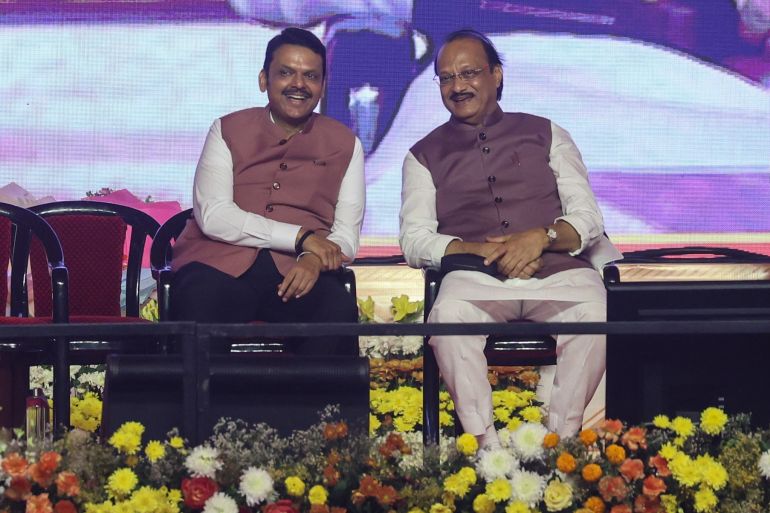
Ajit Pawar, right, with Maharashtra Chief Minister Devendra Fadnavis [File: Divyakant Solanki/EPA]

What’s Pawar’s legacy?

Pawar’s contribution to the development of his region was significant, said a report in The Indian Express newspaper, particularly in Maharashtra’s Pimpri-Chinchwad area, where he pushed “large-scale infrastructure projects, including wider roads and improved civic facilities”.

Baramati especially underwent a makeover, with several infrastructure projects attributed to him, as he supervised the development of his bastion with his uncle, Sharad Pawar.

However, Pawar was also accused of corruption in two prominent cases.

In an alleged Maharashtra irrigation scam, he was accused of involvement in irregularities in awarding contracts worth millions of dollars for civic projects between 1999 and 2009.

Last year, he was named in a land scam in Maharashtra’s Pune city, with a company owned by his son accused of buying reserved government land below the market value. Upon uproar, the deal was scrapped.

Government inquiries into both the alleged scams remain inconclusive.

How did Pawar die?

Pawar’s aircraft, travelling from Mumbai, tried to make an emergency landing in the family stronghold of Baramati, where he was set to canvass ‍in the local elections.

The VSR Ventures-operated Learjet 45 aircraft crashed in an open field at about 8:30am (03:00 GMT) while landing at Baramati airport, local media reported.

The charter aircraft went down in flames, said the Directorate General of Civil Aviation (DGCA), India’s aviation regulator.

Videos from the crash site showed smoke billowing from some of the burning wreckage of the plane, scattered across the open field.

“At first it was ‌on fire, after that there were four or five more explosions,” an unidentified witness told India’s ANI news agency, after seeing the plane crash and explode. But the flames were ‌too fierce to pull anyone out, he added.

Pawar was travelling with his personal security officer, an assistant, and two crew members at the time of the crash, the DGCA said.

VK ⁠Singh, the director of VSR Ventures, told broadcaster India Today the cause of the crash was not clear.

“The aircraft is 100 percent safe,” he said. “The crew was fairly experienced.”

What have been the reactions?

PM Modi described Pawar as a “leader of the people” in a post he shared on X. He said Pawar’s “untimely demise” was “shocking and saddening”.

“Shri Ajit Pawar Ji was a leader of the people … [with] a strong grassroots level connect,” Modi said, adding that he was a “widely respected” and “hardworking” political stalwart.

“His understanding of administrative matters and passion for empowering the poor and downtrodden were also noteworthy.”

Rahul Gandhi of the Congress party also posted his condolences on X, calling Pawar’s death “extremely painful”.

“I am with the people of Maharashtra in this hour of grief,” he wrote.

Maharashtra’s Chief Minister Devendra Fadnavis said he had “no words to express my emotions”.

West Ham sign winger Traore from Fulham

  • 48 Comments

West Ham have signed winger Adama Traore from Fulham in a deal worth up to £2m.

The 30‑year‑old moves from west to east London, where he reunites with Nuno Espirito Santo, who managed him at Wolves.

The deal, worth an initial £1m, could rise to £2m with add-ons and runs until the end of the season with the option of a further year.

Capped eight times by Spain, Traore has made just two Premier League starts for Fulham this season and was not involved in their 2–1 win at home to Brighton on Saturday.

“I’m so happy to be here, so happy to help the team the maximum I can and show my quality,” said Traore.

“My mentality is always to do better. It’s always to improve as a player, to help the team as much as I can and I always say, if I’m the same person as yesterday, it’s one day lost.

Traore’s final appearance for Fulham was in the 3-1 victory against Middlesbrough in the FA Cup on 10 January.

Having started his career at Barcelona, Traore had spells at Aston Villa, Middlesbrough and Wolves before joining Fulham in 2023 on a free transfer.

West Ham have been among the most active teams in the January transfer window, signing forwards Pablo Felipe from Gil Vicente for £20m and Taty Castellanos from Lazio for £25.2m.

They are also in talks to sell midfielder Lucas Paqueta to Flamengo, having already sold Guido Rodriguez to Valencia and Luis Guilherme to Sporting, while German Niclas Fullkrug has joined AC Milan on loan.

Related topics

  • West Ham United
  • Premier League
  • Football Transfers
  • Football

More on this story

  • West Ham Stadium
  • Ask Me Anything  logo