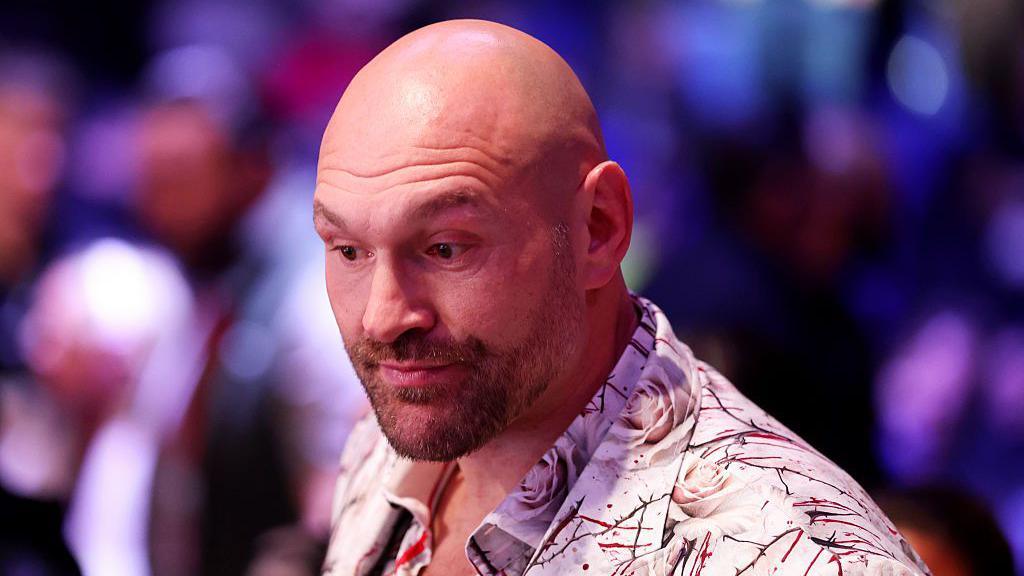
Former heavyweight world champion Tyson Fury will face Arslanbek Makhmudov in the UK on 11 April as he ends his latest spell of retirement.
The fight, which will be broadcast on Netflix, will be Fury’s first since he lost his rematch with unified champion Oleksandr Usyk in December 2024.
The Briton, 37, retired a month after that defeat but announced his return to boxing earlier this month.
“Excited to be back,” Fury said.
“Heart’s always been and always will be in boxing. Someone go tell the king that the ace is back!”
Fury, who announced his retirement for the first time in 2022, has not fought in the UK since December 2022 when he beat Derek Chisora at Tottenham Hotspur Stadium to retain the WBC title.
The Morecambe fighter has 34 victories from 37 fights – winning 24 by knockout – losing two and drawing one.
He has enjoyed two stints as world champion, beating Wladimir Klitschko to win the WBA (Super), IBF and WBO belts in 2015 and claiming the WBC title in 2020 with victory over Deontay Wilder, but has never reigned as undisputed champion.
Authorities in India say they’re investigating the cause of a plane crash that killed Ajit Pawar, the deputy chief minister of India’s Maharashtra state, and four others on board. Here’s what we know so far.
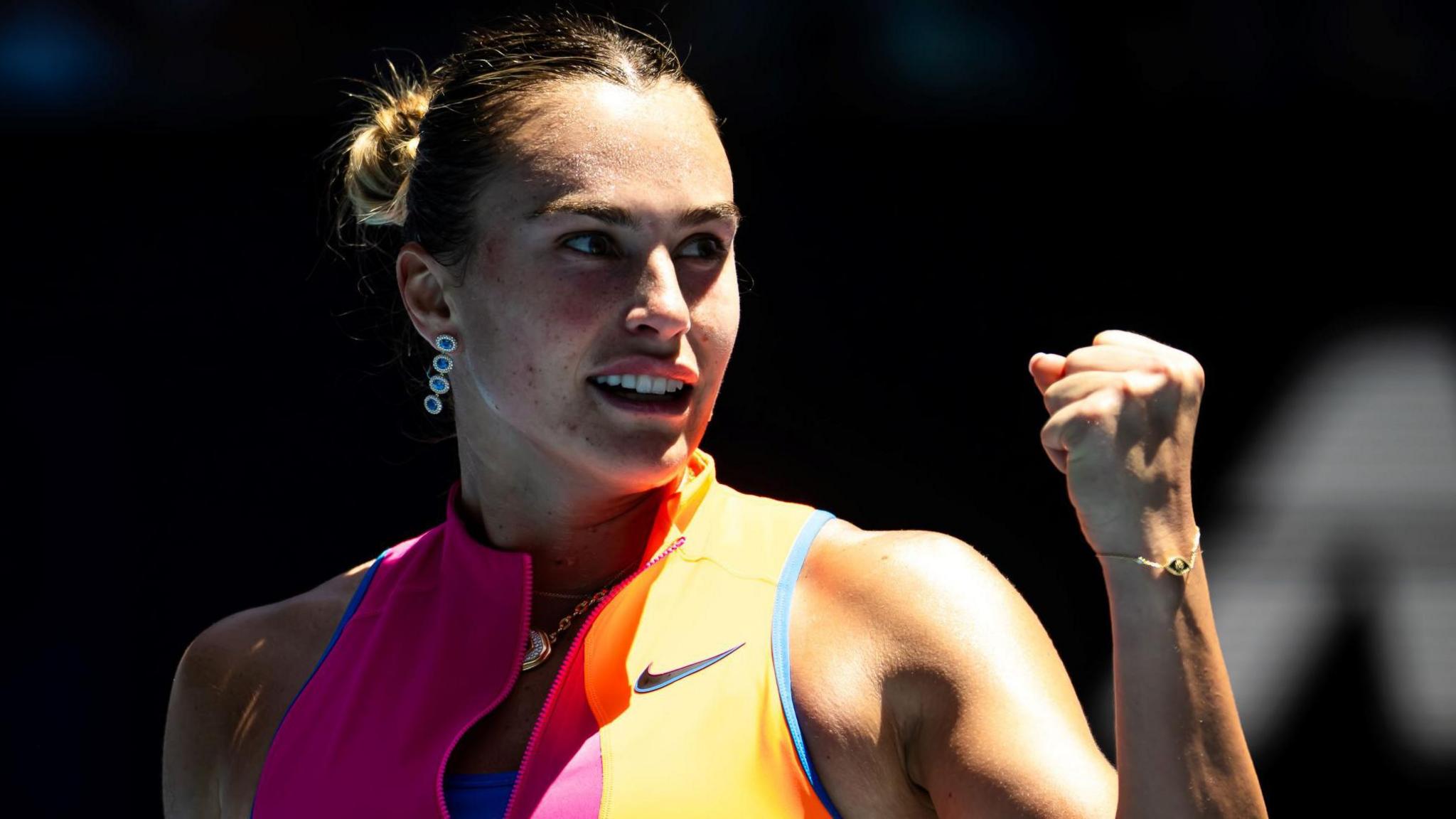
Aryna Sabalenka is two wins away from continuing her reign of dominance at the Australian Open with a third women’s title in four years.
The world number one, champion in 2023 and 2024, has lost just one of her past 25 matches at Melbourne Park.
Having been denied a third consecutive triumph by American Madison Keys in the 2025 final, Sabalenka has not dropped a set on her way to this year’s semi-finals.
Across the sport’s two hard court Grand Slam tournaments, the two-time defending US Open champion has lost just twice in 45 matches on her favourite surface.
She is undoubtedly the favourite – but three fellow top-15 players are looking to spoil the party.
Elina Svitolina ‘looking to take initiative’
Getty Images
Svitolina, through to her first Australian Open semi-final at the age of 31, will hope to defeat Sabalenka for the first time since 2020 and reach a first career Grand Slam final.
Formerly known for her defensive style, Svitolina returned after having daughter Skai in 2022 as a different player, doubling her career total of semi-final appearances over the past three years thanks to a more aggressive approach.
“Since I came back after pregnancy, for me it’s been all about trying to find those opportunities to take the initiative and strike first,” Svitolina said.
Discussing how she will approach her meeting with Sabalenka, she added: “It’s no secret that she’s a very powerful player.
Elena Rybakina ‘ready to take risks’
Getty Images
Big-serving Rybakina would appear to provide the biggest threat to Sabalenka – should they meet in the final – as the only remaining player to boast a positive head-to-head against her.
The 2022 Wimbledon champion has maintained momentum following a strong end to last season, which included victory over Sabalenka to win the WTA Finals.
Rybakina, runner-up three years ago, has won each of her past eight matches against top-10 ranked players – and owns the most wins on the tour since the end of Wimbledon last year (36).
“I still have a lot of things to improve but the most important is that I’m trying to stay aggressive whenever I get the chance to step in, maybe risk a little bit,” Rybakina said.
Jessica Pegula ‘has the tools’
Getty Images
Pegula is through to her third major semi-final, with each appearance coming since she turned 30 in 2024.
Seeking to reach her second Grand Slam final after finishing runner-up to Sabalenka at the 2024 US Open, Pegula said she now feels well-equipped to handle the latter stages of tournaments after feeling “helpless” in past quarter-finals.
“I think I was happy that I was there and then put a little bit too much pressure on myself to get to that next match,” Pegula said.
“But I think I’ve become a better player and I just know how to be in this position more. I think I have more tools.
Can Sabalenka ‘focus on the right things’?
While results might suggest she has enjoyed relatively serene progress, Sabalenka admitted she was “emotionally all over the place” earlier in the tournament.
It has been an issue which has, at times, derailed her pursuit of the sport’s biggest prizes and she has worked with a psychologist to improve that aspect of her game.
Sabalenka lost two Grand Slam finals last year, first to Keys in Melbourne before committing 70 unforced errors in the French Open showpiece against Coco Gauff.
Squeezing through two tight tie-breaks against Anastasia Potapova in the third round was something Sabalenka accepted that she may not have had the mental resilience to achieve five years ago, when she would likely be “focusing too much on the way she feels”.
Even so, Sabalenka’s impressive level of consistency at recent major tournaments – she has reached the semi-finals at 14 of the past 17 majors she has contested – means she is at home at the business end of Grand Slams.
Not least when competing on hard courts, on which she has won her past six major semi-finals.
“It’s unbelievable what I was able to achieve. What’s really helping me to be there all the time is the focus that I’m having,” Sabalenka said.
China is showcasing itself as a solid business and trading partner to traditional allies of the United States and others who have been alienated by President Donald Trump’s politics, and some of them appear ready for a reset.
Since the start of 2026, Chinese President Xi Jinping has received South Korean President Lee Jae Myung, Canadian Prime Minister Mark Carney, Finnish Prime Minister Petteri Orpo and Irish leader Micheal Martin.
Recommended Stories
list of 4 itemsend of list
This week, United Kingdom Prime Minister Keir Starmer is on a three-day visit to Beijing, while German Chancellor Friedrich Merz is expected to visit China for the first time in late February.
Among these visitors, five are treaty allies of the US, but all have been hit over the past year by the Trump administration’s “reciprocal” trade tariffs, as well as additional duties on key exports like steel, aluminium, autos and auto parts.
Canada, Finland, Germany and the UK found themselves in a NATO standoff with Trump this month over his desire to annex Greenland and threats that he would impose additional tariffs on eight European countries he said were standing in his way, including the UK and Finland. Trump has since backed down from this threat.
China’s renewed sales pitch
While China has long sought to present itself as a viable alternative to the post-war US-led international order, its sales pitch took on renewed energy at the World Economic Forum‘s (WEF) annual summit in Davos, Switzerland, earlier this month.
As Trump told world leaders that the US had become “the hottest country, anywhere in the world” thanks to surging investment and tariff revenues, and Europe would “do much better” to follow the US lead, Chinese Vice Premier Li Hefeng’s speech emphasised China’s ongoing support for multilateralism and free trade.
“While economic globalisation is not perfect and may cause some problems, we cannot completely reject it and retreat to self-imposed isolation,” Li said.
“The right approach should be, and can only be, to find solutions together through dialogue.”
Li also criticised the “unilateral acts and trade deals of certain countries” – a reference to Trump’s trade war – that “clearly violate the fundamental principles and principles of the [World Trade Organization] and severely impact the global economic and trade order”.
Li also told the WEF that “every country is entitled to defend its legitimate rights and interests”, a point that could be understood to apply as much to China’s claims over places like Taiwan as to Denmark’s dominion over Greenland.
“In many ways, China has chosen to cast itself in the role of a stable and responsible global actor in the midst of the disruption that we are seeing from the US. Reiterating its support for the United Nations system and global rules has often been quite enough to bolster China’s standing, especially among countries of the Global South,” Bjorn Cappelin, an analyst at the Swedish National China Centre, told Al Jazeera.
The West is listening
John Gong, a professor of economics at the University of International Business and Economics in Beijing, told Al Jazeera that the recent series of trips by European leaders to China shows that the Global North is listening, too. Other notable signs include the UK’s approval of a Chinese “mega embassy” in London, Gong said, and progress in a years-long trade dispute over Chinese exports of electric vehicles (EVs) to Europe.
Starmer is also expected to pursue more trade and investment deals with Beijing this week, according to UK media.
“A series of events happening in Europe seems to suggest an adjustment of Europe’s China policy – for the better, of course – against the backdrop of what is emanating from Washington against Europe,” Gong told Al Jazeera.
The shifting diplomatic calculations are also clear in Canada, which has shown a renewed willingness to deepen economic ties with China after several spats with Trump over the past year.
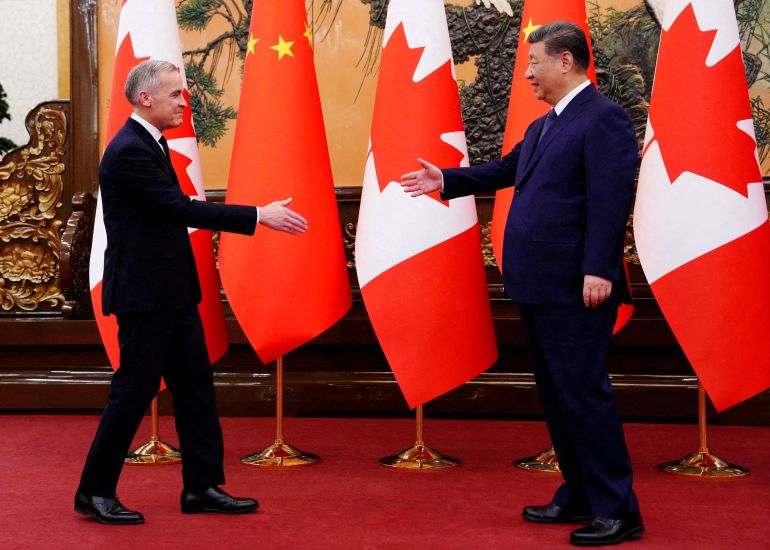
Carney’s is the first visit to Beijing by a Canadian prime minister since Justin Trudeau went in 2017, and he came away with a deal that saw Beijing agree to ease tariffs on Canadian agricultural exports and Ottawa to ease tariffs on Chinese EVs.
Trump lashed out at news of the deal, threatening 100 percent trade tariffs on Canada if the deal goes ahead.
In a statement last weekend on his Truth Social platform, Trump wrote that Carney was “sorely mistaken” if he thought Canada could become a “‘Drop Off Port’ for China to send goods and products into the United States”.
The meeting between Carney and Xi this month also thawed years of frosty relations after Canada arrested Huawei executive Meng Wanzhou in late 2018 at the behest of the US. Beijing subsequently arrested two Canadians in a move that was widely seen as retaliation. They were released in 2021 after Meng reached a deferred agreement with prosecutors in New York.
In Davos, Carney told world leaders that there had been a “rupture in the world order” in a clear reference to Trump, followed by remarks this week to the Canadian House of Commons that “almost nothing was normal now” in the US, according to the CBC.
Carney also said this week in a call with Trump that Ottawa should continue to diversify its trade deals with countries beyond the US, although it had no plans in place yet for a free-trade agreement with China.
Canadian PM Carney, left, meets President Xi in Beijing, China, on January 16, 2026 [Sean Kilpatrick/Pool via Reuters]
Filling the void
Hanscom Smith, a former US diplomat and senior fellow at Yale’s Jackson School of International Affairs, told Al Jazeera that Beijing’s appeal could be tempered by other factors, however.
“When the United States becomes more transactional, that creates a vacuum, and it’s not clear the extent to which China or Russia, or any other power, is going to be able to fill the void. It’s not necessarily a zero-sum game,” he told Al Jazeera. “Many countries want to have a good relationship with both the United States and China, and don’t want to choose.”
One glaring concern with China, despite its offer of more reliable business dealings, is its massive global trade surplus, which surged to $1.2 trillion last year.
Much of this was gained in the fallout from Trump’s trade war as China’s manufacturers – facing a slew of tariffs from the US and declining demand at home – expanded their supply chains into places like Southeast Asia and found new markets beyond the US.
China’s record trade surplus has alarmed some European leaders, such as French President Emmanuel Macron, who, in Davos, called for more foreign direct investment from China but not its “massive excess capacities and distortive practices” in the form of export dumping.
Mexico has temporarily halted oil shipments to Cuba amid heightened rhetoric from United States President Donald Trump, who has been seeking to isolate the communist-ruled island nation.
President Claudia Sheinbaum, however, said the pause was a “sovereign decision” not made under pressure from the US.
Recommended Stories
list of 4 itemsend of list
Mexico, along with Venezuela, has been providing the bulk of Cuba’s oil supplies, but Venezuelan crude was cut off from Havana after its president, Nicolas Maduro, was abducted in a military operation and taken to the US on January 3.
Mexico supplied 44 percent of Cuban oil imports and Venezuela exported 33 percent until last month, while some 10 percent of Cuban oil is sourced from Russia. Some oil is also sourced from Algeria, according to The Financial Times figures.
The erstwhile Soviet Union was the biggest backer of Cuba for decades, but since its fall in 1991, support has dwindled drastically.
So, what’s behind the Mexican government’s decision and will it exacerbate Cuba’s deepening energy and economic crisis?
What did Mexican President Claudia Sheinbaum say?
Asked at her regular morning press conference whether she denied a media report that Mexico had halted the shipment, Sheinbaum responded: “It is a sovereign decision and it is made in the moment when necessary.”
Sheinbaum sidestepped a question about whether Mexico would resume oil shipments to Cuba, answering: “In any case, it will be reported.”
She also said Mexico would “continue to show solidarity” with Cuba.
In its most recent report, Mexico’s state-owned oil corporation Pemex said it shipped nearly 20,000 barrels of oil per day to Cuba from January through September 30, 2025.
With Venezuela offline, shipments from Pemex have become a critical, though insufficient, lifeline for the island.
Analysts now expect further pressure from Washington to halt those shipments more permanently, given Trump’s growing demands that Mexico deliver stronger results in the fight against drug cartels.
Mexico has been trying to balance its traditional ties with Cuba amid mounting pressure from the Trump administration.
The Reuters news agency last week reported that the Mexican government was reviewing whether to keep sending oil to Cuba amid growing concerns within Sheinbaum’s government that continuing the shipments could put the country at odds with the US.
Mexico is currently negotiating a trade agreement with the US amid tariff threats.
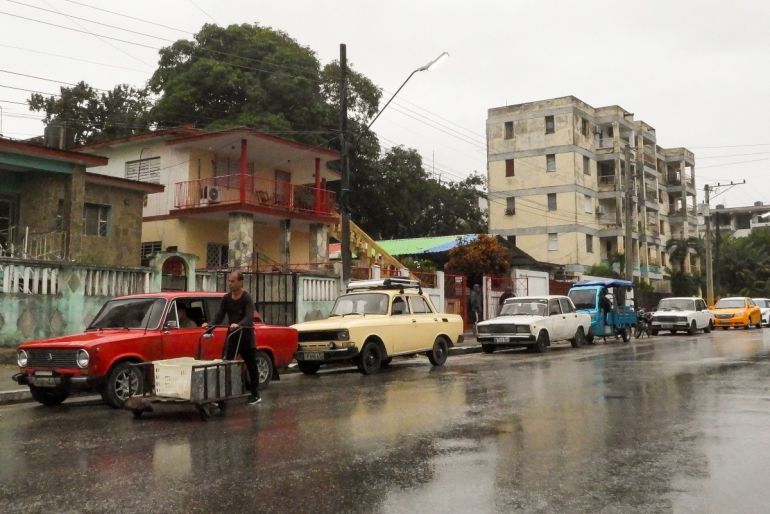
Cars wait in line to refuel at a gas station in Havana on January 20, 2026. [Adalberto Roque/AFP]
Why isn’t Cuba getting Venezuelan oil any more?
Trump has said that no Venezuelan oil or money will go to Cuba after abducting President Maduro and taking control of Venezuela’s oil industry.
“THERE WILL BE NO MORE OIL OR MONEY GOING TO CUBA – ZERO! I strongly suggest they make a deal, BEFORE IT IS TOO LATE,” Trump wrote on his Truth Social platform on January 11.
“Cuba lived, for many years, on large amounts of OIL and MONEY from Venezuela,” Trump added.
Trump did not elaborate on his suggested deal, but US officials have hardened their rhetoric against Cuba in recent weeks.
However, Cuban President Miguel Diaz-Canel has rejected talks. “We have always been willing to maintain serious and responsible dialogue with the various US administrations, including the current one, on the basis of sovereign equality, mutual respect and the principles of international law,” Diaz-Canel said.
What to know about Trump’s growing rhetoric against Cuba
Following the US attack on Venezuela, the Trump administration has escalated its rhetoric against Cuba, which has been under strict US economic sanctions for decades.
Last week, the US-based Wall Street Journal reported that Trump aims to remove Cuba’s leadership and is actively seeking government insiders in Havana who are willing to make a deal with Washington to “push out the Communist regime”.
Trump on Tuesday said that Cuba is on the brink of collapse. “Cuba is really a nation that’s very close to failing,” he said during a visit to the US state of Iowa.
The US president said that Cuba no longer receives oil and money from Venezuela, a close ally of Havana since the days of former socialist President Hugo Chavez.
Last week, a Cuban diplomat based in Bogota accused the US of “international piracy” over Washington’s blockade of Venezuelan oil.
“The US is carrying out international piracy in the Caribbean Sea that is restricting and blocking the arrival of oil to Cuba,” Carlos de Cespedes, Cuba’s ambassador to Colombia, told Al Jazeera on Saturday, adding that Havana is facing more powerful US threats than it has in the 67 years since the revolution.
Earlier, US Secretary of State Marco Rubio, who is of Cuban descent and is believed to orchestrate policies towards Venezuela and Cuba, has described the government in Havana as a “huge problem”.
About a week after Maduro’s abduction, Trump urged Cuba to make a deal “before it is too late,” without specifying what kind of agreement he was referring to.
In a post on Truth Social, Trump suggested Rubio could become the president of Cuba. “Sounds good to me!” he said.
Relations between Havana and Washington have been tense for decades. The ties were normalised in 2014 under former President Barack Obama, in a major foreign policy shift. But Trump, who succeeded Obama, reversed the decision and reimposed sanctions during his first term.
In 2019, Trump banned cruise ships from visiting Cuba, one of the most popular forms of travel to the island, which earns much-needed revenue from tourism.
Mexico faces its own pressure from Washington, as Trump has threatened to take military action against Mexican drug cartels. Last week, the country transferred dozens of suspected cartel members to the US amid pressure from the Trump administration.
Since Trump’s return to power in January last year, the war on drugs has been at the top of his administration’s agenda. The US said its action against Maduro was justified, based on claims that Venezuela sent drugs to the US. But Caracas is not the main source of drugs coming into US territory.
How has the US policy affected Cuba?
Cuba is enduring its worst economic crisis since Fidel Castro’s 1959 revolution, as fuel shortages have caused prolonged power cuts, water and food supply disruptions.
Analysts say the Cuban economy could collapse completely as Mexican and Venezuelan oil supplies dry up.
A total blockade on oil imports to Cuba is part of possible new tactics by the Trump administration to drive leadership change in the Caribbean country, according to the US-based Politico site.
Al Jazeera could not confirm Politico’s report.
Rising geopolitical tensions with the US have also driven tourists away from Cuba, with the number of visitors dropping by nearly 70 percent since 2018.
For decades, tourism – a source of livelihood for millions of Cubans – generated up to $3bn a year for Cuba. Some 1.6 million tourists visited Cuba last year, significantly lower than the 4.8 million in 2018 and the 4.2 million in 2019, before the COVID-19 pandemic hit.
Havana classic car driver Aldama recalled that he would sometimes work until 9pm. Nowadays, he’s lucky if he takes one or two tourists for a spin in a day.
He used to charge $50 for a drive around the capital. Now, given the lack of demand, he has lowered his price to $25 and even $20 if a tourist insists on bartering.
Northern Ireland have appointed Kris Lindsay as interim manager for their first pair of 2027 Women’s World Cup qualifiers in March.
Tanya Oxtoby left the post to manage Newcastle United in November after two years in charge and, with no permanent replacement appointed, Lindsay will take charge of games away to Switzerland on 3 March and home to Turkey four days later.
Lindsay, who is currently manager of the Northern Ireland men’s under-16 team, was previously at the helm of Irish Premiership side Dungannon Swifts, and served as first-team coach for Cliftonville and Glenavon.
Lindsay was also first-team coach for the Northern Ireland women’s team when Gail Redmond was interim manager between the reigns of Oxtoby and previous manager Kenny Shiels in July 2023.
“Managing your country at any level is a privilege and I’m delighted to be given this chance,” said Lindsay.
“I have followed the senior women’s team for some time. They have a fantastic leadership group and my role will simply be to add where I can.
19 January
22 November 2025
Choosing Oxtoby’s successor a ‘significant and complex decision’
Director of women’s football at the Irish Football Association (IFA) Angela Platt said that Lindsay’s interim hire would allow the organisation to take the “proper time and diligence” over naming Oxtoby’s permanent successor.
The role was publicly advertised on football recruitment agency and the closing date was 23 January.
“Following Tanya stepping aside, it was important that we took the appropriate time to reflect and fully assess what the next phase for the senior women’s team should look like,” she said.
“From the outset we were clear that appointing a senior international head coach is a significant and complex decision, and one that requires proper time and diligence.
Analysis – Not the first protracted approach
BBC Sport NI’s Andy Gray
It has been 68 days since Tanya Oxtoby’s departure as Senior Women’s team manager, and Wednesday marks 35 days until the start of World Cup qualifying.
Yet Northern Ireland’s search for a permanent replacement for the Australian goes on.
Kris Lindsay is a highly-respected coach and well liked both within the Irish FA and across football in Northern Ireland, and it cannot be ruled out that he will turn out to be the long-term solution for the women’s team, and a successful one at that.
But this is not the first time the IFA have taken a protracted approach for the position.
When Kenny Shiels left his role in January 2023, it wasn’t until that August that Oxtoby was appointed.
In that time, Northern Ireland did not play in the February window, had Andy Waterworth in charge for a friendly with Wales, while Gail Redmond, along with Lindsay, was interim manager for June friendlies in Scotland and the Czech Republic.
Angela Platt, the director of women’s football at the IFA, said she wants a “robust process” for replacing Oxtoby, but the public nature of the application through a recruitment agency raises more questions than answers.
Having such an open process, instead of targeting a manager, suggests a lack of strategy and clarity going forward post-Oxtoby.
The IFA are determined to land the right person for the job, hence the drawn-out approach, but Northern Ireland did not take part in the December window after Oxtoby’s departure and enter a crucial campaign without a clear plan in place for moving forward.