Archive January 28, 2026

Rivers Problems Are For Fubara, Not Wike’s, To Solve — Aide

image

Lere Olayinka, the spokesperson to the Federal Capital Territory (FCT) Minister, Nyesom Wike, says the problems of Rivers State is for Governor Siminalayi Fubara to address and not his principal.

Olayinka said this on Wednesday during an interview on Channels Television’s The Morning Brief, saying Wike is not the governor of the coastal state.

“The problem of Rivers state is for the Governor to solve. He is the one that can solve his problem,” Olayinka said.

His comment followed an impeachment move on the governor by members of the Rivers State House of Assembly.

According to him, Fubara should liaise with the lawmakers to resolve the political crisis.

“if I’m a governor, I will go to the house of those lawmakers, re-interact with them and talk to them as colleagues and don’t forget that some of this House of Assembly members are even his seniors politically,” he said.

“There are political seniors, so to relate with them, you have to bring yourself down. Like the former governor of Ekiti state, Ayo Fayose said, this person should bring himself down from his political horse of arrogance,” the media aide to Wike said.

However, he said “he (Wike) has to be involved. Is he not from Rivers state?”

READ ALSO: Rivers Impeachment Suit Put On Hold As Court Adjourns Indefinitely

Lingering Crisis

The political crisis in the oil-rich state has continued to linger despite the declaration of the end of the emergency rule by President Bola Tinubu in September, 2025.

A few weeks ago, the Rivers State House of Assembly began an impeachment process against Fubara and his deputy, Ngozi Odu, over alleged gross misconduct.

The lawmakers had passed a resolution calling on the Chief Judge of the state, Simeon Amadi, to constitute a panel to probe the allegations against the governor.

But Amadi declined, citing court orders.

Justice Amadi’s position was conveyed in a formal letter addressed to the Speaker of the Rivers State House of Assembly, Martin Amaewhule, acknowledging receipt of two separate requests from the legislature dated January 16, 2026.

The requests were made pursuant to Sections 188(4) and 188(5) of the 1999 Constitution (as amended), following resolutions of the House to initiate impeachment proceedings against the governor and his deputy.

But said, “By the doctrine of ‘lis pendens’, parties and the court have to await the outcome of the appeal,” the letter read in part.

“In view of the foregoing, my hand is fettered, as there are subsisting interim orders of injunction and appeal against the said orders. I am therefore legally disabled at this point from exercising my duties under Section 188(5) of the Constitution in the instant.”

An Oyigbo High Court of Rivers State in Port Harcourt has adjourned indefinitely the suit filed by Governor Siminalayi Fubara and his deputy, Ngozi Odu, challenging the impeachment process initiated against them by the Rivers State House of Assembly.

Justice Florence Fiberesima of the Oyigbo High Court took the decision after being informed that two separate appeals had been entered in respect of the matter.

The adjournment, the court held, would allow the Court of Appeal to first determine the issues before it.

At the resumed hearing, counsel to the Speaker of the House, Martin Amaewhule, and 27 lawmakers, S.I. Amen, (SAN), notified the court of the pending appeals and applied orally for a stay of proceedings.

The application was not opposed by counsel to the claimants, Paul Orikoro (SAN), nor by Lawrence Oko-Jaja (SAN), who represents Victor Oko-Jumbo, Orubienimigha Timothy, and Sokari Goodboy, the other defendants in the suit.

Oxfam refuses to provide Israel with details of Palestinian staff in Gaza

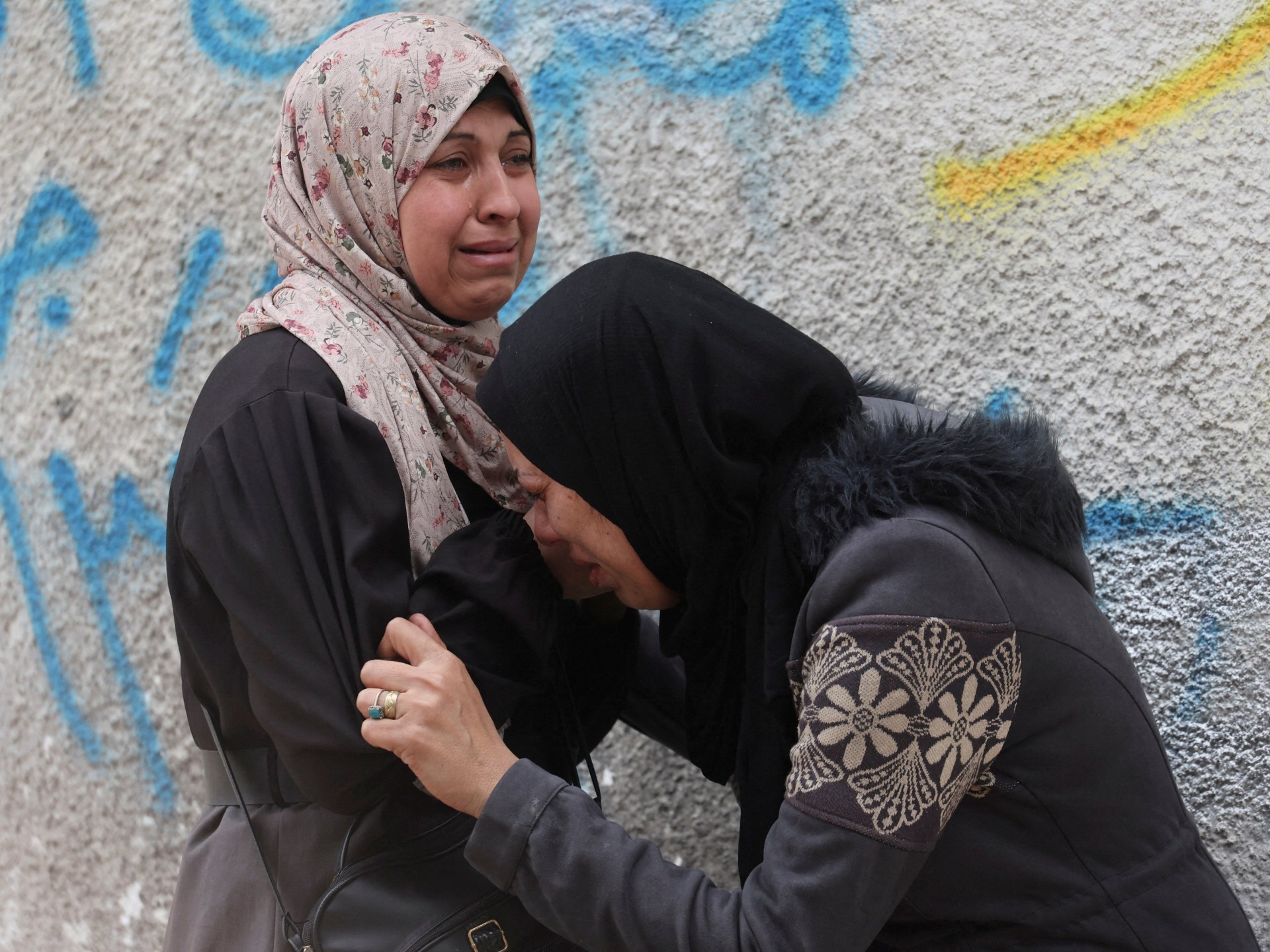
Oxfam says it will not disclose the personal details of its Palestinian staff to Israel, citing its army’s deadly attacks in Gaza that have killed hundreds of aid workers.

As part of a crackdown on NGOs providing life-saving aid to Palestinians, Israel last year demanded that some of the world’s best-known charities working in Gaza, the occupied West Bank and occupied East Jerusalem hand over detailed information about their Palestinian and international staff, operations and funding.

Recommended Stories

list of 4 itemsend of list

On January 1, Israel withdrew the licences of 37 aid groups, including the Norwegian Refugee Council, International Rescue Committee and Oxfam, saying they failed to adhere to the new “security and transparency standards”.

But Oxfam has said it will not share data about its Palestinian employees.

“We will not transfer sensitive personal data to a party to the conflict since this would breach humanitarian principles, duty of care and data protection obligations,” an Oxfam spokesperson told Al Jazeera. “More than 500 humanitarian workers have been killed since October 7, 2023.”

“We call on the government of Israel to immediately halt deregistration proceedings and lift measures obstructing humanitarian assistance,” the spokesperson said. “We urge donor governments to use all available leverage to secure the suspension and reversal of these actions.”

According to rules set out by Israel’s Ministry for Diaspora Affairs, the information to be handed over includes passport copies, resumes and names of family members, including children. It said it would reject organisations it suspected of inciting racism, denying the state of Israel’s existence or the holocaust. It would also ban those it deems as supporting “an armed struggle by an enemy state or a terrorist organisation against the State of Israel”.

Israel says 23 organisations have agreed to the new registration rules. The others are understood to have refused or are weighing their decisions.

The Palestinian NGOs Network (PNGO) condemned the organisations that have adhered to Israel’s demands.

“PNGO underscores the grave risks inherent in this measure, which constitutes a clear violation of the principles of international humanitarian law and established humanitarian work standards,” it said, adding that complying with Israel’s order poses a “direct threat” to the safety and security of local staff.

On Saturday, Doctors Without Borders, known by its French initials MSF, said it was prepared to share a “defined list of Palestinian and international staff names, subject to clear parameters with staff safety at its core” to Israel, while acknowledging that the demands were “unreasonable”.

MSF’s decision was condemned by some doctors, activists and campaigners, saying it could endanger Palestinians, given Israel has targeted aid workers throughout the genocide in Gaza.

A former MSF employee, requesting anonymity, told Al Jazeera, “It is extremely concerning … that MSF would make a decision like this.

“MSF faces profoundly difficult decisions – concede to the demands of a genocidal regime, or refuse and face complete expulsion and an abrupt end to all health activities in the coming weeks. But what is humanitarianism under genocide? There must be alternatives – alternatives that demand a much bolder and more disruptive approach to humanitarianism amid such brutal political decline.”

GB pair Hewett & Reid to meet in quarter-finals

Great Britain’s Alfie Hewett and Gordon Reid both recorded victories to set up a quarter-final meeting in the Australian Open men’s wheelchair singles, before joining forces to reach the semi-finals of the doubles competition.

Defending champion Hewett took just 55 minutes to complete a 6-2 6-1 win over Japan’s Takuya Miki, while Reid beat Australian wildcard Anderson Parker 6-3 6-2.

Hewett and Reid then began their pursuit of a seventh successive wheelchair doubles title in Melbourne by defeating Miki and Dutchman Tom Egberink 6-0 6-4.

The pair have won 18 of the past 23 Grand Slam titles in the doubles format.

They will face either second seeds Martin de la Puente and Stephane Houdet or Tokito Oda and Gustavo Fernandez for a place in the final.

    • 2 hours ago
    • 1 hour ago

Skupski and Johnson in doubles contention

Britain will also have two representatives in the semi-finals of the men’s doubles event.

Sixth seeds Neal Skupski and American Christian Harrison won 6-2 6-3 against Czech pair Petr Nouza and Patrik Rikl.

Luke Johnson and Polish partner Jan Zielinski were 7-6 (7-5) 6-2 winners over fourth seeds Marcelo Arevalo, of El Salvador, and Croatia’s Mate Pavic.

Skupski and Harrison will play third seeds Marcel Granollers of Spain and Argentina Horacio Zeballos for a final place, with Johnson and Zielinski taking on Australian wildcards Jason Kubler and Marc Polmans in the other half of the draw.

Andy Lapthorne and Gregory Slade were beaten in their respective quad singles first-round matches.

Lapthorne lost 6-4 7-5 to Turkish fourth seed Ahmet Kaplan, while Slade was beaten 6-1 6-3 by Brazilian qualifier Leandro Pena.

Related topics

  • Tennis
  • Disability Sport

More on this story

  • Some tennis balls
    • 16 August 2025
    BBC Sport microphone and phone

Drought in the east, floods in the south: Africa battered by climate change

Chokwe District, Mozambique – I have been reporting on climate change stories for nearly all of this month. It wasn’t planned – it just ended up like that. A routine deployment to Kenya saw me head to the Kenya-Somalia border in Mandera town for a drought story.

At the time, there was hardly any international news coverage on this drought in the Horn of Africa. I was not expecting anything dramatic. I was wrong. The drought is bad.

Recommended Stories

list of 3 itemsend of list

As soon as we drove to really remote parts of Mandera County, I started seeing signs that something was wrong.

The team drove past several dry riverbeds. The camels were thin. Then, we saw the communal graveyards where dead livestock had been dumped and burned.

I spoke to a local chief in Mandera, Adan Molu Kike. He was a quiet, unassuming elderly man who went out of his way to explain to me how devastating the recent drought is.

“Our animals started dying in July last year, and they are still dying,” he told me. Then, he asked what country I had come from. I told him Zimbabwe.

“Have you seen a drought this bad in your country?” he asked me.

We were moving with a team from the Kenya Red Cross Society. They were keen to show me more about how the drought was affecting communities.

Water was the biggest challenge. With several rivers dry, water had to be brought in every week from aid agencies. Some communities got water once a week. Others saw the water bowsers arrive twice a week.

There is usually a timetable. If you miss a delivery, that means no water until the next delivery. The water – brown in colour – also has to be shared with livestock.

I see pastoralist Mohamed Hussein dragging two containers of water he has just collected from the water bowser delivery truck. He looks tired and doesn’t look like he wants to chit-chat, but he indulges us.

“I had 100 animals, but now I have only 20 left … My crops in the field are dead,” he says.

We talk about the drought and water situation. He says three of his goats died the night before. He says it’s because of the drought.

Hussein insists on showing me the animals in his back yard. He drags one away and tosses the dead goat in a bush. I remember thinking that out here in the desert like Mandera, it’s survival of the fittest.

Yet, people can’t mourn for too long over dead livestock. He has to keep the few he has left alive or else his family goes hungry.

From extreme drought to massive floods

As journalists, we come into a country, file our reports and fly home. But some experiences stay with you. This drought story did.

I left Kenya and headed home, thinking my stint reporting on climate change stories was finished for at least a few months. I was wrong.

I got back home to learn that it’s been raining a lot. Some places in Harare, Zimbabwe, even had flash floods. I thought nothing of it – only that it was interesting coming from a very hot climate to a wet one.

Then, the next day, news started circulating about floods and very heavy rain in South Africa and Mozambique.

As journalists, we never really switch off, so I was keeping an eye on the floods in Southern Africa, but I didn’t expect to be deployed to another climate change crisis so soon.

A day or two later, the situation worsened, and I was heading to Mozambique.

Again, at the time, there wasn’t much in international media coverage about the floods in Mozambique. South Africa was getting more media attention at the time. So I had no idea of the scale of these floods.

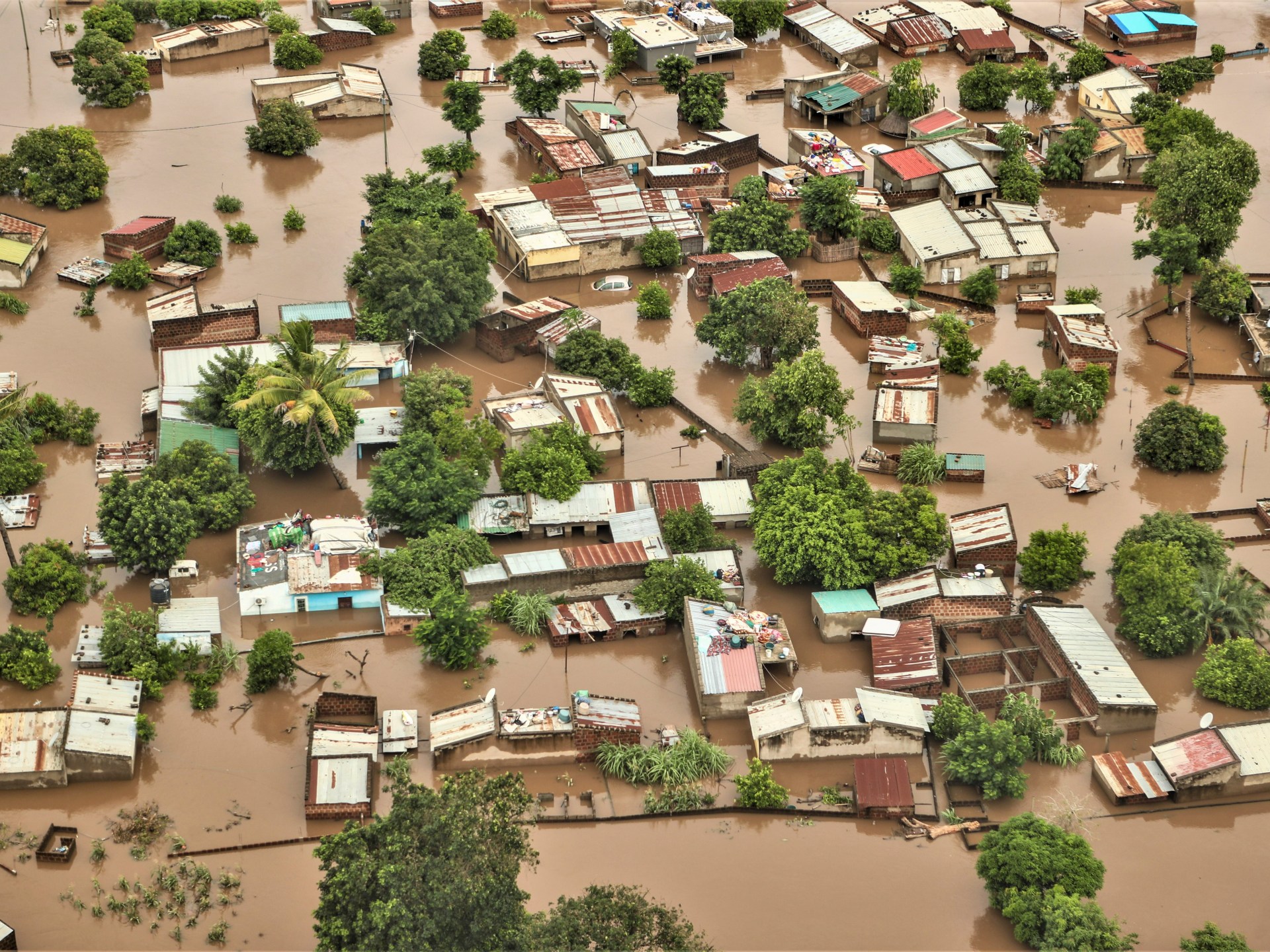
I landed in Mozambique and went to a neighbourhood in the capital, Maputo, that was affected by floods.

I put on my gumboots and waded through dirty, smelly floodwaters in between people’s submerged homes. I was shocked – but nothing prepared me for what I later saw elsewhere in the country.

In Marracuene, I saw a huge toll gate submerged and road signs sticking out on top of the water along a major highway. The highway was now metres deep underwater.

Then, we got Xai Xai, the capital of Gaza province in the south. Swaths of agricultural land were underwater. Parts of Xai Xai city were submerged. Restaurants, shops and businesses in the city centre sat in water.

“Now, the water must go down first, and then, we must start cleaning,” Richard Sequeira, the boat captain who was showing me the devastation, said. “There are a lot of snakes and animals around. Maybe 45 days to two months, we will be out of our houses and living like this.”

He is right. It could be weeks before the water recedes and disappears. But there could be more flooding in the coming days or weeks.

Authorities in neighbouring South Africa’s Mpumalanga province have ordered people to evacuate from flood-prone areas immediately. The dam there is full and could start releasing water.

Former Ondo Deputy Governor, Agboola Ajayi Returns To APC

image

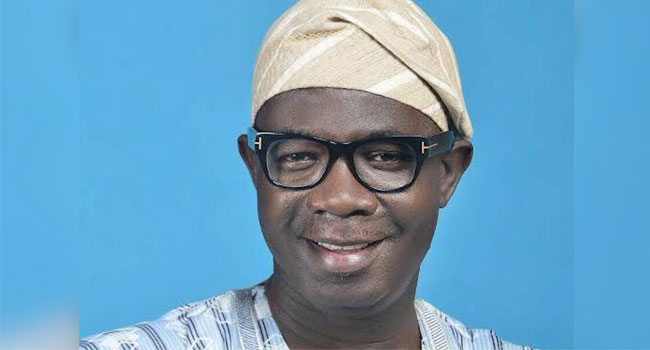
A former Deputy Governor of Ondo State and the Peoples Democratic Party (PDP) candidate in the November 2024 governorship election, Agboola Ajayi, has returned to the All Progressives Congress (APC).

Ajayi formally rejoined the ruling party on Tuesday at his hometown, Apoi Ward 2, Kiribo, in Ese Odo Local Government Area.

A former member of the House of Representatives, Ajayi had, in June 2020, resigned his membership of the APC and defected to the PDP, citing irreconcilable differences between him and the late Governor Oluwarotimi Akeredolu, under whom he served as deputy.

READ ALSO: Our Motive Is To Ensure Every Nigerian Becomes An APC Member— Nentawe Yilwatda

Speaking in Igbekebo, the headquarters of Ese Odo Local Government Area, Ajayi pledged full support for Governor Lucky Aiyedatiwa’s “EASE” agenda and President Bola Tinubu’s Renewed Hope Agenda ahead of the 2027 general elections.

He described his return as a move back to his original political home, which would enable him to actively participate in the party’s affairs and contribute to progressive development in the state.

According to him, “In politics, there could be disagreements, campaigns, propaganda and blackmail, but at the end of the day, the bigger picture is the Nigeria project. We must come together to add value to the system.

“Myself and Governor Lucky Aiyedatiwa have talked. We campaigned against each other, and during campaigns, blackmail and propaganda are not unusual. However, when we look beyond those things, we realise that the bigger picture is greater than all of us.

“This is about the Nigeria project. We should come together to see how we can add value to the system. I also want to commend Mr President for the bold steps and reforms he has introduced in the country.