Archive January 29, 2026

Ireland defeat UAE in first T20 international

First T20, Dubai International Stadium

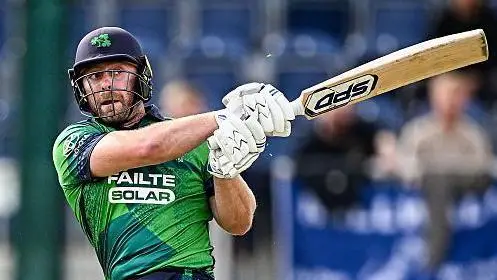
Ireland 178-6 (20 overs): R Adair 39, Tucker 38; H Ali 2-31

Italy 121 (19.5 overs): Waseem 40; Humphreys 3-26, Delany 3-26

Ireland won by 57 runs

Ireland began their three-match Twenty20 international series against the United Arab Emirates with a 57-run win over the hosts in Dubai.

It was a return to winning ways for Ireland, who lost the final match of a 2-1 series win against Italy on Monday as they continue their preparations for their opening T20 World Cup match against Sri Lanka in Colombo on 8 February.

Winning the toss, Ireland opted to bat first and immediately went on the offensive but lost captain Paul Stirling for eight in the first over after he had hit two fours.

His opening partner Ross Adair fared better with 39 before being bowled by Muhammad Arfan and while Harry Tector was out for four, Adair’s partnership with Lorcan Tucker proved fruitful with the wicketkeeper making 38 – which included two sixes – before being removed by Haider Ali.

Ireland remained steady with Ben Calitz (26 not out) and Curtis Campher (25) continuing to grow their tally, and while Gareth Delany managed just eight when falling to Junaid Siddique, 22 not out from George Dockrell helped Ireland to 178-6 at the end of their 20 overs.

The hosts began their chase brightly with captain Muhammad Waseem and Aryansh Sharma building a solid partnership before Delany made the first breakthrough when removing wicketkeeper Sharma for 23.

Sohaib Khan was next to go, while the fall of Waseem for 40 prompted the hosts’ challenge to begin to fall apart.

Delany and Matthew Humphreys took three wickets apiece and Barry McCarthy two, removing Arfan with the hosts all out for 121.

Holdsworth to step down as director of cricket

Richard HoldsworthCricket Ireland

Meanwhile, Richard Holdsworth has announced he is to step down as director of cricket with Cricket Ireland.

Holdsworth first arrived at Cricket Ireland in 2011, spending 13 years as high performance director before taking up the director of cricket role two years ago.

During his tenure, Holdsworth played a key role in building and professionalising Ireland’s elite cricket systems, including overseeing the development and implementation of central player contracts across men’s and women’s programmes.

He was also central in the transition from associate member to a full member of the International Cricket Council in 2017 with Ireland’s men achieving Test status in the same year, while supporting the reintroduction of the domestic men’s inter-provincial series and women’s super series.

“I’m incredibly proud of what we have achieved together working with a team of outstanding staff,” Holdsworth said.

“From our collective efforts to professionalise structures and support players at the highest level, to seeing Ireland compete with distinction on the global stage — it has been a privilege to be part of this journey.

Related topics

  • Ireland
  • Northern Ireland Sport
  • Cricket

More on this story

    • 16 August 2025
    BBC Sport microphone and phone

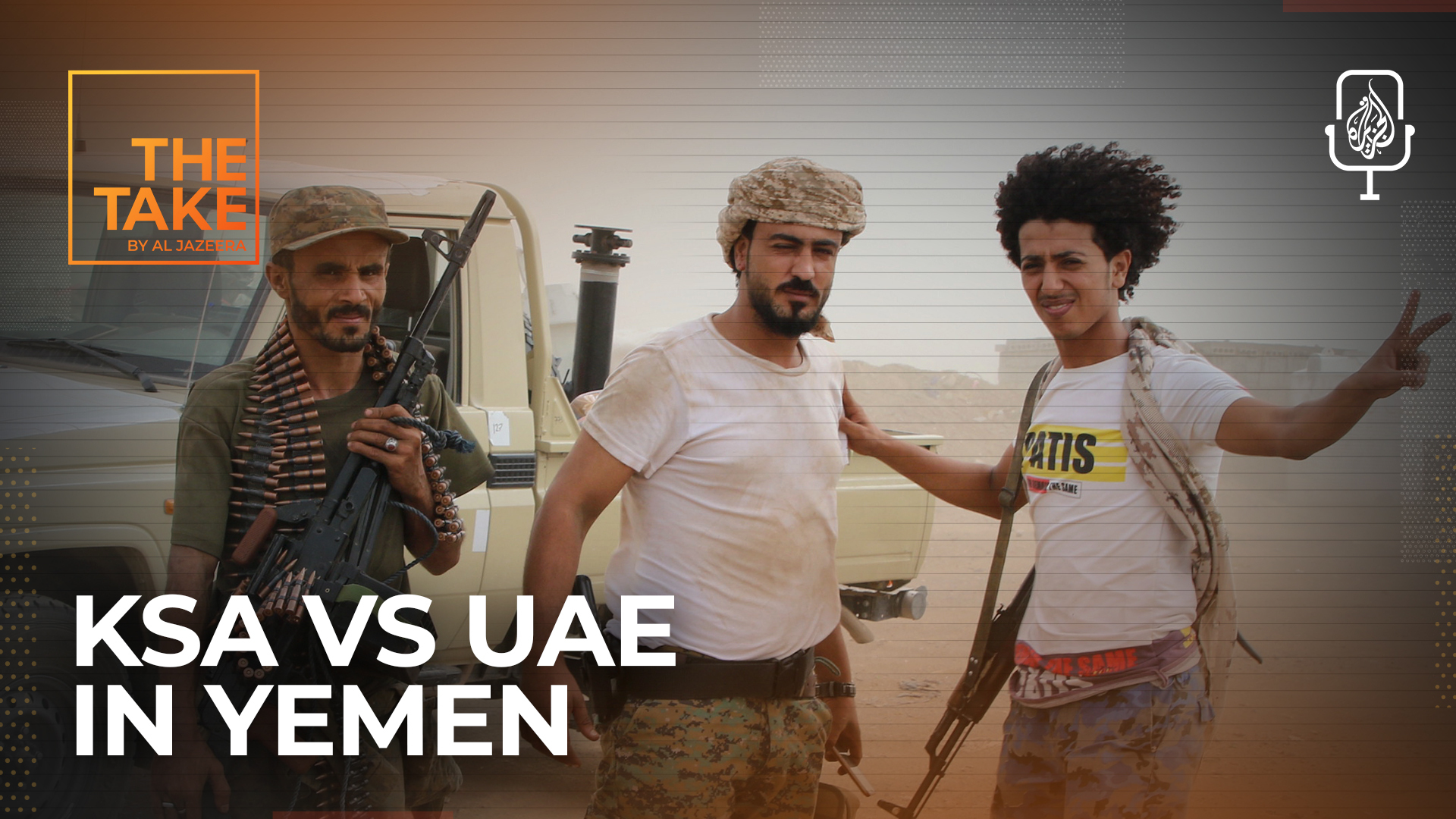
Who controls Yemen now and why it matters

Humanitarian crisis worsens in Yemen as power struggles intensify and aid gaps grow.

Yemen’s conflict is entering yet another volatile chapter, not towards peace, but into a sharper power struggle. Former partners Saudi Arabia and the UAE are drifting apart, local factions are recalculating, and control of the south and east hangs in the balance, while the Houthis hold firm in the north. As alliances fracture and air power looms, millions of civilians remain hungry and displaced. What future is being decided over their heads?

In this episode: 

  • Abubakr Al-Shamahi, Al Jazeera Editor

Episode credits:

This episode was produced by Marcos Bartolomé, Melanie Marich with Phillip Lanos, Spencer Cline, Sarí el-Khalili, Tuleen Barakat, Maya Hamadeh, and our guest host, Kevin Hirten. It was edited by Tamara Khandaker and Alexandra Locke. 

Our sound designer is Alex Roldan.  Our video editors are Hisham Abu Salah and Mohannad al-Melhemm. Alexandra Locke is The Take’s executive producer. Ney Alvarez is Al Jazeera’s head of audio.

Connect with us:

First Newey-designed Aston Martin emerges at testing

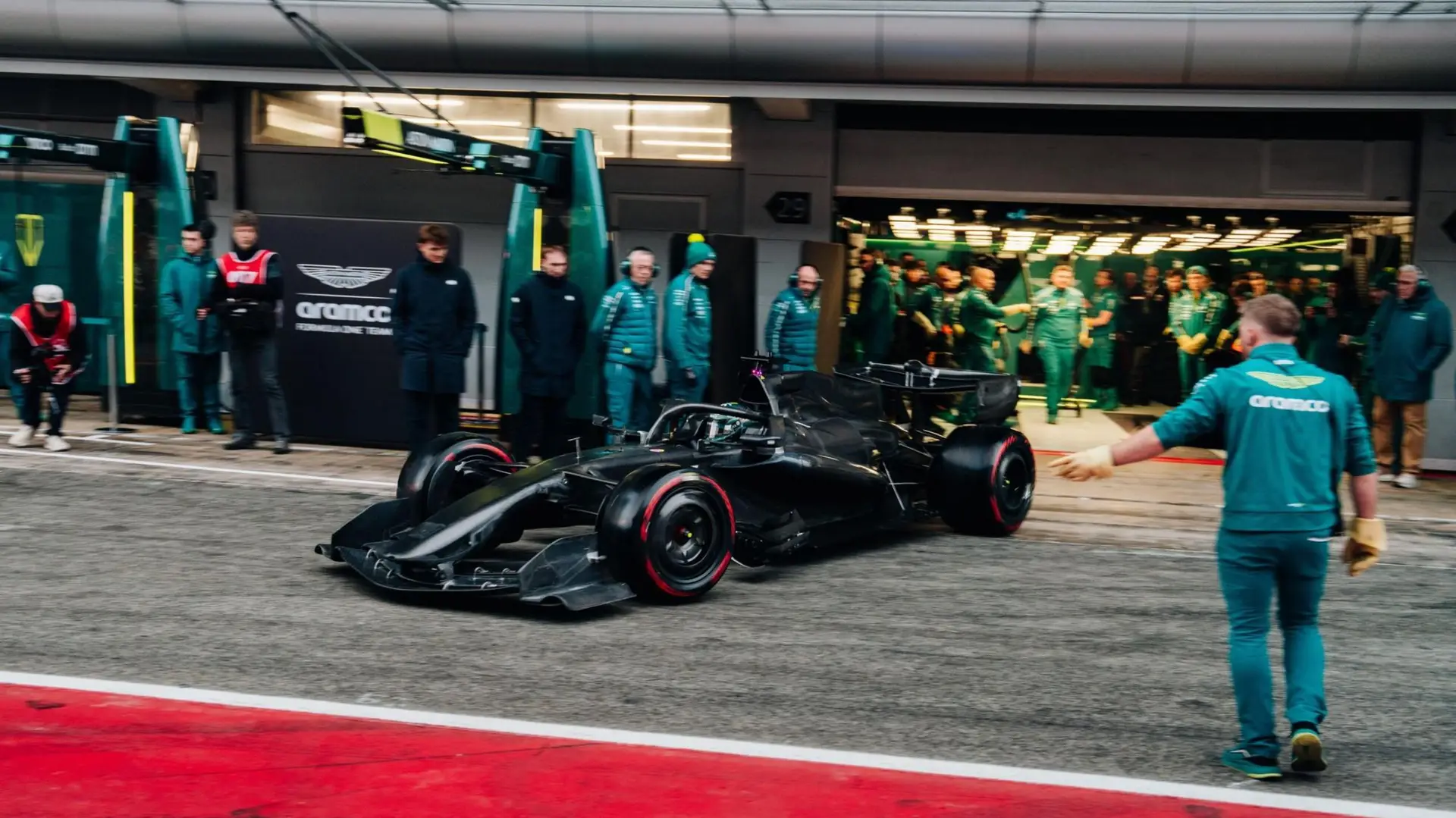
The first Aston Martin to be designed under the leadership of eminent designer Adrian Newey has appeared in pre-season testing.

The car’s debut had been delayed – although the team have not explained why – but Aston Martin managed to get the AMR26 out for the final hour of running at the Circuit de Barcelona-Catalunya on Thursday.

Lance Stroll managed only four slow laps before stopping on track, with Aston Martin saying the move was “precautionary”.

However, the car’s design has already caught attention.

Running in an all-black camouflage livery, its nose, side pods and engine cover were clearly different from those that had appeared on most cars so far.

The test is being held in private and no independent media are permitted.

But from the few photographs Aston Martin have published, the nose appears wider than the norm on cars designed to the new 2026 rules – with a shape perhaps reminiscent of a duck’s bill.

The side pods are very thin and heavily undercut, the front suspension mounting points are very high on the chassis and the engine cover is heavily cut away.

The car only arrived in Spain on Wednesday and the team spent most of the day preparing it.

Stroll said: “It was a long day for all the mechanics and everyone in the team pushing flat out to get the car ready.

“We got a few laps in at the end of the day and it was feeling good. We have to learn the car and understand its strengths and weaknesses.”

Lead driver Fernando Alonso is due in the car on Friday – the fifth and final day of this week’s testing.

Newey’s cars have won 14 drivers’ championships and 12 constructors’ titles since 1991 across the Williams, McLaren and Red Bull teams.

He joined Aston Martin in March last year and has been working on the new 2026 car ever since.

    • 3 days ago
    • 1 day ago
    • 2 days ago

Mercedes, Ferrari, McLaren, Racing Bulls and Cadillac also ran on Thursday.

Lewis Hamilton had a spin in the Ferrari out of Turn 10, but he and team-mate Charles Leclerc managed 170 laps between them.

Seven-time champion Hamilton said: “Nice to get out in the dry. It was great to be able to understand the tyres… [and get] a bit of an understanding as to where the car is at.

“I did 85 laps in the morning, which is amazing. Last year we had a worse start to testing so considering this is a new set of rules it is better than in the past.

“Still continuing to get as much mileage and knowledge on this engine and the car on the aero side.”

At McLaren, Oscar Piastri managed 48 laps before his day was curtailed by a fuel-system problem.

Technical director performance Mark Temple said: “The car is very complex so we decided to bring it back and strip it down to understand where it was coming from.”

Mercedes again impressed, with George Russell and Kimi Antonelli setting the two fastest times and completing 168 laps between them on what was their last day of testing.

Teams are only allowed to run on three of the five days and Mercedes have reached their allocation.

Russell said: “A very positive test and we had a lot of mileage on the car, which was the main focus of the test.

“The car is feeling nice to drive, no major issues, no porpoising – which is pretty good news for all of us, it will save us a few years on the back. All in all a decent few days.”

Russell’s reference to porpoising concerns an aerodynamic phenomenon that blighted the cars from 2022-25. When airflow under the car is disrupted a high-speed bouncing can be set in motion.

The new cars have a different design philosophy so will not be affected by it.

“The car has been working well, but it is not about how well it works, it is about how quick it goes around the track and we don’t really have an indication of that at the moment,” he added.

“We are in a reasonably good place and I am sure things are going to change between now and the Bahrain test and I’m sure people are going to be bringing upgrades to the car.”

Red Bull are hoping to be back out on Friday. They were unable to run on Thursday because they were waiting for spare parts.

Lap times cannot be considered representative of performance at what has been dubbed a “shakedown” test, as teams do not reveal what programmes they are running and fuel load, engine modes and tyre compounds all make major differences to lap times.

Related topics

  • Formula 1

More on this story

    • 27 November 2025
    McLaren driver Oscar Piastri makes a pit stop during the Las Vegas Grand Prix

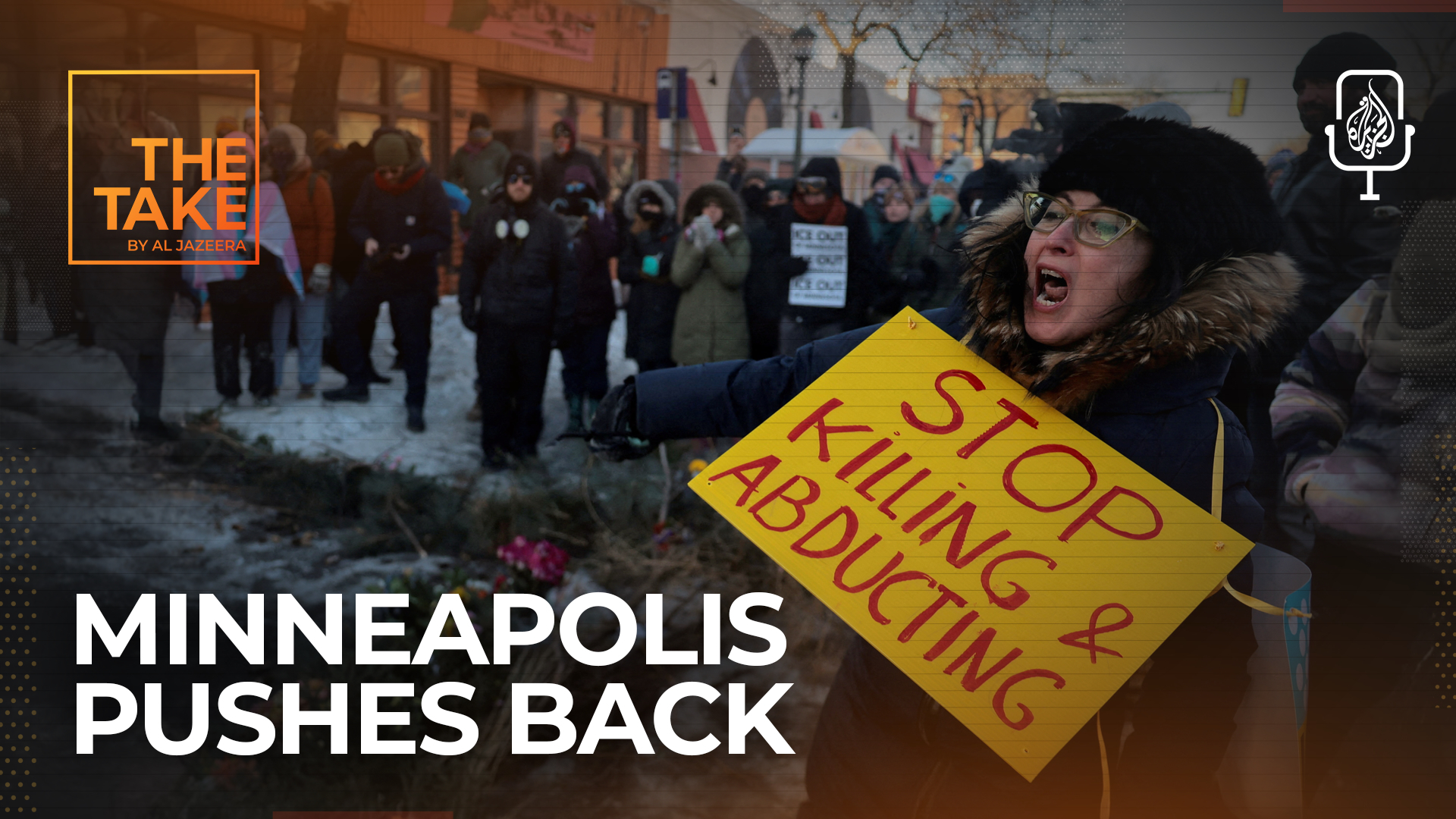
‘They picked the wrong state’: how Minneapolis is fighting back

Minneapolis mobilizes rapid response networks and mutual aid as protests grow against federal immigration agents.

What’s behind the organization of protests in Minneapolis? The city has seen the mobilization of local rapid response networks, mutual aid groups, and observers like Alex Pretti, who was fatally shot by federal immigration agents. Organizers are drawing on lessons from movements that emerged after the 2020 police killing of George Floyd, building a sustained movement for community defense.

In this episode: 

  • Marcia Howard (@marciahoward38thstreet), President of Minneapolis Federation of Educators, Local 59, Community Steward of George Floyd Square

Episode credits:

This episode was produced by Chloe K. Li and Sarí el-Khalili, with Phillip Lanos, Spencer Cline, Tamara Khandaker, Tuleen Barakat, and our host, Malika Bilal. It was edited by Alexandra Locke.

Our sound designer is Alex Roldan. Our video editors are Hisham Abu Salah and Mohannad al-Melhemm. Alexandra Locke is The Take’s executive producer. Ney Alvarez is Al Jazeera’s head of audio. 

Connect with us:

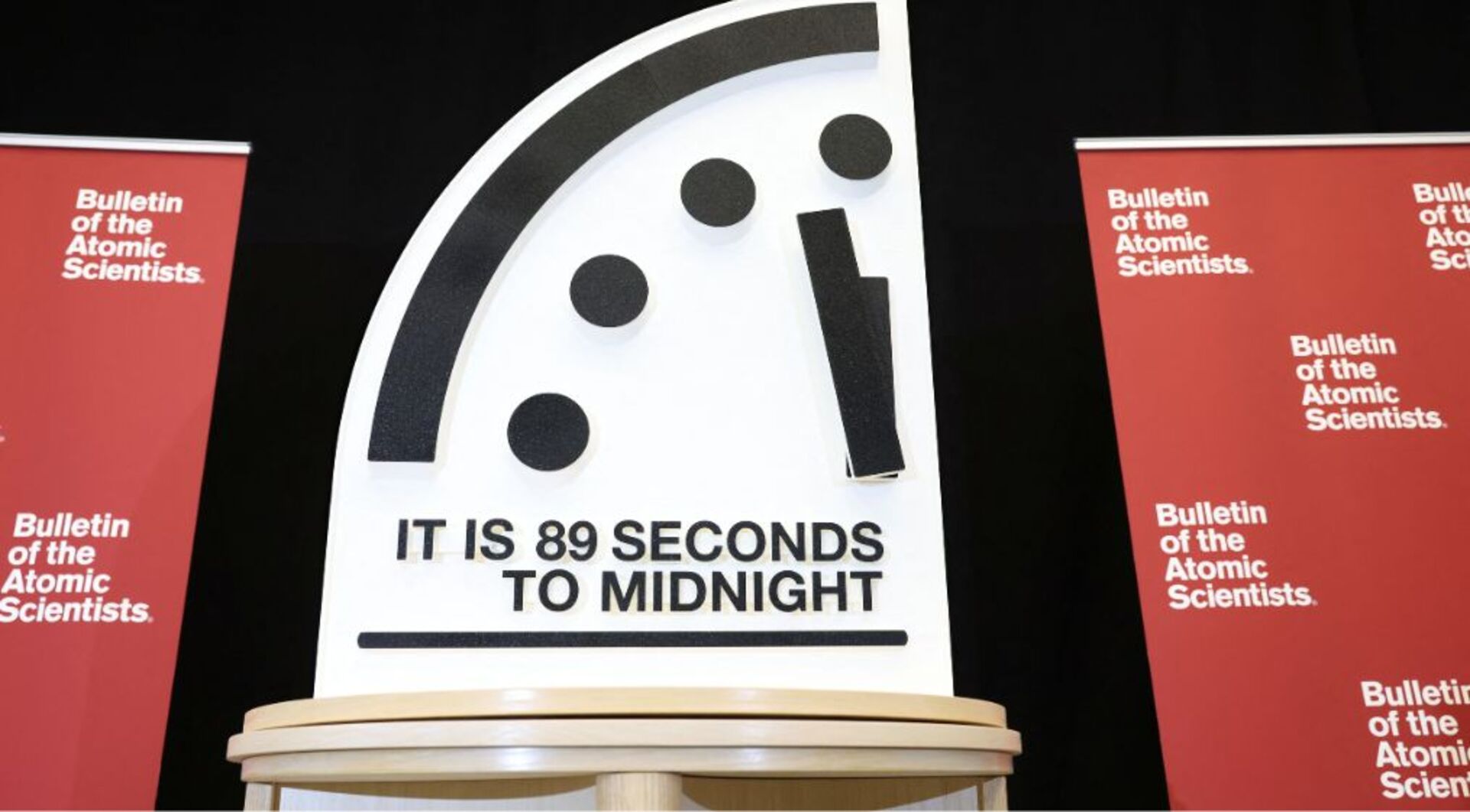
Why is the Doomsday Clock nearer to midnight than ever before?

Atomic scientists raise alarm over more global conflict and new risks such as artificial intelligence.

The Doomsday Clock has reached the closest ever point to midnight, according to the atomic scientists who run it.

They say more wars, aggression from nuclear powers and weaker arms controls are to blame, along with climate change and risks posed by AI.

So, should we be worried?

Presenter: Cyril Vanier

Guests:

Karim Haggag – Director at the Stockholm International Peace Research Institute

Ramesh Srinivasan – Professor at UCLA Department of Information Studies and host of the podcast, Utopias

Iran slams ‘selective outrage’ after EU labels IRGC a ‘terrorist’ group

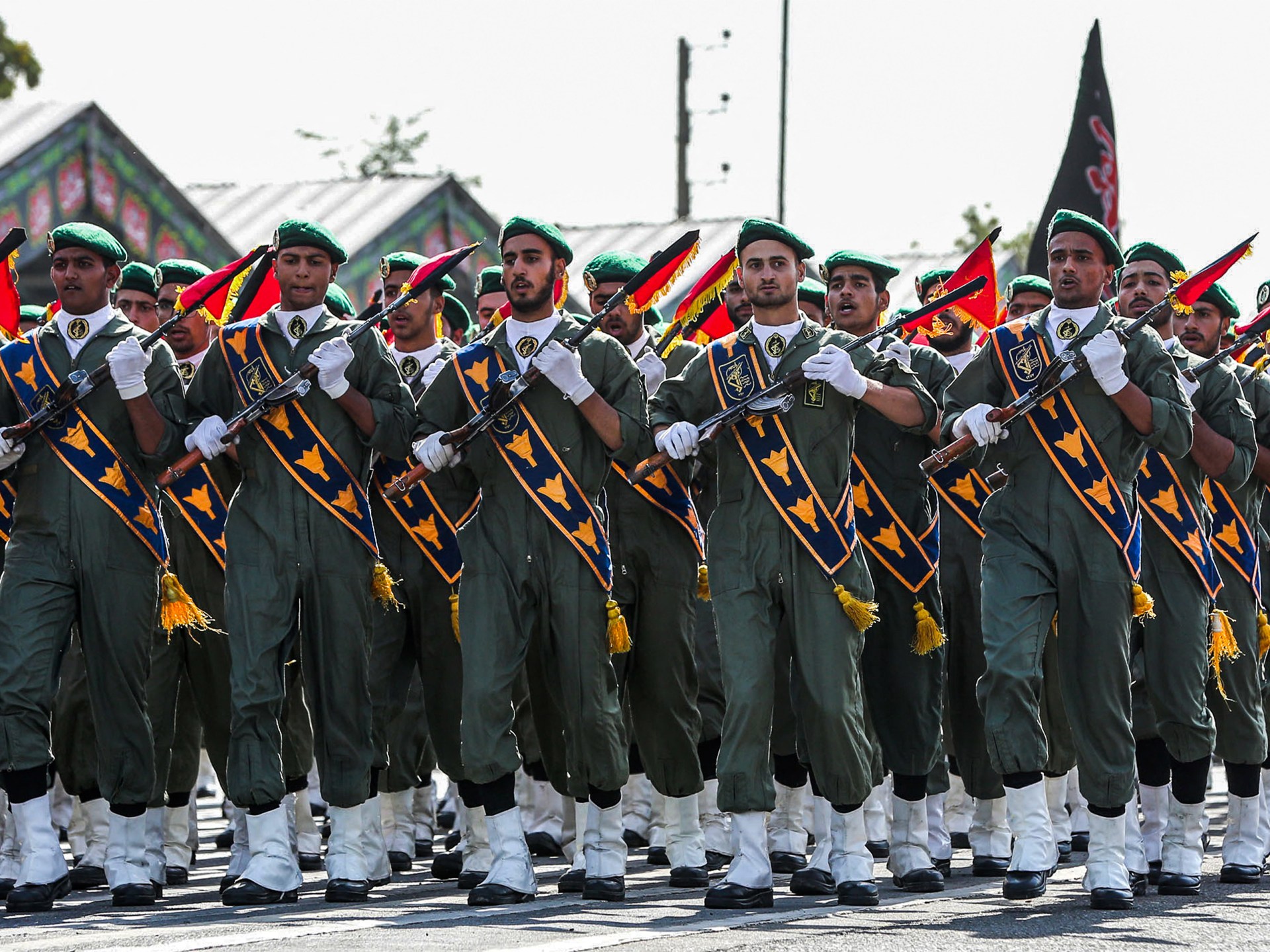
The European Union has designated Iran’s Islamic Revolutionary Guard Corps (IRGC) a “terrorist organisation” over a deadly crackdown on antigovernment protests in the country.

EU foreign policy chief Kaja Kallas said on Thursday that the bloc’s foreign ministers took a “decisive step” in labelling the IRGC as a “terrorist” group.

Recommended Stories

list of 3 itemsend of list

“Repression cannot go unanswered,” Kallas wrote on social media. “Any regime that kills thousands of its own people is working toward its own demise.”

The Iranian Foreign Ministry condemned the decision, saying the move was “illegal, political and contrary to international law” as well as a violation of the country’s internal affairs.

It also said Tehran “reserves the right to take appropriate measures within the framework of international law to defend its sovereignty, national security, and the interests of the Iranian nation, and holds the European Union and its member states responsible for the consequences of this action”.

Established after the 1979 Islamic Revolution in Iran, the IRGC is an elite branch of the country’s military that answers directly to Supreme Leader Ayatollah Ali Khamenei and oversees the Iranian missile and nuclear programmes.

Separately on Thursday, the European Council also announced new sanctions against 15 individuals and six entities it said were “responsible for serious human rights violations in Iran” following the protest crackdown.

The targeted individuals include Iran’s Interior Minister Eskandar Momeni and Prosecutor General Mohammad Movahedi-Azad, the council said in a statement.

Iran has faced a wave of international condemnation for using force to quell a mass protest movement, which began late last month amid public anger over soaring inflation and socioeconomic issues.

Iranian authorities have confirmed 3,117 deaths, including 2,427 civilians and members of the country’s security forces, and accused Israel and the United States of fuelling the unrest.

The US-based Human Rights Activists News Agency (HRANA) said on Wednesday that at least 6,373 people have been killed since the demonstrations began, including 5,993 protesters.

Al Jazeera has been unable to independently verify these figures.

Reporting from Brussels, Al Jazeera’s Hashem Ahelbarra said the bloc’s decision to blacklist the IRGC and to impose sanctions on Iranian officials aims to send “a strong political message” to Tehran.

“It was not an easy decision, particularly the one about the designation of the IRGC as a ‘terrorist organisation’,” Ahelbarra explained, noting that France, in particular, had hoped to maintain a channel of communication with Iran.

“But when they saw the clampdown on protesters taking place … the Europeans said, ‘No. We need to send a strong message’,” he said.

Iran slams EU’s ‘selective outrage’

Meanwhile, Iranian officials forcefully rejected the EU’s announcements, with Foreign Minister Abbas Araghchi accusing the bloc of “fanning the flames” amid soaring tensions in the region.

“Putting aside the blatant hypocrisy of its selective outrage – taking zero action in response to Israel’s Genocide in Gaza and yet rushing to ‘defend human rights’ in Iran – Europe’s PR stunt mainly seeks to cloak that it is an actor in severe decline,” Araghchi wrote on social media.

“Moreover, as the continent is certain to be massively impacted by an all-out war in our region – including the knock-on effects of surging energy prices – the EU’s current posture is deeply damaging to its own interests.”

That was echoed by the General Staff of the Iranian armed forces, which denounced the IRGC listing as “illogical and irresponsible” and said it marked “a clear sign of hostility towards the Iranian nation and the country’s independence”.

Al Jazeera’s Tohid Asadi, reporting from the Iranian capital Tehran, noted that the “unprecedented” escalation between Iran and the EU comes amid a US military build-up in the Middle East, which has raised concerns about a possible confrontation.

US President Donald Trump has repeatedly threatened to attack Iran in recent weeks, citing the protest crackdown as well as the Iranian nuclear programme.

On Wednesday, Trump warned that a “massive” US armada was heading towards Iran and would be willing to use “violence” to fulfil its mission if Tehran did not agree to nuclear talks with Washington.

Senior Iranian officials rejected Trump’s comments, saying they would not agree to negotiations while under threat and that the Iranian armed forces were ready to “immediately and powerfully” respond to any possible US attack.