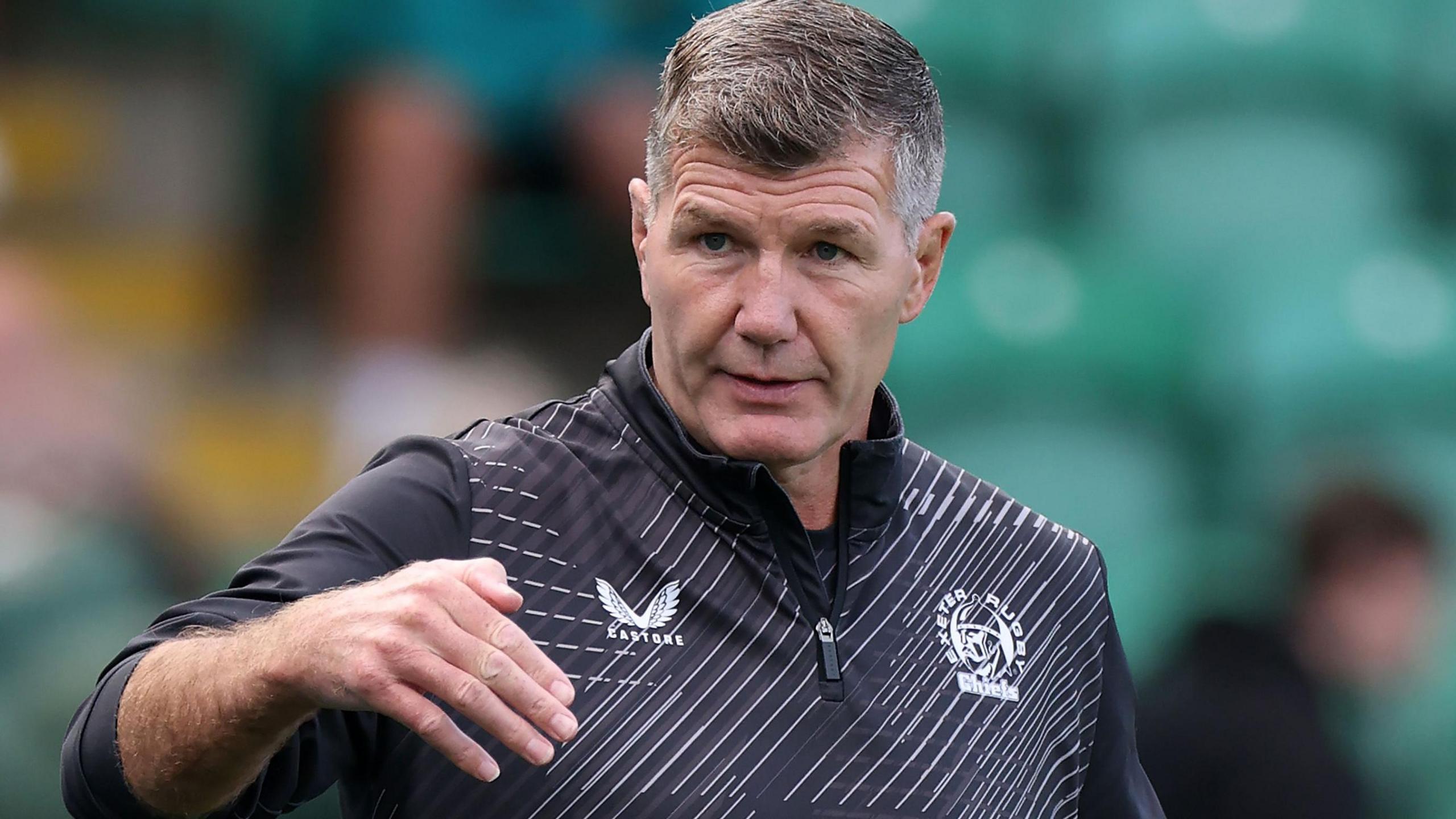
Exeter boss Rob Baxter says he is saddened to see the end of merit-based promotion and relegation to and from the Prem.
Last week rugby authorities in England announced clubs would have to bid to join the top flight from the 2027-28 season.
Clubs wanting to move to the Prem would be assessed on standard of play, finances, investment potential, infrastructure and how their geographical base could help spread the Prem’s appeal, among other factors.
It could mean a new side could win a place in the top flight after a season in the second tier, even if they do not top the table but meet other criteria.
“I feel very uncomfortable with it, and for me to say anything different would make me a complete hypocrite,” Baxter said.
Getty Images
Baxter led Exeter to promotion to the top flight in 2010 – the club are the last side to be promoted from the second tier and establish themselves in the top flight.
But Baxter says he also feels clubs must have the right infrastructure if they are to join the top flight.
Exeter spent hundreds of thousands of pounds on Sandy Park in the run-up to their two-legged play-off final win over Bristol in order to ensure the club would be allowed to gain promotion.
Only one non-Premiership shareholder club – London Welsh – has gained promotion since Exeter, moving their home games to Oxford United’s Kassam Stadium in order to be able to host a minimum of 10,000 spectators.
Ealing and Jersey Reds have won the last four Championship titles, but neither side had a ground capable of hosting enough fans and were not promoted.
“I can’t argue against the meritocracy-based part of it, but at the same time I think it’s important people understand the rules of getting basic things like a 10,000 stadium,” he said.
“These aren’t new rules, it’s not like anybody in the Championship has just had these dropped on them now, they’ve been there for years and years.
“If we want to take Ealing as a perfect example, they’ve known for a long time that to get promoted they would need to get a promotion-worthy team and a facility that can have 10,000 people.
5 days ago
2 days ago
Exeter are still a members club, and chief executive Tony Rowe is exploring additional investment into the side.
Baxter feels the creation of what many see as a franchise-based Prem would give investors more certainty around the clubs they are funding.
He hopes the new system will bring in more new investment into the league, which he feels will benefit the sport as a whole.
“The bigger the investment you want, the more scared off people are by the fact that they might get relegated and the biggest part of your income source can disappear very quickly.
“They’re just realities in the modern world at the moment. If someone says to me ‘what’s the perfect answer?’, there isn’t one, is there.
“But it was going to head this way if no club in the Championship got to the situation where they could get promoted.
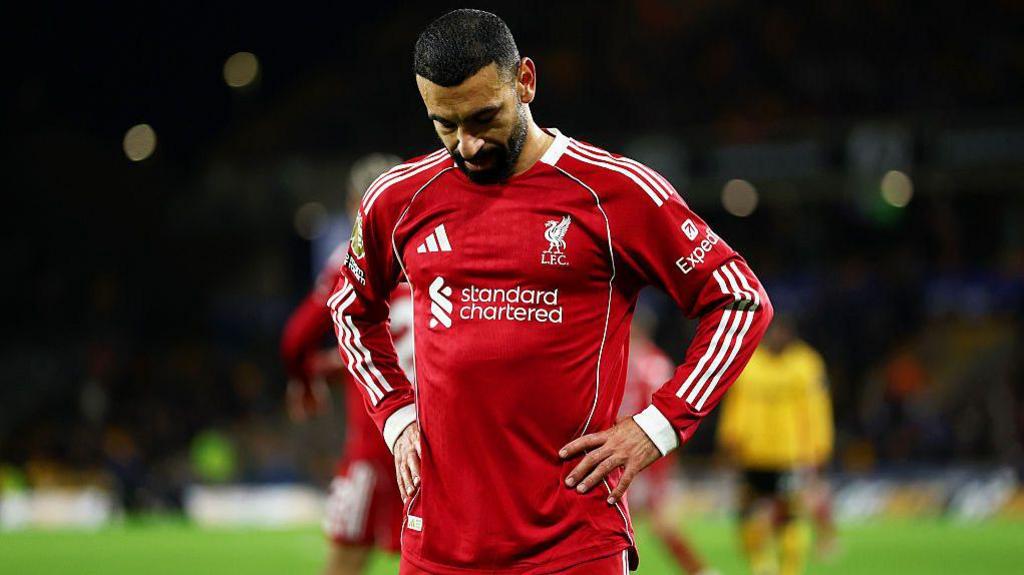
“The stakes are very high,” Liverpool captain Virgil van Dijk said after Tuesday’s surprise 2-1 Premier League defeat to Wolves.
The loss at Molineux left Liverpool in fifth place, which is almost certain to be enough to qualify for the Champions League.
But the table is tight. The Reds have only a three-point cushion over Chelsea, who face fourth-placed Aston Villa for their game in hand on Wednesday.
“Either we get it and we deserve it or we don’t get it and we don’t deserve it,” Van Dijk said.
“If you play for Liverpool, it’s always been like this. It’s down to us, together with our fans, to get the results we need to get into the Champions League.”
Beyond the sporting implications, there are huge finances at stake.
14 hours ago
5 hours ago
1 day ago
‘Extremely well run Liverpool can withstand the revenue drop’ – Maguire
Prize money and commercial opportunities are significantly lower in the other European competitions.
Uefa’s financial report shows that Arne’s Slot’s side earned 98.1m euros (£85.3m) in distribution payments for reaching the last 16 of the Champions League in the 2024-25 season.
When Liverpool were in the Europa League in 2023-24, they got just 26.8m euros (£23.3m) for getting to the quarter-finals.
Winning the tournament would help bridge the funding gap a little more.
Tottenham received 41.4m euros (£36m) after lifting the Europa League last season, but Chelsea were paid just 21.8m euros (£20m) from the Conference League.
Maguire said that the loss of money from Uefa would only be part of the story.
“It also has an impact upon matchday receipts,” Maguire said. “It has an effect on the broadcasting money.
“It will mean lower commercial revenues, because there will be bonuses embedded in contracts with senior sponsors.”
At the high end, Maguire thinks being out of the Champions League could in total “cost Liverpool around £120m”.
Liverpool splashed out more than £400m last summer, signing players such as Florian Wirtz and Alexander Isak.
It was the biggest spend by a club in a transfer window.
But Maguire says that Liverpool “are extremely well run”. One season outside of the Champions League might not have a huge effect, he said.
Last week, Liverpool announced record revenues of £703m for the club’s most recent financial year through to May 2025. The club returned a profit of £8m.
Even with last year’s signings, Liverpool are only eighth on net transfer spend over the last five years.
“While they did have a significant transfer outlay, you’ve to take a long term view on their spending,” Maguire said.
“It’s still substantially behind the two Manchester clubs and Chelsea in particular.”
Uefa’s latest benchmarking report says that Chelsea made a pre-tax loss of £355m for 2024-25.
Manchester United’s finances are improving but the club’s debt is now approaching £1.3bn.
Will Liverpool have any problems when it comes to complying with financial rules?
“The simple answer is no,” Maguire added. “They’re very forensic in terms of their financial analysis.”
Being out of the Champions League could of course affect the players they might attract to Anfield.
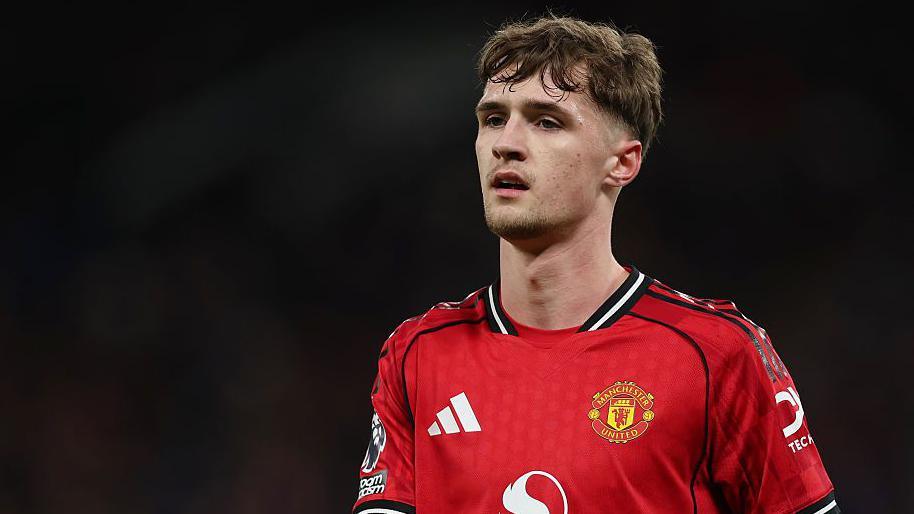
Manchester United midfielder Jack Fletcher has apologised for using a homophobic slur that has led to him receiving a six-match ban.
The England Under-19 international, son of United legend Darren Fletcher, was shown a red card in the 62nd minute of a 5-2 EFL Trophy defeat by Barnsley in October.
At the time it was not clear what had prompted the decision.
However, the Football Association has now confirmed that Fletcher, 18, was sent off for calling an opponent “gay boy”.
“I completely understand such language is unacceptable and immediately apologised after the game.”
Fletcher said a “momentary lapse of character absolutely does not reflect my beliefs or values”.
He was also fined £1,500 and must attend a mandatory face-to-face education programme or face further suspension until it is completed.
In its written reasons, the FA said Fletcher made his comment to an opponent who had made remarks about him and his family throughout the match.
Fletcher’s twin brother, Tyler, was also playing, while Darren was in the crowd.
Fletcher told the FA he had been thrown to the floor and his Achilles had been stamped on by the same opponent earlier in the game.
United said they have been working with Fletcher to “strengthen his understanding of discriminatory language and why it is harmful”.
They said he will continue to take part in club diversity programmes in addition to the training he has been told to do by the FA.
United’s official LGBTQ+ fans group Rainbow Devils said it welcomed Fletcher’s apology and that “homophobic language has no place in football or society regardless of intention or connotation”.
Madrid, Spain – Spain has pledged to keep opposing the war waged by the United States and Israel on Iran after President Donald Trump said Washington would cut off all commercial links with Madrid.
The US leader’s rebuke on Tuesday came after Washington’s European ally refused to let the US military use its bases for missions linked to strikes on Iran.
Recommended Stories
list of 4 itemsend of list
“Spain has been terrible,” Trump told reporters on Tuesday during a meeting with German Chancellor Friedrich Merz, adding, “We’re going to cut off all trade with Spain. We don’t want anything to do with Spain.”
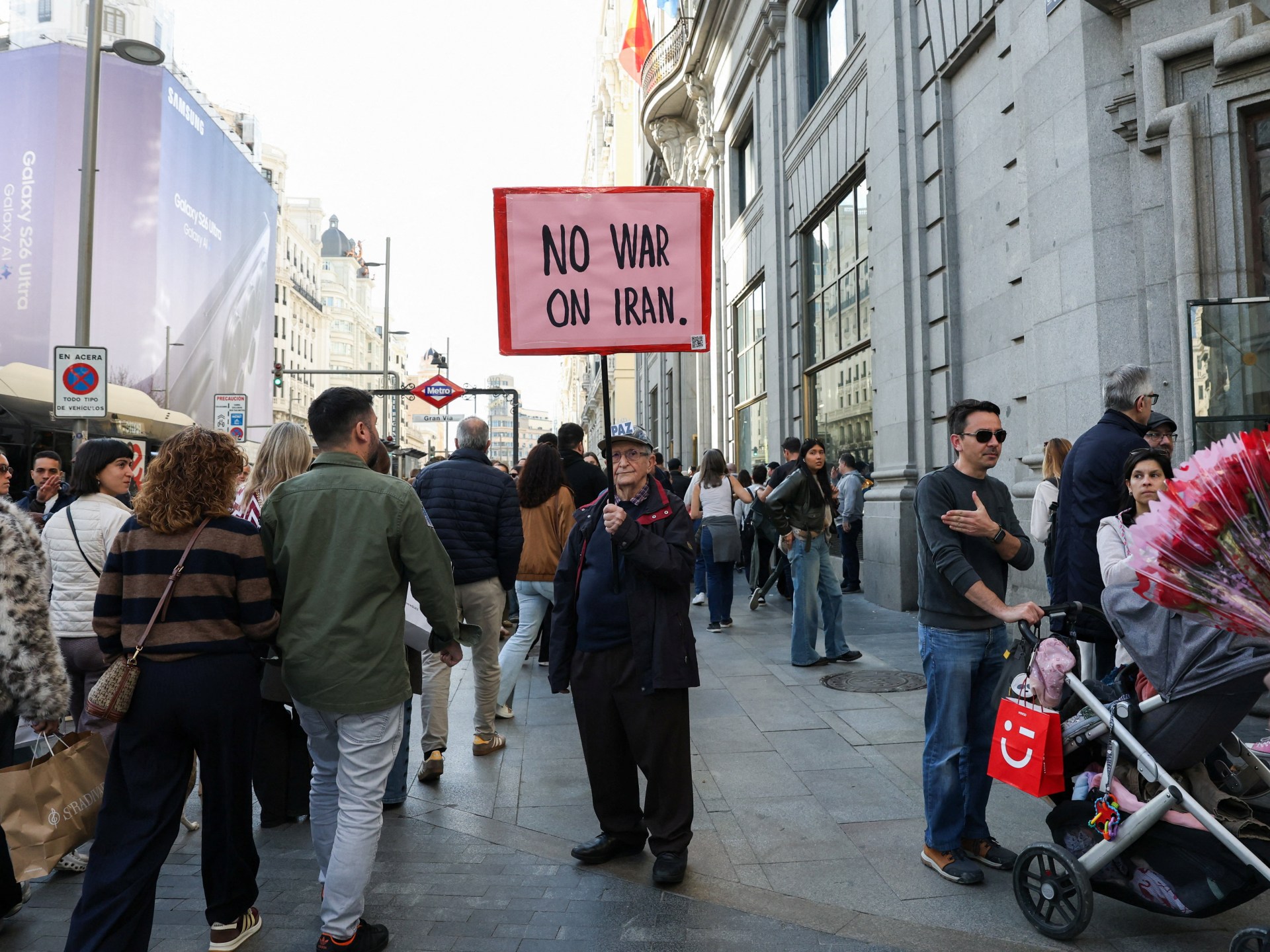
Spanish Prime Minister Pedro Sanchez, one of the few left-wing leaders in Europe to condemn the unilateral US-Israel attack on Iran as “unjustifiable” and “dangerous”, said in a televised nationwide address on Wednesday that Spain’s position was “no to the war”.
“This is how humanity’s great disasters start … The world cannot solve its problems with conflicts and bombs.”
His position cements Spain’s status as an outlier in Europe; Madrid has been one of the few European nations to consistently condemn Israel’s genocidal war on Gaza.
At the Patron Bar in Malasana, Madrid, Gema Tamarit watched Sanchez’s address on the television in the restaurant, which turned up the volume.
“That Trump is mad. We are not afraid of him. Good for Sanchez for sticking up to him. Some more leaders in Europe should do the same,” said Tamarit, 53, a software engineer. “Of course, Iran is an awful regime, but is this the way to change things, by going to war like this?”
A series of opinion polls have suggested that more than half of Spaniards oppose Trump’s foreign policy.
According to a poll published by Eurobazuka published in February, 53 percent said they opposed the US president’s policies, the third highest group by nationality after the French and Belgians, with 57 percent and 62 percent, respectively.
In another poll published in January, nearly 60 percent of Spaniards said they disagreed with the US President’s operation to arrest the former Venezuelan President Nicolas Maduro, according to a survey published by GESOP for Prensa Iberica media group.
The Eurobazuka poll said 48 percent of Europeans considered Trump to be “an enemy of Europe”, compared with 10 percent who believed he was an ally.
Trump’s trade threat
Analysts said the US may not be able to inflict much commercial damage on Spain, as it is part of the European Union.
Last month, the US Supreme Court declared Trump’s threat to impose a range of tariffs worldwide as illegal.
Victor Burguete, an expert in trade and economics at the Barcelona Centre for International Affairs think tank, said the only way Trump could act against Spain would be to prove the US faced a situation of national emergency.
“It is not likely that he can prove acting against Spain is a national emergency,” he told Al Jazeera. “I think this is more a threat than a real possibility of ending trade with Spain.
The dispute erupted when the US relocated 15 aircraft, including refuelling tankers, from the Rota and Moron military bases in southern Spain on Monday after the country’s socialist government said it would not allow them to be used to attack Iran.
Trump has also referred to Spain’s refusal to raise spending on NATO from 2 to 5 percent of gross domestic product, saying “Spain has absolutely nothing that we need.”
Sanchez has provoked Trump’s anger with policies including refusing to let vessels transporting weapons to Israel dock in Spain and condemning Israel’s genocide in Gaza. Spain was among the first Western European nations to recognise the state of Palestine in 2024, along with Ireland, Slovenia and Norway.
“Trump is just angry because Spain has refused to raise NATO spending and condemned the technology companies connected with social media. And done this publicly,” said Burguete.
Spain last month announced it was considering banning children under 16 from accessing social media, and was studying legal action against Grok, Instagram and TikTok.
Bruguete said he believed Sanchez took this stance against the war because he opposed the “strongman politics” of Trump, but also because it played well domestically before the general elections next year.
“There is no doubt that the foreign policy of Trump is not popular in Spain,” he added.
Spain is the world’s top exporter of olive oil and sells auto parts, steel and chemicals to the US, but is less vulnerable to Trump’s threats of economic punishment than other European nations.
The US had a trade surplus with Spain for the fourth year in a row in 2025, at $4.8bn, according to US Census Bureau Data, with US exports of $26.1bn and imports of $21.3bn.
The United States is in talks with opposition Kurdish forces in a bid to arm them and foment an uprising in Iran, according to multiple media reports, as the US-Israel war on Iran enters its fifth day.
President Donald Trump’s administration is actively discussing with opposition Kurdish groups the possibility of arming them, according to CNN, citing Kurdish and US officials. As of Wednesday, it was unclear whether any deals had been struck.
Recommended Stories
list of 4 itemsend of list
Kurdish rebels have for years opposed Tehran and carried out numerous attacks in Iran’s Kurdistan province as well as other western provinces. They operate along the Iraq-Iran border, with Iran and Iraq’s Kurdish minorities sharing close ties.
The US spy agency CIA has a history of working with Kurdish groups in neighbouring Iraq, which the US invaded in 2003. Washington also funded, armed and trained Kurdish fighters in Syria against former President Bashar al-Assad. The CIA has funded rebels and armed groups in numerous countries over the past several decades to destabilise governments critical of US foreign policy.
Amid the ongoing war, and as Iran hits US assets and personnel hosted in neighbouring Gulf countries, the Iranian Revolutionary Guard Corps (IRGC) has also targeted Kurdish positions in the west.
“Instinctively, it feels like a bad move,” analyst Neil Quillian of the United Kingdom-based think tank Chatham House told Al Jazeera of the plan, warning that it might cause more internal conflict in Iran.
“It is an afterthought and has not featured in any major planning to support any broader endgame. It reveals that the US-Iran war against Iran has been poorly thought out,” he said.
Here’s what we know so far:
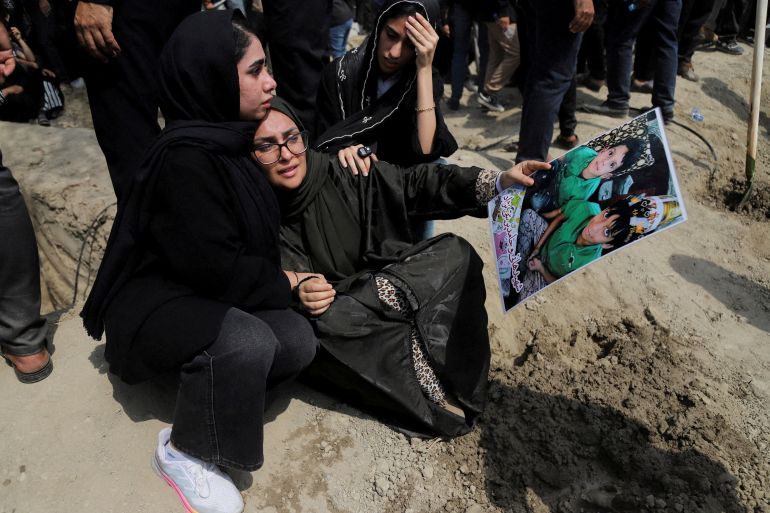
A woman holding a picture of children reacts during the funeral of the victims following a strike on a school, in Minab, Iran, March 3, 2026 [Amirhossein Khorgooei/ISNA/West Asia News Agency via Reuters]
What is happening?
CNN reported on Wednesday that the CIA is negotiating with multiple Kurdish groups to aid them in an uprising.
US officials told CNN the aim would be to use the Kurds to stretch Iranian forces and allow popular protests, or help them seize and control northern Iran, and thus create a buffer for Israel.
Trump spoke with Mustafa Hijri, head of the Democratic Party of Iranian Kurdistan (KDPI), on Tuesday, CNN reported, quoting a Kurdish official. In the coming days, Kurdish groups in Iran are set to participate in ground operations in western Iran, the official told CNN.
Earlier on Tuesday, US publication Axios also reported that on Sunday, a day after the US-Israeli bombing campaign on Iran began, Trump spoke to the leaders of two Kurdish groups in Iraq: Masoud Barzani, who leads the Kurdistan Democratic Party, and Bafel Talabani, leader of the Patriotic Union of Kurdistan (PUK).
Axios cited sources with knowledge of the exchanges. The publication also reported that Israeli Prime Minister Benjamin Netanyahu had lobbied for the US-Kurds connection for months. Israel has established intelligence networks among Kurdish groups in Iran, Iraq and Syria.
At least one Kurdish leader, Bafel Talabani, has confirmed the call with Trump.
In a statement on Tuesday, the PUK said Trump “offered an opportunity to better understand US objectives and to discuss joint support for building a strong partnership between the United States and Iraq”.
No further details were given.
Analyst Quilliam said the plan could fuel domestic conflict inside Iran by pitching opposition groups against each other, rather than helping them team up to challenge “the remnants of the regime”.
“There can be little trust or faith amongst Iran’s Kurdish groups that US support will be honoured,” he said.
“Trump’s approach to regime change is very much a DIY approach, and although supporting Iran’s Kurdish groups might advance that goal, it would be doing so without any responsibility for what happens: the US can simply walk away and leave the mess behind.”
What is the US’s history of arming Kurdish groups?
Kurds are an ethnic minority spread across the Middle East, but without a state of their own and with a history of marginalisation across countries. They share a common culture and language. Several Kurdish groups have for decades sought self-governance in Turkiye, Syria and Iran.
Washington has been a historical ally, particularly of Iraqi Kurds. The US provided tactical support in the form of no-fly zones that protected Kurdish groups during the 1991 uprising, although Washington was criticised for prompting the revolt and then abandoning people as Iraqi forces under Saddam Hussein responded violently.
The no-fly zone allowed the creation of a de facto Kurdish-controlled region, the Kurdish Regional Government, which was officially recognised in 2005.
Since 2014, the US has also partnered militarily with the Kurdish Peshmerga forces to fight ISIL (ISIS) in Iraq.
Similarly, the US, under Trump’s first administration in 2017, trained and armed the People’s Protection Units (YPG) – a Syrian Kurdish militia that Turkiye lists as a “terror” group due to links with the proscribed Turkiye-based Kurdistan Workers’ Party (PKK) – in its successful resistance to ISIL.
The group, which now forms the main component of the Syrian Democratic Forces (SDF), controlled Raqqa and other ISIL strongholds until very recently. However, Washington turned away from the group and backed the new government of President Ahmed al-Sharaa, which took power in December 2024. The SDF signed a deal with the Syrian government to integrate into the government forces. In return, the Syrian government recognised Kurdish rights.
The main Turkish Kurdish group has decided to lay down arms and engage with the Turkish state after four decades of bloody armed rebellion.
Washington’s alliance with Iranian Kurds is therefore not strategic, analyst Quilliam noted. The US has demonstrated its ability to step back from alliances, he said, and from the viewpoint of important regional partners, Washington could cause anger.
“It would be a major concern for Washington’s partners in the region, most notably Turkiye and Syria, and it would be a major headache for Iraq too,” he said.
Bafel Talabani, President of The Patriotic Union of Kurdistan (PUK), has confirmed the call with Trump [File: Ako Rasheed/Reuters]
A brief history of the CIA’s arming and funding of rebel groups
The US spy agency has funded, trained and supplied weapons to rebels and armed groups across numerous countries over the past five to six decades.
Afghanistan: Starting in the late 1970s, the CIA funded and trained Afghan mujahideen to fight the Soviet occupation.
Libya: The US spy agency provided intelligence and other support to rebels fighting the longtime leader Muammar Gaddafi in 2011.
Iran: The CIA, in a joint operation with the British spy agency MI6, helped groups, including military officers, to overthrow the country’s first democratically elected prime minister, Mohammad Mossadegh, in 1953.
Nicaragua: In the 1980s, the CIA provided weapons and funds to the Contras against the socialist Sandinista government of Daniel Ortega. The CIA also backed armed groups in Guatemala (1954) and Cuba (1960-61) and El Salvador to destabilise the governments critical of US policy in Latin America.
Vietnam: Starting in the 1950s, the CIA began arming rebels in Vietnam. Later, it sent its army, making it one of the bloodiest US interventions of all time.
Sri Lanka says it has recovered several bodies and rescued 32 wounded sailors after an Iranian military ship sank just outside the island’s territorial waters.
Authorities told Al Jazeera the frigate IRIS Dena, located about 40 nautical miles (75km) off Galle in southern Sri Lanka, sent out a distress call between 6am and 7am (00:30 to 01:30 GMT) on Wednesday.
Recommended Stories
list of 4 itemsend of list
The cause of the distress was not yet known. The ship had about 180 crew members on board, and a search and rescue operation was under way.
The Iranian frigate was returning from having taken part in the 2026 International Fleet Review last month in eastern India’s coastal city of Vishakapatnam.
Sri Lankan Foreign Minister Vijitha Herath told parliament that the navy received information that the ship was in distress and the government sent ships and air force planes on a rescue mission.
A Sri Lankan navy spokesperson said no other ship or aircraft was observed in the area where the Iranian warship sank.
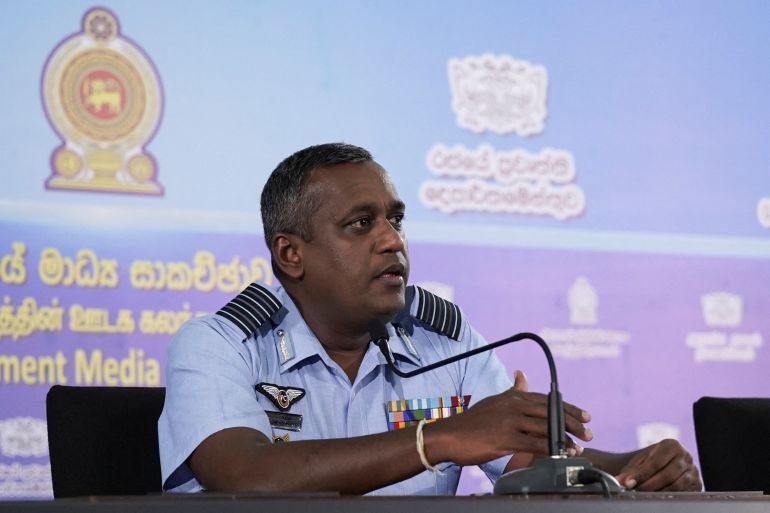
Sri Lankan Air Force spokesman Group Captain Nalin Wewakumbura speaks during a news conference in Colombo, Sri Lanka, March 4, 2026 [Akila Jayawardena/Reuters]
Reporting from outside a hospital in Galle, where the wounded crew members were taken, Al Jazeera’s Minnelle Fernandez said Sri Lankan officials were still trying to figure out what happened to the nearly 150 other crew members.
“The government has not said anything about potential causes of the accident,” she said.
Fernandes said an Iranian embassy official in Colombo said two officers have been sent to Galle “to talk to the survivors to get a sense of what might have happened on the ship”.
The warship’s sinking occurred as the United States and Israel conduct air strikes on Iran for a fifth day after killing Supreme Leader Ali Khamenei and nearly 800 other people, including dozens of schoolgirls.
 Getty Images