Archive February 4, 2026

‘No expectations’: Bangladesh election means little to 1m Rohingya refugees

Cox’s Bazar, Bangladesh – On a Thursday afternoon, 19-year-old Mahmudul Hasan prepared seating on the floor of his bamboo-and-tarpaulin home in Balukhali Rohingya Refugee camp.

Minutes later, 35 young children trooped in. Hasan is still in his teens, but he is their teacher. They greeted him in Rakhine language: “Sayar, Nay Kaung Lar? [Sir, how are you?]” The children are among 80 who study at Hasan’s community-run private school, where he teaches them Burmese, English and maths.

But nearby, a Bangladeshi government official on a motorcycle was trying to educate all those who would listen about something else: He was making announcements about the country’s upcoming February 12 elections.

Between February 9 and February 13, the official yelled out on a microphone, people in the refugee camp should keep their shops shut and not venture outside the camp. And he warned them: Anyone found participating in any political campaign would receive “serious punishment” – they could lose their registration card and a separate document that allows refugees access to subsidised rations.

The camps in Cox’s Bazar are home to more than 1 million Rohingya refugees, who were forced to flee Myanmar in 2017 after a brutal military crackdown. At a time when most countries shunned them, Bangladesh – under then Prime Minister Sheikh Hasina – gave them shelter. But the election season warnings to them were a reminder of how, at the same time, life in Bangladesh is life in limbo: Limited education, health, rations, livelihood options, and freedom of movement.

As Bangladesh’s 127 million voters prepare to elect their next government, Rohingya refugees like Hasan know that they aren’t real stakeholders.

“I don’t have any new expectations,” Hasan told Al Jazeera. “I deserve to live with dignity and human rights. This life [in Bangladesh] is not my choice.”

Still, he conceded, candidates from the two main political fronts in the election – the alliances led by the Bangladesh Nationalist Party and the Jamaat-e-Islami – in the Ukhia and Teknaf regions where the Rohingya camps are based, have spoken of the community’s concerns, as have national leaders from these parties.

That gives him some hope to cling to.

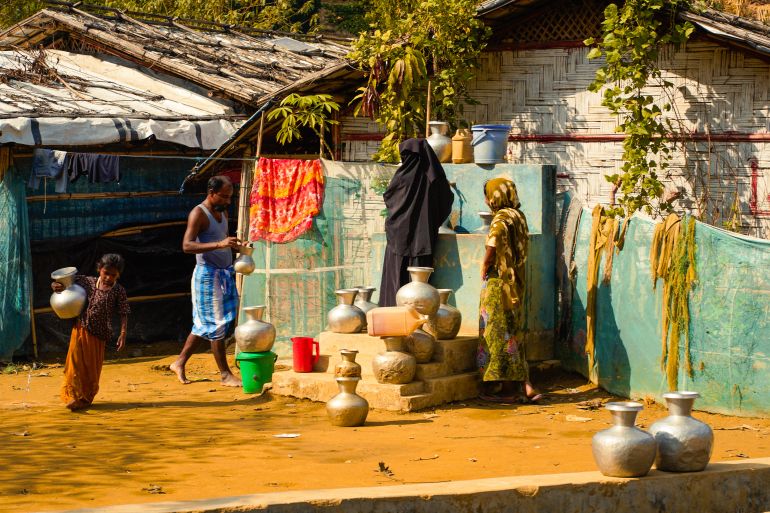
A Rohingya family outside their temporary home in a camp in Cox's Bazar, Bangladesh [Sahat Zia/Al Jazeera]
A Rohingya family outside their temporary home in a camp in Cox’s Bazar, Bangladesh [Sahat Zia/Al Jazeera]

‘It’s not sufficient’

Hasan arrived in Bangladesh with his family when he was 10 years old in 2017, with other Rohingya refugees.

The massacre of the Rohingya in Myanmar – where the community’s members are not even considered citizens – is currently being investigated by the International Court of Justice as a possible genocide. Meanwhile, in November 2024, the International Criminal Court issued an arrest warrant against Myanmar’s military chief, Min Aung Hlaing, accusing him of committing crimes against the Rohingya in 2017.

Since then, Bangladesh has been home to the biggest chunk of Rohingya refugees globally.

But Nay San Lwin, a diaspora leader of the Rohingya and a co-chair of the Arakan Rohingya National Council (ARNC), said that while the community was grateful to Bangladesh’s government and people, the country’s policy of “non-integration” of the Rohingya meant that they remained on the peripheries of society. The camps are fenced with barbed wire, and Rohingya children can’t access the formal education system of Bangladesh, for instance.

“The elected government in February should focus on improving living conditions, access to education, healthcare, livelihoods, and fostering greater engagement between refugees and host communities,” he said.

That’s easier said than done, though. The Rohingya camps have run with financial support from the United Nations and global aid agencies – and funding cuts in recent years have hobbled the already limited services available to residents.

“The humanitarian situation continues to deteriorate due to insecurity, funding cuts, lack of education, and uncertainty about the future,” said Sayed Ullah, president of the United Council of the Rohingya, a community organisation.

Hafez Ahmed, a 64-year-old shopkeeper in the camp, said medical facilities there were getting worse. “We only got the basic medicines they provide in the hospital. If any critical illness is detected, hospitals advise us to seek treatment at private hospitals, but we don’t have the money,” he told Al Jazeera. “Rations are getting less; it’s not sufficient.”

And for young Rohingya like the teenage teacher Hasan, life in the camp is one of dashed dreams.

“Living camp life is a trauma; camp life is like prison life,” he said.  “I wanted to be a world-class teacher who contributes to world education, but what can I say to myself, a fateless one?”

Growing frustrations with life in Bangladesh have led more and more Rohingya refugees to try to repeat the perilous journeys they once took to get to the country – to go elsewhere this time.

In a joint statement issued in November, the UN refugee agency (UNHCR) and the International Organization for Migration (IOM) said that in 2025, more than 5,300 Rohingya refugees embarked on dangerous maritime journeys. Many left Myanmar, but others were also trying to flee Bangladesh. In all, more than 600 are missing or have been killed.

Bibi Khadija, 23, is among those who tried to leave the refugee camps in Bangladesh. In November, she said, she tried “to go to Malaysia in search of a better life”. But after a human trafficker detained her and her three-year-old son, she escaped with the child. As she tried to make her way back to the camp, she asked locals in a market for help. Instead, she said, they “beat” her. “You are the Rohingya; you always create problems for us,” she recalled the mob telling her. Eventually, another local – a stranger – gave her some money to help her get back home.

Khadija’s story isn’t unique: The Rohingya in Bangladesh today sit at the intersection of a complex narrative, say experts – both treated as victims of a possible genocide, and held responsible for crime and strained social services.

As the country looks for a new start with the upcoming election, many – among both the Rohingya and Bangladeshis concerned about their presence in the nation – are hoping for a new deal for the community.

Camps in Cox's Bazar, Bangladesh, are home to more than one million Rohingya refugees [Sahat Zia/Al Jazeera]
Camps in Cox’s Bazar, Bangladesh, are home to more than one million Rohingya refugees [Sahat Zia/Al Jazeera]

‘Matter of utmost priority’

In August 2024, then Prime Minister Sheikh Hasina fled to India, seeking exile after a major student-led uprising. She has now been sentenced, in absentia, to death for a brutal crackdown by her security forces against protesters, in which more than 1,400 people were killed.

Since her ouster, Nobel laureate Muhammad Yunus has led an interim administration. Before the February 12 elections that will determine Bangladesh’s next government, the BNP and the Jamaat – the two main forces, with Hasina’s Awami League banned – have both spoken of the Rohingya crisis.

“Rohingya repatriation is a matter of utmost priority for the BNP,” party leader Israfil Khosru told Al Jazeera. Khosru is a special assistant to BNP chairperson Tarique Rahman’s Foreign Advisory Committee. In 1992, during the first term of Rahman’s mother, Khaleda Zia, as the country’s prime minister, Bangladesh successfully repatriated Rohingya refugees to Myanmar. “We believe in safe and dignified repatriation of the Rohingyas. Their right to citizenship [in Myanmar] must be ensured.”

The Jamaat, meanwhile, has launched a platform to seek feedback on potential solutions to the Rohingya crisis from Bangladeshis and the diaspora. “We received a significant number of policy proposals from the people to solve the Rohingya crisis. We will examine those,” Jamaat’s assistant secretary, Ahsanul Mahboob Zubair, said.

“Solving the Rohingya issue is one of our party’s top priorities, to return them to their homeland, Myanmar, with security and dignity,” he added. He said that while previous Bangladeshi governments have focused on seeking a resolution through the UN, “China, India, and other essential stakeholders should play an effective role,” too.

But Tanvir Habib, assistant professor in international relations at Dhaka University, said the Rohingya issue was not a major factor in the election campaign.

“The next government would need to engage global and regional stakeholders to ensure that support continues to reach this vulnerable community,” he said.

Thomas Kean, senior consultant on Bangladesh and Myanmar for the International Crisis Group, said Rohingya refugees would “welcome improvements to their living conditions in the camps” under whichever party wins the election.

But the refugees see “their stay in Bangladesh as temporary, so the focus remains repatriation”.

John Quinley, director at the human rights nonprofit Fortify Rights, cautioned that Bangladeshi parties need to go beyond using “the Rohingya as a political tool during election campaigns”.

“Whoever comes to power in Bangladesh must outline a comprehensive Rohingya strategy that goes beyond repatriation. Repatriation cannot be the sole political agenda for Bangladeshi leaders, as it is not possible at this time,” he argued. “The Myanmar junta continues to commit genocide against the Rohingya.”

Not everyone is as sympathetic to the Rohingya refugees.

Outside the camp in Cox’s Bazar, Mahabub Alam, a 29-year-old student and a resident of Ukhia, described the Rohingya as a “burden”.

“Rohingya are occupying our local labour market at a lower day wage rate, and the job market is decreasing. So the Rohingya issue is a big problem for us,” Alam said.

Alam also blamed the Rohingya in Cox’s Bazar for local crime, including human trafficking.

While Rohingya leaders push back against the community being characterised as responsible for crime and violence in parts of Bangladesh, those concerns extend beyond locals in Cox’s Bazar.

“People are getting impatient with the lingering Rohingya issue in Bangladesh,” Major-General Shahidul Haque, a former diplomat and Bangladeshi defence attache to Myanmar, told Al Jazeera. “It is impacting our law and order situation and our national security. I have attended seminars this week where everybody is worried and wants this solved. They are expecting the  next government to solve the issue.”

What that solution will look like is unclear.

But back in the camp in Cox’s Bazar, Ahmed, the Rohingya shopkeeper, knows what he wants from the next government in Bangladesh: Repatriation with rights, to Myanmar.
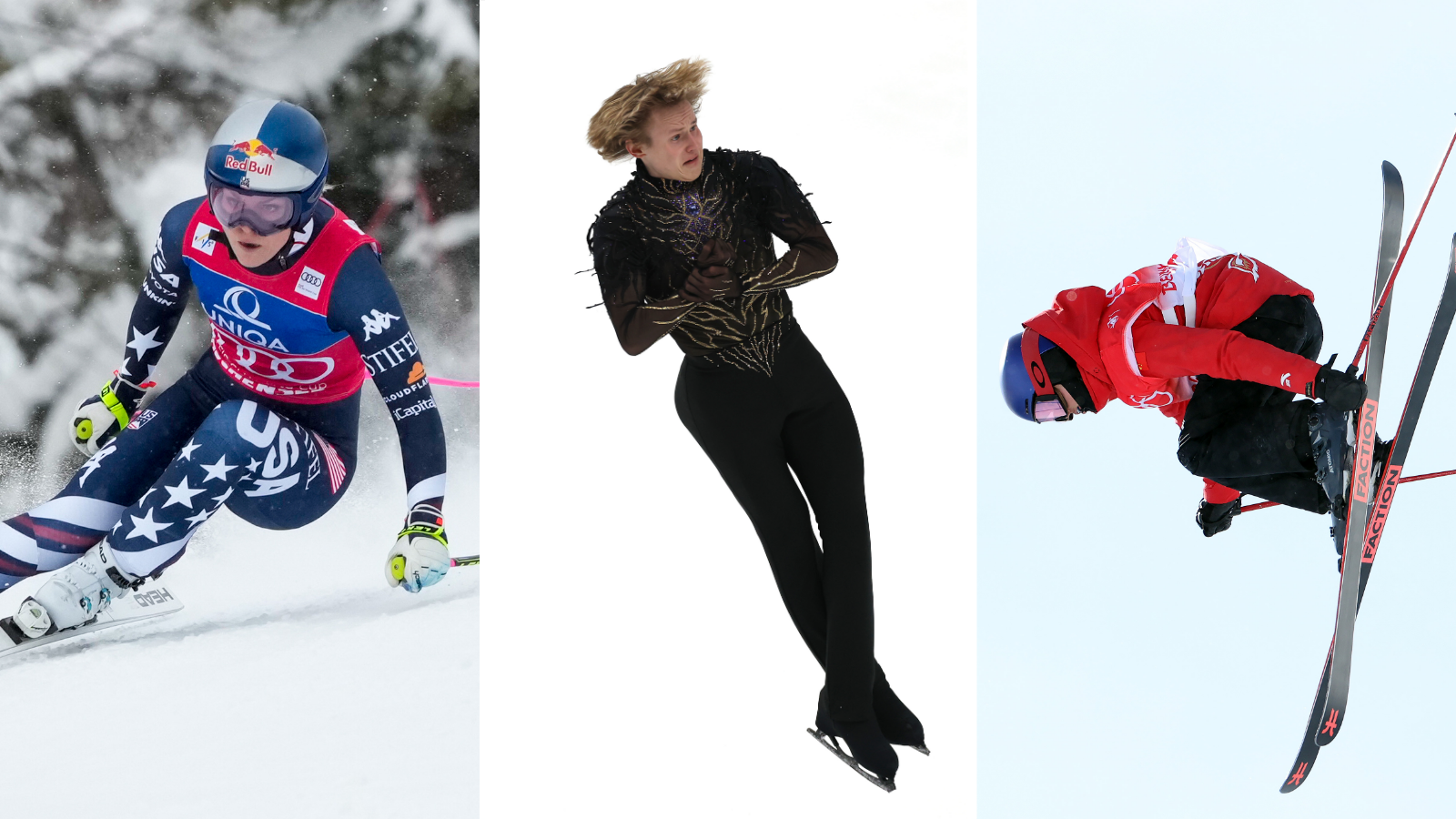
Vonn, Gu and Malinin – global stars to follow at Milan-Cortina 2026

Around 2,900 athletes from more than 90 countries will compete on the ice and snow at Milan-Cortina 2026.

The world’s biggest winter sports stars will descend on northern Italy from Friday 6 February and there’s certain to be thrills, drama and breakout performances.

Lindsey Vonn – alpine skiing

USA's Lindsey Vonn competes during the Women's Super G event of FIS Alpine Skiing World Cup in Tarvisio, ItalyGetty Images

Age: 41 Nation: United States

Just five days before the women’s downhill event takes place in Cortina, Olympic champion Lindsey Vonn announced that she had ruptured her left anterior cruciate ligament but is still hopeful that she can compete on Sunday.

Vonn was airlifted to hospital in Switzerland after crashing in the final World Cup race of the season but remains determined to compete in her fifth Olympics, despite the serious injury.

The veteran skier is no stranger to a comeback having retired in 2019 because of injury before undergoing partial replacement knee surgery on her right knee and returning to the sport in 2024.

Mikaela Shiffrin – alpine skiing

Mikaela Shiffrin of Team United States in action during the Audi FIS Alpine Ski World Cup Women's SlalomGetty Images

Age: 30 Nation: United States

Mikaela Shiffrin is the greatest alpine skier of all time and, competing at her fourth Olympics, has said she wants to “make peace” with the Games following disappointment in Beijing along with serious injury and mental health struggles.

The five-time overall World Cup winner has 108 World Cup wins, securing victory in the opening five slalom events of the season which, when added to her victory in the final slalom of last season, equalled her own record of six consecutive wins in the discipline.

Maxim Naumov – figure skating

Maxim Naumov holds a photograph of his parents after competing in the Championship Men Free Skating during the 2026 United States Figure Skating ChampionshipsGetty Images

Age: 24 Nation: United States

American figure skater Maxim Naumov’s participation in the Milan-Cortina Games could be emotional as he makes his Olympic debut after his parents were killed in a plane crash in Washington DC last year.

Naumov’s dream to make Team USA was one of the last things he spoke about with his parents before they were killed.

Emily Harrop – skimo

Emily Harrop of France participates in the Individual Race Women's event at the ISMF Ski Mountaineering World Cup Comapedrosa Andorra 2025Getty Images

Age: 28 Nation: France

Ski mountaineering, or ‘skimo’, is making its Olympic debut at Milan-Cortina and, while Great Britain have failed to qualify an athlete in the Games’ new sport, France’s Emily Harrop is the next best thing.

With English parents, Harrop could have competed for Team GB but having relocated to the French Alps as a child she opted to represent France.

Jutta Leerdam – speed skating

Jutta Leerdam during the match between Olympisch Kwalificatietoernooi v day 4 at the ThialfGetty Images

Age: 28 Nation: Netherlands

Dutch speed skater Jutta Leerdam will compete in the 1,000m and 500m in Milan.

A former world sprint champion, Leerdam also won a silver medal in the 1,000m at the 2022 Beijing Olympics.

Finley Melville Ives – freestyle skiing

Finley Melville Ives of Team New Zealand competes in the first run of the Aspen Snowmass Men's Freeski Halfpipe Finals during the Toyota US Grand Prix 2026 at Aspen Snowmass Ski ResortGetty Images

Age: 19 Nation: New Zealand

Teenager Finley Melville Ives arrives in Italy as one of the most exciting prospects on the freestyle skiing circuit.

Ives’ parents are both snowboard instructors and his twin brother followed in their footsteps, but Ives opted instead for skis from a young age.

Eileen Gu – freestyle skiing

Eileen Gu Ailing of China competing in the Women's FIS Freeski Final on day three of FIS Freeski Halfpipe World Cup 2025 at Genting Snow ParkGetty Images

Age: 22 Nation: China

Born and raised in California, freestyle skier Eileen Gu was China’s poster girl for Beijing 2022, where – aged 18 – she won gold in the big air and freeski halfpipe competitions and silver in the slopestyle.

In addition to her Olympic triumphs, she is also a two-time world champion and three-time Winter X Games champion.

NHL stars – ice hockey

Jack Eichel #9 of the Vegas Golden Knights faces off against Auston Matthews #34 of the Toronto Maple Leafs during the second period at T-Mobile ArenaGetty Images

For the first time since Sochi 2014, the National Hockey League is permitting its athletes to participate in the Winter Olympics.

NHL stars did not travel to the 2018 or 2022 Games because of financial disputes and pandemic-related complications but will return to the ice this year.

Chloe Kim – snowboarding

Chloe Kim of the United States reacts to an injury sustained during training prior to competing in the Women's Snowboard Halfpipe Finals during the Toyota US Grand Prix 2025 at Copper MountainGetty Images

Age: 25 Nation: United States

Eight years after winning gold as a 17-year-old in Pyeongchang, American halfpipe snowboarder Chloe Kim is going for a three-peat in Italy.

She successfully defended her title in Beijing four years ago but her preparations for Milan-Cortina have been disrupted after she dislocated her shoulder at the beginning of the year.

Francesco Friedrich – Bobsleigh

Francesco Friedrich and Simon Wulff (GER) in action in Altenberg, GermanyGetty Images

Age: 35 Nation: Germany

Legendary German bobsleigh pilot Francesco Friedrich arrives in Italy hoping to become the first man do the treble double – winning two and four-man gold for the third Games in a row.

He is a 16-time world champion across the two and four-man events while he has well over 100 World Cup podium finishes, claiming a 50th victory in the two-man earlier this year.

Arianna Fontana – speed skating

Arianna Fontana of Italy looks on after competing on the Women 1000m Quarterfinals on Day 1 of the ISU European Short Track Speed Skating Championships 2026 at IJssportcentrumGetty Images

Age: 35 Nation: Italy

Competing at her sixth Games, Arianna Fontana is an 11-time Winter Olympic medallist and has won medals at her five previous appearances – including as a 15-year-old in Turin.

Twenty years later, the short track skater is also aiming to compete in long track speed skating.

Lucas Pinheiro Braathen – alpine skiing

Lucas Pinheiro Braathen of Team Brazil in action during the Audi FIS Alpine Ski World Cup Men's SlalomGetty Images

Age: 25 Nation: Brazil

Norwegian-born skier Lucas Pinheiro Braathen could make history in Italy by winning a first Winter Olympics medal for a South American country after he switched allegiance to compete for his mother’s home country of Brazil.

The slalom and giant slalom expert retired in 2023 having competed for Norway but returned in 2025 to represent Brazil and became the first Brazilian to finish on a World Cup podium last year before claiming the country’s first victory this season to add to his five for Norway.

Adeliia Petrosian – figure skating

Adeliia Petrosian performs her free skate during Stage 4 of the 2025/26 Russian Figure Skating Grand Prix at CSKA Arena in Moscow, RussiaGetty Images

Age: 18 Nation: Independent Neutral Athlete

Russian skater Adeliia Petrosian is one of around 20 Russian or Belarusian athletes competing under a neutral flag in Italy.

The teenager had not competed internationally at senior level until the Olympic qualifiers because of the ban on Russian athletes but is a genuine medal contender having won the qualifying event.

Ilia Malinin – figure skating

Ilia Malinin competes in the Championship Men Free Skating during the 2026 United States Figure Skating Championships at Enterprise CenterGetty Images

Age: 21 Nation: United States

Ilia Malinin is the only skater to have successfully landed the quadruple Axel, skating’s most difficult jump, in competition, earning him the nickname the ‘Quad God’.

The American, born to Olympic figure skaters Tatiana Malinina and Roman Skorniakov, is the hot favourite for the men’s singles title in Italy with previous routines including seven quads and a back flip.

Related topics

  • Winter Sports
  • Winter Olympics

Trump says talks with Iran continuing amid tensions

NewsFeed

US President Donald Trump has said that talks with Iran are continuing to try to de-escalate tensions in the Gulf, even as the US military announced shooting down an Iranian drone that approached its aircraft carrier in the Arabian Sea.

Russia-Ukraine war: Second round of peace talks set to begin in Abu Dhabi

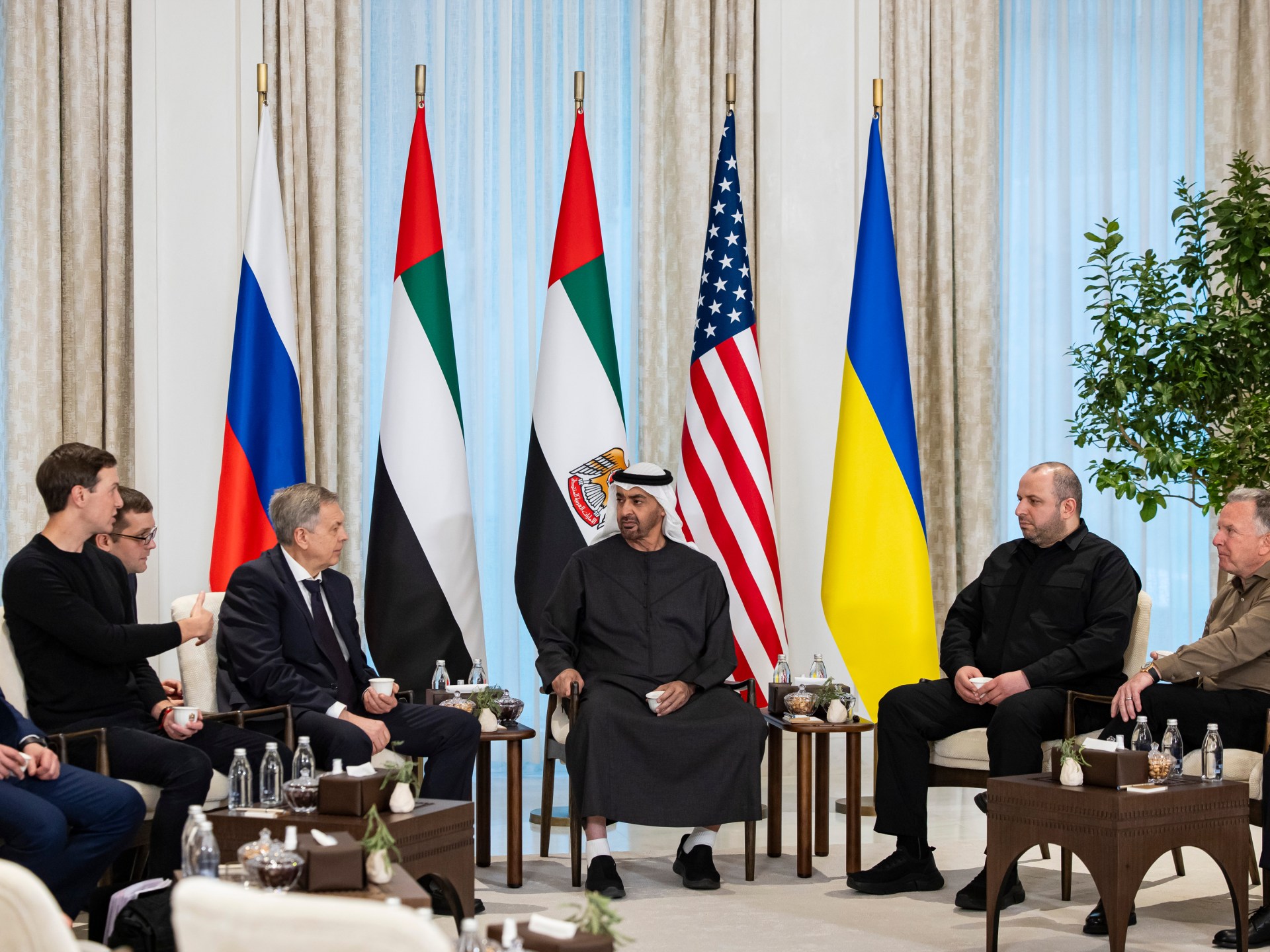
Ukrainian and Russian negotiators are set to join for a second round of United States-brokered talks in the United Arab Emirates (UAE), as they seek to advance fraught talks on how to end Russia’s nearly four-year war in Ukraine.

The two-day trilateral talks slated to be held in Abu Dhabi come as Ukrainian President Volodymyr Zelenskyy accused Russia of violating the Trump-brokered deal that called for ceasing attacks on energy facilities.

Recommended Stories

list of 3 itemsend of list

A huge Russian drone and missile barrage in the run-up to the talks, pounding Ukraine’s energy grid and knocking out power and heating in temperatures far below freezing, threatened to overshadow any chances of progress in the Emirati capital.

“Each such Russian strike confirms that attitudes in Moscow have not changed: They continue to bet on war and the destruction of Ukraine, and they do not take diplomacy seriously,” Zelenskyy said on Tuesday.

“The work of our negotiating team will be adjusted accordingly,” he said, without elaborating.

The first round of the meeting was held in the UAE last month, marking the first direct public negotiations between Moscow and Kyiv on a plan proposed by US President Donald Trump’s administration to end the conflict – Europe’s worst since World War II.

While the Trump administration has, over the past year, pushed the two sides to find compromises, breaking the deadlock on key issues appears no closer as the fourth anniversary of Russia’s invasion of its neighbour approaches later this month.

What are the sticking points?

The main sticking point is the long-term fate of territory in eastern Ukraine, which Russia has occupied. Security guarantees for Ukraine against future Russian attacks have also been one of the obstacles in the talks to end the conflict.

Moscow is demanding that Kyiv pull its troops out of swaths of the Donbas, including heavily fortified cities atop vast natural resources, as a precondition of any deal. It also wants international recognition for the land it annexed in eastern Ukraine.

Kyiv has said the conflict should be frozen along the current front line and has rejected a unilateral pull-back of forces.

Ukraine’s delegation will be headed by Security Council chief Rustem Umerov, while Russia will be represented by its military intelligence director Igor Kostyukov, a career naval officer sanctioned in the West over his role in the Ukraine invasion.

Russian presidential envoy Kirill Dmitriev attended talks in Florida with US officials over the weekend. While neither side released details of what was discussed, US Special Envoy Steve Witkoff said they were “productive and constructive”.

Witkoff led the US team during last month’s talks.

Russia, which occupies about 20 percent of its neighbour, has threatened to take the rest of the Donetsk region if talks fail.

Ukraine has warned that ceding ground will embolden Moscow and that it will not sign a deal that fails to deter Russia from invading again.

Kyiv still controls about one-fifth of the mineral-rich Donetsk region.

Russia also claims the Luhansk, Kherson and Zaporizhzhia regions as its own, and holds pockets of territory in at least three other eastern Ukrainian regions.

The majority of the Ukrainian public is against a deal that hands Moscow land in exchange for peace, according to opinion polls.

On the battlefield, Russia has been notching up gains at immense human cost, hoping it can outlast and outgun Kyiv’s stretched army.

Zelenskyy has been pushing his Western backers to boost their own weapons supplies and heap economic and political pressure on the Kremlin to halt the invasion.

Following the first round of talks, Ukrainians were doubtful that any deal could be struck with Moscow.

Minions routine set for Olympics as skater gets new hope

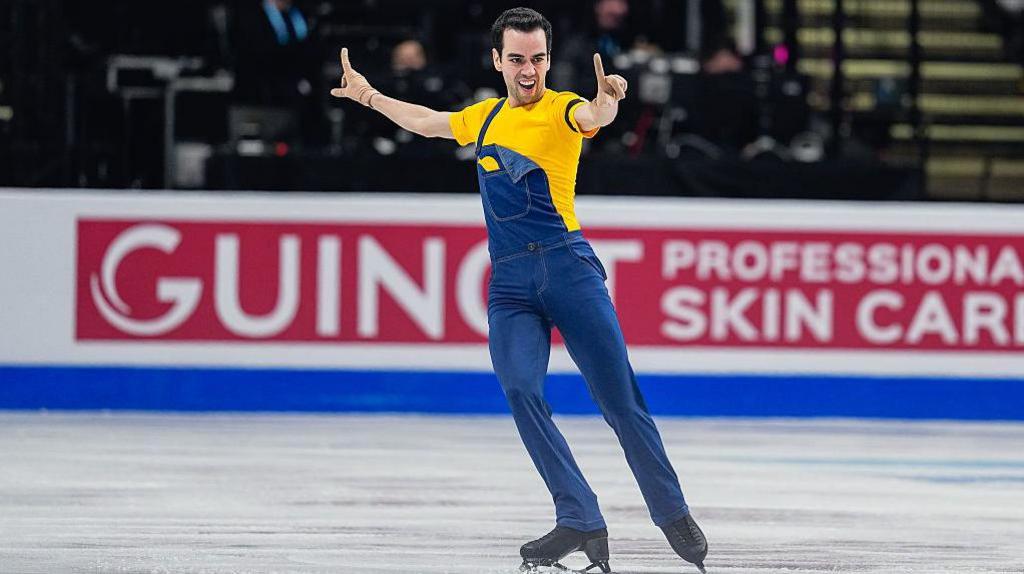
Spanish figure skater Tomas-Llorenc Guarino Sabate is optimistic he will be allowed to perform to music from the Minions films at the Winter Olympics after receiving copyright clearance from Universal Studios.

Sabate, known for his flamboyant routines, has performed to songs from the Minions animated film series while wearing a yellow T-shirt and blue overalls, similar to the characters’ outfits, throughout the 2025-26 season.

He said on Monday that he would not be able to perform to the music at the Olympics as rights holders Universal Pictures had not given permission.

However, on Tuesday Sabate said Universal Studios had reversed its objection and that he is “so close” to being allowed to perform his routine.

“Huge thank you to everyone who reposted, shared and supported,” Sabate said.

“Because of you, Universal Studios reconsidered and officially granted the rights for this one special occasion.

“There are still a couple of things to be tied up with the other two music of the program, but we are so close to accomplishing it! And it’s all thanks to you.

“I’m so happy to see that the Minions hitting Olympic ice is becoming real again!”

The routine in Sabate’s short program – the first of two routines in singles figure skating – has proved a hit in competitions, including in Sheffield at this year’s European Figure Skating Championships, where he finished 18th but became a fan favourite.

Sabate, a six-time Spanish champion set to make his Olympic debut in Milan, said he followed all required procedures and submitted the music through the International Skating Union’s (ISU) ClicknClear system in August.

If he is unable to perform to the Minions mix, he may use music by the Bee Gees for his short program, as this was the routine he performed to in 2024-25.

The men’s event starts in Milan on Tuesday.

“As soon as we have more details on this specific case, we will share them as appropriate,” read an ISU statement.

Related topics

  • Winter Sports
  • Winter Olympics
  • Figure Skating

More on this story

    • 1 day ago
    Winter Olympics daily guide graphic

Testing protocol for prostate cancer ‘alarming’ – Hislop

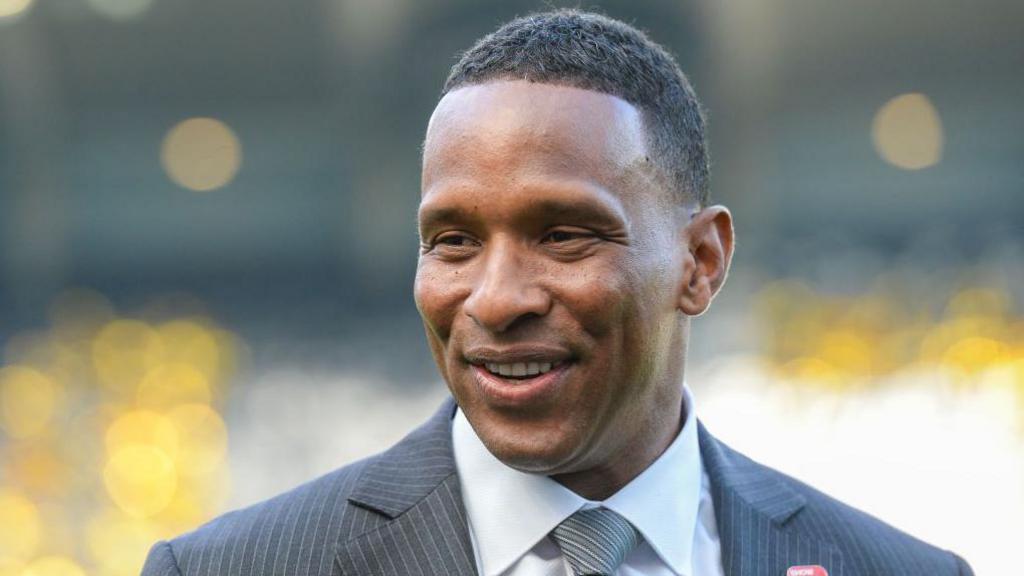
Former Premier League goalkeeper Shaka Hislop says it is “alarming” that tests for prostate cancer are not “regular and standardised” in the United Kingdom.

The 56-year-old was diagnosed with the disease in 2024 after he requested a prostate-specific antigen (PSA) blood test during his annual medical examination in the United States.

Routine PSA testing is not offered by the National Health Service in the United Kingdom, with the screening usually only provided if you are over 50 or if other symptoms are identified.

According to research from Prostate Cancer UK, one in eight males will be diagnosed with the disease at some point in their life.

In black males, meanwhile, that risk is as high as one in four.

The former Trinidad and Tobago keeper – who now lives in the United States – believes the current testing protocol for the disease is flawed and needs changing, especially with cancer’s rising prominence in certain ethnic communities.

Speaking to BBC Radio 5 Live’s Breakfast programme, Hislop said: “I honestly can’t believe that it is still a thing given all we know of prostate cancer and its prominence, particularly in the minority community.

“So, to have that not be a regular and standardised test as offered to people regardless of whether they have any family history or not, I find alarming.

“I have no history of prostate cancer in my family yet here I am having been diagnosed and been treated for it.”

Since his diagnosis, Hislop has tried to approach the prostate cancer with the same “fight” he had during a professional career that spanned six clubs in England, including West Ham and Newcastle.

But it has been difficult for his wife to deal with because of an “emotional history” with the disease.

“My father‑in‑law died of prostate cancer, so I can’t imagine what my wife was going through when she heard my news, knowing her emotional history with prostate cancer, having to deal with that and still be strong for me,” said Hislop.

“For me, it was slightly different in that I understand why they say fight cancer, because that was the only emotion I felt: ‘All right, this is a fight.’ And that’s exactly the way I saw it.

“This was me against cancer – or me and a surgical team against cancer. That was my mindset. I never felt beaten, I never felt demoralised. I never felt sorry. This was just another fight in my life.

“Much the same way I kind of approached a football game, where you focus solely on that.

“It’s the only thing that mattered and that was my entire mindset throughout.

“I know from speaking to people who’ve been diagnosed with prostate cancer that the initial emotional gut punch is tough.

‘Cancer can affect anyone… but it’s not a life sentence’

Sir Chris Hoy holds up a Union flag in celebration at the 2012 London Olympic GamesGetty Images

Hislop is not the first former professional athlete to urge the NHS to change its testing regime.

In 2024, six-time Olympic gold medalist Sir Chris Hoy told the BBC it would be a “no-brainier” to lower the age that males are eligible to request PSA tests.

The previous year, Hoy, 49, was diagnosed with prostate cancer which had spread to his bones. He was told he had between two and four years to live.

In November 2025, the UK National Screening Committee decided against recommending mass screening on the NHS for prostate cancer, saying the main screening test for prostate cancer is “not very reliable” and as a result, can lead to “over-diagnosis and unnecessary treatment”.

Speaking to Naga Munchetty on BBC Radio 5 Live on Tuesday, health secretary Wes Streeting said the government is “still considering and weighing up the evidence.”

“It’s not done and dusted,” he added. “On one hand we know there are massive health inequalities in this space, for black men in particular. On the other hand what we wouldn’t want, in pursuit of expanding treatment, is to end up in another situation where we’ve got a bunch of men walking around impotent or incontinent because we’ve over-treated or unnecessarily treated.”

Hislop is hoping that by ex-athletes documenting their battles against prostate cancer, it will increase the “education” around diagnosis.

“Cancer can affect anyone,” added Hislop. “The earlier you catch it – whatever the cancer is – the better your chance of survival. So knowledge is key here. Knowledge around your own health is absolutely key.

“The other side to that is, if and when you do get that cancer diagnosis, that does not mean it’s the end of life. That is not a life sentence.

“If you catch it early enough, and again this goes back to the education around it, around early testing, you can still live a full and very long life. That’s certainly my expectation now.

“When the likes of Sir Chris Hoy, who again, keeping himself in shape, former athlete, is not caught early enough, the diagnosis can be very dire.

“So there are two sides to this: education around who can get cancer – and the short answer to that is anyone – and then just recognising that you’re part of that group of anyone, and getting tested for it, because the earlier you catch it, the better your chances of living as full a life as ever before.

“So those two things I think are important to know, to understand, to recognise and to speak about.”

Related topics

  • Football

More on this story

    • 17 October 2025
    A graphic of Premier League players from every team in the division in 2025-26 season, with the Premier League trophy in front of them.
    • 16 August 2025
    BBC Sport microphone and phone